Leidsid 33 sarnast õppematerjali, mis on seotud failiga "Pride and Prejudice Book report". Need materjalid aitavad sul teemat sügavamalt mõista.
elizabeth, darcy, prejudice, first, bennet, jane, pride, austen, find, other, collins, good, though, even, really, character, novel, than, five, estate, quite, charlotte, january, gives, understand, class, late, characters, bennets, husband, owner, intelligent, finds, oppinion, minded, sister, male, handsome, social, marriage, friend, wealth, eventsReport Title: ,,Pride and Prejudice'' Author: Jane Austen Genre: Romantic novel Setting (time): 19th century Setting (place): England Tone: a bit depressed, satirical, vivid Themes: love, pride, prejudice, family, women and marriage Introduction Pride and Prejudice was first published on 28 January 1813 and it talks about love and marriage, personalities and misunderstanding, pride and prejudice. The book concentrates on the characters search of love, bafflements and feelings. The story is told from a third point of view. Characters · Elizabeth Bennet: The protagonist of the novel and the second oldest of five sisters, Elizabeth is lively, sharp-tongued, intelligent and good-looking · Mr. Darcy: An extremely wealthy aristocrat. He is proud, egotistic and extremely conscious. · Jane Bennet: Jane is the oldest in the family
Pride and Prejudice by Jane Austen. Jane Austens one of the best novels is ,,Pride and Prejudice" it was released in year 1813. Book starts with that sentence : "It is a truth universally acknowledged, that a single man, in possession of a good fortune, must be in want of a wife" this already tells us what is ,,Pride and Prejudice" about. The book begins by introducing Bennets family, Mr and Mrs Bennet and their five unmarried daughters. In their family they had no boys to give the Bennets legacy over to a male member, so Mr Collins their cousin is getting the Bennets family legacy. Because of that Mrs. Bennet had a mission to put all her daughters to rich men. At the same time appears into neighborhood Mr Bingley a rich and handsome single man who had plans to move nearby to Netherfields manor. When Mrs. Bennet hears about that she sends her husband to talk with Mr. Bingley and after that he
,,Pride and Prejudice" by Jane Austen Book Report Introduction: The book was written between 1796 and 1797 and it was first published on 28 January 1813. The setting takes place in England, mostly in places called Hertfordshire, Derbyshire and Kent. The genre of the book is the novel of manners: it shows the conflicts between two individuals and also the love growing between them. The main themes are love, and it shows very precisely the development of young people's character and morality. The main characters are Elizabeth Bennet- main female protagonist. Mr
Jane Austen Pride and Prejudice Class and social status in Pride and Prejudice Mankind has been acknowledging one another's superiority since the dawn of time. In the novel under the discussion, social status has a great importance in the turn of events. Everyone in the novel is somehow influenced by the topic of fortune or social class. To start with, even though "Pride and Prejudice" touches on many different subjects and characters, its main events are related to or caused by the dogmas of class distinctions.
The Project Gutenberg EBook of Pride and Prejudice, by Jane Austen This eBook is for the use of anyone anywhere at no cost and with almost no restrictions whatsoever. You may copy it, give it away or re-use it under the terms of the Project Gutenberg License included with this eBook or online at www.gutenberg.org Title: Pride and Prejudice Author: Jane Austen Release Date: August 26, 2008 [EBook #1342] [Last updated: August 11, 2011] Language: English Character set encoding: ASCII *** START OF THIS PROJECT GUTENBERG EBOOK PRIDE AND PREJUDICE *** Produced by Anonymous Volunteers, and David Widger PRIDE AND PREJUDICE By Jane Austen Contents Chapter 1 Chapter 22 Chapter 2 Chapter 23 Chapter 43
Pride and Prejudice Questionnaire · Task 1: watch the movie to the end on You Tube http://www.youtube.com/watch?v=l6RI7Rb2g6k · and answer the questions: 1. What was the relationship between Mr. Wickham and Mr. Darcy (what kind of common past did they share)? Both had grown up in the same area and under the protection of grand old Mr.Darcy, who had raised two boys equally as his sons. Two childhood friends parted immediately after old Mr.Darcy's death in arguings over money, power and honour (which one Wicham- had less in tons). · Mr. Darcy seemed to be an utterly arrogant, cold- and careless-natured man to strangers
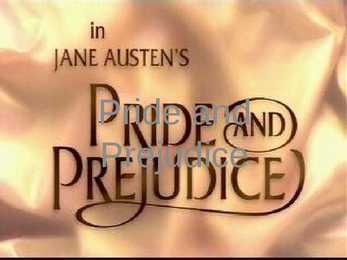
Pride and Prejudice Table of contents Introduction Pride and prejudice The main characters The Bennets family The beginning of the film A turn in the life of the young Greaf in the Bennets family The film end Conclusion Pictures References Introduction I have chosen this film because I like it very much. Pride and Prejudice tells us about a big family in England from the town called Meriton. In the film we can perfectly see the life in England at the end of the 18th century. Pride and prejudice This movie was made after Jane Austen novel Directed by Simon Langton Composer: Care Davis Producer: Sue Birtwistle Country of origin: United Kingdom Genre: drama Tear of release: 1995 Duration of a film: 3 hours The main characters
Commentary The opening pages of Sense and Sensibility are concerned with the laws of inheritance and succession that govern the fate of the Dashwood family property. According to the laws of male primogeniture effective in the mid-nineteenth century, estates went to the closest male descendant of the original owner. Since Old Mr. Dashwood has no sons, his estate is bequeathed to his nephew, Henry Dashwood. Henry, in turn, leaves the estate to his eldest son, John. However, as Austen notes, Henry Dashwood's money was far more vital to his daughters than to his son, because John was already provided for both by his mother's fortune--which he inherited as eldest son--and by the money he received by marrying his own wife. (In general, a man inherited all of his wife's money upon marriage, though the wife usually entered into the marriage with a "settlement," a legal document ensuring that some of her property would revert to her or her children following her husband's death
Lived as a true aristrocrat, had huge debts, numerous love affairs, there were rumors of a scandalous incestuous romance with his halfsister and selfimposed exile It has been speculated that he suffered from bipolar disorder and was bisexual The Byronic hero The Byronic hero is a variant of the Romantic hero as a type of character, named after Lord Byron. Both Byron's life and writings have been considered in different ways to exemplify the type. The Byronic hero first appears in Byron's semi autobiographical epic narrative poem Childe Harold's Pilgrimage Many of Byron's characters are a similar specific type of the Romantic hero: An idealised but flawed character with great talent and passion, a distaste for society, disrispect towards rank and privilege, arrogance, overconfidence, selfdistructiveness. Is rebellious, exiled. Charles Dickens 18121970 Works are very much influenced by his life
Jane Eyre is divided into 38 chapters; most editions are at least 400 pages long (although the preface and introduction on certain copies are liable to take up another 100). The original was published in three volumes, comprising chapters 1 to 15, 16 to 26, and 27 to 38. Brontë dedicated the novel's second edition to William Makepeace Thackeray. [edit] Plot summary [edit] Chapters 1-4: Jane's childhood at Gateshead Young Jane argues with her guardian Mrs. Reed of Gateshead. Illustration by F. H. Townsend. A ten-year-old orphan named Jane Eyre lives with her uncle's family, the Reeds. Jane's aunt, Sarah Reed, dislikes her intensely. When her uncle dies, her aunt and the three Reed children become abusive. When bullied by her cousin John, Jane retaliates but is punished for the ensuing fight and is locked in the room where Mr. Reed died. As night falls, Jane's panicked screams rouse the house, but Mrs
but shy aristocratic landowner who, unlike his Moscow friends, chooses to live in the country on his large estate. He discovers that Kitty is also being pursued by Count Alexei Kirillovich Vronsky, an army officer. At the railway station to meet Anna, Stiva bumps into Vronsky. Vronsky is there to meet his mother. It surmises that Anna and the Countess Vronskaya have travelled together in the same carriage and talked together. As the family members are reunited, and Vronsky sees Anna for the first time, a railway worker accidentally falls in front of a train and is killed. Anna interprets this as an "evil omen." Vronsky is infatuated with Anna. Anna, who is uneasy about leaving her young son, Seryozha, alone for the first time, talks openly and emotionally to Dolly about Stiva's affair and convinces Dolly that her husband still loves her, despite his infidelity. Dolly is moved by Anna's speeches and decides to forgive Stiva
York. 2. Characters · Holden Caulfield The main character of the book. He has been expelled from many schools due to his failure in fixing his grades and is expelled from his current school, Pencey Prep, right in the beginning of the story. Although he is intelligent, he fails almost every class, all except for English. He feels alone and sad, trying to find his place in the world, only finding support from his little sister Phoebe who he thinks is smarter than most of the adults. · Stradlater Shares a room with Holden at Pencey Prep's dorm. He is described as handsome and popular but secretly very untidy. · Ackely Holden's next door neighbor in the dorm. Holden thinks he is of him as a weirdo loner. He isn't very smart and he often barges into Holden's room without
Ameerika Kirjandus 30.01.13 Naturalism · France, Emile Zola · Put down his theory in 1879: Le Roman Experimental, attempt to explain the development of human society throuch biological laws · Outlook is deterministic, pessimistic, fatalistic (fate or biology) · Man as an animal-clever than other beasts, still explainable within the framework · Man is not a free agent, is govern by something · Unable to determine his own faith · Hereditary · Naturalists tried to apply in fiction the processes of natural sciences · Writers task is to record facts, systems of behaviour, living conditions, never revealing any natural unbiased (completely natural) · Point of view: amoral-outside the category of morality, neither good or bad
Libraries. We know a lot of things thanks to books, but we do not know exactly when and where they originated, and what should be considered the first book in the world. Ancient document, written on parchment, papyri and vellum can hardly be qualified as books the way we understand the word today. Centuries went before paper replaced parchment and papyri. In the 15 th century Johann Gutenberg invented a mechanical process of duplicating texts, which we today call book printing. The first book was printed between 1444 and 1446, so these years can be considered as the beginning years of book printing. His most
massive worldwide popularity in his lifetime. Charles Dickens was born in Landport, Portsmouth in Hampshire, the second of eight children to John Dickens n 7 February 1812. The 12-year-old Dickens began working ten hour days in a Warren's boot-blacking factory. In May 1827, Dickens began work in the office of Ellis and Blackmore as a law clerk. At the age of seventeen, he became a court stenographer and, in 1830, met his first love, Maria Beadnell. Maria's parents disapproved of the courtship and effectively ended the relationship when they sent her to school in Paris. In 1834, Dickens became a political journalist, reporting on parliamentary debate and traveling across Britain by stagecoach to cover election campaigns for the Morning Chronice. His journalism, in the form of sketches which appeared in periodicals from 1833, formed his
The making of a new nation. The Enlightenment in America. The emergence of the notion of the American Dream. The great Enlighteners: Crèvecoeur, Jefferson, Paine, Franklin. The American Enlightenment is the intellectual thriving period in the United States in the midtolate 18th century (17151789), especially as it relates to American Revolution on the one hand and the European Enlightenment on the other. Influenced by the scientific revolution of the 17th century and the humanist period during the Renaissance, the Enlightenment took scientific reasoning and applied it to human nature, society, and religion. American Enlightenment a gradual but powerful awakening that established the ideals of democracy, liberty, and religious tolerance in the people of America.
claiming that she made the match herself. An old friend of the family, Mr. George Knightley, does not believe her, but in her certainty she decides that she must also marry off the young rector, Mr. Elton. Among her friends and acquaintances in the large and populous village of Highbury, she begins to notice young Harriet Smith, the pretty illegitimate seventeen-year-old who lives at Mrs. Goddard's boarding school. Determining first to improve Harriet, Emma discourages her interest in worthy Robert Martin of Abbey-Mill Farm, declares that Harriet must be from more genteel parents than his, and fixes upon Harriet as Mr. Elton's future wife. In bringing the two together socially, Emma does a drawing of Harriet which Mr. Elton admires and takes off to London to be framed. This appears so promising to Emma that, when Harriet receives a letter of proposal from Robert Martin, Emma discredits him and
The Moving Finger Agatha Christie Plot summary: Brother and sister Jerry and Joanna Burton bought a country house in an idyllic English town called Lymstock so that Jerry could recover from injuries received in a wartime plane crash. They had been living in London their whole life and thus were excited but intimidated to go. Lymstock was much like any other English village, no more than 300 people. Those that live there enjoy the peace of rural life and form a union to where it can be difficult for strangers to blend in. Fortunately, it wasn't much of a problem for Jerry and Joanna. They were just getting to know the town's strange members and their characters when an anonymous letter arrived, accusing the two of not being brother and sister, but lovers. The letter
BOOK REPORT Title & author of the book: 'Anita and Me' by Meera Syal The setting of the book? The story resolves around Meena Syal, the daughter of the only Punjabi family in the Midlands' mining village of Tollington. The novel provides a vision of British childhood in the 1960s, a childhood caught between two cultures, each on the brink of enormous change. Meena is desperate to fit in with the other children in her neighbourhood while forever feeling like an outsider because she is "different". Eventhough the Punjabi family is well respected by the locals, there are still sutations when they have to deal with racism. Plot summary (NB! Use the present tenses) Anita and Me by Meera Syal is the story of a young Punjabi girl growing up in the fictional English village of Tollington in the Midlands in the 1960s. The book follows Meena during her pre-teen years
To her, the ideal marriage is based on rational love, mutual understanding and respect. The Bronte sisters, Ann, Emily and Charlotte, wrote a few decades later. Although often viewed collectively, their literary output differs greatly from each other. Wrote under male pen names – difficult to get published as a woman. At the time they wrote, their works were considered blasphemous (dealt with sexuality and death). Emily Bronte – Wuthering Heights, critics presumed was written by a woman. Not understood by her contemporaries
Adams Middle School who curses at her students, consumes lots of alcohol, smokes marijuana, and only shows movies while she sleeps through class. She plans to quit teaching and marry her wealthy fiancé, but when he dumps her, she must resume her job as a teacher. She tries to win over substitute teacher Scott Delacorte (Justin Timberlake), who is also wealthy. Amy Squirrel (Lucy Punch), a dedicated teacher and colleague of Elizabeth, also pursues Scott while the school's gym teacher, Russell Gettis (Jason Segel), makes advances on Elizabeth which she rejects.[3] Elizabeth plans to get surgery to enlarge her breasts, believing she is being overlooked for women with larger chests. However, she cannot afford the $10,000 procedure. To make matters worse, Scott admits that he has a crush on Amy, only viewing Elizabeth as a friend. Elizabeth attempts to raise money for the surgery by participating in her 7th grade class car
DORINE O admirable pattern! Virtuous dame! She lives the model of austerity; But age has brought this piety upon her, And she's a prude, now she can't help herself. As long as she could capture men's attentions She made the most of her advantages; But, now she sees her beauty vanishing, She wants to leave the world, that's leaving her, And in the specious veil of haughty virtue She'd hide the weakness of her worn-out charms. That is the way with all your old coquettes; They find it hard to see their lovers leave 'em; And thus abandoned, their forlorn estate Can find no occupation but a prude's. These pious dames, in their austerity, Must carp at everything, and pardon nothing. They loudly blame their neighbours' way of living, Not for religion's sake, but out of envy, Because they can't endure to see another Enjoy the pleasures age has weaned them from. MADAME PERNELLE (to Elmire) There! That's the kind of rigmarole to please you, Daughter-in-law
psychology at the University of St Andrews in Scotland. § Her actual christened name was "Franklin Birkinshaw". which she feels contributed to her being accepted at St Andrews and permitted to study economics: the school assumed she was a male student applicant. Early life § In her early twenties she was briefly married to a man more than twenty years older than her. It is not clear whether she had her first son during this marriage or earlier. § Raising her son as a single mother, she looks back on her twenties as times fraught with "odd jobs and hard times." She worked on the problem page of the Daily Mirror and then as a copywriter for the Foreign Office. She then embarked on an extremely successful career as an advertising copywriter becoming famous for her slogan 'Go to work on an egg'. § At 29 she met Ron Weldon, a jazz musician and antiques dealer.They married
American literature The literary history of this nation when the first humanbeing living in what has since become the U.S used language creatively. · Mid to late 18 century put down · Words are powerful, magical · Words must be remembered · Native Americans stories creation of the world · Attidude thought their land/language · Similar stories Dates and names · America was discovered in 1492 by Columbus · 1497 John Cabot went to Canada · 1579 San Fransisco/St
Report Title: ,,Frankenstein'' Author: Mary Shelley Genre: Novel Setting (time): 19th century Setting (place): North Pole, Europe (Switzerland, Scotland, England) Tone: magical, dark, mysterious, ghostly Themes: love, loneliness, science, human tendency Introduction Frankenstein was first published in March, 1818. This book is also known as The Modern Prometheus. Frankenstein is one of the most popular works of gothic horror and science fiction literature and it is considered to be one of the best known novels of English Romanticism. Characters Robert Walton: Walton is a well-educated sea captain who wants to explore the North Pole. He meets Victor there and then he writes Victor's story to his sister.
Jane Austen "Pride and prejudice" "Pride and prejudice" is a widely beloved novel because it makes people laugh and think. It was first published in 1813 and since then it has been truly loved novel for younger and older people. As well as that, the critics liked it too. So it's not only publics favourite but also smarter people love it. I think that the main reason so many like it, is because it's unpredictable and understable. In addition it's not very difficult to read. But I had to read the novel from laptop and that made my eyes hurt, so that really didn't work for me. Novel has been classified as a classic love story
............................................................................................ Orson Scott Card He was born on the 24th of August, 1951 in Richland, Washington. Card's writing career began primarily as a poet, studying at Brigham Young University. During his studies as a theatre major, he began "doctoring" scripts, adapting fiction for theatre production, and finally writing his own one-act and full-length plays. Later he has worked both as a freelancer and a contracted writer. He first wrote the short story "Ender's Game" while working at the BYU press. Ender's Game and its sequel Speaker for the Dead were both awarded the Hugo Award and the Nebula Award, making Card the only author (as of 2008) to win both of science fiction's top prizes in consecutive years. Card continued the series with seven books, which divide into "Shadow" and "Speaker" series. He has also announced his plan to write two more novels: Shadows in
probably been to add legitimacy to the already-existing trends towards greater psychological introspection and towards more prominent and franker discussions of sexuality. Main characteristic features of Modernism: Characteristics of Modernism Formal characteristics(11) · Open Form · Free verse · Discontinuous narrative · Juxtaposition (kõrvutamine) · Intertextuality · Classical allusions(vihje) · Borrowings from other cultures and languages · Unconventional(ebaharilik) use of metaphor · Metanarrative · Fragmentation · Multiple narrative points of view (parallax) Thematic characteristics(8) · Breakdown of social norms and cultural sureties(veendumus) · Dislocation(nihestus) of meaning and sense from its normal context · Valorization of the despairing individual in the face of an unmanageable future · Disillusionment (silmade avamine, illusioone purustama)
Plot Overview Jane Eyre is a young orphan being raised by Mrs. Reed, her cruel, wealthy aunt. A servant named Bessie provides Jane with some of the few kindnesses she receives, telling her stories and singing songs to her. One day, as punishment for fighting with her bullying cousin John Reed, Jane’s aunt imprisons Jane in the red- room, the room in which Jane’s Uncle Reed died. While locked in, Jane, believing that she sees her uncle’s ghost, screams and faints. She wakes to find herself in the care of Bessie and the kindly apothecary Mr. Lloyd, who suggests to Mrs. Reed that Jane be sent away to school. To Jane’s delight, Mrs. Reed concurs. Once at the Lowood School, Jane finds that her life is far from idyllic. The school’s headmaster is Mr. Brocklehurst, a cruel, hypocritical, and abusive man. Brocklehurst preaches a doctrine of poverty and privation to his students while using the school’s funds to provide a wealthy and opulent lifestyle for his own family
But Cohn's attempts to win Brett are so clumsy and foolish that they provide an easy target for mockery. Cohn adheres to an outdated, prewar value system of honor and romance. He fights only within the confines of the gym until his rage and frustration make him lash out at Romero and Jake. He plays hard at tennis, but if he loses he accepts defeat gracefully. Furthermore, he cannot believe that his affair with Brett has no emotional value. Hence, he acts as a foil for Jake and the other veterans in the novel; unlike them, he holds onto traditional values and beliefs, likely because he never experienced World War I firsthand. Sadly, Cohn's value system has no place in the postwar world, and Cohn cannot sustain it. His tearful request that Romero shake his hand after Cohn has beaten him up is an absurd attempt to restore the validity of an antiquated code of conduct. His flight from Pamplona is symbolic of the failure of traditional values in the postwar world.
The woman, without a word of who she was, died and left her new born boy, Oliver, to the drunken nurse that stood by. Chapter2: The State gave Oliver to Mrs. Mann who housed a number of orphaned children. Mrs. Mann took a large portion of the money given to her by the authorities for each child's food so Oliver grew up small and malnourished. On his ninth birthday, the town beadle, Mr. Bumble, came to collect Oliver and take him to the board for an interview. They told him he was to live with other wards of the state to become educated and learn a trade. Oliver did not mind this, but soon after he arrived, the state decided to implement a plan that would save money by feeding the people very little. After a time on this diet, the boys at the table chose Oliver to go ask the head cook for more gruel. Oliver did this, and was taken away. A flyer was then posted that said the state would give five pounds for someone to take young Oliver off their hands.
Taken at the Flood "There is a Tide" redirects here. "There is a Tide" is also the name of a short story by Larry Niven, set in the Known Space universe. Taken at the Flood is a work of detective fiction by British writer Agatha Christie, first published in the US by Dodd, Mead and Company in March 1948 under the title of There is a Tide...[1] and in the UK by the Collins Crime Club in the November of the same year under Christie's original title.[2] The US edition retailed at $2.50[1] and the UK edition at eight shillings and sixpence (8/6).[2] It features her famous Belgian detective, Hercule Poirot, and is set in 1946. 1 Plot summary In a flashback from late Spring to early Spring, Lynn
............ 8 7. SETTING................................................................ 9 8. LANGUAGE AND STYLE................................... 9 9. WHOM DO I RECCOMEND THIS NOVEL........ 9 10. SUMMARY........................................................... 10 11. SOURCES.............................................................. 11 INTRODUCTION The Mysterious Affair at Styles is a detective novel by Agatha Christie. It was written in 1916 and was first published by John Lane in the USA in October 1920 and in the UK by The Bodley Head (John Lane's UK company) on January 21 1921. In her first novel, The Mysterious Affair at Styles(1920), she created the now-famous Belgian detective Hercule Poirot, the most popular sleuth in fiction since Sherlock Holmes. Poirot and Marple have also been portrayed in the many films, radio programmes and stage plays based on her books
 annaabi.ee