Westminster Today For centuries, Westminster was the political and religious center, but today Westminster is the center of government. Westminster Hall was built in 1099 by the son of William the Conqueror and is one of the largest medieval halls. It was part of the Westminster Palace, which was destroyed by a fire in 1834. The Houses of Parliament that we see today were rebuilt in the 19th century after the fire. The Big Ben clock tower is the largest four-sided ringing clock in the world and it is also one of the London's most famous symbols. Some think that Big Ben is the name of the clock on the tower, but actually it is the name of the big 13-ton bell that rings every fifteen minutes. The most historic religious building in Britain is Westminster Abbey, a beautiful church across the street from the Houses of Parliament. It was begun between 1042 and 1065 when the English king Edward the Confessor built a churc...
LANDMARCS HYDE PARK: Hyde Park is one of the largest parks in central London, England and one of the Royal Parks of London, famous for its Speakers' Corner. The park is divided in two by the Serpentine. The park is contiguous with Kensington Gardens; although often still assumed to be part of Hyde Park, Kensington Gardens has been technically separate since 1728, when Queen Caroline made a division between the two. THE TOWER OF LONDON: Her Majesty's Royal Palace and Fortress, more commonly known as the Tower of London (and historically as The Tower), is a historic fortress and scheduled monument in central London, England, on the north bank of the River Thames. It is located within the London Borough of Tower Hamlets and is separated from the eastern edge of the City of London by the open space known as Tower Hill. It is the oldest building used by the British government. [1] TOWER BRIDGE: Tower Br...
The Houses of Parliament The Houses of Parliament also known as The Palace of Westminister or Westminister Palace was built in 11th century by man called Charles Barry .It is located on the north back of the River Thames. In 1834 most of it burned, so in 1840 The Palace of Westminister was rebuilt. It is the meeting place of the two houses of the Parliament of the United Kingdom - the House of Lords and the House of Commons. The Houses of Parliament is composed of 1100 rooms, 100 staircases and three miles of corridors. Parliament takes breaks during Christmas, Easter and over the summer. The Palace of Westminster features three main towers The Central Tower, The Victoria Tower and The Clock Tower, also known as Big Ben. The Central Tower stands over the middle of the building, immediately above the Central Lobby. This tower is proof that after the fire in 1834, the palace can still look good. The...
London March 28th Parliament of the United Kingdom The Parliament of the United Kingdom, commonly known as the UK Parliament or British Parliament, is the supreme legislative body in the United Kingdom, British Crown dependencies and British overseas territories. It alone possesses legislative supremacy and thereby ultimate power over all other political bodies in the UK and its territories. Its head is the Sovereign of the United Kingdom (currently Queen Elizabeth II) and its seat is the Palace of Westminster in the City of Westminster, one of the Boroughs of the British capital - London. Tower of London The Tower of London, officially Her Majesty's Royal Palace and Fortress of the Tower of London, is a historic castle located on the north bank of the River Thames in central London. It lies within the London Borough of Tower Hamlets, separated from the eastern edge of the square mile of the City of L...
Neti Kukk London London is the capital of England and the United Kingdom . London Eye The EDF Energy London Eye is a giant 135metre tall Fer r is wheel situated on the banks of the River Thames in the Br itish capital. The Tower of London Tower of London, is a histor ic castle on the north bank of the River Thames in central London, England. St Paul's Cathedral St Paul's Cathedral is an Anglican cathedral dedicated to Paul the Apostle. It sits at the top of Ludgate Hill, the highest point in the City of London, and is the seat of the Bishop of London. Shakespeare's Globe Shakespeare's Globe is a reconstr uction of the Globe Theatre which was destroyed by f ire in 1613. The theatre was opened to the public in 1997. Westminster Abbey Westminster Abbey is a large, mainly Gothic church in Westminst...
THE HOUSES OF PARLIAMENT a.k.a thePalace of Westminster IN GENERAL... The last monarch to live there, Henry VIII, moved out in 1512 Parliament has met in the Palace of Westminster since around 1550 there has been a royal palace on this site for nearly 1,000 years in the 19th Century a fire destroyed most of the earlier medieval buildings HISTORY Was originally laid out for Edward the Confessor more than 1,000 years ago in 1066, became the home of William the Conqueror in 1834, everything except Westminster Hall was burnt in the great fire the present building was designed specifically to house parliament and was laid out in Gothic style by Sir Charles Barry, completed in the 1840's THE BUILDING Nearly 1,200 rooms 100 staircases over 3 kilometres (two miles) ofcorridors located next to the River Thames in London TOWERS Includes several towers: Victoria Tow...
Big Ben When most people heat the words "Big Ben" they immediately conjure up an image of the striking Victorian Gothic structure of the clock tower of the Palace of Westminster (the Houses of Parliament). Let's clear up a common misconception first; technically speaking, the name "Big Ben" does not refer to the famous tower, nor to the four huge clock faces of this London landmark; instead, it refers to the largest of the five bells inside the clock tower, whose chimes are such a familiar sound to listeners to BBC radio over the years. The tower was begun following the disastrous fire which destroyed the old Palace of Westminster in 1834. Charles Barry was given the contract to rebuild the Palace, and his designs included a clock tower. ...
London History The Romans AD 43- AD 410 The Romans finally invaded Britain in AD 43 from Kent. The Romans lead by Julius Caesar attempted to invade Britain twice before that in 55 and 54 BC but the invasions were unsuccessful. They made their way to the river Thames and sailed up it. The Romans knew it was important to control a crossing point at the river Thames, so they decided to build a settlement on the north bank. Although small settlements had been built on the banks of the Thames, the Romans were the ones who built the first city. They called their city Londinium. The Roman engineers noticed that the point where the swampy river narrowed would make an ideal crossing point, they built London Bridge. Less than 20 years later the native Iceni tribe, led by Queen Boudicca, rose up against the Romans in revenge for mistreatment and burnt Londinium to the ground. The well disciplined Roman army defeated her forces and Londinium was r...
Houses of Parliament Harrod's Nelson's column tower bridge NIMI .... Houses of Parliament The Houses of Parliament, otherwise known as The Palace of Westminster, stands on the site where Edward the Confessor had the original palace built in the first half of the 11th century. In 1547 the royal residence was moved to Whitehall Palace, but the Lords continued to meet at Westminster, while the commons met in St. Stephen's Chapel. Ever since these early times, the Palace of Westminster has been home to the English Parliament. Harrod's One of the world's most famous department stores, established in 1849 as a humble grocery store employing two assistants. Today, it offers everything from food to fashion, furniture to sportswear plus 20 instore restaurants serving every kind of cuisine imaginable from pizza to sushi. Services range from piano tuning to fitting saddles. Mustsee sights include the Food Halls, the Egyptian Hall ...
LONDON Authority of London 1. City of London 18.Sutton 2. Westminster 19.Croydon 3. Kensington and Chelsea 20.Bromley 4. Hammersmith and Fulham 21.Lewisham 5. Wandsworth 22.Greenwich 6. Lambeth 23.Bexley 7. Southwark 24.Havering 8. Tower Hamlets 25.Barking and Dagenham 9. Hackney 26.Redbridge 10. Islington 27.Newham 11. Camden 28.Waltham Forest 12. Brent 29.Haringey 13. Ealing ...
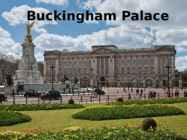
London important sights guide Roman period 20th century · Big Ben is the nickname for the great bell of the clock at the north end of the Palace of Westminster in London and is often extended to refer to the clock or the clock tower as well. It is the largest four-faced chiming clock and the third-tallest free-standing clock tower in the world. The clock first ticked on 31 May 1859. The pendulum is installed within an enclosed windproof box sunk beneath the clockroom. It is 3.9m long, weighs 300 kg and beats every 2 seconds. The clockwork mechanism in a room below weighs 5 tons. · Buckingham Palace is the official London residence of the British monarch. Originally known as, the building which forms the core of today's palace was a large townhouse built for the Duke of ...
Keskaegne London Grete Mark 11b klass Tartu Mart Reininku Gümnaasium Londoni kaart Londoni algus Paljude arvates on parim hetk alustada keskaegse Londoni ajalugu jõululaupäevast 1066, kui William "Vallutaja" krooniti kuningaks vastvalminud Westminster Abbey's. · William andis Londoni linna elanikele eraldi privileegid, kuid ehitas ka linna äärde lossi, et asju kontrolli all hoida. · See loss ja seda ümbritsev kompleks sai hiljem tuntuks kui Tower of London. Tower of London Loss käitus esmaülesandena kuninga residentsi ja valitsushoonena. Kuulsaks vanglaks sai see alles hiljem. ! Keskajal oli loss ka varasalv, mündivabrik ning majutas isegi linna loomaaia esimesi asukaid. Westminster Palace · 1097 William II alustas Westminster Hall-i ehitust, millest pidi saama uue Westminster Palace-i alus. · Viimane plaaniti aga peamiseks kuningate residen...
London London is almost 2,000 years old. Romans came to England in 43 AD. It was first called Londinium. In 1666 the Great Fire destroyed four fifths of the wooden buildings in the City including St Paul`s Cathedral. The fire began in the kitchen of the King`s baker Thomas Farriner in Pudding Lane and lasted for five days. London is the capital of England and the United Kingdom. By now London has swallowed up many of the small towns and villages that once surrounded it. London is on the same latitude as Warsaw. London is a city were more than 7 million inhabitants live. In London there are famous Telephone booths and taxis. Also there are red double- decker buses. The quick and easy way is use the underground trains. The cheapest is to buy a Travelcard. London hosted the 1908 and 1948 Summer Olympic Games and will host the 2012 Summer Olympic Games. ...
HOUSES OF PARLIAMENT Houses of Parliament also known as the Palace of Westminster is one of the most attractive buildings in London. It stands on the site where Edward the Confessor had the original palace built in the first half of the eleventh century . In 1547 the royal residence was moved to Whitehall Palace, but the Lords continued to meet at Westminster, while the commons met in St. Stephen's Chapel. Ever since these early times, the Palace of Westminster has been home to the English Parliament. In 1834 there was a huge fire that destroyed much of the old palace. All that remained was the chapel crypt, The Jewel Tower and Westminster Hall. It was Lord Melbourne, the Prime Minister, who saved the great hall by arranging for the fire engines to be brought right into the hall and personally supervising the fire fighting operation. The magnificent Gothic Revival masterpiece you see ...
LONDON HISTORY PERIOD EVENTS PEOPLE The Celtic period (400 BC Name: Celtic words (Llyn (a lake) + AD 43) Dun (a fort or strong place) ) Not important The Roman occupation (AD 43 Londinium not important Boadicea a revolt against - AD 410) politically. An important trading the Roman conquest centre. Devastation AD 61. Rebuilt. Roman walls built in AD 200. Anglo Saxons (AD 400 Destroyed the Roman towns. Many 1066) kingdoms. London in ruins. King Egbert one Flourishing. Attacks by Vikings. kingdom England (the 9th ...
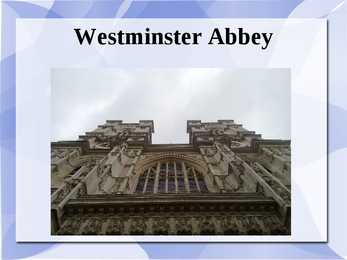
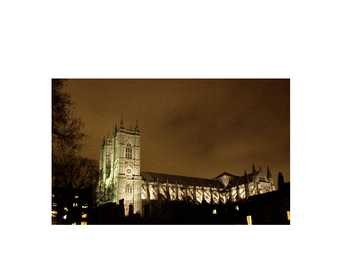
Westminster Abbey Westminster Abbey is a large, mainly Gothic church, in Westminster, London, England (UK). It's located just to the west of the Palace of Westminster. Westminster Abbey was built by Edward the Confessor and opened in 1065. It is one of the most important Gothic buildings in the country and in the world. In 1066, it saw its first coronation, that of William the Conqueror. Since then, nearly every king and queen has been coronated there. On 17 September 2010, Pope Benedict XVI became the first pope to set foot in Westminster Abbey. The Abbey has also been the church since 1066. Many of England's most illustrious statesmen, generals, politicians and artists have been buried there. It is also the final resting place of seventeen monarchs. Westminster School and Westminster Abbey Choir School are also in the precincts of the Abbey. The Westmins...
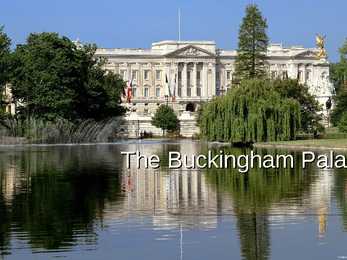
The Buckingham Palace Kätlin Lääne Nyo Science School 10c Meeli Lepisk 2013 Location London City of Westminster Between parks History Buckingham house Built in 1703 Duke of Buckingham - John Sheffield In 1761 George III The Queen's house Buckingham Palace ca 1710 History In 1820s George IV Palace In 1837 Queen Victoria Rebuilt in time Today Headquarters of the Monarchy Official events Receptions Open to visitors Interior 77,000 m2 of floorspace 775 rooms Lavishly furnished Paintings by Rembrandt, Rubens and Claude Sculptures by Canova and Chantrey Changing the Guard Traditional ceremony At Buckingham Palace Change of guard Guard Mounting Full-dress uniform of red tunics and bearskins At 11.30am Takes approximately 45 min...
England Map Click to edit Master text styles Second level Third level Fourth level Fifth level Places to visit in England: Trafalgar Square one of the most famous public arenas in the western world.(London) Click to edit Master text styles Second level Third level Fourth level Fifth level Big Ben-is the nickname for the great bell of the clock at the north end of the Palace of Westminster in London Click to edit Master text styles Second level Third level Fourth level Fifth level Westminister Abbey-large, mainly Gothic, church in ...
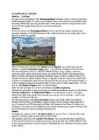
Buckingham Palace • Buckingham Palace is the official London residence and principal workplace of the British monarch. Located in the City of Westminster, the palace is a setting for state occasions and royal hospitality. Buckingham Palace: • was built in 1705 for Duke of Buckingham and is originally known as Buckingham House. • George III bought Buckingham House in 1761 for his wife Queen Charlotte to use as a comfortable family home close to St James's Palace, where many court functions were held. Buckingham House became known as The Queen's House. • During the 19th century it was enlarged, principally by architects John Nash and Edward Blore, forming three wings around a central courtyard. Before reconstruction Nowadays • Buckingham Palace has 775 rooms. These include 19 State rooms, 52 Royal and guest bedrooms, 188 staff bedrooms, 92 offices and 78 bathrooms. In measurements, the ...
Topic London Tallinn English College Tallinn 2007 1. Introduction London is the capital city of the United Kingdom and the largest urban area in England. The ancient City of London, to which the name originally belonged, still maintains its medieval boundaries, but the name "London" has long applied more to the whole metropolis that has grown up around it. London has been an important settlement for over two millenniums. It is also one of the world's leading business, financial and cultural centres and its influence in politics, education, entertainment and even fashion contribute to its status as a major global city. London is a major tourist attraction with four world heritage sites, several royal parks and numerous iconic landmarks such as the Houses of Parliament, Towe Bridge, the Tower of London, Westminster Abbey and the London Eye. 2. History Although there is some evidence of a permanent settle...
Contents Introduction...................................................3 London's early history.....................................45 The people of London......................................6 Buildings and bridges......................................7 Intruduction London is the capital of the united kingdom (UK), which is made up of Great Britain(England, Scotland, Wales) and Northern Ireland. The city lies in the southeast of England and covers an area of about 1,578 square kilometres on either side of the River Thames. With population of seven million, London is by far the largest city in the UK. Birmingham, the second largest, has just over one million inhabitants. Cultural life London is the worldclass centre. It has more than40 theatres, where audiences enjoy everything from musicals to William Shakespeare's plays. The city also ...
A weekend in London Made by .... 6.d klass We will stay at the fabulous 5 Star Athenaeum Hotel in Mayfair which is close to Green Park and Buckingham Palace. It's creative and friendly. There are the colossal Living Wall and the beautifully refurbished spa and gym downstairs. There are also floor to ceiling windows, flat screen TV and complimentary mini bar soft drinks and snacks. Saturday At first we will go visit Buckingham Palace which is the official London residence and principal workplace of the British monarch. We would also like to see the nearby park where are a lot of birds and squirrels. Then we would like to see the river Thames and the Big Ben. Just a short walk from the Thames is situated Westminster Abbey which is a significant building in British history. This beautiful gothic church is a UNESCO World Heritage. Kings, Queens, statesmen, aristocrats, poets, priests, heroes and villains are all part of the church's fas...
Põltsamaa Ühisgümnaasium LONDON REFERAAT Bruno Pähkel 7c klass 2010 CONTENT Introduction...............................................................................................lk3 London history...........................................................................................lk4 Today london.............................................................................................lk5 Big Ben.............................................
The Buckingham Pala Table of contents Introduction General information History Today Interior Visiting Conclusion References The end Introduction I chose the Buckingham Palace for my topic, because i have always been eager to know more about the house where the British Monarch lives in. The Buckingham Palace Located in the City of Westminster The official London residence of the Queen State occasions and royal entertaining Tourist attraction History Built in 1702 Originally called as the Buckingham House In 1761, King George III bought the house and the building became known as the Queen's House George IV, decided to double the size of the house and transform it into a palace History In 1837 Queen Victoria became the first monarch to use Buckingham Palace as their official residence Many parts of the house have been demolished and rebuilt in time ...
Westminster Abbey The Collegiate Church of St Peter Location In London, just to the west of the Palace of Westminster History · Benedictine monks tenth century · Coronation church since 1066 · The present church 1245 - 1745 Traditional burial and coronation site · 17 monarchs : o Henry III o Mary II o Edward the confessor · Famous people o Sir Isaac Newton o Charles Dickens o Charles Darwin o Rudyard Kipling THE END
How well do you know London? Form 10, February 2012 Welcome back to the tour of London! This is your second day (lesson) that you spend exploring the famous landmarks of the city. Again - follow the map so that you would not get lost and try to get streetwise in London. It is also wise to use Google Maps Street View simultaneously it gives you the wonderful feeling of strolling the streets and landmarks. Take the following questions with you, find answers to them and put them down for yourself in this MSWord document. Don't forget to "take" photos - you are supposed to recognise the landmarks later on! At the end of the tour send the worksheet to yourself so that you could use it again. Good luck with exploring the city! DAY 2. The route: Westminster Abbey The Houses of Parliament London Eye 10 Downing Street St Paul's Cathedral The Tower of London Tower Bridge Globe Theatre Greenwich Ob...
Questions and answers London Eye 1. When was London Eye first opened to the public?- It was first opened to the public on 9March 2000. 2. In example, what was it called before?- In example, it was called The Merlin Entertainments London Eye/ The British Airways London Eye. 3. Does it attracts people to visit or not? Why?- Yes it does, because it’s an entertaining and easy way to have a great view of London. Big Ben 1. How big anniversary it had on 31 May 2009?- It had 150th anniversary. 2. How many steps are there inside?- There are 334 steps inside. 3. After who was the bell inside called?- It was called in honour of Sir Benjamin Hall. Tower of London 1. What is the oldest tower?- The oldest tower is White tower. 2. How many years was it in use as a prison?- it was 852 years in use as a prison. 3. Who initiated the construction of the Tower?- William the Conqueror initiated the construction of the Tower. Hyde Park 1. ...
BUCKINGHAM PALACE Buckingham palace is the official residence of the British monarch. The Palace is located in the city of Westminster. It is a setting for state occasions and royal hospitality. It has been a rallying point for the British people at times of national rejoicing and crisis. The Buckingham palace is originally known as the Buckingham House. The building which forms the core of today's palace was a large townhouse. It was built for the Duke of Buckingham in 1703 on a site which had been in private ownership for at least 150 years. It was subsequently acquired by George the third in 1761 as a private residence for Queen Charlotte and known as The Queen's House. During the 19th century it was enlarged, principally by architects John Nash and Edward Blore, forming three wings around a central courtyard. Buckingham Palace finally became the official royal palace of the British monarch on the a...
How well do you know London? Form 10, Welcome to the tour of London! You will spend two days (lessons) exploring the famous landmarks of the city. While on the way, follow the map so that you would not get lost and so that you could eventually get streetwise in London. Take the following questions with you, find answers to them and put them down for yourself in this MSWord document. Don’t forget to “take” photos - you are supposed to recognise the landmarks later on! At the end of the tour send the worksheet to yourself so that you could use it again. Good luck with exploring the city! DAY 1. The route: The Buckingham Palace – Trafalgar Square – National Gallery – Piccadilly Circus – The British Museum – Madame Tussauds – Oxford Street – Hyde Park – Harrods Destination 1: The Buckingham Palace What is its function? - Buckingham Palace has served as the official London re...
London London is the capital of Great Britian. London is the second biggest city in europe after Moscow, second biggest portcity after Rotterdam and one of the most important financial and trading citys in the world. It also a biggest media capital in the world, such as BBC, CNN, ITN and so on. London was built by the romans, side of the river Thames about 2000 years ago. From the first to fith century the city was the center of the romans premises. In the dark ages the city was abandoned. London was recreated by Alfred The Great in the year 886. In the twelth century London became capital of England. From 17. 20. Century London was one of the worlds most important city. The city was havoced by the 1665- plague and 1666 the great fire. London is seperated to 33 boroughs. Londonds council has 25 seatings. The mayor of London is Ken Livingstone. The mayors main assignment is repre...
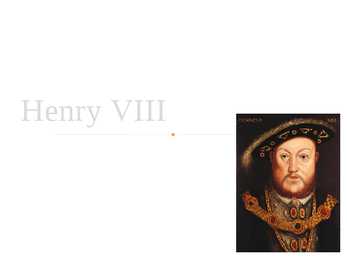
Henry VIII Katrin Repetskaja G1 Early life · Born at Greenwich Palace June 28, 1491. · The son of Henry VII and Elizabeth of York. · Third child, second son. · Six siblings, 3 survived. Reign Crowned on 23 June 1509 at Westminster Abbey. Reign lasted from 1509 until 1547. Fought wars against France and Scotland. Established the Church of England. United England and Wales under one system of government. Appearence Tall and thickset Blue-grey eyes Short auburn hair Beard Handsom in his youth, became bloated and fat Dressed lavishly: gold collar, many jewelled rings Hobbies Threw javelin Hunting Archery Jousting Tennis Spoke French, Latin, some Ita...
Landmarks of London Uku Gross ja Hans Richard Antsmäe Royal Opera House, London The royal opera house is major performing house in UK. It was opened in 1732. In 1734, the first ballet was presented. The next year, Handel's first season of operas began. It has have 2 disauster fires. The main auditorium seats 2,256. http://www.roh.org.uk/publications/la-boheme-2017-digital-programme http://www.roh.org.uk/visit Elizabeth tower It's also known as Big Ben. It was the largest clock for 23 years in UK. It's 96 metres tall. The tower is designed by Augustus Pugin in a neo-gothic style. Built in 1859, by the time the constructor said that it's the most accurate clock in the world. https://londonist.com/2016/08/secrets-of-big-ben Oxford street Major road in the City of Westminster in the West End of London. Europe's busiest shopping street. Million daily visitors. At least 300 shops. It has the lenght of 1,9 km. http...
London Topic Tallinn 2008 2 General information London is the capital of the United Kingdom. It covers the area of about 1000 square kilometres and its population is about 7 million. London is located on the river Thames. It is divided into 32 boroughs and the City. Currency used in London is British Pound. London is one of the most popular tourist destination in the world. It is also world's leading business, financial and cultural centre. Subway is commonly used to move around in London. Climate London has a temperate marine climate. It has daily high temperatures during summer. The warmest month is July. The coolest month is January. Winders are seldom below freezing. Rainfall is regular, but most often in the form of drizzle occurring throughout the year. Snow occurs sometimes in winter but rarely settles more than a few millimetres deep. History The origin of London may be dated around the beginning of the...
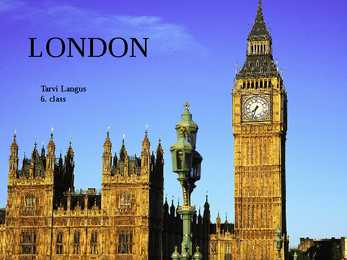
LONDON Tarvi Langus 6. class Contains The Big Ben The Tower of London Hyde Park The London Eye The Tower Bridge More pictures The Big Ben Big Ben is the nickname for the great bell of the clock of the Palace of Westminister in London The Palace of Westminster was destroyed by fire in 1834. The tower has appeared in many films. Muutke teksti laade Teine tase Kolmas tase Neljas tase Viies tase The Tower of London The Tower of London is historic castle on the north bank of the River Thames in central London. The Tower of London has played a prominent role in English history. The Tower has used: Zoo; Prison and now it is a museum. Muutke teksti laade Teine tase Kolmas tase Neljas tase Viies ta...
Names with and without the. A/ We do not use 'the' with names of most streets/roads/squares/parks etc.: Union Street (not 'the...') / Fifth Avenue/ Piccadilly Circus/ Hyde Park Blackrock Road/ Broadway/ Times Square/ Waterloo Bridge Many names (especially names of important buildings and institutions) are two words: Kennedy Airport/ Cambridge University The first word is usually the name of a person ('Kennedy') or a place ('Cambridge'). We do not usually use 'the' with names like these. Some more examples: Victoria Station (not 'the...') / Edinburgh Castle/ London Zoo/ Westminster Abbey/ Buckingham Palace/ Canterbury Cathedral But we say 'the White House', 'the Royal Palace', because 'white' and 'royal' are not names like 'Kennedy' and 'Cambridge'. This is only a general rule and there are exceptions. B/ Most other names (of places, buildings etc.) have names with the: These places usually have names w...
3 days in London Triin Sõro 12b JPG Cultural highlights The tower of London Click to edit Master text style Thames River Cruise Second level Third level Tower of london Fourth level Westminster Abbey Fifth level Windsor Castle Hampton Court Palace Churchill War Rooms Trafalguar square Hampton Court palace Victoria and Albert museum National Portrait Gallery Tower Bridge Exhibition Days out, activities and attractions Click to edit Master text style Second level Visit The London Eye ...
1. Ancient Britain: the Celtic tribes. 2000 years ago there was an Iron Age Celtic culture throughout the Br Isles. It seems that the Celts, who had been arriving from Europe from the 8th cent BC onward, intermingled with the peoples who were already there. The Celts were extremely talented people, creative and artistic. More than 1 Celtic tribe invaded Br. The descendants of ancient Celts live in Wales, Scotland, Cornwall and Ireland. They lived in primitive society. Druids priests, more powerful than chiefs. Acted like prophets. 2. Stonehenge From prehistoric period. Was built on Salisbury plain between 2500 and 1500 bc. One of the most famous and mysterious archaeological sites in the world. One of the mysteries is how it was built at all with the technology of the time. Another is its purpose. It appears to function as a kind on astronomical clock and we know it was used by the Druids for ceremonies marking the passing ...
ENGLAND The location of England Flag Royal Coat of Arms Facts Capital: London Official languages: English Recognised regional languages: Cornish Government: Constitutional monarchy Monarch: Queen Elizabeth II Prime Minister: Gordon Brown MP Facts Total area: 130,395 km2 Population: 51,092,000 Patron saint: St. George Facts The highest mountain: Scafell Pike 978 m Facts The longest river: River Thames 346 km long 2 famous Universities Cambridge University Oxford University Football teams There are many Liverpool Football footbull clubs in Club England. Most famous are: Chelsea Football Club Famous places Palace of Westminster Canterbury Cathedral The London Eye The Tower of Big Ben The End
London London is the UK's largest and most populous metropolitan area and the largest urban zone in the European Union by most measures. In July 2007 it had an official population of 7,556,900 within the boundaries of Greater London, making it the most populous municipality in the European Union. History: The first major settlement was founded by the Romans in 43 AD. Canute took control of the English throne in 1016, controlling the city and country until 1035, when his death resulted in a reversion to Saxon control under his pious stepson Edward the Confessor, who refounded Westminster Abbey and the adjacent Palace of Westminster. By this time, London had become the largest and most prosperous city in England, although the official seat of government was still at Winchester. In the 16th century William Shakespeare and his contemporaries lived in London at a time of hostility to the develop...
BRITISH POLITICS Helen Laine 12 A POLITICAL SYSTEM Democracy Constitutional monarchy Head of the state – Elizabeth II Actual power – Prime Minister Executive power - Her Majesty’s Government Legislative power – Parliament House of Commons and House of Lords Multi-party system MAIN PARTIES Two largest - the Conservative Party and the Labour Party Before labourers - The Liberal party Third largest – the Liberal Democrats Current: Conservative, Liberal Democrats ... Some other parties in UK: Democratic Unionist Party Scottish National Party Palace of Westminster UK Independence Party Green Party of England and Wales Scottish Green Party Social Democratic and Labour Party Alliance Party of Northern Ireland MAIN POLITICIANS Prime Minister: David Cameron (Conservative) Nick Clegg (head of L...
Edward the Confessor (1003-1066) Edward was the oldest son of Ethelred II (Ethelred the Unready http://en.wikipedia.org/wiki/Ethelred_the_Unready) and Emma of Normandy (http://en.wikipedia.org/wiki/Emma_of_Normandy). He wast he penultimate Anglo-Saxon king of England. The family was exiled in Normandy after the Danish invasion of 1013 so Edward spent the first part of his life in Normandy. He grew up in deep religious views and gained the nickname ''Confessor''. As Edward was seperated from his family and grew up in a strange land, it is said that his childhood wasn't a happy one. After Ethelred's death in 1016 the Danes again took control of England. The ...
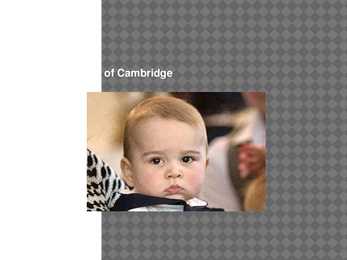
Prince George of Cambridge Prince George Birthname : George Alexander Louis Born 22 July 2013 Son of Prince William, Duke of Cambridge, and Catherine, Duchess of Cambridge. Grandchild of Charles, prince of Wales, and Diana, Princess of Wales. Greatgrandchild of Queen Elizabeth II third in line to succeed. Parents William Arthur Philip Louis born 21 June 1982 Catherine Elizabeth "Kate"; née Middleton born 9 January 1982 In 2001, Middleton met Prince William while they were students at the university. The couple began dating as early as 2002, although their relationship remained unconfirmed. Prince William and Catherine Middleton became engaged in October 2010, in Kenya. The couple married in Westminster Abbey on 29 April 2011 Announcment 3 December 2012, St James's Palace announced that the Duchess of Cambridge was expecting her first child. Before the birth there was speculation that it would boost the national ec...
LONDON London is the capital of England and the United Kingdom, the largest metropolitan area in the United Kingdom. London's population is about 7,518,000. Click to edit Master text styles Second level Third level Fourth level Fifth level Sightseeing Madame Tussaud Wax Figures museum Westminster Abby Big Ben Buckingham Palace London Zoo Harrod's department store London Tower Bridge London Tower Bridge Tower Bridge is a combined bascule and suspension bridge in London, England, over the River Thames. It is close to the Tower of London, which gives it its name. It has become an iconic symbol of London. Harrod's department store Harrods is a high-end department store in...
LONDON The history of the town is very closely linked with the history of the country itself. The name probably comes from the celtic words Llyn, which means a lake, and Dun, which means a fort or a strong place. Although the site was not important during the Celtic period (400 BC 43 AD) During the Roman occupation Londinium, as it was called then, was not influential politically, but was, however an important crossing point for the romans over the river Thames. Londinium was at a very good place, so it soon became a trading centre. In AD 61 the city was devastated by Boudicca, who led a revolt againt the Roman conquest of Britain. The city was burned down and its inhabitants massacred. London was rapidly rebuilt, becoming the capital of the province Britannia. AD 122 Roman walls were built around it as a Around AD 400 the Anglo-Saxons invaded Britain. They destroyed the roman towns and formed many kingdoms that were hostile to one a...
London London is the capital of Great Britain. It is situated on the river Thames. The Thames is a river flowing through southern England and connecting London with the sea. The Thames has a length of 346 kilometres (215 miles). The first bridge was the tower bridge, built in the 12th century. The second bridge was built in the year 1750. .The river Thames divides London into the northern and the southern part. The port of London is one of the greatest trade centres in the world. The river Thames is certainly the most famous water body in London. London is also the seat of the government of Great Britain. It is one of the largest cities in the world with its population of about seven million. Before the great fire in 1666 there were many wooden houses and narrow crooked streets in the town but after the fire it became a well-planned city with wide streets, beautiful squares and parks. It star...
Sights in the UK Hardi anton Big Ben Location: London, Palace of Westminster. The tower was finished in 1858. Largest fourfaced chiming clock and the third highest clock tower in the world. Big Ben is a nickname, the clock towers official name is Elizabeth tower. The clock chimes every 15 minutes and can be heard for a radius up to 5 miles. Stonehenge Location: southern England. Built 2000BC to 3000BC. Archaeologists think it was an ancient place of burial. Stonehenge had about 1 million visitors in 2012. It was added to the UNESCO's list of world heritage in 1986. Giant's Causeway Location: Northern Ireland. It developed 50 to 60 million years ago due to intense volcanic activity. It's the fourth greatest natural wonder in the UK. Most of the rocks are hexagonal, but some have four, five, seven or eight corners. The tallest are 12 metres tall. Snowdonia national park Location: north Wales. The highest...
Artikkel Artikkel puudub Määrav artikkel Isikunimed: Perekonnanimed mitmuses: Veiko the Tamms Tom Smith the Talvistes Riiginimed, kontinendid: Riigi või piirkonna nimed, mis on mitmuses Estonia või kus on täiendina pärisnimi, kingdom, France state või republic: Asia the United Kingdom = the UK Europe the United States of America = the USA = the US the Republic of Estonia the Estonian Republic the United Arab Emirates ...
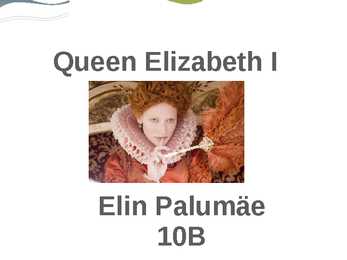
Queen Elizabeth I Elin Palumäe 10B Elizabeth I Reign - 17 Nov. 1558 24 March 1603 (44 years) Coronation - 15 January 1559(25 years) Predecessor - Mary I Successor - James I House - House of Tudor Father - Henry VIII Mother - Anne Boleyn Born - 7 September 1533 Greenwich, England Died - 24 March 1603 (aged 69) Burial - Westminster Abbey Anne Boleyn Queen consort of England Mother of Elizabeth I Tenure - 28 May 1533 17 May 1536 Coronation 1 June 1533 Anne Boleyn was Queen of England from 1533 to 1536 as the second wife of Henry VIII of England and the 1st Marquess of Pembroke in her own right for herself and her descendants. House - House of Tudor Father - Thomas Boleyn, 1st Earl of Wiltshire Mother - Lady Elizabeth Howard Born c.1501/1507 Blickling Hall/ Hever Castle, England Died 19 May 1536 (aged 29-35)Tower of London Religion - Anglican, formerly Roman Catholic King of England Henry VIII Reign - 21 April 1509 ...
Liis Toomsalu QUESTIONS part 2 1: How many people died in the Great Fire of 1666? The death toll from the fire is unknown and is traditionally thought to have been small, as only a few verified deaths were recorded. This reasoning has recently been challenged on the grounds that the deaths of poor and middle-class people were not recorded anywhere, and that the heat of the fire may have cremated many victims, leaving no recognizable remains. 2: How was the fire finally mastered? The battle to quench the fire is considered to have been won by two factors: the strong east winds died down, and the Tower of London garrison used gunpowder to create effective firebreaks to halt further spread eastward. 3: Wh...
The West End Trafalgar Square is called the heart of London because it connects the political area of Westminster to the rest of West London. Lord Nelson's column stands in the center of the beautiful square. Horatio Nelson was a great British commander who defeated Napoleon in the Battle of Trafalgar but unfortunately he himself was killed. To the north and west from the Trafalgar Square is the West End, which is London's main shopping and entertainment area. Most of London's best residential and commercial areas are in the West End. You can find there expensive shops, restaurants, hotels, museums and many art galleries. Great Britain's biggest department store is in Knightsbridge. It was founded in 1834 by Charles Henry Harrod. Harrods is also the world's first building with an escalator. Today Harrods is an amazing place with over 330 shops, which includes twenty-six fine eating places, where you can go eat...
 annaabi.ee