Leidsid 33 sarnast õppematerjali, mis on seotud failiga "Merde Actually". Need materjalid aitavad sul teemat sügavamalt mõista.
florence, there, other, come, novel, french, thing, real, merde, paris, france, stephen, clarke, first, still, really, father, relationship, during, therefore, message, west, going, holiday, finally, manage, gets, complicated, since, part, living, cultural, keep, series, himself, lives, character, previous, stay, known, quite, done, anyway, motherKonstantin Dmitrievich Levin ("Kostya") arrives in Moscow with the aim of proposing to Dolly's youngest sister Princess Ekaterina Alexandrovna Shcherbatskaya, "Kitty". Levin is a passionate, restless but shy aristocratic landowner who, unlike his Moscow friends, chooses to live in the country on his large estate. He discovers that Kitty is also being pursued by Count Alexei Kirillovich Vronsky, an army officer. At the railway station to meet Anna, Stiva bumps into Vronsky. Vronsky is there to meet his mother. It surmises that Anna and the Countess Vronskaya have travelled together in the same carriage and talked together. As the family members are reunited, and Vronsky sees Anna for the first time, a railway worker accidentally falls in front of a train and is killed. Anna interprets this as an "evil omen." Vronsky is infatuated with Anna. Anna, who is uneasy about leaving her young son, Seryozha, alone for
Ameerika Kirjandus 30.01.13 Naturalism · France, Emile Zola · Put down his theory in 1879: Le Roman Experimental, attempt to explain the development of human society throuch biological laws · Outlook is deterministic, pessimistic, fatalistic (fate or biology) · Man as an animal-clever than other beasts, still explainable within the framework · Man is not a free agent, is govern by something · Unable to determine his own faith · Hereditary · Naturalists tried to apply in fiction the processes of natural sciences · Writers task is to record facts, systems of behaviour, living conditions, never revealing any natural unbiased (completely natural) · Point of view: amoral-outside the category of morality, neither good or bad
All Quiet on the Western Front Erich Maria Remarque Character List Paul Bäumer - A young German soldier fighting in the trenches during World War I. Paul is the protagonist and narrator of the novel. He is, at heart, a kind, compas-sionate, and sensitive young man, but the brutal expe-rience of warfare teaches him to detach himself from his feelings. His account of the war is a bitter invective against sentimental, romantic ideals of warfare. Read an in-depth analysis of Paul Bäumer. Stanislaus Katczinsky - A soldier belonging to Paul's company and Paul's best friend in the army. Kat, as he is known, is forty years old at the beginning of the novel and has a family at home
and "Speaker" series. He has also announced his plan to write two more novels: Shadows in Flight, a book that connects the "Shadow" series and "Speaker" series together, and Ender in Exile, a book that takes place after Ender's game and before Speaker for the Dead. Furthermore, Card recently announced that Ender's Game will soon be made into a movie. Though Card is best-known for "Ender's Game", he has also written in a variety of other genres, including plays, short stories, books on writing, the Homecoming series, other science fiction books, and nonfiction, such as articles on computer technology. Orson Scott Card in 2008 and when he was younger. The Setting The novel starts off on Earth, with scenes at the school and the Wiggin home. Little attention is given to the details of this setting, not even the name of the city, and so it comes across as a standard American neighborhood.
Dracula Bram Stoker An Irish novellist Bram Stoker’s Gothic horror novel ‘’Dracula’’ was first published in 1897. The story is about vampire that tries to find new blood for himself and the hunt for him. Also you can find a little romance in the book. It takes place in Transylvania, Romania and in England. The novel is written in diary-form and several characters are telling their story by keeping a journal. Entries are written in six months by four persons. In the novel there are nine main characters: Jonathan Harker, whose writings are seen first; Count Dracula, of whom all the story is about, but he does not keep a diary; Wilhelmina ‘’Mina’’ Harker, early Murray, wife of Jonathan Harker; Lucy Westerna, a friend of
poet whose works I read. I think that his poems are interesting. They reveal much about Larkin's life and about the social issues in the 20th century. Larkin is also considered to be one of the greatest English poets in the 20th century. I think that Larkin was quite interested in politics. For example his poem ´´Talking in Bed´´ begins with the lines /Talking in bed ought to be easiest, Lying together there goes back so far/. At first it gives the reader an idea that he is talking about two lovers, but actually he is talking about England and USA. He describes the darkness that is creeping up. In my opinion he is talking about USA, which is beginning to creep up on England or on Europe. And because of that England is becoming a less dominant and more isolated place. He is saying that intimacy is dying and that may represent the globalization. Another political poem I
The making of a new nation. The Enlightenment in America. The emergence of the notion of the American Dream. The great Enlighteners: Crèvecoeur, Jefferson, Paine, Franklin. The American Enlightenment is the intellectual thriving period in the United States in the midtolate 18th century (17151789), especially as it relates to American Revolution on the one hand and the European Enlightenment on the other. Influenced by the scientific revolution of the 17th century and the humanist period during the Renaissance, the Enlightenment took scientific reasoning and applied it to human nature, society, and religion. American Enlightenment a gradual but powerful awakening that established the ideals of democracy, liberty, and religious tolerance in the people of America.
seem tragically absurd. As a Jew and a nonveteran, Cohn is a convenient target for the cruel and petty antagonism of Jake and his friends. Read an in-depth analysis of Robert Cohn. Bill Gorton - Like Jake, a heavy-drinking war veteran, though not an expatriate. Bill uses humor to deal with the emotional and psychological fallout of World War I. He and Jake, as American veterans, share a strong bond, and their friendship is one of the few genuine emotional connections in the novel. However, Bill is not immune to the petty cruelty that characterizes Jake and Jake's circle of friends. Mike Campbell - A constantly drunk, bankrupt Scottish war veteran. Mike has a terrible temper, which most often manifests itself during his extremely frequent bouts of drunkenness. He has a great deal of trouble coping with Brett's sexual promiscuity, which provokes outbreaks of self-pity and anger in him, and seems insecure about her infidelity as well as his lack of money.
of scale or pace or pattern that it introduces into human affairs. The railway did not introduce movement or transportation or wheel or road into human society, but it accelerated and enlarged the scale of previous human functions, creating totally new kinds of cities and new kinds of work and leisure. This happened whether the railway functioned in a tropical or a northern environment, and is quite independent of the freight or content of the railway medium. The airplane, on the other hand, by accelerating the rate of transportation, tends to dissolve the railway form of city, politics, and association, quite independently of what the airplane is used for. Let us return to the electric light. Whether the light is being used for brain surgery or night baseball is a matter of indifference. It could be argued that these activities are in some way the "content" of the electric light, since they could not exist without the electric light. This fact
Chapter 21 Chapter 42 Chapter 1 It is a truth universally acknowledged, that a single man in possession of a good fortune, must be in want of a wife. However little known the feelings or views of such a man may be on his first entering a neighbourhood, this truth is so well fixed in the minds of the surrounding families, that he is considered the rightful property of some one or other of their daughters. "My dear Mr. Bennet," said his lady to him one day, "have you heard that Netherfield Park is let at last?" Mr. Bennet replied that he had not. "But it is," returned she; "for Mrs. Long has just been here, and she told me all about it." Mr. Bennet made no answer. "Do you not want to know who has taken it?" cried his wife impatiently. "You want to tell me, and I have no objection to hearing it." This was invitation enough. "Why, my dear, you must know, Mrs
Prior to this momentous event that heralds an evolutionary transformation in the life of plants, the planet had already been covered in vegetation for millions of years. The first flower probably did not survive for long, and flowers must have remained rare and isolated phenomena, since conditions were most likely not yet favorable for a widespread flowering to occur. One day, however, a critical threshold was reached, and suddenly there would have been an explosion of color and scent all over the planet – if a perceiving consciousness had been there to witness it. Much later, those delicate and fragrant beings we call flowers would come to play an essential part in the evolution of consciousness of another species. Humans would increasingly be drawn to and fascinated by them. As the consciousness of human beings developed, flowers were most likely the
histories give it but passing mention. Churchill's great history of World War II has been cleaned of every single reference to Allied communications intelligence except one (and that based on the American Pearl Harbor investigation), although Britain thought it vital enough to assign 30,000 people to the work. The intelligence history of World War II has never been written. All this gives a distorted view of why things happened. Furthermore, cryptology itself can benefit, like other spheres of human endeavor, from knowing its major trends, its great men, its errors made and lessons learned. I have tried in this book to write a serious history of cryptology. It is primarily a report to the public on the important role that cryptology has played, but it may also orient cryptology with regard to its past and alert historians to the sub rosa influence of cryptanalysis. The book seeks to cover the entire history of cryptology
I suppose. Our facial features are pretty similar same eyes, same-shaped 14 borrowed forehead. I've seen photos of her when 1E Phrasal verbs page 8 5 (possible answers) she was my age and apart from the 1 1 go ahead 5 come to eighties hairstyle we're the spitting 1 Well, you will go to bed late every night. 2 fall through 6 bring about image of each other! Some people 2 Well, you will refuse to wear a 3 tip off 7 go down with say that they can see a strong family
juhatama 33. Struggle violently, with futility ägedalt, ent ilmaasjatult rabelema 34. Let loose with a guttural snarl lasi lahti samal ajal kurguhäälselt (guturaalselt!) urisedes 35. Conjure up välja manama 36. Dress down for class tunniks mugavalt? riietuma (vastand dress up pidulikult riietuma) 37. Folded herself sinuously onto the floor kõverdas (voltis) end põrandal looklevasse asendisse 38. Come to the end of his gloat ta lakkas tundmast kahjurõõmu 39. Bravado was wearing off trots hakkas hajuma 40. Off limits sisenemine keelatud 41. Slouch off eemale lonkima, löntsima 42. Tumult that my mind shied away from lärm, millest mu mõistus püüdis eemale tõmbuda 43. Keep up his string of complaints jätkas oma kaebuste rodu 44. Groan in unison ühiselt, ühehäälselt oigama A bunch of opinions about ''Twilight''.
presents and expresses his ideas. 1.CHAPTER I 1.1. LARKIN STUDIES POINTS OF VIEW: BIOGRAPHY AND POETRY In the collection of essays edited by Stephen Regan (Philip Larkin, 1997) we can find some underlying question as: are we discussing the poem or the poet? Or, in Larkin’s terms: are we more deceived or less deceived by the metonymy of the phrase “we are reading Larkin”? The main purpose of the volume may be discussing and assessing Larkin’s poetry, but there are at least as many references to his letters (mainly published in SL) and to his life as to the poems themselves. If we think that Larkin is known as a legend we shouldn’t be surprised about the importance his life takes as a part of his work. His work, balancing on the borderline between “Life” and “Art”, will probably always is interesting not only for critics, but also for a wider reading public.
"koška" instead of "kot", "medvešonok" instead of "medved", "saichik" etc. Did not make much sense and we mostly played some games in Russian (Tare-tareke etc). Learned as much playing outside, since we had Estonian-Russian kids around as well. Not that we played with them. It's sad to say but it was not a nice time to be a Russian kid. We were mean to them, and we did not even know why. I think that's the only time I've ever been part of bullying someone, but there was this kid everybody called Vene-Russ and we spent a lot of time playing mean tricks on him. Well, there's that. And I also learned a lot of Russian from my mother's lover who was a Russian military officer and pretty much my father figure at the time. I tried to teach him Estonian and learned some Russian instead. My Russian studies in school have always been very hectic and making very little sense. Teachers kept changing all the time, teaching methods kept changing as well and learning
for a particular purpose. No warranty may be created or extended by sales representatives or written sales materials. The advice and strategies contained herein may not be suitable for your situation. The publisher is not engaged in rendering professional sevices, and you should consult with a professional where appropriate. Neither the publisher nor author shall be liable for any loss of profit or any other commercial damages, including but not limited to special, incidental, consequential, or other damages. For general information on our other products and services, please contact our Customer Care Department within the United States at (800) 762-2974, outside the United States at (317) 572-3993 or fax (317) 572-4002. Wiley also publishes its books in a variety of electronic formats. Some content that
BOOK REPORT Title of the book: Fight Club Author (name and some general information): Chuck Palahniuk is an American novelist born February 21, 1962 in Washington, USA. He is best known as the author for the novel Fight Club (1996), which was made into a movie in 1999. Palahniuk began writing fiction in his mid-thirties. When he attempted to publish his novel, Invisible Monsters, publishers rejected it for its disturbing content. This led him to work on Fight Club which he wrote as an attempt to disturb the publisher even more for rejecting him. After initially publishing it as a short story in the 1995 compilation, Pursuit of Happiness, Palahniuk expanded it into a full novel, which --contrary to his expectations--the publisher was willing to publish. Some other well-known novels: Rant, Choke, Diary. Analysis of the book 1. Setting
BOOK REPORT Title & author of the book: 'Anita and Me' by Meera Syal The setting of the book? The story resolves around Meena Syal, the daughter of the only Punjabi family in the Midlands' mining village of Tollington. The novel provides a vision of British childhood in the 1960s, a childhood caught between two cultures, each on the brink of enormous change. Meena is desperate to fit in with the other children in her neighbourhood while forever feeling like an outsider because she is "different". Eventhough the Punjabi family is well respected by the locals, there are still sutations when they have to deal with racism. Plot summary (NB! Use the present tenses) Anita and Me by Meera Syal is the story of a young Punjabi girl growing up in the fictional English village of Tollington in the Midlands in the 1960s. The book follows Meena during her pre-teen years
The woman, without a word of who she was, died and left her new born boy, Oliver, to the drunken nurse that stood by. Chapter2: The State gave Oliver to Mrs. Mann who housed a number of orphaned children. Mrs. Mann took a large portion of the money given to her by the authorities for each child's food so Oliver grew up small and malnourished. On his ninth birthday, the town beadle, Mr. Bumble, came to collect Oliver and take him to the board for an interview. They told him he was to live with other wards of the state to become educated and learn a trade. Oliver did not mind this, but soon after he arrived, the state decided to implement a plan that would save money by feeding the people very little. After a time on this diet, the boys at the table chose Oliver to go ask the head cook for more gruel. Oliver did this, and was taken away. A flyer was then posted that said the state would give five pounds for someone to take young Oliver off their hands.
His modest background and upbringing are crucial to his development as a writer. Chekhov always felt that he missed out on childhood. It was a very hard lifeand it may have contributed to his poor health: he succumbed later on to the"family disease", tuberculosis, which led to his early death at the age of 44.His mother was a quiet, gentle soul who was full of stories of her early life. In later years, Chekhov would say that "we inherited our talent from our father,but mother gave us soul". The other great passion of his formative years was nature, the Russiancountryside. As a port, Taganrog was surrounded on all sides by the landscapes of the Steppe and Chekhov's earliest stories reveal how intensely aware he was of his bond with the Don Steppe. Chekhov had always claimed that medicine was his wife and literature his mistress. Chekhov had lived for much of his career as a writer under the shadow of the great literary colossus of the age, Lev Tolstoy.
her friend Judith and her horse Gulliver away from the road before the truck came. But after meeting Joe who is son of a local farmer she quietly becomes to get better and in time she is ready to try riding again. But will Grace be brave enough to ride Pilgrim again one day? Tom Brooker has to do some serious work with Pilgrim. He did not want to do it but he could not say no to Annie, that lovely lady with red hair and the most beautiful green eyes he had ever seen. And Annie had come so far to get help. Although in the end Pilgrim will let Tom near him but that is all. Anyone else can't touch him. So Tom has to try another way and that isn't very nice to see. Conflict in this book is between Grace and her horse. Will they ever to be able to trust each other? At first she is sure that she is never going to ride but after trying with other horses Grace thoughts that she is ready to ride Pilgrim. But that is not so easy
Introduction The great French Revolution has been regarded to as one of the most influential events in modern Western history, and therefore there are various interpretations to explain how the Revolution evolved and what it was like. It is important to focus on very different kinds of historical evidence and sources to get a clear picture of the Revolution. Therefore, one must not forget to look not only at the written sources but also at the more cultural and artistic interpretations. One of the best examples of cultural and political distribution of the
Character sketch Sal Paradise On the Road Jack Kerouac Sal Paradise is the narrator of the novel. He is an Italian American living in New Jersey with his aunt. Sal is a college student and writer who has for a long time wished to travel around America in order to get inspiration for his novels and finally gets around to it. It is also mentioned that Sal recently split up with his first wife and recovered from a serious illness. Sal and Dean. Before Sal met Dean he was quite reserved and shy, but later Sal becomes almost as outgoing as his new friend
I don't know what the word means. Look it up in a dictionary. 10 ____________________________________________________________________________________________ No, I don't like the Spice Girls. Marks: /10 Words, words, words 4 Complete these sentences using the correct form of the words below. There is one extra word which you do not need to use. aggressive nervous dull funny easy-going ambitious expensive usual experienced successful practical 1 She told a very ________________________ joke and everyone laughed. 2 She's a very ________________________ person. She will do anything to become famous. 3 They didn't give him the job because he was ________________________. He had never done anything like that before.
as books the way we understand the word today. Centuries went before paper replaced parchment and papyri. In the 15 th century Johann Gutenberg invented a mechanical process of duplicating texts, which we today call book printing. The first book was printed between 1444 and 1446, so these years can be considered as the beginning years of book printing. His most important preserved printings are the 40 copies of the Bible. By the end of the 15 th century there were about 1000 print-shops in Europe already. The oldest Estonian book dates back to 1535. Libraries form a vital part of education. They make available-through books, films, recordings and other media- knowledge that has been accumulated through the ages. People in all walks of life use libraries to get information for their work. Libraries also play an important role in preserving people's cultural heritage.
Moro" (A Moorish Captain) by Cinthio (Giovanni Battista Giraldi). It was first published in 1565. The main characters of the play are Othello, Desdemona, Cassio and Iago. The play in this book has 91 pages and this book is published in 1996 by Dover Publications. Characters: Major characters: Othello he is the play's protagonist and hero. He has risen to high military prestige in Venice, after defeating the Turks and other enemies in battle. He is well-liked and honored, despite his racial difference. He moves to Cyprus after becoming a general and he marries Desdemona. He falls victim to Iago's plan causing Othello to believe his wife has betrayed him with Cassio, becomes insanely jealous of their relationship and ultimately smothers his wife to death. After he realizes that Iago has tricked him and that Desdemona has always
loses its origin, the author enters his own death, writing begins. Nevertheless, the feeling about this phenomenon has been variable; in primitive societies, narrative is never undertaken by a person, but by a mediator, shaman or speaker, whose “perfor- mance” may be admired (that is, his mastery of the narrative code), but not his “ge- nius” The author is a modern figure, produced no doubt by our society insofar as, at the end of the middle ages, with English empiricism, French rationalism and the per- sonal faith of the Reformation, it discovered the prestige of the individual, or, to put it more nobly, of the “human person” Hence it is logical that with regard to literature it should be positivism, resume and the result of capitalist ideology, which has accorded the greatest importance to the author’s “person” The author still rules in manuals of literary history, in biographies of writers, in magazine interviews, and even in the
mostly everyone he speaks to. His son, Freddie, also appears a lot in the text. Freddie is a go-getter and is not afraid of almost anything barring old Lord Emsworth himself. Lord Emsworth tries to get him to leave Blandings Castle whenever possible. Another one of the main characters is the gardener Angus McAllister. He is a grumpy Scot, who cares very much about his gardens. He is very moody and at one point has Lord Emsworth under his paw. 1) The custody of the pumpkin: Main theme in there is the Pumpkin contest, which Lord Emsworth very much wants to win. Also, Freddie, who usually is not in the castle, is there and is flirting with McAllister's niece from America, without Lord Emsworth knowing it. Lord Emsworth would probably not allow that kind of relationship because due to his beliefs he wants Freddie to marry someone from his own class. At one point Lord Emsworth finds out about it
This edition published in the Taylor & Francis e-Library, 2008. "To purchase your own copy of this or any of Taylor & Francis or Routledge's collection of thousands of eBooks please go to www.eBookstore.tandf.co.uk." First edition © 2000 Taylor & Francis Group Second edition © 2008 Taylor & Francis Group All rights reserved. No part of this book may be reprinted or repro- duced or utilised in any form or by any electronic, mechanical, or other means, now known or hereafter invented, including photocopying and recording, or in any information storage or retrieval system, without permission in writing from the publishers. Trademark Notice: Product or corporate names may be trade- marks or registered trademarks, and are used only for identification and explanation without intent to infringe. Library of Congress Cataloging in Publication Data Lycan, William G. Philosophy of language: a contemporary introduction/William G. Lycan.
Harold McMillan articulated his now famous “winds of change” sweeping Africa. We had high hopes for Africa, for the Black race, that the insidious imposition of foreign rule on us, the looting of Africa’s natural resources by our colonial masters accorded us would be things of history. That is more than forty years ago. Unfortunately, the promise of independence has not been fulfilled. Today, Africa has become more desolate; there is more starvation, diseases and non-provision of essential services than when we got our independence. There are all kinds of wars in Africa than the rest of world put together. The majority of so-called Africans leaders want to stay in power until the day their bodies are put in the grave. Through buffoonery, utter mismanagement and downright stealing of the wealth of the masses, these leaders have so impoverished Africa that we are now nothing but a beggar continent. We beg for
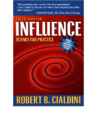
do it, enabled us to make significant changes. His work has enabled us to gain significant competitive differentiation and advantage" -LAURENCE HOF, Vice President, Relationship Consulting, Advanta Corporation "This will help executives make better decisions and use their influence wisely ... Robert Cialdini has had a greater impact on my thinking on this topic than any other scientist." -CHARLES T. MUNGER, Vice Chairman, Berkshire Hathaway, Inc. If you're wondering why of Latin America, the Far East, and Central Europe. you should buy this new edition of Influence: o More neuroscience evidence of how the influence process works is inte-
Character analysis Lord Emsworth: Quotes: 1) "Beach," said Lord Emsworth. "M'lord?" "I've been swindled. This dashed thing doesn't work." "Your lordship cannot see clearly?" "I can't see at all, dash it. It's all black." The butler was an observant man. "Perhaps if I were to remove the cap at the extremity of the instrument, m'lord, more satisfactory results might be obtained." "Eh? Cap? Is there a cap? So there is. Take it off, Beach." "Very good, m'lord." "Ah!" 2) "It's Aggie. My wife, you know." "Well?" "She's left me." "Left you!" "Absolutely flat." 3) "Why did you let him go? You must have known I would want to see him." "What good would that have done?" "I could at least have assured him of my sympathy," said Lady Constance stiffly. "Yes, I suppose you could," said Lord Emsworth, having considered the point. "Not that he
 annaabi.ee