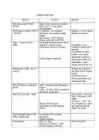
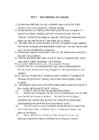
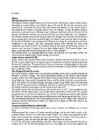
LONDON HISTORY PERIOD EVENTS PEOPLE The Celtic period (400 BC Name: Celtic words (Llyn (a lake) + AD 43) Dun (a fort or strong place) ) Not important The Roman occupation (AD 43 Londinium not important Boadicea a revolt against - AD 410) politically. An important trading the Roman conquest centre. Devastation AD 61. Rebuilt. Roman walls built in AD 200. Anglo Saxons (AD 400 Destroyed the Roman towns. Many 1066) kingdoms. London in ruins. King Egbert one Flourishing. Attacks by Vikings. kingdom England (the 9th ...
The history of London There were some people living on the banks of the Thames when the Romans came to England in 43 AD. The Romans built houses, a port and a bridge over the river and named the place Londinium. The bridge which was built by the Romans was later known as London Bridge and it was built in stone in 1176. It was London's only bridge until 1729. Now there are about twenty bridges crossing the river within London. London soon became the largest city in England and by the time of the Norman Conquest in 1066 it had become the most important city in Britain. It grew in area and population until September 1666, when the Great Fire destroyed four fifths of the wooden buildings in the City including ST Paul's Cathedral. The fire lasted for five days. By now London has swallowed up many of the small towns and villages that surrounded it. It is a city of seven million pepole covering 1,606 square mile...
1: When was London founded, and by whom? London, England was founded in A.D. 43 by the Romans 2: What was its original name? Londinium 3: What happened to London in 61 AD? 61 AD Boadicea, the queen of a tribe of Britons, led a rebellion against the Romans 4: What was the population of London in the second century AD? Around 60,000 5: What happened in 851 AD? 6: What did Alfred the Great do? He defended Anglo-Saxon England from Viking raids, formulated a code of laws, and fostered a rebirth of religious and scholarly activity. His reign exhibits military skill and innovation, sound governance and the ability to inspire men and plan for the future, piety and a practical commitment to the support of religion, personal scholarship and the promotion of education. 7: What did Ethelred do at London Bridge? King Ethelred burnt down the bridge to split apart the invading forces of the Dane Svein Haraldsson 8: Who controlled London from 101...
Westminster Abbey Facts The Collegiate Church of St Peter at Westminster Owned directly by the royal family Dedicated to St Peter Located next to the Houses of Parliament UNESCO World Heritage Site History 616, a shrine was founded 10451050, Edward the Confessor Consecrated on December 28, 1065 Romaneque style, to house Benetictine munks Rebuilt 12451517 in Gothic style by Henry III History 2 Henry VII Lady Chapel in 1503 Dissolution of the Monasteries in 1534 Attacked by Puritans in 1640s Oliver Cromwell's funeral in 1658 Western towers were built between 1722 and 1745 Coronations The coronations of King Harold and William the Conqueror in 1066 All English and British monarchs have been crowned there Except Edward V, Edward VIII and Lady Jane Gray King Edward's Chair since 1308 More about Abbey Poets' Corner Tomb of The Unknown Warrior Statue of Martin Luther King Chapter Hou...
Liis Toomsalu QUESTIONS part 2 1: How many people died in the Great Fire of 1666? The death toll from the fire is unknown and is traditionally thought to have been small, as only a few verified deaths were recorded. This reasoning has recently been challenged on the grounds that the deaths of poor and middle-class people were not recorded anywhere, and that the heat of the fire may have cremated many victims, leaving no recognizable remains. 2: How was the fire finally mastered? The battle to quench the fire is considered to have been won by two factors: the strong east winds died down, and the Tower of London garrison used gunpowder to create effective firebreaks to halt further spread eastward. 3: Wh...
TEST – The history of London 1) London was definitely not an important place during the Celtic period. It was just a mosquito-infested swamp. 2) London became a trading centre during the Roman occupation. It was an important crossing point for the Romans over the river Thames. Market forces began to operate. With troops stationed and ships calling, merchants will inevitably set up shops. 3) The Celtic warrior queen Boudicca and her tribesmen fought against the Roman conquest and devastated Londinium. The city was burned down and its inhabitants massacred. 4) London was rapidly rebuilt and in AD 122 the Roman walls were built around it as a defence. 5) The Romans left Britain early in the 5th century because they had to cope with troubles elsewhere in the Empire. 6) Around AD 400 the Germanic tribes invaded Britain. 7) London fell into ruins because the Anglo-Saxons destroyed the Roman towns and fo...
Isaac Newton School: Nyo Science School Class 10b Supervisor: Meeli Lepisk Author: Brita Lodi Sir Isaac Newton 16431727 · 25 December 1642(4 January 1643, New Style) , in England · Died 20 March 1727 (aged 84) Sir Isaac Newton 16431727 He is the greatest and most influential scientist who ever lived · Physicist · Mathematican · Astronomer · Natural philosopher · Alchemist · Theologian Early life · He was more interested in making mechanical devices than in studying. · Sundial · Educated at The King's School, Grantham. · In June 1661, he was admitted to Trinity College, Cambridge As a students, we know him because.. · He was the first person who invent the 3 laws of motion · Theory of gravitation · Newtonian fluid, nonNewtonian fluid · Newton's theory of color · He invented the early telescope in 1671 Newtons laws in latin ...
The City of London History The City of London occupies one square mile in the middle of the capital. It once made up the entire town of London, surrounded by the wall first built by the Romans. The Roman Londinium grew up on the northern side of the "London Bridge" in the past. Products such as olive oil, wines and fruit were brought by ships from different parts of the Roman Empire and unloaded onto wooden quays along the river. In AD 61 the native Celtic Iceni tribe, led by Queen Boudicca, rose up against The Romans. They burnt Londinium to the ground but Roman armies eventually defeated Boudicca. The city was rebuilt and was gradually surrounded with a wall of stone and brick which lasted for many centuries. During the archeological excavations in 1954 the Roman Temple of Mithras was revealed. It was a pagan temple dedicated to the Persian Sun-god. The Temple was later reconstructed only a short way...
The UK & London The United Kingdom (or the UK) is a short way of saying the United Kingdom of Great Britain and Norther Ireland. The UK is situated north-west of the European continent between the Atlantic Ocean and the North Sea. The UK consists of England, Wales, Scotland and Northern Ireland. Its highest point is Ben Nevis in Scotland followed by Snowdon in Wales. The Severn is the longest river in the United Kingdom. Other important rivers are the Trent, the Mersey, the Tyne, etc. Lough Neagh which lies in the centre of Northern Ireland is thr UK's largest freshwater lake. The climate in the UK is variable. The weather changes so frequently that it is difficult to forecast. It is not unusual for people to complain that the weathermen were wrong. Fortunately there is no extreme weather conditions, it is never very cold or very hot. The first inhabitants were Iberians and Celts who sett...
The Chiltern Hills Ursula 11. kl · The Chiltern Hills are known locally as just The Chilterns and are a chalk escarpment in the south-east of England, lying a few miles north-west of London. · They cover four counties and combine beautiful scenery with interesting history. · The Chilterns begin in Oxfordshire in the Thames Valley and stretch north-east through Buckinghamshire and Bedfordshire to Hitchin in Hertfordshire. They comprise of chalk hills covered with beautiful beech woods, wild flowers, and a variety of wildlife. History · In pre-Roman times, the Chiltern ridge provided a relatively safe and easily negotiable route across southern Iron Age England, thus the Icknield Way (one of England's ancient trackways) follows the line of the hills. · The name "Chiltern" comes from the Cilternsæte, a tribe that occupied the area in the early...
THE CITY OF LONDON History The City of London occupies one square mile in the middle of the capital. It once made up entire town of London, surrounded by the wall first built by Romans. The Romans also built a bridge over the Thames and there has been one in the same area ever since. The Roman Londinium grew up on the northern side of the bridge. In AD 61 the native Celtic tribe, led by Queen Boudicca, rose up against the Romans. They burnt down Londinium to the ground and killed most of its inhabitants. Roman armies eventually defeated Boudicca and Londinium was rebuilt. At the end of the fourth century AD the Roman Empire began to crumble and the Roman armies were recalled from Britain to defend Rome itself. Once they had left, tribes such as Angles, Saxons and Jutes invaded and settled in from Holland, Germany and Denmark. Together they are known as Anglo-Saxons. They were farming people who pr...
The Merlin Enterntaiments London Eye Table of contents Introduction 3 Information 4 History 5 Making The London Eye 7 Interesting Facts 9 Summary 11 References 12 Introduction I chose The Merlin Entertainments London Eye because it is the largest Ferris Wheel in Europe and it has become the most popular paid tourist attraction in the UK, visited by over three million people in one year. Information · Is known also as The Millennium Wheel. · It lies in the Western end of Jubilee Gardens, on the south Bank of the River Thames, in London. · It was constructed in 1998-1999. · Archidects: David Marks, Julia Barfield, Malcolm Cook, Mark Sparrowhawk, Steven Chilton, Nic Bailey. History · 1998 Construction started on The London Eye. · 1999 The London Eye was raised over th...
LONDON KRISTINA KASEMÄGI CONTENTS • GENERAL • HISTORY • CLIMATE • THINGS TO SEE • THINGS TO DO GENERAL o London is the capital city of England and the United Kingdom. o It’s situated in the South East of England with population of 14 million people. HISTORY oLondon is one of the oldest cities in the world, and it was founded by the Romans in 40 A.D. and called Londinium. CLIMATE • London has a temperate marine climate like much of the British Isles, so the city rarely sees extremely high or low temperatures. THINGS TO SEE o THE TOWER OF LONDON o THE LONDON EYE o TOWER BRIDGE o BIG BEN o THE HOUSES OF PARLIAMENT 1 o ST JAMES’S PARK THE TOWER OF LONDON THE LONDON EYE TOWER BRIDGE BIG BEN, THE HOUSE PARLIAMENT 1 AND FAMOUS RED DOUBLE DECKER BUS ST JAMES’S PARK THINGS TO DO IN LONDON You can: o Cross the Thames in a cable car o See a world-class classi...
A weekend in London Made by .... 6.d klass We will stay at the fabulous 5 Star Athenaeum Hotel in Mayfair which is close to Green Park and Buckingham Palace. It's creative and friendly. There are the colossal Living Wall and the beautifully refurbished spa and gym downstairs. There are also floor to ceiling windows, flat screen TV and complimentary mini bar soft drinks and snacks. Saturday At first we will go visit Buckingham Palace which is the official London residence and principal workplace of the British monarch. We would also like to see the nearby park where are a lot of birds and squirrels. Then we would like to see the river Thames and the Big Ben. Just a short walk from the Thames is situated Westminster Abbey which is a significant building in British history. This beautiful gothic church is a UNESCO World Heritage. Kings, Queens, statesmen, aristocrats, poets, priests, heroes and villains are all part of the church's fas...
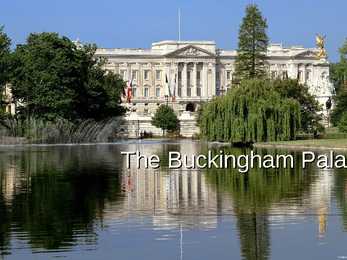
The Buckingham Pala Table of contents Introduction General information History Today Interior Visiting Conclusion References The end Introduction I chose the Buckingham Palace for my topic, because i have always been eager to know more about the house where the British Monarch lives in. The Buckingham Palace Located in the City of Westminster The official London residence of the Queen State occasions and royal entertaining Tourist attraction History Built in 1702 Originally called as the Buckingham House In 1761, King George III bought the house and the building became known as the Queen's House George IV, decided to double the size of the house and transform it into a palace History In 1837 Queen Victoria became the first monarch to use Buckingham Palace as their official residence Many parts of the house have been demolished and rebuilt in time ...
Wemley Stadium History Wembley The Twin Towers Wemley Stadium History Empire Stadium, the original stadium was built for the British Empire Exhibition of 1924. The stadium closed in October 2000 and was demolished in late 2002 for redevelopment. New Wemley broke ground in 2002. New Wembley opened in 2007. Wembley The T win T owers Location London, England Broke ground 1922 Opened 1923 Closed 2000 Demolished 2002 Surface Grass Construction cost £750,000 GBP (1924) Former names Empire Stadium, British Stadium Tenants England national football team Capacity 82,000 Olympic summer games stadium: London, 1944 • London, 1948 New Wemley Stadium Location London, England Broke ground 2002 Opened 2007 Owner The Football Association Operator Wembley National Stadium Limited Surface Grass Con...
Landmarks of London Uku Gross ja Hans Richard Antsmäe Royal Opera House, London The royal opera house is major performing house in UK. It was opened in 1732. In 1734, the first ballet was presented. The next year, Handel's first season of operas began. It has have 2 disauster fires. The main auditorium seats 2,256. http://www.roh.org.uk/publications/la-boheme-2017-digital-programme http://www.roh.org.uk/visit Elizabeth tower It's also known as Big Ben. It was the largest clock for 23 years in UK. It's 96 metres tall. The tower is designed by Augustus Pugin in a neo-gothic style. Built in 1859, by the time the constructor said that it's the most accurate clock in the world. https://londonist.com/2016/08/secrets-of-big-ben Oxford street Major road in the City of Westminster in the West End of London. Europe's busiest shopping street. Million daily visitors. At least 300 shops. It has the lenght of 1,9 km. http...
Buckingham Palace The history of the original building dates back to the early 1700's and finally became the official residence of the British monarch in 1837 after Queen Victoria came to the throne. George III bought Buckingham House in 1761 for his wife Queen Charlotte to use as a comfortable family home close to St James's Palace, where many court functions were held. Buckingham House became known as the Queen's House, and 14 of George III's 15 children were born there. Buckingham Palace is not only the home of the Queen and Prince Philip but also the London residence of the Duke of York (Prince Andrew) and the Earl and Countess of Wessex (Prince Edward and his wife) and their daughter. The 19 State Rooms at the palace are regularly used by the Royal family to entertain guests on their State, ceremonial and official visits to the United Kingdom. During August and September the Queen makes her yearly visit ...
Topic London Tallinn English College Tallinn 2007 1. Introduction London is the capital city of the United Kingdom and the largest urban area in England. The ancient City of London, to which the name originally belonged, still maintains its medieval boundaries, but the name "London" has long applied more to the whole metropolis that has grown up around it. London has been an important settlement for over two millenniums. It is also one of the world's leading business, financial and cultural centres and its influence in politics, education, entertainment and even fashion contribute to its status as a major global city. London is a major tourist attraction with four world heritage sites, several royal parks and numerous iconic landmarks such as the Houses of Parliament, Towe Bridge, the Tower of London, Westminster Abbey and the London Eye. 2. History Although there is some evidence of a permanent settle...
Jüri Gümnaasium THE GREAT PLAGUE IN LONDON Research paper Ervin Sagor 10.h Supervisor: Kristel Kriisa Jüri 2011 TABLE OF CONTENTS INTRODUCTION The history of England has always been fascinating for me and plague was one the most horrifying diseases in human history with millions of deaths across the world. That is why I chose the Great Plague as the topic of my research. The purpose of my study is to educate myself and gain more knowledge on the history and find out how people lived in England in the seventeenth century. For a start, I will give a short review what the bubonic plague is. Then I tell about Black Death in England before the Great Plague, city life before and during the plague. Secondly, I will examine how the plague reached Great Britain. ...
LONDON The history of the town is very closely linked with the history of the country itself. The name probably comes from the celtic words Llyn, which means a lake, and Dun, which means a fort or a strong place. Although the site was not important during the Celtic period (400 BC 43 AD) During the Roman occupation Londinium, as it was called then, was not influential politically, but was, however an important crossing point for the romans over the river Thames. Londinium was at a very good place, so it soon became a trading centre. In AD 61 the city was devastated by Boudicca, who led a revolt againt the Roman conquest of Britain. The city was burned down and its inhabitants massacred. London was rapidly rebuilt, becoming the capital of the province Britannia. AD 122 Roman walls were built around it as a Around AD 400 the Anglo-Saxons invaded Britain. They destroyed the roman towns and formed many kingdoms that were hostile to one a...
Põltsamaa Ühisgümnaasium LONDON REFERAAT Bruno Pähkel 7c klass 2010 CONTENT Introduction...............................................................................................lk3 London history...........................................................................................lk4 Today london.............................................................................................lk5 Big Ben.............................................
LONDON London is the capital of England and the United Kingdom, the largest metropolitan area in the United Kingdom, and the largest urban zone in the European Union. London is located on the River Thames. The capital of England has been a major settlement for two millennia, its history goes back to its founding by the Romans, who called it Londinium. Since at least the 19th century, the name London has also referred to the metropolis developed around this core. The registered population of London is 7,825,200. However, Estonian's native language is English, many people also speak Cornish. Although, the city operates a system of bus, tube and train and also boats routes to all parts of London and also England, it's still not enough. Along the River Thames are House of Parlament, Westminster and many other places. There are many enourmous parks, like Hyde Park, Royal Park, Kensington Gardens, Re...
London History The Romans AD 43- AD 410 The Romans finally invaded Britain in AD 43 from Kent. The Romans lead by Julius Caesar attempted to invade Britain twice before that in 55 and 54 BC but the invasions were unsuccessful. They made their way to the river Thames and sailed up it. The Romans knew it was important to control a crossing point at the river Thames, so they decided to build a settlement on the north bank. Although small settlements had been built on the banks of the Thames, the Romans were the ones who built the first city. They called their city Londinium. The Roman engineers noticed that the point where the swampy river narrowed would make an ideal crossing point, they built London Bridge. Less than 20 years later the native Iceni tribe, led by Queen Boudicca, rose up against the Romans in revenge for mistreatment and burnt Londinium to the ground. The well disciplined Roman army defeated her forces and Londinium was r...
National Gallery Kristine Davõdov Tallinna Lilleküla Gümnaasium Table of contents Introduction History The building Collection Conclusion References Introduction I chose this topic, because I'm interested in art. So, I hoped, that I'll find some interesting facts about it. Also National Gallery is very famous sight in London, and I've heard about it several times. History Established in 1824 John Julius Angerstein Angerstain's house at Pall Mall Building in Trafalgar Square - 1838 First director Charles Lock Eastlake The building William Wilkins architect New house in Trafalgar Square was opened in 1838. The place was chosen, because this is the crossroad of London. It has been altered several times - Sainsbury Wing Collection Over 2300 paintings Date from the 13th ...
THE LONDON EYE AND MADAME TUSSAUDS Getri Tomson, Marta Tolli Maris Selmet, Patrick Barbo THE LONDON EYE THE LONDON EYE HISTORY London Eye was opened in March 2000. Since 2000 The London Eye has become an iconic landmark and a symbol of modern Britain. Back in 2000, the London Eye was known as the Millennium Wheel. INTERESTING FACTS Passengers in the London Eye's capsules can see up to 40 kilometeres in all directions. The London Eye is the vision of David Marks and Julia Barfield, a husband and wife architect team. It took 7 years and the skills of hundreds of people from 5 countries to make The London Eye a reality. At 135m high, The London Eye is the world's tallest cantilevered observation wheel. Each of the 32 capsules weighs 10 tonnes THE LONDON EYE’S CAPSULES AWARDS The London Eye has won over 80 awards. The awards are won for national ...
VÕRDLEVA ÕIGUSTEADUSE ALUSED SEMINARID SEMINARIDE LÄBIMINE ON KOHUSTUSLIK EKSAMILE PÄÄSEMISE EELDUS 2013/2014 õa kevadsemester (Avatud ülikool) I SEMINAR 21. märts 2014 kl 8.30-10.00 1. Kontinentaal-Euroopa õiguse ajalooline kujunemine. a. Euroopa ülikoolide ühtne õigus ja ülikoolide töö eesmärgid. b. Rooma õiguse retseptsioon. c. Kodifikatsioonid. d. Loomuõiguskoolkond vs ajalooline koolkond. 2. Kontinentaal-Euroopa õiguse struktuur. a. Eesti õigusperekondliku kuuluvuse analüüs ajaloolises läbilõikes. 3. Kontinentaal-Euroopa õiguse süsteem. a. Eesti õiguse süsteemi diakrooniline käsitlus (seadusandluse ja kohtusüsteemi näitel) 4. Ius commune allikad: a. Õiguse allika mõiste. b. nende ajalooline kujunem...
London is the capital of both England and the United Kingdom, and the largest metropolitan area in the European Union. An important settlement for two millennia, London's history goes back to its founding by the Romans. Since its foundation, London has been part of many movements and phenomena throughout history, including the English Renaissance, the Industrial Revolution, and the Gothic Revival. The city's core, the ancient City of London, still retains its limited medieval boundaries; but since at least the 19th century, the name "London" has also referred to the whole metropolis that has developed around it. Today the bulk of this conurbation forms the London region of England and the Greater London administrative area, with its own elected mayor and assembly. London is one of the world's most important business, financial and cultural centres and its influence in politics, education, entertainment, media, fashion and the arts cont...
Contents Introduction...................................................3 London's early history.....................................45 The people of London......................................6 Buildings and bridges......................................7 Intruduction London is the capital of the united kingdom (UK), which is made up of Great Britain(England, Scotland, Wales) and Northern Ireland. The city lies in the southeast of England and covers an area of about 1,578 square kilometres on either side of the River Thames. With population of seven million, London is by far the largest city in the UK. Birmingham, the second largest, has just over one million inhabitants. Cultural life London is the worldclass centre. It has more than40 theatres, where audiences enjoy everything from musicals to William Shakespeare's plays. The city also ...
LONDON EYE The EDF Energy London Eye, also known as London Eye is a giant 135metre tall Ferris wheel situated on the banks of the River Thames in the British capital. Facts about london eye It is the tallest Ferris wheel in Europe. It is visited by over ~3.5 million people every year. The wheel carries 32 sealed and air conditioned ovoidal passenger capsules Each 10 tonne capsule holds 25 people. History The London Eye was formally opened by the then Prime Minister, Tony Blair, on 31 December 1999. It was opend to the public on 9. March 2000 after it's formal opening because of technical problems. On 5 June 2008 it was announced that 30 million people had ridden the London Eye since its opening. Critical reception Sir Richard Rogers, winner of the 2007 Pritzker Architecture Prize, wrote of the London Eye in a book about the project: "The Eye has done for London what the Eiffel Tower did for Paris, which is to give it...
London is the capital of both England and the United Kingdom, and the largest metropolitan area in the European Union. An important settlement for two millennia, London's history goes back to its founding by the Romans. Since its foundation, London has been part of many movements and phenomena throughout history, including the English Renaissance, the Industrial Revolution, and the Gothic Revival.The city's core, the ancient City of London, still retains its limited medieval boundaries; but since at least the 19th century, the name "London" has also referred to the whole metropolis that has developed around it. Today the bulk of this conurbation forms the London region of England and the Greater London administrative area, with its own elected mayor and assembly. London is one of the world's most important business, financial and cultural centres and its influence in politics, education, entertainment, media, fashion and the arts contri...
London Tube Tube The London Underground, or 'the Tube' as it is universally known to Londoners, is normally the quickest and easiest way of getting round London. London's Tube Network Greater London is served by 12 Tube lines, along with the Docklands Light Railway(DLR) and an interconnected local train network. Trains generally run between 5am and midnight, Monday to Saturday. Operating hours are reduced on Sunday. Exact details depend on the station and the line, so it's worth checking the Transport for London website. Cheaper by Oyster Oyster card prices are always cheaper than paper tickets for the Tube. The cash single fare for all journeys via Zone 1 is £4, up to £2.40 more than the Oyster fare. Something about history Railway construction in the United Kingdom began in the early 19th century...
London London is the capital of Great Britain. It is situated on the river Thames. The Thames is a river flowing through southern England and connecting London with the sea. The Thames has a length of 346 kilometres (215 miles). The first bridge was the tower bridge, built in the 12th century. The second bridge was built in the year 1750. .The river Thames divides London into the northern and the southern part. The port of London is one of the greatest trade centres in the world. The river Thames is certainly the most famous water body in London. London is also the seat of the government of Great Britain. It is one of the largest cities in the world with its population of about seven million. Before the great fire in 1666 there were many wooden houses and narrow crooked streets in the town but after the fire it became a well-planned city with wide streets, beautiful squares and parks. It star...
London London · London is the capital of the United Kingdom and the constituent country of England. London is one of the world's most important business, financial and cultural centers and its fluence in politic, education, entarainment, fashion and the arts contributes to its status as a major global city. London · Little bit about people who live in london. London currently has a wilde range of peoples, cultures and religions and over 300. languages are spoken in the city. · On July 2007, it had an offical population of 7 556 900 within the boundaries of greater london. History of London · The Blitz and other bombing by the German Luftwaffe during world war 2, killed over 30 000 Londoners and destroyed large areas of housing and other buildings across London. · In 1965 London's political confines were expanded to take into account the growth of the urb...
Tower Bridge is a combined bascule and suspension bridge in London, England, over the River Thames. It is close to the Tower of London, which gives it its name. It has become an iconic symbol of London. The bridge consists of two towers which are tied together at the upper level by means of two horizontal walkways which are designed to withstand the horizontal forces exerted by the suspended sections of the bridge on the landward sides of the towers. The vertical component of the forces in the suspended sections and the vertical reactions of the two walkways are carried by the two robust towers. The bascule pivots and operating machinery are housed in the base of each tower. The bridge's present colour dates from 1977 when it was painted red, white and blue for the Queen's Silver Jubilee. Originally it was painted a chocolate brown colour. The Tower Bridge in London remains one of the more popular tourist attractions in the city. In 1...
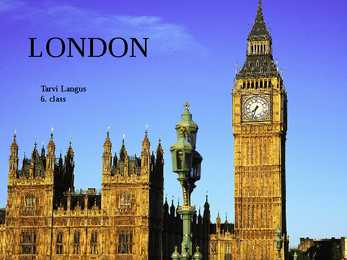
LONDON Tarvi Langus 6. class Contains The Big Ben The Tower of London Hyde Park The London Eye The Tower Bridge More pictures The Big Ben Big Ben is the nickname for the great bell of the clock of the Palace of Westminister in London The Palace of Westminster was destroyed by fire in 1834. The tower has appeared in many films. Muutke teksti laade Teine tase Kolmas tase Neljas tase Viies tase The Tower of London The Tower of London is historic castle on the north bank of the River Thames in central London. The Tower of London has played a prominent role in English history. The Tower has used: Zoo; Prison and now it is a museum. Muutke teksti laade Teine tase Kolmas tase Neljas tase Viies ta...
London London is the UK's largest and most populous metropolitan area and the largest urban zone in the European Union by most measures. In July 2007 it had an official population of 7,556,900 within the boundaries of Greater London, making it the most populous municipality in the European Union. History: The first major settlement was founded by the Romans in 43 AD. Canute took control of the English throne in 1016, controlling the city and country until 1035, when his death resulted in a reversion to Saxon control under his pious stepson Edward the Confessor, who refounded Westminster Abbey and the adjacent Palace of Westminster. By this time, London had become the largest and most prosperous city in England, although the official seat of government was still at Winchester. In the 16th century William Shakespeare and his contemporaries lived in London at a time of hostility to the develop...
No trip to London would be complete without a visit to the Tower of London. This famous historical site has been the living quarters of monarchs. It has been a site of imprisonment and execution of many traitors, clergymen, nobles and framed members of the royal court and was also an armory, treasury, zoo and mint. Today it houses the crown jewels and has a museum filled with armor, weapons and implements of torture. Another popular tourist sight is the London eye. Constructed by British Airways, it towers 135 meters above the banks of the Thames River. It is located near Big Ben and Westminster Abbey, on the opposite bank, adjacent to London's county hall. Views from the eye are spectacular and on a clear day most of London can be seen. If there's only one museum that can be seen, the British Museum is the one to visit. This museum has some of the largest collections on human culture and history. It is the home of the Rosetta Stone a...
Buckingham Palace By Eliise Sau · Buckingham palace is the London residence and administrative headquarters* of the reigning monarch of the United Kingdom. · The palace is often at the centre of state occasions and royal hospitality. · It has been a focal point for the British people at times of national rejoicing and mourning. Peakontor* Buckingham Palace History · Buckingham House was designed by William Winde and this facade* evolved into today´s Grand Entrance. · Goring House was possibly the first house erected within the site around 1624. · The Queen's House was intended as a private retreat for King George III`s wife, Queen Charlotte and 14 of their 15 cildren were born there. The Queen's House Goring house Fassaad* Home of the monarch · T...
Buckingham Palace About Buckingham Palace Buckingham Palace serves as both the office and London residence of Her Majesty The Queen. It is one of the few working royal palaces remaining in the world today. During the summer, visitors can tour the nineteen State Rooms, which form the heart of the Palace. These magnificent rooms are decorated with some of the greatest treasures from the Royal Collection, including paintings by Rembrandt, Rubens and Canaletto and sculpture by Canova. History Buckingham Palace history is going back to the time of Queen Victoria in 1837 . Then, the Palace has been serving as the London Royal residence. In 1703, the Duke of Buckingham had created the Buckingham House. In 1761, George III (1738 1820) buy it. However, in 1825, the House was reconstructed for George IVs order with the help of John Nash. Inside Buckingham Palace are 775 rooms, which include State rooms (19), guest rooms (52), offices ...
London important sights guide Roman period 20th century · Big Ben is the nickname for the great bell of the clock at the north end of the Palace of Westminster in London and is often extended to refer to the clock or the clock tower as well. It is the largest four-faced chiming clock and the third-tallest free-standing clock tower in the world. The clock first ticked on 31 May 1859. The pendulum is installed within an enclosed windproof box sunk beneath the clockroom. It is 3.9m long, weighs 300 kg and beats every 2 seconds. The clockwork mechanism in a room below weighs 5 tons. · Buckingham Palace is the official London residence of the British monarch. Originally known as, the building which forms the core of today's palace was a large townhouse built for the Duke of ...
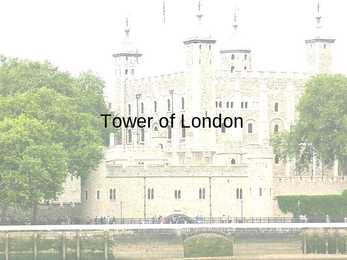
Tower of London Location The Tower of London is located at the eastern boundary of London, next to Tower Bridge on the northern bank of the Thames river. Description At the centre of the Tower of London stands the White Tower. The White Tower is defended by a massive curtain wall, which has thirteen towers. The first curtain wall is defended by a second massive curtain wall, which has five towers. The tower is manned by the Yeomen Warders (known as Beefeaters), who act as tour guides, provide security, and are a tourist attraction in their own right. Every evening, the warders participate in the Ceremony of the Keys as the Tower is secured for the night. History The Tower of London was founded in 1078 by William the Conqueror. In the 12th century, King Richard the Lionheart enclosed the White Tower with a ...
Mikk Hödemann 12.d klass English Parliament What can I say about the English history at all? I think that this is the most interesting history I had to study. During this subject (British civilization), I discovered some exciting facts, occasions which took place in the British history. One of these "discoveries" was the English Parliament. I was amazed how fast it grew within the centuries, from eleventh to seventeenth centuries. The political history of British Isles over the past 800 years has been largely one of reducing the power of the monarchy and transferring authority to a London-based Parliament as the sovereign legislative body for all of Britain. This development has resulted in political, social and religious conflicts, as well as evolving governmental and constitutional institutions. The early political history of the British Isles is the story of four independent cou...
Madame Tussauds museum About museum Madame Tussauds the family themselves pronounce it is a wax museum in London with branches in a number of major cities. It was founded by wax sculptor Marie Tussaud and was formerly known as "Madame Tussaud's"; the apostrophe is no longer used. Madame Tussauds is a major tourist attraction in London, displaying waxworks of historical and royal figures, film stars, sports stars and infamous murderers. Madame Tussauds is owned and operated by Merlin Entertainments. History Marie Tussaud was born as Marie Tussaud Grosholtz in 1761 in Strasbourg, France. Her mother worked as a housekeeper for Dr. Philippe Curtius in Bern, Switzerland, who was a physician skilled in wax modelling. Curtius taught Tussaud the art of wax modelling. Tussaud created her first wax figure, of Voltaire, in 1777ing. WAX FIGURES Russian President Putin Jack Sparrow ...
OXFORD STREET Facts Oxford Street is a major street in London, England in the City of Westminster. With over 300 shops, it is Europe's busiest shopping street. The street derives its name from being part of the old London--Oxford Road which began at Newgate, City of London. It's mile and a half long, from Marble Archat the north east corner of Hyde Park to theTottenham Court Road History Between the 12th century and 1782 it was variously known as Tyburn Road (it was named after the River Tyburn) Uxbridge Road, Worcester Road and Oxford Road. Note: Today the name Uxbridge Road still exists for the portion of the London--Oxford Road between In the late 18th century, many of the surrounding fields were purchased by the Earl of Oxford, and the area was developed. It became popular to entertainers and for entertainment buil...
Hyde Park Kärol Savenkov Lauka Basic School 6.class Hyde Park ● It forms one large green lung in the center of the city ● The park is contiguous with Kensington Gardens Hyde park is one of the largest park in Central London Facts ● Type: Public park ● Location: London, England ● Created: 1637 ● Operated by: The Royal Parks ● Status: Open year round Area ● Hyde park covers more than 360 acres(142 hectars) ● Hosts many large events, including celebrations and concerts ● It is also popular place for jogging , swimming, rowing, picnicking and even horse riding History ● 1536, King Henry VIII confiscated Hyde Park from the monks of Westminster Abbey ● It was used primarily for hunting ● King Charles I opened the park to the public in 16...
Great Britain Great Britain is an island situated to the north-west of Continental Europe. It is the ninth largest island in the world, the largest European island and the largest of the British Isles. With a population of about 60.0 million people in mid-2009, it is the third most populous island in the world, after Java and Honsh. Great Britain is surrounded by over 1,000 smaller islands and islets. The island of Ireland lies to its west. The capital of England is London and its official language is English. The island was first inhabited by people who crossed over the land bridge from the European mainland. Traces of early humans have been found from about 500,000 years ago. Until about 10,000 years ago, Great Britain was joined to Ireland. When visiting the capital London a tourist should go sightseeing around the city. There are lots of attractions to look out. For example the famous Big Ben is...
The Tower in the Middle Ages The Tower of London, that formidable symbol of England's national heritage, served as a royal residence as well as a prison in the medieval period. The monarch traditionally spent the night at the Tower prior to his or her coronation ceremony at Westminster Abbey. It has been the stage on which much of England's dramatic but often sad and bloody saga of royal history has been played out. The founding of the Tower The Tower of London was founded by King William the Conqueror. After his coronation on Christmas Day, 1066, William hastily ordered the erection of a wooden fortress between the Thames and the ancient Roman wall which then surrounded London. William began the building of what is now termed as the White Tower ten years later. A rectangular stone keep of Caen stone, designed as an impregnable fortress and as an impressive and awesome demonstration of his power to the Londoners. With ramparts which wer...
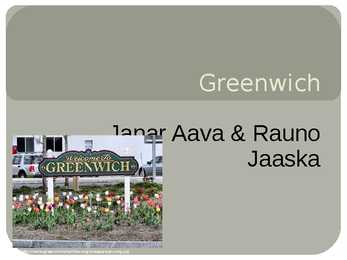
Greenwich Janar Aava & Rauno Jaaska http://www.greenwichchamber.org/images/sign-img.jpg About Greenwich Borough of London The birthplace of Henry VIII and Elizabeth I An UNESCO world Heritage Site http://upload.wikimedia.org/wikipedia/commons/thumb/d/dd/Greenwich_Park_Vista.jpg/1800px-Greenwich_Park_Vista.jpg Means the green place on the bay Situated on the river Thames 20 minutes from Central London Notable for: Ø Maritime history Ø Giving name to Greenwich Meridian (0° longitude) and Greenwich Mean Time Greenwich Mean Time Established in 1884 at the International Meridian Conference Estonian time is GMT+3 (outside of summer it's +2) Some landmarks Greenwich Park The ...
London - The City and Beyond The statue of a bronze dragon on Fleet Street is the entrance to the City of London. This is where the Romans founded Londinium almost two thousand years ago. The City covers about 2,6 square km (1 square mile) and is often called the Square Mile. Today, the City of London is one of the world's most important business and financial centres, with over 500 banks. Over 400 000 people work within the Square Mile during weekdays and it is a crowded and noisy place. The Barbican Centre is a very big complex of buildings, towers, garages and walkways. It was built in the 70s and most Londoners don't like the way it looks. It is the largest performing arts centre in Europe and home to two symphony orchestras, and art gallery and the amazing Museum of London. Fleet Street once was a road between the City and Westminster. Then it became the centre of publishing and newspaper business for centuries. The Dail...
 annaabi.ee