Leidsid 33 sarnast õppematerjali, mis on seotud failiga "Jane Eyre raamatu kokkuvõte Charlotte Brontë lühikirjeldus kirjandus". Need materjalid aitavad sul teemat sügavamalt mõista.
jane, rochester, named, thornfield, bertha, mason, reed, uncle, find, finds, years, wife, live, cousin, fire, grace, keep, cause, eyre, cruel, aunt, bessie, room, while, herself, provide, helen, takes, student, manor, whom, night, claims, woman, blanche, wedding, voice, married, back, real, moor, mary, rivers, friends, decides, travel, marry, lost, sightJane Eyre I decided to read the book Jane Eyre. Jane Eyre was an orphan who lived with Mrs. Reed, her cruel, wealthy aunt. Only a servant named Bessie was gind to Jane, who told her stories and sang songs to her. One day, Jane’s cousin John Reed bullied Jane and Jane got mad. They were caught fighting and Jane aunt, imprisoned Jane into the red room, were Jane’s uncle had died. Jane was really scared of that room because, she believed that her uncle’s ghost was still in there. In the room Jane was screaming and so scared that she fainted. When she waked up, Mrs. Reed decided to send Jane to the Lowood School, Jane was also happy to leave. When Jane arrived to the school she found out that her life was better in her aunt house than in that school. The school’s headmaster was Mr. Brocklehurst, a cruel, hypocritical, and abusive man, who treated the students really bad
Plot introduction Jane Eyre is a first-person narrative of the title character. The novel goes through five distinct stages: Jane's childhood at Gateshead, where she is emotionally abused by her aunt and cousins; her education at Lowood School, where she acquires friends and role models but also suffers privations; her time as the governess of Thornfield Manor, where she falls in love with her Byronic employer, Edward Rochester; her time with the Rivers family at Marsh's End (or Moor House) and Morton, where her cold clergyman-cousin St John Rivers proposes to her; and her reunion with and marriage to her beloved Rochester. Partly autobiographical, the novel abounds with social criticism. It is a novel considered ahead of its time. In spite of the dark, brooding elements, it has a strong sense of right and wrong, of morality at its core.
14KS1 Maarja Tobreluts Jane Eyre Analysis of book and movie “Jane Eyre'' Juhendaja: Kai Hermann Vana-Vigala 2014 Overview ''Jane Eyre'' was published in 1847 and brought fame to its author, Charlotte Bronte. The book incorporates many themes: the relations between men and women, gender equality, the treatment of children and of women, religious faith and religious life and the notion of true love
Jane Eyre Dark Characters The famous novel by Charlotte Bronte is a classic that in my opinion all people should be familiar with. I personally have seen even several movies based on it and also enjoyed reading the book. The novel mainly talks about a girl named Jane and her life as a guverness in Thornfield. When Jane reaches adulthood, she decides to work for the wealthy Mr.Rochester and teach his child who he himself is not that fond of. Jane as a person is shy but doesn't let people take advantage of her and after some time manages to charm the other wise cold hearted Mr.Rochester with her out spoken mind. Despite catching Mr.Rochesters eye their love story developes slowly because besides being both from a completely different class, Mr.Rochester
The Project Gutenberg EBook of Pride and Prejudice, by Jane Austen This eBook is for the use of anyone anywhere at no cost and with almost no restrictions whatsoever. You may copy it, give it away or re-use it under the terms of the Project Gutenberg License included with this eBook or online at www.gutenberg.org Title: Pride and Prejudice Author: Jane Austen Release Date: August 26, 2008 [EBook #1342] [Last updated: August 11, 2011] Language: English Character set encoding: ASCII *** START OF THIS PROJECT GUTENBERG EBOOK PRIDE AND PREJUDICE *** Produced by Anonymous Volunteers, and David Widger PRIDE AND PREJUDICE By Jane Austen Contents Chapter 1 Chapter 22 Chapter 2 Chapter 23 Chapter 43
Pride and Prejudice by Jane Austen. Jane Austens one of the best novels is ,,Pride and Prejudice" it was released in year 1813. Book starts with that sentence : "It is a truth universally acknowledged, that a single man, in possession of a good fortune, must be in want of a wife" this already tells us what is ,,Pride and Prejudice" about. The book begins by introducing Bennets family, Mr and Mrs Bennet and their five unmarried daughters. In their family they had no boys to give the Bennets legacy
the morning Thackeray began as a satirist and parodist, with a sneaking fondness for roguish upstarts like Becky Sharp in Vanity Fair, Barry Lyndon in The Luck of Barry Lyndon and Catherine in Catherine. Charlotte Brontë Charlotte Brontë was a British novelist, the eldest of the three famous Brontë sisters whose novels have become standards of English literature. Charlotte Brontë is best known for Jane Eyre, one of the most famous of British novels. Charlotte Brontë was born in Thornton, Yorkshire, England, the third of six children. In August 1824, Charlotte was sent with three of her sisters; Emily, Maria and Elizabeth, to the Clergy Daughters' School at Cowan Bridge in Lancashire (which she would describe as Lowood School in Jane Eyre). At home in Haworth Parsonage, Charlotte and the other surviving children -- Branwell, Emily and Anne -- began chronicling the lives and struggles
Jane Austen "Pride & Prejudice" Pride and Prejudice, first published on 28 January 1813, has consistently been Jane Austen's most popular novel. Austen sold the copyright for Pride and Prejudice to Thomas Egerton. Egerton published the first edition of Pride and Prejudice in three hardcover volumes in January. The tone is light and a little humoristic. Pride and Prejudice is a humorous story of love and life among English gentility. At first the book was called "First impressions" and this gives a better expression to the requests of the author, than the later heading
In the novel under the discussion, social status has a great importance in the turn of events. Everyone in the novel is somehow influenced by the topic of fortune or social class. To start with, even though "Pride and Prejudice" touches on many different subjects and characters, its main events are related to or caused by the dogmas of class distinctions. The main characters are influenced by that on numerous occasions. Mr. Darcy, of noble descent, finds it hard at first to cope with the relatives and social status of the woman he falls in love with, Elizabeth. He goes as far as mentioning his superiority to her in his first marriage proposal, as was described in the novel. "His sense of her inferiority -of its being a degradation- of the family obstacles which judgment had always opposed to inclination, were dwelt on with warmth which seemed due to the consequence he was wounding, but was very unlikely to recommend his suit
,,Pride and Prejudice" by Jane Austen Book Report Introduction: The book was written between 1796 and 1797 and it was first published on 28 January 1813. The setting takes place in England, mostly in places called Hertfordshire, Derbyshire and Kent. The genre of the book is the novel of manners: it shows the conflicts between two individuals and also the love growing between them. The main themes are love, and it shows very precisely the development of young people's character and morality.
Old Mr. Dashwood is the owner of a large estate in Sussex called Norland Park. Following the death of his sister, Mr. Dashwood invites his nephew Mr. Henry Dashwood to come live with him at Norland. The younger Mr. Dashwood brings John Dashwood, his son from a previous marriage, as well as the three daughters born to his present wife. John Dashwood is grown and married, and has a four-year-old son, Harry. When Old Mr. Dashwood dies, he leaves his estate to John and little Harry, who had much endeared himself to the old man. But now John's father, Henry Dashwood, is left with no way of supporting his wife and three daughters, and he too dies one year later, leaving only ten thousand pounds for his family. Just before his death, he makes his son John promise to care for his stepmother and three half-sisters. Mr. John Dashwood initially intends to keep his promise and treat his female relatives generously, but his wife Fanny, a narrow-minded and selfish woman, convinces him to leave them
Nelly consents, and Lockwood writes down his recollections of her tale in his diary; these written recollections form the main part of Wuthering Heights. Nelly remembers her childhood. As a young girl, she works as a servant at Wuthering Heights for the owner of the manor, Mr. Earnshaw, and his family. One day, Mr. Earnshaw goes to Liverpool and returns home with an orphan boy whom he will raise with his own children. At first, the Earnshaw children--a boy named Hindley and his younger sister Catherine--detest the dark- skinned Heathcliff. But Catherine quickly comes to love him, and the two soon grow inseparable, spending their days playing on the moors. After his wife's death, Mr. Earnshaw grows to prefer Heathcliff to his own son, and when Hindley continues his cruelty to Heathcliff, Mr. Earnshaw sends Hindley away to college, keeping Heathcliff nearby. Three years later, Mr. Earnshaw dies, and Hindley inherits Wuthering Heights
The main characters · Susan Chandler is a phycologist in New York who has a radio pragram that she runs on work days and has been previously worked as an attorney. · Donald Richards is a psycologist who wrote a book about vanishing women and has an intrest in Susan Chandler. · Alex Wright is a wealthy businessman who likes Susan Chandler and owns a foundation that supports people in need. · Jane Clausen is an eldery woman who wants to know what happened to her daughter Regina who had disappeared three years ago. She wants to know it quick because she is dieing because of cancer. · Carolyn Wells is the woman who managed not to fall in a murderes trap and had the ring with engraved "You belong to me". The plot Susan Chandler starts to investigate the vanishing of Regina Clausen and during
same train. During the overnight journey, the two meet and Vronsky confesses his love. Anna refuses him, although she is deeply affected by his attentions to her. Levin, crushed by Kitty's refusal, returns to his estate farm, abandoning any hope of marriage, and Anna returns to her husband Alexei Alexandrovich Karenin, a senior government official, and their son Sergei ("Seryozha") in Petersburg. On seeing her husband for the first time since her encounter with Vronsky, Anna realises that she finds him repulsive, noting the odd way that his ears press against his hat. Part 2 The Shcherbatskys consult doctors over Kitty's health which has been failing since she realizes that Vronsky did not love her and that he did not intend to propose marriage to her, and that she refused and hurt Levin, whom she cares for, in vain. A specialist doctor advises that Kitty should go abroad to a health spa to recover. Dolly speaks to Kitty and understand that she is suffering because of Vronsky and Levin.
Reign - 21 April 1509 28 January House - House of Tudor 1547(37 years) Father -Henry VII of England Coronation - 24 June 1509 (aged 17) Issue Mary I of England Predecessor - Henry VII Henry FitzRoy Successor - Edward VI Elizabeth I of England Spouse - Catherine of Aragon Edward VI of England Anne Boleyn Mother - Elizabeth of York Jane Seymour Born - 28 June 1491 Greenwich Palace, Anne of Cleves Greenwich Catherine Howard Died - 28 January 1547 (aged 55) Catherine Parr Palace of Whitehall, London Burial - St George's Chapel, Windsor Castle Religion Christian (Anglican, previously Roman Catholic)
The lavish Technicolor comedy films established Monroe's "dumb blonde" on-screen persona.[15] In Gentlemen Prefer Blondes, Monroe's turn as gold-digging showgirl Lorelei Lee won her rave reviews,[25] and the scene where she sang "Diamonds Are a Girl's Best Friend" has inspired the likes of Anna Nicole Smith, Madonna,[26] Kylie Minogue,[27] and Geri Halliwell. In the Los Angeles premiere of the film, Monroe and co-star Jane Russell pressed their foot- and handprints in the cement in the forecourt of Grauman's Chinese Theatre. In How to Marry a Millionaire, Monroe was teamed up with Lauren Bacall and Betty Grable. She played a short-sighted dumb blonde, and though the role was stereotypical, critics took note of her comedic timing.[28] Her next two films, the western River of No Return and the musical There's No Business Like Show Business, were not successful
does not like it, but Mr. Sowerberry tells him that he will get used to it in time. Chapter 6: Noah took a joy in making Oliver cry, and one day in attempt to do so, asked Oliver about his mother. Since his mother was a very sensitive subject to him, Oliver became upset. Noah continued to taunt him and insult his mother until Oliver snapped and attacked Noah. Noah surprised screamed and called out to Charlotte and Mrs. Sowerberry. They pulled Oliver off Noah, and sent Noah to find Mr. Bumble at the workhouse because Mr. Sowerberry was not around. Chapter 7: Noah found Mr. Bumble and told him that Oliver had tried to murder him, Charlotte, and Mrs. Sowerberry. Mr. Bumble and the man in white waistcoat were horrified, and Noah exclaimed that Oliver had intended to murder Mr. Sowerberry also. Mr. Bumble went with Noah to thrash Oliver and when they arrived, Mrs. Sowerberry had locked Oliver in the cellar. Mr. Bumble spoke sharply to Oliver and told Mrs
In the same year Christie's beloved mother died. During World War I she worked in a Red Cross Hospital in Torquayas a hospital dispenser, which gave her a knowledge of poisons. It was to be useful when she started writing mysteries. Christie's first detective novel, The Mysterious Affair at Styles, introduced Hercule Poirot, the Belgian detective, who appeared in more than 40 books, the last of which was CURTAIN (1975). The Christies bought a house and named it 'Styles' after the first novel.In 1930, Christie married with Max Mallowan. Their marriage was especially happy. Sir Max Edgar LucienMallowan, CBE (6 May 1904 19 August 1978) was a prominent British archaeologist. Agatha Christie's travels with Mallowan contributed background to several of her novels set in the Middle East.Christie died on January 12, 1976 in Wallingford, Oxforshire. Some of the Agatha Christie books: THE MYSTERIOUS AFFAIR AT STYLES, 1920 THE SECRET ADVERSARY, 1922
Report Title: ,,Pride and Prejudice'' Author: Jane Austen Genre: Romantic novel Setting (time): 19th century Setting (place): England Tone: a bit depressed, satirical, vivid Themes: love, pride, prejudice, family, women and marriage Introduction Pride and Prejudice was first published on 28 January 1813 and it talks about love and marriage, personalities and misunderstanding, pride and prejudice. The book concentrates on the characters search of love, bafflements and feelings. The story is told from a third point of view. Characters
distance away in Yorkshire with the Churchills. There have been letters from him, of course, and a pleasant surprise of the dinner party is an announcement that a recent letter says that Frank will be coming for a visit within a fortnight, an announcement that reminds Emma that, if she were ever to marry, Frank would suit her in age, character, and condition. The snow increases to the point that the visitors feel that they must go if they are to reach home safely. To her consternation Emma finds herself alone with Mr. Elton in the second carriage. But she is disconcerted even more when he begins insistently to declare his love for her and when he is amazed to learn that she thought him in love with Harriet. Emma's refusal of Mr. Elton's offer is firm, but she is indeed worried that he has never thought seriously of Harriet. Her worry and self-criticism continue through the night, mixed with resentment at the impertinence of Mr. Elton's aspirations toward herself. Fortunately for
At the time she agreed, it just began her betrayal and she didn't know how to stop it. Remembering her childhood, she was very frighten about her mom's betrayal and ran away in a long distance from home. And now, she was going home, she was beginning to believe that only her journey home would help her to bring her betrayal to an end...... Betrayal could happen so easily, that's why more and more people have extramarital relations recently. But, it's really hard to find something that good, and really easy to lose it. Just consider pro and con, and then keep what you really love. However, distance makes everything clearer; you can only see the whole when you are far enough. Take Alex for an example, as she had travelled ever further outwards, she found the answer. The Nature of Truth: Annie was a successful author and she met an old friend, Jane, on the train. Things change a lot, even if you had settled down. Jane had the boyfriend in
He travelled to fight the Ottomans in the Greek War of Independence, for which Greeks revere him as a national hero died at 36 years in Greece Lived as a true aristrocrat, had huge debts, numerous love affairs, there were rumors of a scandalous incestuous romance with his halfsister and selfimposed exile It has been speculated that he suffered from bipolar disorder and was bisexual The Byronic hero The Byronic hero is a variant of the Romantic hero as a type of character, named after Lord Byron. Both Byron's life and writings have been considered in different ways to exemplify the type. The Byronic hero first appears in Byron's semi autobiographical epic narrative poem Childe Harold's Pilgrimage Many of Byron's characters are a similar specific type of the Romantic hero: An idealised but flawed character with great talent and passion, a distaste for society, disrispect towards rank and privilege, arrogance, overconfidence, selfdistructiveness. Is rebellious, exiled
4. What was Mrs. Bennett's utmost worry? She was one constant slanderer, so there was nothing more enjoyable nor important for her than getting her daughters married as soon as possible (and show off about it afterwards). 5. Why was Darcy's marriage proposal to Elizabeth such a struggle to him according to his words? He was scared by the propriety and the lack of manners and intelligence of the other members of the Bennets family except Jane and Elizabeth. 6. How did Darcy justify his interference with the relationship between Jane and Bingley? He never ment to do any harm, but simply assumed by a glance that Jane isn'i into Bingley as deeply as It would've been necessary for a happy marriage. 7. What words did Darcy use to describe Elizabeth's appearance at the ball where they first met? He claimed that Elizabeth wasn't pretty, nor elegant enough to catch his eye. 8
Iago carefully maneuvers Othello and himself to arrive as Cassio is leaving Desdemona’s audience. Iago points out how Cassio seems to be avoiding Othello. Desdemona for her part immediately begs for Cassio’s pardon, as she has promised him from their meeting. This is all Iago needs to immediately begin planting seeds of doubt in Othello’s mind as to his wife’s fidelity. The ensuing scenes are all a carefully staged dance by Iago in which he finds a dropped handkerchief of Desdemona’s and convinces Othello of her improper actions. He stages yet another carefully monitored conversation with Cassio and finishes the job of hardening Othello’s heart, leading to the climax, and tragedy of the play. Othello arranges with Iago the deaths of both Desdemona and Cassio, his wife at his own hands, in the midst of his jealous anger. Because of her pledge to plea for Cassio, Desdemona only further
K. Rowling) the richest author in the world. Her six books about his adventures have sold more than 300 million copies worldwide and exist in more than 50 different languages. Most of the readers are children or young teenagers, but the books are unusual in the way that they also appeal to adults. Each of the six books covers about a year in Harry's life as he grows from a boy into a teenager. At the start of the first book we learn that he is an orphan who lives with his horrible aunt and uncle, the Dursleys. On his eleventh birthday he discovers he is a wizard, and soon afterwards goes off to study at Hogwarts School of Witchcraft and Wizardry, which is where most of the action in the six books takes place. Hogwarts is part of a magical world that is invisible to people without magical powers, who are known as `Muggles'. Harry is the hero of all the stories, though there are many other likeable characters
The Moving Finger Agatha Christie The book: The book was first published in 1942 in the USA, it's first revelation in the UK was in 1943. It is a detective novel with the elderly lady Miss Jane Marple. The book's title is taken from the 51st verse of the Edward Fitzgerald's translation of the poem The Rubáiyát of Omar Khayyam, written in between 1048 and 1131. The Moving Finger writes; and, having writ, Moves on: nor all thy Piety nor Wit
a) You can't tell what someone is like just from their … f) Julie had a terrible…with her parents last night. A) character B) appearance C) personality D) looking A) row B) discussion C) argue D) dispute b) I was born in Scotland but I…in Northern Ireland. g) I got to …Steve well last year when we worked together. A) grew up B) raised C) brought up D) rose A) introduce B) know C) meet D) sympathise c) Edward was named after one of his father's distant … h) Is Brenda married or …? I don't like to ask her. A) family B) brothers C) members D) relations A) spinster B) alone C) bachelor D) single d) Jane and Brian got married a year after they got … i) Parents have to try hard to understand the A) divorced B) proposed C) engaged D) separated younger … e) Graham works well in class, but his …could be A) generation B) people C) adolescents D) teenagers better
A young man called John Harmon stands alone on the deck of a ship sailing up the River Thames. He looks down at the dark river and asks himself that is that right to come back. His father is dead and John is rich now, when he will marry a girl he has never seen. That was told in his father's will, where is told that John Harmon will inherit all his father's money when he will marry a certain girl who is named Bella Wilfer. It is an autumn evening and dark shadows are covering the river. There is a boat and in it is sitting Jesse Hexam with his daughter Lizzie. Suddenly, another boat appears and the man in it starts to talk with Jesse. He is called Rogue Riderhood and he says that Jesse is his partner, but Jesse doesn't agree with this and he asks Lizzie to row home as fast as she can. While rowing, they find a drowned man at the end of the boat's rope. Later Mortimer Lightwood,
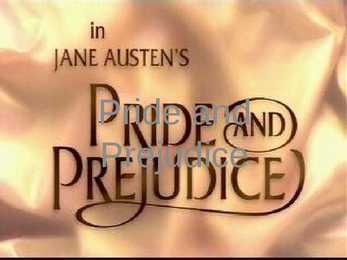
The main characters The Bennets family The beginning of the film A turn in the life of the young Greaf in the Bennets family The film end Conclusion Pictures References Introduction I have chosen this film because I like it very much. Pride and Prejudice tells us about a big family in England from the town called Meriton. In the film we can perfectly see the life in England at the end of the 18th century. Pride and prejudice This movie was made after Jane Austen novel Directed by Simon Langton Composer: Care Davis Producer: Sue Birtwistle Country of origin: United Kingdom Genre: drama Tear of release: 1995 Duration of a film: 3 hours The main characters Jennifer Ehle Elizabeth Bennet Colin Firth Mr. Darcy Susannah Harker Jane Bennet Crispin Bonham-Carter Mr. Bingley Alison Steadman Mrs. Bennet
Exercise 1 Circle the letters that should be CAPITALS. Then write the correct letter in the space above them. 1 peter and i are good friends. we are going to chicago during our summer 2 vacation. 3 there is an interesting football game on sunday. 4 jason lives on thomson avenue. 5 january is the first month of the year. Exercise 2 Look at the signs on the left. Can you find the mistakes? Write the names correctly. hopkins hotel lincoln school orchard street newton road botanic gardens national library shea stadium 3 Nouns Common Nouns Nouns are divided into common nouns and proper nouns. Common nouns are words for people, animals, places, or things. These are words for people. They are common nouns.
gets the hint and notices Frances's look of displeasure. After dinner, Cohn follows Jake to ask why he mentioned the girl and explains that Frances will not permit him to take any trip that involves seeing a girl. Summary: Chapter II Nobody ever lives their life all the way up except bull-fighters. (See Important Quotations Explained) That winter, Cohn travels to New York to find a publisher for his novel. There he gains new confidence. The publishers praise the novel, and several women are "nice" to him. He also wins several hundred dollars playing bridge. This success, combined with reading a romantic chronicle of an English gentlemen traveling abroad, infects Cohn with wanderlust. Upon returning to Paris, he comes to Jake's office to persuade him to travel to South America with him, offering to pay for the entire trip. He worries that he is not living life to the
play, Hamlet is the son of Queen Gertrude and the late King Hamlet, and the nephew of the present king, Claudius. Hamlet is melancholy, bitter, and cynical, full of hatred for his uncle's scheming and disgust for his mother's sexuality. A reflective and thoughtful young man who has studied at the University of Wittenberg, Hamlet is often indecisive and hesitant, but at other times prone to rash and impulsive acts. Hamlet (In-Depth Analysis) Claudius - The King of Denmark, Hamlet's uncle, and the play's antagonist. The villain of the play, Claudius is a calculating, ambitious politician, driven by his sexual appetites and his lust for power, but he occasionally shows signs of guilt and human feeling--his love for Gertrude, for instance, seems sincere. Claudius (In-Depth Analysis) Gertrude - The Queen of Denmark, Hamlet's mother, recently married to Claudius. Gertrude loves Hamlet
the lower people. The fact that Lizaveta comes out as the strongest character could be significant? Maybe the fact that Herman is German and was described as having 'the profile of Napoleon' could suggest that the relationship between the countess and Hermann reflects that of different countries during the time? Not really sure, hope it helped though. The tale opens in the "present" (about 1830) during a card game in the St Petersburg rooms of a Horse Guards officer named Narumov. Among the assembled guests is a young officer of engineers, Hermann, who is of German origin, and who never gambles, but observes the play keenly. Tomsky, another member of the company, remarks that his octogenarian grandmother, the Countess Anna Fedotovna, also does not "punt" despite the circumstances of an anecdote, which (summarised as follows) he then proceeds to narrate: Sixty years before (i.e. about 1770) the Countess was the rage of Paris, known there as la Vénus moscovite
 annaabi.ee