Leidsid 33 sarnast õppematerjali, mis on seotud failiga "If I were an English teacher". Need materjalid aitavad sul teemat sügavamalt mõista.
teacher, students, find, them, english, teachers, subjects, interest, good, other, ways, interesting, politics, between, best, final, exams, class, easy, task, know, behave, even, behaviour, fair, than, decent, throw, rebels, usually, classes, exciting, social, issues, course, really, speak, these, majority, youth, idea, work, matter, having, dialogueELT Methodology (FLGR.01.041) 27.12.2012 Home Assignments. I Youtube clips: · A vision of K-12 students I personally think that Estonian learners are also digital learners. They spend more time at the computers or laptops or iPads etc. than read books or move outside. And another thing is that teachers are less capable in using technological appliances. But the latter mentioned fact is an advantage for us teachers as well. It gives us an opportunity to provide our students to experience success. They can help and assist us if we need some technological help. Another thing is that in schools, in classes generally students are not allowed to use their appliances, so it means they have to communicate verbally as well. I
Why I came to study English Why I came to study English? Seems like a simple question, but it certainly made me think about it. Some of my friends have even said that majoring in English seems so boring and they constantly bombard me with questions about my future. That made me think about how exactly did I end up studying English? First of all, as a kid, I was so sure I would be a hairdresser or a teacher or a cook in the future. I am sure that almost every kid thinks the same, when all they have for inspiration are cartoons and toys to play with. When I started school, I was very interested in mathematics and other subjects that required logical thinking, because apparently I was smart in that area at the time. Up until 6th grade I was the best student in our class, winning mathematic competitions left and right and not only that. By that time I had also found out that I loved to
My languages I love different languages. I mean, I really, really love different languages. I also believe and have been told that I pick them up rather easily. That might be true, although I did not pick any Greek up in Greece but that might have been because they spoke so damn fast that I could not tell if it was a word or an entire sentence. The first foreign language I learned was Russian. Considering I was ten when Estonia became a Republic, it makes sense. We began studying Russian in first grade, though it was simplified – "koška" instead of "kot", "medvešonok" instead of "medved", "saichik" etc. Did not make much
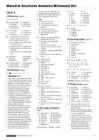
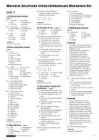
5 (possible answers) she was my age and apart from the 1 1 go ahead 5 come to eighties hairstyle we're the spitting 1 Well, you will go to bed late every night. 2 fall through 6 bring about image of each other! Some people 2 Well, you will refuse to wear a 3 tip off 7 go down with say that they can see a strong family coat. 4 mistake for 8 come up with resemblance between my dad and me.
Students' own answers pointing to his sister's ice cream. 5 The thief grabbed my bag and ran The photos are connected with the 1B Past and perfect tenses off. topic of school. Both photos show page 4 6 He dropped a leaf into the water students in class. In the first photo I imagine that 1 1 ate and watched it drift under the they're about 13 years old. 2 have/'ve met bridge.
Freedom of speech Freedom of speech is a wide speared conception. I can understand it in many different ways. For example in my state, Estonia, the freedom is a very important for every human. At least to me it is seemed to be like that. But at school is a little bit sad story with freedom of speech. Some teachers are not used that student expresses her own strong opinion. When another way some teachers are just waitening it. As well as people can not speak along with state public topics and express their opinion. Therefore freedom of speech is debateable. Already from the old times Estonians have been fighting for their own freedom, because they do not like to allow to another country or state, foreign public and foreign language. Estonian public have been fighting with German, Russian and a lot of other states. Estonians has
FAMILY, HOME AND EVERYDAY LIFE 1. What colours do you like? Why? I like many colours. Coloured things are more interesting than monochrome things. But I have got my favourite colour. My favourite colour is pink. I like yellow and orange too. These colours are quite womanly. I don't like dark colours. Dark colours are too dark for me. 2. What do you think of the colour scheme of your school? I think that my school is beautiful. My school has got quite good look. In the outside the school is light. But in the inside the schoolrooms are quite colourful. I don't like the gym colour scheme. I think that pink and blue are not very good choice. I think that it's quite funny. But other rooms are in normal colours. 3. If money where not a problem, what would your future home look like? There will be many changes in my home look. Mostly I will enlarge the rooms. I need more living space. The kitchen must be huge, because in huge kitchen is better to cook
and remembered more. Therefore I would like to discribe the method thoroughly. Only in the past few hundred years has reading been the primary way of teaching religion. For centuries, religious education relied on hearing and seeing. Religious education can benefit by returning to the ages-old methods of hearing and seeing to complement reading. This method enables you to make the old learning way-seeing available for the students nowadays.It is about deepening our understanding of faith. In times past, when people could not read, it was through pictures that they came to realize the glory of God's world and the meaning of the Bible(http://books.google.ee/books/about/Beyond_the_Written_Word.html? id=wBXK1Y4BlTEC&redir_esc=y). Distribution and sources of this method Talking about art-based learning I am guided from the Maria Luisa Mazzarello article ,,Teaching religion through art
Bad Teacher Elizabeth Halsey (Cameron Diaz) is a Chicago middle school teacher at the fictional John Adams Middle School who curses at her students, consumes lots of alcohol, smokes marijuana, and only shows movies while she sleeps through class. She plans to quit teaching and marry her wealthy fiancé, but when he dumps her, she must resume her job as a teacher. She tries to win over substitute teacher Scott Delacorte (Justin Timberlake), who is also wealthy. Amy Squirrel (Lucy Punch), a dedicated teacher and colleague of Elizabeth, also pursues Scott while the school's gym teacher, Russell Gettis (Jason Segel), makes advances on Elizabeth which she rejects.[3] Elizabeth plans to get surgery to enlarge her breasts, believing she is being overlooked for women with larger chests. However, she cannot afford the $10,000 procedure. To make
Test 16 1 Translate. 1 Mul olid varemalt pikad juuksed. I used to have long hair. 2 Kas see on teie kooli direktor? Is that the head teacher of your school? 3 Peaaegu igaüks räägib võõrkeelt aktsendiga. Almost everyone speaks a foreign language with an accent. 4 Ära muretse, sinu inglise keel on suurepärane. Don´t worry, your English is excellent. 5 Ma ei suuda taluda valju muusikat. I can´t stand loud music. 6 Kas sa tahaksid töötada ruumis või väljas? Would you like to work indoors or outdoors? 2 Complete the sentences with a job. 1 Vets look after sick animals. 2 Lifeguards work on the beach and help swimmers in danger. 3 Childminders look after small children when their parents are at work. 4 Teachers work at school. 5 Plumbers mend baths, sinks, and leaks. 6 Cooks prepare food.
When? Why? 22. Have you ever seen a rehearsal of a show? When? Which show? 23. Have you ever been to a zoo? Which zoo? What animals were there? http://www.abiks.pri.ee 24. Have you ever been to a funfair? Where? 25. Have you ever been to a circus? When? Where? 26. Have you ever seen a circus show on TV? 27. What did you see in the show? (an animal act? clowns? acrobats? jugglers?) 28. Are you good at juggling? What makes you think so? 29. Do you like aerobics? Are you good at it? Do you know anybody who is? 30. Would you like to perform in a circus? 31. Do you know anybody who might become a good clown? What must a clown be good at? 32. Have you ever played sport regularly? What training classes do you go to and how often? What sport would you like to play and why? 33. Have you ever taken part in sport competitions? When, where and what were the results? 34
They say it's unimaginable, boring, tasteless, it's chips with everything and totally overcooked vegetables. The basic ingredients, when fresh, are so full of flavour that British haven't had to invent sauces to disguise their natural taste. What can compare with fresh pees or new potatoes just boiled and served with butter? Why drown spring lamb in wine or cream and spices, when with just one or two herbs it is absolutely delicious? If you ask foreigners to name some typically English dishes, they will probably say "Fish and chips" then stop. It is disappointing, but true that, there is no tradition in England of eating in restaurants, because the food doesn't lend itself to such preparation. English cooking is found at home. So it is difficult to a good English restaurant with a reasonable prices. In most cities in Britain you'll find Indian, Chinese, French and Italian restaurants. In London you'll also find Indonesian, Mexican, Greek..
Education and learning Task 1. Underline the most suitable word or phrase. a) Jack decided to take a course/lesson in hotel management. b) Sheila always got good marks/points in algebra. c) After leaving school, Ann studied/trained as a teacher. d) Peter decided not to go in/enter for the examination. e) My sister learned/taught me how to draw. f) I can't come to the cinema. I have to read/study for a test. g) In history we had to learn a lot of dates by hand/heart. h) I hope your work will improve by the end of course/term. i) Martin failed/missed his maths exam and had to sit it again. j) If you have any questions, raise/rise your hand. Task 2. Complete each sentence with a word from the box. Use each word once only.
Truancy in school individual responsibility Hello ladies and gentlemen, today I am here to talk to you about truancy in school and why is it an individual responsibility. Truancy in school is a very serious problem nowadays. Unfortunately many students have lost their motivation to study. According to the BBC 400,000 children were persistently absent from England's schools in the past year and missed about one month of school each. The effect that poor attendance at school can have on a child's education can be permanent and damaging but skipping should be child's own responsibility and it is not right to punish the parents for it. Students have many reasons why they are skipping school, mostly they do not like the
Estonia If I were the minister of education in Estonia, I would change many things. Firstly, I would rather spend our money on building schools and purchasing new equipment for teaching, than wasting it on our tough national examinations, because there are a lot of schools that would need a new building. Secondly, English would be taught as a second language at schools. It must be a compulsory subject, because most of the world's population is talking English. I would have all the textbooks revised so that they would be updated with latest happenings and etc. Especially history, because we are learning from textbooks that are missing a lot of information that has been discovered after the book was printed. Also I would change most of the subjects for optional, that students can choose the best subjects for them. I think that the absences wouldn't be so punishable by the school, because I think it's your own choice if you go to
My Magna Carta. When I first started my own Magna Carta, I thought what's the most near heart and important to me. I chose two main topics, what I find important and relevant. I'm sure that I'm not the onl one who thinks like that. The first thing I would do, is forbid bullying. What is bullying? Bullying is the use of force, threat or duress to abuse, terrorize or aggressively dominate others. There are different types of victims. One of those is the one that ignores all the hate and insulting what comes at him/her. The other one takes it all by heart and seriously. Words can hurt, a lot
UNIVERSITY OF TARTU DEPARTMENT OF ENGLISH Using Blogs as a Platform in the Teaching of English as a Foreign Language Research paper Tartu 2010 ABSTRACT This work analyses the usefulness of blogging in teaching English as a foreign language. The definition of the term `blog' is provided along with the advantages and disadvantages of blogs' usage in practice. The analysis of language skills developed by students throughout the use of blogs for learning purposes is given in the paper with possible limitations that blogs have. Author of this paper also shares personal comments about the experience in the field. In this paper it is also
Tests Superstar 1 Luke Prodromou Test 1 Name____________________ Class_______ Use your English 1 Complete these sentences using the correct form (present simple or present continuous) of the verb in brackets. _ 1 She is in a band and she _________________________________ (record) a CD at the moment. _ 2 She is an actress and often _________________________________ (appear) on television. _ 3 At the moment she _________________________________ (have) a rest because she is tired. _ 4 Mike is a doctor and he _________________________________ (live) in Manchester.
reason. A person can be insensitive in one way, such as blind, and extraordinarily sensitive in another way, such as in hearing. It is also possible to be so ultra-sensitive that the result is disadvantageous. I expect no argument in asserting that a normal sensitivity is a healthy, indispensable ingredient for optimal education. Sensitivity can be heightened or blunted by education. It is intertwined with curiosity. An ideal education affords numerous and varied opportunities for students to touch, see, smell, listen, hear; to spark their curiosity. When I was a child the things that pleased me were largely other than the plants which have earned me a living as an adult. For example, I collected postage stamps, played basketball, was fond of listening to music, played all manner of games, but dealt only in a neutral, uninspired fashion with plants. The one thing that was constant and of supreme importance was my love of reading. I don't recall why, but by an early age, say age
do it, enabled us to make significant changes. His work has enabled us to gain significant competitive differentiation and advantage" -LAURENCE HOF, Vice President, Relationship Consulting, Advanta Corporation "This will help executives make better decisions and use their influence wisely ... Robert Cialdini has had a greater impact on my thinking on this topic than any other scientist." -CHARLES T. MUNGER, Vice Chairman, Berkshire Hathaway, Inc. If you're wondering why of Latin America, the Far East, and Central Europe. you should buy this new edition of Influence: o More neuroscience evidence of how the influence process works is inte-
I like to study because knowledge is useful sometimes. I'm fond of reading as it gives not only knowledge, but wonderful moments of joy and pleasure. I am neither short nor tall, so I like to wear highheeled shoes, trousers or jeans. I was born on the 25th of April 1985 in the town of Molodechno where I live now together with my parents and my younger sister (older brother). My early years which I remember badly, were typical of a child living in a town. I was born in a family of a teacher and a doctor. I was sent to a kindergarten at the age of three as both the parents were working. As all the children of Belarus I went to school at the age of six. Here I should say that it was my lucky chance to study for 11 years at the school of fine arts in the town of Molodechno . it turned out to be the best school in our town. There I got a proper training in such subjects as English, Russian and Belarusian literature and world culture
century festival in China and the Apollo 11 moon landing in 1969. However, there is a link and that is that they both relied on the use of rockets. The Chinese first developed rockets by filling bamboo tubes with an explosive made from saltpetre, charcoal, and sulphur. The sealed tubes would be thrown onto fires during celebrations because it was thought that the loud explosions would protect them. It was not long before the ancient Chinese realised the military potential of these devices and primitive rockets were used to repel a Mongol invasion in 1232 AD. Word of these new amazing weapons quickly spread around the world and soon rockets were being used in military operations in North Africa and Europe. During the 15 th and 16th centuries they were widely used in naval battles to set fire on enemy ships. Around this time they also started being used for more peaceful purposes again
and education. In 1973, the late Ellis Page and colleagues at the University of Connecticut programmed the first successful automated essay scoring engine, "Project Essay Grade (PEG)" (1973). The technology was foretold some six years earlier in a landmark Phi Delta Kappan article entitled, "The Imminence of Grading Essays by Computer" (Page, 1966). At the time the article was provocative and a bit outrageous, though in hindsight, it can only be deemed prophetic. As a former high school English teacher , Page was convinced that students would benefit greatly by having access to technology that would provide quick feedback on their writing. He also realized that the greatest hindrance to having secondary students write more was the requirement that, ultimately, a teacher had to review stacks of papers. While PEG produced impressive results, the technology of the time was too primitive to make it a practical application. Text had to be typed on IBM
we today call book printing. The first book was printed between 1444 and 1446, so these years can be considered as the beginning years of book printing. His most important preserved printings are the 40 copies of the Bible. By the end of the 15 th century there were about 1000 print-shops in Europe already. The oldest Estonian book dates back to 1535. Libraries form a vital part of education. They make available-through books, films, recordings and other media- knowledge that has been accumulated through the ages. People in all walks of life use libraries to get information for their work. Libraries also play an important role in preserving people's cultural heritage. For example, some libraries have rare books, authors' and composers' manuscripts or works by artists. Today's libraries differ very much from the ones from the past - not only in the contents and services, but also in physical layout and atmosphere. Library derives
Table of Contents Abstract 3 Introduction 4 Chapter 1: Citizenship, Children`s Rights and Participation: from the UN to the UK 6 Chapter 2: Citizenship Education in Wales………………………………………………14 Active Citizenship in Cadle Primary School: A Case Study 20 Conclusion 29 Bibliography 32 Appendices Appendix 1: The United Convention of the Rights of the Child Appendix 2: Interview with Jamie Richards, the Head Teacher of Cadle Primary School 2 Abstract: Children inherently have had a rather tenuous relationship with citizenship. Similarly to how women were once viewed, children have not been considered as subjects of rights due to their perceived incompetence and irrationality. Currently, children are not considered as being rational and capable of exercising responsibility until the age of majority, the age of 18.
Book 1 BASIC ENGLISH BASIC ENGLISH GRAMMAR GRAMMAR BASIC ENGLISH GRAMMAR Book 1 Book 1 Younger students at beginning to intermediate levels will greatly benefit from this step-by-step approach to English grammar basics. This is the ideal supplement to your language arts program whether your students are native
The main question is what makes a human being happy? In my opinion, as a person claims that he is happy, then we can firmly say that this person is successful in life because he feels content with his life. Contentedness and happiness are the key factors in determing how succesful someone is. It is often said that for a small town inhabitant, it is a lot harder to achieve something in life. I totally disagree with this statement. There are just other values in a town with a small population density. Values concerning family life are coming more forth, career and such kind of personal ambitions are kept in the backround. Also it is often mentioned that making a successful career in a small town is largely impossible, because of the lack of different resources and opportunities. By these it is commonly ment a uncompetitive education and few opportunities to develop extracurricular activities. In my opinion it is again a misunderstanding
"Tell me and I forget. Teach me and I remember. Involve me and I learn." Benjamin Franklin In the last few years outdoor education has become more and more popular worldwide and in Estonia too. While there are many definitions for outdoor education, I think the best way to describe it would be outdoor education is a form of education, when learning takes place somewhere else than a classroom and the subjects are not only about the environment and nature but also linked to the national curriculum. Outdoor education often takes place on a walk around the block, a visit to the cemetery or a local post office. It can happen at a city zoo, on a forest trail, or in a national park. These kinds of locations are conducive to first- hand experiences and these places can provide direct contact with the topic and also learning this way can help participants interact and socialize
· And when you begin to miss me, dont forget it was you who let me go. · There is an end to things no matter how much we want to hold into them. · Otsisin keset seda pimedust, sind ja loodetud vabadust,kui mu käed su poole, tegid alguse loole, printsessist ja printsist, ühest kaunist kandist, kus oleme meie kaks, kus lõbutseme, kuni otsas jaks. Sa ei pea muinasmaad looma, sa ei pea tähti taevast tooma. Ole vaid minu kõrval, kui tõuseb päike. Ole vaid mu kõrval kui mind piinab meeleheide. Ole mu kõrval, kui kumab kuu, kui su nime
· How do they differ? · Which extracts are examples of formal letters? · How is the reader addressed in a formal letter? · What are the closing remarks for formal letters? · What is the salutation in a friendly letter? · How would you end extracts 1,2,3 ? · How would you begin the extracts 4 and 5? 1. Dear Mr Miller, I received your kind invitation to the reception. Unfortunately, owing to other commitments. I will be unable to attend ... 2. Dear Ralph, l just got your invitation to the company's event. l `m afraid I can't make it because I've a/ready made plans which l can "t change ... 3. Dear Sirs, I am writing to complain about the poor quality of the items which I received from your company. I have no other alternative but to cancel the order which 1 placed earlier this week ... 4. ... thus, I recommend that you accept this advice on the matter
Silicon Valley Could you reproduce Silicon Valley elsewhere, or is there something unique about it? It wouldn't be surprising if it were hard to reproduce in other countries, because you couldn't reproduce it in most of the US either. What does it take to make a silicon valley even here? What it takes is the right people. If you could get the right ten thousand people to move from Silicon Valley to Buffalo, Buffalo would become Silicon Valley. That's a striking departure from the past. Up till a couple decades ago, geography was destiny for cities
Work on taking yourself deeper into the introspection process by tackling more specific topics. Here are some questions you might want to consider: What am I like? How do my friends characterize me? What are my personality traits? Have I ever experienced a moment of epiphany? Why is (some color) my favorite color? Why is (some movie) my favorite movie? How have my favorites influenced my life? What have I done? What are my major accomplishments? Why do I consider them accomplishments? What extra curricular activities have I participated in? Have I strived hard for something and achieved it? Why did I succeed? Have I strived hard for something and failed to achieve it? Why did I fail? What was the most difficult time of my life? How did my perspective of life change due to that difficult time? Where do I want to go? What would I most like to be doing right now? Where would I like to be? Who would I most like to be with?
....................................................147 Addictions..................................................................................................149 Inner Body Awareness...............................................................................150 Inner and Outer Space................................................................................151 Noticing the Gaps.......................................................................................153 Lose yourself to Find Yourself....................................................................153 Stillness.......................................................................................................154 Chapter Nine Your Inner Purpose - 155 Awakening..................................................................................................156 A Dialogue on Inner Purpose.................................................
 annaabi.ee