Leidsid 33 sarnast õppematerjali, mis on seotud failiga "Estonian teen". Need materjalid aitavad sul teemat sügavamalt mõista.
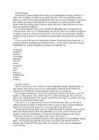
study, argue, there, aren, parent, really, glass, doesn, biggest, difference, north, times, usually, finish, studying, place, mostly, parents, friends, south, other, spend, quite, busy, while, going, training, lesson, weekday, finished, half, seven, living, traffic, light, walk, another, pocket, money, euros, month, different, serious, reasons, followingEstonian teen How do you spend your free time? I'm pretty busy. Every day, I have music school, choir, or basketball training. I have been going to music school for seven years, and I'm going to graduate this spring. I have been going to basketball training for two years. I unfortunately can't go there very often because of music studies. When I'm home, I usually spend my free time on the computer or playing the guitar. What do you like / dislike about living in Võru? I can't tell anything which I particularly do not like. This year I don't like that the school has been moved to another building, which doubles the distance between my home and school. I like that Võru is such a small and quiet town, which makes it nice and secure to live in. Do you get any pocket money?
After being in isolation for only two days a realization hit me. I realized that everything that I took for granted was going to change. As many other, I didn’t thought that Estonia is going to suffer greatly from the virus outbreak and everything is going to proceed as usual. Life goes on. But it doesn’t. I became aware of the problem after my sister and I had a talk about immunity. I myself have lived many years with runny nose and I don’t worry too much about it but I really never thought about my little sister and mom. They both have had some serious issues with their health and I don’t want my actions to harm their wellbeing in any way. Because of that our family has stayed isolated for 10 days now. The first few days were like a cakewalk and being home was awesome but later on we all get tense and want our personal space more than before. We are lucky to have a big house, yard and field so when we really want to be away from one another, we can.
Schools kill creativity Kristiina Moosel N-14 Ken Robinson had a greate speech in TedX 2006. He was discussing about creativity and how we help ourselves and others to develope it. Mostly I agreed with him but still there were some points, where I could argue with him. Ken Robinson says noone knows how’ll the future be like. The future where our kid’s are going to have to live in. Still our education system wants us to prepare them for that. Prepare them for the mystery, for something we have no idea about how it’s going to be. If I had no younger relatives, I’d have to dissagree with him - I mean, when I was in secondary school I had to study mostly only those subjects I’d really need in the future. But I have some
Harold McMillan articulated his now famous “winds of change” sweeping Africa. We had high hopes for Africa, for the Black race, that the insidious imposition of foreign rule on us, the looting of Africa’s natural resources by our colonial masters accorded us would be things of history. That is more than forty years ago. Unfortunately, the promise of independence has not been fulfilled. Today, Africa has become more desolate; there is more starvation, diseases and non-provision of essential services than when we got our independence. There are all kinds of wars in Africa than the rest of world put together. The majority of so-called Africans leaders want to stay in power until the day their bodies are put in the grave. Through buffoonery, utter mismanagement and downright stealing of the wealth of the masses, these leaders have so impoverished Africa that we are now nothing but a beggar continent. We beg for
Edulugude võistlus Success-story competition „Small Town Inhabitants – Educated or Uneducated People“ To begin with, my childhood was quite ordinary, I spent a lot of time in my country home, spending most of my time playing. I have been raised by my mother. As I grew older, I got more and more interested in different things. At one point it occured to me that when I want to be successful in some field, then I really have to educate myself in that filed.When my friends have characterised me then they have mainly mentioned that I am an active person, who has been successful in different fields. I still do not think I am succesful because it is a really complicated definition, but I know that I have succeeded in doing several things. For me the key is my so called success has been that when dealing with a particular thing I have tried to delve into the subject as deep as possible.
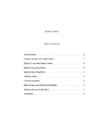
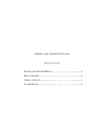
.................................................... 7 Infinitives ............................................................................. 8 Introduction Modal Verbs are can, could, may, might, must, will, would, shall, should, ought to. They are known as modal auxiliary verbs because they ‘help’ another verb, i.e. they are always used with another verb in its base form. e.g. I can swim. Do you think I should go? Characteristics of Modal Verbs • There is no -s in the third person singular: She can ski. He must be tired. It might rain. • They are used to form questions and negatives: Shall we go for a walk? What should I do? He can’t dance. You mustn’t tell lies! • Modal auxiliary verbs don’t usually have past forms. Other expressions are used instead: I had to work hard at school. The prisoner was able to/managed to escape by climbing onto the roof of the prison
The basic ingredients, when fresh, are so full of flavour that British haven't had to invent sauces to disguise their natural taste. What can compare with fresh pees or new potatoes just boiled and served with butter? Why drown spring lamb in wine or cream and spices, when with just one or two herbs it is absolutely delicious? If you ask foreigners to name some typically English dishes, they will probably say "Fish and chips" then stop. It is disappointing, but true that, there is no tradition in England of eating in restaurants, because the food doesn't lend itself to such preparation. English cooking is found at home. So it is difficult to a good English restaurant with a reasonable prices. In most cities in Britain you'll find Indian, Chinese, French and Italian restaurants. In London you'll also find Indonesian, Mexican, Greek... Cynics will say that this is because English have no "cuisine" themselves, but this is not quite the true. Vocabulary:
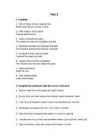
1 Did you meet Ann at the party last night? (meet) 2 Do you think our team will win the football match tomorrow? (win) 3 I can´t go out because I haven´t done my homework yet. (not do) 4 Somebody has broken the lock. I can´t get in. (break) 5 Next year Mary will spend two weeks in Liverpool. (spend) 6 I usually have a cup of tea and sandwich before I go to school. (have; go) 7 Jane is American. (be) She comes from Huston. (come) She has lived there all her life. (live) 8 I have known my next-door neighbour for a year but I haven´t talked to his wife yet. (know; not talk) 3 Make up questions and answer them. 1 lesson / sit / you / in / English / where / do / your? Where do your sit in your English lesson? I sit near the window, 2 feel / centre / do / how / attention / of / when / are / you / the / you? How do you feel when you are the centre of attention? I blush when i am the centre of attention.
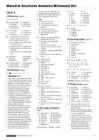
6 talked 7 catching 10 8 feeling 2b 9 is 3a 10 couldn’t 4a 5b 5 6b 2 come 7b 3 live 4 came 11 5 study 2 My pleasure. 6 like 3 I’m fine, thanks. 7 got 4 Lovely day today. 8 have 5 It doesn’t matter. 9 can 6 What’s the problem? 10 go 7 Same to you. 11 going 12 met 12
children—Christina, Michael, David, and Catherine—for their sup- port and patience during the long hours away from them to finish this book. xi ccc_tracy_fm_i-xviii.qxd 7/7/03 3:23 PM Page xii ccc_tracy_fm_i-xviii.qxd 7/7/03 3:23 PM Page xiii Introduction There is nothing on earth that you cannot have once you have mentally accepted the fact that you can have it. —Robert Collier ■ THE TRUTH ABOUT YOU You are a thoroughly good person.You deserve a wonderful life, full of success, happiness, joy, and excitement. You are entitled to have happy relationships, excellent health, meaningful work, and finan-
ambitious young high school graduate and some even don’t consider other possibilities. On the other hand, universities are getting a lot of critic because some say that the goal of universities are to produce as many diploma graduates as possible. I think that universities are places where young people who doesn’t know yet what they want from life, can use this time to discover their true interests. Im sure that many young high school graduates who start study in university are at first not very passionate about their speciality because they dont know what to expect and if their choice is right. There is no quarantee and this is where university comes in play – objective is not only to educate students about their chosen subject but to expand one’s horizon and to develop logical thinking. One could argue that there are too many graduates in some specialities but there can’t never be too much critically thinking people
The train was late. Tom got up late this morning. NB! hardly means very little, nearly not; hard means very much 7. Many adverbs end in -ly, because many adjectives can be made into adverbs by adding –ly. E.g. quick/quickly, slow/slowly, brave/bravely, careful/carefully, bad/badly: They didn’t go out because it was raining heavily. Colin was disappointed to see how badly his son had done at the exam. NB! At the same time there are some adjectives which end in –ly as well. The most common are friendly, lively, lovely, ugly, silly, cowardly: Nobody has ever been so friendly to me. (adjective) He greeted me in a most friendly manner. (adverb) I don’t like your cowardly behaviour. (adjective) He betrayed me in a most cowardly way. (adverb) 8. Sentence Adverbs are words or phrases like certainly, perhaps, luckily, of course
There will be many changes in my home look. Mostly I will enlarge the rooms. I need more living space. The kitchen must be huge, because in huge kitchen is better to cook. And it's good to have own room. Maybe should build the second floor too. In decoration I will colour rooms light. Only the bedroom should be dark, because in dark is better sleep. 4. What makes a good home? I think that everybody's home is the best place in the world. You can always go there. It's good to go home when somebody is waiting you to come home. There shouldn't be noisy at home. Home makes a good home for each other's trust, helpfulness and good relations with other family members. I love my home. 5. How people make choices about where they live? Every person is different. Some people like sun and sea and that kind of person's usually go to live in tropical countries. People must choose the best climate for him. And the work shouldn't be far from home
This is Jane Smith. I'm Jane Smith. My name's John Smith. Informal introduction Hi. John. Jane. Hello. Titles: Mr Mrs Miss Ms Ms is a modern form of address for women. It replaces the traditional forms of Mrs and Miss. Greetings Good morning/afternoon/evening! 'How are you?' Very often people expect you to say something positive. Here's a breakdown of how you can express how you really are without complaining too much. · Fine, thanks. / On top of the world, thanks. · OK, thanks · Not so bad, thanks. / Can't complain, thanks. · So so, thanks. / So and so, thanks. · Not so good, actually 1 The English alphabet Spelling Work with your partner and spell out first your name and then some
6 The food was neither cheap nor 4 financial 9 worthless 2 I agreed to give Jenny a lift into good. 5 costly 10 economical town. 7 There are no easy answers. 3 I had no difficulty repairing the 2 1 economical 7 priceless 8 Few of my relatives live nearby. broken vase. 2 pricey 8 economic 9 My parents have little money.
(NOT You speak a very good English.) 16. After look forward to, we use ing, not an infinitive. I look forward to seeing you. (NOT I look forward to see you.) We're looking forward to going on holiday. (NOT ... to go on holiday.) 17. Information is an uncountable noun. Can you give me some information? (NOT Can you give me an information?) I got a lot of information from the Internet. (NOT I got a lot of informations from the Internet.) 18. Use ing forms after prepositions. I drove there without stopping. (NOT I drove there without to stop.) Wash your hands before eating. (NOT Wash your hands before to eat.) 19. Use this, not that, for things that are close. Come here and look at this paper. (NOT Come here and look at that paper.) How long have you been in this country? (NOT How long have you been in that country?) 20. Use a plural noun after one and a half. We waited one and a half hours. (NOT We waited one and a half hour.) A mile is about one and a half kilometres
Hi, well my topic of this presentation is teenage girls. I chose this topic because I really like to discuss about the life of a teenage girls and what is it really about? And why only girls? The answer is close to why scientists investigate the big mysterios space. We all want to know the secret of infinite mystery. And why only girls? That part is actually quite easy, Cause every teenage girl edventually will come to that point of her little teenage life where they just get sick of boys. I think girls are pretty much the biggest question to all teenagers and why just to teenagers? Answer to that question you will get while growing up
Why? 17. How old were you when you first went to see a puppet show? Do you remember what it was? 18. Who is your favourite actor/actress? 19. What performance or concert would you like to see if it were possible? Why? 20. Have you got a drama club at your school? Are you a member of it? 21. Have you ever worn a costume? When? Why? 22. Have you ever seen a rehearsal of a show? When? Which show? 23. Have you ever been to a zoo? Which zoo? What animals were there? http://www.abiks.pri.ee 24. Have you ever been to a funfair? Where? 25. Have you ever been to a circus? When? Where? 26. Have you ever seen a circus show on TV? 27. What did you see in the show? (an animal act? clowns? acrobats? jugglers?) 28. Are you good at juggling? What makes you think so? 29. Do you like aerobics? Are you good at it? Do you know anybody who is? 30. Would you like to perform in a circus?
People, friends and family more frequently, will ask you the following: ‘Hey. Soo… Who do you want to become in the future?’ First thing most of you will say is that: ‘Um, I’m not entirely sure, I’m yet to decide.’ The one who asks is confused: ‘It’s your last year of high school, you’re probably going to university next year or whatever, and you don’t know who you want to become?!?’ In our busy society where we live in, everything tends to move really fast. All the people around you seem to have a goal in their life, almost if they knew what they were destined to since they were born. As if you were the only one, who has no idea what’s going on in your future. But, if look closely, you will find out. that nobody is 100% sure of their chosen career paths. Nobody was born knowing their career or their life purpose. Sometimes, or may I say, almost in all occasions, you must have faith in something. It’s like believing in something,
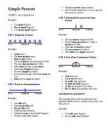
grammar adverbs such as: always, only, never, ever, · Cats like milk. still, just, etc. · Birds do not like milk. · Do pigs like milk? Examples: · California is in America. · California is not in the United Kingdom. · You only speak English. · Windows are made of glass. · Do you only speak English? I am not reading any books right now. Present Continuous · · Are you working on any special projects at work? [am/is/are + present participle] · Aren't you teaching at the university now?
Maturita Solutions Advanced Workbook Key stand bananas and coffee! It's a bit 3 1 to 8 of Unit 1 uncanny really. Is it something she's 2 about 9 century passed on to me genetically, or is it 3 like 10 assumed / 1A Memories page 3 learned behaviour? Who knows? 4 of thought / 1 See exercise 2 2 5
_____________________________________ 5 Why does she run/is she running? Because she's late for work. __________________________________ 6 She doesn't enjoy/is not enjoying the film. _____________________________________ 7 This milk is tasting/tastes horrible. _____________________________________ 8 The Spice Girls are making/make a new CD at the moment. _____________________________________ 9 I am thinking/think it's a good idea for you to study biology. _____________________________________ 10 We want to go for a walk but it's raining/it rains outside. _____________________________________ Marks: /10 3 Write questions using the correct tense (present simple or present continuous) for these answers. 1 _____________________________________________________________________________________________
Forks. I loved Phoenix. I loved the sun and the blistering heat. I loved the vigorous, sprawling city. "Bella," my mom said to me -- the last of a thousand times -- before I got on the plane. "You don't have to do this." My mom looks like me, except with short hair and laugh lines. I felt a spasm of panic as I stared at her wide, childlike eyes. How could I leave my loving, erratic, harebrained mother to fend for herself? Of course she had Phil now, so the bills would probably get paid, there would be food in the refrigerator, gas in her car, and someone to call when she got lost, but still... "I want to go," I lied. I'd always been a bad liar, but I'd been saying this lie so frequently lately that it sounded almost convincing now. "Tell Charlie I said hi." "I will." "I'll see you soon," she insisted. "You can come home whenever you want -- I'll come right back as soon as you need me." But I could see the sacrifice in her eyes behind the promise. "Don't worry about me," I urged
· And when you begin to miss me, dont forget it was you who let me go. · There is an end to things no matter how much we want to hold into them. · Otsisin keset seda pimedust, sind ja loodetud vabadust,kui mu käed su poole, tegid alguse loole, printsessist ja printsist, ühest kaunist kandist, kus oleme meie kaks, kus lõbutseme, kuni otsas jaks. Sa ei pea muinasmaad looma, sa ei pea tähti taevast tooma. Ole vaid minu kõrval, kui tõuseb päike. Ole vaid mu kõrval kui mind piinab meeleheide. Ole mu kõrval, kui kumab kuu, kui su nime
Copyright ©2007 by Saddleback Educational Publishing. All rights reserved. No part of this book may be reproduced in any form or by any means, electronic or mechanical, including photocopying, recording, or by any information storage and retrieval system, without the written permission of the publisher. ISBN 1-59905-201-6 Printed in the United States of America 13 12 11 10 09 08 07 9 8 7 6 5 4 3 2 1 Introduction Grammar is a very old field of study. Did you know that the sentence was first divided into subject and verb by Plato, the famed philosopher from ancient Greece? That was about 2,400 years ago! Ever since then, students all over the world have found it worthwhile to study the structure of words and sentences. Why? Because skill in speaking and writing is the hallmark of all educated people. Lesson by lesson, this book provides basic instruction in the eight parts of speech--nouns, pronouns, verbs,
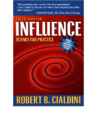
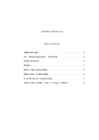
10 9 8 7 6 54 32 1 RRD-VA 12 11 10 09 08 Credits appear on page 260, which constitutes an extension of the copyright page. Contents Preface ix Introduction xi CHAPTER 1 Weapons of Influence 1 Click, Whirr 2 Betting the Shortcut Odds 6 The Profiteers 10 Jujitsu 12 Summary 16 Study Questions 16 CHAPTER 2 Reciprocation: The Old Give and Take ... and Take 18 How the Rule Works 22 The Rule Is Overpowering 23 Politics 26 The Not-So-Free Sample 28 The Rule Enforces Uninvited Debts 31 The Rule Can Trigger Unequal Exchanges 33 Reciprocal Concessions 35 Rejection-Then-Retreat 37
• With hardly, barely, scarcely (which are almost negatives): I have hardly any spare time. • With without when without any ...= with no ... : He crossed the frontier without any difficulty/with no difficulty. • With questions except the types noted above: Have you got any money? Did he catch any fish? • After if, whether and in expressions of doubt: If you need any money, please let me know. I don’t think there is any petrol in the tank. 2 Some or any can be used with singular, countable nouns: Some here usually means ’an unspecified or unknown’: Some idiot parked his car outside my garage. Or other can be added to emphasize that the speaker isn’t very interested: He doesn’t believe in conventional medicine; he has some remedy or other of his own. Any can mean ’practically every’, ‘no particular (one)’:
Few practical options may be available to teachers. It is inevitable in universal public schooling that the extreme students, either dull or bright, will be hurt by our emphasis on the average. It is horrible to admit, but our society cannot assume that all members are capable of being well educated. We have unequal physical, mental and environmental status, and the poorer fringe will always exist. Those of us lucky enough to have a conscience, mature enough to see how things really are, must do what we can to help the less fortunate. Obligation to help. How can a rich person help a poor one? By giving some money? Well, can smart, or educated people give education to those needing it? Sometimes just taking the time to discuss things with troubled people is a great favor and aid. I don't have much surplus money to give to worthy causes, yet donate my time freely. I don't pretend to be able to
A century ago communication across any distance was dependent upon the telegraph or letters. No jets crossed the ocean, no television pictures enabled us instantly to see events in any part of the world, there were no worldwide telephone networks and no computers. It is just a short lifetime since humanity first travelled into space and discovered how fragile our planet looks. FROM FIREWORKS TO THE MOON At first glance you might think that there couldn't possibly be anything common between a 13 th century festival in China and the Apollo 11 moon landing in 1969. However, there is a link and that is that they both relied on the use of rockets. The Chinese first developed rockets by filling bamboo tubes with an explosive made from saltpetre, charcoal, and sulphur. The sealed tubes would be thrown onto fires during celebrations because it was thought that the loud explosions would protect them
•Bottles can break. We can use some and any with countable nouns: •I've got some dollars. •Have you got any pens? We can use a few and many with countable nouns: •I've got a few dollars. •I haven't got many pens. definite article The definite article the is the most frequent word in English. We use the definite article in front of a noun when we believe the hearer/reader knows exactly what we are referring to. • because there is only one: The Pope is visiting Russia. The moon is very bright tonight. The Shah of Iran was deposed in 1979. This is why we use the definite article with a superlative adjective: He is the tallest boy in the class. It is the oldest building in the town. • because there is only one in that place or in those surroundings: We live in a small village next to the church. (the church in our village) =
Prior to this momentous event that heralds an evolutionary transformation in the life of plants, the planet had already been covered in vegetation for millions of years. The first flower probably did not survive for long, and flowers must have remained rare and isolated phenomena, since conditions were most likely not yet favorable for a widespread flowering to occur. One day, however, a critical threshold was reached, and suddenly there would have been an explosion of color and scent all over the planet – if a perceiving consciousness had been there to witness it. Much later, those delicate and fragrant beings we call flowers would come to play an essential part in the evolution of consciousness of another species. Humans would increasingly be drawn to and fascinated by them. As the consciousness of human beings developed, flowers were most likely the
2. I kept missing school- I was sad because i wasn't at school. 3. Emma decided to stay on at school- Emma decided to go into a higher class and take exams. 4. (Emma) worked hard for her exams- She did a lot of work Ex. 7 bring up , tell of 1. My grandmother had a difficult life. She grow up nine children! 2. I hate being the oldest because i always have to look after my younger sister. 3. They tell her off when they found her smoking. 4. My brother's really naughty. Sometimes I find it difficult to put up with him. 5. When my little brother bring up , he wants to be a doctor. 6. Everybody says I take after my uncle. We both have the same nose. Ex. 8 Get Make A gold money into trouble sure money Your mind up
transfer to target plant. Genetically modified crops can cause serious environmental problems as an engineered gene may prove toxic to wildlife. Another drawback is that increased use of toxins to make insect resistant plant can cause resultant organisms to become resistant to antibiotics. FIND OUT 5 REASONS TO AVOID GM FOOD. If humans continue moving forward in such a harmful way towards the future, then there will be no future to consider. Although it’s true that we cannot physically stop our ozone layer from thinning there are still so many things we can do. Sustainability is the key to prevent or reduce the effect of environmental issues. There is now clear scientific evidence that humanity is living unsustainably, and that an unprecedented collective effort is needed to return human use of natural resources to within sustainable limits
 annaabi.ee