 Tasuta
Faili alla laadimine on tasuta
Tasuta
Faili alla laadimine on tasuta
 ~ 8 lehte
Lehekülgede arv dokumendis
~ 8 lehte
Lehekülgede arv dokumendis
 2016-11-06
Kuupäev, millal dokument üles laeti
2016-11-06
Kuupäev, millal dokument üles laeti
 1 laadimist
Kokku alla laetud
1 laadimist
Kokku alla laetud
 0 arvamust
Teiste kasutajate poolt lisatud kommentaarid
0 arvamust
Teiste kasutajate poolt lisatud kommentaarid
 Manfred2002
Õppematerjali autor
Manfred2002
Õppematerjali autor
They were charity hospitals for the poor and sick, as the rich people were treated at home. The early hospitals were dark, crowded and very dirty, so it was very likely to be infected even more, when you went to be cured. The first hospital in Estonia was the hospital of Saint John, first mentioned in 1237. It was for the people who had leprosy. 2.2 Recent developments Many scientific advances have helped to improve patient care. Surgical and intensive care units now use electronic equipment. Modern hospitals are full of advanced equipment such as X-ray machines, ultrasound scanners and life-support machines. Computers help hospitals keep laboratory and medical records. Hospitals use many disposable items for safety such as plastic thermometers, and hypodermic syringes and steel needles. They are used only once, so they cannot spread infection. Scientists have also discovered all kinds of important drugs, such as antibiotics, and certain
The first hospitals were set up by Buddhists as early as the 200's B.C. in india. For hundreds of years hospitals took care of people who were poor or too sick to be treated at home. The oldest hospital still in existence is in Paris. Today there are thousands of hospitals all over the world. Some of them are for special purposes but usually one big hospital simply has separate sections for patients with different needs. Many hospitals have intensive care units, which use electronic motoring devices to keep constant watch over seriously ill patients. Clinics provide medical care for people who are not hospitalized. Some clinics are part of a hospital. There are certain types of specialized clinics, such as those that diagnose and treat diabetes, psychiatric disorders, cancer or venereal diseases. Nursing homes accept patients who need round-the-clock care but do not need to be hospitalised. Conclusion Health plays a very important role in peoples lives
care have been characterised by "Mrs Smith", a fictitious of a care trust in 2005. The development of five integrated 85-year-old with a range of care needs and requiring health and social care teams aligned to general practice, coordinated support across health and social care. single assessment processes, and shared health and Mrs Smith has come to represent vulnerable local social care electronic records are processes that have residents at risk of falling between gaps in the service. facilitated integration. The focus is on improving clinical, By focusing on Mrs Smith, care has been reorganised satisfaction and efficiency outcomes (Leutz, 1999). and better integrated around needs such as hers. The result of integration includes a reduction in delayed
Health 2007 1. Introduction Health is the level of functional or metabolic efficiency of an organism at both the cellular and social level. In the medical field, health is commonly defined as an organism's ability to succesfully respond to challenges and effectively restore and keep a so-called ,,state of balance". 2. History · Early hospitals During the Middle Ages the hospital could serve other functions, such as an almshouse for the poor, or hostel for pilgrims. In ancient cultures, religion and medicine were linked. The earliest known institutions aiming to provide cure were Egyptian temples. Greek temples dedicatedto the healer-god, might admit the sick, who would wait for guidance from the god in a dream. The Romans adopted this worship. The Sri Lankans are perhaps responsible for introducing theconcept ofdedicated hospitals to the world. According to an ancient chronicle, written in the 6 th century A.D., a king had lying-in homes and hospitals b
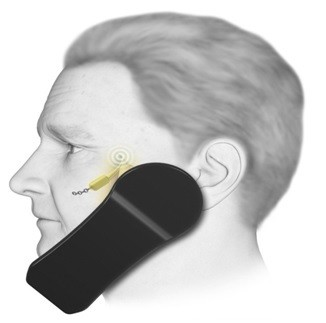
http://www.nytimes.com/2009/09/27/health/re search/27eye.html? pagewanted=1&_r=1&ref=technology A Burst of Technology, Helping the Blind to See Blindness first began creeping up on Barbara Campbell when she was a teenager, and by her late 30s, her eye disease had stolen what was left of her sight. Reliant on a talking computer for reading and a cane for navigating New York City, where she lives and works, Ms. Campbell, now 56, would have been thrilled to see something. Anything. Now, as part of a striking experiment, she can. So far, she can detect burners on her stove when making a grilled cheese, her mirror frame, and whether her computer monitor is on. She is beginning an intensive three-year research project involving electrodes surgically implanted in her eye, a camera on the bridge of her nose and a video processor strapped to her waist. The project, involving patients in the United States, Mexico and Europe, is part of a burst of recent research aimed at one of sci
PSYCHOLOGY PART 1: CORE Biological level of analysis Outline principles that define the biological level of analysis. 1) Behavior can be innate, because it is genetically based. Evolution may play a key role in behavior. 2) Animals may be studied as a means of understanding human behavior. 3) There are biological correlates of behavior. Cognitions, emotions and behaviors are products of the anatomy and physiology of our nervous and endocrine system. Explain how principles of the biological level of analysis may be demonstrated in research. 1) Correlational studies: Study by Buss, who hypothesized that across cultures, men will prefer to marry younger women because of greater reproductive capacity and women will place greater value on a potential mate's earning potential to provide survival advantages. This evolutionary hypothesis was tested in 37 cultures by sending out questioners. 2) Twin studies (type of correlational stud
PRAISE FOR The 4-Hour Workweek "This is a whole new ball game. Highly recommended." --Dr. Stewart D. Friedman, adviser to Jack Welch and former director of the Work/Life Integration Program at the Wharton School, University of Pennsylvania "It's about time this book was written. It is a long-overdue manifesto for the mobile lifestyle, and Tim Ferriss is the ideal ambassador. This will be huge." --Jack Can eld, cocreator of Chicken Soup for the Soul®, 100+ million copies sold "Stunning and amazing. From mini-retirements to outsourcing your life, it's all here. Whether you're a wage slave or a Fortune 500 CEO, this book will change your life!" --Phil Town, New York Times bestselling author of Rule #1 "The 4-Hour Workweek is a new way of solving a very old problem: just how can we work to live and prevent our lives from being all about work? A world of in nite options awaits those who would read this book an
Although, it is said that the electronic or new media have replaced the print media, there exists a majority of audiences who prefer the print media for various communication purposes. Public speaking and event organizing can also be considered as a form of mass media. Electronic Media: For many people, it is impossible to imagine a life without their television sets, be it the daily news dose or even the soap operas.This mass media includes television and radio. This category also includes electronic media like movies, CDs and DVDs as well as the new hottest electronic gadgets. New-age Media: With the advent of new technologies like Internet, we are now enjoying the benefits of high technology mass media, which is not only faster than the old-school mass media, but also has a widespread range. Mobile phones, computers and Internet are often referred to as the new-age media. Internet has opened up several new opportunities for mass communication which include email, websites, blogging,
 annaabi.ee









Kõik kommentaarid