Leidsid 33 sarnast õppematerjali, mis on seotud failiga "Eessõnad. Aeg. at, in, on". Need materjalid aitavad sul teemat sügavamalt mõista.
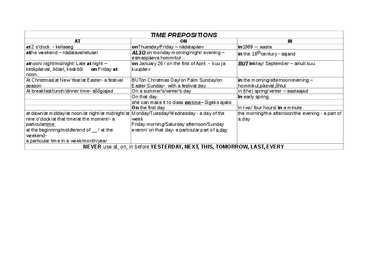
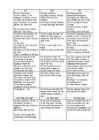
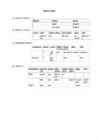
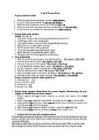
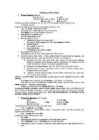
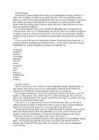
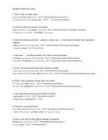
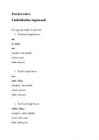
monday, morning, night, clock, going, holiday, april, june, evening, year, summer, spring, good, prepositions, weekend, midday, christmas, easter, work, sleep, busy, sunday, friday, meeting, jill, concert, afternoon, feel, emma, left, garden, lovely, beforeTIME PREPOSITIONS AT ON IN at 2 o'clock - kellaaeg onThuesday/Friday nädalapäev in1989 aasta atthe weekend nädalavahetusel ALSO on monday morning/night/ evening in the 18thcentury - sajand esmaspäeva hommikul... atnoon/ night/midnight/ Late at night on January 26 / on the first of April - kuu ja BUT inMay/ September ainult kuu keskpäeval, öösel, keskööl on Friday at kuupäev noon. At Christmas/at New Year/at Easter- a festival BUTon Christmas Day/on Palm Sunday/on in the morning/afternoon/evening
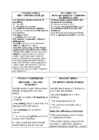
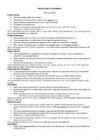
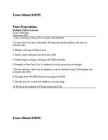
.................................................... 8 Prepositional Phrases ......................................................................................... 8 Prepositions of Time – in, on & at • in is used with centuries, decades, years, seasons and months, parts of the day, periods of time • on is used with dates, special days, days of week, day of week + part of day, day + of ... • at is used with holidays, exact time, meals and with night in on at • the 20th century • the 29th of November • Christmas / Easter • the Middle ages /August the first • six o’clock / 7.30 • the 1980s • Christmas Day / New • midday / noon / • 2006 Year’s Eve / Easter midnight • winter / summer Sunday • the weekend /
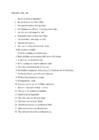
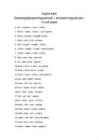
Fill in IN, ON, AT: 1. Dave was born in September. 2. He was born on the 16th of May 3. We agreed to meet at half past four. 4. On Christmas we all went to see our grandmother. 5. Jennifer came to England in 1992. 6. It started to snow on New Year's Day. 7. The First World War ended in 1918. 8. She arrived in spring. 9. We met on Sunday afternoon last week. 10. Do you drive at night? 11. It's Bruce's birthday next Wednesday. 12. Dick and Mary got married in 1993 on the 10th of July. 13. At midnight we heard footsteps. 14. In the morning we went to school as usual. 15. This castle was built in the 15th century. 16. My brother is taking his driving test at 2 o'clock on the 4th of October. 17. Mr Froster doesn't go to office on Saturdays. 18. We'll see Ken tomorrow evening. 19. It happened last week. 20. Can you come to see me on Friday morning?
· action arranged for the future Past Simple A: He spoke. · Finished action in the past yesterday, 2 N: He did not speak. minutes ago, in Q: Did he speak? · actions taking place one after 1990, last Friday another Past A: He was speaking. · action going on at a certain when, while Continuous N: He was not time in the past yesterday at 5 speaking. Q: Was he speaking? · actions taking place at the same time · action in the past that is interrupted by another action Present Perfect A: He has spoken
· http://www2.gsu.edu/~wwwesl/egw/verbs.htm Ajamääruslaused (Adverbs of time) can be time expressions such as · `last night'. can be prepositional phrases with `at', `in', or `on'. `For' refers to a period of time in the past, present, or future. `Since' refers to a point in past time. A We use adverbials of time to say when something happens. We often use noun groups called time expressions as adverbials of time. yesterday, today, tomorrow last year, next Saturday, next week the day after tomorrow, last night, · the other day · Do not use the prepositions `at', `in', `on'!!! Prepositional phrases as adverbials of time: `at' is used with: clock times: at eight o'clock, at three fifteen religious festivals: at Christmas, at Easter mealtimes: at breakfast, at lunchtimes specific periods: at night, at the weekend, at weekends, at half-term `in' is used with: ·
AT ON IN For the time of day For days and dates For longer periods At five o'clock, 11.45, On Friday/ Fridays, 16 May (months/years/seasons) midnight, lunchtime, sunset. 1999, Christmas Day, In October, the 1990s, the At night, the weekend, week- birthday. past, Middle ages, the winter. ends, Christmas, the moment, On Friday/ Sunday/ Monday In the morning/ afternoon/ present, the same time. evening/ morning/ afternoon. evening. In a few minutes/ a week/ Do not use at/ on/ in before moment. last/ next / this/ every
in brackets. _ 1 She is in a band and she _________________________________ (record) a CD at the moment. _ 2 She is an actress and often _________________________________ (appear) on television. _ 3 At the moment she _________________________________ (have) a rest because she is tired. _ 4 Mike is a doctor and he _________________________________ (live) in Manchester. _ 5 I _________________________________ (start) work at 8.30 every morning. _ 6 He is a good cook but she _________________________________ (prefer) to eat out. _ 7 English tests _________________________________ (get) more and more interesting. _ 8 They _________________________________ (have) a party because it's her birthday. _ 9 I sometimes _________________________________ (ride) my bicycle to school. 10_ She usually _________________________________ (go) to the gym on Friday evenings.
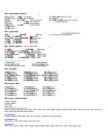
You worked yesterday you didn't work yesterday did you work yesterday? He/she/it worked yesterday he/she/it didn't work yesterday did he/she/it work yesterday? We worked yesterday we didn't work yesterday did we work yesterday? You worked yesterday you didn't work yesterday did you work yesterday? They worked yesterday they didn't work yesterday did they work yesterday? Unit 7 be going to (plans) + - ? I'm going to eat I'm not going to eat am I going to eat? You are going to eat. You aren't going to eat are you going to eat? He/she/it is going to eat He/she/it isn't going to eat is he/she/it going to eat? We are going to eat we aren't going to eat are we going to eat?
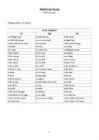
This is the first time that I am here. Ihanko totta? Really? Ymmärrätkö sinä? Do you understand? Kyllä, minä ymmärrän. Yes, I understand. Ei, minä en ymmärrä. No, I don't understand. Tiedätkö sinä? Do you know? Minä en tiedä. I don't know. Luuletko sinä, että alkaa sataa? Do you think it is going to rain? En minä usko. No, I don't think so. Sovittu? Agreed? Joo, sovittu. Yes, deal. Sopiiko kello 18.00? Is at 6 ok? Kyllä se sopii. Yes, it is fine. Valitettavasti se ei sovi. I am sorry, I can't make it. valitettavasti unfortunately
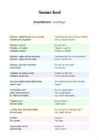
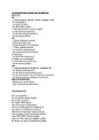
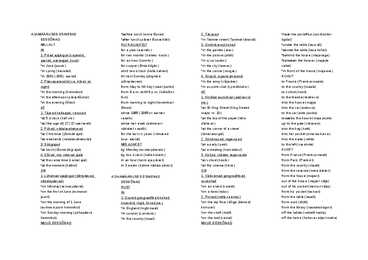
AJAMÄÄRUSES ESINEVAD EESSÕNAD MILLAL? IN 1. Pikad ajajärgud (sajandid, aastad, aastaajad, kuud) *in June (juunis) *in spring (kevadel) *in 1991 (1991. aastal) 2. Päevaperioodid (v.a. öösel- at night) *in the morning (hommikul) *in the afternoon (pärastlõunal) *in the evening (õhtul) AT 1. Täpsed kellaajad, vanused *at 5 o'clock (kell viis) *at (the age of) 17 (17-aastaselt) 2. Pühad, nädalavahetused *at Christmas (jõulude ajal) *at weekends (nädalavahetustel) 3. Söögiajad *at lunch (lõunasöögi ajal) 4. Sõnad, mis viitavad ajale *at the same time (samal ajal) *at the moment (hetkel) ON 1. Lühemad ajajärgud (tähtpäevad, nädalapäevad) *on Monday (esmaspäeval) *on the first of June (esimesel juunil)
Tower, the Simpsons A – AN - THE Time Expressions • we don't use an article: at night, at noon, every We don't usually use an article week, every day, every night, last morning, last • to talk about things in general. • before the names of countries, cities, towns and villages. week, all night, all day, tomorrow, yesterday,... • with plural nouns and uncountable nouns when talking about them • use the with in the morning, in the afternoon, generally
For example, "The Thames", "The Alps", "The Atlantic Ocean", "The Middle East". Unique things have 'the'. For example, "the sun", "the moon". Some institutional buildings don't have an article if you visit them for the reason these buildings exist. But if you go to the building for another reason, you must use 'the'. "Her husband is in prison." (He's a prisoner.) "She goes to the prison to see him once a month." "My son is in school." (He's a student.) "I'm going to the school to see the head master. "She's in hospital at the moment." (She's ill.) "Her husband goes to the hospital to see her every afternoon." Musical instruments use 'the'. "She plays the piano." Sports don't have an article. "He plays football." Illnesses don't have an article. "He's got appendicitis." But we say "a cold" and "a headache". Jobs use 'a'. "I'm a teacher." Countries We don't use 'a' if the country is singular. "He lives in England
at home on the radio in the park at work on television in the car at the university on page 5 in the drawer at the lecture on both sides of the street in a chair at an office on top in the picture at a party on leave in the water at the top of the page on holiday in the sky at the bottom of the page on my right in a coffee bar at the end of the street on my way to college in the middle of the room at my left side in the corner of the room 1 KUHU? WHERE TO? KUS? WHERE? KUST? WHERE FROM? When do you go to work? Father is at work now
FUTURE SIMPLE BE GOING TO Will + infinitive (will go) Am/is/are going to + infinitive (is going to rain) 1.A decision at the moment of 1.Future plans made before the speaking: moment of speaking: A: 'I'm cold'. A: 'We've run out of milk.' B: 'I'll close the window'. B: 'I know, I'm going to buy some.' 2.Prediction based on opinion: 2.Prediction based on present I think the Conservatives will win the evidence: next election. Look at those boys playing football! 3.A future fact: They're going to break the window. He will be ten next year. 4.Promises / requests / refusal / willingness: I'll help you with your homework. Will you give me a hand? 5.In the same way as the future
A work B have worked C is working D worked 5) My father........already worked for two years before he went to University. A was B had C has D is 3. Change the order of the words to make a correct sentence. ( 5 points ) 1) I wonder / can / you / me / help / if 2) a / my / to / written / I / mother / already / letter / long / have 3) the / watch / often / they / TV / in / evening 4) the / gave / my / for / this / umbrella / is / that / Sally / me / my / birthday 5) particular / nothing / have / at / tell / you / to / moment / the 4. Give the comparative and the superlative of the following adjectives: ( 5 points ) e.g. tall taller the tallest lucky difficult soft good interesting 5. Put these sentences into the Reported Speech. ( 5 points ) e.g. She said:"I will call you from London." She said that she would call me from London.
4Use a capital letter for the first letter in a sentence: The dog is barking. Come here! 4Always use a capital letter for the word I : I am eight years old. Tom and I are good friends. 4Use a capital letter for the names of people: Alice, Tom, James, Kim, Snow White 4Use a capital letter for the names of places: National Museum, Bronx Zoo, London, Sacramento 4Use a capital letter for festivals, holidays, days of the week, months of the year: New Year's Day, Christmas, Labor Day, Mother's Day, Sunday, Monday, Friday, January, May, July, October Exercise 1 Circle the letters that should be CAPITALS. Then write the correct letter in the space above them. 1 peter and i are good friends. we are going to chicago during our summer 2 vacation. 3 there is an interesting football game on sunday. 4 jason lives on thomson avenue.
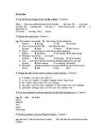
2. On your birthdayyours friends can give you the bumps . 3. When you give somebody a present, you need to wrap it up. 4. When you put bowls,cups, forks and knives on the table, you lay the table . 5. Of you want to say something to many people, you make a speech. 2. Kirjuta lünka sobiv eessõna. Vali siit : in / on / at 1. Why didn´t we go to the swimming pool on Tuesday afternoon ? 2. Little Peggy didn´t sleep well at night. 3. The pupils of class 6 went on a class trip on Monday morning. 4. Please come to my place in the evening. 5. All the animals had a meeting at noon. 6. They had a big garden party on Saturday night . 7. In the afternoon the headmaster made a speech. 8. My parents left for Helsinki on Thursday afternoon . 3. Vasta küsimustele. 1. Will you invite all your friends to yuor birthday party ? No, I won´t / Yes, I will 2. Did you sleep well last night
VIISIMRUSES ESINEVAD EESSNAD KUIDAS? by bus (bussiga) by train (rongiga) by plane (lennukiga) on foot (jalgsi) in English (inglise keeles) in a loud voice (valju hlega) in a whisper (sosinal) with difficulty (suure vaevaga) with care (hoolikalt) with his key (vtmega) without delay (viivitamata) AJAMRUSES ESINEVAD EESSNAD MILLAL? IN 1. Pikad ajajrgud (sajandid, aastad, aastaajad, kuud) *in June (juunis) *in spring (kevadel) *in 1991 (1991. aastal) 2. Pevaperioodid (v.a. sel- at night) *in the morning (hommikul) *in the afternoon (prastlunal) *in the evening (htul) AT 1. Tpsed kellaajad, vanused *at 5 o'clock (kell viis) *at (the age of) 17 (17-aastaselt) 2. Phad, ndalavahetused *at Christmas (julude ajal) *at weekends (ndalavahetustel) 3. Sgiajad *at lunch (lunasgi ajal) 4. Snad, mis viitavad ajale *at the same time (samal ajal) *at the moment (hetkel) ON 1
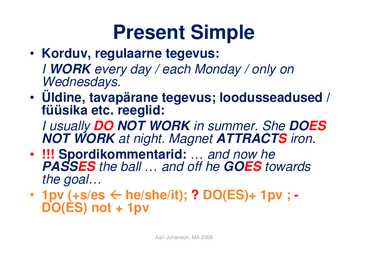
Present Simple · Korduv, regulaarne tegevus: I WORK every day / each Monday / only on Wednesdays. · Üldine, tavapärane tegevus; loodusseadused / füüsika etc. reeglid: I usually DO NOT WORK in summer. She DOES NOT WORK at night. Magnet ATTRACTS iron. · !!! Spordikommentarid: ... and now he PASSES the ball ... and off he GOES towards the goal... · 1pv (+s/es Å he/she/it); ? DO(ES)+ 1pv ; - DO(ES) not + 1pv Aari Juhanson, MA 2008 Present Progressive · Hetkel toimuv, pooleliolev tegevus: S/he IS TALKing on the phone now. I AM READing an interesting book. · Ajutine, regulaarsele ja tavapärasele vastanduv tegevus (tulevikku viitav): This summer they ARE not GROWing
and her father moved here. 4) Yesterday at two o`clock Tom ..............................(sing) and his sister ........................... (draw) a pictuture in the living room. 5) The wind ........................(be) very strong some days ago. 6) Where are the children? They ...................................... (play) with their ball in the garden. 7) He...............................(go) to work every day. 8) Mary................................(arrive) tomorrow. 9) Last year she............................(go) for sports twice a week. 10) At first she took some oranges, then she.................(put) them on the table and ..........................(begin) to make a pie. 11) I cannot come, I .............................(not finish) my work yet. 12) Yesterday I ................................(not go) to school because I ................................(be) ill. 2. Use the verb be in suitable forms. (10 p) 1) They....................students last year. 2) Mike.....
Verbidel, mis lõpevad y-ga, mille ees on konsonant, muutub y->ies carry - he carries Vrdl: play he plays 1. Harjumuspärane, korduv tegevus või seisund olevikus. Tom drinks tea every day. He lives in Brussels. 2. Üldtuntud tõed, loodusseadused The earth goes round the sun. 3. Tulevikus toimuv tegevus a) Sõiduplaanid, planeeritud programmid. The train for Tallinn leaves at 10. The course begins on Monday. b) Tingimuslausetes If you want me, just call c) Ajamääruslausetes I shall speak to him when he comes. 2. Spordireportaazid, arvustused. Lepp passes the ball to Kask. Gibson acts well in "Braveheart". 3. Seisundiverbidega (state verbs) verbid, mida tavaliselt ei kasutata kestvates aegades, sest nad kirjeldavad seisundit, mitte tegevust Need on verbid, mis väljendavad:
Tänavad *near the postoffice (postkontori EESSÕNAD *after lunch (pärast lõunasööki) *in Tamme street (Tammel tänaval) ligidal) MILLAL? KUI KAUA(KS)? 3. Ümbritsevad kohad *under the table (laua all) IN for a year (aastaks) *in the garden (aias) *above the table (laua kohal) 1. Pikad ajajärgud (sajandid, for two months (kaheks kuuks) *in the picture (pildil) *behind the house (maja taga) aastad, aastaajad, kuud) for an hour (tunniks) *in a car (autos) *between the houses (majade
Saturday afternoons. (= He does that every Saturday Afternoon.) Timetables/programmes with a future The train leaves at 10.05 on Tuesday meaning. Reviews/sports commentaries/dramatic The basketball player shoots and the ball narrative goes in the basket. Time expressions used with present simple: Every day/week/month/year, usually, sometimes, always, rarely, never, often, on Monday, in the morning, evening, etc. Present Continuous (to be + verb -ing) Present Continuous is used for... Example Temporary situations I am paying off my car loan this month Frequently repeated actions with always, He is always leaving his dirty clothes on constantly expressing annoyance or the floor! criticism Actions happening at or around the I'm making coffee, would you like some moment of speaking
FUTURE I will work in I will be working in Enne tulevik. Kestev ennetulevik. school. school. tulevikus Mingiks hetkeks I will ..going to.. - on tegevus kestab. tulevikus ma olen seda kindlam! teinud. Will have worked. Present I think Jason is in the garden. He is building(build) a shed. Steve jogs (jog) around the lake every evening. In northwest Scotland summer temperatures rarely rise(rise) above 16C. I'm meeting (meet) Mr. Houghton at six o'clock. His flight takes off(take off) at 11.45. You always complain. Tourism has increased/is increasing in this area. He has just finished work on his new book. I have been to America twice. Her eyes are red because she has been crying. She has been studying non-stop for eight hours. Jade and Tom are having a car boot sale next Saturday. Past
position of the islands in the temperate belt; the fact that the prevailing winds blow from the west and south-west and the warm current -- the Gulf Stream that flows from the Gulf of Mexico along the western shores of England. All these features make the climate more moderate, without striking difference between seasons. It is not very cold in winter and never very hot in summer. So, the British ports are ice-free and its rivers are not frozen throughout the year. The weather on the British Isles has a bad reputation. It is very changeable and fickle. The British say that there is a climate in other countries, but we have just weather. If you don't like the weather in England, just wait a few minutes. It rains very often in all seasons in Great Britain. Autumn and winter are the wettest. The sky is usually grey and cold winds blow. On the average, Britain has more than 200 rainy days a year
(NOT ... an own phone line.) 2. Use or rather to correct yourself. She's German or rather, Austrian. (NOT She's German or better, Austrian.) I'll see you on Friday or rather, Saturday. 3. Use the simple present play(s), rain(s) etc to talk about habits and repeated actions. I play tennis every Saturday. (NOT I am playing tennis every Saturday.) It usually rains a lot in November. 4. Use will ..., not the present, for offers and promises. I'll cook you supper this evening. (NOT I cook you supper this evening.) I promise I'll phone you tomorrow. (NOT I promise I phone you tomorrow.) 5. Don't drop prepositions with passive verbs. I don't like to be shouted at. (NOT I don't like to be shouted.) This needs to be thought about some more. (NOT This needs to be thought some more.) 6. Don't use a present tense after It's time. It's time you went home. (NOT It's time you go home.) It's time we invited Bill and Sonia. (NOT It's time we invite Bill and Sonia.) 7
· Timetables and programmes · Sporting commentaries, rewiews (Beckham wins the ball, crosses and Owen scores) · Feelings and emotions (I love Tallinn..) TIME EXPRESSIONS USED WITH PRESENT SIMPLE: usually, often, always, every day/week etc, in the morning/evening etc, at night/the weekend, on Fridays etc. Present Continuous · Actions taking place at or arount the moment of speaking (The kids are watching TV..) · Fixed arrangements in the near future (I'm going to the dentist tomorrow) · Currently changing ang developing situations (The number of burgularies is increasing) · With ,,Always" to express anger or irritation at a repeated action (You're always forgetting..) TIME EXPRESSIONS USED WITH PRESENT CONTINUOUS: now, at the moment, at present, these days, nowadays, still, today, tonight etc. Present Perfect · Action happened at an unstated time in the past. Emphasis on the action, time is unimportant or unknown
or Holland Park Flower Show, or even the Wembley Flower Show had events worked out differently. The first Royal Horticultural Society (RHS) Great Spring Flower Show at Chelsea opened in May 1913, although, confusingly, there was another May flower show the Royal International Horticultural Exhibition held at the Royal Hospital in 1912. This one off event was backed but not run by the RHS, which cancelled its own Great Spring Show for that year. The RHS Great Spring Flower Show had normally been based at the Inner Temple in the hart of London, but in 1913 RHS had idea of moving the Show to Holland Park. They thought that the Show was becoming too big for the Inner Temple site. Anyway it stayed in first place. July 1912 the RHS President Sir Trevor Lawrence had met Major General Crutchley Of the Royal Hospital at Chelsea, and the two began to talk about a 14-day reservation of the gardens and a 14-year agreement
of the many that are so abundant in Estonia's folklore. It is the story of a poor girl who falls in love with the son of the village elder, and disguises herself as a choirboy in order to sneak into the castle. But, alas, the lord of the manor's son discovers the deception. He is overcome by jealous rage and orders his men to seal the girl inside the thick stone walls while still alive. Turned into an incarnation of undying love, the White Lady now appears every August, on the night of the full moon, in the Dome Church chapel window. Haapsalu is seven-and-a- quarter centuries old this year, and the townsfolk intend to make it a celebration to remember. The annual dance and light show dedicated to the Lady alone involves over 100 performers - and you'll have several chances to catch it over the four days of the event. Musical shows, dances and contests of strength and skill will be held all over town.
Some of them ... (1 do) great things in sport. Lisa ... (2 win) nine swimming competitions since she was 13. John ... (3 be) the school's top runner for the last two years. Next spring he ... (4 run) the London Marathon. But my friend Kelly is the best. She ... (5 start) skating when she was four. She ... (6 have) the best results and she ... (7 win) lots of prizes. She ... even ... (8 be) on TV. Kelly ... (9 break) her arm twice while doing a jump on the ice, but she's OK now. Last year she ... (10 travel) to Canada to practise in a training camp. I'm sure sometime in the future she ... (11 win) an Olympic medal. By that time, I ... (12 be) a famous author and she ... (13 ask) me to write a book about her way to the top. That's why I ... (14 start) taking notes of her and my other classmates' results. 3. Complete the exercise with the verbs in the past simple, the past continuous, or the past perfect tense. Do you remember? I went I was / we were going I had gone
· On the right/left paremal/vasakul · To the right/left paremale/vasakule · Below allpool · Past mööda · Against vastu · Among hulgas · At kusagile · To kuskil Erandid ! · In the picture /photo · In the sky · On the beach / coast · On chair · In the armchair · On a map · At school/work/home/sea/station/airport/port jne. · I live in Kase street · I live at 10 Kase street · I´m on holiday · On the ground floor · I live in the country · In the field · On a farm · On a menu · At the door · On foot · By bus · At the bottom of page · On an island · I sleep in bed · On the wall · At contsert Prepositions of time Ajamäärused In sajandil in the 2nd century - aastaajad in summer - aastad in 1975 - päevaajad in the morning , in midday - in a minute hetkepärast
Ermo Altmäe 011PK Time Prepositions Multiple Choice Exercise Correct! Well done. Your score is 60%. 1. Jane is arriving on January 26 at 2 o'clock in the afternoon. 2. It snows here every year in December. We always go outside and play in the snow on Christmas day. 3. Michael is leaving on Friday at noon. 4. Frankie started working for her law firm in 1995. 5. Franklin began working on the project NO PREP yesterday. 6. Normally, on New Year's Eve, it's tradition to kiss the one you love at midnight. 7 Don't be ridiculous; there were no telephones in the seventeenth century! The telephone was invented in the 1870s. 8. The plane leaves NO PREP tomorrow morning at 8:00 AM. 9
42.Lay laid laid panema, asetama 43.Light lit lit süütama 44.Mean meant meant tähendama 45.Ride rode ridden ratsutama 46.Upset - upset upset ärritama 47.Swing swung swung kiikuma, õõtsutades liikuma 48.Send sent - sent saatma 49. Run ran run jooksma 50.Ring rang rung helistama, helisema 51. Strike struck struck lööma Eessõnad ajamäärustes In: In the morning In the evening In the afternoon In 1998 In february In winter In the 1980s On: On Sunday morning On Monday evening On Saturday afternoon On Friday night reede õhtul On the first of february On a cold winter morning On christmas day At: At ten o'clock At half past eight At noon lõuna At night - õhtul At midnight keskööl At midnight on Tuesday At the beginning of the year Nimetav I mina You sina He - tema (mees)
 annaabi.ee