Nad ei saanud olla maailmale eeskujuks, kui nad jäävad muust maailmast eraldatuks. Senise ajaloo vältel oli USA just pigem isolatsionismi pooldanud.6 Külm sõda tähendas nende jaoks diplomaatia ja välissuhete täielikku ümbermõtlemist – saadi aru, et enda julgeoleku huvides on demokraatlike väärtusi vaja ka 2 Autor on külma sõja alguspunktiks võtnud Winston Churchilli kõne 5. märtsil Fultonis 1946. aastal. 3 Gordon Alexander Craig. War, politics and diplomacy: selected essays. Afterword: new dimensions of war and diplomacy. New York ; Washington: Praegar, 1966, lk. 282. 4 Walter L. Hixson. The myth of American diplomacy: national identity and U.S foreign policy. New Haven ; London: Yale University Press, 2008, lk. 165-166. 5 Ibid., lk. 167. 6 John Lewis Gaddis. Külm sõda. Tallinn: Tänapäev, c2007, lk. 25-26. 4 mujal juurutada
CANADA GENERAL STATISTICS Capital - Ottawa Population - 33,390,141 (July 2007 est.) Population density 3.5 inhabitats per km2 Among the lowest in the world Currency Canadian Dollar (CAD) 2 Official Languages English and French Government system constitutional monarchy and federal parliamentary diplomacy POLITICAL SYSTEM Constitutional monarchy Elizabeth II, Queen of Canada, head of state Governor General appointed by the monarch Parliamentary democracy Similar parliamentary system to other Commonwealth realms Federation "One Dominion under the name of Canada" with the Constitution Act of 1867 GEOGRAPHY Located in North America, north of USA Territory - 9,984,670 km2 World's second largest country CLIMATE Due to large territory, climate varies in greatly
Why was the USSR interested in helping Cuba? A Communist state A good launch base for the USSR Nikita Khrushchev wanted to test the strenght of John F. Kennedy and force him to bargain over the US missile in Europe What happened? Photos of missile sites on Cuba were taken by spy planes, October 14, 1962 Photos revealed to the Us the day after President Kennedy formed the EXCOMM (Executive Committee of the National Security Council) Possible courses of action 1)Do nothing 2)Diplomacy 3)Warning 4)Blockade 5)Air strike 6)Invasion The responses were considered and ExComm started making the choice between an air strike and a naval blockade. Blockade On October 19 ExComm chose the blockade option. The choice provoked the USSR President Kennedy blockaded Cuba on October 21 Speech to the nation President Kennedy gave a nation-wide speech on October 22 announcing the discovery of the missiles and describing the plan. The military level of the US was increased to level DEFCON 3.
It started ti spread in the 17th century, when Englishmen sailed to faraway lands. It has become a world language thanks to its establishment as a mother tounge outside England, in all the continents of the world. Above all, it is the great growth of population in the USA taht has given the English language its present standing in the world. English can be compared with Latin oh the acient times. It dominates the planet as the medium of exhange in science, technology, commerce, tourism, diplomacy and pop culture. The speakers of English fall into one of the three groups: those who have it as their native language; those who use it in their surrounding bilingual society; and those who need it for practical purposes-administrative, professional or educational. 345 million people use English as their first language and an additional 400 million as their second.
budget of the European Union. Jerzy Buzek is the President of the European Parliament The Council is the EU's main decision-making body. Like the European Parliament, the Council was set up by the founding treaties in the 1950s. It represents the member states, and its meetings are attended by one minister from each of the EU's national governments. Which ministers attend which meeting depends on what subjects are on the agenda. Javier Solana gives EU diplomacy a face as High Representative for the Common Foreign and Security Policy The Commission is independent of national governments. Its job is to represent and uphold the interests of the EU as a whole. It drafts proposals for new European laws, which it presents to the European Parliament and the Council. It is also the EU's executive arm in other words, it is responsible for implementing the decisions of Parliament and the Council. That means managing the
cautious and most of all retarded at communicating. I have experienced what too much virtual communication can do to us and believe me you don't want to try it. While having some negative sides, virtual communication is generally still a very good thing because thanks to this advanced technology people from countries around the globe can communicate quickly and easily every day. And not only ordinary people use it; virtual communication has also spawned a whole new field of diplomacy and politics. In fact, it is so convenient that most people don't even bug to send classical, physical letters anymore, which in not too bad in my opinion. Virtual communication has changed the world. The question is: has it changed it better or worse. In my opinion better. But more importantly, how has virtual communication influenced our behaviour and relationships? Frighteningly, it has influenced these aspects in a negative way
have experienced in Thuringia. In addition to singing in the a cappella choir, it is likely that he played the School's three-manual organ and its harpsichords. He probably learned French and Italian, and received a thorough grounding in theology, Latin, history, geography, and physics. He would have come into contact with sons of noblemen from northern Germany sent to the highly selective school to prepare for careers in diplomacy, government, and the military. Although little supporting historical evidence exists at this time, it is almost certain that while in Lüneburg, young Bach would have visited the Johanniskirche (Church of St. John) and heard (and possibly played) the church's famous organ (built in 1549 by Jasper Johannsen and nicknamed the "Böhm organ" after its most prominent master, Georg Böhm). Given his innate musical talent, Bach
It is one of the official languages of the United Nations. According to research by the British Council, around 375 million people in the world speak English as their native language and English has official or special status in at least seventy-five countries. The British Council has also noted that English is the main language of newspapers, airports and air-traffic control, international business and academic conferences, science, technology, diplomacy and sport. Perhaps even more important contributor to the dominant role of the English language in the world is that over two-thirds of the world's scientists are able to read in English. Three quarters of the world's mail is written in English and eighty per cent of the world's electronic information is stored in English. The biggest countries where English is spoken as the first language are: Great Britain, Canada, United States of America and Australia.
more concerned with transforming the Church. In 1434 the Utraquists agreed to accept Sigismund's rule in return for religious tolerance; the Taborites kept fighting, only to be defeated in the same year at the Battle of Lipany. Following Sigismund's death, George of Podbrady (Jií z Podbrad) ruled as Bohemia's one and only Hussite king, from 1452 to 1471, with the backing of Utraquist forces. He was centuries ahead of his time in suggesting a European council to solve international problems by diplomacy rather than war, but he couldn't convince the major European rulers or the pope. After George's death two weak kings from the Polish Jagiellonian dynasty ruled Bohemia, though real power lay with the Utraquist nobles, the so-called Bohemian Estates. INDEPENDENCE Czechs had no interest in fighting for their Austrian masters in WWI, and neighbouring Slovaks felt the same about their Hungarian rulers. Many defected to renegade legions fighting against the Germans and Austrians.
Nixoni doktriin- puhas pragmatism. 1.USA peab kinni lepingulistest kohustustest. 2.USA kaitseb vaid neid riike, keda ähvardab tuuma rünnaku oht. 3 Teistel juhtudel vaatleb vaid eraldi. Kissinger ja Nixon Ping-pongi diplomaatia 70ndad: USA-Hiina suhete paranemine. USA-NL suhted hakkasid ka paranema, seoses tuumarelvadega. Kõik pingelõdvendused tulevad USA initsiatiivil. Jaapani probleemi lahendamine- kindlustunde andmine seoses Hiina suhete paranemisega. SÜSTIK-Diplomaatia (shuttle diplomacy)- Miks shuttle?- Korduv kiire sekkumine. Kissingeri läbirääkimiste vahendamist Iisraelis ja Lähis-Idas. Jimmy Carter (James Earl Carter jun. 1924) 1977-1981: moraalist ja inimõigustest lähtuvalt (toetatakse riike, kus USA seisukohast inimõigusi jälgiti ja seal astuti inimeste kaitseks välja, kus ei jälgitud). Väga ebaõnnestunud president. v.a Camp David 1979 Egiptuse ja Iisraeli, kus Egiptus ei rünnanud enam Iisraeli. *NL tungis Afgaani, Carter väitis, et see on ohtlikum hetk
in Warrensburg, New York, just north of where most of the book's plot takes place. Washington Irving Washington Irving was born in New York City (near present-day Wall Street) at the end of the Revolutionary War on April 3, 1783. His parents, Scottish-English immigrants, were great admirers of General George Washington, and named their son after their hero. Irving had many interests including writing, architecture and landscape design, traveling, and diplomacy. He is best known, however, as the first American to make a living solely from writing. Initially, he wrote under pen names; one was "Diedrich Knickerbocker." In 1809, using this pen name, Irving wrote A History of New-York that describes and pokes fun at the lives of the early Dutch settlers of Manhattan. Letters of Jonathan Oldstyle 1802 Salmagundi 1807-1808 A History of New York 1809 Emily Elizabeth Dickinson
Democrats, One Nation and the Greens. The federal parliament is divided into two Houses the upper house (the Senate) and the lower house (the House of Representatives). The party which gains the majority of seats in the House of Representatives forms the government. The leader of this party becomes the prime minister. In the Government of Australia, the Minister for Foreign Affairs is responsible for overseeing the international diplomacy section of the Department of Foreign Affairs and Trade. Prior to 1970, the office was known as the Minister for External Affairs. The minister is usually one of the most senior members of Cabinet -- the position is equivalent to that of Secretary of State in the United States or Foreign Secretary in the United Kingdom -- as shown by the fact that eleven Prime Ministers of Australia have also worked as the Minister for Foreign Affairs
) Lead by Theodore Roosevelt and Progressive party Women's suffrage · An American Empire (the Philippines, Cuba) New Imperialism - colonial expansion during the late 19th and early 20th centuries (5.) Increasing competition (over resources, strategic power, and prestige) between the industrialized nations (6.) Accelerate internal development (6.) Economical decline at the end of the 19th century · Dollar Diplomacy Political influence over foreign governments (China, Haiti, Nicaragua, Honduras, Dominican Republic) (8.) Providing money, and services to a country, and receiving an alliance in return (8.) Advance and protect American businesses in other countries · Monroe Doctrine European powers were to no longer colonize or interfere with the affairs of the newly independent nations of the Americas (6.) The United States planned to stay neutral in wars between European powers and their colonies
England, which became Protestant. King Henry VIII held the title Defender of the Faith, which was given to him by the Pope. His daughter Elizabeth I became one of England’s greatest monarchs. 15. Elizabeth I. Elizabeth I, daughter of Henry VIII, was the first of three long-reigning queens in the British history (the other two are Victoria and Elizabeth II). During her long reign she established, by skillful diplomacy, a reasonable degree of internal stability in a firmly Protestant England, allowing the growth of a spirit of patriotism and general confidence. She never married, but used its possibility as a diplomatic tool. She became known as the “Virgin Queen”. Her reign is characterized by intellectual brilliance, flourishing literature and commercial prosperity. 16. The Civil War. 1642-1651.During the century, Parliament had established its supremacy over the
20. Malleus, I. UNDAC Support Team. Häire 112, 1406-6130, (2002) nr. 1/2, lk. 112 21. Mikk, K. Riskianalüüs ja kriisireguleerimine. Tallinn 2006 22. Ministeeriumi valitsemisala hädaolukordade riskianalüüsi ajakava ja metoodika 2007 - http://www.siseministeerium.ee/public/riskianalyysi_metoodika.pdf (27.05.2008) 23. NATO Handbook. NATO Public Diplomacy Division, Brussels, 2006. 24. NATO käsiraamat. Brussels : NATO Office of Information and Press, 2001 - http://www.nato.int/docu/other/ee/estonian.htm (27.05.2008) 25. Ohtliku ja suurõnnetuse ohuga ettevõtte teabelehe, ohutusaruande ja hädaolukorra lahendamise plaanide koostamise ja esitamise kord ning suurõnnetuse ohuga ettevõtete loetelu pidamine. https://www.riigiteataja.ee/ert/act.jsp?id=923952 (27.05.2008) 26
education. The goal of this multilateral MA training programme is to introduce a unified academic module that gives an overview of economic, cultural, political, administrational business settings in Russia and Eastern Partnership countries. The programme is developed in cooperation between University of Tartu, University of Tallinn, Tallinn University of Technology and Estonian School of Diplomacy and representatives of business, government and education sector. The project raises the competence and ability of Estonian higher institutions to analyze economic and political-administrative environment and to foresee the possible changes of business development of Russia and Eastern Partnership countries. Furthermore, the module does not focus only on business awareness, but combines the economic, cultural and political sciences and provide the problem-oriented knowledge and abilities.
education. The goal of this multilateral MA training programme is to introduce a unified academic module that gives an overview of economic, cultural, political, administrational business settings in Russia and Eastern Partnership countries. The programme is developed in cooperation between University of Tartu, University of Tallinn, Tallinn University of Technology and Estonian School of Diplomacy and representatives of business, government and education sector. The project raises the competence and ability of Estonian higher institutions to analyze economic and political-administrative environment and to foresee the possible changes of business development of Russia and Eastern Partnership countries. Furthermore, the module does not focus only on business awareness, but combines the economic, cultural and political sciences and provide the problem-oriented knowledge and abilities.
kodus. Pärast Kyros II surma sai Pärsia kuningaks tema poeg Kambyses II. (born c. 585, Media or Persis—died c. 529, Asia) Conqueror who founded the Achaemenian Empire (see Achaemenian dynasty). The grandson of Cyrus I (fl. late 7th century BC), he came to power by overthrowing his maternal grandfather, the king of the Medes. The empire he developed was thenceforth centered on Persia and included Media, Ionia, Lydia, Mesopotamia, Syria, and Palestine. Cyrus conquered by diplomacy as well as by force. The subject of a rich legend in Persia and Greece (recorded by Xenophon and others), he was called the father of his people. He appears in the Bible as the liberator of the Jews held captive in Babylon. He died battling nomads in Central Asia. His legacy is the founding not only of an empire but of a culture and civilization that continued to expand after his death and lasted for two centuries. He exerted a strong influence on the Greeks and Alexander the Great
Monoalphabetic substitution is today a trivial form of cipher. But the technique of its solution lies at the heart of the cryptanalysis of nearly all more sophisticated substitution ciphers. Their solution consists in large measure of breaking down the cipher until the method for solving monoalphabetic substitutions can be applied. That method is therefore of fundamental importance. 4. The Rise of the West MODERN WESTERN cryptology emerged directly from the flowering of modern diplomacy. The ambassadors' reports were sometimes opened and read, and, if necessary, crypt-analyzed. By the end of the century, cryptology had become important enough for most states to keep full- time cipher secretaries occupied in making up new keys, enciphering and deciphering messages, and solving intercepted dispatches. Sometimes the cryptanalysts were separate from the cipher secretaries and were called in only when needed. Perhaps the most elaborate organization was Venice's
I held my breath at the door, but Edward Cullen wasn't there, either. I exhaled and went to my seat. Mike followed, talking about an upcoming trip to the beach. He lingered by my desk till the bell rang. Then he smiled at me wistfully and went to sit by a girl with braces and a bad perm. It looked like I was going to have to do something about Mike, and it wouldn't be easy. In a town like this, where everyone lived on top of everyone else, diplomacy was essential. I had never been enormously tactful; I had no practice dealing with overly friendly boys. I was relieved that I had the desk to myself, that Edward was absent. I told myself that repeatedly. But I couldn't get rid of the nagging suspicion that I was the reason he wasn't there. It was ridiculous, and egotistical, to think that I could affect anyone that strongly. It was impossible. And yet I couldn't stop worrying that it was true.
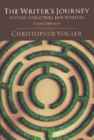
EPILOGUE: LOOKING BACK ON THE JOURNEY receives other C A L L S — the temptation to explore the forbidden zone, a call of childhood romance from Nala, and most drastically, the death of his father that calls him to enter a new phase of life in which he has to run away to survive. 'Simba has many M E N T O R S throughout the story. H i s father is his first great teacher, showing him the path of kingship and the Circle of Life, but he also learns diplomacy and statecraft from Zazu and something of the magical side of life from Rafiki. In Act Two his M E N T O R S a r e T i m o n and Pumbaa, teaching h i m their H a k u n a M a t a t a lifestyle. At the end of Act Two, N a l a comes to teach h i m about love and responsibility, and his fathers spirit is a supernatural M E N T O R encour aging him to face his destiny. In the climax, Nala, T i m o n , and Pumbaa become his A L L I E S against Scar
 annaabi.ee