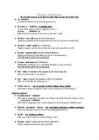
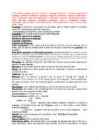
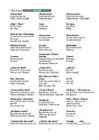
Clauses of Purpose To, in order to/so as to, so that/ in order that, in case, for, with a view To- infinitive (I called mu brother to tell him the good news.) In order to + infinitive et (midagi teha) (I went to the bank in order to apply for a loan.) so as to + infinitive et (She attended a catering course so as to become a chef.) So that + can/ will (present/ future references) (Tommy has moved to the countryside so that he can have more relaxed life.) So that + could/ would (past references) (Sophia bought a sailing boat so that she could sail around the world.) In case + present tense (present/ future references) (Bring an umbrella in case there is a storm in the afternoon.) NEVER USED WITH WILL/WOULD In case + past tense (past references) (We booked a table for six in case Peter brought his wife with him.) NEVER USED WITH ...
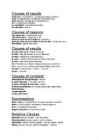
Clauses of results Such a/an + omadussõna + ainsuses loendatav nimisõna Such + omadussõna + loendamatu nimisõna/mitmus Such a lot of + loendamatu nimisõna/mitmus So + omadussõna/määrsõna So much/little + loendamatu nimisõna So many/few + mitmus Clauses of reasons The reason for + nimisõna/-ing vorm The reason why + clause (he verb) Because of/on account of/due to + nimisõna Because of/on account of/due to the fact that + clause (he verb) Now (that) + clause (they verb) Clauses of results In order to/so as to + infinitive (formal) So that + can/will (present or future reference) So that + could/would (past reference) In case + present tense (present or future reference) In case + past tense (past reference) For + nimisõna (kui tahame väljendada tegevuse eesmärki) For + -ing vorm (kui tahame väljendada millegi funktsiooni) Prevent + noun/pronoun + (from) + -ing vorm Avoid + -ing vorm Clauses of contrast Although/even though/though + cl...
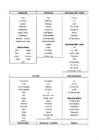
Adding and Contrasting Expressing cause / reason *and *but because as well as However, as besides Although since Moreover, despite This is why Furthermore, In spite of because of What is more, Nevertheless, Due to In addition, On the contrary, Owing to not only .... but also on the one hand For this reason, another point is that on the other hand, whereas Expressing effect / result relat...
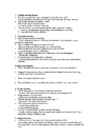
1. Faithful and false friends a. How do you understand literal translation (based on this short text)? Literal translation is translating directly from source language into target language b. Which types of words are more/less literal? More literal: objects and movements Less literal: qualities and ways of moving c. What are the two views of translation that the author brings out? Explain. 1) A process of explanation, interpretation, reformulating ideas and words. 2) Impossible due to other definitions 2. Expressive function a. Name the three expressive text types. - Serious imaginative literature; Authoritative statements; Autobiographies, essays, personal correspondence. b. Why is it difficult to translate an expressive text? - Because of the used dialect may get lost in the translation. c. What constitutes the personal component in an expressive text? - original metaphors, unusual collocations d. What is a...
1. Be ready to explain the terms (lecture 1): language, linguistics, synchronic approach to language, diachronic approach to language, linguistic competence, linguistic performance, what is grammar?, prescriptive grammar vs. descriptive grammar; phonology, phonetics, phone, allophone, phoneme; morphology, morphemes (types of morphemes), morphs, allomorphs, types of affixes, derivational affixes, inflectional affixes; open vs closed class words; syntax. Language: a systematic, conventional use of sounds, signs or written symbols in a human society for communication and self-expression. - human language at all levels is rule- or principle-governed. Linguistics: the scientific study of human natural language Synchronic approach to language: Diachronic approach to language: Linguistic competence: Linguistic performance: What is grammar?: "The sounds and sound patterns, the basic units of meaning, such as words, and the rules to combine them...
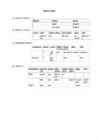
Word order: positive sentences subjects verb(s) object I speak English. I can speak English. Negative sentences subject verbs Indirect object Direct object place time I will not you the story at Tomorro tell school w. Subordinate Clauses conjunction subject verb(s) Indirec Direct place time t object object I will you the story...
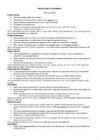
INGLISE KEELE KORDAMINE TIME CLAUSES Present Simple · Permanent states, facts (Tom works..) · Repeated and habitual actions, routines (She usually goes..) · Laws of nature and general truths (The sun sets in the west) · Timetables and programmes · Sporting commentaries, rewiews (Beckham wins the ball, crosses and Owen scores) · Feelings and emotions (I love Tallinn..) TIME EXPRESSIONS USED WITH PRESENT SIMPLE: usually, often, always, every day/week etc, in the morning/evening etc, at night/the weekend, on Fridays etc. Present Continuous · Actions taking place at or arount the moment of speaking (The kids are watching TV..) · Fixed arrangements in the near future (I'm going to the dentist tomorrow) · Currently changing ang developing situations (The number of burgularies is increasing) · Wi...
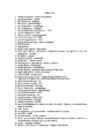
Units 12-18 1. system of pandects pandektiline süsteem 2. general provisions üldosa 3. law of property asjaõigus 4. family law perekonnaõigus 5. law of sucession pärimisõigus 6. law of obligations võlaõigus 7. General Part of the Civil Code Act TsÜS 8. Law of Property Act AÕS 9. Family Law Act perekonnaseadus 10. Law of Succession Act PäRS 11. Law of Obligations Act VÕS 12. persons and transactions isikud ja tehingud 13. natural persons 14. legal persons 15. passive legal capacity õigusvõime 16. active legal capacity (an ability to independently asume civil rights and incur civil obligations) teovõime 17. live birth elussünd 18. bequeath property pärandama 19. mental state vaimne seisund 20. restricted active legal capacity piiratud teovõime 21. mental illness vaimehaigus 22. mental disability nõdrameelsus 23. mental disorder psüühiline häire (sickness ...
1. STYLE The term "style" is polysemantic (has many meanings): a Latin word "stilus" originally meant a writing instrument used by ancient people. Already in classical Latin the meaning was extended to denote the manner of expressing one's ideas in written or oral form. Jonathan Swift defined style as "proper words in proper places". In present day English the word "style" is used in about a dozen of principle meanings: 1. the characteristic manner in which a writer expresses his/her ideas (e.g. style of Byron) 2. the manner of expressing ideas, characteristic of a literary movement or period 3. the use of language typical of a literary genre (e.g. the style of a comedy, drama, novel). 4. the selective use of language that depends on spheres / areas of human activity (e.g. style of fiction, scientific prose, newspapers, business correspondence, etc.). STYLISTICS Stylistics is the study of s...
Established church The Church of England is the established church, which means that: 1.)the Monarch is the Supreme Governor of the church, 2.)the Church performs a number of official functions, 3.)Church and State are linked. To disestablish Disestablishmentarianism refers to campaigns to sever links between church and state, particularly in relation to the Church of England as an established church. It was initially a movement in the United Kingdom in the 18th century. The established churches in Wales and Ireland could not count on even nominal adherence by a majority of the population of those countries. In Ireland, the predominantly Roman Catholic population campaigned against the position of the established Anglican Church of Ireland - eventually disestablished in Ireland from 1 January 1871. A broad church The Church of England is a broad church, representing a wide spectrum of theological thought and practice ...
FGI 1081 Stilistika (Irina Ladusseva) Kab. 420 2 AP Ends with an exam; lasts only for 1 semester. At the exam you get 2 questions and an exercise (50 sentences: establish the device used, recognize it, and name it). Care about the pronunciation of the terms. Books: - I. Galperin "Stylistics" - I. Ladusseva "Rhythm and Text" - I. Ladusseva "Vocabulary and Style" - I. Ladusseva "Stylistic practice: Book I, Book II" - I. Ladusseva "A Guide to Punctuation" EXAMINATION TOPICS: 1. Style, stylistics, a survey of stylistic studies ...
ELEA organisatsioon ELEA EESTI LOGISTIKA ja EKSPEDEERIMISE ASSOTSIATSIOON asutatud 06.12.1994.a. ühendab 71 rahvusvahelise transpordi ja ekspedeerimise ning logistikateenuste pakkumisega tegelevat firmat. Kuidas jaotatakse organisatsioonid? FIATA, a nongovernmental organisation, represents today an industry covering approximately 40,000 forwarding and logistics firms, also known as the "Architects of Transport", employing around 8 10 million people in 150 countries. ELEA on rahvusvahelise ekspedeerimisega ja logistikateenuste pakkumisega tegelevate juriidiliste isikute vabatahtlik ühendus. Organisatsiooni eesmärgiks on esindada ja kaitsta liikmete ühiseid tööalaseid huve, vältida ebaausat konkurentsi ja aidata kaasa oma valdkonna õigusaktide väljatöötamisele ning sellealase info levikule. ELEA Juriidiliste isikute vaba...
Philosophy of Language Philosophy of Language: a Contemporary Introduction introduces the student to the main issues and theories in twentieth and twenty-first-century phi- losophy of language, focusing specifically on linguistic phenomena. Topics are structured in four parts in the book. Part I, Reference and Referring, includes topics such as Russell's Theory of Descriptions, Donnellan's distinction, problems of anaphora, the description theory of proper names, Searle's cluster theory, and the causalhistorical theory. Part II, Theories of Meaning, surveys the competing theories of linguistic mean- ing and compares their various advantages and liabilities. Part III, Pragmatics and Speech Acts, introduces the basic concepts of linguistic pragmatics, includes a detailed discussion of the problem of indirect force and surveys approaches to metaphor. Part IV, new to this edition, examines the four theories of metaphor. Features...
1. Basic Phrases ¡Buenos días! ¡Buenas tardes! ¡Buenas noches! bway-nohs dee-ahs bway-nahs tard-ays bway-nahs noh-chays Hello! / Good morning! Good afternoon! Good evening! / Good night! ¡Hola! / ¡Chao! Adiós. Por favor. oh-lah / chow ah-dee-ohs por fah-bor Hi! / Bye! Good bye. Please. Hasta la vista / Hasta luego. Hasta pronto. Hasta mañana. ah-stah lah vees-tah / ah-stah ah-stah prohn-toh ah-stah mahn-yahn-ah loo-ay-go See you soon. See you tomorrow. See you / See you later. (Muchas) Gracias. De nada. Bienvenidos (moo-chah...
TRADERUN MOODUL TRADERUN MODULE BUSINESS PECULIARITIES IN THE EU, RUSSIA AND EASTERN PARTNERSHIP COUNTRIES ÄRI ERIPÄRAD EUROOPA LIIDUS, VENEMAAL JA IDAPARTNERLUSRIIKIDES Lecturers: Ryhor Nizhnikau (responsible) Giorgi Gaganidze, Sergei Proskura, Andres Assor P2EC.00.202 (UT code), RIE 7044 (TLU code) Reading materials: Business peculiarities in Ukraine and Belarus Lugemismatejal: Äri eripärad Ukrainas ja Valgenenes Created by Andres Assor Tartu 2013 TABLE OF CONTENTS INTRODUCTION ................................................................................................................... 4 1. UKRAINE ...................................................................................................................
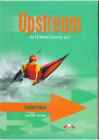
;P ulJbijlg lsBN 978-1-8432s-569-7 Illllll]ililil]t llll ||||rl 9 x781843x255697x Conlenls UNI T1 househol d & appl i ances; dw el l i ngs ln Searchof the Perfect My Home is my chores;colours& rooms;home H ome(mul ti pl choi e ce) Castle(pp. 5-19) safety TheCharmingPast:Blarney ...
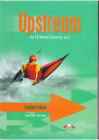
;P ulJbijlg lsBN 978-1-8432s-569-7 Illllll]ililil]t llll ||||rl 9 x781843x255697x Conlenls UNI T1 househol d & appl i ances; dw el l i ngs ln Searchof the Perfect My Home is my chores;colours& rooms;home H ome(mul ti pl choi e ce) Castle(pp. 5-19) safety TheCharmingPast:Blarney ...
;P ulJbijlg lsBN 978-1-8432s-569-7 Illllll]ililil]t llll ||||rl 9 x781843x255697x Conlenls UNI T1 househol d & appl i ances; dw el l i ngs ln Searchof the Perfect My Home is my chores;colours& rooms;home H ome(mul ti pl choi e ce) Castle(pp. 5-19) safety TheCharmingPast:Blarney ...
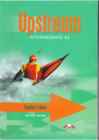
;P ulJbijlg lsBN 978-1-8432s-569-7 Illllll]ililil]t llll ||||rl 9 x781843x255697x Conlenls UNI T1 househol d & appl i ances; dw el l i ngs ln Searchof the Perfect My Home is my chores;colours& rooms;home H ome(mul ti pl choi e ce) Castle(pp. 5-19) safety TheCharmingPast:Blarney ...
 annaabi.ee