Leidsid 33 sarnast õppematerjali, mis on seotud failiga "Cities and towns of Estonia". Need materjalid aitavad sul teemat sügavamalt mõista.
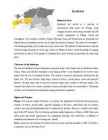
theatre, museum, castle, beach, hotel, almost, forest, islands, kadriorg, open, university, ahhaa, science, centre, aura, museums, vanemuine, summer, hotels, gate, sild, ruins, order, ugala, square, aqua, lady, beaches, thanksKildu Basic School Viljandi by Eisi Kõiv Supervisor: Margit Kirss Kildu 2008 Our 700 years old Viljandi Viljandi is a town (24,000 inhabitants) in Estonia, 160 km south of the capital Tallinn. The town is the administrative capital of the county with the same name as the town. In Viljandi there is theater Ugala, cinema Rubiin, museum, art gallery. Give a concert in Culture centre, Jaani- and Pauluse church, but in Cultureacatemy, too. Folk Summer in Viljandi culminates with the annual folk music festival. The Viljandi Folk Music Festival is a music festival in Estonia with a central focus on European folk music.In the year 2006, over 24,000 people attended the concerts, but many more just came to take part in the festivities. As such, it is the largest annual music festival in
the centre of southern Estonia. The Emajõgi river, which connects the two largest lakes of Estonia, crosses Tartu. The city is served by Tartu Airport. Tartu is also the seat of the Estonian University of Life Sciences, the Baltic Defence College, Estonian Aviation Academy , and the Estonian Ministry of Education and Research. Other notable institutions include the Supreme Court of Estonia (re-established in Tartu in autumn 1993), the Estonian Historical Archives and Estonian national theatre Vanemuine. Historical names of the town include Tarbatu,an Estonian fortress founded in the 5th century,Yuryev named c. 1030 by Yaroslav I the Wise, and Dorpat as first known by the German crusaders in the 13th century. Since Estonia regained its independence in 1991, the old town centre is being renovated. Notably, St. John's church, in ruins since World War II, has been restored. Pärnu Pärnu is a city in southwestern Estonia on the coast of Pärnu Bay, an inlet of the Gulf of
Tallinn English College English Sergo Vainumäe 9A TALLINN Report Supervisor: Inge Välja Tallinn 2006 Order of contents: 1.Introduction 2.Toompea 3.Lower Town 4.Kadriorg and Pirita 5.Museums 1. Introduction Tallinn, the capital of Estonia, lies on the Baltic Sea. It is on almost the same latitude east St. Petersburg in Russia, Stockholm in Sweden and Stavanger in Norway, and covers 158 sq km. Tallinn was first marked on a map of the world by the Arab geographer al-Idrisi in 1154, its name then being Kolyvan (probably derived from the name Kalev). In the 13th-century Chronicle of Henricus de Lettis the town was called Lyndanise. Later came Reval (presumably after the old county of Rävala), the name used by the Germans who ruled the country for seven centuries
procedure which carried on until the end of the 19th century. Tallinn joined the German-dominated Hanseatic League in 1285 and became a junction of trade between East and West: furs, honey, leather and seal fat moved west, while salt, cloth, herring and wine moved 'in the opposite direction. As salt was an important trading commodity, Tallinn is said to have been built on it. Its geographical position was very favourable, with its wide bay protected by the two outlying islands of Aegna and Naissaar; it proved a suitable place for a large port. By the 12th century there were already six inland trade routes leading to the port, which was often visited by foreign ships. Tallinn developed along three lines: fortress, port and market town. The Lower Town, a free town of merchants and craftsmen, gradually evolved at the foot of Toompea. From the 13th century onwards these became separate towns with different communities, both with their own interests and laws.
international trade routes for Vikings. Long struggle of power with foreign intruders has left ancient strongholds in Valjala, Lihula and Soontagana. The churches in Muhu, Valjala, Mustjala, Karja and Kihelkonna are honorable and elderly because Straitland was the one to bring Christianity to Estonia. The castle of Kuressaare is still standing proudly, but in Lihula only ruins can be seen. The patterns of national dresses and the churches bring memories of secret sign cultures of Medieval Times. Good knowledge of singing and facility of speech of the people of Straitland have given Estonia a big number of writers and poets. Character of the landscape The area of Straitland contains Pärnumaa county and some of the islands such as Saaremaa, Muhu, Kihnu, Ruhnu and Abruka
Introduction Tallinn, the capital city of the Republic of Estonia and of the Harju county, is a town in North Estonia on the coast of the Gulf of Finland. It has nearly half a million inhabitants and covers an area of almost 160 sqkm. It is also an important economic and cultural centre and one of the main ports in the Baltic States. Tallinn is one of the oldest cities on the Baltic Sea. It is unique for its well-preserved architecture from the 13-15 centuries. In contrast to the ancient town-walls and towers, Tallinn of today offers modern hotels, restaurants, sport and cultural centres. Every five years national song and folk dance festivals take place in Tallinn
of Saint Petersburg. Tallinn was founded in the 12th century and has been under the rule of Denmark, Sweden, and Germany as well as Russia, and all left their mark on the city's architecture. It is one of the best preserved medieval towns in northern Europe, and makes a beautiful impression from the sea, with its ancient city walls, church spires, and red-tile roofed homes. Tallinn has previously been named as Kolõvan, Lindanise and Reval. Most well-known sights in Tallinn are Freedom Square, Kadriorg Palace, Rotermann Quarter, Tallinn Song Festival Grounds, Toompea Castle and Town Hall Square, the Old Town of Tallinn and many more. Tallinn's Old Town is in the list of UNESCO World Heritage Sites. At the Old Town, you pass beneath the arches of Tallinn's ancient stone walls and enter a world of cobblestones, narrow alleys, and medieval buildings. It's a fun place to explore on foot. Today, the city is growing rapidly, with modern buildings joining the old.
Tallinn is a small port town in which the population is 371 000 people, and the area is only 159,2 km².( square kilometers). Tallinn, the capital of Estonia, is named after taani linnus, which means Danish castle. The Castle in question was built by King Waldemar of Denmark in the 13th century. The settlement quickly developed itself into a busy port. -The Old Town In medieval age Tallinn was called Reval and it was as big as the Tallinns Old Town is now. Uniqueness of Tallinn is that it is one of very few European cities, where the historical lay-out is kept in it's original form , and has a lot of monuments of that time. Thanks to that in 1997 Old
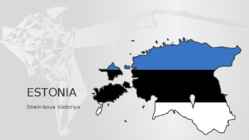
ESTONIA Strelnikova Viktoriya ESTONIA AT A GLANCE • Area: 45 227 square km • Climate: humid-temperate • Number of islands: 1 521. Largest islands are Saaremaa, Hiiumaa and Muhu. • Estonia is a green land, forests cover 55% of the country. • Estonia is a country of thousand of lakes, largest of these are Lake Peipsi and Lake Võrtsjärv. • Highest point: Suur Munamägi (Great Egg Hill), 318 m • The capital of Estonia is Tallinn (439 517 inhabitants (01.01.2016) or approx. 32% of the total population). Other large cities and population (thousands): Tartu - 103 300 Narva - 65 900
Union street Fifth avenue Piccadilly Circus Hyde Park Blackrock road Broadway Times Square Waterloo Bridge Many names (especially names of important buildings and institutions) are two words: Kennedy Airport Cambridge University The first word is usually the name of a person (Kennedy) or a place (Cambridge). We do not usually use ,,the" with names like these. Some more examples: Victoria Station Edinburgh Castle London Zoo Westminister Abbey Buckhingham Palace Canterbury Cathedral But we say 'the White House' and 'the Royal Palace' because 'white' and 'royal' are not names like 'Kennedy' and 'Cambridge' Most other names (of laces, buildings etc) have names with the: The + adjective or + noun name etc Hilton Hotel National Theatre The Sahara Desert Atlantic Ocean These places usually have the:
various English kings, London once again prospered as an international trading centre. However, Viking raids began in the late 10 th century and reached a head when they took the city under Danish king Canute and forced the then-English king to flee. Years later, following a victory at the Battle of Hastings, William the Conqueror was crowned King of England in the newly-finished Westminster Abbey in 1066. William granted the citizens of London special privileges while building a castle in the corner of the city to keep them under control. This castle was expanded by later kings and is now known as the Tower of London. The city grew in wealth and population during the Middle Ages. In 1100 its population was around 18,000 but after 200 years it had grown to nearly 100,000. However disaster struck during the Black Death, when London lost nearly a third of its population. After the defeat of the Spanish Armada, stability in politics allowed the city to grow even more
newspaper "Teataja" created in 1901. The 1904 elections were won by an Estonian-Russian block of 5 Russians and 38 Estonians. The first Estonian mayor was Voldemar Lender and assistant major Konstantin Päts. In 1905 was bloody Sunday in St. Petersburg and this influenced estonian workers: mass meeting, had conflicts with police. 17.10.1905 was made first estonian party Eesti Rahvameelne Eduerankond created by newspaper ,,Postimees" supporters. In 1906 was created estonian proffesional theatre ,,Estonia". Theathre ,,Estonia" In 1912 was started to constructing seastronghold and war harbour ( Peter the Great seastronghold). In 1913 was created power station, theatre building ,,Estonia" and townapothecary's shop was opened. In Kopli was established ship factories( ,,Vene-Balti's", ,,Noblenesser's" and ,,Bekker's factory"). Tramway was opened in Kopli in 1915 by factories ( ,,Vene-Balti's", ,,Noblenesser's" and ,,Bekker's factory") to they'r workers transport.
It is also set into the small coat of arms of Tallinn. Great coat of arms - three lions, a knight, and Danish queen; leaves around Old Thomas - quardian of Tallinn, put on top of the spire of Tallinn Town Hall in 1530; boy that excelled springtime contests thrown by Baltic German elite, because of his low-born status was unable to receive a prize, therefore was granted the position of town guard. Right now there’s third Old Thomas, first one can be seen at Tallinn City Museum. Toompea as a symbol of power Toompea palace - wooden fortification was originally built in the 9th century, Danes made the castle the centre of secular power; Toompea palace hosts the parliament of the Republic of Estonia, designed by Eugen Habermann and Herbert Johanson. The parliament has 101 members and is chosen for 4 years. Stenbock House - the official seat of the Estonian Government since 2000; the building started in 1787, originally meant to be a courthouse
someone/something that has been mentioned before. We passed a beautiful house on our way to Birmingham. – Was the house for sale? I saw a man standing near the house. The man was well-dressed and looked like a businessman. In case of plural countable nouns and uncountable nouns, in ordinary situations, when something is mentioned for the first time, some is used. We passed some beautiful houses on our way to the beach. There were some people at the station. There was some sand on the building site. In extraordinary situations or when we want to emphasize something no article is used. Poor people cannot afford to live in beautiful houses. There were people inside the house on fire! There was sand on my plate! The Indefinite Article is used when referring to an indefinite object (just any of the kind). Could you lend me a pen
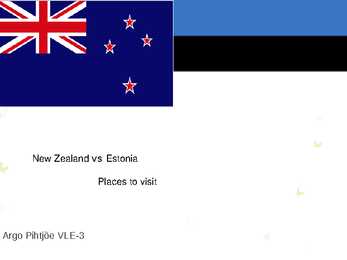
destinations Rotorua Famous for its volcanic activity. Every reserve has spectacular examples of geysers, boiling pools, hot springs, boiling mud, volcanic terraces, and craters. Mt Tarawera nearby volcano offers spectacular scenery including superb views inside the rim of the volcano Best area in the country to experience and learn about Maori Culture. Top ten places to visit in New Zealand Bay of Islands Bay of Islands is the finest maritime park in New Zealand. There are about 150 islands. The park has an abundance of marine life, including marlin, whales, penguins and dolphins. Mt Cook National Park Mt Cook and surrounding area is an alpine park within the South Westland World Heritage area. Mt Cook, Mt Tasman and Mt Sefton. This glacier is New Zealand's longest and it has one of longest ski runs in the world. Top ten places to visit in
It originates from Denmark. It was officially adopted in 1925. Geography Estonia is the northernmost of the three Baltic States. It is located on the northern hemisphere on the eastern shores of the Baltic Sea in the north-east of Europe. It has land contact with Russia from the east and Latvia from the south. In the north The Gulf of Finland separates Estonia from Finland. The Gulf of Riga is situated to the south-west. Estonia has more than 1500 islands. The biggest ones are located to the west. The four biggest islands are Saaremaa, Hiiumaa, Vormsi and Muhu. The highest point in Estonia and also in the Baltic region is Suur Munamägi. It is 318. above sea level. Estonia is a country of a thousand lakes. The Largest one is Lake Peipsi which is also the fourth biggest freshwater lake in Europe. Lake Peipsi and Lake Võrtsjärv are rich in fish. Estonia has many rivers but only nine of them are longer than 100km. The most important
ASTLANDA). To the ancient Scandinavians the land was known as EISTLAND; to modern Scandinavians it is known as ESTLAND. Most contemporary languages use the Latin name ESTONIA. FLAG The Estonian blueblackandwhite national flag was originally the flag of the Estonian Student's Society, consecrated in Otepää Church in 1884. today there is a memorial plaque on the church wall commemorating the event. The Flag Museum attracts tourists who take an interest in the history of the flag. After about half a century, during which it was prohibited by the Soviet authorities, the flag was sen again in public for the first time in Tartu. Many elderly people were carrying the flags they had kept in secret hiding places durin the Soviet years; tears were rolling down their cheeks. On 24 February 1989, Estonia, still part of the Soviet Union, hoisted its tricolour on the tower of Pikk Hermann in Tallinn
countryside charm to create a comprehensive experience of Estonia beyond the big cities. But the legend of the White Lady of Haapsalu, which is at the heart of the festival, is perhaps the most famous tall tale of the many that are so abundant in Estonia's folklore. It is the story of a poor girl who falls in love with the son of the village elder, and disguises herself as a choirboy in order to sneak into the castle. But, alas, the lord of the manor's son discovers the deception. He is overcome by jealous rage and orders his men to seal the girl inside the thick stone walls while still alive. Turned into an incarnation of undying love, the White Lady now appears every August, on the night of the full moon, in the Dome Church chapel window. Haapsalu is seven-and-a- quarter centuries old this year, and the townsfolk intend to make it a celebration to remember
He built a wooden palace at Westminster, were the parliament met later. This is why Westminster became the seat of government not the city of London itself. Edward the Confessor also built Westminster Abbey. He ruled until his death in 1065, after which King Harold was crowned. Norman period( Medieval London) 1066 In 1066 in the Battle of Hastings the Normans were victorious and William was crowned King. William granted the citizens of London special privileges, but he also built a castle in the southeast corner of the city to keep them under control. This castle was expanded by later kings until it became the complex we now call the Tower of London. The Tower acted as royal residence, and it was not until later that it became famous as a prison. In 1176 the first stone London Bridge was built. This bridge was to remain the only one in London until 1739. Because the passage across this one bridge was narrow and clogged with
the Estonian Republic the United Arab Emirates the Netherlands the Ukraine the City Linnad, külad, pärisnimed: Mered, ookeanid: London the Baltic Sea Canterbuty Cathedral the Pacific Ocean Windsor Castle Ajakirjad: Ingliskeelsed ajalehed: Cosmopolitan the Morning Post the Times NB! Postimees, Eesti Ekspress Tänavad, väljakud, pargid, sillad, Teatrid, muuseumid, galeriid, kinod, hotellid, rongijaamad, lennuväljad, ülikoolid, kohvikud, kauplused, avalikud hooned: katedraalid: the Globe Theatre
Art Museum of Estonia Art Museum of Estonia was founded on November 17th, 1919, but it was not until 1921 that it got its first permanent building the Kadriorg Palace, built in the 18th century. In 1929 the palace was expropriated from the Art Museum in order to rebuild it as the residence of the President of Estonia. The Art Museum of Estonia was housed in several different temporary spaces, until it moved back to the palace in 1946. In September, 1991 the Kadriorg Palace was closed, because it had totally deteriorated by then. At the end of the year the Supreme Council of the Republic of Estonia decided to guarantee the construction of a new building for the Art Museum of Estonia in Kadriorg. Untill then the Knighthood House at Toompea Hill served as the temporary main building of the Art Museum of Estonia. The exhibition there was opened on April 1, 1993. Art Museum of Estonia premanently closed down the exhibitions in that building in October 2005.
8% Belarusians 2.1% Finns 0.6% Others 2.7% Coat of arms and flag of Tallinn Tourism Since independence, improving air and sea transport links with Western Europe and Estonia's accession to the European Union have made Tallinn easily accessible to tourists. The main attractions are in the two old towns (Lower Town and Toompea) which are both easily explored on foot. Eastern districts around Pirita and Kadriorg are also worth visiting and the Estonian Open Air Museum (Eesti Vabaõhumuuseum) in Rocca al Mare, west of the city, preserves aspects of View of Oleviste church tower International relations Tallinn participates in international town twinning schemes to foster good international relations. Partners include: Annapolis, United States Bialystok, Poland Dartford, United Kingdom Gdask, Poland Gdynia, Poland Ghent, Belgium
Theatres in Estonia Native Estonian theatre, born in 1870 with the plays of the patriotic poetess Lydia Koidula, came into being on the crest of national awakening. Its tastes were at first pretty simple, the favourite genres being folk comedy and romantic melodrama, although both also transmitted halfhidden social and political attitudes. In less than forty years, in 1906, the leading amateur companies, the "Vanemuine" in the university town Tartu
Tallinn was granted the Lübeck law in 1248 and became the member of the Hanseatic League in 1285. General Data l Country - Estonia l County - Harju County l First appeared on map - 1154 l Town rights - 1248 l Mayor - Edgar Savisaar l Aera - Total 159.2 km2 (61.5 sq mi) l Population - (1 Mar 2012) Total - 416,470 Denisty - 2,614.0/km2(6,766.6/sq mi) Tallinn Coat of arms Flag Top 5 Attractions 1. Kiek in de Kök Visitors to the museum will see examples of Medieval firepower, displays detailing how the city's system of walls and towers developed through the centuries and an exhibit on crime and punishment in Old Tallinn. 2. Kadriorg Palace - Kadriorg Art Museum A trip to Tallinn isn't a trip to Tallinn without a visit to this magnificent northern baroque palace, built by Peter the Great for his wife, Catherine I, in 1718. The grandiose palace with its surrounding manicured gardens is
top 10 digital cities in the world.The city was a European Capital of Culture for 2011, along with urku, Finland.Tallinn is the oldest capital inNorthern Europe. The city was known as Reval from the 13th century until the 1920s. http://en.wikipedia.org/wiki/Tallinn Old Tallinn The Old Town can historically be divided into two distinct areas: Toompea Hill and the Lower Old Town, which were separated by a dividing wall since medieval times. The elevated area of Toompea Hill with its castle was occupied by the residences of Tallinn's rulers and gentry. The Lower Old Town meanwhile developed as an autonomous merchantile centre, flourishing during the 13th-16th centuries, when the city enjoyed membership of the powerful Hanseatic Trading League. Generally speaking these two districts are now collectively referred as the Old Town. The Town wall and towers Medieval fortresses, which emerged during the development of the medieval town at the end of the
requires several days (if not years) boasting diverse cultural enclaves. to get to know. That said, your Neighborhoods like Nob Hill, inaugural visit (as you will certainly the Castro and the Mission be coming back for more) should District offer unique experiences include trips to the Tower of for every traveler. Yet, there are London, the National Gallery, and several monuments that you can't the British Museum. But if you miss, such as the cable have more time, hit up Portobello cars, Fisherman's Road and Borough Market to Wharf andAlcatraz. And, of appreciate the local culture. course, the city's crowning architectural achievement, the Golden Gate Bridge, is unmistakable. New York City and Maui
in its rooms, but the street name remained in the form of Süsterstrasse and Cisternstrasse. It was not until the 18th century that the name Lai also started to appear. In 1872, when the street names were being fixed, Lai remained the sole name of the street. 4 1 Lai Street / 4 Nunne Street A good example of Neo-Renaissance and early Art Nouveau styles combined is Lai Street 1, the present Youth and Puppet Theatre, erected at the beginning of the 20th century as the Nobility Club. The three-storey building replaces two medieval properties. In 1784 an amateur theatre began playing in a house situated in the same place and soon became a professional German City Theatre. The famous German writer August von Kotzebue (1761-1819), the life and soul of the theatre, lived in Tallinn for several long periods. (Otto von Kotzebue, the son of August von Kotzebue, accompanied explorer Adam
Australia Australia is a country and also a continent. If someone wants to make clear, that he is speaking of the country, he may call it by its full name of Commonwealth of Australia. Australia's name means "southland."It is south of the equator. Sometimes it is also called the island continent because it is an island. There are about twenty million people in Australia.It is 1,800 miles from the mainland of Asia and almost half way round the world from Europe. More than 600 miles of ocean separate it from Americas. Since Australia is south of the equator, its seasons are just the opposite of ours. It has summer while we have winter, and the other way round. States and Territories. Australia consists of six states, two territories and eight external territories. The six states are: Western Australia (capital Perth), South Australia (capital Adelaide),
Toompea (from German Domberg – Cathedral Hill ) is a limestone hill with an area of about 7 hectares in the central part of Tallinn. It towers about 30-40 m above the surrounding areas. According to the legend it´s the tumulus mound over the grave of the national hero Kalev, erected stone by stone in his memory by his grieving wife Linda. It is the birthplace of Tallinn - a place where in 1229 the Knights of the Sword built a fortress instead of the wooden Estonian stronghold. Toompea Castle is also one of the most potent symbols of the reigning power. Today Toompea is the seat of the Government of Estonia as well as the Riigikogu, both of which are often simply colloquially referred to as Toompea. For centuries there was only one access to Toompea - Pikk Jalg - but there is also another way leading up to Toompea - Lühike Jalg, which was made in the 14th century. At present Pikk Jalg and Lühike Jalg are used only by pedestrians. Until
Trip to Estonia Day 1 Tallinn · The first day, I would spend in Tallinn's Old Town. The Old Town has architecture from the 14th and the 15th century, which is quite interesting, compared to architecture today. . Day 2 Narva · On day 2, I would visit Narva and look at the castle, which was built in the 14th century by the Danes. The castle is now a museum, so while sight-seeing, a person could also learn about the castle. Across the river is the Ivangorod castle. Day 3 Tartu · I would visit Tartu on day 3. First, I would go and have a look at the Old Town to learn about it. Then, I would go have a look at the Tartu University, which is quite near. Day 4 Alatskivi · On day 4, I would go to Alatskivi and have a look at the castle. Alatskivi is near Tartu and it's also near lake Peipsi. The castle is surrounded by a beautiful forest. Day 5 Pärnu · In Pärnu, I would go and see the Red Tower, a former
are not a garlic enthusiast. Enjoy the fair and its concerts and buy local handicraft, home made gourmet food and hand made bread as souvenirs. · The festival year ends with the national poetry days, "Tähetund" (StarHour), dedicated to the Estonian poet, Betti Alver. Most Estonian actors say that Betti Alver poetry days were among their very first public performances. Põltsamaa Põltsamaa is the city of wine, bridges and roses. Põltsamaa Castle was started in 1272. In the course of centuries the fort suffered damage. In 1770 the old convent building was replaced by a rococo palace. The ruins of the castle, destroyed in 1941, are being conserved. The courtyard has been converted into a stage of outdoor events. Mustvee Mustvee, a town located on the shore of Lake Peipsi, is best characterised by its motto five churches, two cultures, one nation. Tourist destinations: Elistvere
Table of Contents........................................................................................................................2 Introduction.................................................................................................................................3 The Estonia National Opera........................................................................................................4 Russian Drama Theatre...............................................................................................................5 Tallinn City Theatre.................................................................................................................... 6 Estonian Drama Theatre..............................................................................................................7 Estonia National Puppet Theatre....................................................................................
Valaste Waterfall is the highest waterfall in Estonia, located on Valaste stream near the Baltic coast. Waterfall Valaste is 30.5m high since 1996, declared as a cultural heritage and national symbol of Estonia. Valaste Waterfall is a popular tourist destination in the summer but also in winter, when nature creates the ice kingdom. Sights If you are coming to Estonia, you need to visit: Old Town of Tallinn Kaali Meteorite Craters Jägala waterfall Kumu art museum Kadriorg palace People Estonians are a Finnic people closely related to the Finns and inhabiting, primarily, the country of Estonia. They speak a Finnic language known as Estonian. Although Estonia is traditionally grouped as one of the Baltic countries, Estonians are ethnically and linguistically unrelated to the Baltic peoples of Latvia and Lithuania. Things to do Sunbath on white sandy beaches or at the pools
 annaabi.ee