Leidsid 33 sarnast õppematerjali, mis on seotud failiga "Charlie Chaplin". Need materjalid aitavad sul teemat sügavamalt mõista.
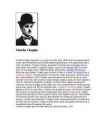
chaplin, film, through, work, films, scene, little, acting, actor, subtle, silent, character, concern, attention, star, demanded, unity, constant, working, popular, best, known, tramp, found, himself, situations, before, first, theater, tour, making, caught, early, slapstick, while, walk, simply, audience, control, allow, come, maintain, complete, takesCharlie Chaplin Early years · Charles Spencer Chaplin was born in London on 26 April 1889. · Chaplin's childhood was fraught with poverty and hardship. Because of this poverty, Chaplin was sent to a workhouse at seven years old. · He was briefly reunited with his mother at age of nine, before Hannah was forced to readmit her family to the workhouse in July 1898. · In September 1898, Hannah Chaplin was committed to Cane Hill mental hospital. So Charlie and his brother had to live with their father who soon passed away. · For a while Charlie's mom was in good health but in 1903 she became ill again and was readmitted.Charlie was 14 years old at that time. · His mother was released eight months later but in 1905 her madness returned, this time permanently and she remained in care until her death in 1928. Young performer · Chaplin's first stage
Filmikunsti ajalugu 31.01.12 The age of pioneers: the early history of film How the horses helped to ivent the cinema. Cinema was invented by accident. 1872, west coast: leland standford, party, rich people, end of the 19 century, bored. Stanfrod talks friends about horses: problem: question is, what happens with the hooves while its moving, running. Bet, with eyes, can't settle this. Cannot ever see if the hooves touch the ground. Stanford has enough money, hires most famous photographer. Eadwerd muybridge, comes to usa. Tells him to settle this with photography.
Which began in Rome in 59 B.C. It reported the proceedings of the Roman Senate and such news as births and deaths.The first printed newspaper was a Chinese circular called Dibao. It was printed from carved wooden blocks during the A.D. 700's. The first regular published printed newspaper in Europe was Avisa Relation oder Zeitung of Strasbourg, Germany (now France). It started in 1609. A weekly newssheet established in 1622 was the first printed newspaper in England. The ground work for mass communications in the 20th century was laid in the 19th century by two inventions, which allowed people to communicate by wire: the electric telegraph and the telephone. As the telegraph came into widespread use, inventors searched for a way to transmit sound without wires. In 1885 the German scientist Hertz made a machine that produced radio waves and a receiver which could detect them from distance the radio. Soon after that the
3) JAMES WATT He was born in the small port of Greenock on the river Clyde in Scotland in 1736. His father was a mathematical-instrument maker and also kept a shop to supply ships with goods for their voyages. James was a delicate boy and often suffered from headaches. That is why he could not go to school at the age when other children did. His mother taught him to read and his father taught him writing and arithmetic. He had very good memory and a natural love of work. He liked mathematics and was also fond of designing and making things. James was an observant and thoughtful boy. When James was able to go to school, he was sent to a private school. He learnt many subjects there. In his spare time James began to make experiments. He built a small electrical apparatus with which he gave his friends shocks that made them jump. When James was 18 he decided to become a professional instrument- maker. He could not find anyone to teach him, so he went to London
Lesson 20 Topic Charles Spencer Chaplin Charles Chaplin was born on April 16, 1889 as a son of a small vaudeville actor. His early years at his home in South London passed in great poverty. For a time he was cared for in an orphanage. He received very little schooling. At an early age he appeared on the music hall stage with his father and brother taking small parts in vaudeville. At the circus Charles admired the art of the clown called Rabbit. Before meeting him Charles had never thought of becoming a comic actor. After a short experience at the theatre he re-entered vaudeville in London as a member of the Fred Karno company. The Fred Karno pantomime troupe gave comic shows. Chaplin himself said that he would never have achieved success in
Charlie Chaplin Charlie Chaplin was born in London on 16th April, 1889. Both his parents were music hall entertainers and Charlie started appearing on the stage while still a child. His father, Charles Chaplin, deserted the family and eventually died of alcoholism. His mother, Hannah Chaplin, found it increasingly difficult to find work on the stage and in 1895 the family entered the Lambeth Workhouse. When he was sixteen Chaplin won the part of Billy in a West End production of Sherlock Holmes. He later joined Fred Karno's music hall revue. While touring the United States in 1913 Chaplin was discovered by the film producer Mack Sennett. Over the next couple of years Chaplin made a series of short slapstick films for Sennett's Keystone Company. In these films Chaplin developed a character that wore baggy pants, tight frock coat, large shoes on the wrong feet and a black derby hat
England Kaspar Rätsep G1a Famous persons Kings & Queens: Queen Elizabeth I, Queen Victoria, Queen Elizabeth II, Henry VIII Politicians: Winston Churchil, Baroness Margaret Thatcher Writers & Poets: William Shakespeare, Daniel Defoe, Charles Dickens, Rudyard Kipling, Dame Agatha Christie Philosophers &Economists: Francis Bacon, John Locke Inventors & Scientists: Isaac Newton, Charles Darwin Actors,Actresses & Filmmakers: Sir Charlie Chaplin, Dame Elizabethe Taylor, AlfredHitchock, Hugh Grant, Orlando Bloom, KeiraKnightley, Daniel Radcliffe Musicians & Singers: Sir Elton John,Phil Collins,George Michael,Robbie Williams King Henry VIII Born: June 28, 1491 at Greenwich Palace Parents: Henry VII and Elizabeth of Y ork House of Tudor Ascended to the throne: April 21, 1509 aged 17 years Crowned: June 24, 1509 at Westminster Abbey Married: (1) Catherine of Aragon 1509-1533 Divorced (2) Anne
Marilyn Monroe Marilyn Monroe (born Norma Jeane Mortenson;[1] June 1, 1926 August 5, 1962), was a Golden Globe award winning[2] American actress, singer, model, Hollywood icon,[3] cultural icon, fashion icon,[4] pop icon and sex symbol. She is known for her comedic acting roles and screen presence. Monroe became one of the most popular movie stars of the 1950s and early 1960s. During the later stages of her career, she worked towards serious roles and her fame surpassed that of many entertainers of her time.[5] Her death at thirty six was classified as "probable suicide."[6] Many individuals including Jack Clemmons, the first LAPD Police officer to arrive at the death scene[7] believed that she was murdered
Chapter 17 Chapter 38 Chapter 58 Chapter 18 Chapter 39 Chapter 59 Chapter 19 Chapter 40 Chapter 60 Chapter 20 Chapter 41 Chapter 61 Chapter 21 Chapter 42 Chapter 1 It is a truth universally acknowledged, that a single man in possession of a good fortune, must be in want of a wife. However little known the feelings or views of such a man may be on his first entering a neighbourhood, this truth is so well fixed in the minds of the surrounding families, that he is considered the rightful property of some one or other of their daughters. "My dear Mr. Bennet," said his lady to him one day, "have you heard that Netherfield Park is let at last?" Mr. Bennet replied that he had not. "But it is," returned she; "for Mrs. Long has just been here, and she told me all about it." Mr
and the censors, who, from the start of season two, increasingly gave notes regarding what the show could and could not depict. When the third season ended in 2002, MTV (who owns the rights to the name "Jackass") contemplated keeping the show going with a new cast (even running a teaser for the show's return during the 2002 VMA Awards Show). Because of problems with MTV's standards and practices department as well as the sudden departure of Margera and the CKY Crew halfway through season three, the Jackass crew did not attempt to create a finale to bring the show to a close. MTV released a DVD boxed set in December 2005. It included the three Jackass DVD volumes (which were not composed of all three entire seasons, but highlights of each season), a bonus disc that included the crew's trip to Gumball 3000, a "Where Are They Now" documentary, MTV Cribs Jackass Edition, TV spots, and a 48-page book of photos and inside stories. Life after Jackass
especially by Thomas Paine in "The Age of Reason" and by Thomas Jefferson in his short Jefferson Bible from which all supernatural aspects were removed. Benjamin Franklin was influential in America, England, Scotland, and France, for his political activism and for his advances in physics. The American Dream is a national ethos of the United States, a set of ideals in which freedom includes the opportunity for prosperity and success, and an upward social mobility achieved through hard work. In the definition of the American Dream by James Truslow Adams in 1931, "life should be better and richer and fuller for everyone, with opportunity for each according to ability or achievement" regardless of social class or circumstances of birth. The idea of the American Dream is rooted in the United States Declaration of Independence which proclaims that "all men are created equal"
playwrights, fiction and non-fiction writers, scholars, and fans of pop culture all over the world. Discover a set of useful myth-inspired storytelling paradigms like "The Hero's Journey," and step-by-step guidelines to plot and • character development. Based on the work of Joseph Campbell, The Writers Journey is a must for all writers interested in further developing their craft. This updated and revised Third Edition provides new insights and observations from Vogler's ongoing work on mythology's influence on stories, movies, and man himself. In revealing new material, he explores key principles like polarity and catharsis, plus: • A revised chapter which looks back at the Star Wars phenomenon and analyzes
as soon as you need me." But I could see the sacrifice in her eyes behind the promise. "Don't worry about me," I urged. "It'll be great. I love you, Mom." She hugged me tightly for a minute, and then I got on the plane, and she was gone. It's a four-hour flight from Phoenix to Seattle, another hour in a small plane up to Port Angeles, and then an hour drive back down to Forks. Flying doesn't bother me; the hour in the car with Charlie, though, I was a little worried about. Charlie had really been fairly nice about the whole thing. He seemed genuinely pleased that I was coming to live with him for the first time with any degree of permanence. He'd already gotten me registered for high school and was going to help me get a car. But it was sure to be awkward with Charlie. Neither of us was what anyone would call verbose, and I didn't know what there was to say regardless. I knew he was more than a little confused by my decision
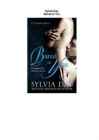
This one is for Dr. David Allen Goodwin. My love and gratitude are boundless. Thank you, Dave. You saved my life. Acknowledgments My deepest gratitude to my editor, Hilary Sares, who really dug into this story and made me work for it. Basically, she kicked my ass. By not pulling her punches or letting me shortchange the details, she made me work harder and because of that, this story is a much, much better book. BARED TO YOU wouldn't be what it is without you, Hilary. Thank you so much! To Martha Trachtenberg, copy editor extraordinaire. This book is an important one for me and she treated it that way. Thank you, Martha! To Victoria Colotta, for all her hard work on the interior design and typesetting. She took my plain text and made it gorgeous. Thank you, Victoria!
Bad Teacher Elizabeth Halsey (Cameron Diaz) is a Chicago middle school teacher at the fictional John Adams Middle School who curses at her students, consumes lots of alcohol, smokes marijuana, and only shows movies while she sleeps through class. She plans to quit teaching and marry her wealthy fiancé, but when he dumps her, she must resume her job as a teacher. She tries to win over substitute teacher Scott Delacorte (Justin Timberlake), who is also wealthy. Amy Squirrel (Lucy Punch), a dedicated teacher and colleague of Elizabeth, also pursues Scott while the school's gym teacher, Russell Gettis (Jason Segel), makes advances on Elizabeth which she rejects.[3]
Furthermore, Card recently announced that Ender's Game will soon be made into a movie. Though Card is best-known for "Ender's Game", he has also written in a variety of other genres, including plays, short stories, books on writing, the Homecoming series, other science fiction books, and nonfiction, such as articles on computer technology. Orson Scott Card in 2008 and when he was younger. The Setting The novel starts off on Earth, with scenes at the school and the Wiggin home. Little attention is given to the details of this setting, not even the name of the city, and so it comes across as a standard American neighborhood. A shuttle is used as a background in the fourth chapter. It has small narrow corridors and the walls of the rooms were carpeted as floors. The importance of the shuttle is that Ender learned something about orientation in zero gravity and that knowledge helped him a lot later.
any natural unbiased (completely natural) · Point of view: amoral-outside the category of morality, neither good or bad · Naturalist find it absurd to blame the wicked. These criminals are doing what nature, environment, their unconscious tells them to do. Naturalists do not judge their characters, they simply report. Try to describe facts like they are. Naturalists depict the lower, coarser forms of life. · Drab, squallid set of scene. Revolting, disgusting · Characters are people with strong animal desires · Neurotic characters unable to understand the forces that control them · By the end of the 18th century the naturalism depicts in europe, but stars to become the literature method no 1 in america · Naturalism appealed American authors because they found it very right to describe what was going on in the turn of century in America · They wanted something fresh, new
TARTUFFE A COMEDY CHARACTERS MADAME PERNELLE, mother of Orgon ORGON, husband of Elmire ELMIRE, wife of Orgon DAMIS, son of Orgon MARIANE, daughter of Orgon, in love with Valere CLEANTE, brother-in-law of Orgon TARTUFFE, a hypocrite DORINE, Mariane's maid M. LOYAL, a bailiff A Police Officer FLIPOTTE, Madame Pernelle's servant The Scene is at Paris ACT I SCENE I MADAME PERNELLE and FLIPOTTE, her servant; ELMIRE, MARIANE, CLEANTE, DAMIS, DORINE MADAME PERNELLE Come, come, Flipotte, and let me get away. ELMIRE You hurry so, I hardly can attend you. MADAME PERNELLE Then don't, my daughter-in law. Stay where you are. I can dispense with your polite attentions. ELMIRE We're only paying what is due you, mother. Why must you go away in such a hurry? MADAME PERNELLE Because I can't endure your carryings-on,
"Anna Karenina" Lev Tolstoi Part 1 The novel opens with a scene introducing Prince Stepan Arkadyevitch Oblonsky, "Stiva", a Moscow aristocrat and civil servant who has been unfaithful to his wife Darya Alexandrovna, nicknamed "Dolly". Dolly has discovered his affair - with the family's governess - and the house and family are in turmoil. Stiva's affair and his reaction to his wife's distress shows an amorous personality that he cannot seem to suppress. In the midst of the turmoil, Stiva reminds the household that his married sister, Anna
satirizes a wide range of topics including religion (712-All about the mormons 914-Bloody Mary 912-Trapped in the closet) politics(1212 About Last Night... ) violence(Too much to count-Kenny dies in every episode) sexuality( 409 Do the handikapped go to hell? and The movie : South park bigger longer, uncut) Trey Parker and Matt Stone created the show and continue to do most of the writing, directing, and voice acting. The narrative revolves around four children -- Stan Marsh, Kyle Broflovski, Eric Cartman, and Kenny McCormick -- and their bizarre experiences in the titular mountain town. Has won 3 daytime Emmys Total of 188 episodes since the show's debut in 1997. Two feature-length movies have also been released; the musical film South Park: Bigger, Longer & Uncut in 1999, and the three-episode Imaginationland story arc was reissued straight-to-DVD in 2008 CHARACTERS
5 (possible answers) she was my age and apart from the 1 1 go ahead 5 come to eighties hairstyle we're the spitting 1 Well, you will go to bed late every night. 2 fall through 6 bring about image of each other! Some people 2 Well, you will refuse to wear a 3 tip off 7 go down with say that they can see a strong family coat. 4 mistake for 8 come up with resemblance between my dad and me.
policies of governments. Yet it has never had a chronicler. It badly needs one. It has been estimated that cryptanalysis saved a year of war in the Pacific, yet the histories give it but passing mention. Churchill's great history of World War II has been cleaned of every single reference to Allied communications intelligence except one (and that based on the American Pearl Harbor investigation), although Britain thought it vital enough to assign 30,000 people to the work. The intelligence history of World War II has never been written. All this gives a distorted view of why things happened. Furthermore, cryptology itself can benefit, like other spheres of human endeavor, from knowing its major trends, its great men, its errors made and lessons learned. I have tried in this book to write a serious history of cryptology. It is primarily a report to the public on
Mrs. Mann took a large portion of the money given to her by the authorities for each child's food so Oliver grew up small and malnourished. On his ninth birthday, the town beadle, Mr. Bumble, came to collect Oliver and take him to the board for an interview. They told him he was to live with other wards of the state to become educated and learn a trade. Oliver did not mind this, but soon after he arrived, the state decided to implement a plan that would save money by feeding the people very little. After a time on this diet, the boys at the table chose Oliver to go ask the head cook for more gruel. Oliver did this, and was taken away. A flyer was then posted that said the state would give five pounds for someone to take young Oliver off their hands. Chapter3: The board locked up Oliver in what he called the `dark room' all day until someone would take him as an apprentice. After several days of solitary confinement, several beatings, and being made
"We've known for years that people buy based on emotions and justify their buying decision based on logic. Dr. Cialdini was able, in a lucid and cogent manner, to tell us why this happens." --MARK BLACKBURN, Sr. Vice President, Director of Insurance Operations, State Auto Insurance Companies "Dr. Cialdini's ability to relate his material directly to the specifics of what we do with our customers and how we do it, enabled us to make significant changes. His work has enabled us to gain significant competitive differentiation and advantage" -LAURENCE HOF, Vice President, Relationship Consulting, Advanta Corporation "This will help executives make better decisions and use their influence wisely ... Robert Cialdini has had a greater impact on my thinking on this topic than any other scientist." -CHARLES T. MUNGER, Vice Chairman, Berkshire Hathaway, Inc.
Lamb to the Slaughter by Roald Dahl (1916-1990) The room was warm and clean, the curtains drawn, the two table lamps alight - hers and the one by the empty chair opposite. On the sideboard behind her, two tall glasses, soda water, whiskey. Fresh ice cubes in the Thermos bucket. Mary Maloney was waiting for her husband to come him (correction: home) from work. Now and again she would glance up at the clock, but without anxiety, merely to please herself with the thought that each minute gone by made it nearer the time when he would come. There was a slow smiling air about her, and about everything she did. The drop of a head as she bent over her sewing was curiously tranquil. Her skin - for this was her sixth month with child - had acquired a wonderful translucent quality, the mouth was soft, and the eyes, with their new placid look, seemed
, Hoboken, New Jersey. Published simultaneously in Canada. No part of this publication may be reproduced, stored in a retrieval system, or transmitted in any form or by any means, electronic, mechanical, photocopying, recording, scanning, or otherwise, except as permitted under Section 107 or 108 of the 1976 United States Copyright Act, without either the prior written permission of the Publisher, or authorization through payment of the appropriate per-copy fee to the Copyright Clearance Center, Inc., 222 Rosewood Drive, Danvers, MA 01923, (978) 750-8400, fax (978) 750-4470, or on the web at www.copyright.com. Requests to the Publisher for permission should be addressed to the Permissions Department, John Wiley & Sons, Inc., 111 River Street, Hoboken, NJ 07030, (201) 748-6011, fax (201) 748-6008, e-mail: [email protected].
Philip Larkin’s Poetry: Themes, Form, Style, Imagery and Symbolism Author: Sandra Olivares González Tutor: Jesús Marín Calvarro Degree in English Studies, English Department, Faculty of Philosophy and Letters, University of Extremadura Cáceres, 29th January 2016 Philip Larkin’s Poetry: Themes, Form, Style, Imagery and Symbolism The aim of this work is to obtain some characteristics of the poetry of Philip Larkin, such us the origin of his themes, the way in which he writes his poems and the symbolism he uses (which is a very controversial topic because some assume that he does use it, while some others say that he uses it in an ironic way). In this work we tried to make a revision on the vision of Larkin through the studies that had been made on him, and on the basis of it we can say, that the voice of Larkin still clearly contemporary
How genre and narrative makes meaning in ``The Black Dahlia`` When analyzing a film, people understand the movie is much more complicated than it seems. To make a difference, to give a meaning to the film, film-makers have used different visual and thematic features. There are macro features (genre, narrative) as well as micro features (mise en scene, cinematography) and they are linked together in many ways. I have chosen to analyse the closing sequence of ``The Black Dahlia``, directed by Brian de Palma, and I will focus on macro features in this essay. Brian de Palma is well known director, who is focused on noir area through his career (he was once considered as a Hitchcock imitator) ``The Black Dahlia" can be classified as Film Noir. The genre is called Film Noir due to the `serie noir` books, which were
BOOK REPORT Title of the book: Fight Club Author (name and some general information): Chuck Palahniuk is an American novelist born February 21, 1962 in Washington, USA. He is best known as the author for the novel Fight Club (1996), which was made into a movie in 1999. Palahniuk began writing fiction in his mid-thirties. When he attempted to publish his novel, Invisible Monsters, publishers rejected it for its disturbing content. This led him to work on Fight Club which he wrote as an attempt to disturb the publisher even more for rejecting him. After initially publishing it as a short story in the 1995 compilation, Pursuit of Happiness, Palahniuk expanded it into a full novel, which --contrary to his expectations--the publisher was willing to publish. Some other well-known novels: Rant, Choke, Diary. Analysis of the book 1. Setting The story takes place in somewhere between 1980s and 1990s in the United States. 2
the medium is the message. This is merely to say that the personal and social consequences of any medium-that is, of any extension of ourselves-result from the new scale that is introduced into our affairs by each extension of ourselves, or by any new technology. Thus, with automation, for example, the new patterns of human association tend to eliminate jobs, it is true. That is the negative result. Positively, automation creates roles for people, which is to say depth of involvement in their work and human association that our preceding mechanical technology had destroyed. Many people would be disposed to say that it was not the machine, but what one did with the machine, that was its meaning or message. In terms of the ways in which the machine altered our relations to one another and to ourselves, it mattered not in the least whether it turned out cornflakes or Cadillacs. The restructuring of human work and
THE CREATIVE EVOLUTION OF ARVO PÄRT. XIX. THE SEVENTIES. STYLISTIC DIVERSIFICATION. THE MATURE STYLES OF HEINO JÜRISALU, ANTI MARGUSTE AND EINO TAMBERG. XX. ALO PÕLDMÄE: FULLNESS OF COLOURS AND MULTITUDE OF DETAILS. XXI. MATI KUULBERG: SPECTACLE, BRILLIANCE, LIGHTNESS. XXII. RAIMO KANGRO: ROCK, POP AND NEO-CLASSICISM. XXIII. LEPO SUMERA: DEEP NATIONAL SPIRIT, EVOCATIVE AND PHILOSOPHICAL THINKING. XXIV. ERKKI-SVEN TÜÜR: LYRICIST SEARCHING FOR HIS PATH THROUGH SYNTHESIS. XXV. THE EIGHTIES. SUMMARY OF THE OUTPUT OF THE SOVIET PERIOD. RIPENING OF THE PRESUMPTIONS FOR A NEW HISTORICAL TURN. THE RE-ESTABLISHED REPUBLIC OF ESTONIA. XXVI. THE NINETIES AND THE FIFTH GENERATION OF COMPOSERS. XXVII. THE SPECIFIC FEATURES AND TRENDS OF ESTONIAN NATIONAL SYMPHONISM. XXVIII. THE PERFORMANCES OF SYMPHONIC MUSIC: THE ORCHESTRAS OF TARTU AND TALLINN. XXIX. ESTONIAN SYMPHONISTS ABOUT CREATIVITY. CONCLUSION APPENDIXES
voracious appetite. He bears a deep grudge against Corporal Himmelstoss. Kantorek - A pompous, ignorant, authoritarian schoolmaster in Paul's high school during the years before the war. Kantorek places intense pressure on Paul and his classmates to fulfill their "patriotic duty" by enlisting in the army. Read an in-depth analysis of Kantorek. Corporal Himmelstoss - A noncommissioned training officer. Before the war, Himmelstoss was a postman. He is a petty, power-hungry little man who torments Paul and his friends during their training. After he experiences the horrors of trench warfare, however, he tries to make amends with them. Read an in-depth analysis of Corporal Himmelstoss. Franz Kemmerich - One of Paul's classmates and comrades in the war. After suffering a light wound, Kemmerich contracts gangrene, and his leg has to be amputated. His death, in Chapter Two, marks the reader's first encounter with the meaninglessness of death and the
of describing what the collar looked like, the poet first compares it to a collar in ancient legend, and then, looking forward, says that it was later carried by lord and lost by him on his disastrous raid against the Franks. In the poem it is considered very essential to bear in mind both past and future, it is wisdom. But true understandings, and especially a correct anticipation of future events, are things not easy to achieve in an uncertain world. For example, as a young man of little experience determines to give the unarmed Grendel a sporting chance by himself using no weapons (which proved to be a fortunate decision, since Grendel is protected by magic against all weapons). Things go Beowulf's way. Conversely, as an old man fighting with the dragon, he is wrong expecting that he can survive as he always did. They both are doomed to death. `Fate goes ever as it must' says the poet. The course of life cannot be predicted with any certainty
 annaabi.ee