 10 punkti
Autor soovib selle materjali allalaadimise eest saada 10 punkti.
10 punkti
Autor soovib selle materjali allalaadimise eest saada 10 punkti.
 ~ 8 lehte
Lehekülgede arv dokumendis
~ 8 lehte
Lehekülgede arv dokumendis
 2017-05-02
Kuupäev, millal dokument üles laeti
2017-05-02
Kuupäev, millal dokument üles laeti
 1 laadimist
Kokku alla laetud
1 laadimist
Kokku alla laetud
 0 arvamust
Teiste kasutajate poolt lisatud kommentaarid
0 arvamust
Teiste kasutajate poolt lisatud kommentaarid
 scorpion6000
Õppematerjali autor
scorpion6000
Õppematerjali autor
Tartu Kutsehariduskeskus Autode ja masinate remondi osakond Rainer Kaine AT-109 Iseseisev töö Electric cars Instructor: Tauris Vijar Tartu 2010 Introduction In this essay i´m write electric cars and this how these cars are built, how easy is built electric car, how much costs electric cars. The problems for electric cars, there are many problems why peoples still can´t use quiet and more green cars. But even the electric car is not all green because the electricity produced for nuclear, coal, oil shale and natural gas. These ways to get electricity pollutes nature, the only difference between lies in the fact that pollution is in the one place. Coal Electric power station Oil shale power station in Narva What is a electric car An electric car is a plug-in battery powered automobile which is propelled by electric motor. Electric cars are a variety of electric vehicle (EV); the t
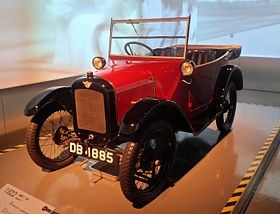
Indroduction This assignment will examine Britain's car market and shows how the external and internal environment factors influences it, mostly on Mini Ltd. External marketing environment is divided into 4 different groups; socio-cultural, economic, technological and political factors. Internal marketing evironment is divided into 6 different groups; which are customers, competitors, suppliers, distributors, employees and stakeholders. Also this assignment is provided with the SWOT analysis, where strengths, weaknesses, opportunities and threats are examined. Mini Mini was at first manufactured by the Austin Motor Company Ltd. In 1957 Alec Issigonis was commissioned to develop a new type of small car. At the same year were the first sketches of Mini made and after that the Mini model is been created from wood and also the most important mechanical parts for Mini has been developed. Four years later the Mini hits the streets. In 1965 the first Mini with an automatic transmission ent
1·1 Chapter 1 Routine maintenance and servicing 1 Contents Air cleaner element renewal . . . . . . . . . . . . . . . . . . . . . . . . . . . . . . .34 Fuel filter renewal - fuel injection engines . . . . . . . . . . . . . . . . . . . .36 Alternator drivebelt check . . . . . . . . . . . . . . . . . . . . . . . . . . . . . . . .20 Hinge and lock check and lubrication . . . . . . . . . . . . . . . . . . . . . . .31 Automatic transmission fluid level check . . . . . . . . . . . . . . . . . . . . .27 Idle speed and mixture adjustment . . . . .
Two-Stroke TUNER’S HANDBOOK By Gordon Jennings Illustrations by the author Copyright © 1973 by Gordon Jennings Compiled for reprint © 2007 by Ken i PREFACE Many years have passed since Gordon Jennings first published this manual. Its 2007 and although there have been huge technological changes the basics are still the basics. There is a huge interest in vintage snowmobiles and their “simple” two stroke power plants of yesteryear. There is a wealth of knowledge contained in this manual. Let’s journey back to 1973 and read the book that was the two stroke bible of that era. Decades have passed since I hung around with John and Jim. John and I worked for the same corporation and I found a 500 triple Kawasaki for him at a reasonable price. He converted it into a drag bike, modified the engine completely and added mikuni carbs and tuned pipes. John borrowed Jim’s cop
SISUKORD ENERGY STORY................................................................................................................4 USES OF ENERGY............................................................................................................. 4 2.1 Uses of energy in homes...............................................................................................5 2.2 Types of energy used in homes.................................................................................... 6 2.3 Energy use in different types of homes........................................................................ 6 2.4 Commercial Energy Use...............................................................................................9 2.5 Industrial and Manufacturing Energy Use..................................................................11 2.6 Transportation Energy Use.........................................................................................12 RENE
Tallinn 2013 Ott Speek Subject: English Geodesy Study group: GI-21b PETROLEUM PRESENTATION Petroleum (L. petroleum, from Greek: Πέτρα (rock) + Latin: oleum (oil) is a naturally occurring flammable liquid consisting of a complex mixture of hydrocarbons of various molecular weights and other liquid organic compounds, that are found in geologic formations beneath the Earth's surface. The name Petroleum covers both naturally occurring unprocessed crude oils and petroleum products that are made up of refined crude oil. A fossil fuel, it is formed when large quantities of dead organisms, usually zooplankton and algae, are buried underneath sedimentary rock and undergo intense heat and pressure. Petroleum is recovered mostly through oil drilling. This comes after the studies of structural geology (at the reservoir scale), sedimentary basin analysis, reservoir characterization (mainly in terms of porosity and permeable structures). It is refined and separated
THE CAPITALIST NIGER Chika Onyeani ………………………Every African must internalise this book - period….DAA INTRODUCTION In October 1960, Nigeria received its independence from Britain. By then, Ghana the former Gold Coast had been independent for three years under the great Osagyefo Kwame Nkumah. It was a time for celebrating Africa’s coming of age, as more and more African countries received their independence either from Britain or France. It was especially a poignant time for Africa, as then British Prime Minister Harold McMillan articulated his now famous “winds of change” sweeping Africa. We had high hopes for Africa, for the Black race, that the insidious imposition of foreign rule on us, the looting of Africa’s natural resources by our colonial masters accorded us would be things of history. That is more than forty years ago. Unfortunately, the promise of independence has not been fulfilled. Today, Africa has become more desolate; there is more starvation
Stonehenge One of the best known ancient wonders of the world, 5000 years old Megalith monument, built by western mediterraneans during 3000-1600 BC Circular structure, large standing stones, aligned with rising sun at teh solstice Attlers and bones were sued to dig pits that hold the stones The Celts in Britain and their legacy 700-200 BC celts invade Britain Gaels or Goehls(Ireland and Scotland),Cymri(Wales) and Brythons(gave name to Brittany) Fierce fighters,superb horsemen.Most of them farmers, lived in thatched houses Good at art, craftmanship, used iron Divided into tribes, ruled by kings, only in face of danger would they choose a single leader Legacy- hill-forts, farms, churches, field system, woodland, pasture, weapons, iron objects, langugae, culture Caesar in Britain The great Roman Emperor Firts came 55 BC to gather information, celts were doing agriculturally well,so romans wanted
 annaabi.ee











Kõik kommentaarid