 50 punkti
Autor soovib selle materjali allalaadimise eest saada 50 punkti.
50 punkti
Autor soovib selle materjali allalaadimise eest saada 50 punkti.
 ~ 1 leht
Lehekülgede arv dokumendis
~ 1 leht
Lehekülgede arv dokumendis
 2010-04-04
Kuupäev, millal dokument üles laeti
2010-04-04
Kuupäev, millal dokument üles laeti
 21 laadimist
Kokku alla laetud
21 laadimist
Kokku alla laetud
 0 arvamust
Teiste kasutajate poolt lisatud kommentaarid
0 arvamust
Teiste kasutajate poolt lisatud kommentaarid
 HelerinH
Õppematerjali autor
HelerinH
Õppematerjali autor
i ee q koo z say-tah The Spanish language academy no longer considers the ch, ll or rr to be separate letters in dictionaries, but they are still separate letters in the alphabet. In Spain, you can say oo-bay for v, but in Latin America most dialects just use bay and an adjective, such as chica (Mexico and Peru) or corta (Argentina and Chile). 4 4. Articles & Demonstratives Masc. Singular Fem. Singular Masc. Plural Fem. Plural the el (ail) la (lah) the los (lohs) las (lahs) a, an un (oon) una (oon-ah) some unos (oon-ohs) unas (oon-ahs) this este esta these estos estas
Malestrom Major Rivers N am e Continent Out fl o w T o tal Lengt h (mi.) Nile Africa Mediterran ean Sea 4,1 60 Am azo n South Am erica Atlantic Oce an 4,000 Ch ang (Yangtze) Asia East China Sea 3,964 M ississippi-M iss o u ri N o rt h Am eri ca Gul f of Mexico 3,710 Major Deserts Name Continent Area (sq. m i.)
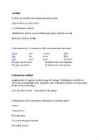
INGLISE KEELE GRAMMATIKA Present Simple Lihtoleviku moodustamine Jaatav vorm Eitav vorm Küsiv vorm I make I do not make Do I make? He/she/it speaks He/she/it does not speak Does he/she/it speak? We/you/they go We/you/they do not go Do we/you/they go? NB! ERANDID! · Verbidele, mis lõpevad ss, h, ch, tch, x või oga, lisatakse ainsuse kolmdandas pöördes es. he does he goes he misses he watches he mixes · Verbid, mis lõpevad yga, mille ees on konsonant, muudavad y iks enne es lisamist. fly he flies carry he carries Võrdle: say he says Lihtolevik väljendab: · Antud momendil toimuvat tegevust, mis ei väljenda kestvat aega, näiteks see, hear,
Artikkel Artikkel on abisõna, mis kuulub nimisõna juurde. Inglise keeles on kaks artiklit: 1) umbmäärane artikkel umbmäärane artikkel on a, täishäälikuga algava nimisõna ees an 2) Määrav artikkel on the Umbmäärase artikli puudumine võib muuta nimisõna tähendust wood puit a wood mets fire tuli a fire lõke iron raud a iron triikraud He gave me the book. Ta andis mulle selle raamatu. He gave me a book. Ta andis mulle ühe raamatu. Umbmääran artikkel a (an) näitab, et tegemist on ühe asjaga või isikuga. Umbmäärane artikkel on tekkinud arvsõnast one (üks). Seepärast saab umbmäärast artiklit tarvitada ainult ainsus oleva nimisõnaga. Give the child a book. Anna lapsele üks raamat. Umbmäärase artikli tarvitamine elukutusete ja rahvuste puhul. Ainsus: I am a doctor. He is an artist. Y
12 Interjections 138 Adjective Endings 54 Kinds of Adjectives 58 Comparison of Adjectives 65 13 Sentences 139 What is a Sentence? 139 6 Determiners 71 Kinds of Sentences 140 The Imperative 141 The Articles 71 The Subject and the Object 143 Demonstrative Determiners 73 Direct and Indirect Objects 144 Interrogative Determiners 74 Positive and Negative Sentences146 Possessive Determiners 75 Questions 147 7 Verbs and Tenses 79 14 Punctuation 150 The Simple Present Tense 80 Period 150
INGLISE KEEL Sisukord Sisukord 2 Ajavormid Tense vorms 3 Lihtolevik The present simple 3 Lihtminevik The past simple 3 Lihttulevik The future simple 3 Kestev olevik The present continuous 3 Kestev minevik The past continuous 4 Kestev tulevik The future conrinuous 4 Täisminevik The present perfect 4 Enneminevik The past perfect 4 Ennetulevik Future perfect 5 Üldminevik Past tense 5 Üldtulevik Future indefinite 5 Artiklid ja eessõnad 7 Eessõnad 7 Kesksõnad 8 Prefiksid ehk eesliited 8 Sufiksid ehk jär
INGLISE KEEL Sisukord Sisukord.................................................................................................................................. 2 Ajavormid Tense vorms.......................................................................................................3 Lihtolevik The present simple..................................................................................... 3 Lihtminevik The past simple....................................................................................... 3 Lihttulevik The future simple...................................................................................... 3 Kestev olevik The present continuous......................................................................... 3 Kestev minevik The past continuous........................................................................... 4 Kestev tulevik The fut
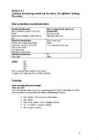
MODULE 1 Greeting. Introducing oneself and the others. The alphabet. Spelling. The tenses. How to introduce yourself and others Formal introductions How to respond and reply to an May I introduce myself? I am John introduction Smith. How do you do. Allow me to introduce John Smith to Pleased to meet you. you. Standard introduction Nice to meet you. I'd like you to meet John Smith. Hello. I want you to meet John Smith. I'm so pleased to meet you. This is Jane Smith. I'm Jane Smith. My name's John Smith. Informal introduction Hi. John. Jane. Hello. Titles: Mr Mrs Miss Ms Ms is a modern form of address for women. It replaces the traditional forms of Mrs and Miss. Greetings Good morning/afternoon/evening! 'How are you?' Very often people expect you to s
 annaabi.ee









Kõik kommentaarid