Religious literature- mostly written in church languages(Latin, Greek, Old Slavic) Secular literature- written in vernacular languages as well 6th -15th century Anonymity Religious writing Liturgical writing-hymns, psalms Theological writing-aquinas, abelard etc Religious poetry Mystery plays-reenactment of bible stories Secular writing Troubadour writing:"courtly love", romance Epic poem(song of roland) Travel writing History writing-chronicles Allegory The use of symbols and analogy to convey a certain meaning /message Literary output of medieval English Anglo-saxon or Old English literature(7th century-1066) Middle english literature(12th century-15th century) End of the period:1470s chancery standard(regulating english) and onset of renaissance Middle English literature Written in many dialects in early period 14th century Middle english was used for majority literary works-known poets Chaucer, Langland Standardization-printing from 1470
* The Word * Christian utopia * Covenant of grace - John Winthrop (1587-1649) - William Bradford „Of Plymouth Plantation“ (1630) - conflict between the ideal and the real - literacy and plain style • Edward Taylor (1642-1729) - meditative writing deeply grounded in faith • Captivity narrative: *Enemies inside and outside *Satanic darkness outside Puritan settlement *Lived allegory of salvation *The Sovereignty and Goodness of GOD, Together with the Faithfulness of His promises displayed: Being a Narrative of the Captivity and Restauration of Mrs. Mary Rowlandson
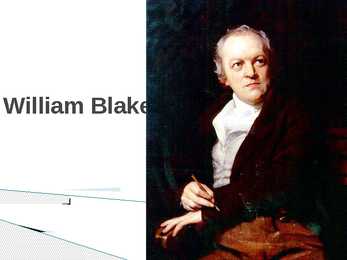
death. Blake taught Catherine to write, and she helped him to colour his printed poems. William and Catherine's first daughter and last child might be Thel described in The Book of Thel who was conceived as dead. Politics Blake was not active in any well-established political party Blake was both concerned about senseless wars of kingdoms, and the blighting effects of the industrial revolution. Much of his poetry recounts in symbolic allegory the effects of the French and American revolutions. Death On the day of his death, Blake worked on his Dante series. Eventually, it is reported, he ceased working and turned to his wife, who was in tears by his bedside. Beholding her, Blake is said to have cried, "Stay Kate! Keep just as you are I will draw your portrait for you have ever been an angel to me." Having completed this portrait (now lost), Blake laid down his tools and began to sing hymns and verses
concerns of premature burial the reanimation of the dead, mourning Dark romanticism genre Wrote : horror satires humor tales hoaxes He used irony and ludicrous extravagance "Metzengerstein" - the first story that Poe is known to have published Poe reinvented science fiction responding in his writing to emerging technologies such as hot air balloons in "The Balloon-Hoax" He used themes specifically catered for mass market tastes. Disliked didacticism and allegory "Works with obvious meanings cease to be art." "Quality work should be brief and focus on a specific single effect. " "The writer should carefully calculate every sentiment and idea." During his lifetime recognized as a literary critic. Poe's early detective fiction tales starring the fictitious C. Auguste Dupin - Dupin combines his considerable intellect with creative imagination, even putting himself in the mind of the criminal
English writers Maria maasing Edwin Abbott Abbott · Edwin Abbott Abbott(1838-1926)was an English clergyman and writer.He was born in London. He wrote several theological works and a biography (1885) of Francis Bacon, but he is best known for his Shakespearian Grammar (1870) and religious allegory the Flatland. William Blake · William Blake (17571827) was an English poet, philosopher and artist.He was one of the most extraordinary personalities to emerge during the period of Romanticism. He believed that spiritual reality lies hidden behind the visible world of the senses and he attempted to create a symbolic language to represent his spiritual visions. He began printing his own illustrated poems in colour in 1787. The first example
His masterpiece "The Vision of Piers Ploughman" how important working hard is, the labour of peasants is the base of the welfare of the people. A passionate protest against social injustice. A time when peasants were slowly rising against their feudal lords. Descriptions of different social classes. Religious mysticism. Two great principles: 1) all men are equal before God; 2) honest labour is dignified. It is a dream allegory. A young maiden named Youth, Greed is an old witch. The greatest writer of this period and the whole of medieval times Geoffrey Chaucer (1340?-1400): · The father of English poetry · The creator of English versification · The first poet to use various metres · Laid the foundation of the new literary English language · Wrote in Middle English · An active man of affairs, who belonged to the middle class
The Elizabethan Era English poet and playwright, widely regarded as the greatest writer in the English language and the world's most important dramatist ,,England's national poet" Early plays in 1590's were mostly comedies (The Taming of the Shrew, The Merchant of Venice..) Began to focus on tragedy/drama in early 1600's (Romeo and Juliet, Hamlet, Macbeth, Othello..) In 1608 tragedy is replaced with romance Wrote historical plays too (Richard III, Julius Caesar..) Used allegory and methaphores Brought over 1700 words into the English language ,,A fool thinks himself to be wise, but a wise man knows himself to be a fool. " ,,Hell is empty and all the devils are here. " ,,Expectation is the root of all heartache." ,,It is not in the stars to hold our destiny but in ourselves." ,,Words without thoughts never to heaven go." Sir Walter Scott 1771 1832 Suffered polio, which left him with a permanent limp Studied law and history
Tate, Maritain, and Pound give insightful and pertinent observations of the Inferno, however, one major aspect, which was overlooked in their critiques, was the theological truths Dante uncovered on his imaginary journey through Hell. The reality of God, the Creator's love and man's choice is evidenced throughout the Inferno. On this spiritual pilgrimage, Dante has lost his way and tries to get back on the right path to gain salvation, but many temptations are faced along the way. Dante uses allegory in his story to depict these temptations or sin. In the dark wood he encounters a leopard, lion, and a she-wolf. The leopard stands for lust, the lion for pride, and the she-wolf for greed. He takes the reader through the murky, disgusting depths of Hell using very graphic, grotesque language and imagery. The poet communicates his vision well and his truth comes alive as the reader follows his spiritual search of personal salvation.
their work; the image of literature to be found in contemporary culture is tyrannically centered on the author, his person, his history, his tastes, his passions; criticism still consists, most of the time, in saying that Baudelaire’s work is the failure of the man Baudelaire, Van Gogh’s work his madness, Tchaikovsky’s his vice: the explanation of the work is always sought in the man who has produced it, as if, through the more or less transparent allegory of fiction, it was always finally the voice of one and the same person, the author, which delivered his “confidence.” — 2 The Death of the Author Though the Author’s empire is still very powerful (recent criticism has often merely consolidated it), it is evident that for a long time now certain writers have attempted to topple it
periods in art in all media, although in many ways figurative art developed at a different pace. The earliest Gothic art was monumental sculpture, on the walls of Cathedrals and abbeys. Christian art was often typological in nature (see Medieval allegory), showing the stories of the New Testament and the Old Testament side by side. Saints' lives were often depicted. Images of the Virgin Mary changed from the Byzantine iconic form to a more human and affectionate mother, cuddling her infant, swaying from her hip, and showing the refined manners of a well-born aristocratic
The signs of personification are the pronouns (he / she), capital letters, verbs of thinking, speaking, and any qualities typical of humans (e.g. "Then the Moon held a finger to her lips."). Personification can be regarded as a kind of metaphor (if we can visualize something it is personification; if not then it is metaphor). If personification is associated with symbolic or didactic tendencies, it becomes allegory - a figurative presentation of an abstract meaning. In allegory the actions are usually symbolic while the characters are expressed by personification (in fables), an abstract idea rendered through a concrete image (e.g. "It is time to turn ploughs into swords."). (8) V. Other cases (Lexical Stylistic Devices) 1. Bathos spoiling the lofty effect, bringing something down to earth. The usual function is irony or humour.
Criminals or about to commit a crime. Murder, betrayal, theft, death. Nb! Characters are forced to these by circumstances. Men lost in despair. Existentsialism-general problem of existence. Always a subject of literature. Entered the realm of philosophy. A merging of philosophy and literature. Albert camus, jean paul sartre-ideas through fiction. Iris Murdoch-philosopher by education. Purpose of novel: to analyse ideas. Aritficial fictional world. Characters-express ideas. Parable, allegory, fable. Existentsialist-born lonely. Loneliness, impossibility of communication even in most intimate moments. Tragedy of lovers, friends. Murdoch: we cast a verbal net over the other. We all speak a different language. Antonioni ,,eclipse". Realism in the visual arts and literature refers to the general attempt to depict subjects as they are considered to exist in third person objective reality, without embellishment or interpretation
ta ei tohi hüppe ajal lümitada hobuse kaela kohale. Müüt tugevast mustast naisest on ilusa rumala blondiini müüdi teine pool. Valge mees muutis valge naise nõrgamõistuslikuks, nõrgakehaliseks, fragiilseks seksiobjektiks ja asetas siis pjedestaalile; ta muutis musta naise tugevaks enesekindlaks amatsooniks ja eemaldas ta oma köögist... Valge mees muutis iseennast Kõikvõimsaks Administraatoriks. (Eldridge Cleaver, "The Allegory of the Black Eunuchs", Soul on Ice, 1968, lk 162) Kuna Tema on kulutamisvõimekuse embleem ja peamine kulutaja, on ta ühtlasi ka selle maailma kaupade kõige mõjukam müüja. Kõik kunagi ette võetud uuringud, on näidanud, et atraktiivse naise imidz on kõige efektiivsem reklaamivõte. Ta võib istuda kaksiratsi uue auto poritiival või juveelidest lõõmavana sellesse astuda; Ta võib lamada mehe jalgadel, paitades tema uusi sokke; Ta võib
restoration of the monarchy. John Evelyn: his diaries largely contemporaneus to Pepys. Cast considerable light on the art, culture and politics of the time (deaths of Charles I and Oliver Cromwell). Compared to Pepys, self-consciously pious, even reserved. Far more a formal record. 11. 17th century religious prose (Donne, Andrewes, Bunyan) Prose dominated by Christian religious writing, often strayed into political and economic writing John Bunyan: The Pilgrim’s Process – allegory of personal salvation, a guide to Christian life. Remarkable for its simple, biblical style and vivid presentation of character and incident. Written in straightforward narrative. Bunyan’s work has spiritual fervor and writes in compelling style. The eloquence of Bible united with the vigorous realism of common speech. John Donne: Six Sermons, Fifty Sermons, Essayes in Divinity, Sermons Never Before Published. Andrewes: 12. The baroque style as the embodiment of the Restoration ethos
speaking; and any qualities typical of humans (e.g. "The Face of London was now strangely changed; the voice of mourning was heard in every street." "Then the Moon held a finger to her lips."). Personification can be regarded as a kind of metaphor (if we can visualize something it is personification; if not then it is metaphor). If personification is associated with symbolic or didactic tendencies, it becomes allegory - a figurative presentation of an abstract meaning. In allegory the actions are usually symbolic while the characters are expressed by personification (in fables), an abstract idea rendered through a concrete image (e.g. "It is time to turn ploughs into swords."). V. Other cases. 1. Bathos spoiling the lofty effect, bringing something down to earth. The usual function is irony or humor. FGI 1081 Stylistics (I
His family belonged to the gentry. He was educated at Cambridge and was also a member and president of the Royal Society. Although the Society was responsible for the publication of his major writings, his relationships with its members was strained [ pingeline ]. In the 2530 years that Newton was a member he attended its meetings only a handful of times. In terms of religion he accepted the Church of England only partially. Over time, he came to see the Bible more as an allegory than as undisputed [ vastuvaieldamatu ] fact. He was an unlikable [ ebameeldiv ] man a solitary [ üksildane ] genius. He worked in short bursts of energy and was always hesitant to publish his findings. He had to be coaxed and encouraged to make those simplifications necessary to communicate a considerable body of thought. He quarreled violently with those men (e.g., Robert Hooke, Gottfried Wilhelm Leibniz and John Flamstead) who questioned his priority
them emotional. It is recognized by capital letters, the pronouns (he, she), the possessive case, and words like think, speak, etc. (The Moon was floating on her back, sadly combing her silver hair) It is important that the reader can visualize the object, either man or a woman. In poetry, personification is achieved also by addressing the object. If personification is associated with symbolic or didactic tendencies, it becomes allegory. It can be found in fables in which animals portrait human beings. 5) Other cases Bathos is ruining a solemn effect by bringing together unrelated elements. The later are: · Words belonging to different stylistic groups--colloquial and literary words together (I aint discussing it with my parent) · Using colloquial words when speaking about famous people (That Shakespeare chap) · Mentioning a down-to-earth object side by side with something lofty (they were
triggered) localizations: `A Hungarian', `a Romanian', `a Pole', `a Czech': after they've been invoked again and again, as if they were concrete entities, they begin, on the contrary, to seem like figures of allegory, hobbling across an abstract, worn landscape of the mind. What can such designations mean in a world in which it takes less time to go from Poland to Hungary than to sit through a Woody Allen movie, and in which most computers in Slovakia are IBM compatible
based on original literary sources. The selection of those originals and their quite illustrative translation into the cinematic language are worrying. 1 In addition, cinema artists had to find indirect allegorical ways for achieving their intentions. The feature film Hullumeelsus (Insanity, 1968, directed by Kaljo Kiisk), unveils a drama in a mental institution during World War II. The same principle of allegory has been applied to the adventure film Viimne reliikvia (The Last Relic, 1969, directed by Grigori Kromanov, 1926-1984). This film is the most popular work among Estonian films, and has been shown in 60 countries. During the second half of the Sixties, the sharp-eyed psychological view of the world was deepening. Such a way of observation, thinking and reflection penetrate the whole decade, like a red thread that connects the decade with the present time. The
crossed the Atlantic. It tells of a ship's passengers bound for Narragonia, the land of 247 T H E W R I T E R ' S JOURNEY ~ T H I R D EDITION Christopher Vogler fools, and is a scathing depiction of the follies of its time. It was widely translated and adapted into books and plays. T h e Ship of Fools is an allegory, a story in which all the conditions of life and levels of society are lampooned savagely in the situation of a boatful of pathetic passengers. It is a sardonic tale, harshly depicting the flaws in the people and social systems of its time. Titanic goes in for broad-brush social criticism as well, portraying the rich and powerful as foolish monsters, and the poor as their noble but helpless victims. T h e
 annaabi.ee