 10 punkti
Autor soovib selle materjali allalaadimise eest saada 10 punkti.
10 punkti
Autor soovib selle materjali allalaadimise eest saada 10 punkti.
 ~ 1 leht
Lehekülgede arv dokumendis
~ 1 leht
Lehekülgede arv dokumendis
 2009-03-26
Kuupäev, millal dokument üles laeti
2009-03-26
Kuupäev, millal dokument üles laeti
 19 laadimist
Kokku alla laetud
19 laadimist
Kokku alla laetud
 0 arvamust
Teiste kasutajate poolt lisatud kommentaarid
0 arvamust
Teiste kasutajate poolt lisatud kommentaarid
 HonourHimself
Õppematerjali autor
HonourHimself
Õppematerjali autor
All rights reserved. Published by John Wiley & Sons, Inc., Hoboken, New Jersey. Published simultaneously in Canada. No part of this publication may be reproduced, stored in a retrieval system, or transmitted in any form or by any means, electronic, mechanical, photocopying, recording, scanning, or otherwise, except as permitted under Section 107 or 108 of the 1976 United States Copyright Act, without either the prior written permission of the Publisher, or authorization through payment of the appropriate per-copy fee to the Copyright Clearance Center, Inc., 222 Rosewood Drive, Danvers, MA 01923, (978) 750-8400, fax (978) 750-4470, or on the web at www.copyright.com. Requests to the Publisher for permission should be addressed to the Permissions Department, John Wiley & Sons, Inc., 111 River Street, Hoboken, NJ 07030, (201) 748-6011, fax (201) 748-6008,
Editor: Elisabeth Bayle Project Editor: Nancy Davis Production Editor: Lisa Brazieal Copy Editor: Barbara Flanagan Interior Design and Composition: Romney Lange Illustrations by Mark Matcho and Mimi Heft Farnham fonts provided by The Font Bureau, Inc. (www.fontbureau.com) Notice of Rights All rights reserved. No part of this book may be reproduced or transmitted in any form by any means, electronic, mechanical, photocopying, recording, or otherwise, without the prior written permission of the publisher. For information on getting permission for reprints and excerpts, [email protected]. Notice of Liability The information in this book is distributed on an “As Is” basis, without warranty. While every precaution has been taken in the preparation of the book, neither the author nor Peachpit shall have any liability to any person or entity with respect to any loss or damage caused or alleged to be caused
9 Your thoughtful gift was greatly appreciated. Once again. , thank you for your generosity. 10 I am very sorry but unfortunately you won't be able to use my summer house during the first week of August. 11 I'm so happy for you! Write back soon and tell me all about your new job. 12 Hope this advice helps. Informal (friendly) letters Giving News TASK 6 Read the following questions then listen to the dialogue and answer them. a) Why hasn't Steve written earlier? b) What does he think of Hong Kong? c) What is the weather like? d) What happened to him recently? e) What does he say about his new colleagues? f) Is his new job easier than the one he had in London? g) How does the writer feel about his new situation? Informal (friendly) letters are normally written to relatives, friends or other people we know very well. A good informal letter should be divided into paragraphs. Each
suffering, unsatisfactoriness, or just plain misery. He sees it as a characteristic of the human condition. Wherever you go, whatever you do, says the Buddha, you will encounter dukkha, and it will manifest in every situation sooner or later. According to Christian teachings, the normal collective state of humanity is one of “original sin.” Sin is a word that has been greatly misunderstood and misinterpreted. Literally translated from the ancient Greek in which the New Testament was written, to sin means to miss the mark, as an archer who misses the target, so to sin means to miss the point of human existence. It means to live unskillfully, blindly, and thus to suffer and cause suffering. Again, the term, stripped of its cultural baggage and misinterpretations, points to the dysfunction inherent in the human condition. The achievements of humanity are impressive and undeniable. We have created sublime works of music, literature, painting, architecture, and sculpture
(e.g. a/an, the, my, that). She broke a/the/that/my window. (NOT She broke window.) Where is the station? (NOT Where is station?) 65. We don't often use would in subordinate clauses; instead, we use past tenses. Would you follow me wherever I went? (NOT Would you follow me wherever I would go?) I would tell you if I knew. (NOT I would tell you if I would know.) 66. With when, use the past perfect to make it clear that one thing finished before another started. When I had written my letters, I did some gardening. (NOT When I wrote my letters, I did some gardening.) When he had cleaned the windows, he stopped for a cup of tea. (NOT When he cleaned the windows, he stopped for a cup of tea.) 67. Don't use can to talk about the chance that something will happen. It may/might/could rain this evening. (NOT It can rain this evening.) I think Jane may/might/could come tomorrow. (NOT I think Jane can come tomorrow.) 68. Don't use an infinitive after think.
into thinking that we are much richer than we are. Fifth, there is a myth that the purpose of education is that of giving you the means for upward mobility and success. Thomas Merton once identified this as the "mass production of people literally unfit for anything except to take part in an elaborate and completely artificial charade." When asked to write about his own success, Merton responded by saying that "if it so happened that I had once written a best seller, this was a pure accident, due to inattention and naiveté, and I would take very good care never to do the same again." His advice to students was to "be anything you like, be madmen, drunks, and bastards of every shape and form, but at all costs avoid one thing: success." The plain fact is that the planet does not need more "successful" people. But it does desperately need more peacemakers, healers, restorers, storytellers, and lovers of every shape and form. It needs people
Changing career: 'These days, I go home feeling relaxed' Starting a new career is a daunting prospect for many. But Kate Hilpern discovers that plenty of help is at hand Some of the jobs that career changers are most keen to break into PR and teaching, among them are the very same jobs that people are queuing to get out of, says John Lees, author of How to Get a Job You'll Love and Take Control of Your Career. Many of us get to the point, whether in our twenties, thirties, forties or fifties where we decide to change careers. Some of us will make radical changes, while others will move to the edge of their comfort zone, perhaps shifting from acupuncturist to homeopath or PR office to journalist. But the key to making the right decision, says Lees, is to bring your dream back down to life with a hard thump. "I always say to people, 'Find out what you will actually be doing in the job of your dreams. What does the nitty-gritty day-to- day work involve?'" Conversely, he says, pe
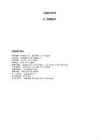
TARTUFFE A COMEDY CHARACTERS MADAME PERNELLE, mother of Orgon ORGON, husband of Elmire ELMIRE, wife of Orgon DAMIS, son of Orgon MARIANE, daughter of Orgon, in love with Valere CLEANTE, brother-in-law of Orgon TARTUFFE, a hypocrite DORINE, Mariane's maid M. LOYAL, a bailiff A Police Officer FLIPOTTE, Madame Pernelle's servant The Scene is at Paris ACT I SCENE I MADAME PERNELLE and FLIPOTTE, her servant; ELMIRE, MARIANE, CLEANTE, DAMIS, DORINE MADAME PERNELLE Come, come, Flipotte, and let me get away. ELMIRE You hurry so, I hardly can attend you. MADAME PERNELLE Then don't, my daughter-in law. Stay where you are. I can dispense with your polite attentions. ELMIRE We're only paying what is due you, mother. Why must you go away in such a hurry? MADAME PERNELLE Because I can't endure your carryings-on, And no one takes the slightest pains to please me. I leave your house, I tell you, quite disgusted; You do the opposi
 annaabi.ee






Kõik kommentaarid