 50 punkti
Autor soovib selle materjali allalaadimise eest saada 50 punkti.
50 punkti
Autor soovib selle materjali allalaadimise eest saada 50 punkti.
 ~ 1 leht
Lehekülgede arv dokumendis
~ 1 leht
Lehekülgede arv dokumendis
 2011-01-12
Kuupäev, millal dokument üles laeti
2011-01-12
Kuupäev, millal dokument üles laeti
 7 laadimist
Kokku alla laetud
7 laadimist
Kokku alla laetud
 0 arvamust
Teiste kasutajate poolt lisatud kommentaarid
0 arvamust
Teiste kasutajate poolt lisatud kommentaarid
 merleSi
Õppematerjali autor
merleSi
Õppematerjali autor
Review : The importance of being earnest The play is directed by Peter Joucla and the producer is Grantly Marshall . The play itself is written by Oscar Wilde . Jack looks like an ordinary guy from the countryside who pretends to have a brother in London whose name is Ernest . Actually his friends in London know him as Ernest and in the country as Jack. Jack was caught by his best friend Algernon who found his cigar box , in which the name Ernest had been written . Algernon also created himself an imaginary friend called Bunbury. The reason is to have an opportunity to escape from the countryside social life to the city . Things turn bad when Jack falls in love with Gwendolyn who has an obsession to marry with a guy whose name is Ernest. Once , when they meet in the countryside at his aunt Cecily's , Jack had a lot of explaining to do , because his best friend Algeron who is pretending to be Ernest also went Cecily's house because he loves her. So the girls think th
· New characters were businessmen, salesman, immigants, poor farmers · These characters were in new settings, skyscrapers, departments store, apartment building, ghetto, stockyard (cattle, cows were slaughtered), commercial trust · Their world is not one of culture or high moral standards · For these new writers controlling new american social experience · Naturalists offered a view that questioned the belief that now was a conscious and national being and happiness could in moral behaviour · Naturalists show man as a small figure in deterministic system which ignores him · Man is a huge machine · Lot of these novels end in tragedy · For 20 years naturalism remained dominant method. The beginning of the 1910 (modernism starts ) · American naturalists: frank Norris ,,The Octopus", Stephan Crane ,,Red badge of courage" · Jack London (1876-1916) · Grew up in extreme poverty
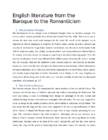
English literature is one of the oldest literatures in Europe; dates back to the 6th century AD. Oral literature, i.e. not written down, spread from person to person. In 449 AD Anglo-‐Saxon tribes invaded England – beginning of the Anglo-‐Saxon period in English literature. The first form of literature was folklore, carried by scops and gleemen, who sang in alliterative verse (a kind of simple poetry). Prose developed much later. The first form of recorded English literature was the epic Beowulf, which was produced sometime near the end of the 7th and beginning ?
Orson Scott Card in 2008 and when he was younger. The Setting The novel starts off on Earth, with scenes at the school and the Wiggin home. Little attention is given to the details of this setting, not even the name of the city, and so it comes across as a standard American neighborhood. A shuttle is used as a background in the fourth chapter. It has small narrow corridors and the walls of the rooms were carpeted as floors. The importance of the shuttle is that Ender learned something about orientation in zero gravity and that knowledge helped him a lot later. Most of the time passes in Battle School, which is composed of army barracks with rows of bunk beds; dining halls one for soldiers and one for commanders, with scoreboards decorating both; the game room, with various video games for the children to play; battlerooms, where the children have practice and battles in zero gravity; and a gym with shower rooms, where
· Sometimes, some things go wrong so you'd appreciate them when they're right. · Kiss the kissers, Love the lovers & Play the players. · The purpose of relationship is not to have someone who might complete u, but to have someone with whom u might share ur incompleteness. · Sometimes, the only time you realize how much a person means to you is when h/she's gone & wont come back. · Depression isn't a sign of weakness, it is a sign of being strong for TOO LONG. · People dream, but sometimes they forget to wake up, and they don't make it happen. · One thing common about butterflies and love: when you hold too tight, it gets hurt. When too loose, they fly away. · Too much expectations will kill you. But, no expectations will lead you pathetic and helpless. · Teacher: "Children in the dark make mistakes". Student: "mistakes in the dark make children" · don't promise me anything, just show me that you really do.
Arkadyevna Karenina is coming to visit from Saint Petersburg. Meanwhile, Stiva's childhood friend Konstantin Dmitrievich Levin ("Kostya") arrives in Moscow with the aim of proposing to Dolly's youngest sister Princess Ekaterina Alexandrovna Shcherbatskaya, "Kitty". Levin is a passionate, restless but shy aristocratic landowner who, unlike his Moscow friends, chooses to live in the country on his large estate. He discovers that Kitty is also being pursued by Count Alexei Kirillovich Vronsky, an army officer. At the railway station to meet Anna, Stiva bumps into Vronsky. Vronsky is there to meet his mother. It surmises that Anna and the Countess Vronskaya have travelled together in the same carriage and talked together. As the family members are reunited, and Vronsky sees Anna for the first time, a railway worker accidentally falls in front of a train and is killed. Anna interprets this as an "evil omen." Vronsky is infatuated with Anna
king’s religious policy and the object of loathing by his Puritan opponents. Herbert gives praise to the things that the Puritans wished to do away with. For example, he emphasizes the importance of ritual, the mystery of the sacraments offering praise to the angels and so forth. Although the churches had fallen into disrepair by the 1620s, the state of the church as a holy place was resumed eventually by the movement which put importance on this aspect of “beauty of holiness”. Eventually, even a beautification and restoration programme was launched in which painting and sculpture returned as aids to the liturgy. (Coursebook, pp. 45-47) 7. 17th century philosophical writings (Burton, Browne, Hobbes) Robert Burton was an English writer, whose most famous work is considered to be The Anatomy of Melancholy. It discusses and tries to analyze the nature of melancholy, but also human emotion in general
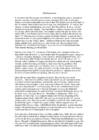
The Renaissance In the history the Middle Ages were followed by the Renassance period. During this period a new class called bourgeoeisie came into being. This is the period when monarchies based on nationality were estabilished. The Renaessance started in Italy In the 14th century. Then it spread all over Europe, reached England in 16th century. The struggle for power culminated in a war called The War of Roses. It was a civil war between two dynasties, families. They had different emblems on one side the Yorks (white rose) other Lancasters (red). They couldn't decide who gets the throne. War ended 1485
 annaabi.ee









Kõik kommentaarid