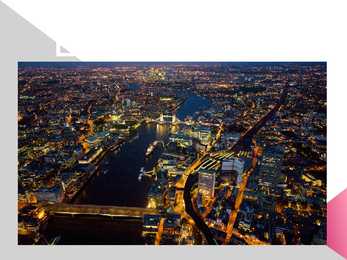
The City and The Tower of London Styv Solovjov G1a The City Founded by Romas 43-50 AD, set up trading post It has seen at least 15 major fires 1666 burnt down 4/5 of its houses Then The City was rebuilt Tower Bridge (Tower Hill tube), built in 1894 during the Second World War, its was heavily bombed Now there is one of the biggest financil centres in Europe Banks, stock exchange Many banking and insurance institutions have their headquarters there Stock Exchange, Lloyd's of London,the Bank of England are all based in the City Over 500 banks have offices in the City City is an established leader in trading in Eurobonds, foreign exchange, energy futures and global insurance Of the $3.98 trillion daily global turnover, trading in London accounted for around $1.36 trillion,or 34.1% of the total Canary wharf Click to edit Master text styles Second level ...
The great Fire The Great Fire of London of September 1666 was one of the moost famous incidents in Stuart England. It was the second tragedy to hit the city in the space of 12 months. The fire started in Pudding Lane. The fire started in a baker's shop owned by Thomas Farriner who was the king's baker. His maid failed to put out the ovens at the end of the night. Once it started, the fire spread quickly. The city was basically made out of wood and with September following on from the summer, the city was very dry. Strong winds fanned the flames. In 1665, during the plague, the king, Charles II, had fled in London. His plan, in 1666 (he stayed in London and took charge of the operation to save the city) was to create fire-breaks. The heat created by the fire was so great that the lead roof on the old St Paul's Cathedral melted. The actual human casualty rate was remarkably small with possibly only 5 people dying in this fire. The...
Topic London Tallinn English College Tallinn 2007 1. Introduction London is the capital city of the United Kingdom and the largest urban area in England. The ancient City of London, to which the name originally belonged, still maintains its medieval boundaries, but the name "London" has long applied more to the whole metropolis that has grown up around it. London has been an important settlement for over two millenniums. It is also one of the world's leading business, financial and cultural centres and its influence in politics, education, entertainment and even fashion contribute to its status as a major global city. London is a major tourist attraction with four world heritage sites, several royal parks and numerous iconic landmarks such as the Houses of Parliament, Towe Bridge, the Tower of London, Westminster Abbey and the London Eye. 2. History Although there is some evidence of a permanent settle...
London London is the UK's largest and most populous metropolitan area and the largest urban zone in the European Union by most measures. In July 2007 it had an official population of 7,556,900 within the boundaries of Greater London, making it the most populous municipality in the European Union. History: The first major settlement was founded by the Romans in 43 AD. Canute took control of the English throne in 1016, controlling the city and country until 1035, when his death resulted in a reversion to Saxon control under his pious stepson Edward the Confessor, who refounded Westminster Abbey and the adjacent Palace of Westminster. By this time, London had become the largest and most prosperous city in England, although the official seat of government was still at Winchester. In the 16th century William Shakespeare and his contemporaries lived in London at a time of hostility to the develop...
What is London? London is one of the largest cities in the world, with an area of 1706,8 km2. It is the capital of England and The United Kingdom. It is in Central Europe. The city lies on the river Thames. London has 7,556,900 inhabitants, which is more than a quarter of the countries in Europe! For one city, London is very special. The beginning of London Before the founding of London, there had already been smaller groups of people in the area. There aren't any records on who they were. The first mayor settlement of London was in 43 AD. Romans came to the banks of the river Thames. They built houses, a port and a bridge over the river (later known as London Bridge). They named the place Londinium. In the year 200 they built a wall around their city. The wall doesn't exist today, but a part of it can be seen near the Museum of London. In the year 61 Londinium was burned down. The houses were made out of wood back then, so this was ...
London is the capital of both England and the United Kingdom, and the largest metropolitan area in the European Union. An important settlement for two millennia, London's history goes back to its founding by the Romans. Since its foundation, London has been part of many movements and phenomena throughout history, including the English Renaissance, the Industrial Revolution, and the Gothic Revival.The city's core, the ancient City of London, still retains its limited medieval boundaries; but since at least the 19th century, the name "London" has also referred to the whole metropolis that has developed around it. Today the bulk of this conurbation forms the London region of England and the Greater London administrative area, with its own elected mayor and assembly. London is one of the world's most important business, financial and cultural centres and its influence in politics, education, entertainment, media, fashion and the arts contri...
London London is the capital of Great Britian. London is the second biggest city in europe after Moscow, second biggest portcity after Rotterdam and one of the most important financial and trading citys in the world. It also a biggest media capital in the world, such as BBC, CNN, ITN and so on. London was built by the romans, side of the river Thames about 2000 years ago. From the first to fith century the city was the center of the romans premises. In the dark ages the city was abandoned. London was recreated by Alfred The Great in the year 886. In the twelth century London became capital of England. From 17. 20. Century London was one of the worlds most important city. The city was havoced by the 1665- plague and 1666 the great fire. London is seperated to 33 boroughs. Londonds council has 25 seatings. The mayor of London is Ken Livingstone. The mayors main assignment is repre...
Contents Introduction...................................................3 London's early history.....................................45 The people of London......................................6 Buildings and bridges......................................7 Intruduction London is the capital of the united kingdom (UK), which is made up of Great Britain(England, Scotland, Wales) and Northern Ireland. The city lies in the southeast of England and covers an area of about 1,578 square kilometres on either side of the River Thames. With population of seven million, London is by far the largest city in the UK. Birmingham, the second largest, has just over one million inhabitants. Cultural life London is the worldclass centre. It has more than40 theatres, where audiences enjoy everything from musicals to William Shakespeare's plays. The city also ...
London is the capital of both England and the United Kingdom, and the largest metropolitan area in the European Union. An important settlement for two millennia, London's history goes back to its founding by the Romans. Since its foundation, London has been part of many movements and phenomena throughout history, including the English Renaissance, the Industrial Revolution, and the Gothic Revival. The city's core, the ancient City of London, still retains its limited medieval boundaries; but since at least the 19th century, the name "London" has also referred to the whole metropolis that has developed around it. Today the bulk of this conurbation forms the London region of England and the Greater London administrative area, with its own elected mayor and assembly. London is one of the world's most important business, financial and cultural centres and its influence in politics, education, entertainment, media, fashion and the arts cont...
Great Plague of London. The Great Fire of London. Samuel Pepys's diary . The Great Plague of London (1665-1666) The Great Plague was a massive outbreak of disease in England that killed an estimated 100,000 people The plague arrived with a merchant carrying a parcel of cloth sent from London, although this is a disputed fact It was the last major outbreak of the plague in England The English outbreak is thought to have originated from the Netherlands By July 1665, plague was in the city of London itself Though concentrated in London, the outbreak affected other areas of the country A bill of mortality for the plague People at the plague King Charles II of England, his family and his court left the city for Oxfordshire The aldermen and the the majority of the other city authorities opted to stay at their posts - The Lord Mayor of the city, Sir John Lawrence quarantined himself in a ...
LONDON Authority of London 1. City of London 18.Sutton 2. Westminster 19.Croydon 3. Kensington and Chelsea 20.Bromley 4. Hammersmith and Fulham 21.Lewisham 5. Wandsworth 22.Greenwich 6. Lambeth 23.Bexley 7. Southwark 24.Havering 8. Tower Hamlets 25.Barking and Dagenham 9. Hackney 26.Redbridge 10. Islington 27.Newham 11. Camden 28.Waltham Forest 12. Brent 29.Haringey 13. Ealing ...
London - The City and Beyond The statue of a bronze dragon on Fleet Street is the entrance to the City of London. This is where the Romans founded Londinium almost two thousand years ago. The City covers about 2,6 square km (1 square mile) and is often called the Square Mile. Today, the City of London is one of the world's most important business and financial centres, with over 500 banks. Over 400 000 people work within the Square Mile during weekdays and it is a crowded and noisy place. The Barbican Centre is a very big complex of buildings, towers, garages and walkways. It was built in the 70s and most Londoners don't like the way it looks. It is the largest performing arts centre in Europe and home to two symphony orchestras, and art gallery and the amazing Museum of London. Fleet Street once was a road between the City and Westminster. Then it became the centre of publishing and newspaper business for centuries. The Dail...
The history of London There were some people living on the banks of the Thames when the Romans came to England in 43 AD. The Romans built houses, a port and a bridge over the river and named the place Londinium. The bridge which was built by the Romans was later known as London Bridge and it was built in stone in 1176. It was London's only bridge until 1729. Now there are about twenty bridges crossing the river within London. London soon became the largest city in England and by the time of the Norman Conquest in 1066 it had become the most important city in Britain. It grew in area and population until September 1666, when the Great Fire destroyed four fifths of the wooden buildings in the City including ST Paul's Cathedral. The fire lasted for five days. By now London has swallowed up many of the small towns and villages that surrounded it. It is a city of seven million pepole covering 1,606 square mile...
London There were some people living on the banks of the Thames when the Romans came to England in 43 AD. But we don't know much about them. London first called Londinium . In 200 they built a wall around their city, a part of which can still be seen near the Museum of London . London Bridge was built in stone in 1176. It was London's only bridge until 1729. Now there are about twenty bridges . London soon became the largest city in England and by the time of the Norman Conquest in 1066 it had become the most important city in Britain. It grew in are and population until September 1666, when the Great Fire destroyed four fifths of the wooden buildings in the City including St Paul's Cathedral. The fire began in the kitchen of King's baker in Pudding Lane and lasted for five days. London is an exciting city which attracts people from all over the world. It is popular place to live because there is something new to see and do every day. M...
London London is the capital of England and of the United Kingdom. It`s one of the largest and most populated cities in the world. More than 7 million people live in London today. London is situated in south-eastern England on the River Thames. People have lived in the area for more than 5000 years. London is made up of two ancient cities that are now joined together – the city of London and the city of Westminister.Both cities together make up an area called Greater London. London is famous for its parks.Hyde park is one of the largest and nicest of them. Tourism is one of London´s largest industries. The city is full of red doubledeckers that drive visitors from one famous place to another all day long. The most popular places for tourist to visit are the Houses of Parlament,the Tower of London,Buckingham Palace,the London Eye and Madame Tussaud`s Wax Museum Buckingham Palace London Eye the To...
Places I would like to visit in London Lagedi school VIII The London Eye • The London Eye is a giant Ferris wheel on the South Bank of the River Thames in London. • London Eye is also known as the Millennium Wheel • The London Eye was formally opened by Prime Minister Tony https:// www.google.ee/search?q=l&source=lnms&tbm=isch&sa=X&ved=0ahUKEwjC8b_96qjQAhWFDywKHUA0BGwQ_AUICCgB&biw=1280&bih=694#tbm=i sch&q=london+eye&imgrc=nM3bY3L0TF94BM%3A Blair on 31 December 1999 • London eye cost £70 million. https:// www.google.ee/search?q=london+eye&espv=2&biw=1280&bih=694&site=webhp&source=lnms&t https:// bm=isch&sa=X&ved=0ahUKEwiMzOHk7ajQAhWCBywKHVkcA0AQ_AUIBigB#imgrc=b1UWbWaSw2L www.google.ee/search?q=london+eye&espv=2&biw=1280&bih=694&site=webhp&so...
London History The Romans AD 43- AD 410 The Romans finally invaded Britain in AD 43 from Kent. The Romans lead by Julius Caesar attempted to invade Britain twice before that in 55 and 54 BC but the invasions were unsuccessful. They made their way to the river Thames and sailed up it. The Romans knew it was important to control a crossing point at the river Thames, so they decided to build a settlement on the north bank. Although small settlements had been built on the banks of the Thames, the Romans were the ones who built the first city. They called their city Londinium. The Roman engineers noticed that the point where the swampy river narrowed would make an ideal crossing point, they built London Bridge. Less than 20 years later the native Iceni tribe, led by Queen Boudicca, rose up against the Romans in revenge for mistreatment and burnt Londinium to the ground. The well disciplined Roman army defeated her forces and Londinium was r...
London Topic Tallinn 2008 2 General information London is the capital of the United Kingdom. It covers the area of about 1000 square kilometres and its population is about 7 million. London is located on the river Thames. It is divided into 32 boroughs and the City. Currency used in London is British Pound. London is one of the most popular tourist destination in the world. It is also world's leading business, financial and cultural centre. Subway is commonly used to move around in London. Climate London has a temperate marine climate. It has daily high temperatures during summer. The warmest month is July. The coolest month is January. Winders are seldom below freezing. Rainfall is regular, but most often in the form of drizzle occurring throughout the year. Snow occurs sometimes in winter but rarely settles more than a few millimetres deep. History The origin of London may be dated around the beginning of the...
THE CITY OF LONDON History The City of London occupies one square mile in the middle of the capital. It once made up entire town of London, surrounded by the wall first built by Romans. The Romans also built a bridge over the Thames and there has been one in the same area ever since. The Roman Londinium grew up on the northern side of the bridge. In AD 61 the native Celtic tribe, led by Queen Boudicca, rose up against the Romans. They burnt down Londinium to the ground and killed most of its inhabitants. Roman armies eventually defeated Boudicca and Londinium was rebuilt. At the end of the fourth century AD the Roman Empire began to crumble and the Roman armies were recalled from Britain to defend Rome itself. Once they had left, tribes such as Angles, Saxons and Jutes invaded and settled in from Holland, Germany and Denmark. Together they are known as Anglo-Saxons. They were farming people who pr...
London There were some people living on the banks of the Thames, when the Romans came to England in 43 AD. But we don't know much about them. The Romans built houses, a port and a bridge over the river and named the place Londinium. The bridge which was built by the Romans was later known as London Bridge and it was built in stone in 1176. London soon became the largest city in England and by the time of the Norman Conquest in 1066 it had become the most important city in Britain. It grew area and population until September 1666, when the Great fire destroyed four fifths of the wooden buildings in the City. The fire began in the kitchen of the King's baker in Pudding Lane and lasted for five days. By now London is a city of seven million people covering over 1,5 square miles. Nowadays the population of London is made up of the people of very many nationalities. It is a popular...
London March 28th Parliament of the United Kingdom The Parliament of the United Kingdom, commonly known as the UK Parliament or British Parliament, is the supreme legislative body in the United Kingdom, British Crown dependencies and British overseas territories. It alone possesses legislative supremacy and thereby ultimate power over all other political bodies in the UK and its territories. Its head is the Sovereign of the United Kingdom (currently Queen Elizabeth II) and its seat is the Palace of Westminster in the City of Westminster, one of the Boroughs of the British capital - London. Tower of London The Tower of London, officially Her Majesty's Royal Palace and Fortress of the Tower of London, is a historic castle located on the north bank of the River Thames in central London. It lies within the London Borough of Tower Hamlets, separated from the eastern edge of the square mile of the City of L...
LANDMARCS HYDE PARK: Hyde Park is one of the largest parks in central London, England and one of the Royal Parks of London, famous for its Speakers' Corner. The park is divided in two by the Serpentine. The park is contiguous with Kensington Gardens; although often still assumed to be part of Hyde Park, Kensington Gardens has been technically separate since 1728, when Queen Caroline made a division between the two. THE TOWER OF LONDON: Her Majesty's Royal Palace and Fortress, more commonly known as the Tower of London (and historically as The Tower), is a historic fortress and scheduled monument in central London, England, on the north bank of the River Thames. It is located within the London Borough of Tower Hamlets and is separated from the eastern edge of the City of London by the open space known as Tower Hill. It is the oldest building used by the British government. [1] TOWER BRIDGE: Tower Br...
London Tube Tube The London Underground, or 'the Tube' as it is universally known to Londoners, is normally the quickest and easiest way of getting round London. London's Tube Network Greater London is served by 12 Tube lines, along with the Docklands Light Railway(DLR) and an interconnected local train network. Trains generally run between 5am and midnight, Monday to Saturday. Operating hours are reduced on Sunday. Exact details depend on the station and the line, so it's worth checking the Transport for London website. Cheaper by Oyster Oyster card prices are always cheaper than paper tickets for the Tube. The cash single fare for all journeys via Zone 1 is £4, up to £2.40 more than the Oyster fare. Something about history Railway construction in the United Kingdom began in the early 19th century...
London London · London is the capital of the United Kingdom and the constituent country of England. London is one of the world's most important business, financial and cultural centers and its fluence in politic, education, entarainment, fashion and the arts contributes to its status as a major global city. London · Little bit about people who live in london. London currently has a wilde range of peoples, cultures and religions and over 300. languages are spoken in the city. · On July 2007, it had an offical population of 7 556 900 within the boundaries of greater london. History of London · The Blitz and other bombing by the German Luftwaffe during world war 2, killed over 30 000 Londoners and destroyed large areas of housing and other buildings across London. · In 1965 London's political confines were expanded to take into account the growth of the urb...
London London is the capital of Great Britain. It is situated on the river Thames. The Thames is a river flowing through southern England and connecting London with the sea. The Thames has a length of 346 kilometres (215 miles). The first bridge was the tower bridge, built in the 12th century. The second bridge was built in the year 1750. .The river Thames divides London into the northern and the southern part. The port of London is one of the greatest trade centres in the world. The river Thames is certainly the most famous water body in London. London is also the seat of the government of Great Britain. It is one of the largest cities in the world with its population of about seven million. Before the great fire in 1666 there were many wooden houses and narrow crooked streets in the town but after the fire it became a well-planned city with wide streets, beautiful squares and parks. It star...
TEST – The history of London 1) London was definitely not an important place during the Celtic period. It was just a mosquito-infested swamp. 2) London became a trading centre during the Roman occupation. It was an important crossing point for the Romans over the river Thames. Market forces began to operate. With troops stationed and ships calling, merchants will inevitably set up shops. 3) The Celtic warrior queen Boudicca and her tribesmen fought against the Roman conquest and devastated Londinium. The city was burned down and its inhabitants massacred. 4) London was rapidly rebuilt and in AD 122 the Roman walls were built around it as a defence. 5) The Romans left Britain early in the 5th century because they had to cope with troubles elsewhere in the Empire. 6) Around AD 400 the Germanic tribes invaded Britain. 7) London fell into ruins because the Anglo-Saxons destroyed the Roman towns and fo...
Põltsamaa Ühisgümnaasium LONDON REFERAAT Bruno Pähkel 7c klass 2010 CONTENT Introduction...............................................................................................lk3 London history...........................................................................................lk4 Today london.............................................................................................lk5 Big Ben.............................................
Jüri Gümnaasium THE GREAT PLAGUE IN LONDON Research paper Ervin Sagor 10.h Supervisor: Kristel Kriisa Jüri 2011 TABLE OF CONTENTS INTRODUCTION The history of England has always been fascinating for me and plague was one the most horrifying diseases in human history with millions of deaths across the world. That is why I chose the Great Plague as the topic of my research. The purpose of my study is to educate myself and gain more knowledge on the history and find out how people lived in England in the seventeenth century. For a start, I will give a short review what the bubonic plague is. Then I tell about Black Death in England before the Great Plague, city life before and during the plague. Secondly, I will examine how the plague reached Great Britain. ...
London London is one of the world's great cities. Located in the southeast of England, on the River Thames, it is the capital of the United Kingdom and has been the heart of its political, cultural and business life for centuries. London has always been the centre of the world. The origin of the city may be dated around the beginning of the 1st century when a Celtic tribe settled near the Thames. The Romans founded London about 50 AD. Its name is derived from the Celtic word Londinios, which means `the place of the bold one'. The Romans brought with them forts, roads and the rule of law. Then in 61 AD Queen Boudicca led a rebellion against the Romans. Her army marched on London. No attempt was made to defend London. Boudicca burned London but after her rebellion was crushed it was rebuilt. By the end of the 2nd century, a 6metre stone wall was ...
LONDON The history of the town is very closely linked with the history of the country itself. The name probably comes from the celtic words Llyn, which means a lake, and Dun, which means a fort or a strong place. Although the site was not important during the Celtic period (400 BC 43 AD) During the Roman occupation Londinium, as it was called then, was not influential politically, but was, however an important crossing point for the romans over the river Thames. Londinium was at a very good place, so it soon became a trading centre. In AD 61 the city was devastated by Boudicca, who led a revolt againt the Roman conquest of Britain. The city was burned down and its inhabitants massacred. London was rapidly rebuilt, becoming the capital of the province Britannia. AD 122 Roman walls were built around it as a Around AD 400 the Anglo-Saxons invaded Britain. They destroyed the roman towns and formed many kingdoms that were hostile to one a...
London London is almost 2,000 years old. Romans came to England in 43 AD. It was first called Londinium. In 1666 the Great Fire destroyed four fifths of the wooden buildings in the City including St Paul`s Cathedral. The fire began in the kitchen of the King`s baker Thomas Farriner in Pudding Lane and lasted for five days. London is the capital of England and the United Kingdom. By now London has swallowed up many of the small towns and villages that once surrounded it. London is on the same latitude as Warsaw. London is a city were more than 7 million inhabitants live. In London there are famous Telephone booths and taxis. Also there are red double- decker buses. The quick and easy way is use the underground trains. The cheapest is to buy a Travelcard. London hosted the 1908 and 1948 Summer Olympic Games and will host the 2012 Summer Olympic Games. ...
London London is the capital of England and of the United Kingdom. It`s one of the most populated cities in the world. More than 7 million people live in London today. London is situated in south-eastern England on the River Thames. The Romans started to build a town on the River Thames about 2000 years ago. They called their town Londinium and that`s where the name London comes from. London is made up of two ancient cities that are now joined together - the city of London and the city of Westminster. London is famous for it`s parks. Hyde Park is one of the largest and nicest of them . In summer you can walk in the park have a picnic or rent a small boat and go fishing. Hyde Park is also a place for big rock concerts - the Beatles, the Rolling Stones, Queen, the Red Hot Chilli Peppers and the Foo Fighters are just some of the bands that have played there.
LONDON LONDON Largest city in western Europe Dominates Britain Headquarters of all goverment departments the country´s parliament major legal institutions the monarch Bussiness and banking centres, the national television networks and newspapers Seven times larger Fifth of the total population TWO AREAS Walled City (the square mile) Small Did not contain Parliament or the royal court Traders and merchants Westminster Outside London´s walls National institutions meeting place WEST END AND EAST END West End Theatres, cinemas, expensive shops East End Poorer residental area Home to successive waves of immigrant groups LONDON “Londoners“ live in its suburbs Travel to work each day Cultural and racial variety greatest 300 languages spoken Nearly third of the people were born outside The most popular City in the world (2007) Signs of its richness a...
The people of London Jaanika 9b London is a growing city with a population of more than seven million. It is also a multicultural city, as it has been since Roman times. Now about a quarter of the capital`s inhabitants are members of ethnic minotities. The Irish community The largest non-English group. People from Ireland first went to London in 1845. Irish-born population is over 250,000 Indian communities Indians are London`s largest ethnic minority. Population 411,000 Thousands arrived from Uganda and Kenya in the 1960s. Many Punjabi Sikhs, live in Hounslow. Pakistanis and Bangladeshis Thousands live in London, mostly in the east. Tower Hamlets is home to about half the city`s Bangladeshis. The heart of the community is a Brick Lane. Lined with inexpensive resturants. Caribbeans and Africans Black Caribbeans are second largest ethnic minority. They come from island...
The UK & London The United Kingdom (or the UK) is a short way of saying the United Kingdom of Great Britain and Norther Ireland. The UK is situated north-west of the European continent between the Atlantic Ocean and the North Sea. The UK consists of England, Wales, Scotland and Northern Ireland. Its highest point is Ben Nevis in Scotland followed by Snowdon in Wales. The Severn is the longest river in the United Kingdom. Other important rivers are the Trent, the Mersey, the Tyne, etc. Lough Neagh which lies in the centre of Northern Ireland is thr UK's largest freshwater lake. The climate in the UK is variable. The weather changes so frequently that it is difficult to forecast. It is not unusual for people to complain that the weathermen were wrong. Fortunately there is no extreme weather conditions, it is never very cold or very hot. The first inhabitants were Iberians and Celts who sett...
LONDON KRISTINA KASEMÄGI CONTENTS • GENERAL • HISTORY • CLIMATE • THINGS TO SEE • THINGS TO DO GENERAL o London is the capital city of England and the United Kingdom. o It’s situated in the South East of England with population of 14 million people. HISTORY oLondon is one of the oldest cities in the world, and it was founded by the Romans in 40 A.D. and called Londinium. CLIMATE • London has a temperate marine climate like much of the British Isles, so the city rarely sees extremely high or low temperatures. THINGS TO SEE o THE TOWER OF LONDON o THE LONDON EYE o TOWER BRIDGE o BIG BEN o THE HOUSES OF PARLIAMENT 1 o ST JAMES’S PARK THE TOWER OF LONDON THE LONDON EYE TOWER BRIDGE BIG BEN, THE HOUSE PARLIAMENT 1 AND FAMOUS RED DOUBLE DECKER BUS ST JAMES’S PARK THINGS TO DO IN LONDON You can: o Cross the Thames in a cable car o See a world-class classi...
How well do you know London? Form 10, Welcome to the tour of London! You will spend two days (lessons) exploring the famous landmarks of the city. While on the way, follow the map so that you would not get lost and so that you could eventually get streetwise in London. Take the following questions with you, find answers to them and put them down for yourself in this MSWord document. Don’t forget to “take” photos - you are supposed to recognise the landmarks later on! At the end of the tour send the worksheet to yourself so that you could use it again. Good luck with exploring the city! DAY 1. The route: The Buckingham Palace – Trafalgar Square – National Gallery – Piccadilly Circus – The British Museum – Madame Tussauds – Oxford Street – Hyde Park – Harrods Destination 1: The Buckingham Palace What is its function? - Buckingham Palace has served as the official London re...
Liis Toomsalu QUESTIONS part 2 1: How many people died in the Great Fire of 1666? The death toll from the fire is unknown and is traditionally thought to have been small, as only a few verified deaths were recorded. This reasoning has recently been challenged on the grounds that the deaths of poor and middle-class people were not recorded anywhere, and that the heat of the fire may have cremated many victims, leaving no recognizable remains. 2: How was the fire finally mastered? The battle to quench the fire is considered to have been won by two factors: the strong east winds died down, and the Tower of London garrison used gunpowder to create effective firebreaks to halt further spread eastward. 3: Wh...
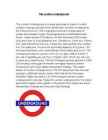
The London Underground The London Underground is a really good way to travel in london. London Underground has more names than one (the Underground, the Tube and so on). The Underground servers a large parts of london like Greater London, Buckinghamshire, Hertfordshire and Essex. It allso serves 270 stations, it's 402 kilometers (250 miles) long and it has 11 lines (Bakerloo line, Central line, Circle line, District line, Hammersmith & City line, Jubilee line, Metropolitan line, Norther line, Piccadilly line, Victoria line and finally Waterloo & City line ). All the lines have been color coded (Brown, Red,Yellow and so on). The Underground doesn't cost too much (In our age 1.40£ to 6.60£). If you use it regularly you can buy a "Oyster card", which you can use to store your rides/money. The first Underground was opened in 1863 (10 January) useing gas-lit wooden carriages hauled by steam locomotives and it was cal...
The City of London History The City of London occupies one square mile in the middle of the capital. It once made up the entire town of London, surrounded by the wall first built by the Romans. The Roman Londinium grew up on the northern side of the "London Bridge" in the past. Products such as olive oil, wines and fruit were brought by ships from different parts of the Roman Empire and unloaded onto wooden quays along the river. In AD 61 the native Celtic Iceni tribe, led by Queen Boudicca, rose up against The Romans. They burnt Londinium to the ground but Roman armies eventually defeated Boudicca. The city was rebuilt and was gradually surrounded with a wall of stone and brick which lasted for many centuries. During the archeological excavations in 1954 the Roman Temple of Mithras was revealed. It was a pagan temple dedicated to the Persian Sun-god. The Temple was later reconstructed only a short way...
LONDON EYE The EDF Energy London Eye, also known as London Eye is a giant 135metre tall Ferris wheel situated on the banks of the River Thames in the British capital. Facts about london eye It is the tallest Ferris wheel in Europe. It is visited by over ~3.5 million people every year. The wheel carries 32 sealed and air conditioned ovoidal passenger capsules Each 10 tonne capsule holds 25 people. History The London Eye was formally opened by the then Prime Minister, Tony Blair, on 31 December 1999. It was opend to the public on 9. March 2000 after it's formal opening because of technical problems. On 5 June 2008 it was announced that 30 million people had ridden the London Eye since its opening. Critical reception Sir Richard Rogers, winner of the 2007 Pritzker Architecture Prize, wrote of the London Eye in a book about the project: "The Eye has done for London what the Eiffel Tower did for Paris, which is to give it...
Transport system in London Kaspar Rätsep Transport for London (TfL) The local government, responsible for most aspects of the transport system in Greater London in England Created in 2000 Three main directorates are: London Underground, London Rail and Surface Transport London Underground Also known as the Tube Oldest metro system in the world The Underground has 11 lines The majority of London Underground is actually on the surface rather than in tunnel Ticket prices begin from £2.00 Heavy rail London is the focal point of the British railway network London has 14 terminus stations London Railway network is the busiest and largest in Europe along with Paris. Train prices start from £1.20 Buses London's bus network is extensive, with over 6,800 scheduled services every weekda...
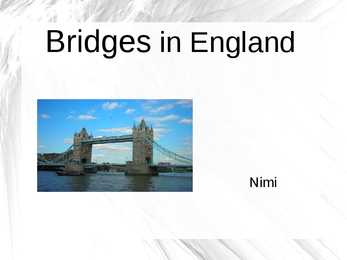
Bridges in England Nimi Tower Bridge Tower Bridge has stood over the River Thames in London since 1894 Tower Bridge is 60 meters long with towers that rise to a height of 43 meters Tower Bridge is the only Thames bridge which can be raised London Bridge London Bridge is between the City of London and Southwark London's original bridge made this one of the most famous bridge in the world Southwark Bridge Southwark Bridge is a road-bridge linking Southwark and the City across the River Thames It was designed by Ernest George and Basil Mott and opened in 1921 Westminster Bridge Westminster Bridge is a road and foot traffic bridge over the River Thames between Westminster and Lambeth The current bridge, opened in 1862 Cannon Street Rail Bridge Another London bridge that does not go by its proper name s Cannon St...
Geoffrey Chaucer 13431400 · Son of a wealthy London wine merchant. · Served as a page in the royal household while in his early teens. · Was married to on of the Queen's ladiesinwaiting Philippa Roet. · Worked as the Controller of Customs in London, Justice of Peace in Kent and Clerk of the King's Works. · Was buried in Westminster Abbey. Chaucer's poetry Poetry generally divided into three periods: 1. The French period: "The Romance of the Rose" 2. The Italian period "Troilus and Criseyde" 3. The English Period "The Canterbury Tales" Chaucer's works are written in Middle English of London in The 1300s. "The Canterbury Tales": · He planned to write 120 tales but managed only 20. · They travel one ...
WT Letter to a Friend Dear Tom, Sorry I haven't written you for a while, but I've just returned from a a week's holiday in United Kingdom, London. We stayed in one of the city's best hotels. The hotel was Radisson SAS and it was right in the centre of the city. It was ideal to go sightseeing and shopping. London is spectacular city. It's the largest city in the United Kingdom, very historic, cultured, peaceful and beautiful at the same time. Did you know, that London has the oldest, longest and the most expensive underground network, dating from 1863 called The Tube? There are plenty of things to do there, too. We stent most of our time shopping and visiting the main sights, like The Big Ben Tower, National Gallery and Royal Opera House, where I saw the best concert I've ever seen! Unfortunately, I lost my passport to the Royal Opera House, but luckily some kind person had already hande...
The magic of London Close you eyes and imagine you are in a huge and comfy city. In front of you there are huge market street. There are not only shops. When you walk a litte bit around there you can find very beatiful and huge parks. Can you guess where you are? You're in London, of course, the most fabolous city in the world. What makes London such a special place? It's the friendly environment and the many diffrent cultural peole who live there. Just imagine you can meet one street at least five different culture peoples. What do to in London when you are tourist? There are many intresting places. Every human can find something intresting. There are many art galleries,museums and parks. I love London huge Ferris Wheel that named London Eye.There are also many street performes. They are actually pretty funny. My favorite tourist atraction is street markets because there are hugh variety of clohtes. I can not me...
OXFORD STREET Facts Oxford Street is a major street in London, England in the City of Westminster. With over 300 shops, it is Europe's busiest shopping street. The street derives its name from being part of the old London--Oxford Road which began at Newgate, City of London. It's mile and a half long, from Marble Archat the north east corner of Hyde Park to theTottenham Court Road History Between the 12th century and 1782 it was variously known as Tyburn Road (it was named after the River Tyburn) Uxbridge Road, Worcester Road and Oxford Road. Note: Today the name Uxbridge Road still exists for the portion of the London--Oxford Road between In the late 18th century, many of the surrounding fields were purchased by the Earl of Oxford, and the area was developed. It became popular to entertainers and for entertainment buil...
The United States of America is a big country. People speak English in America. Washington is the capital of the United States. New York City is the largest city in the country, the centre of business. Los Angeles is the second largest city, the film capital. Chicago is the third largest city in the country, the world`s tallest building Sears Towers. The flag of the United States has thirteen stripes. These show the number of states in 1776. It has fifty stars that show the number of states now. I love to see the starry flag That floats above my head. I love to see its waving folds With stripes of white and red. "Be brave," say the red stripes. "Be pure," say the white. "Be true," say the bright stars, "And stand for the right." Author Unknown The Bald Eagle is the national bird of the United States...
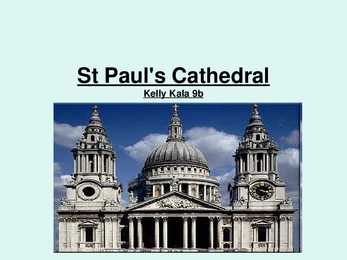
St Paul's Cathedral Kelly Kala 9b St Paul's Cathedral · St Paul's Cathedral is the Anglican cathedral on Ludgate Hill in the City of London and the seat on the Bishop of London. The present building dates from the 17th century and is generally reckoned to be London's fifth St Paul's Cathedral. The cathedral sits on the highest point of the City of London. The cathedral is one of London's most visited sights. St Paul's Cathedral Today · St Paul's Cathedral today is a busy working church. Daily services are held every day to which all are welcome to attend. Whilst the Cathedral charges for those who wish to sightsee,it does not charge for people who want to worship. Those attending services at St Paul's do so at no cost. People seeking a place to be quiet and pray are admitted to the St Dunstan's Chapel free of charge. Admission on Sundays for all services is free and th...
London important sights guide Roman period 20th century · Big Ben is the nickname for the great bell of the clock at the north end of the Palace of Westminster in London and is often extended to refer to the clock or the clock tower as well. It is the largest four-faced chiming clock and the third-tallest free-standing clock tower in the world. The clock first ticked on 31 May 1859. The pendulum is installed within an enclosed windproof box sunk beneath the clockroom. It is 3.9m long, weighs 300 kg and beats every 2 seconds. The clockwork mechanism in a room below weighs 5 tons. · Buckingham Palace is the official London residence of the British monarch. Originally known as, the building which forms the core of today's palace was a large townhouse built for the Duke of ...
 annaabi.ee