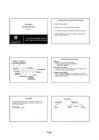
● 1997.-1998. aastal firma pankrotistus ning firma osteti ära oma töötajate poolt Eesmärk ● Toota võimalikult kvaliteetseid trükkplaate võimalikult kiiresti ● Selle käigus anda inimestele tööd ja arendada neid tehnoloogia valdkonnas Visioon/missioon ● Olla usaldatud oma klientide poolt, austatud looduse poolt ja kardetud konkurentide poolt Slogan/väärtused ● Slogan- Striving for excellence ● Väärtused: Usaldus Kiirus+ konkurentsivõimeline hind Paindlikus Kogemused Kvaliteet- innovatiivsus+ pidev enesetäiendus Personal Keskkonnasõbarlikkus Tegevusvaldkond ja-kohad ● Ülikiire trükkplaatide tootmine ning kohalesaatmine proto -ja väikeseeriates ● Paide, Tööstuse 17 SWOT-analüüs
obstacle is often xenophobia which may be caused by a wide range of factors. As a rule, xenophobia occurs in big, mostly mono-cultural societies, where strangers are kept at a distance just because they have not been seen around before. On the other hand, xenophobia can result from the hyper-liberal immigration policy in some modern countries. For example France and Sweden which have warmly welcomed a huge amount of immigrants form Asia and Africa during the recent decades. However, instead of striving to integrate with the local population by learning their language and getting to know their culture, they form their own closed community which do not communicate with the indigenous population. What is more, they keep on following the laws of their native land, often ignoring the legislation of their new homeland. Moreover, it is the part of the population who is not interested in their own roots and who do not excel at work, who tends to emigrate the most. Therefore, the immigrants from the
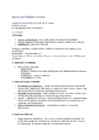
· mina-identiteet (self-identity) - 2 eluaastaks (keel, samasus) · enesehinnang (self-esteem) - 3 eluaastaks (uhkus, negativism, sõltumatuse otsimine · mina-ekstensioon (self-extension) - 4 eluaastaks (mulle kuuluvad asjad, teistele hinnangu andmine) · mina-pilt (self-image) - 6 eluaastaks (võrdlused teistega, teiste ootustega arvestamine, kohusetunne · ratsionaalne mina (rational coger) - 12 eluaastaks (probleemide lahendaja, kompetentsus) · püüdlused (propriate striving) - 12-noorukiiga (elu eesmärgid, plaanid) üleminek sõltuvusest sõltumatu inimese seisundisse, neurootiline inimene jääb sõltuvaks (lapseks) · integratsioon (self as knower) - täiskasvanu (integreerib kõik eelnevad tasemed) VI. Kohusetunne (conscience) Sisaldab enesehinnangut, mina-pilti ja püüdlusi Kaks liiki: a) pean-kohusetunne (must conscience) - hirm karistuse ees b) võin-kohusetunne (ought conscience) - vaba otsustus VII
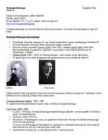
nali Psühhodünaamiline paradigma Alfred Adler (1870-1937) Individuaalpsühholoogia Alder, A (1912/1926). Neurotic Constitution. Alder, A. (1927) The Practice and Theory of Individual Psychology Adler, A. (1927) Understanding Human Nature. I Organite alaareng kompenseerimine (compensation), ülekompenseerimise (overcompensation) püüdlus täiuse või üleoleku poole striving for superiority. II Alaväärsustunne ja alaväärsuskompleks alaväärsustunne (feeling of inferiority), alaväärsukompleks (inferiority complex), üleolekukompleks (superiority complex). III Elustiil elustiil (life-style). sotsiaalne huvi (social interest). Elu eesmärgid ja õige (terve) elustiil on: töö ühiskonna kasuks, koostöö teistega, järglaste saamine (armastus ja abielu). IV Isiksuse tüübid
nali Psühhodünaamiline paradigma Alfred Adler (1870-1937) Individuaalpsühholoogia Alder, A (1912/1926). Neurotic Constitution. Alder, A. (1927) The Practice and Theory of Individual Psychology Adler, A. (1927) Understanding Human Nature. I Organite alaareng kompenseerimine (compensation), ülekompenseerimise (overcompensation) püüdlus täiuse või üleoleku poole striving for superiority. II Alaväärsustunne ja alaväärsuskompleks alaväärsustunne (feeling of inferiority), alaväärsukompleks (inferiority complex), üleolekukompleks (superiority complex). III Elustiil elustiil (life-style). sotsiaalne huvi (social interest). Elu eesmärgid ja õige (terve) elustiil on: töö ühiskonna kasuks, koostöö teistega, järglaste saamine (armastus ja abielu). IV Isiksuse tüübid
· mina-identiteet (self-identity) - 2 eluaastaks (keel, samasus) · enesehinnang (self-esteem) - 3 eluaastaks (uhkus, negativism, sõltumatuse otsimine · mina-ekstensioon (self-extension) - 4 eluaastaks (mulle kuuluvad asjad, teistele hinnangu andmine) · mina-pilt (self-image) - 6 eluaastaks (võrdlused teistega, teiste ootustega arvestamine, kohusetunne · ratsionaalne mina (rational coger) - 12 eluaastaks (probleemide lahendaja, kompetentsus) · püüdlused (propriate striving) - 12-noorukiiga (elu eesmärgid, plaanid) üleminek sõltuvusest sõltumatu inimese seisundisse, neurootiline inimene jääb sõltuvaks (lapseks) · integratsioon (self as knower) - täiskasvanu (integreerib kõik eelnevad tasemed) VI. Kohusetunne (conscience) Sisaldab enesehinnangut, mina-pilti ja püüdlusi Kaks liiki: a) pean-kohusetunne (must conscience) - hirm karistuse ees b) võin-kohusetunne (ought conscience) - vaba otsustus VII
God's law is eternal. St. Paul's scheme of sin and salvation: the revolt of the bad angels under Lucifer because of their pride, the creation, the temptation and fall of man, the incarnation, the atonement, the regeneration through Christ. When God had made the world he found it good and he created man in his own image but with the Fall of Man both man and the universe were corrupted. So the disorder and chaos are products of sin and are perpetually striving to come again. Man's only way to salvation is through God's grace. The chain of being is a metaphor served to express the unimaginable plenitude of God's creation, its order and unity. The chain stretched from the foot of God's throne to the meanest inanimate objects. Every tiny part of creation was a link in the chain and there could be no gap. First there is mere existence, the inanimate class: the elements, liquids and metals, next- existence and life,
According to the intellectual tradition stretching from Aristotle to Dante, all things in nature all phenomena are composed of four fundamental elements. These elements were air, fire, earth and water. These elements were believed to follow certain laws they were to follow their ideal nature. So, since they are heavy and coarse, water and earth move downward. Likewise, since they are light and airy, air and fire move upward. Each of the four elements is constantly striving to reach its natural center. The striving [ püüdlus ] of all these elements is what kept the cosmos going. In this scheme of things, the elements of air and fire predominated and together they composed a fifth element, more pure than the rest, which the ancients called "the aether."[ eeter ] And since the heavenly bodies are "up there," they must be composed of "the aether." Which brings me to relate a brief story.
useful to his conversation (way of life) is agreeable to him . . . because all victual that conduces to nourishment is relishable, whereas other things that cannot be assimulated and be turned into our substance are insipid. A Discourse cannot be pleasant to the Hearer that is not easie to the Speaker; nor can it be easily pronounced unless it be heard with delight. Here is an equilibrium theory of human diet and expression such as even now we are only striving to work out again for media after centuries of fragmentation and specialism. Pope Pius XII was deeply concerned that there be Serious study of the media today. On February 17, 1950, he said: It is not an exaggeration to say that the future of modern society and the stability of its inner life depend in large part on the maintenance of an equilibrium between the strength of the techniques of communication and the capacity of the individual's own reaction.
Depression Assertive Feelings Altruism Dutifulness · CONSCIENTIOUSNESS:-careless, -disorganised, efficient, -inefficient, neat, organised, -sloppy, systematic, thorough, -unsystematic Self- Activity Actions Compliant Achievement conscious striving · AGREEABLENESS: -cold, considerate, -harsh, kind, -rude, Impulsive Excitement Ideas Modesty Self discipline sympathetic, -unco-operative, -unkind, -unsympathetic, warm seeking Vulnerable Positive Values Tender- Deliberation · INTELLECT: artistic, complex, creative, deep, imaginative,
of Muslim authorities. Jihad, in its broadest sense, is classically defined as "exerting one's utmost power, efforts, endeavors, or ability in contending with an object of disapprobation." Depending on the object being a visible enemy, the devil, and aspects of one's own self, different categories of Jihad are defined.Jihad when used without any qualifier is understood in its military aspect. Jihad also refers to one's striving to attain religious and moral perfection. Some Muslim authorities, especially among the Shi'a and Sufis, distinguish between the "greater jihad", which pertains to spiritual selfperfection, and the "lesser jihad", defined as warfare. 7|Page Within Islamic jurisprudence, jihad is usually taken to mean military exertion against non
Alfred Adler (1870-1937). Individuaalpsühholoogia. Mis määrab ära inimese käitumise? Adlerit huvitas, mis on see jõud, mis paneb inimesed tegutsema. Oletas, et kõige olulisem jõud on see, et kõik organismid püüavad välja arendada oma potentsiaali ja see mis on selles keskkonnas mittekohane püütakse kompenseerida. I Organite alaareng – kompenserimine, ülekompenseerimine. Püüdlus täiuse või üleoleku poole (striving for superiority). Kopenseerimine - inimene püüdleb täiuse poole. II Alaväärsustunne (feeling of inferiority)ja alaväärsuskompleks (interiority complex). Üleolekukompleks (superiority complex). Loomulik reaktsioon paneb tegutsema selles suunas, et inimene poleks enam alaväärne. Alaväärsuskompleks – inimene fikseerub sellele ideele, et tema elu on teistest halvem. Ei ole enam normaalne motivaator. Inimene ei
individuals derive a positive sense of well-being, belonging, meaning, and purpose from being part of and contributing back to something larger and more permanent than themselves (e.g. nature, social groups, organizations, movements, traditions, belief systems) Kuidas olla positiivne: · Hooliv avatus - mindfulness, defined as actively searching for novelty, is also characterized as non- judging, non-striving, accepting, patient, trusting, open, letting go, gentle, generous, empathetic, grateful, and kind. Its benefits include reduction of stress, anxiety, depression, and chronic pain · Kulgemine - flow or a state of absorption in one's work, is characterized by intense concentration, loss of self-awareness, a feeling of control, and a sense that "time is flying." Flow is an intrinsically rewarding experience, and it can also help one achieve a goal (e.g
form, the latter being very detailed, elastic and capricious, creating a wholly novel phenomenon in Estonian music. All is connected with the important colour aspect: adding characteristic features to all that is in progress. The thought may soar in free fanciful visions while tied to the firmly anchored theme. The work is, strictly speaking, multi-imaged, the scanty thematic material being in no sense decisive. Eller is striving for figurativeness and sensitivity. Not one of the musical lines in his score has a finished, completed shape: the yarn, once interrupted in one line, will proceed in another. The critics did not find the work satisfactory in all respects, reproaching it being over burdened details. The next tone poem Viirastused (Ghosts, 1924), follows this fantastic line in a more refined manner. The work was the most novel in the whole symphonic output of
affiliation", questions how individuals derive a positive sense of well-being, belonging, meaning, and purpose from being part of and contributing back to something larger and more permanent than themselves (e.g. nature, social groups, organizations, movements, traditions, belief systems) Kuidas olla positiivne? • Hooliv avatus - mindfulness, defined as actively searching for novelty, is also characterized as non-judging, non-striving, accepting, patient, trusting, open, letting go, gentle, generous, empathetic, grateful, and kind. Its benefits include reduction of stress, anxiety, depression, and chronic pain • Kulgemine - flow or a state of absorption in one's work, is characterized by intense concentration, loss of self-awareness, a feeling of control, and a sense that "time is flying." Flow is an intrinsically rewarding experience, and it can also help one achieve a goal (e.g
or if we are not afraid of loss, we are afraid of disapproval. We want to do something to improve our lives, at work or at home, but we are afraid that we may fail, or that someone else may criti- cize us, or both. For most people, their fears govern their lives. Everything they do is organized around avoiding failure or criticism. They think continually about playing it safe, rather than striving for their goals. They seek security rather than opportunity. ■ DOUBLE YOUR RATE OF FAILURE The author Arthur Gordon once approached Thomas J. Watson Sr., the founder of IBM, and asked him how he could succeed faster as ccc_tracy_1_1-17.qxd 6/23/03 2:46 PM Page 6 6 ➤ CHANGE YOUR THINKING, CHANGE YOUR LIFE a writer. Thomas J. Watson, one of the giants of American business,
Figure 1.4 Most commonly used applications on site, Ergo (2009) The size of the site crew differs corresponding to the complexity and cost of the project. Basically, this means that the more expensive and complex a project is, the more team members will be involved in temporary organization. Building a team where trust, respect and synergy between each other are present is an essential when striving for a better project. GC's size of site crew according to the project price 30 Size of crew 20 10 0 1-20 milj 20-50 milj 50-100 milj 100-500 milj 500-1000 milj 1000-.... milj Figure 1.5 Site crew size according to the project budget, Ergo (2009)
universe anymore. Most people don’t inhabit a living reality, but a conceptualized one. But we cannot really honor things if we use them as a means to self- enhancement, that is to say, if we try to find ourselves through them. This is exactly what the ego does. Ego-identification with things creates attachment to things, obsession with things, which in turn creates our consumer society and economic structures where the only measure of progress is always more. The unchecked striving for more, for endless growth, is a dysfunction and a disease. It is the same dysfunction the cancerous cell manifests, whose only goal is to multiply itself, unaware that it is bringing about its own destruction by destroying the organism of which it is a part. Some economists are so attached to the notion of growth that they can’t let go of that word, so they refer to recession as a time of “negative growth.” A large part of many people’s lives is consumed by an obsessive
American values and the cultural assumptions of Western society threaten to smother the unique flavors of other cultures. M a n y observers have remarked that American culture is becoming world culture, and what a loss it would be if the only flavorings available were sugar, salt, mustard, and ketchup. T h i s problem is much on the minds of European storytellers as many coun tries with distinct cultures are drawn into a union. T h e y are striving to create sto ries that are somewhat universal, that can travel beyond their national borders, for local audiences may not be numerous enough to support the always-growing cost of production. T h e y are up against intensely competitive American companies that aggressively courts the world market. M a n y are studying and applying American techniques, but they also worry that their unique regional traditions will be lost.
OMRON, 1997 All rights reserved. No part of this publication may be reproduced, stored in a retrieval system, or transmitted, in any form, or by any means, mechanical, electronic, photocopying, recording, or otherwise, without the prior written permis- sion of OMRON. No patent liability is assumed with respect to the use of the information contained herein. Moreover, because OMRON is constantly striving to improve its high-quality products, the information contained in this manual is subject to change without notice. Every precaution has been taken in the preparation of this manual. Nevertheless, OMRON assumes no responsibility for errors or omissions. Neither is any liability assumed for damages resulting from the use of the informa- tion contained in this publication.
She shared in their attendance on Mrs. Bennet, and was a great comfort to them in their hours of freedom. Their other aunt also visited them frequently, and always, as she said, with the design of cheering and heartening them up--though, as she never came without reporting some fresh instance of Wickham's extravagance or irregularity, she seldom went away without leaving them more dispirited than she found them. All Meryton seemed striving to blacken the man who, but three months before, had been almost an angel of light. He was declared to be in debt to every tradesman in the place, and his intrigues, all honoured with the title of seduction, had been extended into every tradesman's family. Everybody declared that he was the wickedest young man in the world; and everybody began to find out that they had always distrusted the appearance of his goodness
Outside of Turkey, the Van Kedi may be recognised as a colour variant of Turkish Van rather than distinct breed. It is worth mentioning the Anatolian (Turkish Shorthair, Anadolu Kedisi) which is a naturally occurring cat similar in type to the Turkish Van with which it is allowed to breed. The Anatolian is found in all natural colours, with and without Van markings. In the past, many Anatolian cats were exported and registered as Vans or Angoras although Dutch and German breeders are striving for purebred Anatolians. The mistaken identity of Turkish Van suggests that they produce semi-longhaired variants. The Aegean Cat is derived from naturally occurring cats of the Greek Cycladic Islands. It is being developed by members of the fledgling Greek Cat Fancy and is currently the only native Greek breed. Selective breeding started in the early 1990s using native semi- longhaired. These are of a light European/Continental type i.e. neither cobby, nor oriental.
"Wow," they seem to say, "You and Frank lloyd Wright?" .BUlI Chapter 5 LIKING groupie, who trades sexual favors for the right to tell friends that she or he was "with" a famous musician for a time. No matter which form it takes, the behavior of such individuals shares a similar theme-the rather tragic view of accomplish- ment as deriving from outside the self. Certain of these people work the association principle in a slightly different way. Instead of striving to inflate their visible connections to others of success, they strive to inflate the success of others they are visibly connected to. The clearest il- lustration is the notorious "stage mother," obsessed with securing stardom for her child. Of course, women are not alone in this regard. A few years ago, a Davenport, Iowa, obstetrician cut off service to the wives of three school officials, reportedly because his son had not been given enough playing time in school basketball games
* Since these constituted its major income, their loss shuttered the office. Hoover's speech had warned Yardley that an appeal would be fruitless. There was nothing to do but close up shop. An unexpended $6,666.66 and the organization's files reverted to *In 1940, as Secretary of War, he had to reverse himself and accept the cryptanalyses of MAGIC. But the international situation then was totally different. "In 1929," he himself has written, in the third person, "the world was striving with good will for lasting peace, and in this effort all the nations were parties. Stimson, as Secretary of State, was dealing as a gentleman with the gentlemen sent as ambassadors and ministers from friendly nations. ..." In 1940, Europe was at war, and the United States was on the verge. the Signal Corps, where William Friedman had charge of cryptology. The staff quickly dispersed (none went to the Army), and when the books were closed on October 31, 1929, the American Black Chamber had
 annaabi.ee