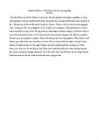
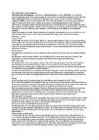
One day Holmes asked Dr. Watson to help him. He had started to investigate a problem of a dog who had bitten its owner, professor Presbury. The professor's assistant, Mr Bennet, had asked him to do it. Bennet was professor Prespury's daughter's fiancee. Frofessor had recently become engaged with a young girl. She was a daughter of one of professor's colleagues. The girl had been worried about the professors age. After that the professor had started to behave strangely. Professor's family was worried about him. After every 9 days he behaved especially strangely. He had been climbed the wall up to his daughter's window. Holmes decided go and solve the problem. When Holmes and Watson got to the hotel near the professors home, Bennet came to tell them about the packet that had arrived that morning. At that night Holmes decided to guard professors coming out of the house, then they saw that the dog bit him. They went inside the professors room and they found a
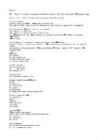
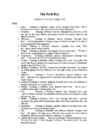
lbi viidi. 2.Esitamine, tsiteering, kommenteerimine, analsimine. Plaani "report", jaota see osadeks. Vid kasutada ka alapealkirju, et lugeja saaks tervikliku informatsiooni. Vldi isiklikke tlusi. Kasuta "It" ehitust vi passiivseid vorme. Niteks: It seemed.. it was found out..., it may/could be that..., it can be said that Tsiteerimiseks: In the words of.. As ... has said,... According to.. Viitamiseks: The diagram suggest that.. Kommentraatiks/analsiks Oddly.. In general.. It seems that... Strangely.. Predictably.. As might be (have been) predicted Kasuta siduvaid snu: in addition also however what is more although therefore 3.Kokkuvte Vta kokku oma ideed: This report described/compared/analysed... To sum up.. To summarise.. In short.. Soovitamiseks: It is/would be advisable to do... It is recommended that
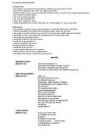
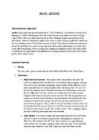
... This report is intended to describe/present It is based on a survey which was conducted/ carried out.... BODY PARAGRAPHS phrases to use Since/ As..... For this reason/ these reasons..... According to the survey...... Surprisingly/ Oddly/ Strangely/ Probably..... The graph/diagram/survey suggests/shows..... The cause for ..... The majority believe/ think..... sharply/rapidly/gradually.... Three out of 20 students...... The general tendency is .... However/ On the one/other hand....
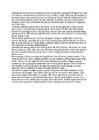
Thisby Barnes. She hoped that maybe Hilary would tire of him. She went to the Wickham's hospital and told to nurses that she can't go to the scotland because of the trip. Nurses tried to change her mind, but Arabella didn't listen to them. Next morning children were ready and Arabella too. Sister Brewster joined with them. They wanted to go to the Ghent. Suddenly Arabella saw that busdriver's driving had become rather erratic ; he wasn't on the right side of the road. Arabella was beside a strangely sagging busdriver by now, applying the hand-brake and switching off the ignition. The bus came to a lop-sidedhalt on the wrong side of the road, on a narrow grass slope leading to a small waterway. The bus landed on its side quite gently and lay rocking. She heard the squeal of brakes and saw a good looking man. He called ambulance and all were taken to the hospital. The children were sent back to Wickham to their families. Only two of them stayed with Arabella in hospital
It is based on a survey which was conducted/ carried out.... B. BODY PARAGRAPHS- present the facts in a logical, organized way. Use sub-headings if necessary. Don´t discuss more than 3/4 aspects. Give some description and explanation. phrases to use Since/ As..... For this reason/ these reasons..... According to the survey...... Surprisingly/ Oddly/ Strangely/ Probably..... The graph/diagram/survey suggests/shows..... The cause for ..... The majority believe/ think..... sharply/rapidly/gradually.... Three out of 20 students...... The general tendency is .... However/ On the one/other hand.... C. CONCLUSION- sum up the body paragraphs and if you are asked to
3.4. Could it be someone from the neighbourhood or not? Yes, it could be. 4. Read Extract 3. Christopher developed some ideas inside his head. 4.1. Do you think his reasoning makes any sense? Why / why not? It makes sense, but at the same time it's strange because mr Shears has not been living there for two years. 5. Christopher 5.1. How have you experienced Christopher as a person? He is a young boy. 5.2. Would you like to be his friend? I don't know. 5.3. Does he sometimes act a bit strangely? Illustrate your answers with the text. 1. He walked away when he was laughted at. 2. He walked away because he suspected the old lady was calling the police. 3. He didn't realise that his father had a relationship with mrs Shears. 4. He was quite straight when asking questions and talking to people. 5. He told his exact age by day.
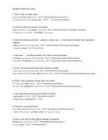
57 pleased rahulik - 58 proud uhke + 59 quick kiire + 60 quiet vaikne + 61 relaxed puhanud + 62 sad kurb + 63 scared kartma + 64 shy häbelik + 65 sick haige + 66 slow aeglane + 67 straightforward otsekohene - 68 strange imelik + 69 strangely imelikult + 70 stressed stressis + 71 strong tugev + 72 stubborn kangekaelne + 73 tense pinges + 74 terrible kohutav + 75 terrified hirmunud + 76 tired väsinud + 77 upset ärritunud + 78 wise tark + 79 worried mures + 80 cowardly argpüks -
More vocabulary: increase remarkably/significantly, Fluctuates, follows upward/downward trend, 7 out of 10, those who were questioned/surveyed, decreases by 10 per cent, seventy per cent of those questioned had no complaints… a large number (majority) who participated in the survey stated that… this is illustrated by the fact that… The diagram suggests that… according to… As might be (have been) predicted… Predictably… Surprisingly… Strangely… Oddly… Interestingly… In general… On the whole…
a yin yang of empty space beneath the mountain. The inevitable breaking that we await creates a tension in the picture. In the background, a small wave forming a miniature Fuji is reflected by the distant mountain, itself shrunk in perspective. The little wave is larger than the mountain. The small fishermen cling to thin fishing boats, slide on a sea-mount looking to dodge the wave. The violent Yang of nature is overcome by the yin of the confidence of these experienced fishermen. Strangely, despite a storm, the sun shines high.[23] In the two first designs the waves appear to be dense and uniform, they almost seem to be minerals. Their rigidity and verticality evoke the shape of a snow-capped mountain, while in the Great Wave the wave stands out because it is more active, dynamic, and aggressive, which make it threatening. The earlier images are very marked by the perspective traditionally used in Japanese painting, where the viewer sees the scene from a bird's-eye view
Anson, I hear Dolly’s sick,“ she began solicitously. 44. Astray Meaning in Estonian: eksiteel, eksiteele. Example from book: He came to take vicarious pleasure in happy marriages, and to be inspired to an almost equally pleasent melancholy by those that went astray. 45. Circumspect Meaning in Estonian: arukas, ettevaatlik. Example from book: Towards young wives his attitude was circumspect: he never abused the trust which their husbands – strangely enough in view of his unconcelealed irregularities – invariably reposed in him. 46. buoyed (buoy)Meaning in Estonian: poitatud (poi). Example from book: It occurred to Anson that it was his father’s intelligence and not his uncle’s that had earned that fur and the stones, the rich brilliance that buoyed up her passing beauty. 47. Handkerchief.Meaning in Estonian: taskurätt. Example from book: At two
asking him for sleeping pills, but instead the doctor suggests him more natural means like chewing ginger. When the main character begs him, saying he's in pain and suffering, the doctor suggests him to join a support group to see what real pain and suffering is like. He joins a support group for men with testicular cancer, despite not having cancer himself, where he meets Bob. The narrator feels better after hearing about others coping with their problem and strangely enough, he could sleep after the session. After the first session he started going to every meeting and soon enough he started looking for more and more support groups as a weird psychological therapy to fill the entire week. He used different fake names in different support groups. After a while, the narrator begins to notice a woman who had begun to join each and every one of his support groups. He knew she was a faker and she knew about him.
) She's old enough to walk to school by herself. 35. Don't use a structure with that ... after want or would like. My parents want me to go to university. (NOT My parents want that I go to university.) I'd like everybody to leave. (NOT I'd like that everybody leaves.) 36. After link verbs like be, seem, feel, look, smell, sound, taste, we use adjectives, not adverbs. I feel happy today. (NOT I feel happily today.) This soup tastes strange. (NOT This soup tastes strangely.) 37. Use than after comparatives. My mother is three years older than my father. (NOT My mother is three years older that/as my father.) Petrol is more expensive than diesel. 38. In questions, put the subject immediately after the auxiliary verb. Where are the President and his family staying? (NOT Where are staying the President and his family?) Have all the guests arrived? (NOT Have arrived all the guests?) 39. Used to has no present. I play tennis at weekends
Ei lähe kaua kuni kellalööja Quasiomodi paavstisk valitakse. Kui teised kandidaadid pidid naljakaid nägsid tegema, et rahva poolehoidu võita, siis Quasimodo ei pidanud midagi tegema. (His giant head is covered with "red bristles," while, between his shoulder, an enormous hump rises up above his neck, only to be counterbalanced by a "protuberance" coming out of his chest. He has only one operable eye. The other is completely covered by an oversized wart, and legs and hands that are "strangely put together."). Quasiomodo ei tee rahva sõimust väljagi, kuna on kurt. Ta pannakse istuma mõnitustroonile ja viiakse läbi Pariisi tänavate. Samal ajal naaseb Gringoire lavale ja püüab etendusega jätkata. Korraga hüüab keegi, et Esmeralda tantsib Kohtupalee ees. Ta ei mõista mis seal nii erilist on ja läheb vaatama, jättes oma etenduse. 2. raamat
e.g C.Mansfield: ,,I do not want to write: I want to live." What does she mean by that? Nowadays, the archaic second person singular ,,thou" and its forms such as (thee, thy, thine, thyself) may be used in poetry where they create elevated high-flow colouring. In prose, they may may create geographical or historical background. Geographical background: Hemingway render the speeech of a spanyard (spanish) by using thou in his dialogue to imply his non-english nationality. Strangely, he doesn't make speaker use spanish words, in fact. Third person singular he/she may be used in personification (The moon smiled her faint smile.). It, when used about people, turns them into a class of objects. The result is usually irony, humor, contempt or negative attitude. e.g The woman went a longer road. Then it (ought to be she) stopped and grinned. The pronoun ,,we", according to the english norm, may imply only the speaker. We have 2 kinds of uses:
1999, p. 304, italics mine) in sharp contrast to a first-rate performance (Shakespeare's A Midsummer Night's Dream) in a theatre in Bucharest. Hoffman's obsessive repetition of the word `muddle' throughout her account strangely reminds of E.M. Forster's novel, A Passage to India, in which what the British colonizers stigmatize as `Indian muddle' seems to be the final cause for unsuccessful intercultural communication between East and West. Such implied intertextuality
b = Barrington Brown recessive gene. When 2 copies are present there is less Enzyme B produced which means less melanin produced; the pigment granules are elliptical (reddish- brown) instead of round (black). He gave it the name Barrington Dilution or Barrington Brown because it was discovered at the Quaker Oats Nutritional Laboratories in Barrington, Illinois. The first cat known to be homozygous for Barrington Brown was born at the Barrington Laboratories. This was a strangely colored light brown (rich caramel or perhaps cafe-au-lait) male kitten homozygous for Barrington Brown as well as having “standard chocolate dilution". The 2 gene systems were additive in nature and each expresses its effect as if the other were not present i.e. the end result is the sum of both Barrington Brown and "standard chocolate dilution" being expressed. Shaw's description of "rich caramel" (light tan) misled 1970s breeders to believe
It's not her cleverness, but she has such wonderful depth of feeling. I'm awfully sorry for her.'" This is a scene worth remembering, for it involves the meeting of Tolstoy's two main characters. Clearly, they are drawn to one another on some level, probably because each has what the other lacks. Despite their differences, they have some clear similarities. Most notably, both Levin and Anna are dissatisfied with what society dictates for them. But Anna acts strangely around him, flirting with him. By mentioning Kitty, she is introducing the topic of infidelity and ruined expectations, something Levin never before considered. After Levin and Anna have their crucial meeting, the two main couples find themselves fighting. Kitty notices that Levin is acting oddly and she has a feeling that he, too, has fallen for Anna. "'You're in love with that hateful woman; she has bewitched you! I saw it in your eyes. Yes, yes! What can it all lead to
every fool can tell that: it was the very day that young Hamlet was born; he that is mad, and sent into England. HAMLET Ay, marry, why was he sent into England? 171 First Clown Why, because he was mad: he shall recover his wits there; or, if he do not, it's no great matter there. HAMLET Why? First Clown 'Twill, a not be seen in him there; there the men are as mad as he. HAMLET How came he mad? First Clown Very strangely, they say. HAMLET How strangely? First Clown Faith, e'en with losing his wits. HAMLET Upon what ground? First Clown Why, here in Denmark: I have been sexton here, man and boy, thirty years. HAMLET How long will a man lie i' the earth ere he rot? 172 First Clown I' faith, if he be not rotten before he die—as we have many pocky corses now-a-days, that will scarce hold the laying in—he will last you some eight year
(a flea). More original cases are of greater interest to stylistics (e.g. "China is a country where you often get different accounts of the same thing.") 4. Personification a figure of speech that presents inanimate things as human beings. The signs of personification are the pronouns (he / she); capital letters; verbs of thinking, speaking; and any qualities typical of humans (e.g. "The Face of London was now strangely changed; the voice of mourning was heard in every street." "Then the Moon held a finger to her lips."). Personification can be regarded as a kind of metaphor (if we can visualize something it is personification; if not then it is metaphor). If personification is associated with symbolic or didactic tendencies, it becomes allegory - a figurative presentation of an abstract meaning. In allegory the actions are usually
reconstructing the order of events. Each category represented a different intention. He developed mastered, perfected stories. The short story of psychological effect. Tales of the grotesque and arabesque contains some of his most famous stories "The Fall of the House of Usher". Typical of a gothic story gloomy, dark, murky. The feeling of intolerable loneliness. One such story is "The Man of the Crowd" the secret of a man who seems to be strangely alienated from human fellowship, the narrator chases the man, still the man remains a mystery. The narrator's feverish in the man's identity symbolises human desire for selfdiscovery. Poe adored the idea of the Doppelganger, uses this motif to stress the complexity of human nature. Another Poe's favourite topic is the impossibility for the artist to escape from the practical world "William Wilson", something haunts
to that alone which is present at the moment; while man -- because he is endowed with reason, by which he comprehends the chain of consequences, perceives the causes of things, understands the relation of cause to effect and of effect to cause, draws analogies, and connects and associates the present and the future -- easily surveys the course of his whole life and makes the necessary preparations for its conduct strangely tender love for his offspring. She also prompts men to meet in companies, to form public assemblies and to take part in them themselves; and she further dictates, as a consequence of this, the effort on man's part to provide a store of things that minister to his comforts and wants -- and not for himself alone, but for his wife and children and the others whom he holds dear and for whom he ought to provide; and this
Lauren was the one who made my decision for me. She didn't want to hike, and she was definitely wearing the wrong shoes for it. Most of the other girls besides Angela and Jessica decided to stay on the beach as well. I waited until Tyler and Eric had committed to remaining with them before I got up quietly to join the pro-hiking group. Mike gave me a huge smile when he saw that I was coming. The hike wasn't too long, though I hated to lose the sky in the woods. The green light of the forest was strangely at odds with the adolescent laughter, too murky and ominous to be in harmony with the light banter around me. I had to watch each step I took very carefully, avoiding roots below and branches above, and I soon fell behind. Eventually I broke through the emerald confines of the forest and found the rocky shore again. It was low tide, and a tidal river flowed past us on its way to the sea. Along its pebbled banks, shallow pools that never completely drained were teeming with life.
involuntary (A) ridge (A) infrequent (B) chaos (B) substantial (C) wonder (C) automatic (D) combination (D) immeasurable 2. display 7. elements (A) disperse (A) ingredients (B) decline (B) measurements (C) disguise (C) marks (D) demonstration (D) spans 3. oddly 8. assessable (A) symbolically (A) tangible (B) presumably (B) legitimate (C) tightly (C) accountable (D) strangely (D) measurable 4. appropriately 9. reflection (A) supposedly (A) image (B) aptly (B) synthesis (C) tangibly (C) solid (D) durably (D) tightness 5. moderate 10. tangible (A) sustained (A) firm (B) medium (B) consistent (C) sharp (C) concrete (D) periodic (D) tedious TEST QUESTIONS Choose the word or phrase that is closest in meaning to the underlined word or phrase. 1
I resisted as long as I could; then I melted at the feel of his tongue stroking slow and sweet over mine. I'd wanted his kiss since we'd had sex. I wanted the reassurance that he valued what we'd shared, that it meant something to him as it had to me. I was left bereft once again when he pulled away. "Come on." He pulled the key out as the door opened. Gideon's redheaded receptionist said nothing this time, although she eyed me strangely. In contrast, Gideon's secretary, Scott, stood when we approached and greeted me pleasantly by name. "Good afternoon, Miss Tramell." "Hi, Scott." Gideon gave him a curt nod. "Hold my calls." "Yes, of course." I entered Gideon's expansive office, my gaze drifting to the sofa where he'd first touched me intimately. Lunch was arranged on the bar-two plates covered in metal salvers. "Can I take your purse?" he asked.
upon to donate again in the future. Nearly all the students who were about to give a pint of blood as a result of the rejection-then-retreat technique agreed to donate again (84 percent), while less than half of the other students who appeared at the Chapter 2 RECIPROCATION blood center did so (43 percent). Even for future favors, the rejection-then-retreat strategy proved superior. The Sweet, Secret Side Effects Strangely enough, then, it seems that the rejection-then-retreat tactic not only spurs people to agree to a desired request but actually to carry out the request and, finally, to volunteer to perform further requests. What could there be about the technique that makes people who have been duped into compliance so likely to continue to comply? For an answer, we might look at a requester's act of conces- sion, which is the heart of the procedure. We have already seen that, as long as it is
Christopher Vogler Friends who were more seasoned veterans in this war of ideas pointed out that in being challenged I was merely encountering an archetype, one of the familiar characters who people the landscape of the Hero's Journey, namely a Threshold Guardian. T h a t information instantly gave me m y bearings and showed me how to handle the situation. C a m p b e l l h a d described how heroes often encounter these "unfamiliar yet strangely intimate forces, some of which severely threaten" them. T h e Guardians seem to p o p u p at the various thresholds of the journey, the nar row and dangerous passages from one stage of life to the next. Campbell showed the many ways in which heroes can deal with T h r e s h o l d Guardians. Instead of attacking these seemingly hostile powers head-on, journeyers learn to outwit them or join forces with them, absorbing their energy rather than being destroyed by it.
"true-in-fiction," that Holmes lives at Baker Street or whatever. (NB: if it were true that Holmes lived in Baker Street, then it would be true of Baker Street, a real place to this day, that it had had Holmes living in it. Also, if such sentences were true just in virtue of someone's having written them in popular books or stories, then it would be equally true that Holmes existed, Hamlet existed, and so on, since people say those things in books and stories too; this point is strangely overlooked.) Yet some people want to insist that fictional sentences are literally truth-valueless rather than false; if you are sympathetic to this, you will want to hold a Kripkean theory of fictional names rather than Russell's (Kripke 1972/1980:1568). Donnellan (1974) defends such a theory in more detail. Kripke has a further and in a way more fundamental objection to the Description Theory, but it requires a bit of technical apparatus. That appa-
" She replied in the affirmative. "I almost envy you the pleasure, and yet I believe it would be too much for me, or else I could take it in my way to Newcastle. And you saw the old housekeeper, I suppose? Poor Reynolds, she was always very fond of me. But of course she did not mention my name to you." "Yes, she did." "And what did she say?" "That you were gone into the army, and she was afraid had--not turned out well. At such a distance as that, you know, things are strangely misrepresented." "Certainly," he replied, biting his lips. Elizabeth hoped she had silenced him; but he soon afterwards said: "I was surprised to see Darcy in town last month. We passed each other several times. I wonder what he can be doing there." "Perhaps preparing for his marriage with Miss de Bourgh," said Elizabeth. "It must be something particular, to take him there at this time of year." "Undoubtedly. Did you see him while you were at Lambton? I thought I understood from
can increase the e ects of some drugs (the estrogen antagonist tamoxifen, for example) while decreasing the e ects of others,13 such as the drug Velcade® , to which it binds. If you are undergoing treatment for multiple myeloma or mantle cell lymphoma, likewise avoid EGCG. GARLIC EXTRACT (ALLICIN POTENTIAL, S-ALLYL CYSTEINE) Garlic extract and its constituent parts have been used for applications ranging from cholesterol management to inhibiting lethal MRSA staph infections. Strangely, test subjects and I have had the best fat-loss results with extracts designed to deliver relatively high doses of allicin. Allicin, if delivered in a stable form, appears to have the ability to inhibit fat regain. The reason our results were "strange" relates to the "stable form" bit. Most research indicates that allicin should have almost zero bioavailability more than six days after extraction from garlic cloves, particularly after exposure to stomach acid. Our confounding
and nuclear energy,brrt have none of the d Wind power! =:chparagraph (1-6).Thereis :re extrasentence whichyou wind power is an aLternativeenergy source which has been used for :c not needto use. many years in countries ljke Holland and Denmark. Strangely FTtl enough,even though it is one of the windiest countriesiiEulurope,Britain -. ile momentiltere are only has been slow to take advantageof wind power. The strong winds which
and nuclear energy,brrt have none of the d Wind power! =:chparagraph (1-6).Thereis :re extrasentence whichyou wind power is an aLternativeenergy source which has been used for :c not needto use. many years in countries ljke Holland and Denmark. Strangely FTtl enough,even though it is one of the windiest countriesiiEulurope,Britain -. ile momentiltere are only has been slow to take advantageof wind power. The strong winds which
and nuclear energy,brrt have none of the d Wind power! =:chparagraph (1-6).Thereis :re extrasentence whichyou wind power is an aLternativeenergy source which has been used for :c not needto use. many years in countries ljke Holland and Denmark. Strangely FTtl enough,even though it is one of the windiest countriesiiEulurope,Britain -. ile momentiltere are only has been slow to take advantageof wind power. The strong winds which
and nuclear energy,brrt have none of the d Wind power! =:chparagraph (1-6).Thereis :re extrasentence whichyou wind power is an aLternativeenergy source which has been used for :c not needto use. many years in countries ljke Holland and Denmark. Strangely FTtl enough,even though it is one of the windiest countriesiiEulurope,Britain -. ile momentiltere are only has been slow to take advantageof wind power. The strong winds which
 annaabi.ee