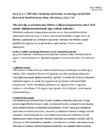
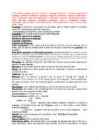
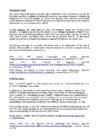
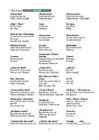
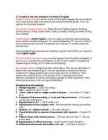
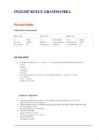
Pronouns By: Anneli Võikar Pronouns are small words that take the place of a noun. We can use a pronoun instead of a noun. Pronouns are words like: he, you, ours, themselves, some, each... If we didn't have pronouns, we would have to repeat a lot of nouns. Types of pronouns Personal pronouns Reflexive pronouns Demonstrative pronouns Interrogative pronouns Indefinite pronouns Relative pronouns Possesive pronouns Reciprocal pronouns Pronoun case Personal pronouns Personal pronouns represent specific people or things. We use them depending on: number person gender Case Singular: subject- I, you, he, she, it ; object-me, you, him, her, it. Plural: subject-we, you, they ; object-us, you, them. Examples: 1) Do you like coffee? (subject) 2) John loves you. (object)
(She) HER HERS (It) ITS ITS 1st person (plural) (Our) OUR OURS 2nd person (plural) (You) YOUR YOURS 3rd person (plural) (They) THEIR THEIRS Reflexive pronouns: A reflexive pronoun is a pronoun that is preceded by the noun or pronoun to which it refers (its antecedent) within the same clause. In English, the reflexive pronouns are myself, yourself, thyself, himself (in some dialects, "his self"), herself, itself, oneself, ourselves, yourselves, and themselves (in some dialects, "their selves"). "I see myself" or "She sees herself" Relative pronouns: A relative pronoun "relates" a subordinate clause to the rest of the sentence. It may be found in
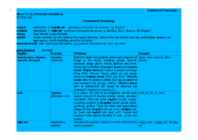
PRONOUNS Object form Possessive Subject form Possessive Reflexive Pronouns Osastav asesõna Omastav Nimetav asesõna Omastav Enesekohased asesõnad Keda? Asesõna + nimisõna Kes? Nimisõna + verb+asesõna Mida? Kelle? Mis? Kelle? (ennast, ise) Kellele
V Seminar, Majandussotsioloogia - Tekst toob välja, et moderniseerunud ühiskond on liikumas järgmisesse faasi, mida U. Beck nimetab ’refleksiivseks modernsuseks’ (ingl. k reflexive modernity)? Kuidas on selliste muutustega ühiskonnas seotud järgmised protsessid: a) globaliseerumine b) individualiseerumine c) muutused soorollides d) globaalsed riskid a) Autor Becki sõnul on globariseerumine üks tegur liikumaks reflektiivse modernsuse faasi. Becki sõnul on globaliseerumine vähendanud nii riikide, kui ka riigi kodanike suveräänsust ehk iseseisvust. Samuti muudab globaliseerumine turgu vähem riigist sõltuvaks ning kohustab riiki jägima pigem rahvusvahelisi tavasid
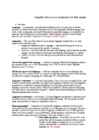
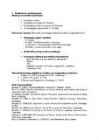
4.1 Pronoun subclasses Personal pronouns – Subject pronouns are used when the person or thing is the subject I, you, he, we, you, they Object pronouns are used when the person or thing is the object. Me, you he, us, you them Reflexive pronouns are used when a person or thing acts on itself Singular: myself, yourself, himself, itself Plural: ourselves, yourselves, themselves Possessive pronouns – Indicate possession or ownership. Mine, yours, his, hers, ours, yours, theirs.
28.09.2015 Jarvis, D. S. L. (2007) Risk, Globalisation and the State: A Critical Appraisal of Ulrich Beck and the World Risk Society Thesis, Global Society, 21(1), 23-46 Tekst toob välja, et moderniseerunud ühiskond on liikumas järgmisesse faasi, mida U. Beck nimetab ’refleksiivseks modernsuseks’ (ingl. k reflexive modernity)? Refleksiivne modernsus on kaasajastamise protsess, mis on välja arenenud tööstuslikust modernsusest, sellele on omane, et ei toimu enam nii suurt tööstuslikku arengut, kui see oli tööstusliku modernsuse ajal. Refleksiivse modernsuse ühiskonnas väärtustatakse inimeste produktiivsust ning seda, mis on juba ühiskonna poolt kasutuses. Sellele on omane riskiühiskond. Kuidas on selliste muutustega ühiskonnas seotud järgmised protsessid:
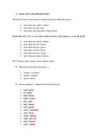
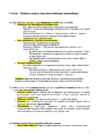
8) descriptive or classifying genitive: a man's voice 4. Pronouns: pronoun subclasses!; categories of case, number, person, gender (be ready to discuss these grammatical categories). A varied class of closed-class words with nominal function. Semantically, a pronoun may be a `pro-form'. Syntactically, most pronouns function like noun phrases. Some pronouns have morphological characteristics that nouns do not have (`case', person, gender, number). Pronoun subclasses: central: personal, reflexive, possessive reciprocal: each other, one another relative: the wh-series, that interrogative: the wh-series demonstrative: this, these, that, those indefinite, positive, universal: all, both, each, every indefinite, positive, assertive: the some series, multal and paucal, one; half, several, enough, other, another indefinite, positive, non-assertive: the any series, either indefinite, negative: the no series, neither Morphological characteristics: - case: I/me - person: I/you/she
CITATION FORM The citation form of the lexeme is the form that is employed to refer to the lexeme; it is also the form that is used for the alphabetical listing of lexemes in a conventional dictionary. In English, the citation form of a noun is the singular: e.g., mouse rather than mice. For multi-word lexemes which contain possessive adjectives or reflexive pronouns, the citation form uses a form of the indefinite pronoun one: e.g., do one's best, perjure oneself. In many languages, the citation form of a verb is the infinitive: French aller, German gehen, Spanish ir. In English it usually is the full infinitive (to go) although alphabetized without 'to' (go); the present tense is used for some defective verbs (shall, can, and must have only the one form). In
escuchar to listen correr to run compartir to share estudiar to study leer to read recibir to receive hablar to speak vender to sell practicar to practice beber to drink tomar to take comprender to understand viajar to travel To make sentences negative, simply put no in front of the verb. 28. Reflexive Verbs The subject and the object are the same with reflexive verbs - the subject acts upon itself. A reflexive verb in Spanish will be marked with se attached to the end of the infinitive. These verbs are conjugated like regular verbs, except the reflexive pronoun agrees with case and gender and precedes the verb when not used in the infinitive form. Reciprocal verbs are the same as reflexive except the action passes from one person to another. It can only be used in the first and third person
Proper Nouns 13 Singular Nouns 21 Plural Nouns 23 8 Subject-Verb Agreement 123 Collective Nouns 34 Masculine and Feminine Nouns 37 9 Adverbs 127 4 Pronouns 44 Personal Pronouns 44 10 Prepositions 132 Reflexive Pronouns 47 Interrogative Pronouns 48 Demonstrative Pronouns 49 11 Conjunctions 135 5 Adjectives 52 12 Interjections 138 Adjective Endings 54 Kinds of Adjectives 58 Comparison of Adjectives 65 13 Sentences 139 What is a Sentence
pronoun asesõna, An item used to substitute for the reference to entities They are in the kitchen. pronoomen which lexical noun phrases indicate. The main sub- Your boxes of photos have been classification include personal (he, you), possessive delivered. Mine will arrive (his, yours), reflexive (himself, yourselves), reciprocal tomorrow. (each other, one another), relative (who, which, that), interrogative (who, what, which), demonstrative (this, that, those), and indefinite (some, none). preposition eessõna, Class of word used to express relationships between at 2 o'clock, to the school
(used by the working class) 5. Regularisation of ,,be" ,,Me/You/They was" 6. Regularisation of some irregular verbs draw/drawed/have drawed; go/went/have went 7. Optional ,,-ly" ending on adverbs ,,He writes real quick." 8. Unmarked plurality on amounts of measurement after numerals 10 pound, 20 year 9. Different forms of the relative pronoun ,,The man what lives there."/ ,,The man as lives there." 10. Regularisation of reflexive pronouns myself; herself; hisself; theirselves 11. Distinction between main and auxiliary verb ,,do" ,,You done it, did you?" 2) The spread of English. The Inner / Outer / Expanding Circle THE SPREAD OF ENGLISH · 16-18th century the spread took place. · By the beginning of the 19th century English had spread to virtually every part of the world. · 19-20th century the number of speakers only grew.
What is Sociology?, lk. 3-29 · 3. Theories and Perspectives of Sociology, lk. 72-103 Muid kirjandusallikaid: Bourdieu, P. (2003). Praktilised põhjused : teoteooriast. Tänapäev, Tallinn. Beck, U. (2005). Riskiühiskond (teemad: uus vaesus, meeste ja naiste suhetest perekonnas ja väljaspool). Tartu: TÜ kirjastus. B. Bourdieu, P (1993) The Field of Cultural Production. Essays on Art and Literature, Polity Press, Cambridge. Bourdieu, P. (1994) In Other Words. Essays Towards a Reflexive Sociology, Polity Press, Cambridge. Bourdieu, P. (1989/1979) Distinctions. A social analysis of the judgement of taste, Routledge, London. Bourdieu, P. (1998) Practical Reason. On the Theory of Action, Polity Press, Cambridge. Bourdieu, P. (1999a/1972) Outline of the Theory of Practice, Cambridge University Press, Cambridge. Giddens, A. (1997/1984) The Constitution of Society. Outline of the Theory of Structuration, Polity Press, Cambridge. Beck, U. And Beck-Gernsheim, E
rahvastikurühmade palgavõimalustele on suhteliselt väike. Jarvis, D. S. L. (2007) Risk, Globalisation and the State: A Critical Appraisal of Ulrich Beck and the World Risk Society Thesis, Global Society, 21(1), 23-46 – vt. ka lisamaterjali ’U. Beck – Riskiühiskond’ 1. Tekst toob välja, et moderniseerunud ühiskond on liikumas järgmisesse faasi, mida U. Beck nimetab ’refleksiivseks modernsuseks’ (ingl. k reflexive modernity)? Refleksiivne modernsus on kaasajastamise protsess, mis on välja arenenud tööstuslikust modernsusest, sellele on omane, et ei toimu enam nii suurt tööstuslikku arengut, kui see oli tööstusliku modernsuse ajal. Refleksiivse modernsuse ühiskonnas väärtustatakse inimeste produktiivsust ning seda, mis on juba ühiskonna poolt kasutuses. Sellele on omane riskiühiskond. 2. Kuidas on selliste muutustega ühiskonnas seotud järgmised protsessid:
you their nende theirs nende (oma) they Kasutamine Omadussõnaline vorm nimisõna ees My name is Chris. This is your bag. I can`t see thier faces. Nimisõnaline vorm iseseisvalt My name is Chris, mine is Tim. This is your bag. That is hers. I can`t see thier faces but they can see ours. 3. Enesekohased asesõnad (reflexive pronouns) Ainsus Mitmus myself ourselves yourself yourselves himself themselves herself itself Umbisikuline one oneself
18. Historiographic Metafiction. Linda Hutcheon. History as a collection of representations. Historiographic Metafiction and Magic realism in the writings of Salman Rushdie. Postcolonial situation and Postcolonial trauma. Historiographic metafiction is a term originally coined by literary theorist Linda Hutcheon. According to Hutcheon, in "A Poetics of Postmodernism", works of historiographic metafiction are "those well-known and popular novels which are both intensely self-reflexive and yet paradoxically also lay claim to historical events and personages". Historiographic metafiction is a quintessentially postmodern art form, with a reliance upon textual play, parody and historical re-conceptualization. Hutcheon: there is no truth or falseness per se, there're only other people's truth History as a collection of representations. History vs story. History is a human construct. Can we know the past today except through representations? Can we know the truth? 19
Nekrolog is tragic music, there is neither real lyricism nor sunny temperament. The suffering and emotions of dying people are expressed: at the end we also feel protest. Musicologist Yuri Korev from Moscow noted: It must be admitted that the composer has realized his aim in full. We feel that in Nekrolog the composer has expressed spiritual restlessness and tragic weakness. But can a Soviet artist confine himself only to the most reflexive recognition of terror and horror? If Pärt were a mature artist, he most likely would not have striven for illustrating his sensations instead finding in this exciting theme something worthier… This is the spiritual strength, endurance and noble faith in the coming triumph of progress and humanity.1 Estonian musicologist Karl Leichter stated: Nekrolog is more a description of fascist death camps with their monstrous ghastliness than a customary obituary
something, it is the right thing to do. This feature of the principle of social proof is simultaneously its major strength and its major weakness. Like the other weapons of influence, it provides a convenient shortcut for determining the way to behave but, at the same time, makes one who uses the shortcut vulnerable to the attacks of profiteers who lie in wait along its path. In the case of canned laughter, the problem comes when we begin responding to social proof in such a mindless and reflexive fashion that we can be fooled by partial or fake evidence. Our folly is not that we use others' laughter to help decide what is humorous; that is in keeping with the well-founded principle of social proof. The folly is that we do so in response to patently fraudulent laughter. Some- how, one disembodied feature of humor-a sound-works like the essence of humor. The example from Chapter 1 of the turkey and the polecat is instructive. Be-
ratherthan:contrasting twosituations/things insteadof:in ploceof morethan:o greateramount 4 comeo longway(fixedphrase) 5 to arrongea competition/sports event 6 spinaI injuries(collocation) -, a fewyeorslater(fixedphrase) I the more official (in comparisonwith the previous competition) 9 both(itrefersto twogames- summer& winter) l0 alongside (duringsameperiodas) I I precious to - popularwith_ worthof _ famousfor |2 support+ reflexive + on/by:preventfromfailing l3 in recentyears(fixedphrase) l4 in additionto - in thenumberof _ in amount 15 willcontinuein thefuture(fixedphrose) o Post Reading:Ss do researchin the library/onthe Int er netand f ind o u t th e e v e n tsi n c ru d e di n the P ar aly m picSss. t h e n ma k ea p o s te ra d v e rti s i nth ge P ar aly m pic s . a.
ratherthan:contrasting twosituations/things insteadof:in ploceof morethan:o greateramount 4 comeo longway(fixedphrase) 5 to arrongea competition/sports event 6 spinaI injuries(collocation) -, a fewyeorslater(fixedphrase) I the more official (in comparisonwith the previous competition) 9 both(itrefersto twogames- summer& winter) l0 alongside (duringsameperiodas) I I precious to - popularwith_ worthof _ famousfor |2 support+ reflexive + on/by:preventfromfailing l3 in recentyears(fixedphrase) l4 in additionto - in thenumberof _ in amount 15 willcontinuein thefuture(fixedphrose) o Post Reading:Ss do researchin the library/onthe Int er netand f ind o u t th e e v e n tsi n c ru d e di n the P ar aly m picSss. t h e n ma k ea p o s te ra d v e rti s i nth ge P ar aly m pic s . a.
ratherthan:contrasting twosituations/things insteadof:in ploceof morethan:o greateramount 4 comeo longway(fixedphrase) 5 to arrongea competition/sports event 6 spinaI injuries(collocation) -, a fewyeorslater(fixedphrase) I the more official (in comparisonwith the previous competition) 9 both(itrefersto twogames- summer& winter) l0 alongside (duringsameperiodas) I I precious to - popularwith_ worthof _ famousfor |2 support+ reflexive + on/by:preventfromfailing l3 in recentyears(fixedphrase) l4 in additionto - in thenumberof _ in amount 15 willcontinuein thefuture(fixedphrose) o Post Reading:Ss do researchin the library/onthe Int er netand f ind o u t th e e v e n tsi n c ru d e di n the P ar aly m picSss. t h e n ma k ea p o s te ra d v e rti s i nth ge P ar aly m pic s . a.
ratherthan:contrasting twosituations/things insteadof:in ploceof morethan:o greateramount 4 comeo longway(fixedphrase) 5 to arrongea competition/sports event 6 spinaI injuries(collocation) -, a fewyeorslater(fixedphrase) I the more official (in comparisonwith the previous competition) 9 both(itrefersto twogames- summer& winter) l0 alongside (duringsameperiodas) I I precious to - popularwith_ worthof _ famousfor |2 support+ reflexive + on/by:preventfromfailing l3 in recentyears(fixedphrase) l4 in additionto - in thenumberof _ in amount 15 willcontinuein thefuture(fixedphrose) o Post Reading:Ss do researchin the library/onthe Int er netand f ind o u t th e e v e n tsi n c ru d e di n the P ar aly m picSss. t h e n ma k ea p o s te ra d v e rti s i nth ge P ar aly m pic s . a.
 annaabi.ee