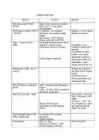
World Trade Center By Topics • Design • Construction • Buildings • Owners • Exploitation • Film and media • Accidents • Rebuilding the WTC • Pictures Design • Architects - Minoru Yamasaki, Emery Roth & Sons • Closely-spaced towers • The worlds tallest building • Height 417m, with antenna 526m • 110 floors Construction • Construction started in August 5, 1966 • Had to create 23 acers park next to center • Complited in 1970 • Opened for tenants in January 1972 • The ribbon cutting ceremony was on April 4, 1973 • Total cost reached to $900 million
Palmse manor Tiina Trutsi 10c The entrance Click to edit Master text styles Second level Third level Fourth level Fifth level The History First mentioned in 1287 when it was under the tutelage of Tallinn's St Michael's nunnery Several owners afterwards Rebuilding accomplished in 1782-1785 The restoration of the mansion was started in 1975 and completed in 1985 Since spring 2002 the manor is managed by the Foundation "Museums of Virumaa" Palmse was the first manor in Estonia that was restored as a complex Special attractions The former garage is turned into a vehicle museum The 1870s Greenhouse with tropical plants and sculptures The Orchard the garden area behind the greenhouse filled with fruit trees Special attractions
I liked the actors very much. The actors were Amanda Seyfried as Savannah and Channing Tatum as John. I liked Seyfried before I saw that movie, because she can play different roles and I believe her. She is a really good actor, not like most of the Hollywood actors. Tatum I saw acting the first time but I liked him too. They were really good together. Seyfried played a rich Southern girl who doesn't drink, doesn't do drugs and is spending her spring rebuilding houses for the poor people. Tatum plays a guy from Army who meets Savannah in the beach when Savannah lost her bag into the sea and John goes after that bag. I liked all the scenes of the movie. They were really well made and it was never boring. Savannah and John were together only two weeks and they fell in love. Then Savannah had to go to school again and John had to leave to the army. They started to write letters to each other
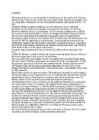
The statue widens progressively down the drapery of the Virgin's dress, to the base, the rock of Golgotha. The figures are quite out of proportion, owing to the difficulty of depicting a fully-grown man cradled full-length in a woman's lap. Much of the Virgin's body is concealed by her monumental drapery, and the relationship of the figures appears quite natural. The Pietà's first home was the Chapel of Santa Petronilla. The chapel was later demolished by Bramante during his rebuilding of the basilica. During the time, Pieta got lot of damages. But it had renovated and returned to the St. Peter's Chapel.
Unfortunately in 1665 the great Plague was responsible for the deaths of 100,000 Londoners and in 1666 The Great Fire destroyed amost 400 acres. The fire raged for three days and burned down many churches, St. Paul's Cathedral and so on. The tower of London had a lucky escape. The architect Sir christopher Wern lost no time in drawing up plans and giving the entire city a monumental baroque aspect. Many of his plans were never realized, becaus people started rebuilding themselves, but the 50 churches and St, Paul's Cathedral were quite remarkable. During the Georgian era, London was considered the premier city of the western world. The Bank of Englad was established in 1694. But it was during the Victorian era that London became the metropolis that it is today. The second World war had almost the same effect to the town as The great Fire. But London still remains the centre for fashion, culture and artistic achievement.
The patriot by Stephen Molstad The story took place in the 18th century. Benjamin Martin was a veteran of the FrenchIndian War and a widower who raised his seven children. Gabriel, the oldest, wanted to join the American forces without his father's permission. Martin, who knew the horrifying carnage that war presented, didn't want his son to participate, but against his father's wishes, Gabriel did join up. He returned home after two years, stumbling wounded into the family home. That night, a skirmish between the British and the patriots woke the Martins and they gave care to the wounded of both sides the next morning. British soldiers approached the house, proceeded to kill the Colonial wounded, burnt down the house and took Gabriel into custody as a spy, intending to hang him. Martin's 15yearold son Thomas was killed while trying to free Gabriel as he was taken prisoner. Enraged Martin set about to free his son Gabriel, w...
commanded that all new houses in London should be of stone and brick not wood. In 1834 Parliament was destroyed by fire. The new parliament included a great clock, which is now known as Big Ben. In the 19th century new museums were created in London such as the Victoria & Albert, the Science Museum and the Natural History Museum. The first doubledecker bus appeared in the streets of London as early as in 1904. After the two world wars, London went through a massive rebuilding. Several structures were built in London to mark the year 2000: the Millenium Dome, Millenium bridge, London Eye etc. London's vast urban area is often described using a set of district names. Since 1965 Greater London has been divided into 32 London boroughs. However, it is a city that is surprisingly easy to get around, with the comprehensive and easily navigated London Underground or `Tube'. London's population was 7,172,000 on the latest Census Day of April 2001. This is 14
D. His head is the mascot on the Brotherhood's coat of arms. The Brotherhood was active only in Estonia and Latvia, unknown in the rest of Europe. Members of the Brotherhood left Tallinn in the 1940s. The site of the House of the Brotherhood of Blackheads probably had a residential building on it from the 14th century. In the first half of the 16th century, the Blackheads bought it and built a new hall with an archless ceiling. The next serious rebuilding took place in 1597, when the facade was redesigned in the Dutch Renaissance architectural spirit, with a profusion of ornaments and carved decorations. One of Tallinn's most eyecatching doors, on the front of this building, dates to 1640. The twonaved and vaulted guild hall, bought from the Olav Guild, dates to the 15th century. The next renovation took place in 1908, but this time it only affected the interiors, which were given a neo classical appearance.
Without this unity he could not express the subtlety of character that was so important to him. The only way to achieve that unity was to maintain complete control over every scene. This constant attention to detail ran many features over-time and over-budget, but the public reaction assured him and the studios that what he was doing worked. As his popularity increased he took more liberties with filming. Movies such as his 1925 hit, "The Gold Rush", demanded unending reworking of scenes and rebuilding of sets. Chaplin typically improvised his story in front of the camera with only a basic framework of a script. He shot and printed hundreds of takes when making a movie, each one a little experimental variation. While this method was unorthodox, because of the expense and inefficiency, it provided lively and spontaneous footage. Taking what he learned from the footage, Chaplin would often completely reorganize a scene. It was not uncommon for him to
subsequent years. The Exclusion Zone • An area originally extending 30 kilometers (19 mi) in all directions from the plant is officially called the "zone of alienation". It is largely uninhabited, except for about 300 residents who have refused to leave. The area has largely reverted to forest, and has been overrun by wildlife because of a lack of competition with humans for space • Even today, radiation levels are so high that the workers responsible for rebuilding the sarcophagus are only allowed to work five hours a day for one month before taking 15 days of rest. Ukrainian officials estimate the area will not be safe for human life again for another 20,000 years. • In 2011 Ukraine opened up the sealed zone around the Chernobyl reactor to tourists who wish to learn more about the tragedy that occurred in 1986. Conclusion • Chernobyl nuclear disaster must have been caused by human factors using of
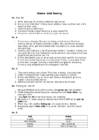
that the deaths of poor and middle-class people were not recorded anywhere, and that the heat of the fire may have cremated many victims, leaving no recognizable remains. 2: How was the fire finally mastered? The battle to quench the fire is considered to have been won by two factors: the strong east winds died down, and the Tower of London garrison used gunpowder to create effective firebreaks to halt further spread eastward. 3: What did the Rebuilding of London Act 1666 say about bricks? That houses must be made out of bricks or stones. 4: Who was appointed to rebuild St. Paul's Cathedral and the ruined parish churches? Sir Christopher Wren 5: When was the Bank of England founded? It was established in 1694 (27 July). 6: When did Lloyd's of London begin to operate? The Society of Lloyd's was incorporated by Lloyd's Act 1871. 7: Why did William III build Kensington Palace?
Independence; Napoleon was defeated at Waterloo, witnessed the Industrial Revolution. Queen Victoria (1837-1901) her reign saw a great expansion of national wealth, industrial advancement, an expansion of the British empire, an increase in the popularity of the monarchy. Her husband Prince Albert, the marriages of their 9 children connected them with many royal families in Europe. Sir Christopher Wren (1632-1723) became a leading figure in the rebuilding of London after the Great Fire of 1666, building in total 52 new churches, including St, Paul`s Cathedral. John Nash (1752-1835) a famous architect and town planner during the Georgian era. 3. In ex. 4 at page 20 the task was to remember the dates from London history. Roman invasion AD 43, Anglo-Saxon invasion around AD 400, Danish invasion 9th century, Norman invasion 1066, Hundred Years` War 1337-1453, the Wars of the Roses 1455-1488, the
the mother church of the Diocese of London. It sits on Ludgate Hill at the highest point of the City of London and is a Grade 1 listed building. Its dedication to Paul the Apostle dates back to the original church on this site, founded in AD 604. The present church, dating from the late 17th century, was designed in the English Baroque style by Sir Christopher Wren . Its construction, completed in Wren's lifetime, was part of a major rebuilding programme in the City after the Great Fire of London. Westminster Abbey Westminster Abbey, formally titled the Collegiate Church of St Peter at Westminster, is a large, mainly Gothic abbey church in the City of Westminster, London, just to the west of the Palace of Westminster. It is one of the United Kingdom's most notable religious buildings and the traditional place of coronation and burial site for English and, later, British monarchs.
1. They are very lucky because the flat is 2. Living in a city is much easy than being in the country. 3. The garden in the square is one of the nice gardens in London. Martin says 1. It is very relaxing to live in the country. 2. A flat near the office would be more convenient than where he lives now. 3. He lives in one of the most beautiful places in the world. Katrina says 1. She used to have a difficult time getting to shool. 2. When they were rebuilding the city centre, the traffic jame were even worst than they were before. 3. The trip to school is much better than it used to be. Ex. 7 p. 33 1. Katarina is not as older than her brother. 2. Towns are more as inconvenient than villages. 3. The journey was not as bad than it was last time. 4. The train is not as slower than bus. 5. London is not as smaller than Birmingham. 6. The country is much not as noisier than the city. Ex. 2 p. 34
In 1176 the first stone London Bridge was built. This bridge was to remain the only one in London until 1739. Because the passage across this one bridge was narrow and clogged with traffic, it was much quicker for travellers to hire boatmen to row them across the river, or transport them up or down river. In 1191 Richard I acknowledged the right of London to self-government, and in 1192 the election of the first Mayor was held. In 1245 Henry III began his lifetime work of rebuilding Westminster Abbey, which was re- consecrated in 1269. An other building project of the medieval period was Old St. Paul's Cathedral which was finished in 1280. Tudor London 1485-1603 When Henry VII took the throne in 1485, the population of the city of London was about 75,000. By 1600 that number had risen to 200,000. London also grew in importance under the Tudor rule. As the Roman Catholic Church didn't give Henry VIII a divorce he wanted, he changed the entire religion of England
by the end of the day that he wanted to buy the house. For the house and furnishings, the Prince paid £220,000. Sandringham's first role was as a home for newly-weds. Prince Albert Edward married Princess Alexandra of Denmark on 10 March 1863, and they travelled to Norfolk 18 days later. The young couple made many extensions and improvements to the house and estate, including the construction of new roads, the rebuilding of cottages and landscaping. A new garden wall was built to accommodate the magnificent gift of the famous Norwich Gates - spectacular ironwork gates designed by Thomas Jekyll and presented as a wedding gift by the people of Norwich and Norfolk. It became obvious that the existing house was not suitable for large social gatherings and a growing family, so the Prince of Wales rebuilt it completely. As home to the heir to the throne and his wife, Sandringham was venue to many glittering occasions
Parliament soon re-emerged ☾ Prince William and Mary became the king and the queen so this way it was established that a monarch could rule only with the support of Parliament. ☾ Bill of Rights, which limited some of the powers of the monarch 1666 The Great Fire of London destroys most of the city's old wooden buildings. It also destroys bubonic plague, which never reappears. Most of the city's finest churches, including St Paul's Cathedral, date from the period of rebuilding which follows. 1688 The Glorious Revolution 1690 The Presbyterian Church becomes the official Church of Scotland" The Battle of the Boyne, in which William III and the Ulster Protestants defeat James II and the Irish Catholics. EIGHTEENTH-CENTURY ✿ Politically, this century was stable. Monarch and Parliament got on quite well together. ✿ The Whigs, were the political 'descendants' of the parliamentarians -
not a final but an open-ended order, capable of continuous further development. Legibility (loetavus) Consider visual quality of the American city by studying the mental image of that city held by its citizens. Concentrate on "legibility" the apparent clarity of the cityscape. Legibility is crucial in the city setting, will analyze in some detail, will try to show how the concept could be used today in rebuilding our cities. It is of special importance when considering urban environments scale of size, time, complexity. The first chapter will develop basic ideas, later chapters will apply them to several American cities. Cues used in structuring and identifying environment: visual sensations of color, shape, motion, polarization of light, smell, sound, touch, kinesthesia, sense of gravity, perhaps even electric and magnetic fields. There is
Lisa 1. Intervjuu Andres Uibomäega Lauri: What is your background? Andres Uibomäe: I was educated as an industrial designer, but motorcycles have been my big passion for as long as I can remember. During my teen years, all I did was to ride and repair motorcycles. I have owned about 15 different motorcycles and modifications. I can’t even remember all my motorcycles; most of them were of Russian origin, though. Every time, it ended in the same way – rebuilding, modifying, tuning. [6] So the background behind Renard is passion from one side, and a designer with creative ambition but no outlet. Somebody once said that four wheels move your body but two wheels move your soul. [6] Lauri: When did you start with the Renard project? Andres Uibomäe: I stumbled upon Renard trails accidentally, seven years ago, when talking to a motorcycle restorer who had been investigating Renard history (Renard was a small Estonian motorcycle brand at the end of 1930s)
The Tudors had changed all that. St. Paul's Cathedral St. Paul's Cathedral has had an eventful history. The first records date from 604 AD, when Mellitus, Bishop of the East Saxons built the first wooden church on the summit of one of London's hills. At the end of the 7th century, it was built in stone by Erkenwald, Bishop of London. In 962 and 1087, the Cathedral was destroyed by fires, but each time it was rebuilt. By that time, it was one of the largest cathedrals in Europe. Rebuilding and extensions in the 13th and 14th century enlarged the cathedral even more. But disaster struck again on the night of the 2nd of September 1666, when the great fire of London destroyed 4/5th of all of London, wiping 13,200 houses and 89 churches, including the St. Paul's Cathedral off the map. In 1669, Christopher Wren designed the so-called 'Great Model' for the new St. Paul's Cathedral. In this model, the cathedral was shaped like a Greek cross, with a portico, consisting of Corinthian
An assassination attempt was made on him on the 5th of November in 1605, now known as the famous Gunpowder Plot. Plague caused more problems for London later in that century, culminating in the Great Plague. That was the last major outbreak in Europe, possibly thanks to the Great Fire of London in 1666. The fire broke out in the original City and quickly swept through London's wooden buildings, destroying large amounts of the city. Rebuilding took over ten years. Following London's growth in the 18th century, it became the worlds largest city from about 1831 to 1925. This growth was aided from 1836 by London's first railways, which put countryside towns within easy reach of the city. Rising traffic problems on roads led to the creation of the world's first subway system the London Underground. Because of this rapid growth, London became one of the first cities in human history to reach a population of one
In 1215. he was forced to sign Magna Carta by the English barons. He was not a very popular king. People think of him as a cruel and disloyal person. He died in 1216. after eating peaches. King Henry III Reigned as King of England from 19 Oct 1216 to 16 Nov 1272. During Henry III reign the custom of having Parliaments was established. He was a very kind king and it is known that he could never say "no" to anyone. The rebuilding of Westminster Abbey was started by him. King Edward III Reigned as King of England from January 25, 1327 to 1377. During his reign in 1340 the Hundred Years War was started between England and France. King Edward III main ambition was military glory. King Henry VI Reigned as King of England from Aug 31,1422 to March 4, 1461 and also from October 31,1470 to April 14, 1471. Henry VI., was only nine months old when he was proclaimed King of France and England
and say to them: Come and show me another city with lifted head singing so proud to be alive and coarse and strong and cunning. Flinging magnetic curses amid the toil of piling job on job, here is a tall bold slugger set vivid against the little soft cities; Fierce as a dog with tongue lapping for action, cunning as a savage pitted against the wilderness, Bareheaded, Shoveling, Wrecking, Planning, Building, breaking, rebuilding, Under the smoke, dust all over his mouth, laughing with white teeth, Under the terrible burden of destiny laughing as a young man laughs, Laughing even as an ignorant fighter laughs who has never lost a battle, Bragging and laughing that under his wrist is the pulse. and under his ribs the heart of the people, Laughing! Laughing the stormy, husky, brawling laughter of Youth, half-naked, sweating, proud to be Hog Butcher, Tool Maker, Stacker of Wheat, Player with
The influence of these groups lasted from the end of the 12th to the early 14th century, and their perseverance ensured the construction of major bridges over wide rivers as the Rhône and the Danube. The bridge over the Rhône at Avignon (1187), for example, a wooden deck on stone piers, was built by such an order under the inspired vision of a young shepherd, later canonized as St Bénézet for his accomplishment. The four surviving arches, dating from the bridge's rebuilding around 1350, rank as one of the most remarkable monuments of medieval times in view of the 101-110ft (31-34m) elliptical arches with radii varying at the crown and haunches. As the Middle Ages drew to a close, stone arches of remarkable spans were built in mountain valleys where rock abutments provided solid foundations for spans in excess of 150ft (50m), such as the Vieille-Brioude and the Grand Pont du Doux in France. Renaissance and Neo-Classical bridges
These reforms gained him enemies in the upper classes, especially among the high nobility, who despised him as a social upstart. Disaster fell upon Portugal in the morning of 1 November 1755, when Lisbon was struck by a violent earthquake with an estimated Richter scale magnitude of 9. The city was razed to the ground by the earthquake and the subsequent tsunami and ensuing fires. Sebastião de Melo survived by a stroke of luck and then immediately embarked on rebuilding the city, with his famous quote: "What now? We bury the dead and take care of the living."Despite the calamity and huge death toll, Lisbon suffered no epidemics and within less than one year was already be ing rebuilt. The new downtown of Lisbon was designed to resist subsequent earthquakes. Architectural models were built for tests, and the effects of an earthquake were simulated by marching troops around the models. The buildings and big squares of the Pombaline
Its leading figure was Maxim Gorky, who laid the foundations of this style with his works The Mother and his play The Enemies (both 1906). His autobiographical trilogy describes his journey from the poor of society to the development of his political consciousness. His novel The Artamanov Business (1925) and his play Egor Bulyshov (1932) depict the decay and inevitable downfall of Russia's ruling classes. Gorky defined socialist realism as the "realism of people who are rebuilding the world," and points out that it looks at the past "from the heights of the future's goals". Gorky considered the main task of writers to help in the development of the new man in socialist society. Gorky's version of a heroic revolutionary is Pavel Vlasov from the novel The Mother, who displays selflessness and compassion for the working poor, as well as discipline and dedication. Gorky's works were significant for the development of literature in
Zerubbabel was the governor of this province. King Darius I of Persia appointed Zerubbabel governor of the Province. It was after this appointment that Zerubbabel began to rebuild the Temple. Elias Bickerman speculates that one of the reasons that Zerubbabel was able to rebuild the Temple was because of "the widespread revolts at the beginning of the reign of Darius I in 522 BCE, which preoccupied him to such a degree that Zerubbabel felt he could initiate the rebuilding of the temple without repercussions". 23.Nehemja, tema tegevus Jeruusalemmas. Sotsiaalsed meetmed. Pärsia kuninga Kyrose/Kürose /Päike/ võit Uus- Paabeli riigi üle 538. aastal enne Kristust andis Nebukadnetsar II ajal Paabelisse küüditatud juutidele võimaluse Palestiinasse tagasi pöörduda. Pagendatud ei olnud mitte kõik juudid vaid osa rahvast sageli just mõjukamad inimesed. Kodumaale naasmise võimalust ei kasutanud kohe ka kõik väljasaadetud. Osa rahvast jäi Paabelisse
 annaabi.ee