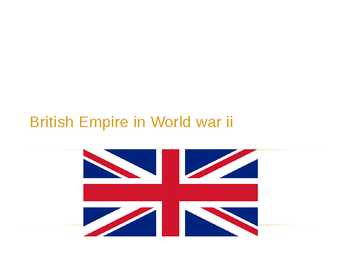
Same before and after the war Winston Churchill JOINING the war Britain declared war on Nazi Germany on 3 September 1939 rd British Empire in World war II On May 8, 1945, the Allies formally accepted the unconditional surrender of the armed forces of Nazi Germany. On 30 April Hitler committed suicide. The act of military surrender was signed on 7 May in Reims, France, and ratified on 8 May in Berlin, Germany. On August 15, 1945, the Surrender of Japan occurred, effectively ending World War II. The signing of the surrender document occurred on September 2, 1945. Prime Minister Winston Churchill gives the "Victory" sign Nuremberg trials North East India, 1944 North Africa, 1941 British Empire in World war II Britain was no longer the great power it had once been Canada, Australia and New Zealand moved within the orbit of the United
23.Prejudice – eelarvamused 24.Appalling - jubedus, kohutav, õõvastav 25.Instigators – aluspanija, algataja 26.Mutual enmity – vastastikune vaenulikkus 27.Disputes – vaidlus 28.Comprasions – võrdlused 29.Admittedly - tõsi küll 30.Appoints – lähetab, määrab 31.Representative – esindaja 32.Issuing bank – keskpank 33.Repeal – tühistama 34.Impose – määrama, kehtestama 35.Essential – oluline, vajalik 36.Treaties – aluslepingud 37.Ratified - ratifitseeritud 38.Quarter – neljandik, kvartal 39.Alliance – liit, ühendus 40.Consumer protection – tarbijakaitse 41.Strict – range, karm 42.Strengthen – tugevdama, jõudu koguma 43.Harmful – kahjulik, halb 44.Emissions – heide(heitekogus) 45.Forefront – suunanäitaja 46.Strive – püüdma, püüdlema 47.Persuade – veenma 48.Maintenance – hooldus 49.Compulsory - kohustuslik 50.Rural – maa, maakoha
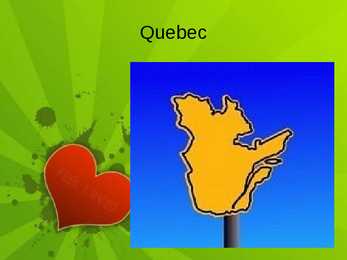
A unique variety of Celtic music Excellent jazz musicians, A culture of classical music, And love foreign rhythms Cuisine Quebec's cuisine has a strong French and Irish influence. Many Quebecers go to the cabane à sucre (sugar house) for a traditional meal. Traditional meal that features omelette, ham, oreilles de crisse, baked beans and maple syrup. In 1939, the government of Quebec unilaterally ratified its coat of arms to reflect Quebec's political history: French rule (gold lily on blue background), British rule (lion on red background) and Canadian rule (maple leaves) and with Quebec's motto below "Je me souviens" ("I remember"). The Flag . In 1900, Quebec finally sought to have its own uniquely designed flag. By 1903, the parent of today's flag had taken shape, known as the "Fleurdelisé". The flag in its present form with
· Citizens have high environmental awareness · Sunniest Region in Germany, Making it the "Solar Capital" · The Heliotrope (the world's first energy self-sustaining solar building) Germany and the Kyoto Protocol · Sets binding obligations on industrialized countries to reduce emissions of greenhouse gases. · Between March 1998 and March 1999, 84 countries including Germany signed the Kyoto Protocol. · In March 2002, the Bundestag unanimously ratified Kyoto. In May 2002, the European Union submitted the articles of ratification for all 15 of its then member states. · Since signing and ratifying the protocol, Germany has committed to reducing its emissions to 21% below 1990 levels between 2008 and 2012 RECYCLING: A Prime Example of German Sustainability How it began... · The "Green Movement" in Germany was ignited by damaging acid rain that was ruining their forests
Two other institutions play vital roles: the Court of Justice of the EU upholds the rule of European law the Court of Auditors checks the financing of the EU's activities. The powers and responsibilities of all of these institutions are laid down in the Treaties, which are the foundation of everything the EU does. They also lay down the rules and procedures that the EU institutions must follow. The Treaties are agreed by the presidents and/or prime ministers of all the EU countries, and ratified by their parliaments. The EU has a number of other institutions and interinstitutional bodies that play specialised roles: the European Central Bank is responsible for European monetary policy the European External Action Service (EEAS) assists the High Representative of the Union for Foreign Affairs and Security Policy, currently Catherine Ashton. She chairs the Foreign Affairs Council and conducts the common foreign and security policy, also ensuring the
Climate Change, Climate Change-Kyoto Protocol, Desertification, Endangered Species, Environmental Modification, Hazardous Wastes, Law of the Sea, Marine Dumping, Marine Life Conservation, Ozone Layer Protection, Ship Pollution, Tropical Timber 83, Tropical Timber 94, Wetlands, Whaling signed, but not ratified: Air Pollution- Persistent Organic Pollutants Oil and Gas Industry Organization Private sector active in all aspects of industry. Major Oil/Gas Bacton, St. Fergus, Teeside, Easington, Isle of Grain, Cruden Ports Bay, Sullom Voe, Flotta, Nigg Bay, Southampton Foreign Company Extensive, including many European and U.S. firms. The largest Involvement include Total, Chevron, BHP, Amerada Hess.
In its beginnings, the United States of America consisted only of the Thirteen Colonies. American colonists fought off the British army in the American Revolutionary War of the 1770s and issued a Declaration of Independence in 1776. Seven years later, the signing of the Treaty of Paris officially recognized independence from Britain. In the nineteenth century, westward expansion of United States territory began, in which the United States would occupy all the North American land east to west. Ratified in 1788, the Constitution serves as the supreme American law in organizing the government; the Supreme Court is responsible for upholding Constitutional law. Slavery was abolished in 1865 by the Thirteenth Amendment to the United States Constitution. In later years, civil rights were extended to women and black Americans. The Progressive Era marked a time of economic growth for the United States, advancing to the Roaring Twenties
and agreements’ (Eur. Conv. Of Hum. Rights) • ECSC (1951) – Strong potential for cooperation, ‘above states’ organization, shared sovereignity (only six member states); revolutionary institutions – not IO. European Defence Community (EDC) – A plan to create a common European military as a means of binding Germany to European integration after WWII. The creation of the EEC • Treaties of Rome (EEC / EURATOM) – Signed in March 1957; Ratified in January 1958. Four goals: - Single market within 12 years (with 3½ freedoms goods, capitals, services, people) - Elimination of custom duties & common external tarifs - Extablishment of common agriculture, trade, transport, competition policy - Creation of European Social Fund and European Investment Bank Merging of Institutions (1965) Elimination of Commission and Council of Euratom and the High Authority
1. UN as a world organization The United Nations officially came into existence on 24 October 1945, when the UN Charter had been ratified by a majority of the original 51 Member States. The day is now celebrated each year around the world as United Nations Day. The purpose of the United Nations is to bring all nations of the world together to work for peace and development, based on the principles of justice, human dignity and the well-being of all people. It affords the opportunity for countries to balance global interdependence and national interests when addressing international problems. There are
The new government which will serve their best interests. Rousseau social contrackt A man is born free, yet everywhere he is in chains Rousseau theorized about the best way in which to set up a political community in the face of the problems of commercial society which he had already identified in his Discourse on Inequality (ownership/property is the source of all evil) Every law the people have not ratified in person is null and void -- is, in fact, not a law. The legislative power belongs to the people, and can belong to it alone The natural man was free, the modern man is in chains ever since he came to be a society and started a social contract. The social contract: In society you lose some freedoms, but gain others. If you dont like it, you may get out. Laws are based on social and historical conventions (also montesque)
Date of adoption Date of enter into force These two are important because treaties do not have retroactive force. This means that (they are valid from) treaties can influence states only from the time it enters into force. However, some conventions do have retroactive force if the convention mentions it specifically in the convention, e.g. concerning international crimes. Number of participants (signed/ratified) Treaties are legally binding only on member States (if not customary law) are legally binding when ratified . If a country joined in 1999 you can't use 1988 requirements/regulations ?! Structure modern treaties very often have many annexes and additional regulations etc. this is a nightmare because these usually require additional ratifications. Nowadays there are also framework conventions, e.g. convention on conventional weapons (CCW).
1975 - Suriname left the Kingdom of the Netherlands and became an independent nation, resulting in a huge influx of Surinamese immigrants to the Netherlands. 1986 - Aruba separated from the Netherlands Antilles and became an equal member of the Kingdom of the Netherlands. 1991 - Members of the 12 European Community nations met at Maastricht to consider a draft version of a treaty to increase economic integration and political cooperation. The Maastricht Treaty, as it became known, was ratified in 1993, creating the European Union. (4) 15 Conclusion I got to know many important, and interesting facts about Netherlands and I learned many new words. I know now that in Netherlands there lives approximately 16 million people but interesting fact was that there are 14 million bicycles in Holland. The shirt, nightdress, bed tick, pocket-handkerchief, tablecloth and napkin were invented in Holland.
642. fails to pass ei suuda vastu võtta 643. extraordinary elections erakorralised valimised 644. implementation täideviimine/rakendamine 645. Auditor General riigikontroll 646. the use and maintenance of state assets riigivarade kasutamine ja korrashoid/säilitamine 647. proprietary obligations omaniku kohustused 648. decree dekreet 649. borrowings krediidi võtmine/laenamine 650. foreign and domestic borrowings välis- ja siseriiklikud laenud 651. ratified ratifitseeritud 652. impose taxes and duties kehtestama makes ja lõive 653. fine trahv 654. state duty riigilõiv 655. compulsory insurance premiums kohustuslikud kindlustusmaksud 656. enterprise ettevõte 657. interest intress 15 658. dividends dividendid 659. sale of state assets riigivarade müük 660. gifts kingitused 661. foreign aid välisabi 662. donations annetused
nations of the Americas (6.) The United States planned to stay neutral in wars between European powers and their colonies · The US in WWI 9 WWI- Firmly neutral, after entering, victory over Germany, The treaty of versailles ended it · Versailles Treaty of 1919 Paris Peace Conference opposition among British and French leaders compromise - establishment of the League of Nations, the Treaty against many principles of the Fourteen Points US never ratified(kinnitama) · League of Nations Stop, prevent war Improve people's lives Encourage co-operation in trade Disarmament Enforce the Treaty of Versailles Success: some small countries independent, etc. (success in the Third World, Africa ) Overall did not succeed Germany not permitted to join, Soviet Russia banned, US never joined Predecessor of the United Nations Estonia supported it -> help them. For a while Estonia was the most active member.
monarchy, and the ground he builds on, is this, that no man is born free. In this last age a generation of men has sprung up amongst us, that would flatter princes with an opinion, that they have a divine right to absolute power, let the laws by which they are constituted, and are to govern, and the conditions under which they enter upon their authority, be what they will, and their engagements to observe them never so well ratified by solemn oaths and promises. To make way for this doctrine, they have denied mankind a right to natural freedom; whereby they have not only, as much as in them lies, exposed all subjects to the utmost misery of tyranny and oppression, but have also unsettled the titles, and shaken the thrones of princes: (for they too, by these mens system, except only one, are all born slaves, and by divine right are
families`.2 Similarly to how women were once viewed, children have been seen as irrational, emotional and incompetent and therefore are often excluded from the citizenship status. However, the adoption of the U.N Convention of the Rights of the Child (UNCRC) in 1989 was the initial legally binding law that for the first time, granted children the recognition as worthy individuals with rights of their own. 3 The UNCRC has been considered as one of the most innovative international treaties ever ratified. It laid the foundation for the potential change of attitude and perception of children as primarily objects of the adult world. The recognition of children by the UNCRC as respected individuals with rights of their own has given impetus to a significant field of academic study. Since then, there has been increasing sociological interest in children which has provided a new perspective around the idea of children as social actors, and that childhood is not a natural phenomenon but a social
Alexis I) and Naryshkin family (Natalya Naryshkina was the second wife) over who should inherit the throne. Peter's other half-brother, Ivan V of Russia, was next in line for the throne, but he was chronically ill and of infirm mind. Consequently, the Boyar Duma (a council of Russian nobles) chose the 10-year-old Peter to become Tsar with his mother as regent. This arrangement was brought before the people of Moscow, as ancient tradition demanded, and was ratified. Sophia Alekseyevna, one of Alexis' daughters from his first marriage, led a rebellion of the Streltsy (Russia's elite military corps) in AprilMay 1682. In the subsequent conflict some of Peter's relatives and friends were murdered, including Matveev, and Peter witnessed some of these acts of political violence. The Streltsy made it possible for Sophia, the Miloslavskys (the clan of Ivan) and their allies to
them British explorer James Cook mapped almost the entire coastline. The British government claimed a treaty with Mori. The Treaty is regarded as New Zealand's foundation as a nation and is revered by Mori as a guarantee of their rights. Under British rule New Zealand had been part of the colony of New South Wales. New Zealand became an independent Dominion and a fully independent nation when the Statute of Westminster was ratified, although in practice Britain had ceased to play any real role in the government of New Zealand much earlier than this. *The British expansion in South Africa When Dutch mercantile power began to fade, the British moved in to fill the vacuum. They seized the Cape to prevent it from falling into the hands of Napoleonic France. British sovereignty of the area was recognized at the Congress of Vienna. A pattern soon emerged whereby English-speakers became highly urbanised, and
nouncement of decision on rehabilitation taken by the court in accordance with the decision of the mediation council. A court decision on rehabilitation is published according to the rule pro- vided by this law. Article 44. Rehabilitation manager 1. Rehabilitation process is carried out by the rehabilitation manager. Article 47. Ratification of rehabilitation plan by the creditors 1. The rehabilitation plan reviewed and approved by the mediation council shall be ratified by the secured creditors within 7 days after receiving the rehabilitation plan from the mediation council. Ratification of rehabilitation plan requires consent of all secured creditors. 27 CYAN MAGENTA YELLOW BLACK 27 Chapter IV
Korea, Kyrgyzstan, Kuwait, Latvia, Lebanon, Lithuania, Macedonia, Moldova, Mongolia, the Netherlands, Oman, Pakistan, Poland, Qatar, Rumania, the Russian Federation, Saudi Arabia, the Slovak Republic, Slovenia, the Republic of South Africa, Sweden, Switzerland, Syria, Tajikistan, Thailand, Turkey, Turkmenistan, Ukraine, the United Arab Emirates, Uzbekistan, Venezuela, Vietnam and Yugoslavia (effective for Serbia). Belarus also signed a double tax treaty with Libya, but it has not been ratified yet. Belarus has double tax treaties as a legal successor to the USSR with the following countries: Denmark, France, Japan, Malaysia, Spain, Great Britain and the USA. According to the Ministry for Taxes and Levies, the treaties with Canada and Norway are no longer in force. Appendix 5 summarizes withholding tax rates for different types of income and countries. Source: Ernst & Young. Doing Business in Belarus 2012
Doth make the night joint-labourer with the day: Who is't that can inform me? HORATIO That can I; At least, the whisper goes so. Our last king, Whose image even but now appear'd to us, Was, as you know, by Fortinbras of Norway, 9 Thereto prick'd on by a most emulate pride, Dared to the combat; in which our valiant Hamlet— For so this side of our known world esteem'd him— Did slay this Fortinbras; who by a seal'd compact, Well ratified by law and heraldry, Did forfeit, with his life, all those his lands Which he stood seized of, to the conqueror: Against the which, a moiety competent Was gaged by our king; which had return'd To the inheritance of Fortinbras, Had he been vanquisher; as, by the same covenant, And carriage of the article design'd, His fell to Hamlet. Now, sir, young Fortinbras, Of unimproved mettle hot and full, Hath in the skirts of Norway here and there Shark'd up a list of lawless resolutes,
 annaabi.ee