Leidsid 33 sarnast õppematerjali, mis on seotud failiga "Quebec". Need materjalid aitavad sul teemat sügavamalt mõista.
quebec, french, canadian, province, north, forest, lawrence, forestsfficial, river, wildlife, east, english, language, rule, present, iris, than, region, canada, west, hudson, south, lies, cover, first, later, political, irish, unique, variety, cuisine, traditional, meal, maple, blue, fleur, emblem, montreal, place, class, road, predominantly, divisionTopic Canada History The first people to live in what is now Canada arrive from Asia at least 20 000 years ago. They arrived by a way of a land bridge that once connected Asia and North America at what is now Alaska. In 1497, John Capot, an Italian navigator in the service of England found rich fishing grounds off Canada's southeast coast. France took the lead in exploring the country and set up a colony in eastern Canada in the early 1600's. Great Britain gained control of the country in 1763 and thousands of British immigrants began to join the French who remained in Canada. Canada gained its independence from Britain in 1931. Position/area
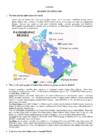
CANADA REVISION QUESTIONS 2010 1. The main physiographic regions of Canada. Canada may be divided into seven physiographic regions: Arctic Lowlands, Cordilleran Region, Interior Plains, Hudson Bay Lowlands, Canadian Shield (Forest Lands), St Lawrence Lowlands and Appalachian Region. Divisions are based on each area's relatively similar physical geography and landforms. Physiographic regionalization is defined here as the process by which regions with relatively homogeneous physical geography are determined 2. Who are the native people of Canada? Into which three groups can they be divided? Canada's constitution specifies three categories of aboriginal peoples: Indian (First Nations), Métis, Inuit.
Geography Canada is the world's second largest country in total area after Russia , since it covers nearly 10 million square kilometres, but is one of the most sparsely populated, with only about 34 million inhabitants. The majority of them live within 300 kilometres of Canada's southern border. Much of the rest of Canada is uninhabited or thinly populated, because the country has a rugged terrain and severe climate. Canada extends across the continent of North America, from Newfoundland on the Atlantic coast to British Columbia on the Pacific coast and northward into the Arctic Ocean. Canada shares land borders with the United States to the south and north-west. Canada is a land of great variety. Towering mountains, crystal-clear lakes, and lush, green forests make Canada's far west a beautiful region. Farther inland, fields of wheat and other grains cover Canada's vast prairies
Canada. Canada is a very big country in the continent of North America. It is about 10 million square kilometres and that makes it the second largest country in the world after Russia. Quebec (the province) is six times as big as the UK. Canada borders the Atlantic Ocean, the Pacific Ocean, the Arctic Ocean and the USA. The capital of Canada is Ottawa and other main cities are Toronto, Montreal and Vancouver. It is a very developed country. Montreal is the largest city and it is called the Paris of North America because most of the people there speak French. The population of Canada is 28 million people. It is a very multicultural country
Quebec. Factfile Land area - 1,365,128 square km Capital - Quebec City Largest city Montreal Official language French Population 7, 6 mln Emblems Coat of arms Flag Motto "Je Me Souviens" Flower blue flag iris Bird snowy owl Mineral asbestos Tree yellow birch Quebec's National Holiday 24 June Geography Situated in eastern part of Canada Highest point Mont D'lberville Largest river the St. Lawrence River Canadian Shield 90% of the territory Appalachian Mountains History First inhabitants were the indigenous people First French explorer Jacques Cartier 1534 First it was called New France In 16. 17. century population grew massively The Seven Year's War in 1756-1763, New France was renamed the Province of Quebec Act of Union in 1840 Economy The St. Lawrence River Valley is a agricultural region The nothern coniferous forests, lakes and rivers
The Inuits came to Canada from Asia crossing the Bering land bridge. The earliest discoveries in Canada were made by the Vikings. In AD 985 Vikings sailing from Iceland to Greenland were blown westward off their course and the Vikings sighted the coast of Labrador peninsula. The report of forested areas encouraged further exploration because the colonies in Greenland which belonged to the Vikings lacked lumber. In AD 1000 Leif Ericson became the first European to land in North America. The first colony was established what was described as Vinland by the Vikings. It was located on the northernmost tip of todays Newfoundland. There has also been a theory that the Vikings penetrated Hudson Bay and reached the Great Lakes region but recent investigations have cast serious doubt on it. The Greenland colony died out during the 15th century and the Viking adventures in Canada must have come to an end long before that time. The Colony of New France
CANADA Canada is a vast country, second largest country of the world after Russia. It stretches from the Atlantic Ocean in the east to the Pacific Ocean in the west and to the Arctic Ocean in the North. Canada Covers most of the northern part of North America and its geography is very diverse. Canada's area is about 10 million square kilometers and its population is 31 000 000. Its capital is Ottowa and other main cities are Toronto, Montreal and Vancouver. Almost 75 % of canadians lives within 300 kilometer of the USA border, because the climate is softer in the South. 89 % of Canada is almost unhabited. Its official languages are English and French, but many other languages are spoken too
and it is bordered by three oceans: the Arctic, the Pacific and the Atlantic Oceans. The population of Canada is about 31 million people. About 77% of the people live in cities which lie in a band about 100 miles wide above the border of the United States. The capital of Canada is Ottawa. Other large cities are Montreal, Toronto, Vancouver, Winnipeg and Quebec. 2. Geographical position Canada is a huge country in the continent of North America. It is bordered with the Atlantic Ocean in the east, the Pacific Ocean in the west, the United States of America in the south and the Arctic Ocean in the north. Canada is a vast country, with a territory of 3.8 million square miles of land and fresh water it is the second biggest country in the world after Russia. Canada covers most of the northern part of North America. Canada has over 151,480 miles of coastline
Canada is the second largest country in the world with a territory of about 10 million square kilometers and it is bordered by three oceans: the Arctic, the Pacific and the Atlantic Oceans. The population of Canada is about 31 million people. About 77% of the people live in cities which lie in a band about 100 miles wide above the border of the United States. The capital of Canada is Ottawa. Other large cities are Montreal, Toronto, Vancouver, Winnipeg and Quebec. Canada has two official languages English and French. It's interesting to know that about 61% of Canadians name English and 24% French their mother tongue. There are also many other languages spoken in Canada such as: Italian, Chinese, German, Polish, Ukrainian, Greek and Dutch. There are also many native languages such as Algonquian. The British and the French as the main settlers from Europe fought for hundreds
Canada Geography The geography of Canada is vast and diverse. Occupying most of the northern portion of North America, Canada is the world's second largest country in total area. The highest point in Canada is Mount Logan 6,050 m, which is in the Yukon. The two principal river systems are the Mackenzie and the St. Lawrence. The St. Lawrence, with its tributaries, is navigable for over 3,058 km. The largest lake situated entirely in Canada is Great Bear Lake at 31,328 km2 in the Northwest Territories. The largest lake which is at least partly in Canadian territory is Lake Superior Climate Canada's climate is as diverse as its landscape. Generally, Canadians enjoy four very distinct seasons, particularly in the more populated regions along the US border. Daytime
Tallinn English College Report of Canada 8a Teacher: Merike Sisask Composer: Kärt Kalvet 2010 Canada, Kärt Kalvet 8a Canada General Information Canada is in North America. It's area is 9220970 sq km. Canada's population is 313.612.000 people. Canada is divided into 10 provinces and 3 territories. The capital of Canada is Ottawa. Canada has constitutional monarchy. The head of state in Canada's government is the Queen of England. There are two main languages in Canada: English and French. Canada's curreny is Canadian dollar (1 dollar=100 cents[Can$]). The highest peak of Canada is Mount Logan, 5959 metres. The lowest point is sea level
John Cabot in 1497. He sailed to Newfoundland. The first European who explored further inland was Jacques Cartier in 1534. The King of France wanted to settle nowadays eastern Canada and call it New France. To avoid the high costs building the settlements, King of France made an agreement with a fur trading company if the company brought settlers to New France, they'd have monopoly to trade for furs and they would receive all the profits. First attempts of colonization failed. In 1604, French nobleman and a mapmaker named Samuel de Champlain established first permanent French settlement in the New World on an island. This area was called Acadia. When they moved to more sheltered harbour, the settlement was called Port Royal. By 1607, France wanted to establish a new French settlement along the St. Lawrence River. French went there and came back and in 1610, some of them returned. They were the ancestors of the French speaking Acadian people in Nova Scotia and New Brunswick today.
6. Towns, economy, agriculture 7. Climate 8. Animals, plantlife 9. Population 10. Sports 11. Culture 12. History 13. Political system, symbols 14. Conclusion 15. Materials 1. Introduction If you had to use two words to describe Canada, they might be large and diverse. Canada is the second largest country in the world, bordered by three oceans, and across the country, Canadians experience many different landscapes from rolling plains and mountains to the cold tundra of the north. Despite Canada's great size, it is one of the world's most sparsely populated countries. This fact, coupled with the grandeur of the landscape, has been central to the sense of Canadian national identity. 2. Geographical position Canada is the second largest country in the world after Russia. In the Arctic, Canada reaches almost as far north as Greenland. To the south it extends to the same latitude as southern France. The distance from Canada's west coast, the Pacific Ocean, to its
Tallinn English College CANADA Report Karin Kristen Tapupere 8.b Instructor: Tiiu Martma Intro: Canada is a country occupying most of northern North America, extending from the Atlantic Ocean in the east to the Pacific Ocean in the west and northward into the Arctic Ocean. It is the world's second largest country by total area and its common border with the United States to the south and northwest is the longest in the world. The land occupied by Canada was inhabited for millennia by various groups of Aboriginal people. Beginning in the late 15th century, British and French expeditions explored, and later settled along, the Atlantic coast
The northern part of Canada is called Eskimo land and there are very cold winters. Only in the southern part and the west coast is the climate as mild as in the western part of the United States. During the Ice Age almost all of Canada was covered time after time whit great sheets of ice. These sheets carried away much of Canada's soil to the United States. Parts of Canada were first settled by the French, part of it by the English. Picturesque Quebec is the most French, of Canada's big cities. Canada's largest city, Montreal, is also largely French. Next to Paris in France it is the largest French- speaking city in the world. Canada belongs to British Commonwealth of Nations. It rules itself in very much the way the United States. Its capital is Ottawa. The country is divided into provinces and territories. Both the provinces of Ontario and British Columbia are much bigger than the states of Texas.
Canada is the second largest country in the world. Situated to the north of the United States, in North America, it has both English and French as its official languages. Even though its area is bigger than that of the United States, its population is only about 11% of that of the USA some 35 million. Because of that, Canada has one of the lowest population densities in the world. The capital of Canada is Ottawa the name of whose comes from the old Algonquin language, with the original word meaning `to trade'. Due to the country's huge size and position, it is very diverse. It is bordered by the Pacific
Ottawa Ottawa is the capital of Canada and a municipality within the Province of Ontario. Located in the Ottawa Valley in the eastern portion of Southern Ontario, the city lies on the southern banks of the Ottawa River, a major waterway forming the local boundary between the Provinces of Ontario and Quebec. The 2006 Census recorded the population at 812,129, making it the fourth largest municipality in the country and second largest in Ontario. Connected by several bridges to its Quebec neighbour , the City of Gatineau on the northern shores of the Ottawa River, the two cities had a combined 2006 population of over 1,130,000, making it the country's fourth largest metropolitan area. On December 31, 1857, Queen Victoria was asked to choose a common capital for the
Territory and landscape Canada is one of the largest countries in the world. It covers nearly 4 million square miles. It is dividend into ten provinces( British Columbia, Manitoba, New Brunswick, Alberta, Nova Scotia, Ontario, Prince Edward Island, Quebec, Saskatchewan, Newfoundland ) along with two territories( the Yukon, the Northwest territories ). The capital city is Ottawa. Canada is a country rich in forests. It borders in the south with The United States and it's surrounded in the west by the Pacific Ocean, in the east by the Atlantic Ocean and above by many smaller bays, but is also borderedd with Alaska in the north-west. To the north of Canada is the broad Canadian Shield, an area of rock scoured clean by the last ice age, thinly
Alberta The capital of Alberta is Edmonton. The population is 3.7 million people and there are many nationalities. Besides English and French there are also immigrants from Scotland, Ireland, Wales, Germany, Ukraine and Scandinavia. In Edmonton and Calgary there are also historic Chinatowns, and Calgary has Canada's third largest Chinese community. Geographical features Alberta covers an area of 661,848 square kilometres, an area about 5% smaller than Texas or 20% larger than France. This makes it the fourth largest province after Quebec, Ontario, and British Columbia
Canada's History North America was first settled by people who came from the northern and eastern parts of Asia about 15,000 years ago. They crossed the Bering Strait from Siberia to Alaska. Some of those people followed the Yukon River and found their way south. Others followed the MacKenzie River which opened the way to the plains of the interior, and then travelled on to the Great Lakes and the St. Lawrence River. The third group of people inhabited the Arctic regions. The first two groups were called Indians, the group that settled in the north were called Eskimos. These people are the only true native Canadians, the rest are new Canadians who have been transplanted from other parts of the world, especially from Europe. The first European visitors to North America were Norsemen who settled briefly in the 11th century. John Cabot, a Venetian seeking riches for England, made the next known voyage in 1497
Ireland 1. The first inhabitants were hunters and fishers from the European mainland in 6000 BC. In 200 BC, the Celts arrived. 2. Christianity was established during the 5th century by Saint Patrick, who is also Ireland's patron saint. His feast day is on 17th of March, the day he died. 3. The English conquest of Ireland began in the 12th century by Henry II. 4. King James I settled English and Scottish Protestants in the province of Ulster. This has resulted in conflicts between the Irish Catholics and the "planted" Protestants. 5. Home Rule was the name given to the Movement of Independence in 1916. Ireland demanded independence, self-government and freedom from the UK. 6. During the 1840s, the population decreased deeply due to Great Famine, which caused death and emigration. Now, population is changing and Ireland has become an
CANADIAN PATRIOTIC SONGS "Ca-na-da", or "The Centennial Song" (French version: "Une chanson du centenaire") was written by Bobby Gimby in 1967 to celebrate Canada's centennial and Expo 67. The Canadian Centennial was a year long celebration held in 1967 when Canada celebrated the 100th anniversary of the Canadian Confederation. The 1967 International and Universal Exposition, or Expo 67 as it was commonly known, was the general exhibition, category one World's Fair held in Montreal, Quebec, Canada from April 27 to October 29 The "Canadian Railroad Trilogy" is a song by Gordon Lightfoot that describes the building of the Canadian Pacific Railway. "Farewell to Nova Scotia" is a popular folk song from Nova Scotia of unknown authorship
Canada Canada is a country occupying most of northern North America, extending from the Atlantic Ocean in the east to the Pacific Ocean in the west and northward into the Arctic Ocean. It is the world's second largest country by total area, and shares land borders with the United States to the south and northwest. Canada is a federation composed of ten provinces and three territories; in turn, these may be grouped into regions. Western Canada consists of British Columbia and the three Prairie provinces (Alberta, Saskatchewan, and Manitoba).
2. When was Christianity established in Ireland? 432 AD Saint Patrick arrived in Ireland and began converting the Irish to Christianity. Who is Ireland's patron saint? Saint Patrick is Ireland's patron saint. When is his feast day? His feast day is on 17 March 3. When did the English conquest of Ireland begin? Henry II, with permission from tha Pope, sought to conquer Ireland. In 1171 he became the first English monarch to set foot on the isle. 4. Who were settled in the province of Ulster by King James I? James I settled English and Scottish Protestants in Munster and Ulster. What has this resulted in? It has resulted in an amount of English people in Ireland. 5. What is meant by Home Rule? Home Rule was a movement that sought to repeal the Acts of Union 1800. The Home Rule Act, was meant to permit Ireland self-government within the UK. 6. Changes in the number of population since the 1840s. 1841: 6.5M in Ireland, 8.2M on the island 1901: 3
Canada's birthday is on the first of July and its motto is: "From sea to sea". The first inhabitants were the ancestors of the Aborigines. Today Canada is the home of over a million Aboriginal people. They came to Canada about 25 000 years ago. First Europeans came to Canada about 1000 years ago. The first Europeans in Canada were the Vikings. The population of Canada is about 33 million. Canada has two official languages: English and French. About 65% of Canadians speak only English and about 20% of them speak only French. English and French have equal status in federal courts, Parliament, and in all federal institutions. The public has the right to receive federal government services in either English or French. About 77% of the Canadians live in cities or towns. Montreal and Toronto are the two largest cities in Canada. Toronto has more than 3 million people and is Canada's business centre. It's also famous for its skyscrapers
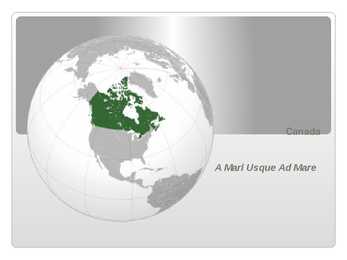
Canada A Mari Usque Ad Mare Official language(s) English, French Inuktitut, Inuinnaqtun, Cree, Recognised regional languages Dëne Sliné, Gwich'in, Inuvialuktun, Slavey, Tlch Yatiì Languages in Canada North American country consisting of ten provinces and three territories located in the northern part of the continent, it extends from the Atlantic Ocean in the east to the Pacific Ocean in the west, and northward into the Arctic Ocean spanning over 9
CANADA Pavel Zubarev 8.a Geographical position Canada is the second largest country in the world. Only Russia has a greater land area. Canada is situated in North America. Canada is a federation of 10 provinces and 2 territories. The population Canada is slightly larger than the United States, but has only about a tenth as many people. About 28 million of people live in Canada. About 80% of the population live within 320 km of the southern border. Much of the rest of Canada is uninhabited or thinly populated because of severe natural conditions. Canada's people are varied.
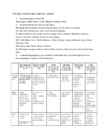
the lower hoist quarter. The fly contains a representation of the Southern Cross constellation, made up of five white stars one small five-pointed star and four, larger, seven-pointed stars. - The flag of New Zealand is a defaced Blue Ensign with the Union Jack in the canton, and four red stars with white borders to the right. The stars represent the constellation of Crux, the Southern Cross, as seen from New Zealand. - animals - ir - wild mammal - Beaver[1], Canadian Horse - Kangaroo -.... - birds -ir - as yet undetermined, suggestions include wren and robin - Canada - Common Loon - aust - Emu - nz - Kiwi f) native people -ir - Celtic - Indian, also known as First Nations, Inuit and Métis -aust - aborigenes - maori g) History - When discovered? - can - 1534 -au - 1606 - nz - 1642 - When did became part of the British Empire? - 1931 - 1931 -1931 -1931
The capital city is Washington D.C. Although the United States has no official language at the federal level, English is the de facto national language. English is the most common language for daily interaction among both native and non-native speakers. Spanish is the second language. The largest city is the New York City. The Government is Federal constitutional republic and the president is George W. Bush. 2. Geographical position The United States of America is located on the continent of North America. It has borders with two countries Mexico and Canada. There are also the Atlantic Ocean, the Pacific Ocean and the Gulf of Mexico surrounding the big country. There are 50 states in America. Most of the people live in towns. The biggest state is Alaska; next by size are California, Alaska and Montana. Six states - Maine, Vermont, New Hampshire, Connecticut, Rhode Island and Massachusetts are called New England. They are all small states in the USA that lie in the north- east
USA ajaloo konspekt (algus-Mayflower Compact) 1. Name the regions of the USA New England, Middle Atlantic, South, Midwest, Southwest, West. 2. Name the states that make up each region. NE: Maine, New Hampshire, Vermont, Massachutsess, Rhode Island, Connecticut. MA: New York, Pennsylvania, New Jersey, Maryland, Delaware. S: Virginia, North Carolina, South Carolina, Georgia, Florida, Alabama, Mississippi, Louisiana, Missouri, Arkansas, Kentucky, Tennessee, West Virginia. MW: North Dakota, South Dakota, Nebraska, Illinois, Michigan, Kansas, Minnesota, Iowa, Indiana, Wisconsin, Ohio. SW: Arizona, New Mexico, Texas, Oklahoma. W: Washington, Oregon, California, Hawaii, Alaska, Montana, Idaho, Nevada, Colorado, Wyoming, Utah. 3
10. Scandinavian raids. In 789 three Viking ships landed on the coast of the kingdom of West Saxon. They were traders and raiders. In the 9th century they conquered and settled the islands around Scotland and some coastal regions of Ireland. Their conquest of England was halted when they were defeated by King Alfred of the Saxon kingdom of Wessex. As a result, the settlement was confined mostly to the north and east of the country. 11. The Norman Conquest. The successful Norman invasion of England in 1066 brought Britain into the mainstream of western European culture. Unlike the German invasions, the Norman invasion was small-scale. On 14 October 1066, an invading army from Normandy defeated the English at the Battle of Hastings. The battle was close and extremely bloody. At the end of it, most
The United Kingdom The United Kingdom consists of England, Scotland, Wales and North Ireland and it is situated in the Atlantic Ocean near the mainland of Europe. The population of the UK is 58.6 million and area is 244,110 sq km. Britain has a temperate humid climate. Its characteristic features are mild winters, warm summer, no temperature extremes, abundant rain all year round and frequent changes of weather. The mild climate is partly due to the warm Gulf Stream and partly to the south westerly winds. Occasional winds from the east in winter may
It was built in the early 1900s just to be the capital. The official language is English and the official name of Australia is the Commonwealth of Australia. Australia is located on the Southern Hemisphere (because of that Australia is also called "A land down under"). 2 . Geographical position Australia is an island continent and it is located between the Indian and South Pacific oceans south east of Asia. From the north it is bordered by the Timor Sea and the Torres Strait. From the east by the Coral Sea and the Tasman Sea. Australia's coastline is about 37,000 km long. The Great Australian Bight washes the southern coast. The Gulf of Carpenteria and the Cape York Peninsula surround it in the south. 3. Relief Australia is the smallest continent in the world It is often called the island continent because is too big for an island but rather small for a continent
 annaabi.ee