about my school homework to my friends. I hope that they aren`t bored of me! Some people just irritable me in my school.You know I don't stupid girls, especially some of my classmates. They are my classmates and some of them think only about what to wear. I know that clotches are not so important in live. They think they are most beautiful and popular girls in school,but they are not. Sometimes I have problems with my mother. We often quarrel. I have no problems with my father. We have never quarreled or something like this. I hate winter. I hate cold weather, all this worm clothes, darkness. I love summer! sunshine and happiness! I want to go for a walk, but not alone! everybody is busy, so I will have to go for a walk by myself!
invited her. We dance all night toghether and we started a relationship, although I knew her only sine one week. First date was on cinema at “50 Shades of Grey” movie. Funny right? Every time she makes me happy. We did a lot of things together like: karting, go with ATV, swimming, we splashed with water guns, we go outside to ride bikes, we go on cinema and almost everywhere, we go together. We understand very well and longest quarrel between us lasted five minutes. He is a very kind person, she tells no lies, she’ll tell you if she doesn’t like your after-shave and you won’t find her in the corner at the party. Petra is a very happy and cheerful person. She spend a lot of time at school, she come home, makes her homework and goes to the gym. In her spare time, she meet with me. She seems to have it all: brains, fame, beauty and an awesome relationship with me.
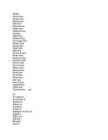
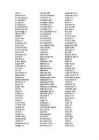
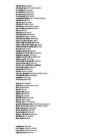
Connect with Content with Cope with Correspond with Crowded with Deal with Delighted with Difficulty with Disagree with Disappointed with Dissatisfied with Experiment with Expert with sth Familiar with Fed up with Fight with sb Fill sth with sth else Friendly with Furious with sb about/at sth Gossip with sb Happy with Ill with Impressed with Interfere with Make an appointment with Meeting with Mix with Part with Patient with Peased with Populaar with Present sb with Provide sb with Quarrel with sb Reason with Relationship with sb Replace sth with sth else Satisfied with Shake hands with Symphathise with Threaten sb with sth ON Advice on Agree with sb on sth Base on Bet on Blame sth on sb Comment on Compliment sb on Concentrate on Congratulate sb on sth Decide on Depend on Discussion on Emphasis on Expert on Information on Insist on Knock on Keen on sth Lean on Operate on Opinion on Take pity on sb Pride oneself on sth on doing sth Rely on Report on BY Affected by Amazed by
part with thank for pay for think of pessimistic about tired of pleased with trouble with popular with trust in prepare for truth about present with unite in prevent from unkind to protect against unknown to protect from unwilling to protest about use of proud of used to provide with victims of punish for vote for puzzled about warn about qualified for worry about quarrel about wrong with rank among zest for reaction to recover from related to relief from rely on report on respect for responsible for result of rhyme with rid of room for safe from save from serious about sick of smile at solution to sorry for stand for subtract from succeed in suffer from
may surface years later, and young people can even be affected when the family atmosphere shows no tendency toward violence. However, this does not mean that violence on television is the only source for aggressive or violent behavior, but it is a significant contributor. After taking some negative character from the movie as a model, people will start to behave really stupidly, aggressively or dangerously. Some people start to pick a quarrel to get into a fight, but usually it ends with some bruises and bleeding nose. But there are more serious problems created by the violent TV programs. Sometimes some people want to imitate even those scenes where someone suffers serious harm or even dies. For example, two young children watched Tom & Jerry and they saw a scene where Jerry drummed a pan into a Tom’s head. They also tried it out, but this led to the sister’s death.
fall behind with= ei suuda kaasas püsida fail to keep up with fall for= 1) ära armuma fall in love with sb 2)õnge minema be deceived fall in= kokku varisema collapse fall in with= nõustuma agree with fall into= 1) kategooriateks jaotatud be divided into 2) alustama begin; enter a state fall on= 1) ründama attack 2) tühja kõhuga õgima eat hungrily fall out with= tülitsema näägutama quarrel fall trough= ei suuda midagi lõpule viia fail to be completed Get get across= õnnestunult jagada ideid successfully communicate ideas get along= jätkama vaatamata raskustele continue despite difficulties get along with= läbi saama be on friendly terms;get on with get at= õel/mõtlema mean get away with= põgenema karistuse eest escape punishment for a wrongful, illegal act get back= tagasi võtma recover possession of
The nobles established a committee for that. Another sign of the chaning feudalism was the army. Kings started to pay for soldiers. The Power of the Kings of England. Church and state William had created Norman bishops and given them land for homage. As a result it wasn't sure whether the bishops should obey the king or the church and that led to trouble. Both the kings and popes wanted more power and authority. First big quarrel was between William Rufus and Anselm. Finally they agreed on that only church has the power to make bishops. The crisis came when Henry II's friend Thomas Becket was made the Archbishop of Canterbury. Henry hoped that he will help him bring the church more under his control but Thomas didn't agree to it. He was murdered by Henry's knights on altar steps in the cathedral. All Christian Europe was shocked and Becket became the saint of Church. The Beginnings of Parliament
· Ruled 1189-1199 · Known as Richard the Lionheart · Reputation as a great military leader and warrior · A central Christian commander during the Third Crusade · Put down rebellions against his father before becoming king · Spent very little time in England · Seen as a pious hero · One of the few Kings of England remembered by his epithet John Lackland · Ruled 1199-1216 · Got into trouble · Quarrel with Pope Innocent III · Excommunicated · Overtaxing England for war against France · Lost the war · Result: a revolt of the English barons · Forced John to sign the Magna Charta in 1215 · Not even the King was above the law · No free man could be arrested without due process of law and a trial Edward I · Reigned 1272-1307 · Known as Edward Longshanks and the Hammer of the Scots · A strong king
b) Susan feels that her boss is someone to respect. c) I'm sorry, but I just can't stand your behaviour any longer. d) My brother and I really have a good relationship with our parents. e) Why don't you visit my house on your way home from the shops? f) Tony felt that he could rely on his friend Mary. g) The millionaire decided to make a present of his money to the poor. h) Paula and Shirley are good friends but sometimes they quarrel. i) Jean decided to refuse Chris's offer of marriage. j) All three children behave like their father and are very sociable.
They have their exits and their entrances, And one man in his time plays many parts, His acts being seven ages. At first, the infant, Mewling and puking in the nurse's arms. Then the whining schoolboy, with his satchel And shining morning face, creeping like snail Unwillingly to school. And then the lover, Sighing like furnace, with a woeful ballad Made to his mistress' eyebrow. Then a soldier, Full of strange oaths and bearded like the pard, Jealous in honor, sudden and quick in quarrel, Seeking the bubble reputation Even in the cannon's mouth. And then the justice, In fair round belly with good capon lined, With eyes severe and beard of formal cut, Full of wise saws and modern instances; And so he plays his part. The sixth age shifts Into the lean and slippered pantaloon, With spectacles on nose and pouch on side; His youthful hose, well saved, a world too wide For his shrunk shank, and his big manly voice, Turning again toward childish treble, pipes And whistles in his sound
only Whigs in his administration; the Emperor's heir is described as having "one of his heels higher than the other", which describes the encouragement by the Prince of Wales (the future George II) of the political opposition during his father's life; once he ascended the throne, however, George II was as staunch a favorer of the Whigs as his father had been. The novel further describes an intraLilliputian quarrel over the practice of breaking eggs. Traditionally, Lilliputians broke boiled eggs on the larger end; a few generations ago, an Emperor of Lilliput had decreed that all eggs be broken on the smaller end. The differences between BigEndians (those who broke their eggs at the larger end) and LittleEndians had given rise to "six rebellions... wherein one Emperor lost his life, and another his crown".
(take) pleasure in-nauding (have the) pleasure of-nauding Point at/on-osutama (im)polite to-viisakas(eba) Popular with-populaarne Praise sb for-kiitma Prefer sth to sth else-eelistama Prepare for-valmistama Present sb with-esitlema Prevent sb from-ära hoidma (take)pride in-uhkust tundma Pride oneself on sth/ on doing-milleski väga hea olema Prohibit sb from doing sth-keelama Prone to-kalduv Protect against/from-kaitse Proud of-uhke Provide sb with-varustama Punish sb for-karistama Quarrel about sth/with sb riid, tüli, tülitsema Qualified for-väljaõppinud Quick at-kiire Quotation from-tsitaat kelleltki Ready for-valmis Reason for-põhjus millekski Reason with- mõistusele kutsuma Receive from-saama (keep) a record of-kirje,salvestis Recover from-paranema Reduction in-vähenemine Refer to-viitama,nimetama (in/with) reference to-viide, millegi suhtes Refrain from-hoiduma Regardless of-hoolimata,vaatamata sellele et Related to-seotud,suguluses
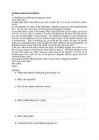
.................................................................................................... ...................................................................................................... ...................................................................................................... ...................................................................................................... .................................... j) Who was right in the little quarrel the girl or the man? Why do you think so? ...................................................................................................... ...................................................................................................... ...................................................................................................... ...................................................................................................... .................
come out with utter; produce come up with utter; produce count on rely on cut in on interrupt disagree with cause illness or discomfort to do away with abolish do without deprive oneself of drop in at/on visit casually without planning drop out of leave; quit face up to acknowledge fall behind in lag; not progress at required pace fall back on use for emergency purpose fall out with quarrel with fill in for substitute for get ahead of surpass; beat get around evade; avoid get away with do without being caught or punished get by with manage with a minimum of effort get down to become serious about; consider get in enter (a vehicle) get off descend from; leave get on enter (a vehicle); mount get on with proceed with get through with terminate, finish
He was baptized on the 29th of April. His father, John, was a merchant, bailiff and leading citizen; his mother, Mary Arden, was a rich farmer's daughter. He attended the local grammar school. He wed his older wife, Anne Hathaway at the age of 18 and they had 3 children - Susanna, and twins Judith/Hamnet. Susanna later became William's caretaker after the death of his wife and the twins. Shakespeare was forced toleave Stratford for London after a quarrel with the local squire. Will started as an actor before starting to write his own plays; his career lasted for 21 years. Returned to Stratford in 1610, where he lived until his death atthe age of 52 and was buried in the local churh. Optimistic period wrote two long poems, ,,Venus and Adonis", ,,Lucrece", 154 sonnets, bright comedies, ,,Romeo and Juliet" and his historical plays. Sonnets the genre was developed in Italy, perfected by Petrarch, Shakespeare and Milton.
S.-s mother came from the family of a rich farmer and there were 8 children in S.-s family. William was third of them. He attended the local grammar school had to leave school at the age of 16because his father lost his property. He started working. When he was 18 he married Ann Hathaway who was rich farmers daughter, had 3 children. First Susanna, then the twins Judith and Hamlet. In 1596 S left Stratford because he had had a quarrel with the local squire went to London at first was an actor. Then begun revising old plays and in some time started writing himself (poems). 1593-1594 two long poems were written "Lucrece" and "Venus and Adonis" were dedicated to the Earl of Southampton. After that strated writing plays, was prolific( viljakas), average was 2 plays a year. First plays were displayed at "The Theatre" and "The Curtin". World famous tragedies were performed at "The Globe". Was quite well off. Became shareholder
Before his return, he had used the telegram to propose to and be accepted by Wolcott's sister Caroline (Carrie) Balestier, whom he had met a year earlier, and with whom he had apparently been having an intermittent romance. On 18 January 1892, Carrie Balestier (aged 29) and Rudyard Kipling (aged 26) were married in London, in the The wedding was held at All Souls Church, Langham Place. Henry James gave the bride away. Settled in the U.S, and seemed content there until four years later, when a quarrel his wife had had with her brother resulted in a messy law suit and intense media interest. Kipling was horrified by the publicity and returned the family to England, thus continuing the restlessness that had remained with him since childhood. He would always be on the move, looking for somewhere to settle down. But he never quite succeeded in finding a country that lived up to his expectations. After The U.S , South Africa became the next land he felt able to transfer his affections to. The
That's why my friend is Lena, the most amusing person in the world. She thinks everything is funny -- even flunking an exam. Lena is a sunny soul by nature and always takes the slightest excuse to be amused. My friend has an imagination and her own style. Usually she writes nice compositions and once even won short-story contest that our school wallpaper holds every year. Lena and me are good friends. We help each other a lot and try not to quarrel. But when sometimes it comes to quarrelling we try to make it up at once. Questions: 1. How old is Lena? 2. Does she wear spectacles? Describe her appearance. 3. Does she do well at school? 4. What unbreakable rule has she? 5. What books is she fond of reading? 6. Does Lena go in for sports? 7. Is she a member of the school basket-ball team? 8. Why is it a pleasure to watch her playing basket-ball? 9. Is Lena a sunny soul by nature? What makes you think so? 10. Has she an imagination? Prove it
I haven't noticed that he's regular At church. DORINE You'd have him run there just when you do. Like those who go on purpose to be seen? ORGON I don't ask your opinion on the matter. In short, the other is in Heaven's best graces, And that is riches quite beyond compare. This match will bring you every joy you long for; 'Twill be all steeped in sweetness and delight. You'll live together, in your faithful loves, Like two sweet children, like two turtle-doves; You'll never fail to quarrel, scold, or tease, And you may do with him whate'er you please. DORINE With him? Do naught but give him horns, I'll warrant. ORGON Out on thee, wench! DORINE I tell you he's cut out for't; However great your daughter's virtue, sir, His destiny is sure to prove the stronger. ORGON Have done with interrupting. Hold your tongue. Don't poke your nose in other people's business. DORINE (She keeps interrupting him, just as he turns and starts to speak to his daughter).
A new house is being built in Anne street 8.Oodatakse kirjakandjat The postman is being waited for 9.Seda olukorda kasutati ära This situation will be taken advantage of 10.Seda raamatut küsitakse sageli That book is often asked for 11.Vaheaega oodatakse The holidays are looked forward to 12.Kallas oli silmist kadunud The shore had been lost sight of 13.Kasutati uut grammatikaõpikut The new grammar book was made use of 14.Seda rumalat tüli Georgiga ei ole ära lõpetatud This foolish quarrel with George has not been but an end to 15.Valitsus kannab hoolt vanade inimeste eest Old people are taken care of by our government 16.Loengut kuulati tähelepanelikult The lecture was listened to with close attention Infinitive 1.Tal ei olnud mingit vajadust kokku hoida There was no need for her to be economical 2.Usutakse, et ta on kirjutanud kaks raamatut pseudonüümi all He is believed to have written two novels under the pseudonym 3.Tom lahkus bussist viimasena
within the Reformed (Calvinist) church, over predestination. The Arminian or Remonstrant, cause was championed by Holland under its leader, Jan van Olden Barneveldt. The other provinces and Maurice sided with the Gomarists or High Calvinists, who prevailed. The dispute ended with Barneveldt's execution for treason in 1619. (2) 10 Frederick Henry's son, William II of Orange, became involved in a bitter quarrel with the province of Holland, and after his death no stadtholder was appointed in Holland and four other provinces for more than 20 years. William III of Orange, who was stadtholder from 1672 until his death in 1702, was also king of England after 1689. (3) 2.9 The Decline of the Dutch Republic Inevitably, the Dutch and the English, the leading maritime trading nations of the world, came into sharp commercial rivalry and military conflict. The issues between the two countries were
3 They _____________________ on their holiday in the mountains early in the morning. 4 What time did they _____________________ from their trip to Rio? 5 I don't know the answer but I'll try and _____________________ for you by tomorrow. 6 At first, he was a weak student but he _____________________ one of the best in the school. 7 Her parents always try and _____________________ her from school. 8 I wish I knew the best way to _____________________ children. 9 They had a quarrel but now they have _____________________ it and are friends again. 10 After two hours, we finally _____________________ the plane. Marks: /10 5 Write sentences using these words. 1 imitate ______________________________________________________________________________________ 2 mental ______________________________________________________________________________________
less than a month Richard II and Henry Bolingbroke He was only 14 when he crushed down the Peasant ´sRevolt. 1387.9 the five lords appeallant appeared- they sought to dictate kings chioces. King refused and his cloest friends were routed. He submitted to the demands. 8 years he worked with his uncle, waiting for revenge. 1397 he arrested three appellants, got his power back. 1398 Henry Bolingbroke was banished for settling a quarrel with Duke of York. Richard confiscated Lancastrian estates that were to become Henry´s. Finally king surrened his crown to him and was sent to imprisoned where he died The War of the Roses 1455-1485 Series of dynastic wars between the House of Lancaster(red rose) and the House of York(white rose) for the English throne. Many battles, huge massacres. Disaster for nobility. It ended with the marriage of Henry VII Tudor
When Veslovsky flirts openly with Anna, she plays along with him even though she clearly feels uncomfortable. Vronsky makes an emotional request to Dolly, asking her to convince Anna to divorce her husband so that the two might marry and live normally. Dolly broaches the subject with Anna, who appears not to be convinced. However, Anna is becoming intensely jealous of Vronsky, and cannot bear it when he leaves her for short excursions. The two have started to quarrel about this and when Vronsky leaves for several days of provincial elections, a combination of boredom and suspicion convinces Anna she must marry him in order to prevent him from leaving her. She writes to Karenin, and she and Vronsky leave the countryside for Moscow. Part 7 The Levins are in Moscow for Kitty's confinement. Despite initial reservations, Levin quickly gets used to the fast-paced, expensive and frivolous Moscow society life. He starts to accompany Stiva to his
and Danes were comparatively small. ___ time, they formed one kingdom and merged _____ one people. 5. Put the verbs in brackets in the correct tense and voice. Underline the verb forms in your notebooks. The Vikings (to raid) at first as the Anglo-Saxons (to do) four centuries earlier. They (to be) sure it (not to be) very difficult to conquer England. They (to take) most of England within a few years because the Anglo-Saxon kingdoms (to quarrel) with one another. Their southward advance (to halt) by King Alfred of Wessex who (to win) a decisive battle in 878. The country (to divide) into two parts. The territory which the Vikings (to take) (to call) the ‘Danelaw’. Alfred (to recognize) as king in the rest of the country. But for Alfred’s victory, the Vikings (to capture) all of England. Over a century later the two parts (to unite) into one kingdom. 6. Change the following sentences to passive. Underline the verb forms in
aboard, aboard, for shame! The wind sits in the shoulder of your sail, And you are stay'd for. There; my blessing with thee! And these few precepts in thy memory See thou character. Give thy thoughts no tongue, Nor any unproportioned thought his act. Be thou familiar, but by no means vulgar. Those friends thou hast, and their adoption tried, Grapple them to thy soul with hoops of steel; But do not dull thy palm with entertainment Of each new-hatch'd, unfledged comrade. Beware Of entrance to a quarrel, but being in, Bear't that the opposed may beware of thee. Give every man thy ear, but few thy voice; Take each man's censure, but reserve thy judgment. Costly thy habit as thy purse can buy, But not express'd in fancy; rich, not gaudy; For the apparel oft proclaims the man, And they in France of the best rank and station Are of a most select and generous chief in that. Neither a borrower nor a lender be; For loan oft loses both itself and friend, And borrowing dulls the edge of husbandry.
"Clearly, Mark Twain was not alone in thinking that the Americans had betrayed their founding values for what he labeled a "backseat" in the community of imperialist nations. That narrative still drives Americans' understanding of national identity. We still believe we are a nation of white Protestants, despite massive evidence to the contrary, and our politicians have to avow their Christianity to be creditable. Our leaders invoke divine guidance when they dispatch troops, and we quarrel endlessly over the contents of American history texts. Moreover the rest of the world continues to fling our values back at us: in 2006 Iranian President Mahmound Ahmadinejad asked President Bush how it was possible to bomb Afghanistan and still profess "to be a follower of Jesus Christ...feel obliged to respect human rights, [and] present liberalism as a civilization model." Twain called the PhilippineAmerican War "a quagmire from which each fresh step renders
"Well, Jane, who is it from? What is it about? What does he say? Well, Jane, make haste and tell us; make haste, my love." "It is from Miss Bingley," said Jane, and then read it aloud. "MY DEAR FRIEND,-- "If you are not so compassionate as to dine to-day with Louisa and me, we shall be in danger of hating each other for the rest of our lives, for a whole day's tete-a-tete between two women can never end without a quarrel. Come as soon as you can on receipt of this. My brother and the gentlemen are to dine with the officers.--Yours ever, "CAROLINE BINGLEY" "With the officers!" cried Lydia. "I wonder my aunt did not tell us of that." "Dining out," said Mrs. Bennet, "that is very unlucky." "Can I have the carriage?" said Jane. "No, my dear, you had better go on horseback, because it seems likely to rain; and then you must stay all night."
But Donnellan shows that there are less formal cases in which we use descriptions solely to focus on a particular individual regardless of that person or thing's attributes. 24 Reference and referring For contrast, here is a standard Russellian example. We come across the hideously murdered body of Smith, and I assert (12) Smith's murderer is insane meaning that whoever committed this terrible crime is insane. Donnellan has no quarrel with Russell here; this is what he calls the attributive use of the description. But suppose instead that we have not seen the body and have no other direct knowledge of the matter; Jones has been arrested and charged with the crime and we are attending his trial. The prosecution's case is excellent, and we are privately presuming that Jones is guilty; also, he is rolling his eyes and drooling in a homicidal manner. Here too I say to you (12), "Smith's murderer is insane
There, on the whiteboard, was a ten-digit number written in a small, neat hand. My fingers stumbled over the keypad, making mistakes. I had to hang up and start again. I concentrated only on the buttons this time, carefully pressing each one in turn. I was successful. I held the phone to my ear with a shaking hand. It rang only once. "Hello, Bella," that easy voice answered. "That was very quick. I'm impressed." "Is my mom all right?" "She's perfectly fine. Don't worry, Bella, I have no quarrel with her. Unless you didn't come alone, of course." Light, amused. "I'm alone." I'd never been more alone in my entire life. "Very good. Now, do you know the ballet studio just around the corner from your home?" "Yes. I know how to get there." "Well, then, I'll see you very soon." I hung up. I ran from the room, through the door, out into the baking heat. There was no time to look back at my house, and I didn't want to see it as it was now -- empty, a symbol of fear instead of sanctuary
 annaabi.ee