Leidsid 33 sarnast õppematerjali, mis on seotud failiga "Presentatsioon Buckinghami palace'ist.". Need materjalid aitavad sul teemat sügavamalt mõista.
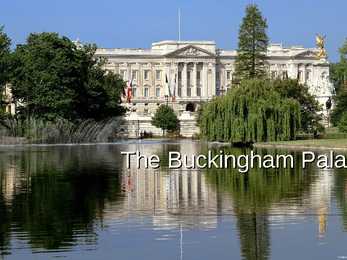
palace, buckingham, room, royal, drawing, landmarks, year, queen, green, rooms, visit, katrina, adolfi, grammar, popular, garden, parties, originally, built, duke, later, acquired, 1761, resident, finally, became, official, british, monarch, 1837, square, metres, today, still, there, prince, philip, elizabeth, chanceBuckingham Palace About Buckingham Palace Buckingham Palace serves as both the office and London residence of Her Majesty The Queen. It is one of the few working royal palaces remaining in the world today. During the summer, visitors can tour the nineteen State Rooms, which form the heart of the Palace. These magnificent rooms are decorated with some of the greatest treasures from the Royal Collection, including paintings by Rembrandt, Rubens and Canaletto and sculpture by Canova. History Buckingham Palace history is going back to the time of Queen Victoria in 1837 . Then, the Palace has been serving as the London Royal residence. In 1703, the Duke of Buckingham had created the Buckingham House. In 1761, George III (1738 1820) buy it. However, in 1825, the House was reconstructed for George IVs order with the help of John Nash
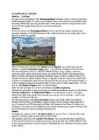
BUCKINGHAM PALACE Buckingham palace is the official residence of the British monarch. The Palace is located in the city of Westminster. It is a setting for state occasions and royal hospitality. It has been a rallying point for the British people at times of national rejoicing and crisis. The Buckingham palace is originally known as the Buckingham House. The building which forms the core of today's palace was a large townhouse. It was built for the Duke of Buckingham in 1703 on a site which had been in private ownership for at least 150 years. It was subsequently acquired by George the third in 1761 as a private residence for Queen Charlotte and known as The Queen's House. During the 19th century it was enlarged, principally by architects John Nash and Edward Blore, forming three wings around a central courtyard. Buckingham Palace finally became the official royal palace of the British monarch on the accession of Queen Victoria in 1837. The last major
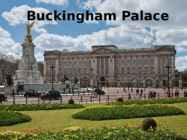
Buckingham Palace • Buckingham Palace is the official London residence and principal workplace of the British monarch. Located in the City of Westminster, the palace is a setting for state occasions and royal hospitality. Buckingham Palace: • was built in 1705 for Duke of Buckingham and is originally known as Buckingham House. • George III bought Buckingham House in 1761 for his wife Queen Charlotte to use as a comfortable family home close to St James's Palace, where many court functions were held. Buckingham House became known as The Queen's House. • During the 19th century it was enlarged, principally by architects John Nash and Edward Blore, forming three wings around a central courtyard. Before reconstruction Nowadays • Buckingham Palace has 775 rooms. These include 19 State rooms, 52 Royal and guest bedrooms, 188 staff bedrooms, 92 offices and 78 bathrooms. In measurements, the building
Buckingham Palace The history of the original building dates back to the early 1700's and finally became the official residence of the British monarch in 1837 after Queen Victoria came to the throne. George III bought Buckingham House in 1761 for his wife Queen Charlotte to use as a comfortable family home close to St James's Palace, where many court functions were held. Buckingham House became known as the Queen's House, and 14 of George III's 15 children were born there. Buckingham Palace is not only the home of the Queen and Prince Philip but also the London residence of the Duke of York (Prince Andrew) and the Earl and Countess of Wessex (Prince Edward and his wife) and their daughter. The 19 State Rooms at the palace are regularly used by the Royal family to entertain guests on their State, ceremonial and official visits to the United Kingdom
The Buckingham Pala Table of contents Introduction General information History Today Interior Visiting Conclusion References The end Introduction I chose the Buckingham Palace for my topic, because i have always been eager to know more about the house where the British Monarch lives in. The Buckingham Palace Located in the City of Westminster The official London residence of the Queen State occasions and royal entertaining Tourist attraction History Built in 1702 Originally called as the Buckingham House In 1761, King George III bought the house and the building became known as the Queen's House George IV, decided to double the size of the house and transform it into a palace History In 1837 Queen Victoria became the first monarch to use Buckingham Palace as their official residence Many parts of the house have been demolished and rebuilt in time
London important sights guide Roman period 20th century · Big Ben is the nickname for the great bell of the clock at the north end of the Palace of Westminster in London and is often extended to refer to the clock or the clock tower as well. It is the largest four-faced chiming clock and the third-tallest free-standing clock tower in the world. The clock first ticked on 31 May 1859. The pendulum is installed within an enclosed windproof box sunk beneath the clockroom. It is 3.9m long,
Buckingham Palace By Eliise Sau · Buckingham palace is the London residence and administrative headquarters* of the reigning monarch of the United Kingdom. · The palace is often at the centre of state occasions and royal hospitality. · It has been a focal point for the British people at times of national rejoicing and mourning. Peakontor* Buckingham Palace History · Buckingham House was designed by William Winde and this facade* evolved into today´s Grand Entrance. · Goring House was possibly the first house erected within the site around 1624. · The Queen's House was intended as a private retreat for King George III`s wife, Queen Charlotte and 14 of their 15 cildren were born there. The Queen's House Goring house Fassaad* Home of the monarch
Landmarks of London Uku Gross ja Hans Richard Antsmäe Royal Opera House, London The royal opera house is major performing house in UK. It was opened in 1732. In 1734, the first ballet was presented. The next year, Handel's first season of operas began. It has have 2 disauster fires. The main auditorium seats 2,256. http://www.roh.org.uk/publications/la-boheme-2017-digital-programme http://www.roh.org.uk/visit Elizabeth tower It's also known as Big Ben. It was the largest clock for 23 years in UK. It's 96 metres tall. The tower is designed by Augustus Pugin in a neo-gothic style. Built in 1859, by the time the constructor said that it's the most accurate clock in the world. https://londonist
London London is the capital of Great Britain. It is situated on the river Thames. The Thames is a river flowing through southern England and connecting London with the sea. The Thames has a length of 346 kilometres (215 miles). The first bridge was the tower bridge, built in the 12th century. The second bridge was built in the year 1750. .The river Thames divides London into the northern and the southern part. The port of London is one of the greatest trade centres in the world. The river Thames is certainly the most famous water body in London. London is also the seat of the government of Great Britain. It is one of the largest cities in the world with its population of about seven million. Before the great fire in 1666 there were many wooden houses and
The Romans knew it was important to control a crossing point at the river Thames, so they decided to build a settlement on the north bank. Although small settlements had been built on the banks of the Thames, the Romans were the ones who built the first city. They called their city Londinium. The Roman engineers noticed that the point where the swampy river narrowed would make an ideal crossing point, they built London Bridge. Less than 20 years later the native Iceni tribe, led by Queen Boudicca, rose up against the Romans in revenge for mistreatment and burnt Londinium to the ground. The well disciplined Roman army defeated her forces and Londinium was rebuilt. By AD 100 it had also become the capital of the Roman province. A massive wall was built to protect the city from further attacks. The Roman Empire came under increasing attack across Europe and in AD 410 they retreated. The Romans gave us a language based on Latin, the calendar, law and legal system, the
Buckingham Palace Buckingham Palace, one of the several castles owned by the British Royal family and one of the best-known tourist attractions in London. History It was built in 1705, originally known as Buckingham House. In 1826, King George IV started to expand the house into a palace. Queen Victoria was the first queen who lived in Buckingham Palace. A part of the palace is still used by the Royal family, it’s the Queen’s official and main royal London home. Other parts of the palace can be visited. About 400 people work at the Palace. And 2 people, who look after the 300 clocks. There are 755 rooms including 19 State rooms, 52 royal bedrooms, 78 bathrooms, 92 offices, a cinema, a swimming pool, post office and police station. The largest room at Buckingham Palace is the Ballroom. There’s a helicopter landing area, a lake, and a tennis court in Buckingham Palace’s garden. And Victoria monument near the Buckingham Palace. Royal Flag
century and early 7th century, which was found in 1939. The wooden ship, which was buried there, contained lots of armour, weapons, jewellery, symbols of power and other treasures, but no bodies were found. 10. Roman conquest In the 1st c. BC the Roman Empire began to make contact with Britain (wine, pottery, small bronze statues) Julius Caesar's first raid was in 55 BC (the troops were afraid of the sea crossing) In the following year he invaded again, this time he marched inland In AD 43 the Emperor Claudius decided the full-scale invasion (army of 40,000 men) The Roman occupation lasted nearly 400 years. They couldnt conquer Scotland or as they called it caledonia, and so they built a strong wall along the northern border, named after the Emperor Hadrian who planned it. (70 miles or 117km long) The army established Roman Rule in the South and SW of the country.
How well do you know London? Form 10, Welcome to the tour of London! You will spend two days (lessons) exploring the famous landmarks of the city. While on the way, follow the map so that you would not get lost and so that you could eventually get streetwise in London. Take the following questions with you, find answers to them and put them down for yourself in this MSWord document. Don’t forget to “take” photos - you are supposed to recognise the landmarks later on! At the end of the tour send the worksheet to yourself so that you could use it again. Good luck with exploring the city! DAY 1
Westminster Today For centuries, Westminster was the political and religious center, but today Westminster is the center of government. Westminster Hall was built in 1099 by the son of William the Conqueror and is one of the largest medieval halls. It was part of the Westminster Palace, which was destroyed by a fire in 1834. The Houses of Parliament that we see today were rebuilt in the 19th century after the fire. The Big Ben clock tower is the largest four-sided ringing clock in the world and it is also one of the London's most famous symbols. Some think that Big Ben is the name of the clock on the tower, but actually it is the name of the big 13-ton bell that rings every fifteen minutes. The most historic religious building in Britain is Westminster Abbey, a beautiful
London March 28th Parliament of the United Kingdom The Parliament of the United Kingdom, commonly known as the UK Parliament or British Parliament, is the supreme legislative body in the United Kingdom, British Crown dependencies and British overseas territories. It alone possesses legislative supremacy and thereby ultimate power over all other political bodies in the UK and its territories. Its head is the Sovereign of the United Kingdom (currently Queen Elizabeth II) and its seat is the Palace of Westminster in the City of Westminster, one of the Boroughs of the British capital - London. Tower of London The Tower of London, officially Her Majesty's Royal Palace and Fortress of the Tower of London, is a historic castle located on the north bank of the River Thames in central London. It lies within the London Borough of Tower Hamlets, separated from the eastern
boundaries, but the name "London" has long applied more to the whole metropolis that has grown up around it. London has been an important settlement for over two millenniums. It is also one of the world's leading business, financial and cultural centres and its influence in politics, education, entertainment and even fashion contribute to its status as a major global city. London is a major tourist attraction with four world heritage sites, several royal parks and numerous iconic landmarks such as the Houses of Parliament, Towe Bridge, the Tower of London, Westminster Abbey and the London Eye. 2. History Although there is some evidence of a permanent settlement before the Romans came in 43 A.D., it is more accepted by historians that the Romans were the first. The settlement was called Londinium. The first London lasted for just seventeen years, for around AD 61, a tribe of Celts led by Queen Boudica stormed London, burning it to the ground. The next heavily-planned London
It is one of the best preserved medieval cities in Europe. London is the capital of England and also the capital of the United Kingdom. It is situated on the river Thames, in southeast England. London is made up of two ancient cities which are now joined together: the City of London, known simply as ´the City` which is the business and financial heart of the United Kingdom, and the City of Westminister, where the Parlament and most of the government offices are located. Also the Buckingham Palace, the official London residence of Queen and the Royal family are located there too. London was founded by the Romans in AD 43 and was called Londinium. In AD 61 the town was burnt down and when it was rebuilt by the Romans it was surrounded by a wall. When William the Conqueror conquered England in 1066 he made London his base. He built the Tower of London and was crowned in Westminster Abbey. During the Tudor period London became an important economic and financial centre
one million inhabitants. Cultural life London is the worldclass centre. It has more than40 theatres, where audiences enjoy everything from musicals to William Shakespeare's plays. The city also contain many cinemas, concert halls, museums and art galleries. Royal residence English (later British) kings and queens have lived in London for almost 1,000 years. There are several royal palaces in the capital. St James's Palace was built by King Henry VIII in the 16th century. Since 1837 the monarch has lived in Buckingham Palace LONDON'S EARLY HISTORY The Romans invaded England in 43 AD. They landed in Kent, made their way to the River Thames and sailed up it. Then they settled in a place on the north bank, where the river was not to wide. This settlement was called Londinium. A bridge was later built across the Thames. Roman London
Many visitors come to see the famous sights, museums and galleries; others come for the shopping. The famous sopping street is Oxford Street. It is the most famous street in London where you can buy souvenirs, clothes, and so on. Today Harrods's is among the world`s best known shops. The famous sights in London are British Airways London Eye, the Westminster Abbey, The Tower of London, St Paul`s Cathedral, The Houses of Parliament, Shakespeare`s Globe, Buckingham Palace, Piccadilly Circus, Trafalgar Square and so on. British Airways London Eye was built to celebrate the Millennium. It is the worlds largest and tallest observation wheel. You can get gorgeous views from it. It is perfect way to see city`s exciting architecture and landscape. The Westminster Abbey is one of the oldest buildings of London were many famous people are berried. The Westminster Abbey in known as The British Pantheon to.
A weekend in London Made by .... 6.d klass We will stay at the fabulous 5 Star Athenaeum Hotel in Mayfair which is close to Green Park and Buckingham Palace. It's creative and friendly. There are the colossal Living Wall and the beautifully refurbished spa and gym downstairs. There are also floor to ceiling windows, flat screen TV and complimentary mini bar soft drinks and snacks. Saturday At first we will go visit Buckingham Palace which is the official London residence and principal workplace of the British monarch. We would also like to see the nearby park where are a lot of birds and squirrels. Then we would like to see the river Thames and the Big Ben. Just a short walk from the Thames is situated Westminster Abbey which is a significant building in British history. This beautiful gothic church is a UNESCO World Heritage. Kings, Queens, statesmen,
Changing the Guard · Perhaps the epitome of London's surviving pageantry can be found in the ceremonial Changing of the Guard. · A hugely popular spectacle, the Changing of the Guard takes place at a range of royal locations in and around · London daily during the summer and on alternate days for the rest of the year. · There is no ticketing, so make sure you get there early. · Ever since 1660 Household Troops have guarded the Sovereign Palaces. · The Palace of Whitehall was the main residence until 1689 and was guarded by the Household Cavalry. · The court moved to St James's Palace in 1689 and when Queen Victoria moved into Buckingham Palace the Queen's Guard remained at St James's Palace and a detachment guarded Buckingham Place, as it does today.
It shares land borders with Scotland to the north and Wales to the west; it is surrounded by the Irish Sea, the Celtic Sea, the North Sea and the English Channel, it's linked to Frane by the Channel Tunnel. The total area of the country is more than 130000 sq km. Most of England is lowland, but there are upland regions in the north, south and south west. The climate is temperate, subject to frequent changes, with plentiful rainfall all year round, although the seasons are quite variable in temperature, it rarely falls below -5 or rises above +30 degrees. The longest river, the Severn, flows for 354km. England's capital London, is the largest metropolitan area in the United Kingdom, drawing from a wide range of people, cultures and religions, speaking over 300 different languages, mixing their culture, traditions, music. It is the largest urban zone in the European Union, today one of the
St. James Park History St James’s Park is the oldest Royal Park in London. On James I's accession to the throne in 1603, he ordered that the park be drained and landscaped, and kept exotic animals in the park, includingcamels, crocodiles, and an elephant, as well as aviaries of exotic birds along the south. Charles II opened the park to the public, as well as using the area to entertain guests. On his desire had the park redesigned in a more formal style, probably by the French landscaper André Mollet
Lakes can be found in the north of England, in and Area called Lake District. The most beautiful lakes are in Scotland. British mountains are low. The highest peak Ben Nevis is 4.406 feet. The biggest towns are London, Birmingham, Leeds, Glasgow, Sheffield, manchester and Liverpool. The United Kingdom is a constitutional monarchy. The monarch is expected to be politically neutral and should not make political decisions. The present sovereign is Queen Elisabeth II. The Most importatantauthority is the parlament. Britain does not have a written constitution, but a set of laws such as the Magna Carta, The Declaration of Rights and the Acts of Parlament. Education is compusory from 5-16 years. Primary schools starts from the age of 5 and continues until they are 11. At 11 most pupils go to secondary school. 90% of the schools are co-educational. At 16 pupils take a national exam called GCSE and they can leave school if they want to
LANDMARCS HYDE PARK: Hyde Park is one of the largest parks in central London, England and one of the Royal Parks of London, famous for its Speakers' Corner. The park is divided in two by the Serpentine. The park is contiguous with Kensington Gardens; although often still assumed to be part of Hyde Park, Kensington Gardens has been technically separate since 1728, when Queen Caroline made a division between the two. THE TOWER OF LONDON: Her Majesty's Royal Palace and Fortress, more commonly known as the Tower of London (and historically as The Tower), is a historic fortress and scheduled monument in central London, England, on the north bank of the River Thames. It is located within the London Borough of Tower Hamlets and is separated from the eastern edge of the City of London by the open space known as Tower Hill. It is the oldest building used by the British government. [1]
Romans Anglusaxons , Norman 3. How did the Celts influence Britain? Language. Wars. Engand and Scotland eventually became 1 contry 4. How many people approximately speak English? Approximately 600 million 5. Who (which tribes) gave the base of the English language?Germanic tribes- Anglo-Saxons. 6. Describe Wales.- Wales is a mountainous country on the western side of Great Britain. The national game of Wales is Rugby. Flag- Red dragon on a green and white field. They have their own language Cymraeg ( Welsh) . Anthem- Land Of My Fathers. Official animal- Dragon. There used to be a lot of coalmines. 7. What are the symbols of the 4 constituent countries? England- The three national symbols of England are St.George's cross; The red Rose and the Three Lions Crest; The oak is national tree; Northen Ireland- Shamrock; St.Patrick ;Scotland-thistle, St.Andrew 's cross . ; Wales-daffodil, leek, Prince of Wales's feathers; St
1. The Queen’s official title. Elizabeth the Second, by the Grace of God, of the United Kingdom of Great Britain and Northern Ireland and of Her other Realms and Territories Queen, Head of the Commonwealth, Defender of the Faith. 2. The Queen’s working day. Starts after breakfast. Reads the newspapers which are prepared by the Press Secretary, and a report on the previous day’s proceedings in the Parliament and the letters she receives. Also phone calls. Once a month she attends the Privy Council in order to give Royal Assent to various items of government legislation. Discusses domestic matters with the Master of the Household.
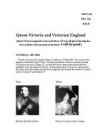
Kadri Laur PRG 11B. 26.05.07 Queen Victoria and Victorian England (Queen Victoria is supposed to have said this as a 10-year-old girl on learning that she was likely to become queen in the future: I will be good.) VICTORIA (r. 1837-1901) Victoria was born at Kensington Palace, London, on 24 May 1819. She was the only daughter of Edward, Duke of Kent. The Duke and Duchess of Kent selected the name Victoria but her uncle, George IV, insisted that she be named Alexandrina after her godfather, Tsar Alexander II of Russia. Edward died when Victoria was eight months old, upon which her mother enacted a strict regimen that shunned the courts of Victoria's
come to see them. Some of them are even like symbols of England. The most famous ones are: Stonehenge is one of the greatest national icons of Britain. That prehistoric monument is located in the plain of Salisbury, in the county of Wiltshire in the south-west of England. It is built of 150 enormous stones which are set in a purposive circular pattern. Stonehenge was probably built to mark the longest and shortest day of the year because it lies on the line of the midsummer sunrise and the midsummer sunset. That would have enabled people to keep a record of changing of seasons. Although it is still unclear who built it. Hadrian’s Wall is an ancient wall which was built in 2nd century by Hadrian, the emperor of Rome from AD 117 to 138, and it marked the northern border of the Roman Empire in Britain. The wall was 80 Roman miles (117 kilometres) long and it is situated in northern
Diana's mother sued for custody but she didn't get it and the custody went to the father. After that her father married to Raine Spencer. Diana and her siblings didn't get along with her. DESCENDANCE On her father's side, she was a descendant of King Charles II of England and she was also a descendant of King James II of England through an illegitimate daughter. On her mother's side, Diana was Irish and Scottish. Diana's family had been close to the British Royal Family and Diana's maternal grandmother, Ruth, was a long-time friend to Queen Elizabeth. EDUCATION Diana was first educated at Norfolk, and after that at West Heath Girls' School, where she was regarded as a poor student. At the age of 16, she left West Heath and briefly attended a finishing school in Switzerland. At about that time, she first met her future husband, who was then dating her eldest sister, Lady Sarah. Diana was good at
hotter. Hot weather causes terrible congestion on the roads as Britons rush to the coastal resorts. Winters are generally mild, with the most frequent and prolonged snowfalls in the Scottish Highlands, where it is possible to go skiing. If it does snow heavily in other parts of Britain, the country often comes to a standstill. Trains, buses and planes are late. Contrary to popular opinion, it doesn't rain all the time. There is certainly steady rainfall throughout most of the year, but the months from September to January are the wettest. Thanks to the rain Britain has a richly fertile countryside which is famous for its deep green colour. History The first inhabitants were Iberians and Celts who settled on the land and were often at war with eaeh other. In AD 43 the Roman Emperor Claudius invaded, and made Britain a Roman province. Julius Caesar had previously visited Britain to have a look around. The Romans
Mary I Mary I, called Mary Tudor (1516-1558), Queen of England (1553-1558). Mary was born in London on February 18, 1516, the daughter of Henry VIII by his first wife, Catherine of Aragón. Because Henry divorced Catherine, Mary was declared illegitimate. Nonetheless, Henry included her in his will, and on the death of her half-brother, Edward VI, on
Kadrina Secondary School Princess Diana Report Mattias Suurkivi 8.a Class Instructor: Katrin Mägi Kadrina 2009Contents Introduction I chose Princess Diana, because I wanted to know about her and I like the British royal family and she was a part of the family, too. She is dead and if somebody reads it, he or she can learn about her and will know what she was like. The purpose of the work is to introduce Diana and get to know her better. Diana Facts about Diana Main Facts Her full name is Diana Frances Spencer and she was the Princess of Wales. Diana was called people's Princess. She was born on 1. July 1961 in Park house, Sandringham, Norfolk. She was
 annaabi.ee