 10 punkti
Autor soovib selle materjali allalaadimise eest saada 10 punkti.
10 punkti
Autor soovib selle materjali allalaadimise eest saada 10 punkti.
 ~ 5 lehte
Lehekülgede arv dokumendis
~ 5 lehte
Lehekülgede arv dokumendis
 2015-10-15
Kuupäev, millal dokument üles laeti
2015-10-15
Kuupäev, millal dokument üles laeti
 1 laadimist
Kokku alla laetud
1 laadimist
Kokku alla laetud
 0 arvamust
Teiste kasutajate poolt lisatud kommentaarid
0 arvamust
Teiste kasutajate poolt lisatud kommentaarid
 Rii Priidel
Õppematerjali autor
Rii Priidel
Õppematerjali autor
Holidays, Festivals, Cultural events TALLINN - If you're looking for entertainment in Estonia this summer, you are really spoiled for choice. Festivals and events dedicated to the consumption of beer are a lot of fun, but if you want to get the true feel of the country, you need something a little more ethnic. Like a town fair. Just as July becomes August, the seaside town of Haapsalu will host a grand spectacle of rural Estonian entertainment. The White Lady Days is a summer celebration filled with amusement for all the family. Held in and around the remains of the Teutonic-knights-era castles, the fair combines enchanting medieval legends with modern countryside charm to create a comprehensive experience of Estonia beyond the big cities. But the legend of the White Lady of Haapsalu, which is at the heart of the festival, is perhaps the most famous tall tale of the many that are so abundant in Estonia's folklore.
2010 Contents: page The Bands · The Beatles 3 · The Who 4 · Placebo 5 · The Kooks 6 · Coldplay 7 The Singers · Sir Elton Hercules John 8 · Andrew Abraham 9 · Robert Peter "Robbie" Williams 10 · Christopher Anthony John "Chris" Martin 11 The Bands The Beatles were an English rock band, formed in Liverpool in 1960 and one of the most commercially successful and critically acclaimed acts in the history of popular music. From 1962 the group consisted of John Lennon (rhythm guitar, vocals), Paul McCartney (bass guitar, vocals), George Harrison (lead guitar, vocals) and Ringo Starr (drums, vocals). Rooted in skiffle and 1950s rock and roll, the group later worked in many genres ranging from folk
Estonia has many rivers but only nine of them are longer than 100km. The most important ones are Pärnu River and Emajõgi River Climate Estonia lies in the northern part of the temperate climate zone and in the transition zone between maritime and continental climate. Because Estonia is continuously warmed by the Gulf Stream it has a milder climate despite its northern latitude. Northern latitude means long summer daylight hours (the longest summer day stretches to 19 hours), and dark winters when daylight lasts sometimes only six hours. Being on the Baltic Sea the country is subjected to sea breezes and humidity. Estonia has a temperate climate, with four seasons of near-equal length. Summer is warm, while spring and autumn can be mild. Winter, which lasts from November to middel March, 4 can be very cold. The cold winter does not necessarily mean constant snow; in fact snowfalls
The northern and western parts are quite low. 50% of Estonia is covered with forests and 30% is covered with wetlands. Estonian landscape features numerous meteorite craters. The Endla Nature Reserve in Central Estonia is an uninhabited wetland covered in a variety of vegetation and fauna. It covers seven ancient bogs, zix slow- flowing rivers, five shallow lakes and over 30 springs. Pärnumaa means sun, sean and holidays. Pärnu is the summer capital of Estonia. It is rich in sandy beaches, forests, bogs and marshes. It is in the South-West of Estonia. Its area is about 32 square kilometres. About 45000 people live in Pärnu, 80% of them are Estonians. Pärnu is the 5th biggest city in Estonia. It's an important harbour-city. Pärnu was founded in 1241. It was then known by the German name of Pernau. Sweden took control of town during the 16th century Livonian War. It was
THE NATIONAL AND INTERNATIONAL IN THE ESTONIAN SYMPHONIC MUSIC. JAAN KOHA. ESTER MÄGI. KULDAR SINK. XVIII. THE SEVENTIES. THE NINTH SYMPHONY OF EDUARD TUBIN. THE CREATIVE EVOLUTION OF ARVO PÄRT. XIX. THE SEVENTIES. STYLISTIC DIVERSIFICATION. THE MATURE STYLES OF HEINO JÜRISALU, ANTI MARGUSTE AND EINO TAMBERG. XX. ALO PÕLDMÄE: FULLNESS OF COLOURS AND MULTITUDE OF DETAILS. XXI. MATI KUULBERG: SPECTACLE, BRILLIANCE, LIGHTNESS. XXII. RAIMO KANGRO: ROCK, POP AND NEO-CLASSICISM. XXIII. LEPO SUMERA: DEEP NATIONAL SPIRIT, EVOCATIVE AND PHILOSOPHICAL THINKING. XXIV. ERKKI-SVEN TÜÜR: LYRICIST SEARCHING FOR HIS PATH THROUGH SYNTHESIS. XXV. THE EIGHTIES. SUMMARY OF THE OUTPUT OF THE SOVIET PERIOD. RIPENING OF THE PRESUMPTIONS FOR A NEW HISTORICAL TURN. THE RE-ESTABLISHED REPUBLIC OF ESTONIA. XXVI. THE NINETIES AND THE FIFTH GENERATION OF COMPOSERS. XXVII. THE SPECIFIC FEATURES AND TRENDS OF ESTONIAN NATIONAL
secretary. At the time the park was called Fonnenthal. A century later the name was changed to Yekaterinenthal after Yekaterina, wife of Peter I. Kadriorg Palace was designed in Baroque style by the Italian Niccoló Michetti and built in the 1720s on the order of Peter the Great in honour of his wife. The tsar himself is known to have laid three bricks in the foundation of the building. The palace was also planned to serve as a summer house for the tsar's family. For a long period, Kadriorg Palace housed the Art Museum of Estonia, but after thorough repairs over quite a few years it was finally opened as the Museum of Foreign Art in the summer of 2000. There is also a Baroque-style garden behind the palace. The Swan Pond and the area round the palace are the oldest parts of the park. The President's Residence does not lie far from Kadriorg Palace. The house was designed as an
(limestone). There are a number of other things in Estonia which have symbolic value without any official status: the oak tree, the weather-vane and the Tower of Pikk Hermann in Tallinn, Hermann Castle in Narva, Big Egg Hill in South Estonia, and others. 6. Climate The climate in Estonia is determined by the country's location. Climatic differences are due, above all, to the vicinity of the Baltic Sea and the North Atlantic. Thus, summer temperatures are somewhat lower than the average for that latitude, but winter temperatures are considerably warmer. The coldest month is February, the warmest July. Permanent snow cover becomes established in the southeast at the beginning of December, at the earliest; and by the end of March, the snow can be more than half a metre deep. Apart from the coast and the Western Islands, the snow vover lasts for approximately 100 days: from the beginning of January to the end of March
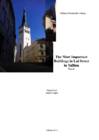
some rehearsal rooms, and is planning to build a large auditorium in the present courtyard. All together the theatre has eight stages on which it performs, both indoor and outdoor, including towers and mills along the Old Town walls and Salme Cultural Centre in the nearby suburb of Kalamaja. The theatre performs both world classics and modern drama. It often shines the spotlight on new Estonian productions. Performances are given in different venues, and there is an outdoor stage for summer plays. Lai 23 is a typical merchant`s house in the Late Gothic style. It is a two-room building, the so- called diele-dornse house, in which a vestibule diele is a bigger room at the street side and a smaller living-room dornse stands behind it in the depth of the yard. 6 The central room in the house's street side part was a large, high-ceilinged entrance hall with a small kitchen under a mantle chimney. This type of chimney was unique to medieval homes,
 annaabi.ee











Kõik kommentaarid