Leidsid 33 sarnast õppematerjali, mis on seotud failiga "People and Behaviour". Need materjalid aitavad sul teemat sügavamalt mõista.
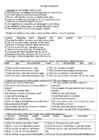
person, work, parents, friend, child, once, others, suitable, money, talk, never, children, real, character, sister, brother, stand, behaviour, rather, teacher, proud, class, felt, brave, honest, words, understand, complete, polite, look, year, father, bride, woman, marriage, behave, call, phrase, rude, greedy, mean, tolerant, homework, gentle, lazyFeelings and Opinions 1. Underline the most suitable word or phrase. a) When Dick saw his neighbour kick his dog he became angry/nervous. b) Sue wasn't really interested/interesting in the film. c) We were both afraid/anxious that we would miss the plane. d) I wish you wouldn't snap your fingers. It's very annoying/worrying. e) You're not scared/thrilled of spiders, are you? f) If we forget to do our homework, our teacher gets cross/terrifying. g) Tim completely lost his temper! He was absolutely furious/upset.
in brackets. _ 1 She is in a band and she _________________________________ (record) a CD at the moment. _ 2 She is an actress and often _________________________________ (appear) on television. _ 3 At the moment she _________________________________ (have) a rest because she is tired. _ 4 Mike is a doctor and he _________________________________ (live) in Manchester. _ 5 I _________________________________ (start) work at 8.30 every morning. _ 6 He is a good cook but she _________________________________ (prefer) to eat out. _ 7 English tests _________________________________ (get) more and more interesting. _ 8 They _________________________________ (have) a party because it's her birthday. _ 9 I sometimes _________________________________ (ride) my bicycle to school. 10_ She usually _________________________________ (go) to the gym on Friday evenings.
desk truck door watch gate egg window 11 Exercise 1 Underline the common nouns in these sentences. 1 There's a little bird in the garden. 2 Who is your teacher? 3 Don't eat that rotten apple. 4 Kate has a lovely doll. 5 I like reading stories. 6 My father is a doctor. 7 Every child has a dictionary. 8 Rudy hates bananas. 9 The phone is ringing. 10 Here's a book for you. Exercise 2 Here's a mixed bag of words. Put each word under its correct heading. swimmer snail fire engine clown letters flag river barber mountain fox hotel parrot granny taxi gardener camel People Animals Places Things
3 d reminisce 6 e ingrained genetically 4 plausible 5 obsolete 4 1 I've asked you time and time 3 1 There's a strong resemblance again to keep the noise down. between Paul and Joe. 1D Sporting origins page 67 2 She recognised him at once. 2 Phobias can be genetically 3 He's working at his father's shop inherited. 1 1 staunchly / resolutely for the time being. 3 When it comes to politics, 2 By and large 4 They'll be here any moment now. Edward and his dad have a lot in 3 swiftly 5 Everybody makes mistakes once common
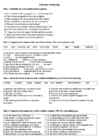
Education and learning Task 1. Underline the most suitable word or phrase. a) Jack decided to take a course/lesson in hotel management. b) Sheila always got good marks/points in algebra. c) After leaving school, Ann studied/trained as a teacher. d) Peter decided not to go in/enter for the examination. e) My sister learned/taught me how to draw. f) I can't come to the cinema. I have to read/study for a test. g) In history we had to learn a lot of dates by hand/heart. h) I hope your work will improve by the end of course/term.
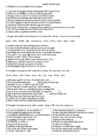
Health and the body 1) Underline the most suitable word or phrase. a) There were ten people waiting in the doctor's office/surgery/ward. b) After I ate the shellfish, I experienced/fell/happened ill. c) George's cut arm took over a week to cure/heal/look after. d) David fell down the steps and twisted his ankle/heel/toe. e) Everyone admired Lucy because she was tall and skinny/slim/thin. f) I've been digging the garden and now my back aches/pains/injuries. g) Whenever I travel by boat I start feeling hurt/sick/sore.
Alone, wants no such wealth of fineries. CLEANTE But, madam, after all . . . MADAME PERNELLE Sir, as for you, The lady's brother, I esteem you highly, Love and respect you. But, sir, all the same, If I were in my son's, her husband's, place, I'd urgently entreat you not to come Within our doors. You preach a way of living That decent people cannot tolerate. I'm rather frank with you; but that's my way-- I don't mince matters, when I mean a thing. DAMIS Mr. Tartuffe, your friend, is mighty lucky . . . MADAME PERNELLE He is a holy man, and must be heeded; I can't endure, with any show of patience, To hear a scatterbrains like you attack him. DAMIS What! Shall I let a bigot criticaster Come and usurp a tyrant's power here? And shall we never dare amuse ourselves Till this fine gentleman deigns to consent? DORINE If we must hark to him, and heed his maxims, There's not a thing we do but what's a crime; He censures everything, this zealous carper. MADAME PERNELLE
MODULE 1 Greeting. Introducing oneself and the others. The alphabet. Spelling. The tenses. How to introduce yourself and others Formal introductions How to respond and reply to an May I introduce myself? I am John introduction Smith. How do you do. Allow me to introduce John Smith to Pleased to meet you. you. Standard introduction Nice to meet you. I'd like you to meet John Smith. Hello. I want you to meet John Smith. I'm so pleased to meet you. This is Jane Smith. I'm Jane Smith.
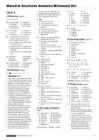
7 There are no easy answers. 3 I had no difficulty repairing the 2 1 economical 7 priceless 8 Few of my relatives live nearby. broken vase. 2 pricey 8 economic 9 My parents have little money. 4 Dad refused to let me stay out late. 3 valuable 9 costly 10 He read the whole magazine. 5 We're considering selling our car. 4 financial 10 worthy 11 Most graduates quickly find a job.
Golden Grammar rules 1. Don't use an with own. Sue needs her own room. (NOT Sue needs an own room.) I'd like a phone line of my own. (NOT ... an own phone line.) 2. Use or rather to correct yourself. She's German or rather, Austrian. (NOT She's German or better, Austrian.) I'll see you on Friday or rather, Saturday. 3. Use the simple present play(s), rain(s) etc to talk about habits and repeated actions. I play tennis every Saturday. (NOT I am playing tennis every Saturday.) It usually rains a lot in November. 4. Use will ..., not the present, for offers and promises. I'll cook you supper this evening. (NOT I cook you supper this evening.) I promise I'll phone you tomorrow. (NOT I promise I phone you tomorrow.) 5. Don't drop prepositions with passive verbs. I don't like to be shouted at. (NOT I don't like to be shouted.)
to be in the house by the end of next week." "What is his name?" "Bingley." "Is he married or single?" "Oh! Single, my dear, to be sure! A single man of large fortune; four or five thousand a year. What a fine thing for our girls!" "How so? How can it affect them?" "My dear Mr. Bennet," replied his wife, "how can you be so tiresome! You must know that I am thinking of his marrying one of them." "Is that his design in settling here?" "Design! Nonsense, how can you talk so! But it is very likely that he may fall in love with one of them, and therefore you must visit him as soon as he comes." "I see no occasion for that. You and the girls may go, or you may send them by themselves, which perhaps will be still better, for as you are as handsome as any of them, Mr. Bingley may like you the best of the party." "My dear, you flatter me. I certainly have had my share of beauty, but I do not pretend to be anything extraordinary now
Crime and the Law Task 1. Underline the most suitable word or phrase. a) Sally didn't realise that she had broken/countered/denied the law. b) The police have banned/cancelled/refused parking in this street. c) I must remember to get a/an agreement/licence/permission for my television. d) The president admitted that there had been a breakdown of law and crime/government/order. e) Jim's parents wouldn't agree/allow/let him go to the demonstration. f) Jake was arrested because he had entered the country falsely/illegally/wrongly. g) Talking to other students is against the law/orders/rules of the examination. h) The two men were arrested before they could commit/make/perform any more crimes. i) I had to take the company to court/justice/law to get the money they owed me. j) Smoking is compulsory/prohibited/refused near the petrol tanks. Task 2
.. (make) her speech when the girls rushed in. --- 4 2. Write the verbs in the past simple, the future simple, or the present perfect tense. Do you remember? I started I'll start I've started / she's started I'm not interested in sport, but lots of my classmates are. Some of them ... (1 do) great things in sport. Lisa ... (2 win) nine swimming competitions since she was 13. John ... (3 be) the school's top runner for the last two years. Next spring he ... (4 run) the London Marathon. But my friend Kelly is the best. She ... (5 start) skating when she was four. She ... (6 have) the best results and she ... (7 win) lots of prizes. She ... even ... (8 be) on TV. Kelly ... (9 break) her arm twice while doing a jump on the ice, but she's OK now. Last year she ... (10 travel) to Canada to practise in a training camp. I'm sure sometime in the future she ... (11 win) an Olympic medal. By that time, I ... (12 be) a famous author and she ... (13 ask) me to write a book about her way to the top
coast. "No." "He used to go fishing with us during the summer," Charlie prompted. That would explain why I didn't remember him. I do a good job of blocking painful, unnecessary things from my memory. "He's in a wheelchair now," Charlie continued when I didn't respond, "so he can't drive anymore, and he offered to sell me his truck cheap." "What year is it?" I could see from his change of expression that this was the question he was hoping I wouldn't ask. "Well, Billy's done a lot of work on the engine -- it's only a few years old, really." I hoped he didn't think so little of me as to believe I would give up that easily. "When did he buy it?" "He bought it in 1984, I think." "Did he buy it new?" "Well, no. I think it was new in the early sixties -- or late fifties at the earliest," he admitted sheepishly. "Ch -- Dad, I don't really know anything about cars. I wouldn't be able to fix it if anything went wrong, and I couldn't afford a mechanic..."
Entertainment and Art Task 1. Underline the most suitable word or phrase. a) I like this book, and I've read six capitals/chapters/prefaces already. b) It's not a proper drawing, only a rough/plan/sketch. c) The play is very long but there are three breaks/intervals/rests. d) At the cinema I don't like sitting too near the film/screen/stage. e) We heard a piece by Mozart performed by a German band/group/orchestra. f) Her second book was very popular and became a best buy/seller/volume.
..... them moved, they were just staring ..... each other. 13) You must go, Susan, or else I won't go ..... there as well. 14) He laughed ..... her, not feeling any pity at all. 15) Mother listened ..... the radio while Jim was catching ..... butterflies. 16) She was soon bored, so he decided ..... finish his speech earlier. 17) Marta was hungry; she went ..... the kitchen .... order to grab ..... sandwich and ..... bottle ..... milk. 1.4 Write a postcard to your friend from America who will be visiting you next week. Note: do not write more than 30-50 words Also, the postcard should include: o That you'll be meeting him/her at the airport at five p.m. o His/hers clothes should be warm and comfortable o You can organize a picnic if he/she wants Do not be too formal! Rough notes: ...................................................................................................... ................................
I look forward to meeting you to discuss employment opportunities. Yours faithfully, Nicole Porter Paragraph Plan for Letters · salutation · Paragraph 1 reasons for writing · Paragraphs 2, 3 development · Final paragraph closing remarks · Name · Letters are divided into two categories, formal and informal. There are various types of formal and informal letters . · It is important to think about the person who you are writing to before you begin writing a letter. If the wrong style is used, the letter will look impolite, silly or odd. For example, if you used formal language to write to a close friend, the letter would look odd, or if you used informal language to write a letter to a company, the letter would look impolite. · There are certain characteristics which allow us to distinguish between formal and informal letters. These are: ~ The salutation (e.g
· All men are idiots... But I'm in love with their king. · Boy, if you're looking for perfection, you've got the wrong girl. Go get yourself a Barbie. · If you really love me, you have to love all things about me. · All I really need is somebody who will listen to my bullshit, call me out on my bullshit, & love me despite my bullshit. · When I need you, you're not there. When you need me, I'm always there in a blink. & you call yourself a good friend? Think again. · Haters want to hate & bring you down so let them waste their time & try, I'll never give them the satisfaction of seeing me upset. · Before you say "FML" (FuckMyLife) remember that there are other people out there who have it worse than you do. ' · I'm tired of waiting for you. I want to leave, but something about you keeps pulling me back in. · The difference between physical attraction & love is the ability to see the same person at their best
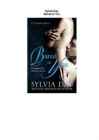
This one is for Dr. David Allen Goodwin. My love and gratitude are boundless. Thank you, Dave. You saved my life. Acknowledgments My deepest gratitude to my editor, Hilary Sares, who really dug into this story and made me work for it. Basically, she kicked my ass. By not pulling her punches or letting me shortchange the details, she made me work harder and because of that, this story is a much, much better book. BARED TO YOU wouldn't be what it is without you, Hilary. Thank you so much! To Martha Trachtenberg, copy editor extraordinaire. This book is an important one for me and she treated it that way. Thank you, Martha! To Victoria Colotta, for all her hard work on the interior design and typesetting. She took my plain text and made it gorgeous. Thank you, Victoria!
who died at the age of 91. He was married three times and has two children. Some of his most notable works are The Catcher in the Rye, Nine Stories and Franny and Zooey. The Catcher in the Rye is by far the most famous and most critiqued book of his, selling over 250,000 copies every year. In total the book has sold over 65 million copies worldwide. The success of The Catcher in the Rye led to public attention: Salinger became reclusive, publishing new work less frequently. Analysis of the book 1. Setting The story starts in the year 1950 when the novel's protagonist and narrator Holden starts telling a story from a hospital about the events of last year's winter. Most of the story takes place in winter of 1949 just over a couple of days in Pennsylvania and New York. 2. Characters · Holden Caulfield The main character of the book. He has been expelled from
of meaning of sentences with different structures, the speaker's creative ability to produce and understand any of an infinite set of possible sentences. Notes: Proto-Germanic » Northwest Germanic » West Germanic » North Sea Germanic » Anglo Frisian » English 2. How to classify words into different word classes? (definition is that enough?, morphology, distribution and function tests); Grammatical categories for nominals, verbs, adjectives. "A set of words like dog, child, cat, man, bird where the individual words are mutually substitutable is known as a word class..." Definitions a) A noun is the name of a person, place or thing. b) A verb expresses an action, process or state. c) An adjective is a describing word which modifies a noun. "Although such definitions will identify many members of a word class, linguists generally agree that they need to be supplemented by formal tests. e.g. sincerity Sincerity can be frightening
"We've known for years that people buy based on emotions and justify their buying decision based on logic. Dr. Cialdini was able, in a lucid and cogent manner, to tell us why this happens." --MARK BLACKBURN, Sr. Vice President, Director of Insurance Operations, State Auto Insurance Companies "Dr. Cialdini's ability to relate his material directly to the specifics of what we do with our customers and how we do it, enabled us to make significant changes. His work has enabled us to gain significant competitive differentiation and advantage" -LAURENCE HOF, Vice President, Relationship Consulting, Advanta Corporation "This will help executives make better decisions and use their influence wisely ... Robert Cialdini has had a greater impact on my thinking on this topic than any other scientist." -CHARLES T. MUNGER, Vice Chairman, Berkshire Hathaway, Inc.
Dolly has discovered his affair - with the family's governess - and the house and family are in turmoil. Stiva's affair and his reaction to his wife's distress shows an amorous personality that he cannot seem to suppress. In the midst of the turmoil, Stiva reminds the household that his married sister, Anna Arkadyevna Karenina is coming to visit from Saint Petersburg. Meanwhile, Stiva's childhood friend Konstantin Dmitrievich Levin ("Kostya") arrives in Moscow with the aim of proposing to Dolly's youngest sister Princess Ekaterina Alexandrovna Shcherbatskaya, "Kitty". Levin is a passionate, restless but shy aristocratic landowner who, unlike his Moscow friends, chooses to live in the country on his large estate. He discovers that Kitty is also being pursued by Count Alexei Kirillovich Vronsky, an army officer. At the railway station to meet Anna, Stiva bumps into Vronsky
Catherine Morland My name is Catherine Morland. I would like to tell you a bit about myself. To begin with, I am seventeen years old and grew up in a countryside in a small town named Fullerton with my parents and nine siblings. As a child I was interested in many things like drawing, sports and music. I was very lively and cheerful, enjoyed cricket, horse riding and just hated cleanliness and restriction. As I grew up, I chose reading over sports and all of the wild games I used to like. Undoubtedly, I would now describe myself with the word naivety. I am very naïve and do not notice the most obvious things happening around me. I really hope that it is caused by the lack of experience and will eventually pass.
used their best efforts in preparing this book, they make no representations or warranties with respect to the accuracy or completeness of the contents of this book and specifically disclaim any implied warranties of merchantability or fitness for a particular purpose. No warranty may be created or extended by sales representatives or written sales materials. The advice and strategies contained herein may not be suitable for your situation. The publisher is not engaged in rendering professional sevices, and you should consult with a professional where appropriate. Neither the publisher nor author shall be liable for any loss of profit or any other commercial damages, including but not limited to special, incidental, consequential, or other damages. For general information on our other products and services, please contact our
The letter started a series of poison pen letters all over the village, which destroyed the safety the villagers took for granted. Right away, they knew it wasn't true and thought somebody was doing it just for laughs. The second letter went to Mrs Symmington, the local solicitor Mr Symmington's wife. It turned out the letters were no trick at all, when she committed suicide, after reading a letter that stated her last child wasn't her husband's. Her body was discovered with the letter, a glass containing potassium cyanide and a torn suicide note which read: I can't go on. Few days after, Mr Symmington's maid was murdered. Shockingly, the body was found by Megan, Mr Symmington's 20 year old step-daughter. Scotland Yard sent someone to investigate, and came to the conclusion that the letter- writer/murderer was a middle-aged woman who must be one of the citizens of Lymstock. The
.................................................................59 Happiness as a Role Vs. True Happiness..................................................59 Parenthood: Role or Function? ................................................................60 Conscious Suffering.................................................................................63 Conscious Parenting.................................................................................64 Recognizing Your Child...........................................................................65 Giving Up Role-playing............................................................................66 The Pathological Ego................................................................................68 The Background Unhappiness...................................................................70 The Secret of Happiness............................................................................71
are structural. Nouns, main verbs, adjectives and adverbs are usually content words. Auxiliary verbs, pronouns, articles, and prepositions are usually grammatical words. Example ‘We flew over the mountains at dawn'. countable nouns Countable nouns are easy to recognize. They are things that we can count. For example: "pen". We can count pens. We can have one, two, three or more pens. Here are some more countable nouns: •dog, cat, animal, man, person •bottle, box, litre •coin, note, dollar •cup, plate, fork •table, chair, suitcase, bag Countable nouns can be singular or plural: •My dog is playing. •My dogs are hungry. We can use the indefinite article a/an with countable nouns: •A dog is an animal. When a countable noun is singular, we must use a word like a/the/my/this with it: •I want an orange. (not I want orange.) •Where is my bottle
Lamb to the Slaughter by Roald Dahl (1916-1990) The room was warm and clean, the curtains drawn, the two table lamps alight - hers and the one by the empty chair opposite. On the sideboard behind her, two tall glasses, soda water, whiskey. Fresh ice cubes in the Thermos bucket. Mary Maloney was waiting for her husband to come him (correction: home) from work. Now and again she would glance up at the clock, but without anxiety, merely to please herself with the thought that each minute gone by made it nearer the time when he would come. There was a slow smiling air about her, and about everything she did. The drop of a head as she bent over her sewing was curiously tranquil. Her skin - for this was her sixth month with child - had acquired a wonderful translucent quality, the mouth was soft, and the eyes, with their new placid look, seemed
Home and family Ex. 3 p. 31 a. When she was 15. Emma's behavior got worse. b. It's very hard for them it they have suddely leave and live out in the world on their own. c. Caroline was a real friend. d. She has friends, a boyfriend and a busy social life. e. I have to treat her like an adult and give her space. Ex. 4 1. Emma was unhappy. She was smoking and drinking. She kept missing school and getting terrible fights. She stayed out at night, wen clubs, often got into trouble with the police and even started taking drugs. 2. Caroline was fostered a lot of teenagers before. Caroline is kind and caring for Emma
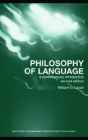
University of North Carolina. He is the author of over 150 articles as well as seven books. Routledge Contemporary Introductions to Philosophy Series Editor: Paul K. Moser Loyola University of Chicago This innovative, well-structured series is for students who have already done an introductory course in philosophy. Each book introduces a core general subject in contemporary philosophy and offers students an accessible but substantial transition from introductory to higher-level college work in that subject. The series is accessible to non-specialists and each book clearly motivates and expounds the problems and positions introduced. An orientating chapter briefly introduces its topic and reminds readers of any crucial material they need to have retained from a typical introductory course. Considerable attention is given to explaining the central philosophical problems of a subject and the main competing solutions and arguments for those solutions. The primary aim is to
We must keep apart the stylistics of language and the stylistics of speech. Stylistics of language studies different styles, including registers, stylistic devices and expressive features of linguistic units. The stylistics of speech studies individual texts or particular texts viewing the way the author's message is expressed. Literary stylistics Literary stylistics means of artistic expressiveness, that characterises a literary work, a writer, a literary trend or a home epoch. Denotation, Connotation Meaning has two vital elements, one is denotation (a direct reference, meaning proper) and the other, connotation (additional shade of meaning). Synonyms for connotation (overtone, colouring, charge). The majority of words have denotation only e.g tree, stone, to take, bag, window, etc. Connotation may be permanent part of the meaning of the word. Then it is called inherent (ever-present)
different now. Children have more freedom to make their own decisions. For example, children aged 13 may be employed part time in Great Britain. Age 15 is legally a "young person" not a "child". Age 16 is a school leaving age. They can leave home, drive a moped, marry with "parents' consent" buy beer. Age 17 can drive a car. Age 18 can vote, get married, drink in pubs. Education is a very important part in the life of British youth. One can't become an independent person without it. When time comes to enter a college a young Englishman chooses one far away from home. It is a necessary part of becoming adult. During the last 30 years there were a lot of different trends in youth movements. All of them were characterized by their own philosophy, way of life, style of dressing. Each tendency was born by the influence of economic and political changes in the society. Those trends are known as the "hippies" the "punks" the "rockers".
 annaabi.ee