 50 punkti
Autor soovib selle materjali allalaadimise eest saada 50 punkti.
50 punkti
Autor soovib selle materjali allalaadimise eest saada 50 punkti.
 ~ 1 leht
Lehekülgede arv dokumendis
~ 1 leht
Lehekülgede arv dokumendis
 2015-03-02
Kuupäev, millal dokument üles laeti
2015-03-02
Kuupäev, millal dokument üles laeti
 1 laadimist
Kokku alla laetud
1 laadimist
Kokku alla laetud
 0 arvamust
Teiste kasutajate poolt lisatud kommentaarid
0 arvamust
Teiste kasutajate poolt lisatud kommentaarid
 danalukk
Õppematerjali autor
danalukk
Õppematerjali autor
s e ! o g ne Bo l t i g h et S pa Ingredients v 2 packages of spaghetti 200 g v 1 liter of water v 1 medium onion v 3 cloves of garlic v 1 tablespoon salt v 3 tablespoons oil soup v 2 tablespoons butter v 150 g of minced meat v tomato sauce Preparation 1. You must Fill a large pot with water and salt after you add onion, garlic cloves and oil. you need to heat water over high heat until boiling, then you must add the spaghetti and after you have Boil for 12 minutes until they plunged. 2. Next, you must add 2 tablespoons of butter. you need to cook meat with tomato sauce, again you must add onion, salt and garlic after it is cooked add the cooked spaghetti, after you must cook for 3 minutes serve.
Food, Restaurants and Cooking Task 1. Underline the most suitable word or phrase. a) Waiter, could you bring me the account/bill/addition, please? b) It's a very popular restaurant - we should apply for/book/keep a table. c) If you're hungry, why not ask for a large dish/plate/portion? d) Please help/serve/wait yourself to salads from the salad bar. e) Waiter, can I see the catalogue/directory/menu, please? f) This fish is not what I called/commanded/ordered. g) This dish/plate/serving is a speciality of our restaurant. h) Have you tried the crude/raw/undercooked fish at the new Japanese restaurant? i) Paul never eats meat, he's a vegetable/vegetarian/vegetation. j) Have you decided what to have for your main course/food/helping? Task 2. Complete each sentence (a-j) with a suitable ending (1-10). Use each ending once. a) Dinner's nearly ready. Can you lay ...6… 1. up if you dry and put the dishes away. b)
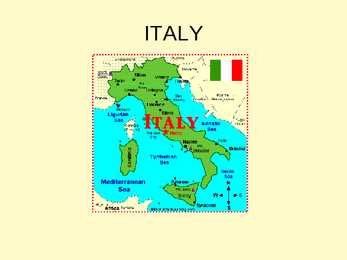
..................................................6 Lombardy....................................................................................................................................6 Meal structure..................................................................................................................................7 Recipe.............................................................................................................................................8 Pasta alla Carbonara (eesti keeles)...................................................................................................9 2 ITALY KITCHEN Italian Cuisine is traditional Italian food. It is often made up of the famous Italian foods such as pasta, pizza, cannoli and red or white wine
Wrap this dough in a greased plastic sheet and leave in a warm place for at least an hour. The dough should be fermented and swollen to at least twice its size in this duration. Take it out of its wrapping, and knock it with your knuckles, again in a kneading motion, to release any air bubbles A traditional Italian meal will consist of the following courses: Anti-Pasto: This consists of hot and cold appetizers. Primo: This has dishes like pasta, risotto, or even soup. This is the first course. Secondo: This contains the main dish of fish or meat. Contorno: This is the side dish of salad or vegetables. A traditional Italian menu will feature salad after the main course. Dolce: This is the dessert course. Caffee: Here you will be served a cup of espresso. Liqueurs: This course is also referred to as the "Coffee Killer" course where you will be served grappa or Farinata 3 3/4 cups of water
History: · Indian society is predominantly agrarian. Diet consists mainly of fruits and vegetables, meat, cereals, dairy products and honey. Also, drinks containing different types of spices. · During the Gupta empire influenced by diet buduism and jainism. Many religious people were vegetarians. Most of the people consumed the chickens, sheep and goat meat. · Muslims also put emphasis on the development of food. Indians brought to the diet of dried fruit and flat bread. India introduced the dietary habits of the Portuguese and Chinese. · Indian diet is mixed with a variety of cultures. Etiquette: · Traditionally, meals were eaten while seated either on the floor or on very low stools or cushions. · Food is most often eaten without cutlery, instead using the right hand. Among the middle class throughout India, spoons and forks are commonplace. · Hot food is served on banana leaves, the leaves a
Cuisine of South Africa has had a variety of sources and stages: · Cookery practised by indigenous people of South Africa such as the Khoisan and Xhosa- and Sotho-speaking people · Settler cookery introduced during the colonial period by people of Indian and Afrikaner and British descent and their slaves and servants - this includes the cuisine of the Cape Malay people, which has many characteristics of Malaysia and Java, and recipes from neighbouring colonial cultures such as Portuguese Mozambique. Indigenous cookery traditional South African cuisine In the precolonial period, indigenous cuisine was characterized by the use of a very wide range of fruits, nuts, bulbs, leaves and other products gathered from wild plants and by the hunting of wild game. The domestication of cattle in the region about two thousand years ago by Khoisan groups enabled the use of milk products and the availability of fresh meat. However, during the colon
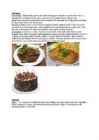
German Sauerbraten: Traditionally made with a beef roasting joint (topside or similar) the meat is marinated for 2-3 days in beer, spices such as cloves, juniper berries, allspice and peppercorns, bay leaves and onions and is braised in the marinade for a long period, resulting in very tender melt-in-the-mouth meat. The Black Forest: cake is one of the most popular German national foods. Cake consists of several layers of chocolate cake, with whipped cream and cherries between each layer. Then the cake is decorated with additional whipped cream and chocolate shavings. A Schnitzel in German is a slice of pork or veal haunch. Dish made with boneless meat thinned with a mallet (escalope-style preparation), coated in bread crumbs and fried. Only if it is made of veal and coated in bread crumbs is it called Wiener Schnitzel; a pork version is called Schnitzel Wiener Art (Viennese type schnitzel). These are served with a slice of lemon and without a sauce. Both often are referred to as simpl
Estonian cuisine The traditional cuisine of Estonia has substantially been based on meat and potatoes, and on fish in coastal and lakeside areas, but is influenced by many other cuisines by now. In the present day it includes a variety of international foods and dishes, with a number of contributions from the traditions of nearby countries. German, Scandinavian, Russian and other influences have played their part. The most typical foods in Estonia have been rye bread, pork, potatoes and dairy products. Estonian eating habits have historically been closely linked to the seasons. In terms of staples, Estonia belongs firmly to the beer, vodka, rye bread and pork "belt" of Europe. The Cold Table Flounder The first course in traditional Estonian cuisine is based on cold dishes - a selection of meats and sausages served with potato salad or Rosolje, an Estonian signature dishes based on beetroot, meat and herring . Small pastries called pirukad ("pirukas" in the
 annaabi.ee





Kõik kommentaarid