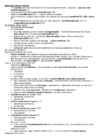
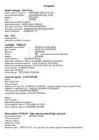
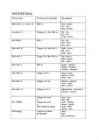
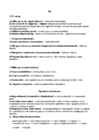
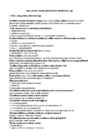
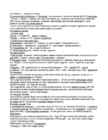
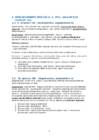
FUNKTSIONAALSED TSOONID Sensoorsed tsoonid - arenenud alaarplaadist - sisaldavad side- ja väädineuronite kehi - väädineuronid moodustavad sensoorseid tuumi, mis on närvide lõpptuumad Motoorsed tsoonid - arenenud basaalplaadist - sisaldavad ventraaljuure neuronite kehi - ventraaljuure neuronid moodustavad motoorseid tuumi – närvide algustuumad Somatosensoorne tsoon - paikneb dorsaalsarves - Nuclei proprii (B8) saavad dorsaaljuure neuroneilt tundeimpulsse, mis pärinevad nahast - Nuclei thoracicus (B9) paikneb dorsaalsarve basis’e mediaalses osas võtab vastu tundeimpulsse, mis lähtuvad liikumisaparaadist Vistserosensoorne tsoon - põhiliselt substantia intermedia’s - tuumad puuduvad, sest neuronikehad on hajutatult Vistseromotoorne tsoon - substantia intermedia’s - Nucleus intermediolateralis (B10)
vahet, tuleb kaaluda igat aatomi nukleiidi mis läbib kosmilise kiire detektorit.[2] Umbes 90% kosmiliste kiirte tuumadest on vesinikud (prootonid), umbes 9% on heeliumid (alfa osakesed) ja kõik teised elemendid moodustavad ainult 1%. Isegi selles ühes protsendis on väga haruldasi elemente ja isotoope. Need vajavad suuri detektoreid, et koguda piisavalt osakesi selleks, et öelda midagi olulist kiire allika ,,sõrmejälje" kohta. HEAO (The High Energy Astrophysical Observatory) Heavy Nuclei Experiment, millega alustati 1979, kogus ainult umbes 100 kosmilist kiirt milles esines elemente vahemikus 75-89 (grupp elemente millesse kuulub plaatinum, elavhõbe ja plii). Kasutatud detektor oli palju suurem kui enamus teaduslikke vahendeid mida kasutab NASA praegu. Et teha paremaid mõõtmisi on vaja veelgi suuremat detektorit ja mida suurem on detektor, seda suurem on selle maksumus.[2] 3 Kust need tulevad?
....................................................................10 Conclusion..........................................................................................................................................12 References..........................................................................................................................................13 Introduction What is nuclear power? Nuclear power is any nuclear technology designed to extract usable energy from atomic nuclei via controlled nuclear reactions. The most common method today is through nuclear fission, though other methods include nuclear fusion and radioactive decay. All utility-scale reactors heat water to produce steam, which is then converted into mechanical work for the purpose of generating electricity or propulsion. In 2007, 14% of the world's electricity came from nuclear power. More than 150 nuclear-powered naval vessels have been built, and a few radioisotope rockets have been produced.
emotsioonide keskus infundibulum - LEHTER hypophysis - corpus mammilare - NIBUKEHAD epithalamus: - corpus pineale KÄBIKEHA reguleerib suguküpseks saamist ja öö ning päeva vaheldumist. thalamus dorsalis: - TALAMUS corpus geniculatum mediale KESKMISED PÕLVIKKEHAD corpus geniculatum laterale KÜLGMISED PÕLVIKKEHAD pulvinar - PADJANDID Encephalon II Telencephalon - hemisphaeria cerebri - pallium - nuclei basales- lobus frontalis, parietalis, temporalis, occipitalis, insularis sulcus lateralis,- KÜLGVAGU sulcus centralis,-TSENTRAALVAGU sulcus parietooccipitalis - KIIRU-KUKLA VAGU fissura longitudinales cerebri SUURAJU-PIKILÕHE fissura transversa SUURAJU - RISTILÕHE Lobus frontalis:- OTSMIKUSAGAR gyrus precentralis - PRETSENTRAAL KÄÄR gyrus frontalis superior - ÜLEMINE OTSMIKU KÄÄR lobulus paracentralis - SAARESAGAR ?????????
loaf - loaves Ends with -o Add -es potato potatoes tomato - tomatoes volcano - volcanoes ends with -us Change -us to -i cactus - cacti nucleus - nuclei focus - foci ends with -is Change -is to -es analysis - analyses crisis - crises thesis - theses ends with -on Change -on to -a phenomenon - phenomena criterion - criteria
Nuclear weapon Heleanor Kala Henri Möll What is nuclear weapon? • tools of mass destruction • suddenly releases the energy • explosive devices • nuclear fallout • damage your blood, cells and organs • special isotopes of uranium or plutonium how it works? • atom • breaking that nucleus • combining two nuclei • large amounts of energy history • Scientist discovered how to create a chain reaction • in the 1930s • Robert Oppenheimer • Manhattan Project • development of the nuclear bomb Nuclear bomb effect • release four kinds of energy 1. Radiation (Cause Disease and will effect the next Generation) 2. Electromagnetic 3. Heat 4. Pressure Hiroshima • Hiroshima was the primary target of the first nuclear bombing mission on August 6, 1945
target cells Away from axon hillock*. AXON HILLOCK – The region of the neuronal cell body where the axon emerges and where the action potential is generated as a net effect of the integration of neuronal stimulation and inhibition. AXON TERMINAL – Nerve ending which forms presynaptic element of the neurone where synaptic vesicles* are accumulated. BASAL GANGLIA – Subcortical clusters of neurones, which include the following nuclei: caudate, putamen, globus pallidus and substantia nigra. They play a role in movement control. BLOOD-BRAIN BARRIER – A barrier made of epithelial cells which line the blood vessels of the brain. These cells form very tight junctions and control the passage of the chemicals between the blood and brain. BRAIN STEM – The part of the brain which connects to the spinal cord. It is the major route for information transfer between the brain and spinal cord. It controls
polypeptides, which are short polymers of amino acids; and 3. polysaccharides, which are often linear bonded polymeric carbohydrate structures Polymers are everywhere The way plastics are made is actually a way of imitating nature, which has created a huge number of polymers. Cellulose, the basic component of plant cell walls is a polymer, and so are all the proteins produced in your body and the proteins you eat. Another famous example of a polymer is DNA - the long molecule in the nuclei of your cells that carries all the genetic information about you. People have been using natural polymers, including silk, wool, cotton, wood, and leather for centuries. These products inspired chemists to try to create synthetic counterparts, which they have done with amazing success. Biopolymers (also called renewable polymers) are produced from biomass for use in the packaging industry. Biomass comes from crops such
Gravity is responsible for setting newborn stars aflame, by squeezing atoms of hydrogen in the star's core so tightly that they fuse to make helium. The fusion generates light and heat and also exerts pressure that allows the core to withstand the enormous weight of the star's outer layers. But when the core consumes all of its hydrogen, gravity compresses it. The temperature of the shrinking core rises to about a hundred million degrees, hot enough for helium nuclei to fuse and make carbon. The new surge of energy keeps the core from collapsing much further. For an isolated star no heavier than the sun, there is little more to the story. The star burns all of its helium and shrivels. It turns into a white dwarf about the size of Earth, aging and cooling indefinitely--unless it lies close enough to another star to steal its neighbor's outer layers of hydrogen. If enough material falls onto the white dwarf, the siphoned fuel ignites a thermonuclear explosion
kraniaalnärvi motoorsetes tuumades. Ekstrapüramidaalsüsteemi kuuluvad motoorsed subkortikaalsed tuumad ja integratsioonitsentrid. Motoorsed tuumad 1. Corpus striatum ‒ (putamen + nucleus caudatus) 2. Globus pallidus 3. Nucleus subthalamicus 4. Nucleus ruber 5. Substantia nigra Integratsioonikeskused: 1. Cerebellum 2. Thalamus 3. Formatio reticularis 4. Nuclei vestibulares 5. Nucleus Oliveris 6. Limbiline süsteem Ekstrapüramidaalsüsteemi keskused on ühendatud omavahel arvukate tagasisideringide põhimõttel. Aferentsed impulsid tulevad läbi integratsioonitsentrite (suurajukoor, thalamus, cerebellum, retikulaarformatsioon), mis katkematu vooluna suunatakse lõpuks motoneuronite mõjutamiseks (õpitud, täpsed liigutused ‒ pianist, tikkimine, kirjutamine). Ekstrapüramidaalteid võib jaotada piltlikult 3 korruse vahel: 1
a) Corpus amydaloideum – telechephalon, cortex cerebri b) Corpora mamillaria – diencephalon, hypothalamus c) Nucleus ruber – diencephalon (thalamus ventralis), mesencephalon (pedunculus cerebri) d) Trigonum n. hypoglossi – ventriculus quartus (fossa rhomboidea) ! Vegetatiivne närvisüsteem ! a) sümpaatikusetüve ja spinaalnärvi ühendusharud: rr. comunicantes albi, rr. comunicantes grisei c) mao sümp. innervatsioon – nuclei intermediolaterales—radix ventrales n.spinales—ramus communicans albus—truncus symphaticus—nn.et plexus splanchicus major—ganglion coeliacum —plexus et n.gastricus-- gaster d) kusepõie parasümp. Innervatsioon - ristluusegmendidànucl. Parasympatici sacrales à n.spinalis àn. splanchicus pelvinus à plexus hypogastricus inferior à plexus vesicalis à terminaalganglionid à kusepõis a) Sümpaatiline põie innervatsioon nimmesegmendid —> nucl
Vaheaju ! 1) jaotus, millise osa hallaine kuulub ekstrapüramidaal-motoorsesse süsteemi 1. epithalamus 2. thalamus dorsalis 3. thalamus ventralis - hallaine kuulub ekstrapüramidaal-motoorsesse süsteemi 4. hypothalamus 2) mille kaudu on III vatsakese ühendused I, II vatsakestega, mille kaudu IV vatsakesega I, II vatsakestega - foramen interventriculare kaudu IV vatsakesega - aquaeductus mesencephali 3) millises osas ja kus asuvad koorealused nägemis- ja kuulmiskeskus thalamus dorsalis’es, nuclei posteriores kuulmiskeskus - corpus geniculatum mediale nägemiskeskus - corpus geniculatum laterale 4) mis moodustab III vatsakese põhja ees hüpotalamus - chiasma opticum, tuber cinereum koos infundibulum’iga, corpora mamillaria, taga - substantia perforata posterior ja pedunculus cerebri !
ballistic missiles. Rail guns could fire projectiles to intercept the incoming missiles. Some scientists argue that rail guns could also protect Earth from rogue asteroids, by firing high- velocity projectiles from orbit. Upon impact, the projectiles would either destroy the incoming asteroid or change its trajectory. 5.3 Fusion reaction initiations Rail guns could also be used to initiate fusion reactions. Fusion occurs when two small atomic nuclei combine together to form a larger nucleus, a process that releases large amounts of energy. Atomic nuclei must be traveling at enormous velocities for this to happen. On the earth, some scientists propose using rail guns to fire pellets of fusible material at each other. The impact of the high-velocity pellets would create immense temperatures and pressures, enabling fusion to 14 occur
5. Saaresagar lobus insularis – väike sagar teiste vahel, külgvao põhjas, ajukoore vanem osa. Poolkerade sees on valgeaine, selles aga suured hallaine kogumikud – basaaltuumad, mis on seotud reflektoorsete (“kaasasündinud”) ja automaatsete (hästi ära õpitud) liigutuste juhtimisega. Haisteaju rhinencephalon – suur hulk aju piirkondi (haistmiskeskused + võlvikäär, hippokampus, mandelkeha jne.) – on limbilise süsteemi aluseks. Basaaltuumad (nuclei basales, am. ka basal ganglia): Sabatuum (nucleus caudatus) – suurim, paikneb poolkera mediaalses osas, vahetult aju külgvatsakese kõrval; Läätstuum (nucleus lentiformis) – paikneb lateraalsemal, koosneb kahest osast – kahkjas kera (globus pallidus) ja koorik (putamen); Tõkis (ka müür jne.) (claustrum) – eelmisest veel lateraalsemal, õhuke hallaine kiht enne ajukoort; Mandelkeha e. mandeltuum (corpus amygdaloideus, nucleus
Mõlema koostises on bipolaarsed neuronid, mille kehad paiknevad vastavates tundeganglionites. 1.3.1 N. cochlearis, aferentne Kuulmistee: Perifeersed jätked lõpevad kuulmis- e spiraalelundi organum spirale neuroepiteelis. 1. Neuroni keha: bipolaarsete neuronite kehad vastavas tundeganglionis ganglion cochleare 2. Neuroni keha (lõpevad tsentraalsed jätked): vastavas sensoorses tuumas: nucl cochlearis ventralis et dorsalis 3. Neuroni keha: nuclei corporis trapezoidei, aksonid tõusevad lemniscus lateralisena (pmst tractus) 4. Neuroni keha: colliculus inferior, corpus geniculatum mediale 1.3.2 N. vestibularis, aferentne Tasakaalutee/vestibulaartee: Perifeersed jätked lõpevad tasakaaluelundi neuroepiteelis crista ampullarises ja maculas. 1. Neuron: ganglion vestibulare, meatus acusticus internuse põhjas. 2. Neuron (lõpevad tsentraalsed jätked): n. vestibularise tuumades nucl
123. (a) rDNA = DNA from two sources ; both DNAs cut with, restriction enzyme / named restriction enzyme ; giving sticky ends ; or giving blunt ends to which sticky ends added ; complementary binding of sticky ends ; H bonds / e.g. A to T / e.g. C to G ; nicks in (sugar-phosphate) backbone sealed by ligase ; 3 max (b) percentage / proportion, of, muscle fibres with central nuclei / dying muscle fibres, increases in control with time ; percentage / proportion, of, muscle fibres with central nuclei / dying muscle fibres, reduced by treatment ; ref to comparative figures with percentages and day ; 3 (c) advantages 1 can identify presence of disorder ; 2 removes uncertainty ; 3 allows early treatment ;
Finally, Newbold anagrammed the letters of this senary text to produce his Latin plaintext. In April, 1921, Newbold announced the preliminary results of his solution according to this method before brilliant and learned audiences. These results stamped Roger Bacon as the greatest scientific discoverer of all time. According to Newbold, Bacon had recognized the Great Nebula in Andromeda as a spiral galaxy, identified biological cells and their nuclei, and come close to seeing the union of the sperm with the ovum. He had therefore to have not merely speculated about but to have actually constructed a microscope and a telescope and used them to make discoveries that anticipated the 20th century. Newbold's cryptanalysis of a caption on a sketch that somewhat resembles a pinwheel and that he took to represent the Andromeda nebula reads in part: "In a concave mirror I saw a star in the form of a snail . . . between
 annaabi.ee