Leidsid 33 sarnast õppematerjali, mis on seotud failiga "Nimetu". Need materjalid aitavad sul teemat sügavamalt mõista.
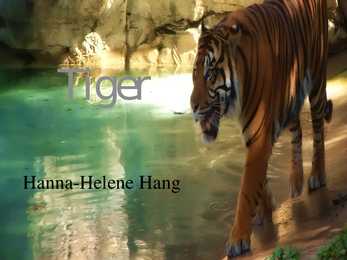
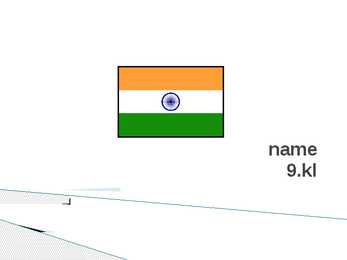
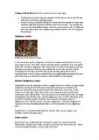
indian, animal, animals, elephant, tiger, mammal, pangolin, male, bengal, good, parks, bird, grace, pride, beauty, found, hills, lanka, other, places, asian, guess, witch, female, bangladesh, related, skunksINDIA COUNTRY · India is a country in South Asia. · It is the seventh-largest country by geographical area. · The most populous democracy in the world. · Country with over 1.18 billion people. · The capital of India is New Delhi. · India has a coastline of 7,517 kilometres. Mainland India is bounded by the Indian Ocean on the south, the Arabian Sea on the west, and the Bay of Bengal on the east; and it is bordered by Pakistan to the west Bhutan, the People's Republic of China and Nepal to the north; and Bangladesh and Burma to the east. In the Indian Ocean, mainland India and the Lakshadweep Islands are in the vicinity of Sri Lanka and the Maldives. India has a coastline of 7,517 kilometres. THE SYMBOLS OF INDIA The National Flag is orange withe and green. The Tiger is the national animal of India. Tiger is also called the lord of Jungles. The national animal
Causes: *The main cause of animal extinction, without doubt,is human demand, either for animal resources directly, or for the natural resources of the animals' habitats. *In addition to that, there are other indirect causes caused by human activities. *Habitat loss: Is considered to be the main cause for animal extinction. Humans are clearing our forests for wood and timber. The foodchain is disturbed and animals will die. *Wildlife trade: Poaching and wildlife trade are another common threat to animals. International wildlife trade has also been linked to drugs trade. The most common anilmal trade is pet trade, such as orangutangs. Animals are also killed for fur(tigers, leopards, cheetahs) *Climate change: It has been recently suggested that warmer global temperatures may be affecting animals. In fact, it has been suggested that the golden toad became extinct because of the warmer climate. The Animals *T-REX: Tyrannosaurus rex was one of the largest land carnivores of all time
The Republic of Kenya The Republic of Kenya uesed to be British East Africa, but it game independent December 12, 1963 . It is a country in East Africa. It is bordered by Ethiopia to the north, Somalia to the northeast, Tanzania to the south, Uganda to the west, and Sudan to the northwest, with the Indian Ocean running along the southeast border. Capital of Kenya is Nairobi, population is 31.6 million and density 59/km2. Kenya sure packs a lot in: mountains and deserts, colourful tribal culture, beaches and coral reefs, and some of Africa’s best wildlife attractions. In Kenya you can visit Nairobi-Nairobi is the city at the heart of Kenya and the primary gateway to the vast game reserves and national parks of East Africa, Amboseli- This park is one of the
The coat of arms features a kangaroo and an emu (the national animals of Australia), golden wattle (the national floral emblem), a shield with the coats of arms of the six states of Australia and a star for all states and territories. Australia's national anthem is "Advance Australia Fair", which replaced "God Save The Queen" in 1984. the unofficial anthem is "Waltzing Matilda". As said before Australias national animals are kangaroos and emus. Often coalas are mentioned too, its floral emblem is the golden wattle and its national colours are the colours of its flag red, white and blue. Head of state Head of state is Queen Elizabeth II, who is queen of United Kingdom and also queen is Australia. In practice, Governor General performs her functions in queen's absence. Since 1989 Bill Hayden has been the Governor General Government
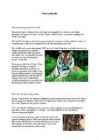
Physical characteristics Tigers are easy to recognise. They typically have rustyreddish to brownrusty coats, a whitish medial and ventral area, a white "fringe" that surrounds the face, and stripes that vary from brown or gray to pure black. The form and density of stripes differs between subspecies, but most tigers have over 100 stripes. Subspecies There are nine recent subspecies of tiger, three of which are extinct. The surviving subspecies, in descending order of wild population, are: The Bengal tiger or the Royal Bengal tiger; The Indochinese Tiger, also called Corbett's tiger; The Malayan Tiger; The Sumatran Tiger; The Siberian tiger, also known as the Amur, Manchurian, Altaic, Korean or North China tiger; The South China Tiger, also known as the Amoy or Xiamen tiger. Extinct subspecies are: The Bali Tiger was limited
...............................................................................................3 Relief...............................................................................................................................4 Climate & Time Zones....................................................................................................5 Plants...............................................................................................................................5 Animals...........................................................................................................................6 Population.......................................................................................................................6 The Native Australians....................................................................................................6 The Biggest cities..............................................................................................
These strong trees do not die when there are forest fires. Some other kinds are small bushes in the semi-deserts.Eucalyptuses give the local people timber and eucalyptus oil. Of 600 kinds of acacias the golden wattle, the national flower of Australia, is the best known. Australia has many other kinds of tree, and thousands of kinds of wild flowers too. Of other trees there grow bottle trees in the savannas, tree ferns in the tropical forests and many others. Fauna. The animal life of Australia is unique. The marsupials or pouched animals form the biggest group of animals in Australia. Most of the she-marsupials have pouches in which they carry their young. The kangaroo is one Australian animal that everybody knows.There are more than 50 species of kangaroo. They are furry animals that hop on their hind legs. The biggest are red kangaroos, grey kangaroos and euros. The smallest are thekangaroos that belong to the group called rat kangaroos
7. BROWN BEAR • The brown bear, the most widely distributed bear species in the world, was named a species of "least concern"—meaning the bears are not threatened with extinction. • The grizzly, a subspecies of the brown bear, has successfully rebounded in parts of the United States, thanks to U.S. Endangered Species Act protection. • Human settlements near brown bear habitats are increasingly becoming "mortality sinks" where the animals are poached or inadvertently (tahtmatult) killed. 8. THE AMERICAN BLACK BEAR • Thriving in Canada, the United States, and Mexico, this is the only bear species considered secure throughout its range. • An enormous amount of effort and funding for conservation and management continue to be directed at bears in North America, where their status is relatively favorable. CONCLUSION • Six of the world's eight bear species—75 percent—are threatened with extinction.
islands in the Caribbean Sea). · The flag consists of a gold saltire, which divides the flag into four sections: two of them green (top and bottom) and two black (hoist and fly). · black representing the strength and creativity of the people which has allowed them to overcome the odds, gold for the wealth of the country and the golden sunshine, and green for the lush vegetation of the island. · Coat of arms: On the dexter side a West Indian Native Woman holding in the exterior hand a Basket of Fruits and on the sinister side a West Indian Native Man supporting by the exterior hand a Bow all proper. · The motto : "Out of Many, One People" - as tribute to the unity of the different cultural minorities inhabiting the nation. · Capital and largest city: Kingston · Official languages : jamaican English, National language: Jamaican Patois. · Ethnic groups (2011): 92.1% African, 6.1% Mixed, 0.8% Indian, 0.4% Other, 0
The Mountain Lion cougar (Puma concolor), also puma, cougar, or panther, is a member of the Felidae family, native to the Americas. This large, solitary cat has the greatest range of any wild land mammal in the Western Hemisphere, extending from Yukon in Canada to the southern Andes of South America. An adaptable species, the cougar is found in every major North American habitat. The Mountain lions of Yellowstone region were significantly reduced by predator control measures during the early 1900s. It is reported that 121 lions were removed from the park between the years 1904 and 1925. Then, the remaining population was estimated to be 12 individuals
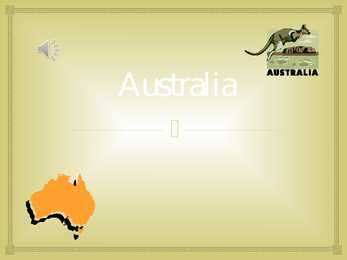
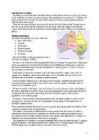
Australia Australia , officially the Commonwealth of Australia, is a country in the Southern Hemisphere comprising the mainland of the Australian continent, the island of Tasmania and numerous smaller islands in the Indian and Pacific Oceans. Australia flag Australia coat of arms. Australia is a cloudless dark blue sky, the bright sun, multikilometer beaches with snowwhite sand and ocean up to horizon. Australia's landmass of 7,617,930 square kilometers is on the IndoAustralian Plate. Surrounded by the Indian and Pacific
1300). 3. For the Europeans, most of these islands were discovered by Columbus during the 15 th century. 4. The area was colonized by England, Spain, France, Portugal and the Netherlands. 5. Languages spoken in The West Indies: English, French, Spanish, also Creole and Pidgin (by black slaves). The origin of the people is mostly African, who were brought there for slavery. 6. Most West Indian countries gained independence during the 1960s-1980s. 7. The main branches of economy are tourism and companies kept offshore (tax haven). 8. Reggae, limbo dancing and salsa have originated from the West Indies. 9. Religions: Catholicism, various forms of Protestantism, Hindus and Muslims, Rastafarians; many worship the Christian god and African gods at the same time (witchcraft, voodoo). The reason why there are so many religions is because
and herds of buffalos. Once inhabited the present United States from Coast to Coast original Native (Indian) Americans. Indians, the name commonly applied to the people found by Columbus in America. They introduced colonists to clothing such as moccasins and ponchos, as well as to cotton, which is used to make many clothes today. Much of early Indians' clothing was made from deer skins. Many common English words have American Indian origins. These include: bayou, chipmunk, hickory, hominy, pecan, squash, toboggan, and tomahawk. Some interesting facts about The United States of America: · CocaCola was first bottled in 1894 in Vicksburg, Mississipi. · The world's first drivein movie theatre, built in 1933 near Camden, New Yersey. · 1/3 of the people who work in the capital city Washington DC work for the federal government.
· It is the seventhlargest country by geographical area. · The most populous democracy in the world. · Country with over 1.18 billion people. · The capital of India is New Delhi. The symbols of India: to edit Master text styles Second level Third level Fourth level Fifth level The National Flag The National Animal "Tiger" The National Fruit" Mango" The National Flower "Lotus" (Nelumbo nucifera) The National Bird"Peacock" The National Tree" Banyan" The National Sport"hockey" The National Emblem The National Song'Vand Mtaram" National Anthem of India " Jana Gana Mana"
As more snow fell, the ice grew thicker. It began to move. Great sheets of moving ice, or glaciers, were formed. The edges of the sheets were pushed outward. At last the ice covered most of what is now Canada. And it spread southward into what is now the United States. The ice was probably a mile deep in places. It moved over hills and valleys, rivers and forests. It moved slowly perhaps only a foot a day. Millions of plants were buried by the ice. Many animals moved south. Among the animals able to stand the cold near the edge of the ice were woolly mammoths, woolly rhinoceroses, and caribou. For thousands of years the ice moved southward. But at last the summers grew longer and warmer, and the ice began to melt back. It melted back so that most of North America was out from under it. But again it grew colder and the ice sheets moved southward. Again it grew warmer and they melted back
INDIAN SPORTS ANDRES MÄLLO 9.A INDIAN SPORTS • Kabaddi • Kho kho • Pehlwani • Gilli-danda • Contact sport KABADDI • Originated in ancient India • It is known by its regional names in different parts of the subcontinent, such as kabadi in Tamil Nadu, Kabaddi in Karnataka, hadudu in Bengal, bhavatik in Maldives, kauddi in the Punjab region and chedugudu in Andhra Pradesh KHO KHO • Tag sport • Indian subcontinent • Played by teams of twelve players • Nine enter the field • Who try to avoid being touched by members of the opposing team • One of the two most popular traditional tag games of the South Asia • Form of wrestling PEHLWANI • Developed in the Mughal Empire • The words pehlwani and kushti derive from the Persian terms pahlavani and koshti respectively • Many southern Indian
INDIAN SPORTS ANDRES MÄLLO 9.A INDIAN SPORTS · Kabaddi · Kho kho · Pehlwani · Gilli-danda · Contact sport KABADDI · Originated in ancient India · It is known by its regional names in different parts of the subcontinent, such as kabadi in Tamil Nadu, Kabaddi in Karnataka, hadudu in Bengal, bhavatik in Maldives, kauddi in the Punjab region and chedugudu in Andhra Pradesh KHO KHO · Tag sport · Indian subcontinent · Played by teams of twelve players · Nine enter the field · Who try to avoid being touched by members of the opposing team · One of the two most popular traditional tag games of the South Asia · Form of wrestling PEHLWANI · Developed in the Mughal Empire · The words pehlwani and kushti derive from the Persian terms pahlavani and koshti respectively · Many southern Indian
Introduction, Location Australia is a country between the Indian Ocean and the Pacific Ocean. It is the only country in the world that occupies an entire continent. The mainland covers an area of 7.7 million km² and it is about 3700 km from the most northern point to its most southern point and about 4000 km from east to west. There are also many different seas around Australia, like the Coral and the Tasman Seas in the west or the Timor and the Arafura Seas in the north, where the Indian and the Pacific Oceans meet. Because all seas and oceans near Australia are warm, surfing is a very popular hobby. Political subdivision Australia is divided into six states, which are: · New South Wales · Victoria · Queensland · South Australia · Western Australia · Tasmania New South Wales is the most populous state in Australia. Its capital is Sydney. Victoria is one of the most densely populated states in Australia. Its capital city is Melbourne
Table of contents 1. Introduction 2. Geographical position 3. Mountains, lowlands 4. Rivers, lakes 5. The territories and provinces 6. Towns, economy, agriculture 7. Climate 8. Animals, plantlife 9. Population 10. Sports 11. Culture 12. History 13. Political system, symbols 14. Conclusion 15. Materials 1. Introduction If you had to use two words to describe Canada, they might be large and diverse. Canada is the second largest country in the world, bordered by three oceans, and across the country, Canadians experience many different landscapes from rolling plains and mountains to the cold tundra of the north. Despite Canada's great size, it is
Australia Australia is surrounded by the Indian and Pacific oceans, it is separated from Asia by the Arafura and Timor seas. Australia presents an enormous range of climatic conditions, since it covers thirty degrees of latitude. It is mostly temperate, but one third of the continent is tropical, and there are large desert areas. The two largest cities are Sydney and Melbourne. The capital of Australia is Canberra. It is a small city and was built in the early 1900s. History
The present coat of arms was granted by King George V in 1912. It consists of a shield containing the badges of six Australian states, enclosed by an ermine border. The shield is a symbol for the federation of the states, which took place in 1901. The crest, which is above the shield, is a seven-pointed gold star on a blue and gold wreath. The seven points of the star represent exactly the same thing that they do on the flag. The supporters of the shield are native Australian animals: the red kangaroo and the emu. Usually the coat of arms is depicted on the background of sprays of golden wattle with a scroll beneath it containing the word `Australia'. Australia's national anthem is `Advance Australia Fair', which replaced `God Save the Queen' in 1984. It was written by a Scottish-born composer, Peter Dodds McCormick. The unofficial anthem of Australia is `Waltzing Matilda'. It tells a story about a swagman, who has named his sleeping blanket Matilda
Territory). The Australian people are culturally the same as the Anglo Americans. There also live aborigines. Aborigines are the ancestors of the people. Like the US and Canada, Australia was an English speaking colony of Great Britain. Today Australia is a modern developed country with a diversified economy. Australia is an island continent of 7.7 million square kilometres, which makes it a little smaller than the USA. Located in south of Asia, between The Pacific and Indian Oceans, Australia is the World's driest continent. Although large areas of the centre are desert, Australia has a wide range of climate from tropical in the north to temperate in the south east, where it frequently snows in winter. Geographical position The coasts of Australia are surrounded by the Pacific Ocean, the Indian Ocean and the Southern Ocean. Four seas are surrounding Australia, which are the Timor Sea and Arafura Sea in the north of
Form 10A 2009 Introduction The climate is cyclical England is in the middle latitude The English weather changes frequently 52% of the year is overcast England is washed by the warm Gulf Stream Spring March, April, May Wild areas may still be cold and muddy Animals start emerging from their hibernation Plants start blooming Sun and showers Summer Plants and animals start breeding Warm weathers The landscapes are covered with flowers Warm rain The average temperature ranges from 10 0C 150C Britain's highest temperature recorded is 38.5°C in August 2003 Autumn Birds are returning after migrating from the north Birds start growing their winter plumage. Many flowers fade Trees reveal their autumn colours It rains more often Winter Animals start hibernating Flowers are rare Not much snow because of the Gulf Stream
the Definite Article. The Indefinite Article has two forms – a and an (a precedes words beginning with a consonant sound and an precedes words beginning with a vowel sound). It comes from the Old English word ãn, which meant one. The Definite Article is the. It comes from the Old English word ţis, which meant this. Thus, in most general terms, a and an cannot be used with countable nouns in the plural and with uncountable nouns. Countable nouns are names of the things you can count (one elephant, two elephants, three elephants, etc). Uncountable nouns are names of the things you cannot normally count (love, air, philosophy, etc). The can usually be used when we mean this. The Indefinite Article – a/an (= one!) can only be used with singular countable nouns. a child, a book, an elephant, an apple On the other hand, singular countable nouns cannot be used without any determiner. Determiners are both articles (a/an and the) and different pronouns (e.g
It flows from north-western Minnesota south to the Gulf of Mexico. It is a significant transportation artery and when combined with its major tributaries (the Missouri and the Ohio rivers) it becomes the third largest river system in the world (at 6,236 km). The western tributaries are the Red River, the Arkansas and the Missouri. The eastern tributaries are the Tennessee and the Ohio. Its name means the Father of Waters in the Red Indian. Together with its tributaries it forms 20,000 km of navigable waterways. The Colorado River is a river in the south-western United States, approximately 1450 miles long, draining a part of the arid regions on the western slope of the Rocky Mountains. The natural course of the river flows into the Gulf of California, but the heavy use of the river as an irrigation source for the Imperial Valley has desiccated the lower course of the river in Mexico such that it
India Mairi Kaseorg 9. A Overview of India India is the largest country and biggest democracy in the world today. It is the secondmost populous country with over 1.2 billion people which is about 17% of the world's population. The unemployment rate of India is 10.4%and many people live in poverty. The offical languages are Hindi and English. India is bounded by the Indian Ocean on the south, the Arabian Sea on the south west, and the Bay of Bengal on the southeast. Overwiev of India It is also home to a diversity of wildlife in protected habitats. India is a federation with a parliamentary system. It is the thirdlargest standing army in the world and ranks tenth in military expenditure among nations. The map of India Click to edit Master text styles Second level Third level Fourth level
conquests in C17. Denmark only acquired a few islands. 5. Which languages are spoken in the West Indies? What is the origin of the people who live there? Pidgin is a simplified language that is born out of contact (e.g. trade) between speakers who do not speak the same language. The elements of two or more languages coalesce. Creole is a pidgin language that has become the native language of a community. Usually it was a mix of a European and another language. 6. When did most West Indian countries gain independence? In 1804, Haiti became the first Carribean nation to gain independence. In 1844, the Dominician Republic declared its independence from Haiti. Cuba became independent in 1902. Subsequently, the British West Indies became independent, starting with Jamaica, as well as Trinidad and Tobago. 7. What are the main branches of economy in the West Indies? Sugar industry 8. Which styles of music and dance originate in the West Indies?
Rare animals Rare Chinese tiger seen in the wild Researchers have confirmed that a wild tiger, photographed by a farmer in the Qinba Mountains of Shaanxi Province, Central China, is indeed that of the critically endangered South China tiger. The South China tiger classified as one of only five subspecies of tiger still alive today is extremely rare, with only an estimated 20 to 30 still remaining in the wild. The wildlife and conservation group WWF says the South China tiger is actually native to the Hainan most forests of south-east China, and because there are so few individuals left, it is regarded by many scientists as being "functionally extinct" in the wild. But a group called Save China's Tigers has been working on a captive- breeding programme and hopes to
Over 1,800 species of flowering plants are found in Hawaii. The United States is home to more than 400 mammal, 750 bird, and 500 reptile species. About 91,000 insect species have been described. In America, there are very many parks, which 58 are national parks and there are hundreds of federally managed parks, forests and wilderness areas. The first national park in the world was Yellowstone national park in Wyoming. The flora is so diverse in America because of the different climates and good weather in some places (like California). Many species became extinct soon after the first settlements. The U.S. climate is temperate in most areas, tropical in Hawaii and southern Florida, polar in Alaska, semiarid in the Great Plains, Mediterranean in coastal California and arid in the Great Basin. The droughts and floods are infrequent in America. In north Alaska was recorded the lowest temperature in U.S. -62.2 °C . The
Cuisine of South Africa has had a variety of sources and stages: · Cookery practised by indigenous people of South Africa such as the Khoisan and Xhosa- and Sotho-speaking people · Settler cookery introduced during the colonial period by people of Indian and Afrikaner and British descent and their slaves and servants - this includes the cuisine of the Cape Malay people, which has many characteristics of Malaysia and Java, and recipes from neighbouring colonial cultures such as Portuguese Mozambique. Indigenous cookery traditional South African cuisine In the precolonial period, indigenous cuisine was characterized by the use of a very
The capital letter is also called a big letter or upper- case letter, or sometimes just a capital. A B C D E F G H I J K L M N O P Q R S T U V W X Y Z When do you use a capital letter? 4Use a capital letter for the first letter in a sentence: The dog is barking. Come here! 4Always use a capital letter for the word I : I am eight years old. Tom and I are good friends. 4Use a capital letter for the names of people: Alice, Tom, James, Kim, Snow White 4Use a capital letter for the names of places: National Museum, Bronx Zoo, London, Sacramento 4Use a capital letter for festivals, holidays, days of the week, months of the year: New Year's Day, Christmas, Labor Day, Mother's Day, Sunday, Monday, Friday, January, May, July, October Exercise 1 Circle the letters that should be CAPITALS. Then write
as she is desperate to fit in with the other children in her neighbourhood while forever feeling like an outsider because she is "different". She and her family are the only immigrants in the village. They are trying to work out how to fit into British society while attempting to maintain their own culture. Meena's house is always full of a constant stream of ethnic visitors and her parents seem to see no need to integrate futher. Namely, her parents considered every Indian immigrant in England as a friend or even as a part of the family. Meena's family are keen to see her keeping up the family's cultural tradition. Meena on the other hand, is caught between two cultures. She is having a difficult time adjusting to her surroundings, wishing she were blonde and carefree like her 14-year-old neighbor, Anita (Brewster). Meena idolizes Anita for her looks and free spirit, and in many ways wants to be
present? The Russian colonization of the Americas covers the period, from 1732 to 1867, when the Tsarist Imperial Russian Empire laid claim to northern Pacific Coast territories in the Americas. The Russians were primarily interested in the abundance of fur-bearing mammals on Alaska's coast, as stocks had been depleted by overhunting in Siberia. By the middle of the 19th century, profits from Russia's American colonies were in steep decline. Faced with the reality of periodic Indian revolts, the political ramifications of the Crimean War, and unable to fully colonize the Americas to their satisfaction, the Russians concluded that their American colonies were too expensive to retain. after less than a month of negotiations, the United States accepted Emperor Alexander II's offer to sell Alaska. The purchase of Alaska for $7.2 million ended Imperial Russia's colonial presence in the Americas. The Russian's legacy in Alaska (1784) can be seen in various forms
 annaabi.ee