 50 punkti
Autor soovib selle materjali allalaadimise eest saada 50 punkti.
50 punkti
Autor soovib selle materjali allalaadimise eest saada 50 punkti.
 ~ 14 lehte
Lehekülgede arv dokumendis
~ 14 lehte
Lehekülgede arv dokumendis
 2010-04-18
Kuupäev, millal dokument üles laeti
2010-04-18
Kuupäev, millal dokument üles laeti
 7 laadimist
Kokku alla laetud
7 laadimist
Kokku alla laetud
 0 arvamust
Teiste kasutajate poolt lisatud kommentaarid
0 arvamust
Teiste kasutajate poolt lisatud kommentaarid
 Aliiina
Õppematerjali autor
Aliiina
Õppematerjali autor
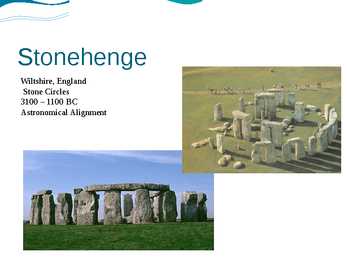
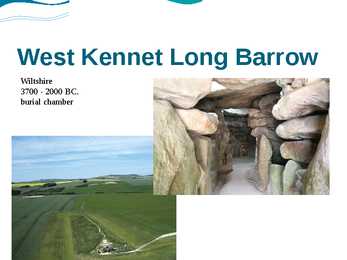
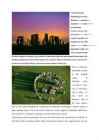
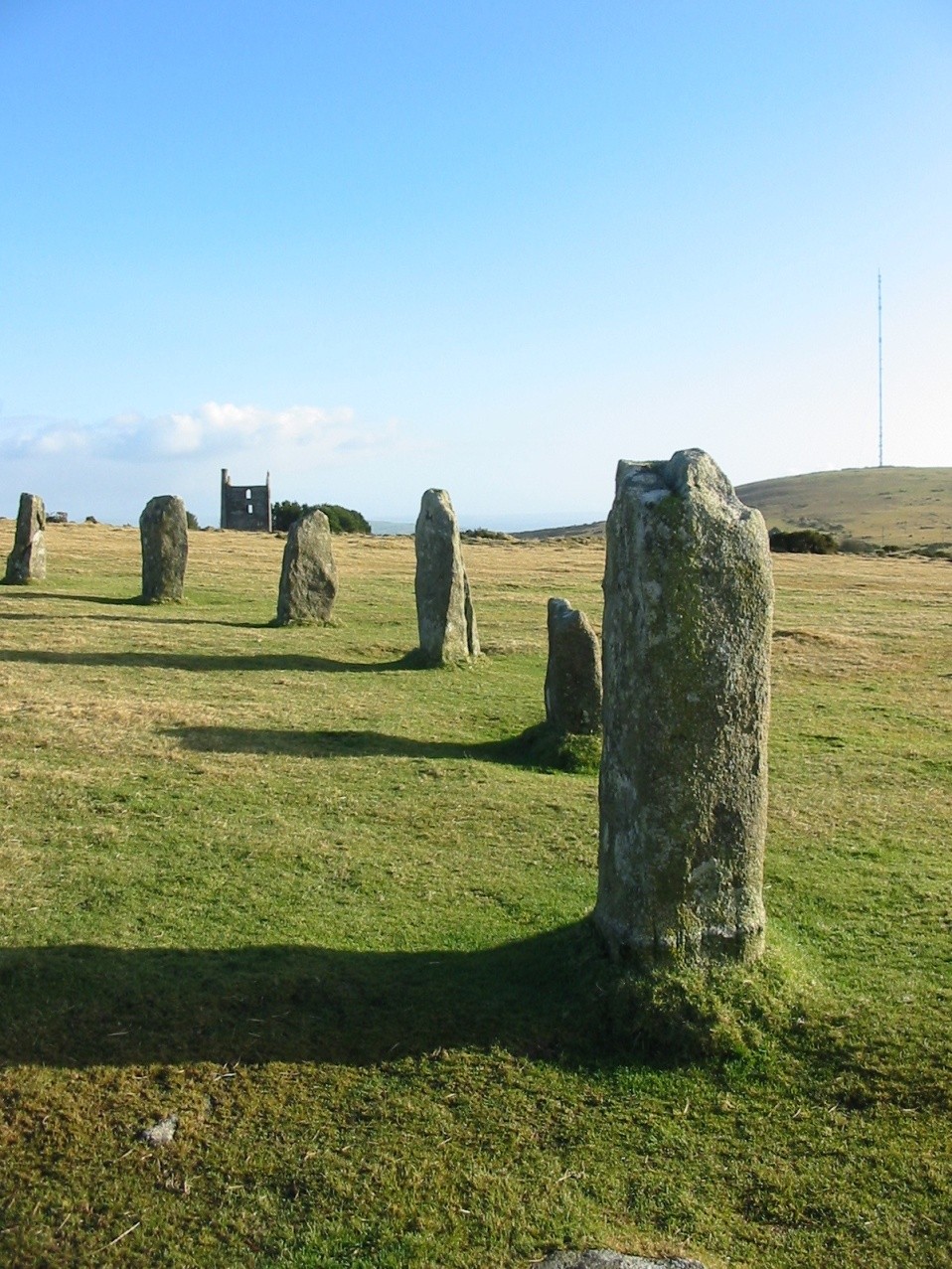
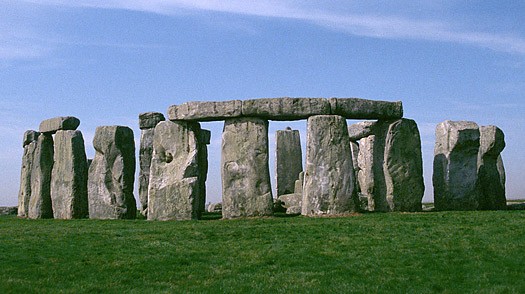
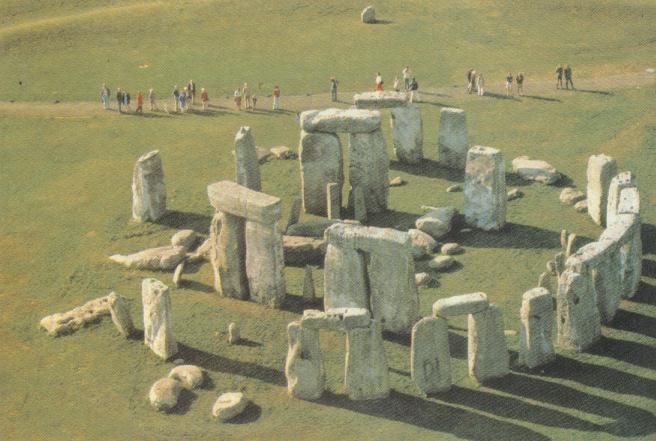
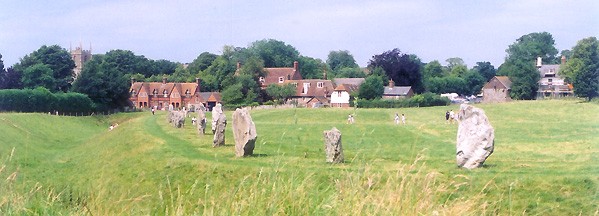
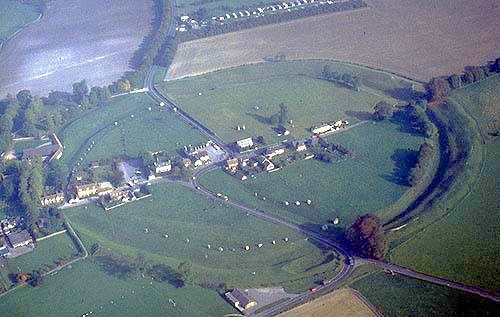
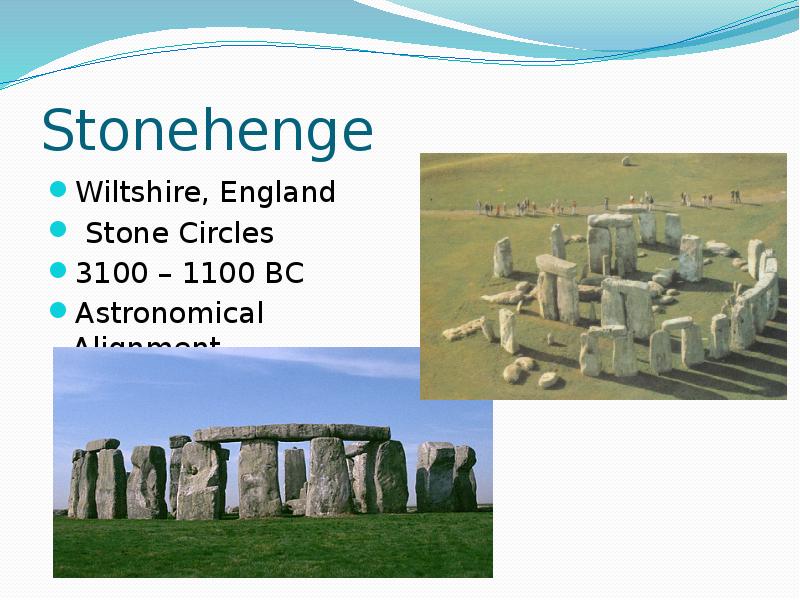
Stonehenge Stonehenge is a prehistoric monument located in the English county of Wiltshire, about 3.2 kilometres (2.0 mi) west of Amesbury and 13 kilometres (8.1 mi) north of Salisbury. One of the most famous prehistoric sites in the world, Stonehenge is composed of earthworks surrounding a circular setting of large standing stones. Archaeologists had believed that the iconic stone monument was erected around 2500 BC, as described in the chronology below. However one recent theory has suggested that the first stones were not erected until 2400-2200 BC,[1] whilst another suggests that bluestones may have been erected at the site as early as 3000 BC (see phase 1 below). The
km) north of Salisbury. One of the most famous sites in the world, Stonehenge is composed of earthworks surrounding a circular setting of large standing stones. It is at the centre of the most dense complex of Neolithic and Bronze Age monuments in England, including several hundred burial mound. Archaeologists have believed that the iconic stone monument was erected around 2500 BC, as described in the chronology below. One recent theory however, has suggested that the first stones were not erected until 24002200 BC, whilst another suggests that bluestones may have been erected at the site as early as 3000 BC (see phase 1 below). The surrounding circular earth bank and ditch, which constitute the earliest phase of the
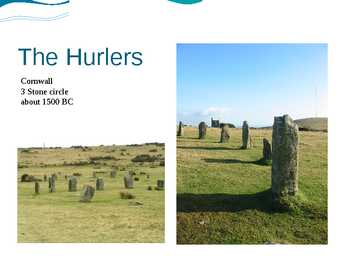
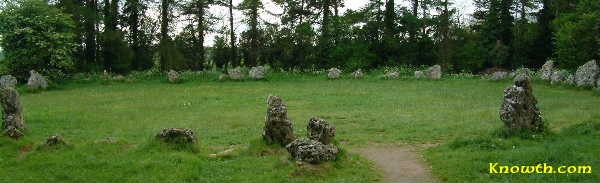
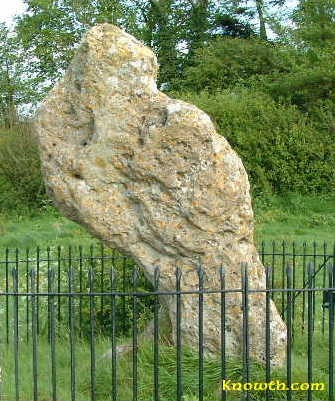
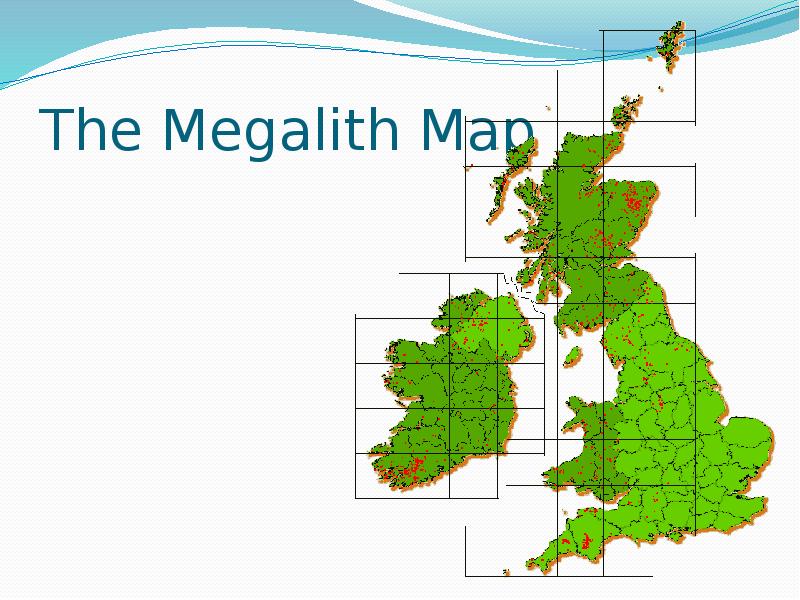
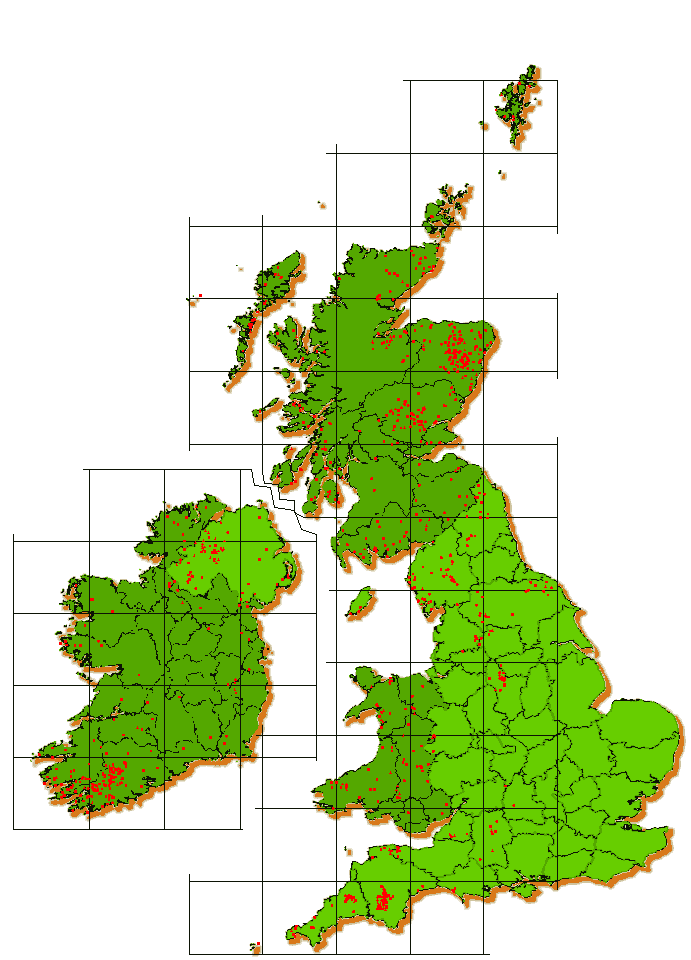
Stonehenge Hort 4000 Mary Laine What is Stonehenge? Derived from words that mean hanging stones, circle of stones, or stone hinges 162 stones originally and about half remain today Southern England, eight miles north of Salisbury and 30 miles north of the English Channel Nearby hillsides are covered with hundreds of burial pits known as barrows 80% of the barrows face east towards where the sun rises on the horizon There are at least 900 circles in Wales, Scotland, England, and Ireland. Most are made of stone, but wood was also used. Soil was also piled up to create banks, ditches, and circles. Many of these structures are
1) INDIAN ROCK ART: A NATIONAL TREASURE IN DANGER Unrecognized, unprotected, this priceless legacy of primitive art has endured the ravages of nature only to fall victim to wanton destruction by ,,civilized" man. Like the huge stone statues of Easter Island and prehistoric cave paintings of Altamira and Lascaux, North American Indian rock art is surrounded by an atmosphere of mystery. Although examples of rock art exist at some 15000 sites in canyons, deserts, caves and river gorges. Nowadays, however, primitive rock art in the United States has become a new field of scientific study. Klaus F Wellmann wrote two books about rock art. He is a professor of medicine. Rock art represents the history of aboriginal Americans. In the most cases the art is an expression of ideas and way of life, ritual ceremonies, hunting, fighting. The pictures of people and animals are often strikingly lifelike and artistic.
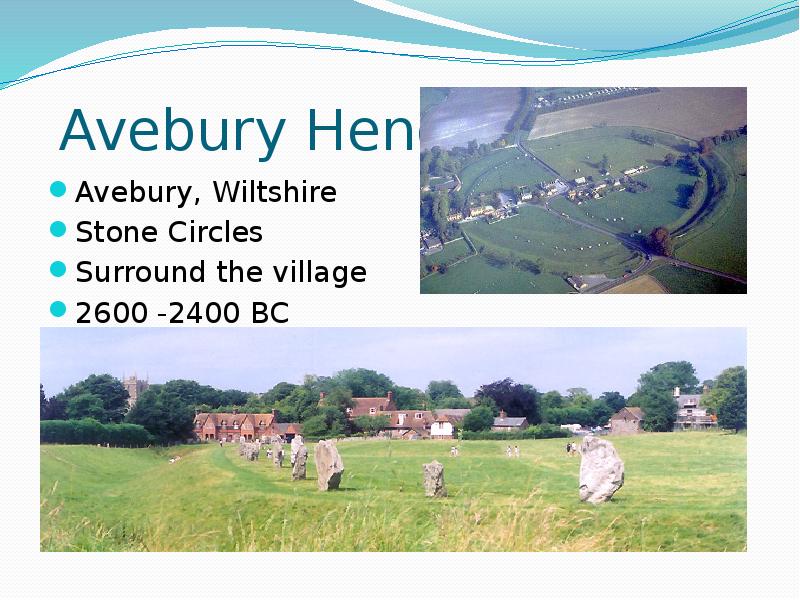
of the piece. Diachronic is development in history Synchronic is particular state at any given moment 2.) Give a general overview of Celtic Britain, Roman invasion in 55-54 BC, Anglo-Saxon invasion and the second Roman "invasion" of Great Britain, who were the leaders, what influence did they leave on the culture of Great Britain? Celtic Britain was during the Bronze Age, there were many small tribal kingdoms fighting one another. Many megalithic monuments were built around that time, e.g. Stonehenge, the Avebury ring. The Roman Invasion 55-54 BC, Julius Caesar ruled Rome, Rome built the Hadrian's wall (73 miles long, built in 121 127 AD) against the Picts and Scots, bits have survived till today. The Romans bring along the Christian faith The beginning of Christianization of the Celts. The Romans withdrew their forces together with the fall of the Roman empire. Anglo Saxon Invasion 5th 6th century AD
The United Kingdom The United Kingdom consists of England, Scotland, Wales and North Ireland and it is situated in the Atlantic Ocean near the mainland of Europe. The population of the UK is 58.6 million and area is 244,110 sq km. Britain has a temperate humid climate. Its characteristic features are mild winters, warm summer, no temperature extremes, abundant rain all year round and frequent changes of weather. The mild climate is partly due to the warm Gulf Stream and partly to the south westerly winds
1) General facts The UK: * the United Kingdom of Great Britain and Northern Ireland was formed in 1801 * it covers 243,610 sq km * everybody from the UK is called British * the capital city is London * is made up of four constituent countries: England, Scotland, Wales and Northern Ireland which in turn are divided into counties * the flag is called the Union Jack which is a combination of the flags of England, Scotland and Northern Ireland * the population is about 60,000,000 people, the population density is 242 people/sq km * its coasts are washed by the Atlantic Ocean, the North Sea, the English Channel, the Celtic Sea, Saint George's Channel, and the Irish Sea. It is linked to France by the Channel Tunnel * the United Kingdom is a constitutional monarchy. The current monarch is Queen Elizabeth II, who is also the Queen and Head of State of fifteen other Commonwealth Realms, such as
relations and defence. Great Britain Across / 'krs / risti, läbi, põiki Locality / l'kælt / asukoht, paikkond Inland body / 'nlænd 'bd / sisemaine osa Inlet / 'nlet / merekäär, laht Headland / 'hedlnd / neem Scour / 'ska / küürima Foreshore / 'f:: / tõusu ja mõõna vaheline rand Recreational / rekr'enl / lõõgastumis-, vabaaja- Scenery / 'si:nr / maastik Juxtaposition / dkstpz'in / kõrvuti asetsev GB consists of England, Scotland and Wales. GB is only a dot on the world map. It offers a great variety and scenic contrasts are often within easy reach. The coastline is washed by the tidal system twice a day. Britain´s speciality is the man-made scenery. Each part of the country has its peculiar geographical features. England Indented / n'dentd / sakiline Estuary / 'estjr / suudmelaht
 annaabi.ee












Kõik kommentaarid