Leidsid 33 sarnast õppematerjali, mis on seotud failiga "Losses of our life". Need materjalid aitavad sul teemat sügavamalt mõista.
person, found, hope, alive, losing, lost, imagine, know, missing, year, although, beach, whole, even, them, makes, losses, everyday, phenomenon, lose, sock, aswell, things, tend, beloved, face, safe, there, situations, doesn, disappears, without, trace, reasons, variable, criminal, cases, beings, getting, hidden, deeply, matters, average, night, beforeneighbourhood, this truth is so well fixed in the minds of the surrounding families, that he is considered the rightful property of some one or other of their daughters. "My dear Mr. Bennet," said his lady to him one day, "have you heard that Netherfield Park is let at last?" Mr. Bennet replied that he had not. "But it is," returned she; "for Mrs. Long has just been here, and she told me all about it." Mr. Bennet made no answer. "Do you not want to know who has taken it?" cried his wife impatiently. "You want to tell me, and I have no objection to hearing it." This was invitation enough. "Why, my dear, you must know, Mrs. Long says that Netherfield is taken by a young man of large fortune from the north of England; that he came down on Monday in a chaise and four to see the place, and was so much delighted with it, that he agreed with Mr. Morris immediately; that he is to take possession before Michaelmas, and some of his servants are
Ego: The Current State of Humanity – 19 The Illusory Self......................................................................................20 The Voice in the Head.............................................................................22 Content and Structure of the Ego.............................................................24 Identification with Things........................................................................25 The Lost Ring...........................................................................................26 The Illusion of Ownership........................................................................29 Wanting: The Need for More....................................................................31 Identification with the Body.....................................................................33 Feeling the Inner Body.............................................................................34
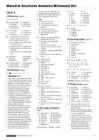
6 drop me off A. So there you are ... problem solved! 7 to lay off Rosie Yeah, these are good 8 turned up intentions, but not if we end up poisoning people in the long run. I 1F Discussion page 9 don't know, I just find the whole thing unnatural. I don't think we have a right 1 1 laboratory 5 crops to `play God' in this way. 2 controversy 6 harmful Leo I see what you mean. But to be 3 discredited 7 term honest with you, people have been 4 campaign 8 crisis crossing breeds for hundreds of years.
Libraries. We know a lot of things thanks to books, but we do not know exactly when and where they originated, and what should be considered the first book in the world. Ancient document, written on parchment, papyri and vellum can hardly be qualified as books the way we understand the word today. Centuries went before paper replaced parchment and papyri. In the 15 th century Johann Gutenberg invented a mechanical process of duplicating texts, which we today call book printing. The first book was printed between 1444 and 1446, so
Try to describe facts like they are. Naturalists depict the lower, coarser forms of life. · Drab, squallid set of scene. Revolting, disgusting · Characters are people with strong animal desires · Neurotic characters unable to understand the forces that control them · By the end of the 18th century the naturalism depicts in europe, but stars to become the literature method no 1 in america · Naturalism appealed American authors because they found it very right to describe what was going on in the turn of century in America · They wanted something fresh, new · They were disgusted by romantics · Showed the harsh tone in moral life · Refleced the development of science · Period of intense urbanisation, the city is in the center of the novel, often · New characters were businessmen, salesman, immigants, poor farmers · These characters were in new settings, skyscrapers, departments store, apartment
fact views his attentions to her as mere amusement, believing that she does the same. Anna, shaken by her emotional and physical response to Vronsky, returns at once to Saint Petersburg. Vronsky travels on the same train. During the overnight journey, the two meet and Vronsky confesses his love. Anna refuses him, although she is deeply affected by his attentions to her. Levin, crushed by Kitty's refusal, returns to his estate farm, abandoning any hope of marriage, and Anna returns to her husband Alexei Alexandrovich Karenin, a senior government official, and their son Sergei ("Seryozha") in Petersburg. On seeing her husband for the first time since her encounter with Vronsky, Anna realises that she finds him repulsive, noting the odd way that his ears press against his hat. Part 2 The Shcherbatskys consult doctors over Kitty's health which has been failing since she realizes that
My carry-on item was a parka. In the Olympic Peninsula of northwest Washington State, a small town named Forks exists under a near-constant cover of clouds. It rains on this inconsequential town more than any other place in the United States of America. It was from this town and its gloomy, omnipresent shade that my mother escaped with me when I was only a few months old. It was in this town that I'd been compelled to spend a month every summer until I was fourteen. That was the year I finally put my foot down; these past three summers, my dad, Charlie, vacationed with me in California for two weeks instead. It was to Forks that I now exiled myself-- an action that I took with great horror. I detested Forks. I loved Phoenix. I loved the sun and the blistering heat. I loved the vigorous, sprawling city. "Bella," my mom said to me -- the last of a thousand times -- before I got on the plane. "You don't have to do this."
Many people have contributed to my thinking and have been invisible guides as these chapters came to- gether. I would like to first thank my friend Mark Victor Hansen, who introduced me many years ago to Emmet Fox, perhaps the finest spiritual thinker of the twentieth century. Ernest Holmes, founder of Science of Mind, opened my eyes and heart to the incredible universe of potential contained within each person when they changed their thinking and changed their lives. Great spiritual teachers such as Charles Fillmore, Neville, Eric Butterworth, Wayne Dyer, and Roberto Assagioli have had a profound influence on my thinking. I would also like to thank those great practical thinkers on suc- cess who have had such a wonderful influence on me—and on the world—such as Napoleon Hill, Maxwell Maltz, Claude Bristol,
3 naive 6 grumpy 1 1 horrified 4 determination page 9 2 relief 5 resigned 1 1 connected 6 say 3 1 gold 5 lamb 3 obstinate 6 misery 2 show 7 as though 2 bird 6 rake 3 imagine 8 would guess 2 1 Water was pouring into the boat. 3 the hills 7 bee 4 like 9 hard 2 We clambered onto the rocks. 4 a mouse 8 a fox 5 judging 3 The wooden floor had rotted. Challenge
making music, active listening, non-violent communication ..." they wrote, in part. The idea, they said last week, was that the relationships would be more important than the real estate. What they hoped to put together was a kind of family, but without sibling rivalry or parents, of course; the thought was that everyone would do the dishes without grumbling. "It's hard to feel supported in a place like New York City, especially without a partner, or consistent person or group that you are able to connect with daily," said Ms. Berger, a musician and piano teacher who has been renting a room from another young woman in an apartment in Park Slope. "And I'd rather have a lot of people to share my day with." The impetus for the group home or collective they hope to form is less about finances -- though it is true that pooling resources yields better real estate -- and more about community building. Indeed, Ms
In a re- lated vein, the book might be seen as a way to demonstrate that, properly presented, what often seems like dry science can actually prove to be lively, useful, and relevant to all readers' personal lives. Comment on the Fifth Edition of Influence: Science and Practice It has been some time since Influence was last published. In the interim, some things have happened that deserve a place in this new edition. First, we now know more about the influence process than before. The study of persuasion, compli- ance, and change has advanced, and the pages that follow have been adapted to re- flect that progress. In addition to an overall update of the material, I have devoted special attention to updated coverage of popular culture and new technology, as well as to research on cross-cultural social influence-how the influence process works similarly or differently in various human cultures. I have also expanded a fea-
And free with your advice on all occasions. DAMIS But . . . MADAME PERNELLE You're a fool, my boy--f, o, o, l Just spells your name. Let grandma tell you that I've said a hundred times to my poor son, Your father, that you'd never come to good Or give him anything but plague and torment. MARIANE I think . . . MADAME PERNELLE O dearie me, his little sister! You're all demureness, butter wouldn't melt In your mouth, one would think to look at you. Still waters, though, they say . . . you know the proverb; And I don't like your doings on the sly. ELMIRE But, mother . . . MADAME PERNELLE Daughter, by your leave, your conduct In everything is altogether wrong; You ought to set a good example for 'em; Their dear departed mother did much better. You are extravagant; and it offends me, To see you always decked out like a princess. A woman who would please her husband's eyes Alone, wants no such wealth of fineries. CLEANTE But, madam, after all . . . MADAME PERNELLE Sir, as for you,
Bumble asks if he knows of anyone who needs a boy, and Mr. Sowerberry offers to take him. The board agrees upon the plan, and Mr. Bumble takes Oliver, weeping from loneliness, to the Sowerberry house. He meets both Mr. and Mrs. Sowerberry, the serving girl Charlotte. Mr. Sowerberry gives him a little meat, which he devours and takes him to his bed that is located under the coffin counter. Chapter 5: A pounding on the door the following morning woke Oliver from his sleep in the coffin room. The person outside was yelling and kicking the door to be let in. Oliver opened the door and was introduced to Noah Claypole who also worked for Mr. Sowerberry and who was a higher rank than Oliver was. He pointed this out to Oliver very quickly and was very mean to him. Noah and Oliver went down to get breakfast with Charlotte. Mr. and Mrs. Sowerberry during their own breakfast decide that because Oliver was such a nice looking, though melancholy, boy, he should be a made a mute. Later in the morning, Mr
"It is not composed, as in Europe, of great lords who posses everything, and of a herd of people who have nothing". During the period of enlightenment the people of America came to realize that if they work hard enough that what they earn is for them to keep. There are no Kings or Dictators ruling the lower class. There is a huge amount of personal and financial freedom to be gained in American during this time. Crevecoeur states that "each person works for himself". American became a classless society during the Enlightenment period where each individual was allowed as much room to grow as needed. The Age of Romanticism. The early romantic writers. Washington Irving as a transitional figure from the traditions of the Enlightenment to those of Romanticism. Romanticism (or the Romantic era/Period) was an artistic, literary, and intellectual movement that originated in Europe toward the end of the 18th
There had been even rumours about him and the boys that they beat an Indian guy to death. Not only did she have to struggle with the problems with racism, but also with the idea of having a baby brother. This all was too much for her. Fortunatelly, Meena's grandmother came to pay a little visit to them from India. She and Meena develop At the end of the novel Anita's little sister Tracey runs to Meena's place to get help. Namely, she believed that Sam is killing her older sister. They found them in the garden of Big House, where the witch suppose to live. When Tracey tries to attack Sam to defend Anita, the boy throws the girl into the pound. She would have been nearly drowned, if she hadn't been saved by a mysterious man. It turns out that the man is from India and also the owner of land, where the closed mine is. Meena's family decide to move out of Tollington. Characterize and analyze the main characters (what motivates them, are they round or flat
7 ___________________________________________________________________________________________ They usually go to bed at about midnight. 2 Macmillan Publishers Limited 2001. This sheet may be photocopied for use in class. 8 ____________________________________________________________________________________________ Yes, we own a BMW. 9 ____________________________________________________________________________________________ I don't know what the word means. Look it up in a dictionary. 10 ____________________________________________________________________________________________ No, I don't like the Spice Girls. Marks: /10 Words, words, words 4 Complete these sentences using the correct form of the words below. There is one extra word which you do not need to use.
l `m afraid I can't make it because I've a/ready made plans which l can "t change ... 3. Dear Sirs, I am writing to complain about the poor quality of the items which I received from your company. I have no other alternative but to cancel the order which 1 placed earlier this week ... 4. ... thus, I recommend that you accept this advice on the matter. I am pure that the suggestion offered is the best solution. Please let me know if this was helpful. Yours sincerely, Lee Jones 5. ... I would appreciate a reply at your earliest convenience. I look forward to meeting you to discuss employment opportunities. Yours faithfully, Nicole Porter Paragraph Plan for Letters · salutation · Paragraph 1 reasons for writing · Paragraphs 2, 3 development · Final paragraph closing remarks · Name · Letters are divided into two categories, formal and informal
/ wicce f.) is a practitioner of witchcraft. Historically, it was widely believed that witchcraft involved the use of these powers to inflict harm upon members of a community or their property, and that all witches were in league with the devil. Since the mid 20th century, the term witchcraft has sometimes been used to distinguish between bad witchcraft and good witchcraft, with the latter often involving healing. Human misfortune was often blamed on a supernatural entity or a known person in the community. Reasons for accusations of witchcraft fall into four general categories: · A person was caught in the act of positive or negative sorcery · A well-meaning sorcerer or healer lost their clients' or the authorities' trust · A person did nothing more than gain the enmity of their neighbours · A person was reputed to be a witch and surrounded with an aura of witch-beliefs
• A revised chapter which looks back at the Star Wars phenomenon and analyzes the six feature films as an epic on the theme of father-son relationships • New illustrations and diagrams that give additional depth to the mythic principles • A final chapter, "Trust the Path," an inspiring call to adventure for those who want to discover themselves through writing "This book is like having the smartest person in the story meeting come home with you and whisper what to do in your ear as you write a screenplay. Insightfor insight, step for step, Chris Vogler takes us through the process of connecting theme to story and making a script come alive. " - Lynda Obst, Producer, Sleepless in Seattle, How to Lose a Guy in 10 Days; Author, Hello, He Lied
As her looks begin to fade, she becomes increasingly possessive and jealous. Count Mippipopolous - A wealthy Greek count and a veteran of seven wars and four revolutions. Count Mippipopolous becomes infatuated with Brett, but, unlike most of Brett's lovers, he does not subject her to jealous, controlling behavior. Amid the careless, amoral pleasure-seeking crowd that constitutes Jake's social circle, the count stands out as a stable, sane person. Like Pedro Romero, he serves as a foil for Jake and his friends. Wilson-Harris - A British war veteran whom Jake and Bill befriend while fishing in Spain. The three men share a profound common bond, having all experienced the horrors of World War I, as well as the intimacy that soldiers develop. Harris, as Jake and Bill call him, is a kind, friendly person who greatly values the brief time he spends with Jake and Bill.
Home and family Ex. 3 p. 31 a. When she was 15. Emma's behavior got worse. b. It's very hard for them it they have suddely leave and live out in the world on their own. c. Caroline was a real friend. d. She has friends, a boyfriend and a busy social life. e. I have to treat her like an adult and give her space. Ex. 4 1. Emma was unhappy. She was smoking and drinking. She kept missing school and getting terrible fights. She stayed out at night, wen clubs, often got into trouble with the police and even started taking drugs. 2. Caroline was fostered a lot of teenagers before. Caroline is kind and caring for Emma. She helped Emma to see that how important it was to go to school and live her life. 3. Emma decided to stay on at school, and worked hard for her exams. Emma was extremely lucky. Caroline want Emma to stay with them.
" "What is it, darling? What's the matter?" He had now become absolutely motionless, and he kept his head down so that the light from the lamp beside him fell across the upper part of his face, leaving the chin and mouth in shadow. She noticed there was a little muscle moving near the corner of his left eye. "This is going to be a bit of a shock to you, I'm afraid," he said. "But I've thought about it a good deal and I've decided the only thing to do is tell you right away. I hope you won't blame me too much." And he told her. It didn't take long, four or five minutes at most, and she say very still through it all, watching him with a kind of dazed horror as he went further and further away from her with each word. "So there it is," he added. "And I know it's kind of a bad time to be telling you, bet there simply wasn't any other way. Of course I'll give you money and see you're looked after. But there needn't really be any fuss. I hope not anyway
Irene still hasn't officially been told by Soames. Aunt Anne is old and bedridden. She hears the new from Forsyte 'Change, and tells Aunt Hester to warn Soames to be very very careful. We find Soames ranting at Irene about something or other fairly unpleasant. He doesn't like June much. He gets the news about the house out under cover of the burst of irritation. She doesn't react. He clearly expected a reaction, and asks her if she heard. She already knew. She tells him that if he wants to know what she wants, he should ask her. Soames storms off. Irene reacts after he leaves, wondering what she's going to do. Bosinney has finished the plans of the house. He presents them to a puzzled Soames. Soames knows about painting, but not about architecture. All this talk about regularity is all very well, but won't it look like a barrack? Won't it be cold? Irene can't stand the cold! Bosinney explains. Eventually Soames consents. The building of the house proceeds over the winter
found something he/she feels passinoate about and practiced a lot. Of course there are some super kids, who haven’t practiced that much but are still very good at what they’re doing. Just not that much as much we think there are. I mean, for a kid it’s easy to look talented. Ken Robinson gave his son as an example - the part where his son plays Joseph and switches the lines with other actor on a premiere. I can give my cousin as an example. She wants me to make her a choreography every year around the Christmas. One year she forgot everything, except the beginning and the end, so she improvised everything in between. I was really proud of her, cause at first I thought she’s gonna freek out and run away. But she didn’t. Kids, they’re fierce. If they don’t remember anything, they’ll make it up. They’re more afraid to just stand and watch the silent crowd than to be wrong. Ken says that kids are not afrayd to be wrong. But by the time they start going to
I only wish I could share more of it with you guys. I miss you all so much. Lots of love and kisses to everyone! Love Regina 3. Descriptions a) an object My bed in the dormitory is a bunk bed. It is a huge old light brown wooden piece of furniture. It squeaks when I switch sides or when I climb into it. I sleep on the second level and sometimes I am truly scared for my life. It is not as sturdy as I would like it to be. The bottom step on the ladder is loose and I know that one night I am going to fall thanks to that. It has carvings, but they are all scribbles made by previous sleepers. The mattress is worn out and needs to be replaced. It is stained beyond sense. At least it has not fallen apart, yet. b) a place Lausanne is a city in Switzerland which took my breath away, literally. It is one of the most beautiful places I have seen and it is simply filled with history.
Copyright ©2007 by Saddleback Educational Publishing. All rights reserved. No part of this book may be reproduced in any form or by any means, electronic or mechanical, including photocopying, recording, or by any information storage and retrieval system, without the written permission of the publisher. ISBN 1-59905-201-6 Printed in the United States of America 13 12 11 10 09 08 07 9 8 7 6 5 4 3 2 1 Introduction Grammar is a very old field of study. Did you know that the sentence was first divided into subject and verb by Plato, the famed philosopher from ancient Greece? That was about 2,400 years ago! Ever since then, students all over the world have found it worthwhile to study the structure of words and sentences. Why? Because skill in speaking and writing is the hallmark of all educated people. Lesson by lesson, this book provides basic instruction in the eight parts of speech--nouns, pronouns, verbs,
Kordamine inglise keele eksamiks A 1.1 Read the text and answer the questions below. Dear Mary-Alice, It's been ages since I last wrote to you, isn't it weird? Yes, so it is, but, I do have a certain reason. Do you remember Sir Thom of the Minquettes'? That fine young man with fascinating blue eyes... Oh, my sweet Mary, you will never guess what happened yesterday! It was about seven o'clock in the evening when Lillian called me out for a walk you know I can't say `no' to my little sis. Anyway we went to the forest near the Swan Lake and, believe it or not, got lost! Awful! I was so scared... We walked and walked, not even knowing the direction we were heading to, until we reached a huge mansion. And the garden around it was so extraordinary... That is something you just must see! But neither the trees nor flowers could be as wonderful as the owner himself! Sir Thom treated us tea and sandwiches, not
what consequences they might have. I will also talk about some of the examples and point out actions everyone can take to minimize the chance of becoming a victim of an identity theft. What is Identity theft Identity theft is defined as the deliberate use of someone else's identity, usually as a method to gain a financial advantage or obtain credit and other benefits in the other person's name, and perhaps to the other person's disadvantage or loss. The person whose identity has been assumed may suffer adverse consequences if they are held responsible for the perpetrator's actions. Identity theft occurs when someone uses another's personally identifying information, like their name, identifying number, or credit card number, without their permission, to commit fraud or other crimes.[1] Criminals can even use seemingly harmless pieces of information, such as your date of birth, to commit identity theft. [2] The different types of identity theft
Women writer's influence on our society Estonian women writer's history doesn't go far back. The reason for that is that people were slaves back then. Even if there were writers, then most weren't famous and they wrote poems and stories more for themselves. Also being a woman and a writer wasn't considered as a decent job for a woman at that time. The stories that we have from that time were given to one another by talking and mostly we don't know who were the authors. Education was also very expensive so only rich people could get it and Estonians, who were just farmers, mostly didn't have money for that. First I am going to talk about Marie Heiberg. She lived 1890-1942. Her first poem collection was ,,Mure-lapse laulud" in translation ,,Problem child's songs". Her talent was noticed, but she didn't have a change to really become famous. She was in a great penury that made her life really though and she had a gentle soul
way some teachers are just waitening it. As well as people can not speak along with state public topics and express their opinion. Therefore freedom of speech is debateable. Already from the old times Estonians have been fighting for their own freedom, because they do not like to allow to another country or state, foreign public and foreign language. Estonian public have been fighting with German, Russian and a lot of other states. Estonians has strongly tried to keep alive their own nationality, independent that Estonia is a very small state in comparison with other states. Thanks to the Tartu peace treaty, liberty war, finally public achieved to their state a freedom. Republic gives to people feeling that they are free inside and outside to express their own opinion on many subjects. Anyway if I live in Republic I should have to be a chance to express my opinion. There is still a place, where I can not do this
"You Belong To Me" by Mary Higgins Clark This book was written by Mary Higgins Clark in the year 1998. In the Asian Age was written about this book "Clark keeps you reading...very engaging" and the Daily Mirror wrote "Clark plays out her story like a pro that she is...flawless". About Mary Higgins Clark Mary Theresa Eleanor Higgins Clark Conheeney is born in December 24th in the year 1927 in the Bronx, New York. She has wrote twenty-four books and each and every one of them has been a bestseller in the United States and various European countries
taste. What can compare with fresh pees or new potatoes just boiled and served with butter? Why drown spring lamb in wine or cream and spices, when with just one or two herbs it is absolutely delicious? If you ask foreigners to name some typically English dishes, they will probably say "Fish and chips" then stop. It is disappointing, but true that, there is no tradition in England of eating in restaurants, because the food doesn't lend itself to such preparation. English cooking is found at home. So it is difficult to a good English restaurant with a reasonable prices. In most cities in Britain you'll find Indian, Chinese, French and Italian restaurants. In London you'll also find Indonesian, Mexican, Greek... Cynics will say that this is because English have no "cuisine" themselves, but this is not quite the true. Vocabulary: to criticize - tasteless overcooked - ingredient - to invent - sauces - to disguise - spice herb - delicious - disappointing - to lend
named Fullerton with my parents and nine siblings. As a child I was interested in many things like drawing, sports and music. I was very lively and cheerful, enjoyed cricket, horse riding and just hated cleanliness and restriction. As I grew up, I chose reading over sports and all of the wild games I used to like. Undoubtedly, I would now describe myself with the word naivety. I am very naïve and do not notice the most obvious things happening around me. I really hope that it is caused by the lack of experience and will eventually pass. In addition, I find myself a kind and caring person because I always want and agree to help people when needed. Furthermore, I really like reading. Sometimes I think that I read too much because I often mix fiction up with reality and in some cases it does not do me any good. As novels have such a great influence on me, I often misunderstand people in reality. Also, I quite often jump into conclusions
 annaabi.ee