Leidsid 33 sarnast õppematerjali, mis on seotud failiga "How far can we go being tolerant?". Need materjalid aitavad sul teemat sügavamalt mõista.
child, them, live, tolerant, there, children, encourage, tolerate, could, having, woman, thing, role, good, raise, part, even, thomas, twenty, five, operation, female, years, ready, going, idea, stay, women, traditional, tolerance, ability, fair, understanding, whose, ways, opinions, different, seems, legal, adopt, facilities, lots, eyes, suitableand four to see the place, and was so much delighted with it, that he agreed with Mr. Morris immediately; that he is to take possession before Michaelmas, and some of his servants are to be in the house by the end of next week." "What is his name?" "Bingley." "Is he married or single?" "Oh! Single, my dear, to be sure! A single man of large fortune; four or five thousand a year. What a fine thing for our girls!" "How so? How can it affect them?" "My dear Mr. Bennet," replied his wife, "how can you be so tiresome! You must know that I am thinking of his marrying one of them." "Is that his design in settling here?" "Design! Nonsense, how can you talk so! But it is very likely that he may fall in love with one of them, and therefore you must visit him as soon as he comes." "I see no occasion for that. You and the girls may go, or you may send them by
.................................................................59 Happiness as a Role Vs. True Happiness..................................................59 Parenthood: Role or Function? ................................................................60 Conscious Suffering.................................................................................63 Conscious Parenting.................................................................................64 Recognizing Your Child...........................................................................65 Giving Up Role-playing............................................................................66 The Pathological Ego................................................................................68 The Background Unhappiness...................................................................70 The Secret of Happiness............................................................................71
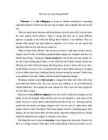
How far can we go being tolerant? Tolerance- it is the willingness to accept or tolerate somebody ot something especially opinions or behaviuor that you may not agree with, or people who are not like you. When we speak about tolerance and being tolerant, then of course all of us do not have the same opinion about tolerance. There is saying that there are as many different opinions as people in the world and talking about tolerance is not different. How we tolerate other people and their behaviour depends a lot of how we are raised and educated, where we live and who we connect to When we hear word ,,tolerant" then mostly we connect it with homo sexuals, racism, religion and all kinds of different people(disabled people for example) and how we tolerate those things. Speaking of homo sexuals then for me they are same people as I
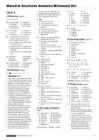
say that they can see a strong family coat. 4 mistake for 8 come up with resemblance between my dad and me. I can't see it myself, not facially anyway 3 Well, she would keep driving too 2 1 bring about 5 go ahead although there are certain similarities fast in the town. 2 fall through 6 go down with in our physical build. I also seem to 4 Well, he would keep misbehaving 3 tip off 7 come to have inherited his big feet, unluckily in class. 4 come up with 8 mistake for for me. It was the first thing my parents 5 Well, you would keep eating too noticed when I was born
Harold McMillan articulated his now famous “winds of change” sweeping Africa. We had high hopes for Africa, for the Black race, that the insidious imposition of foreign rule on us, the looting of Africa’s natural resources by our colonial masters accorded us would be things of history. That is more than forty years ago. Unfortunately, the promise of independence has not been fulfilled. Today, Africa has become more desolate; there is more starvation, diseases and non-provision of essential services than when we got our independence. There are all kinds of wars in Africa than the rest of world put together. The majority of so-called Africans leaders want to stay in power until the day their bodies are put in the grave. Through buffoonery, utter mismanagement and downright stealing of the wealth of the masses, these leaders have so impoverished Africa that we are now nothing but a beggar continent. We beg for
Chapter 5 Take Charge of Your Life 77 Chapter 6 Commit to Excellence 90 Chapter 7 Put People First 118 Chapter 8 Think Like a Genius 136 Chapter 9 Unleash Your Mental Powers 154 Chapter 10 Supercharge Your Thinking 179 Chapter 11 Create Your Own Future 201 Chapter 12 Live A Great Life 222 Summary and Conclusions 249 ix ccc_tracy_fm_i-xviii.qxd 7/7/03 3:22 PM Page x x ➤ CONTENTS Bibliography 256 Index 260 Advanced Coaching and Mentoring Program 268 About the Author 269
When there's a problem I want a solution. Don't offer me any half measures. 31. Literal-mindedness is good. 32. One of the biggest energy-wasting manifestations is the compulsion to begrudge energy. 33. One need not have a better theory to object to a theory's defects. 34. One needs more energy, higher frequencies, more bandwidth, and less interference in order to sustain a finer quality of attention. 35. One who has authority over others is responsible for deterring them from behaving unustly toward one another and for effecting the redress of injustices when they occur. 36. One who is not still looking for answers is either a buddha or a damn fool. 37. People say that they want to be "loved for themselves" but I find that insulting. I want to do things that are worthwhile and be admired because my actions are admirable, not for foolish subjective reasons. 1 38
suppress. In the midst of the turmoil, Stiva reminds the household that his married sister, Anna Arkadyevna Karenina is coming to visit from Saint Petersburg. Meanwhile, Stiva's childhood friend Konstantin Dmitrievich Levin ("Kostya") arrives in Moscow with the aim of proposing to Dolly's youngest sister Princess Ekaterina Alexandrovna Shcherbatskaya, "Kitty". Levin is a passionate, restless but shy aristocratic landowner who, unlike his Moscow friends, chooses to live in the country on his large estate. He discovers that Kitty is also being pursued by Count Alexei Kirillovich Vronsky, an army officer. At the railway station to meet Anna, Stiva bumps into Vronsky. Vronsky is there to meet his mother. It surmises that Anna and the Countess Vronskaya have travelled together in the same carriage and talked together. As the family members are reunited, and Vronsky sees Anna for the first time, a railway worker accidentally falls in front of a train and is killed
· Hereditary · Naturalists tried to apply in fiction the processes of natural sciences · Writers task is to record facts, systems of behaviour, living conditions, never revealing any natural unbiased (completely natural) · Point of view: amoral-outside the category of morality, neither good or bad · Naturalist find it absurd to blame the wicked. These criminals are doing what nature, environment, their unconscious tells them to do. Naturalists do not judge their characters, they simply report. Try to describe facts like they are. Naturalists depict the lower, coarser forms of life. · Drab, squallid set of scene. Revolting, disgusting · Characters are people with strong animal desires · Neurotic characters unable to understand the forces that control them · By the end of the 18th century the naturalism depicts in europe, but stars to become
poet whose works I read. I think that his poems are interesting. They reveal much about Larkin's life and about the social issues in the 20th century. Larkin is also considered to be one of the greatest English poets in the 20th century. I think that Larkin was quite interested in politics. For example his poem ´´Talking in Bed´´ begins with the lines /Talking in bed ought to be easiest, Lying together there goes back so far/. At first it gives the reader an idea that he is talking about two lovers, but actually he is talking about England and USA. He describes the darkness that is creeping up. In my opinion he is talking about USA, which is beginning to creep up on England or on Europe. And because of that England is becoming a less dominant and more isolated place. He is saying that intimacy is dying and that may represent the globalization. Another political poem I
You are extravagant; and it offends me, To see you always decked out like a princess. A woman who would please her husband's eyes Alone, wants no such wealth of fineries. CLEANTE But, madam, after all . . . MADAME PERNELLE Sir, as for you, The lady's brother, I esteem you highly, Love and respect you. But, sir, all the same, If I were in my son's, her husband's, place, I'd urgently entreat you not to come Within our doors. You preach a way of living That decent people cannot tolerate. I'm rather frank with you; but that's my way-- I don't mince matters, when I mean a thing. DAMIS Mr. Tartuffe, your friend, is mighty lucky . . . MADAME PERNELLE He is a holy man, and must be heeded; I can't endure, with any show of patience, To hear a scatterbrains like you attack him. DAMIS What! Shall I let a bigot criticaster Come and usurp a tyrant's power here? And shall we never dare amuse ourselves Till this fine gentleman deigns to consent? DORINE
6 have/'ve known interested and it looks as though shipwrecked three times. 7 walked they are working hard. Most of She was lucky because she survived 8 have you phoned them are looking at the experiment each of the three disasters. 2 1 written 8 was trying and working together. They are 4 1 D 3 F 5 G all wearing uniform it's quite an 2 been meaning 9 came
.......................................................................... ...................................................................................................... ...................................................................................................... ...................................................................................................... ............................................................................. d) What could be Mary-Alice's reply? ...................................................................................................... ...................................................................................................... ...................................................................................................... ...................................................................................................... ..............................
· And when you begin to miss me, dont forget it was you who let me go. · There is an end to things no matter how much we want to hold into them. · Otsisin keset seda pimedust, sind ja loodetud vabadust,kui mu käed su poole, tegid alguse loole, printsessist ja printsist, ühest kaunist kandist, kus oleme meie kaks, kus lõbutseme, kuni otsas jaks. Sa ei pea muinasmaad looma, sa ei pea tähti taevast tooma. Ole vaid minu kõrval, kui tõuseb päike. Ole vaid mu kõrval kui mind piinab meeleheide. Ole mu kõrval, kui kumab kuu, kui su nime
Time Warner Book Group 1271 Avenue of the Americas, New York, NY 10020 Visit our Web site at www.lb-teens.com First Edition: September 2005 The characters and events portrayed in this book are fictitious. Any similarity to real persons, living or dead, is coincidental and not intended by the author. Library of Congress Cataloging-in-Publication Data Meyer, Stephanie, 1973-- Twilight : a novel / by Stephanie Meyer. -- 1st ed. p. cm. Summary: When seventeen-year-old Bella leaves Phoenix to live with her father in Forks, Washington, she meets an exquisitely handsome boy at school for whom she feels an overwhelming attraction and who she comes to realize is not wholly human. ISBN 0-316-16017-2 [1. Vampires -- Fiction. 2. High schools -- Fiction. 3. Schools -- Fiction. 4. Washington (State) -- Fiction.] I. Title. PZ7.M57188Tw2005 [Fic] --dc22 2004024730 Printed in the United States of America For my big sister, Emily, without whose enthusiasm this story might still be unfinished.
ads and the subliminal presentation o Twice as many Reader's Reports- first-person accounts in which readers of odors. of previous editions describe how e Increased coverage of how compliance they've seen a principle work on principles work in other cultures. or for them. Reader's Reports have New insights are derived from the become the most popular feature of research findings, sayings, and customs the book. Boston. New York • San Francisco Mexico City • Montreal • Toronto • London • Madrid • Munich • Paris Hong Kong • Singapore • Tokyo • Cape Town • Sydney Acquisitions Editor: Michelle Limoges Editorial Assistant: Christina Manfroni Executive Marketing Manager: Wendy Gordon
I don't know what the word means. Look it up in a dictionary. 10 ____________________________________________________________________________________________ No, I don't like the Spice Girls. Marks: /10 Words, words, words 4 Complete these sentences using the correct form of the words below. There is one extra word which you do not need to use. aggressive nervous dull funny easy-going ambitious expensive usual experienced successful practical 1 She told a very ________________________ joke and everyone laughed. 2 She's a very ________________________ person. She will do anything to become famous. 3 They didn't give him the job because he was ________________________. He had never done anything like that before.
as books the way we understand the word today. Centuries went before paper replaced parchment and papyri. In the 15 th century Johann Gutenberg invented a mechanical process of duplicating texts, which we today call book printing. The first book was printed between 1444 and 1446, so these years can be considered as the beginning years of book printing. His most important preserved printings are the 40 copies of the Bible. By the end of the 15 th century there were about 1000 print-shops in Europe already. The oldest Estonian book dates back to 1535. Libraries form a vital part of education. They make available-through books, films, recordings and other media- knowledge that has been accumulated through the ages. People in all walks of life use libraries to get information for their work. Libraries also play an important role in preserving people's cultural heritage.
pre-eminent dramatist. He is often called England's national poet and the "Bard of Avon" (or simply "The Bard"). His surviv- ing works consist of 38 plays, 154 sonnets, two long narrative poems, and several other poems. His plays have been trans- lated into every major living language, and are performed more often than those of any other playwright. Shakespeare was born and raised in Stratford-upon-Avon. At the age of 18 he married Anne Hathaway, who bore him three children: Susanna, and twins Hamnet and Judith. Between 1585 and 1592 he began a successful career in London as an actor, writer, and part owner of the playing company the Lord Chamberlain's Men, later known as the King's Men. He ap- pears to have retired to Stratford around 1613, where he died three years later. Few records of Shakespeare's private life survive, and there has been considerable speculation about such matters as his sexuality, religious beliefs, and whether the
Education Education is so multifaceted that it is difficult for me to know where to begin discussing it, or how to prioritize the many factors. Relaying my own experience is easy: I had a standard classroom approach, supplemented by inordinate reading. In only the briefest and least memorable instances did I receive any individual tutoring. Education is commonly thought of as the job of schools. Adults cry "educate our children!" Everyone has opinions about the best way to do the job. It is of urgent importance, and all the numerous factors are much studied, debated, and new (or old) ideas continually tested or retested. Some people say "it's as simple as . . . " and then name their pet peeve or passion. My view is not of an education specialist, but of one who loves sharing what I learn, and owes much to educators. Since I don't have an educational theory neatly worked-out, nor an outline
one day. No matter his expression, he was a knockout. "How about tomorrow after work?" I offered as a substitute. "If I make it through the day, that'll be worth celebrating." "Deal. I'm breaking in the new kitchen for dinner." "Uh..." Cooking was one of Cary's joys, but it wasn't one of his talents. "Great." Blowing a wayward strand of hair off his face, he grinned at me. "We've got a kitchen most restaurants would kill for. There's no way to screw up a meal in there." Dubious, I headed out with a wave, choosing to avoid a conversation about cooking. Taking the elevator down to the first floor, I smiled at the doorman when he let me out to the street with a flourish. The moment I stepped outside, the smells and sounds of Manhattan embraced me and invited me to explore. I was not merely across the country from my former home in San Diego, but seemingly worlds away. Two major metropolises-one endlessly temperate and sensually lazy, the
degree of B.A. International Relations` Table of Contents Abstract 3 Introduction 4 Chapter 1: Citizenship, Children`s Rights and Participation: from the UN to the UK 6 Chapter 2: Citizenship Education in Wales………………………………………………14 Active Citizenship in Cadle Primary School: A Case Study 20 Conclusion 29 Bibliography 32 Appendices Appendix 1: The United Convention of the Rights of the Child Appendix 2: Interview with Jamie Richards, the Head Teacher of Cadle Primary School 2 Abstract: Children inherently have had a rather tenuous relationship with citizenship. Similarly to how women were once viewed, children have not been considered as subjects of rights due to their perceived incompetence and irrationality. Currently, children are not considered as being
"The 4-Hour Workweek is a new way of solving a very old problem: just how can we work to live and prevent our lives from being all about work? A world of in nite options awaits those who would read this book and be inspired by it!" --Michael E. Gerber, founder and chairman of E-Myth Worldwide and the world's #1 small business guru "Timothy has packed more lives into his 29 years than Steve Jobs has in his 51." --Tom Foremski, journalist and publisher of SiliconValleyWatcher.com "If you want to live life on your own terms, this is your blueprint." --Mike Maples, cofounder of Motive Communications (IPO to $260M market cap) and founding executive of Tivoli (sold to IBM for $750M) "Thanks to Tim Ferriss, I have more time in my life to travel, spend time with family, and write book blurbs. This is a dazzling and highly useful work." --A. J. Jacobs, editor-at-large of Esquire magazine and author of The Know-It-All "Tim is Indiana Jones for the digital age
Catherine Morland My name is Catherine Morland. I would like to tell you a bit about myself. To begin with, I am seventeen years old and grew up in a countryside in a small town named Fullerton with my parents and nine siblings. As a child I was interested in many things like drawing, sports and music. I was very lively and cheerful, enjoyed cricket, horse riding and just hated cleanliness and restriction. As I grew up, I chose reading over sports and all of the wild games I used to like. Undoubtedly, I would now describe myself with the word naivety. I am very naïve and do not notice the most obvious things happening around me. I really hope that it is caused by the lack of experience and will eventually pass.
relates to American Revolution on the one hand and the European Enlightenment on the other. Influenced by the scientific revolution of the 17th century and the humanist period during the Renaissance, the Enlightenment took scientific reasoning and applied it to human nature, society, and religion. American Enlightenment a gradual but powerful awakening that established the ideals of democracy, liberty, and religious tolerance in the people of America. If there were just one development that directly caused the American Revolution and uplifted the intellectual culture of the continent while it was only a British colony, it would be the American Enlightenment. Broadly, the Enlightenment was an intellectual movement that changed the fundamental perspective of the masses, urging them to foster skepticism and apply scientific principles in matters of religion and morality. Its chief values were: Liberty, Democracy, Republicanism, Religious Tolerance
proficiency. 1 What is Grammar? 5 The Simple Past Tense 98 Regular and Irregular Verbs 99 Was and Were 104 2 The Capital Letter 6 The Past Progressive Tense 106 The Future Tense 108 Can and Could 112 May and Might 113 3 Nouns8 Do, Does and Did 115 Common Nouns 8 Would and Should 120 Proper Nouns 13 Singular Nouns 21 Plural Nouns 23 8 Subject-Verb Agreement 123 Collective Nouns 34 Masculine and Feminine Nouns 37
The room was warm and clean, the curtains drawn, the two table lamps alight - hers and the one by the empty chair opposite. On the sideboard behind her, two tall glasses, soda water, whiskey. Fresh ice cubes in the Thermos bucket. Mary Maloney was waiting for her husband to come him (correction: home) from work. Now and again she would glance up at the clock, but without anxiety, merely to please herself with the thought that each minute gone by made it nearer the time when he would come. There was a slow smiling air about her, and about everything she did. The drop of a head as she bent over her sewing was curiously tranquil. Her skin - for this was her sixth month with child - had acquired a wonderful translucent quality, the mouth was soft, and the eyes, with their new placid look, seemed larger darker than before. When the clock said ten minutes to five, she began to listen, and a few moments later, punctually as always, she heard the tires on the gravel outside, and the car door
(NOT You speak a very good English.) 16. After look forward to, we use ing, not an infinitive. I look forward to seeing you. (NOT I look forward to see you.) We're looking forward to going on holiday. (NOT ... to go on holiday.) 17. Information is an uncountable noun. Can you give me some information? (NOT Can you give me an information?) I got a lot of information from the Internet. (NOT I got a lot of informations from the Internet.) 18. Use ing forms after prepositions. I drove there without stopping. (NOT I drove there without to stop.) Wash your hands before eating. (NOT Wash your hands before to eat.) 19. Use this, not that, for things that are close. Come here and look at this paper. (NOT Come here and look at that paper.) How long have you been in this country? (NOT How long have you been in that country?) 20. Use a plural noun after one and a half. We waited one and a half hours. (NOT We waited one and a half hour.) A mile is about one and a half kilometres
Count Mippipopolous becomes infatuated with Brett, but, unlike most of Brett's lovers, he does not subject her to jealous, controlling behavior. Amid the careless, amoral pleasure-seeking crowd that constitutes Jake's social circle, the count stands out as a stable, sane person. Like Pedro Romero, he serves as a foil for Jake and his friends. Wilson-Harris - A British war veteran whom Jake and Bill befriend while fishing in Spain. The three men share a profound common bond, having all experienced the horrors of World War I, as well as the intimacy that soldiers develop. Harris, as Jake and Bill call him, is a kind, friendly person who greatly values the brief time he spends with Jake and Bill. Georgette - A beautiful but somewhat thick-witted prostitute whom Jake picks up and takes to dinner. Jake quickly grows bored of their superficial conversation and abandons her in a club to be with Brett. Belmonte - A bullfighter who fights on the same day as Pedro Romero
immense fear for her children's well-being, or revenge against a lover. The long-term result of amalgamation of distinct types of magic-worker into one is the considerable present-day confusion as to what witches actually did, whether they harmed or healed, what role they had in the community, whether they can be identified with the "witches" of other cultures and even whether they existed as anything other than a projection. Present-day beliefs about the witches of history attribute to them elements of the folklore witch, the charmer, the cunning man or wise woman, the diviner and the astrologer. Powers typically attributed to European witches include turning food poisonous or inedible, flying on broomsticks or pitchforks, casting spells, cursing people, making livestock ill and crops fail, and creating fear and local chaos. Witch-hunts
The basic ingredients, when fresh, are so full of flavour that British haven't had to invent sauces to disguise their natural taste. What can compare with fresh pees or new potatoes just boiled and served with butter? Why drown spring lamb in wine or cream and spices, when with just one or two herbs it is absolutely delicious? If you ask foreigners to name some typically English dishes, they will probably say "Fish and chips" then stop. It is disappointing, but true that, there is no tradition in England of eating in restaurants, because the food doesn't lend itself to such preparation. English cooking is found at home. So it is difficult to a good English restaurant with a reasonable prices. In most cities in Britain you'll find Indian, Chinese, French and Italian restaurants. In London you'll also find Indonesian, Mexican, Greek... Cynics will say that this is because English have no "cuisine" themselves, but this is not quite the true. Vocabulary:
Silicon Valley Could you reproduce Silicon Valley elsewhere, or is there something unique about it? It wouldn't be surprising if it were hard to reproduce in other countries, because you couldn't reproduce it in most of the US either. What does it take to make a silicon valley even here? What it takes is the right people. If you could get the right ten thousand people to move from Silicon Valley to Buffalo, Buffalo would become Silicon Valley. That's a striking departure from the past. Up till a couple decades ago, geography was destiny for cities. All great cities were located on waterways, because cities made money by trade, and water was the only economical way to ship. Now you could make a great city anywhere, if you could get the right people to move there
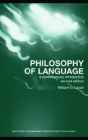
"This exceptional text fulfils two essential criteria of a good introduc- tory textbook in the philosophy of language: it covers a broad range of topics well, all of which are the basis of current active research, and does so in an accurate manner accessible to undergraduate students." Mike Harnish, University of Arizona ". . . an excellent textbook for teaching. The examples throughout are delightful and students will love them." Edwin Mares, Victoria University of Wellington William G. Lycan is William Rand Kenan Professor of Philosophy at the University of North Carolina. He is the author of over 150 articles as well as seven books. Routledge Contemporary Introductions to Philosophy Series Editor: Paul K. Moser Loyola University of Chicago This innovative, well-structured series is for students who have already done an introductory course in philosophy
 annaabi.ee