Animal Experimentation Based on the Constitution of Estionia, we are all born with equal rights. However, mankind denys that animals share these rights. Animals are just as entitled to the rights of living, avoiding pain as humans are. Nonetheless, we still abuse them, often even without a second thought. Despite the wide use of animal testing, the research gained from it is not helpful to mankind. The chemicals and medicines tested on animals reacts differently on every species. That is why results gained from animal testing could be incorrect and misleading. In many cases, not only are the results wrong, but the opposite can be true for humans; a drug may cure a disease in lab animals but have an bad effect when used in treating people for the same symptoms. Only the study of human patients will ultimately lead to valid research. Unfortunately, many institutions which commit v...
nationally as these centers are closely linked with Allied Command Transformation and promote the alliance-approved transformation goals. THE MAIN AGENDA OF THE FACILITY IS TO: • improve cyber defence interoperability within the NATO Network Enabled Capability (NNEC) environment, • design the doctrine and concept development and their validation, • enhance information security and cyber defence education, awareness, and training, • provide cyber defence support for experimentation (including on- site) for experimentation, • analyze the legal aspects of cyber defence. THE CENTRE HAS ALSO OTHER RESPONSIBILITIES WHICH INCLUDE: • contribution to development of Cyber Defence Center practices and standards with NATO, PfP, NATO candidates and non-NATO nations, • contribution to development of NATO security policies related to cyber defence its definition of scope and responsibility of military in cyber defence,
Ballet Merili Kaarna 11.d Italian renaissance court entertainment originated in the 15th century the epicentre moved to France obligatory component of opera Mlle La Fontaine 1681 St. Petersburg ballet reanimated in western Europe Styles Romantic ballet mid 19th century emphasized intense emotion most widely known and performed ● Classical ballet ○ based on technique and vocabulary ○ different styles ○ height in 19th century Neoclassical ballet use of the abstract diverse music choise possibilities for achitectureand design in choreography Contemporary ballet ballet technique apparent roots exploration experimentation
speculation. The painting can be seen in the Louvre Museum in Paris, France. The last supper Tempera on gesso, pitch and mastic. The mural represents Jesus and the twelve disciples when Jesus says that one of them would betray him. The painting which covers a wall at the monastery of Santa Maria delle Grazie in Milan, Italy, is mainly a later reconstruction because much of it deteriorated relatively soon as a result of Leonardo’s experimentation with tempera and oil on dry wall. . The Vitruvian Man Pen and ink on paper, 1490. The drawing which depicts a man in two superimposed positions within a square and circle is named after the architect Vitruvius because it is accompanied by a text which is based on the architect’s work. The Vitruvian Man is held by the Gallerie dell’Academia in Venice, Italy, but it is not permanently displayed. Lady with an Ermine Oil on wood panel, 1490
They try to keep themselves healthy because otherwise they would feel miserable. People watch carefully what they eat and many go to regular check-ups. But still people get ill, even the healthiest people catch a cold sometimes. Nothing can prevent accidents to happen. The people who are ill or some kind of an accident has happened to them need help. Medicine is the science and art of healing. It is a science because it is based on knowledge gained through careful study and experimentation. Medicine develops very quickly. Nowadays the doctors can do almost anything they want. Egyptian doctors began to specialize in 2500 B.C. At that time they were already quite skilful. When a man lost a limb there was a big possibility that he would lose too much blood and die or get a blood poisoning before that time. Now the doctors can help people who have been in very serious car accidents for example. They can even replace blood with blood substitutes for a short time until
treated the diseases of eyes and teeth. Also Egyptians produced first medical textbooks. Chinese developed a medical practice, which is based on balance between two life forces yin and yang. To restore the balance chinese developed acupuncture - inserting needles into ones body. Medicine and elements of medical care Medicine is the science of healing, but at the same time it is art of healing. It is a science, because it is based on knowledge, which is gained through careful study and experimentation. It is an art because a very large part of it depends on how skillfully doctors apply this knowledge when they are dealing with patients. The goal of medicine is to save lives. Also medicine relieves suffering. Medical care consists of three main elements: the diagnosis, treatment of disease and the promotion of health and prevention of disease. Diagnosis is required for every health problem. To identify the diseas or damage the doctors
If we have children at home it would be better to put dangerous things out of their reach. If still and accident has happened we must call for an ambulance. We must tell what has happened to the person, tell the person's age, home address. In case of poisoning we must save the bottle, tell the person's age and weight. 6. Medicine and elements of medical care Medicine is the science and art of healing. It is a since because it's based on knowledge gained through careful study and experimentation. It is an art because it depends on how skilfully doctors and other medical workers apply this knowledge when dealing with patients. The goals of medicine are to save lives and relieve suffering. Many thousands of men and women, who work in the medical profession, spend their lives taking care of the sick. When disaster strikes, hospital workers give emergency aid to the injured. Medical care consists of three main elements: the
● Knowledge and technologies; ● Actors and networks; ● Institutions Examples of sectoral system of innovation from different countries: knowledge inputs, actors, networks, institutions (based on group work presentations) South –Korea, Electronics - knowledge base came from subcontracting and original equipment manufacture, access foreign export channels and engage in catch-up learning, imitation and innovation. Long experimentation over details in the manufacturing process → firm- specific pattern of knowledge. Ministry of Science and Technology (MOST) - dedicated to technological development and coordination of technology-related activities in the country Innovative enterprises and the importance of "wider look at innovation" “my main job is to promote innovation” Positive encouragement “create the right framework, the right mindset” “senior leaders to create an environment of friendliness, courtesy,
story. Overlapping narrative from multiple zanras. The anti-hollywood approach Citizen Kane and its innovations Narration technique an deep focus/sequence shot style imitated by countless directors. Sophisticated deep focus photography and sequence shot: attemptm to technically reporduce the human vision, give the audience the decision where to watch, more ,,realistic" reproducction of real time (of the narrator). Welles rebelled against the Hollywood Studio system: technical experimentation, the production mode, the story-telling, the absence of stars. 1958 Touch of evil Inspector Vargas has to solve a case in the Mexican-American borderland. His counterpart is the corrupt American inspector Quilan. In times when the classical film noir was considered to be over Orson Welles produced the swan song to the genre. Tale about the corruption of human nature. The film was initially recut by the studio. 12.03.12 COURSE 09: Alfred Hitchcock: Thrills as a Transatlantic Bridge
Eliot provided poets with a new range of technical innovations, e.g. abrupt scenematic cutting (scenes end suddenly); shift in tone; bathos (an abrupt stylistic transition, e.g. from elevated to the commonplace); collection of fragments; experimentation with language. At the end of Eliot’s career – plays, e.g. “Murder in the Cathedral” (1935). Also a critic – criticism and poetry become almost indistinguishable. Virginia Woolf Virginia Woolf, nee Stephen (1882-‐1941) – modernist, one of the most innovative
FROM SWIMMING TO SWINGING How I Learned to Swim Effortlessly in 10 Days The Architecture of Babe Ruth How to Hold Your Breath Longer Than Houdini ON LONGER AND BETTER LIFE Living Forever: Vaccines, Bleeding, and Other Fun CLOSING THOUGHTS Closing Thoughts: The Trojan Horse APPENDICES AND EXTRAS Helpful Measurements and Conversions Getting Tested--From Nutrients to Muscle Fibers Muscles of the Body (Partial) The Value of Self-Experimentation Spotting Bad Science 101: How Not to Trick Yourself Spotting Bad Science 102: So You Have a Pill ... The Slow-Carb Diet--194 People The Slow-Carb Diet--194 People Sex Machine II: Details and Dangers The Meatless Machine I: Reasons to Try a Plant-Based Diet for Two Weeks The Meatless Machine II: A 28-Day Experiment BONUS MATERIAL Spot Reduction Revisited: Removing Stubborn Thigh Fat Becoming Brad Pitt: Uses and Abuses of DNA
Ta kasutas maalis esimesena kirjatähti, imiteeris puu ja marmori faktuuri ning leiutas kollaazitehnika Robert Delaunay Robert Delaunay (12 April 1885, Paris 25 October 1941) was a French artist who used Orphism, which is similar to abstract art, abstraction and cubism in his work. Delaunay concentrated on Orphism, while his later works were more abstract, reminiscent of Paul Klee. His key influence related to bold use of colour, and a clear love of experimentation of both depth and tone. While he was a child, Delaunay's parents divorced, and he was raised by his uncle, in La Ronchère (near Bourges). He took up painting at an early age and, by 1903, he was producing mature imagery in a confident, impressionistic style. In 1908, after a term in the military working as a regimental librarian, he met Sonia Terk, who he later married, though at the time she was married to a German art dealer who she would soon divorce
Väiksem risk. Mitmekülgsem ärijuhtimise tugi (nt väljaõpe). .............aga vähem vabadust. LOENG5 33. Ettevõtte seosed turgude ja riigiga (skeem) 34. Ettevõtte rajamiseks vajalikud sammud – põhiloogika. Prindi slaidid 6-10 35. Ettevõtlusprotsessi eripära nutika idufirma (lean start-up) meetodi puhul. Ries claims that startups can shorten their product development cycles by adopting a combination of business-hypothesis-driven experimentation, iterative product releases, and what he calls "validated learning". Ries' overall claim is that if startups invest their time into iteratively building products or services to meet the needs of early customers, they can reduce the market risks and sidestep the need for large amounts of initial project funding and expensive product launches and failures. Traditsioonilistel ettevõtetel on ports takistusi, mida lean startup meetod aitab vältida:
a profession. The medical profession was actively engaged in the elimination of female healers their exclusion from the universitiess, for example long before the witch-hunts began. There was nothing in late medieval medical training that conflicted with church doctrine. Medical students spent years studying Plato, Aristotle and Christian theology and a doctor rarely saw any patients at all, and no experimentation of any kind was taught. Medicine was sharply differentiated from surgery, which was almost everywhere considered a degrading, menial craft, and the dissection of bodies was almost unheard of. It was witches who developed an extensive understanding of bonnes and muscles, herbs and drugs. By the 14th century,the medical profession's campaign against urban, educated women healers was virtually complete throughout Europe. Male doctors had won a clear monopol over the
within the chaos of life, artist takes place in the life. According to derrida, the world used to have a center, everything was organized around the centre, centers are illusory, they are not real anymore, not true. Nostalgia for the lost centre, people want to have a kind of center, kind of starting point, the second reaction is acceptance and a delight of free play without a centre. The second type is playful postmodernism. A lot of experimentation. No distinction between high and low cultures, the high and the popular mix. Pastiche-it is related to parody, not exactly the same, parody is for fun, pastiche is imitating but not for the sake of mocking. Postmodernism of resistance, deconstructs metanarratives, in favour of all kinds of minorites, feminist literature, ethnic literature. Postmodernism tells counterhistorys, alternative hiostyres, of the point of view of other, not self, but from the point of view of the other. In
contemporary concerns: climate change and ecocriticism. Ian McEwan: the progress of a mainstream writer. · Born on 21 June in 1948, England · Spent much of his childhood traveling, because father was officer in army · Sussex University, Creative Writing course · First Love, Last Rites (1975),In Between the Sheets(1978) · claustrophobic tales of childhood, deviant sexuality and disjointed family life · first books were remarkable for their formal experimentation and controlled narrative voice. · Ian McEwan has written plays for television and film screenplays · wrote the libretto to Michael Berkeley's music for the oratorio Or Shall We Die? · author of a children's book, The Daydreamer (1994). · Many film adaptions · Many awards McEwan's psychological fiction. Psychological novel, also called psychological realism, is a work
(b) Mitu faktorit on, ja mitu taset on igal faktoril selles uurimuses ? (c) Kirjeldage võimalikke faktorite üldefektide avaldumisi. Kirjeldage ka tulemust, kus ei esine üldse faktorite üldefekte. (d) Kirjeldage võimalikke (erinevat tüüpi) interaktsiooniefekte! (e) Visandage vastavad joonised seletuste juurde ! 6.9. EKSPERIMENDID VÄHESE ARVU KATSE-ISIKUTEGA (small-N experimentation) (Ch. 11). Tüüpilistes BS ja WS katseplaanides kasutatakse suurt hulka KI-sid, kuigi WS plaani korral muidugi vähem kui BS korral. Sellistel juhtudel ühe ebatüüpilise KI andmed tavaliselt eriti ei mõjusta üldiste seaduspärasuste esiletulekut. Selliseid uurimusi nim. tüüpilisteks, paljude KI-dega E-deks (large-N design). Kuid on mitmeid psühholoogia valdkondi, kus traditsiooniliste psühholoogiliste, paljude muutujatega ja samal ajal paljude KI-dega
quite original though it does not depart from the exposition. As the latter is displayed in the classical manner, all that follows had to proceed in the same way. No doubt that it would have given more variegated and logical possibilities for development. With his First Symphony Pärt took part in the contest of musical compositions in Paris (Composers’ Rostrum), organised by UNESCO in 1968, and achieved 11th place. In the middle of the Sixties intense experimentation and the search for novel ways of expression was rampant. Is it really the task of music to present ever more novel phenomena from the outer world? Incessantly renewing and modernising the corresponding means of expression, the music of this kind may tarry on quite extraneous territory. Estonian listeners became accustomed to it. 1 Articles of the Baltic musicologists. (Moscow: Sovetsky Kompozitor, 1968) 277.
characteristics, Kasiski examinations—all were peculiar and particular to cryptology. It dwelt a recluse in the world of science. Friedman led cryptology out of this lonely wilderness and into the broad rich domain of statistics. He connected cryptology to mathematics. The sense of expanding horizons must have resembled that felt by chemists when Friedrich Wohler synthesized urea, demonstrating that life processes operate under well-known chemical laws and are therefore subject to experimentation and control, and leading to today's vast strides in biochemistry. When Friedman subsumed cryptanalysis under statistics, he likewise flung wide the door to an armamentarium to which cryptology had never before had access. Its weapons—measures of central tendency and dispersion, of fit and skewness, of probability and sampling and significance—were ideally fashioned to deal with the statistical behavior of letters and words.
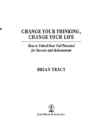
yourself to generate 20 answers to each question—you will be ab- solutely astonished at the number of great ideas and insights for growth and improvement you will come up with. These ideas will dramatically increase the speed at which you become one of the best in your field. ■ THE EDISON APPROACH Thomas Edison, the greatest inventor of the modern age, was con- vinced that experimentation was simply a process of elimination. He therefore kept accurate records of every experiment. Once he had decided that an invention was possible, he dedicated himself to eliminating the ways that wouldn’t work until the only method left standing was the one way that would work. As a result, he became the greatest inventor of the modern age and one of the wealthiest businessmen in the country.You should do the same.
instead of suave or self-assured. T h e y overcompensate, missing the point of balance. T h e y may then retreat to the opposite extreme of sullenness or some other exagger ated form of their original behavior. Eventually, through a series of such pendulum swings they may learn a new way to behave, somewhere in the middle ground. Learning how to handle any quality is a process o f finding the boundaries by experimentation. In many polarized relationships, one person is more experienced and has already made a fool of himself in long-ago experiments, so now he knows precisely how to handle women, cards, guns, cars, or money. To the inexperienced person it's all new, so we get to watch him or her making the beginner's hilarious mistakes. Often there is a reciprocal area where the experienced person is weak, and is forced to make a comical effort to master the unaccustomed quality, such as polite
 annaabi.ee