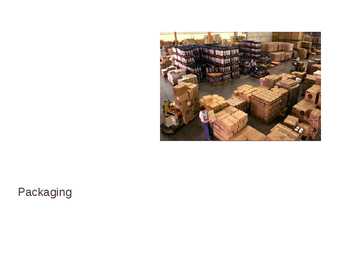
Packaging General characteristics of the packaging q Packaging tool or set of tools that protect goods from damage and loss. q Packaging is really important, as all kinds of damage may be caused to shipments : moisture, corrosion, dropping, evaporation, chemical reactions, and pilferage. Its essential to arrange for safe packing. Packing elements Ø Packing elements are containers, packaging or dressings material. Ø Package means the container for storage of goods or for their transportation. Ø Packaging materials mean any material used especially to protect something. qualification of packing Number of signs: Ø place Ø purpoce Ø the applied materials Ø form Ø frequency rate of use
siiski voolida. Neli päeva kilekotis päikese käes olev sai läks natuke kõvaks, kuid oli niiske. Mida kuivem on õhk, seda kiiremini sai kõveneb. Minu hüpotees pidas paika kuivamise koha pealt, kuid selle ajaga ei suutnud sai hallitama hakata. KASUTATUD KIRJANDUS 3 http://www.bbc.co.uk/food/white_bread [08.04.2014] http://en.wikipedia.org/wiki/Evaporation [08.04.2014] http://en.wikipedia.org/wiki/White_bread [09.04.2014] http://water.usgs.gov/edu/watercycleevaporation.html [09.04.2014] http://www.hkhk.edu.ee/teravili/sai.html [09.04.2014] http://en.wikipedia.org/wiki/Mold [10.04.2014] http://lepo.it.da.ut.ee/~illarl/CD/dok/hallitus3.htm [10.04.2014] 4
pollution. CAUSES There are many different chemical substances that contribute to air pollution. These chemicals come from a variety of sources. Among the many types of air pollutants are nitrogen oxides, carbon monoxides, and organic compounds that can evaporate and enter the atmosphere. Air pollutants have sources that are both natural and human. Now, humans contribute substantially more to the air pollution problem. Forest fires, volcanic eruptions, wind erosion, pollen dispersal, evaporation of organic compounds, and natural radioactivity are all among the natural causes of air pollution. Usually, natural air pollution does not occur in abundance in particular locations. The pollution is spread around throughout the world, and as a result, poses little threat to the health of people and ecosystems. Though some pollution comes from these natural sources, most pollution is the result of human activity
latitude. The Baltic Sea causes differences between the climate of coastal and inland areas. The average annual temperature in Estonia is 4.5 degrees Celsius. The average temperature in February, the coldest month of the year, is negative 5.2 degrees Celsius. The average temperature in July, which is considered the warmest month of the year, is 17 degrees Celsius. Estonia is located in a humid zone in which the amount of precipitation outnumbers total evaporation. There are about 160 to 180 rainy days a year, and average precipitation is biggest on the western slopes of the Sakala and Haanja Uplands. Snow cover, which is deepest in the south-eastern part of Estonia, usually lasts from mid-December to late March. Flora and fauna. Estonia is a small country and areas of unspoiled nature are very rare. Our plants and animals have been developing only for 10000 years, since the last Ice Age, and they are not represented in a great variety.
2 degrees Celsius. The average temperature in July, which is considered the warmest month of the year, is 17 degrees Celsius. The climate is also influenced by the Atlantic Ocean, the North- Atlantic Stream and the Icelandic Minimum, which is an area known for the formation of cyclones and where the average air pressure is lower than in neighbouring areas. Estonia is located in a humid zone in which the amount of precipitation outnumbers total evaporation. There are about 160 to 180 rainy days a year, and average precipitation is biggest on the western slopes of the Sakala and Haanja Uplands. Snow cover, which is deepest in the south-eastern part of Estonia, usually lasts from mid-December to late March. Economy of Estonia As a member of the European Union, Estonia is part of the world's largest economic zone. In 1999, Estonia experienced its worst year economically since it regained
191.Elaborate viimistletud, keerukas 192.Elevation- külgvaade 193.Embellish- kaunistama 194.Emphasized- rõhutatud 195.Enclosure piiratud ala, aed, tarastus 196.Endangering seada ohtu 197.Enhance- paremaks muutma 198.Ensure tagama 199.Environmental constraints keskkonnaalased piirangud 200.Establishment - rajamine, paigaldus 201.Evaporated back tagasi aurustunud 202.Evaporating- aurustamine 203.Evaporation- aurustumine 204.Evergreen- igihaljas puu 205.Evoke tekitama 206.Evolve- arendama 207.Exert influence- mõju avaldama 208.Exotic horticultural specimens eksootilised taimed 209.Expand laiendada 210.Expanded clay paisutatud savi 211.Extension- laiendus, lisaosa 212.Extent- ulatus, määrus, valdus F 213.Fee tasu 214.Fences- tarad 215.Fern- sõnajalg 216.Fertilizing- väetama 217.Field- põld 218.Fig- viigipuu 219
aurutootlikus boiler output, steam capacity auruülekuumendi superheater bandaaz banding deaeraator deaerator düüsiventiil nozzle-control valve ekraanküttepind water screen gaasikäik gas flue, gas passage gaasisiiber flap, flapper valve horisontaalne leektorukatel horizontal fire-tube boiler kahekontuuriline katel double-evaporation boiler kaitseklapp safety valve katla tõmme boiler air draft katlakivi scale katlaventilaator blast fan, forced draft fan kaudse toimega kaitseklapp, impulse safety valve impulsskaitseklapp keemistemperatuuur boiling temperature keevitatud ketasrootor welde disc rotor ketasrootor discrotor soojuskiirgus heat radiation kiirusastmega aktiivturbiin Curtis turbine
The average in July, which is the warmest month, is about +17 degrees and the coldest month is usually February with 5 degrees as the average. The lowest temperature ever measured is 43,5 ºC and the highest recorded figure is +35,6 ºC. The prevailing winds blow from southwest and west. The windiest place is the isle of Osmussaar. Winds are stronger in autumn and winter. Estonia is located in a humid zone in which the amount of precipitation outnumbers total evaporation. There are about 160 to 180 rainy days a year. Snow cover usually lasts from middle December to late March. Luckily Estonia has no climatic extremes. Heavvy storms and extensive floods are rare. LANDSCAPE Estonia is mostly flat with average elevation of only about 50 meters above sea level. The relief of the present day lanscape was shaped suring the Ice Age. The hilly terrain was also shaped by the continental ice and melting waters
6. Kondensatsioon. Atmosfääriga kontaktis olles muundub veeaur jälle veeks ja muutub nähtavaks õhus. Seda nimetatakse pilvede tekkeks. Evaporatsioon ja transpiratsioon Evaporatsioon e. aurumine sõltub: 1) õhuniiskusest, 2) temperatuurist, 3) tuule kiirusest, 4) õhurõhust (langedes aurumine kiireneb), 5) mulla omadustest (lõimis, struktuur). Sademeid aurumisest rohkem humiidne kliima. Sademeid aurumisest vähem ariidne kliima. Evaporation the process by which water is converted from its liquid form to its vapor form. , . Evaporatsioon ja transpiratsioon Transpiratsioon vee reguleeritud auramine taimede pinnalt, mille intensiivsus sõltub sellest, kui palju taim hoiab oma õhulõhesid avatuna. Evapotranspiratsioon = evaporatsioon + transpiratsioon. Transpiration the loss of water from parts of plants. . Pinnamood ja sademed Sademete jaotumist mõjutavad kõrged mäeahelikud, mis
More disappointingly, the above- mentioned climatic changes, combined with heedless deforestation and noxious industrial emissions will not only affect animal life by changing important habitats but will also contribute to soil erosion and leaching. Thus, crop yields are expected to continue to drop in coming decades, resulting in widespread famine. Moreover, many regions will face dwindling water supplies as the result of shrinking glaciers and snowpack, evaporation, and the infiltration of salt water. Acute food and water shortages will presumably bring about manifold health problems. To summarise the situation, having no visible manifestation, global warming has been affecting the earth for quite a while now; the effects of climate change, while not immediate, are potentially catastrophic. I would describe global warming as `an environmental time bomb ticking away.' Dear Sir/Madam,
oil emulsions ("mousse") is one of physical smothering. The animals and plants most at risk are those that could come into contact with a contaminated sea surface. Marine mammals and reptiles; birds that feed by diving or form flocks on the sea; marine life on shorelines; and animals and plants in mariculture facilities. The most toxic components in oil tend to be those lost rapidly through evaporation when oil is spilt. Because of this, lethal concentrations of toxic components leading to large scale mortalities of marine life are relatively rare, localised and short-lived. Sub-lethal effects that impair the ability of individual marine organisms to reproduce, grow, feed or perform other functions can be caused by prolonged exposure to a concentration of oil or oil components far lower than will cause death. Sedentary animals in shallow waters such as oysters, mussels and
to trap warm air close to the skin. While these fibers are dense enough to trap air, advanced fabric technology improving blood flow, oxygen delivery and recovery time. they are spaced far enough apart to easily allow heat-sapping sweat to escape Whether you’re warming up, bursting through the defence or getting up to head the through evaporation. ball, TECHFIT™ is proven to enhance your performance at every turn. adizero represents a designphilosophy, steeped in a hand crafted tradition of attention to the finest detail. Performance is about more than being light; every product
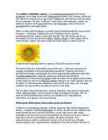
pattern of two opposite spirals. This is most easily seen either before the disk flowers open up or after the seed has set and all the accessory flower parts have fallen off. This is one of the more interesting patterns in nature. The rough-hairy quality of the Common Sunflower is characteristic of many members of its family. These little bristles probably serve two functions: to discourage plant- eating animals and to conserve water in the plant by limiting evaporation. Members of the sunflower family are popular with butterflies because the wide flower head makes a good "landing platform" and the numerous individual flowers make for a high probability of finding nectar. Monarch butterflies are commonly seen nectaring on sunflowers during their fall migration. Whether as a source of food for people and wildlife or an eye-catching splash of color on the landscape, the Common Sunflower is an important member of the prairie community. I
Thoroughly n. entirety They are entirely right about the economy. The president released the speech in its entirety before the news conference. erode v. to wear away, disappear slowly n. erosion Syn. deteriorate The senator's support is eroding because of his unpopular positions on the major issues. It took millions of years of erosion for nature to form the Grand Canyon. evaporate v. to vanish n. evaporation Syn. disappear The chances of the two sides reaching an agreement have evaporated. The evaporation of the funds was unexplainable. recover v. to get back; to have something returned adj. recovered Syn. retrieve adj. recoverable n. recovery The NASA team was unable to recover the space capsule. The recovered objects had not been damaged. reportedly adv. to know by report; unconfirmed; supposedly adj
25 / 1.3 / 1(%); 2 (ii) R any reference to energy / light missing the plant reflected (off plant) / only certain wavelengths of light can be, absorbed / used; ora absorbed by / hits, non-photosynthetic parts; e.g. bark passes through leaf / misses chlorophyll / misses chloroplasts; some is heat that is used in evaporation / respiration; max 2 (iii) bacteria / named bacterium decomposer; (Nitrobacter, Nitrosomonas) 1 (iv) take the first 2 answers: death / dead remains; excretion; R waste products egestion; other suitable method; e.g. insects moulting hatched eggs
1970), and therefore, the color will be less stable than in fresh. On prolonged frozen Freezing Systems for Meat storage, a dark brown layer of metmyoglobin may form 1–2 mm beneath the surface so Heat transfer can only occur by four that, on thawing, the surface color will basic mechanisms: conduction, radiation, 112 Chapter 5 convection, and evaporation/condensation. comes the problem of uneven air distribution, Conduction requires a good physical contact since each item is subjected to the same between the meat to be cooled and the cooling velocity/time profile. Some meat products medium, and this is generally difficult to are frozen on racks of trays (2 m high), while achieve with carcasses and other irregular pulled or pushed through a freezing tunnel by meat cuts
At first this seemed exhilarating, just the kind of minor wilderness challenge that I was after. But after the third or fourth time of edging out across a sheer, un stable cliff face with m u d d y water streaming over me, the process began to take its toll. M y arms and legs began to tremble from the unaccustomed exertion, my fingers and toes grew cramped. M y core temperature dropped from repeated soakings as the cool air chilled my clothes and skin by evaporation. At times the whole hillside of yellow m u d and shale seemed to be shuddering and slipping under me, flowing in a slow-motion mudslide. By the tenth crossing I was starting to get worried. T h e hike that was supposed to take an hour had taken three hours and there was no end in sight. I lost my footing a couple of times in the muck and barely caught myself, clinging to the crumbling rock with fingers cramped and arms shaking, knowing I
 annaabi.ee