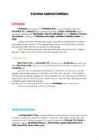
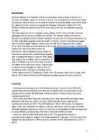
Estonian national holidays Christmas Christmas , also referred to as Christmas Day, is an annual holiday celebrated on December 25 or January 7 that commemorates the birth of Jesus of Nazareth. Modern customs of the holiday include gift-giving, Church celebrations, and the display of various decorations--including the Christmas tree, lights, mistletoe, nativity scenes, and holly. In many countries there are many different types of decorations used depending on the traditions and available resources. However , in Estonia people bring Christmas tree in and decorate it with straw ,glass balls and candles. Estonians eat sauerkraut and black pudding. On the 24th December people leave work early, families gather, Santa Clouse comes , everybody gives gifts. People are very calm at Christmas time and they support each other. New Year's Eve New Year's Eve is on December 3...
Sauerkraut Sauerkraut is finely shredded cabbage that has been fermented by various lactic acid bacteria, including Leuconostoc, Lactobacillus, and Pediococcus. It has a long shelf-life and a distinctive sour flavor, both of which result from the lactic acid that forms when the bacteria ferment the sugars in the cabbage. It is therefore not to be confused with coleslaw, which receives its acidic taste from vinegar. People of Estonia like sauerkraut very much. They definitely a great dish for Christmas, because it`s really good to eat it with potatoes or something like that. To make sauerkraut yourself you need to have: 1 kg sauerkraut, 700 g slightly salted pork, 100 g barley grits, 2 tomatoes, salt. This is how you can do it: Boil the sauerkraut in a little water, on the top place the washed barley and the meat. Stew until soft, stirring now and then. Add salt. Place the sauerkraut with the s...
Estonian national holidays Christmas: The people decorate the christmas tree. On christmas eve people go to church. Children are waiting for Father Christmas. Christmas is on 24 Decmber. New Year's Day: People have parties on New Year's Eve. Usually they meet friends and relatives. People wish each other a Happy New Year. In the evning they gather in town quares. Midsummer Eve: People celebrate the longest day at the year. Usually they have garden parties. People make big bonfires. It is common stay up all night.
Estonian National Opera Pavel Kornev 9B Tallinn 2009 The National Opera "Estonia" was founded in 1906. Till 1949 the theatre staged both drama and musical productions. In the 1920s its opera and ballet troupes became separate entities; in every genre the theatre was then regarded as the leading one in the country. Its new house opened in 1913. It was the biggest and most imposing of the theatre buildings in Estonia. In World War II its building was bombed, but it was restored more or less in its former shape in 1947. In 1949 the Estonia was turned into an exclusively musical theatre staging operas, ballets and operettas. In 1998 it was officially given the status of National Opera. Art director since 2002 was Arne Mikk, at present the chief conductor of the theatre is Paul Mägi, the...
Estonian National Cuisine re a d a c k B Bl The word ,,bread" came to Estonian from Germanic languages. Traditional black bread spread in Estonia in the second century. In a household people usually baked bread on Saturdays. Depending on the size of the family, they usually made 6-10 loaves of bread. One loaf of bread usually weighed about 2-5 kg. Beliefs and habits If a piece of bread was dropped, it had to be picked up and given a kiss so that hunger would not come to the house. A loaf of bread was never put on a table upside crust down. That would predict a family member's death. It was not allowed to lay a loaf of bread with its cut side to the door, because then the house would run out of bread. Eating the crusty end of bread would give a girl nice breasts. Warm bread was supposed to be broken not cut. Christmas bread Christmas bread had t...
Estonian National Spring Holidays Sanna Kartau, Mari-Ann Lumeste, 2011 What holidays do we have in Spring? March · 8th - Women's Day (Naistepäev) · 12th - St Gregorius's Day (Korjusepäev) · 14th - Estonia's Mother Tongue Day · 17th - St Gertrude's Day (Käädripäev) · 25th - St Mary's Day (Ussimaarjapäev) April 1st - April Fools Day 1st - Karjalaskepäev (the day cattle was first sent to the pastures after winter) 14th - Plowing Day (Künnipäev) 23rd - St George's Day (Jüripäev) Moving Easter (Lihavõtted) May · 1st - Walpurgis Day and Night (Volbripäev) · 9th - St Nicholas's Day (Nigulapäev) · The second Sunday of May - Mother's Day (Emadepäev) We'll pick... A - 14th of March - Estonia's Mother Tongue day B - (varies between the 25th of March and 25th of April) - Easter C - 1st of May - Walpurgis Day and Night 14th of March - Estonia's Mother Tong...
Estonian National Emblems and Symbols There are several important emblems and symbols of Estonia of which many are also known for the rest of the world. Estonian national emblems are the blue- black-and-white national flag, the national anthem and the coat of arms. The symbols are national flower (the cornflower), national bird (the barn swallow) and national stone (limestone). Estonian flag was originally the flag of the Estonian Students' Society which was consecrated in 1884. During Soviet rule, the flag was prohibited and it was first used again in Tartu in 1988. The national anthem is entitled as "My Native Land, My Pride and Joy". The melody was composed in the centre of the 19 th century by Friedrich Pacius and the Estonian lyrics were written by Johann Voldemar Jannsen. It was adopted as the official national anthem in 1920. The national coat of arms is originated from Denmark. It ...
Symbols of Estonia Estonian coat of arms The Estonian coat-of-arms has ancient roots and resembles both that of Denmark and of England. The three blue leopard-like creatures on a gold background were first used in 1219 as part of the coat-of-arms of the city of Tallinn and, later in history, of the Estonian province. In 1925, what is called the three lion coat-of-arms finally became the national coat-of-arms. National flower The campaign to choose a national flower for Estonia was organized by The Estonian Wildlife Protection Society in 1967-1968 where the ornamental Blue Cornflower was the favourite because of its popularity and decorative appearance, because of this Blue Cornflower was selected as the National Flower of Estonia. National bird The barn swallow, the national bird, is a characteristic guest of Estonian homes. Its call can be heard from practically every eave or barn rafter in t...
Theatres in Estonia Native Estonian theatre, born in 1870 with the plays of the patriotic poetess Lydia Koidula, came into being on the crest of national awakening. Its tastes were at first pretty simple, the favourite genres being folk comedy and romantic melodrama, although both also transmitted halfhidden social and political attitudes. In less than forty years, in 1906, the leading amateur companies, the "Vanemuine" in the university town Tartu and the "Estonia" in Tallinn, could become professional, and in 1911 the "Endla" of P ärnu joined them. Theatre became especially popular amongst Estonians in the second half of the 19th century. Before that time, theatre had mostly been staged in German for the benefit of the local nobility and merchants. Theatre in Estonian emerged in various song and drama societies, the strongholds of national thought. In the early 20th century, th...
Report Theatres of Tallinn Student: Supervisor: Tallinn 2008 Table of Contents Table of Contents........................................................................................................................2 Introduction.................................................................................................................................3 The Estonia National Opera........................................................................................................4 Russian Drama Theatre...............................................................................................................5 Tallinn City Theatre.................................................................................................................... 6 Estonian Drama Theatre....................................
Estonian history between 1710-1850 and 1850-1918 Contents Contents.................................................................................................................................. 2 17101850.............................................................................................................................. 3 Population and social structure........................................................................................ 4 Serfdom and the intensifying manorial economy ............................................................. 4 Influences of Pietism and the Moravian Brethren............................................................. 5 Enlightenment and enlightened absolutism...................................................................... 6 18501918.......................................................................................................................
February 24: Independence Day The Republic of Estonia was founded on February 24, 1918 when the Salvation Committee, Päästekomitee, declared the independence of the Republic of Estonia. This date was celebrated as the Day of Independence until the Soviet occupation of Estonia in 1940. During the Soviet occupation, the Independence Day was festively celebrated in Estonian communities around the world. Every year, the US Secretary of State sent greetings on the occasion to the Ambassador of the Republic of Estonia to the United States, Ernst Jaakson. On February 24, 1989, the red flag of Soviet Estonia was replaced by the blue-black-white Estonian national flag on Toompea and since that time the Independence Day has been celebrated as a public holiday again. This year Estonia will celebrate the 83rd anniversary of the declaration of the state independence. A Quest for Independence For centur...
Estonia Topic Tallinn 2007 2 List of Contents page Facts and figures 3 Geography 3 Climate 3 Nature 4 History 5 Economy 6 Culture 6 Biggest towns 7 Language 8 3 Facts and figures The Republic of Estonia is a small country. Covering only 45, 228 sq km it is slightly bigger than Denmark, Belgium or Switzerland. Estonia's population is under 1.4 million. The official language is Estonian but since very many Russians live here Russian is also wide spread. The capital of Estonia is Tallinn. The currency used in Estonia is Eesti kroon. The Estonian national flag is blue-black-white. It was originally the flag of the Estonian Students' Society. The flag was first consecrated in Otepää Church in 1884. For a while, during the Soviet occupation, the flag was banned but it was again seen in p...
estonian culture The culture of Estonia incorporates indigenous heritage, as represented by the country's rare Finno-Ugric national language Estonian, with mainstream Nordic and European cultural aspects. Due to its history and geography, Estonia's culture has been influenced by the traditions of the adjacent area's various Finnic, Baltic, Slavic and Germanic peoples as well as the cultural developments in the former dominant powers Sweden and Russia. Traditionally, Estonia has been seen as an area of rivalry between western and eastern Europe on many levels. An example of this geopolitical legacy is an exceptional combination of nationally recognized Christian traditions: a western Protestant and an eastern Orthodox Church. Like the mainstream culture in the other Nordic countries, Estonian culture can be seen to build upon the ascetic environmental realities and traditional livelihoods, a heritage of ...
Estonian Defence League The Estonian Defence League is part of the Defence Forces. The task of the Estonian Defence League is to enchance, by relying on free will and self-initiative, the nation's readiness to defend the independence of Estonia and its constitutional order. There are over 13 000 members in the Estonian Defence League. Together with affiliated organisations Women's Home Defence, Young Eagles and Home Daughters, the Estonian Defence League has more than 21 000 volunteers in action. There are also public figures in the organisation. The Estonian Defence League unites loyal citizens who wish and are able to work voluntarily and without receiving any remuneration for protecting the internal order of the state and improving the sense of security. According to the Estonian Defence League Act they co- operate with the police, local governments, border guard, rescue board and fire-fighters. Member...
Tallinn English College Topic Estonia Tallinn 2008 1. Introduction Estonia is a small country about the size of Switzerland, or New Hampshire and Massachussetts combined. Estonia is named after the people called "Ests" who lived in the region in the 1 st century AD. The Republic of Estonia is one of the three countries commonly known as the "Baltic States". The other Baltic States are Latvia and Lithuania. 2. Geographical position Estonia is situated in northeastern Europe. Estonia is bounded on the north by the Gulf of Finland, on the east by Russia, on the south by Latvia and on the west by the Baltic Sea. In the north it borders on Finland. The coastline of the Baltic Sea in Estonia is characterized by numerous gulfs and bays, the biggest of them being the Gulf of Finland, the Gulf of Riga and the Gulf of Pärnu. Bays include the Narva Bay, Matsalu Bay, Kolga Bay, Kunda Bay, Tallinn Bay etc....
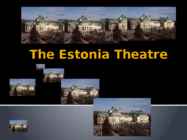
The Estonia Theatre The location Estoniatheatre is situated in the centre of Tallinn. Theatre Estonia winter garden The history The Estonia Theatre is an opera house and concert hall in Tallinn, Estonia. The Jugendstil building was designed by Finnish architects Armas Lindgren and Wivi Lönn. It was built as a national effort with the leadership of Estonia society in 1913 and was opened to the public on 24 August. At the time, it was the largest building in Tallinn. The opera house was heavily damaged in the Soviet air raid on Tallinn on 9 March 1944. It was reconstructed in a classical and Stalinist style, and reopened in 1947. Thebuilding has two large auditoriums in two separate wings. It now houses the Estonian National Opera and the Estonian National Symphony Orchestra. A chamber hall was opened in 2006. Speciality In2003 a new multipurpose chamber hal...
Dear Elijah, I’m writing to tell you about the Estonian flag and what are the symbols of Estonia. The national symbols of the Republic of Estonia are the Estonian flag, coat of arms, anthem, but also the national bird and flower. They all have great meaning for Estonia, although nowadays it often tends to forget. The Estonian national flag is a rectangular piece of cloth, which consists of three equal width horizontal bands of colour: the upper band is blue, medium black and white underside. The correlation of the width and length is less imporatnt, but fixed as 7:11.
Võnnu Keskkool ESTONIA Referaat Autor: Klass : 9 Juhendaja: Võnnu 2013 Estonia officially the Republic of Estonia, is a state in the Baltic region of Northern Europe It is bordered to the north by the Gulf of Finland, to the west by the Baltic Sea, to the south by Latvia and to the east by Lake Peipus and Russia.Across the Baltic Sealies Sweden in the west and Finland in the north. The territory of Estonia covers 45,227km2 The Estonian climate resembles that of other countries on the Baltic littoral. On account of the country's proximity to the sea, the skies are often cloudy, and rain often falls in the spring and autumn, in the winter the rain turns to snow. The highest point in Estonia is Suur Munamäg It is in fact the highest point in the Baltic region Forest cover over one half of Estonia. The most common types of tree are pine, spruce and birch. Estonia, along...
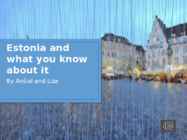
Estonia and what you know about it By Anšiel and Liza National symbols • The flag is blue, black and white horisontal lines, It represents the blue sky, the dirt, purity or snow. • The national bird is a swallow. • The national flower is a cornflower. History • The first settelments in Estonia came by supposedly about 11 000 years ago. • In the past most Estonians worshipped spirits of nature and their beliefs were seen as unholy by christian crusaders. Taara is believed to have been the name of the old Estonian god. • Starting with the Northern Crusades in the Middle Ages, Estonia became a battleground for centuries where many countries fought their wars over controlling the important geographical position of the country as a gateway between East and West, despite this the country has survived. • Estonia first got it’s independence in 1918 wich lasted 22 years. • The first president of Estonia during this period was Kon...
Report on Estonia Estonia is a country in northern Europe. Estonia has land borders in the south with Latvia and in the east with Russia, it's oversea neighbours are Finland and Sweden. Estonia has got 15 counties. Estonia has been an independent country since 1991. Tallinn is the capital city of Estonia. Estonia is a member of European Union nad NATO. Estonia is a democratic republic and it's president is Toomas Hendrik Ilves. The official language of Estonia is Estonian, which is Finno-Ugric language and has many similarities with Finnish. The population of Estonia contains mainly Estonians but some Russians and other ethnicities too. Many foreign people think of Estonia as an old-timed soviet union country, but in my opinion Estonia is quite far-advanced country. Estonian national symbols are cornflower, slate, swallow and it's blue-black-white flag. There is very high level of education in Estonia, m...
Estonian Business School Bachelor’s Studies 1.International business administration (Rahvusvaheline ärijuhtimine) 2.Languages and business administration (Võõrkeeled ja ärikorraldus) 3.Entrepreneurship and business administration (Ettevõtlus ja ärijuhtimine) International business administration designed for people interested in economics and business who wish to acquire professional knowledge and skills to work in an international company or in public sector very good Business English language skills possibility to specialize in marketing, service economics or finance Languages and business administration for people who would like to gain practical skills of foreign languages (possible to study 3 foreign languages at a time) have basic knowledge of economics and business administration Entrepreneurship and business administration for people who would like to wisely get into the business worl...
Marit Moorits 12b Kristjan Raud Kristjan Raud (18651943) belongs to the older generation of Estonian artistic pathfinders. Together with his twin brother Paul Raud and his contemporary artist, Ants Laikmaa, he managed to break through the obstacles set before the Estonians by the prevailing peasant mentality and the extremely classconscious society of the time. Kristjan Raud was one of the first Estonian artists who is brave enough to try and make his career in his homeland, although his talent and connections in the art world, established already during his studies in Germany and St.Petersburg would have enabled him to easily merge in either place. The long years of study in St.Petersburg, Dusseldorf and Munich ended in 1903 when Kristjan Raud settled at home. A great ...
School name THEATRES IN TALLINN Term Paper Compiler: Tallinn 2013 Introduction Tallinn is the capital city of Estonia. In Estonia there are many theatres. Tallinn has 8 theatres. Most of them are located in the Old Town or near the Old Town. These 8 theatres are: Estonian National Opera, Tallinn City Theatre, Estonian Drama Theatre, Estonian State Puppet & Youth Theatre, Russian Drama Theatre, VAT Theatre, Theatre NO99 and Von Krahl Theatre. Estonian National Opera The song and drama society `'Estonia'' was founded in 1865. Play-acting started in 1871. The following theatre activites were relatively haphazard, theatre as a tradition really came into being since 1895, when the society began to direct song plays, folk plays and comedies, usually with singing and dancing; in the start of the XX century already saw more serious drama on the stage. In year 1906 Paul Pinna a...
Estonia is a pretty small country in northern Europe. Estonia has land borders in the south with Latvia and in the east with Russia, it's oversea neighbours are Finland and Sweden. Estonia divided into fifteen counties. Estonia has been an independent country since 1991. Tallinn is the capital city of Estonia. It's not very large, there lives about 400 000 pedestrians. Estonia is a member of European Union and NATO. Estonia is a democratic republic and it's president is Toomas Hendrik Ilves. The territory of Estonia covers 45,227 km² and is influenced by a temperate seasonal climate. The surface there is mainly flat, but in the southern parts of Estonia it gets little bumpy. The official language of Estonia is Estonian, which is Finno-Ugric language and has many similarities with Finnish. The population of Estonia contains mainly Estonians but some Russians and other ethnicities too. Many foreign people think of Estonia as an old-timed...
Tallinna Inglise Kolledz Estonia Topic Alice Tärk, 9b Tallinn 2007 FACTFILE Area: 45 228 sq km Poplulation: under 1.4 million Capital: Tallinn Language: Estonian Currency: Eesti kroon (EEK) Main religion: Lutheran National holiday: 24 February (anniversary of the republic) National flower: Cornflower National bird: Barn Swallow National stone: Limestone LOCATION The Republic of Estonia is the northernmost and smallest of the three Baltic States. It is located on the eastern shores of the Baltic Sea in the north east of Europe. To the east the country borders Russia. Latvia is the countries neighbour to the south. From the west the coast of Estonia is washed by the Baltic Sea and from the north by the Gulf of Finland. The length of the coastline is approximately 3 800 km. The longest distance from east to west is 350 km, while nort...
Estonia Anna-Kaisa Adamson Estonia, officially the Republic of Estonia, is a state in the Baltic region of Northern Europe. It is bordered to the north by the Gulf of Finland, to the west by the Baltic Sea, to the south by Latvia, and to the east by the Lake Peipsi and the Russian Federation. The territory of Estonia covers 45,227 km2. The capital, Tallinn, has around 400000 inhabitants.Tallinn's ability to blend medieval architecture with Scandinavian modernity with all the comforts you'd expect from a modern, competitive and innovative capital. Estonian language, does not belong to the Indo-European group. It belongs to the Finno-Ugric language family, which also includes Finnish and Hungarian. Estonian dialects are divided into two groups, Northern and Southern, usually associated with biggest cities of those regio...
Estonia traditional costumes In Estonia traditional costume denotes mainly the festive peasant dress of the 19th century, which in its time referred besides social status also to national background, as the ruling class were mainly German at the time. The former peasant costume of regional variation has become today a national symbol and has turned due to its altered function into a national dress. Estonian country folk produced their clothing mainly from home-spun woollen or linen fabric: shirts and married women's head-wear was mostly made from linen, while various outer garments, gloves, stockings and socks, were made from wool. The majority of the clothes remained undyed for a long time: linen garments were bleached white, while woollen outer garments were mainly sheep-brown or black. The wool for making skirts was dyed with herbal dyes. The bedstraw root was particularly widely used to produce red colouring...
Arti Hunt IT-14E The Republic of Estonia is a country in Northern Europe. Estonia is located on the eastern coast of the Baltic Sea. The capital of Estonia is Tallinn Estonia has an area of 45 227 km2 In Estonia, there are about 1 340 021 people The colours of Estonian flag are blue, black and white National flower is cornflower National bird is swallow National stone is limestone National anthem is ,,Mu isamaa , mu õnn ja rõõm’’ National Coat of Arms is a golden shield which includes three lions in the middle, with oak branches along the side of the shield. Estonia has 1521 islands and the biggest of them are Saaremaa and Hiiumaa. Estonia is divided in to 15 different counties. The biggest cities in Estonia are Tallinn, Tartu , Pärnu, Narva In Tartu there is the biggest and oldest University in Estonia Suur Munamägi is the highest peak of Estonia and also in the Balti...
ESTONIA ·Republic of Estonia is a country in Norhern Europe. Our president is Toomas Hendrik Ilves ·Territory of Estonia is 45,227 ( square kilometer) km² ·Population is 1.4 million. Estonia is one of the least-populous members of the European Union. ·The capital and largest city is Tallinn wich is in North-Estonia ·We are special because we have own language estonian ·Estonia is bordered to the north by the Gulf on Finland, to the west by the Baltic Sea, to the south by Latvia and to the east by Russian Federation ·Estonia is divided into 15 counties (maakond) ·In Estonia are 33 cities and several town-parish towns in the country. More than 70% of the population lives in towns. ·Estonia has summer capital it's Pärnu, autum capital it's Türi, winter capital it's Otepää ·The Estonia Theatre is an opera house and concert hall in Tallinn . It was built on 1913 ·The oldest records of...
Estonia Tjorn Treu KP-31 Information · Area- 45,227 km2 · Population- 1,282,963(2011 july) · Location- Baltic Region of Northern Europe · Capital- Tallinn · Main cities- Tallinn,Pärnu,Tartu,Narva · Official Language- Estonia · Political structure- democraic republic National symbols Flag- Coat of arms- Anthem-"My Fatherland, My Happiness and Joy,, Plant-cornflower Bird-chimney swallow Stone-slate Tree- Oak History DATES Independence Day (Iseseisvuspäev) - February 24 May Day (kevadpüha) - May 1 National Flag Day (Eesti lipu päev) - June 4 Victory Day (võidupüha) - June 23 St. John's Day (Jaanipaev) - June 24 Day of Restoration of Independence (taasiseseisvumispäev) - August 20 history EVENTS Viljandi Folk Music Festival - July Ollesummer (Beer Summer) July The All-Estonian Song Festival (Laulupidu) takes place every five years in Tallin...
Estonia lies on the eastern shores of the Baltic Sea on the level northwestern part of the rising east European platform. Estonia is a flat country covering 46 226 square kilometers.Estonian's neighbours are Finland, Sweden, Latvia and Russia. Estonia is rich in islands. The two largest are Saaremaa and Hiiumaa . Saaremaa is famous for its big meteorite crater called Kaali and Hiiumaa is famous for its nature and plants. The countries highest point Big Egg hill ( Suur- Munamägi) reaches 318 meters above sea level. Estonia has many uplands too. The uplands are: Pandivere upland, Otepää upland, Vooremaa upland, Karula upland Haanja upland, Sakala upland. Estonia is covered by about 18 000 square kilometers of forest. Estonia is also rich in lakes and rivers The largest lake is Peipsi and the second-largest lake is Võrtsjärv. The largest river is Võhandu whinch is 162 meters long. Estonia has many national parks. A national park is a p...
Triin Aljand Märjamaa Gümnaasium 9-B Hanna-Liisa Hannus 2014 Personal information Full nameTriin Aljand Nationality Estonia Born July 8, 1985 (age 29) Tallinn, Estonia Height 1.79 m Weight 68 kg She is a former Estonian swimmer. Triin Aljand hobbies are music, movies and crosswords. She is engaged with Slovenian swimmer Peter Mankoč. Estonian female athlete in 2011 and 2012 Medals She who won a silver medal at the 2012 European Aquatics Championships in 50m butterfly. European short course championships: Silver 2011 Szczecin 50m butterfly Silver 2012 Chartres 50 m freestyle Bronze 2010 Eindhoven 50 m butterfly Bronze 2011 Szczecin 50 m freestyle Sheset the Estonian national records three times in the 50-m butterfly on December 12, 2008. She set another national record in the 100-m butterfly at the 2008 European Short Course Swimming Championships on Dec...
Estonia is located in the Northern Europe and is a state in the Baltic region It is bordered to the north by the Gulf of Finland, to the west by the Baltic Sea, to the south by Latvia, and to the east by Lake Peipus(Peipsi) and the Russian Federation.Estonia also has a number of islands: Saaremaa and Hiiumaa, which are the most known are also the two biggest ones.The territory of Estonia covers 45,227 km2. There is 3,794 kilometers of coastline marked by numerous bays, straits, and inlets. The Republic of Estonia is divided into fifteen counties: Hiiumaa, Saaremaa, Läänemaa, Harjumaa, Lääne-Virumaa, Ida-Virumaa, Tartumaa, Jõgevamaa, Järvamaa, Raplamaa, Viljandimaa, Pärnumaa, Valgamaa, Põlvamaa and Võrumaa. The capital city of estonia is Tallinn. Estonia is influenced by a temperate seasonal climate. Estonia has four seasons of near-equal length. July is the warmest month, and February is the coldest month. Snow cover, which is d...
Are young people living in Estonia patriots of their homeland? To begin with, it would be a good idea to explain who patriots actually are. They are people whose public conducts are regulated by one single motive - the love of their homeland. When speaking of patriotism, already The Constitution of Estonian Rebublic states that the main aim of our country is to assure that our nation, language and culture will be preserved. Many people have argued whether young Estonians are patriots of their homeland or not and there have been many different answers to that question. One the one hand, young Estonians are very supportive and helpful when there is a crisis situation in our country. For example, in case of the disturbances in April 2007, young men where ready to go as voluntaires to protect our country. Also, more an more young people are interested in taking part in the Song and Dance Festivals. Where they can wear our ...
Estonia. Estonia, officially the Republic of Estonia is a country in Northern Europe. It is the smallest of the three Baltic countries. Estonia has land borders with Latvia (339 km) to the south and Russia (229 km) to the east. It is separated from Finland in the north by the narrow Gulf of Finland and from Sweden in the west by the Baltic Sea. Estonia has been a member of the European Union since May 1, 2004 and of the NATO since March 29, 2004. The area of Estonia is about 45000 square kilometres and the population is about 1.4 million people. The capital of Estonia is Tallinn and the official language is Estonian. The currency is Eesti kroon. The main religion is Lutheran. Anniversary of the republic is celebrated on February 20. The national flower is cornflower, national bird is barn swallow and national stone is limestone. It is a land of great natural beaut...
Introduction Estonia, officially the Republic of Estonia (Estonian: Eesti or Eesti Vabariik) is a country in the Baltic region of Northern Europe. It is bordered to the north by Finland across the Gulf of Finland, to the west by Sweden across the Baltic Sea, to the south by Latvia (343 km), and to the east by the Russian Federation (338,6 km). The territory of Estonia covers 45,227 km² and is influenced by a temperate seasonal climate. The Estonians are a Finnic people closely related to the Finns, with the Estonian language sharing many similarities to Finnish. The modern name of Estonia is thought to originate from the Roman historian Tacitus, who in his book Germania (ca. AD 98) described a people called the Aestii. Similarly, ancient Scandinavian sagas refer to a land called Eistland, close to the German term Estland for the country. Early Latin and other ancient versions of the name are Estia and Hestia. Until the late 1930s, the ...
Estonian Defence League In this world, different people like different things. Some people are into dancing, but some people are into war games and military things. For those, who like the last ones, there is a special organisation, that raises love to our home country in young people. Estonian Defence League even protects our country in case of a war or emergency. It has and always will be free and open to all of those, who are even a little bit interested in it. The Estonian Defence League was preceded in 1918 by Estonia's first armed home defence organisation: The Citizens' Defence Organisation (Omakaitse) against the public disorder accompanying the Russian Revolution. On 11 November in 1918 the Citizens' Defence Organisation was renamed the Estonian Defence League which performed the tasks of a national guard in the War of Independence. In October of 1925 was founded the Estonian De...
UNO SOOMERE ESTONIAN SYMPHONIC MUSIC. THE FIRST CENTURY 1896-1996. AN OVERVIEW With a Historical and Cultural Summary IN MEMORY OF THE GREAT ESTONIAN COMPOSERS CONTENTS ESTONIA AND THE ESTONIANS FOREWORD IN THE FOLD OF TSARIST RUSSIA. EMERGENCE AND FIRST STEPS ON THE CLASSICAL-ROMANTIC PATH. HISTORICAL INTRODUCTION I. MUSICAL LIFE IN TARTU AT THE TURN OF THE CENTURY. TRAILBLAZERS: ALEKSANDER LÄTE, RUDOLF TOBIAS, ARTUR KAPP. II. THE FIRST DECADE OF THE 20TH CENTURY. ARTUR LEMBA: THE BEGINNING OF ESTONIAN SYMPHONY AND OPERA. III. NEW DEVELOPMENTS IN CULTURAL AND MUSICAL LIFE: THE END OF THE TSARIST PERIOD. THE INDEPENDENT REPUBLIC OF ESTONIA: THE INTRODUCTION OF INNOVATIONS FROM WESTERN ART AND THE EVOLUTION OF NATIONALLY ORIENTED MUSICAL TRENDS. IV. THE TWENTIES. ARTUR KAPP: ROMANTICIST AND DRAMATIST. V. THE INFLUENCE OF NEW WESTERN MUSIC...
Introduction of Estonia The Republic of Estonia is beautiful country which is located in northeastern Europe, bordering the Baltic Sea on the west, the Gulf of Finland on the north, Latvia on the south, and Russia on the east. Estonia is the smallest of the Baltic countries. Administrative division: Estonia has an area of 45,226 square kilometers and Estonia is administratively divided into counties. There are 15 counties in Estonia. The capital is Tallinn which is located in Harjumaa. Counties are divided into 194 rural municipalities. Population: The population of Estonia was estimated at 1.34 million in January 2011, with a density of 30 persons per square kilometer. According to the last census the number of inhabitants has decreased. In 2010 the birth rate was 11,82 per 1,000 population, while the death rate was exactly the same, so population growth rate is 0%. The proportion of urban p...
Diana Ostrat Essey How does the United States influence Estonia? The United States of America with it's global economic and political superpower is one of the most influential countries in the world and therefore it’s influence can also be felt in Estonia. Fluctuations in Estonia’s status as an independent country have had significant impact on the amount of influence from other countries, whether it is the language, eating habits or lifestyle. But how has United States influenced Estonia after we gained our independence? Estonia is not economically dependent on the United States as they are not one of our most important trading partners, but as the economics of the United States has a great influence on the world economy, they can still indirectly have an influence on Estonian economy. ...
1. Estonian literacy is really young. It dates back to only 19th century, but since then we have had really outstanding poets and writers. They have changed our traditions and shown us the beauty of our homecountry through their writings. There are more man writers in Estonia, but still each of them are astonishing. 2.Marie Under 18831980. She lived in Moscow for a while and then returned to Estonia and started writing. Founded Estonian Literary Society and was the honour member of it. She wrote poems in Germany at first, but them got inspiration to write poems in Estonian, working in newspaper ,,Teataja". She was the first writer in estonia to express emotions in erotic ways so her openminded poems were new to estonia. Her poems have been translated into many different languages. Heljo Mänd was born in 11.February, 1926 and writes bookes for children. Like magazine ,,Täheke" and book ,,Karu Aabits" that children have leart from. K...
Brita ESTONIAN FOOD Rasmus Roger Kregor EVERYDAY MEALS Breakfast Lunch Dinner HOLIDAY FOOD New Year's Eve Midsummer Day September 1 Christmas Birthdays NATIONAL DISHES Rye bread Baltic herring Kama DIFFERENT INFLUENCES ON ESTONIAN CUISINE Geographic location and climate Food preparation methods History and external influences Six step historical development OLD ESTONIAN CUISINE AKA PEASANT CUISINE Simple One sided With few spices Made of bread and starch Fish and meat that's high in salt and fat Coarseflour rye bread Butter and nuts GERMAN AKA MANOR CUISINE Quality and availability International connections St. Petersburg and Stockholm 1781 the first cookbook RUSSIAN CUISINE Dumplings Solyanka Rassolnik Borscht Beef stroganof Chicken Kiev Cottage cheese patty/donut Pasha THE BIRTH OF ESTONIAN CUISINE 1918 Republi...
Estonia Estonia lies in the North-Europe and it is the member of European Union. In the north, Estonia is washed by the Gulf of Finland, in the west by the Balic Sea, in the south there is Latvia and in the east there lies Russian Federation. The territory of Estonia is 45,227 km 2 and it is divided into 15 counties. The capital and also the largest city in Estonia is Tallinn. The population is not large only 1.3 million people. The official language is Estonian. Although we have only few speakers in word terms, we are proud of our language which is considered to be one of the world's most beautiful ones. Estonia is an independent country, the government is parliamentary republic and the president of Estonia is Toomas-Hendrik Ilves. In Estonia, there are many places worth visiting. For example, the ruins of the Order Castle in Viljandi, national parks in Soomaa and definitely Old ...
The Most Interesting Historical Events in Estonia Liana Põldver · The nationwide Song Festival tradition began with the first Song Festival in Tartu, June 18 20, 1869. · 1860 marks the beginning of the period of the National Awakening. A singing society led by Johann Voldemar Jannsen started and carried through the nationwide idea of Song Festival. · During 1879 1910 six Song Festivals were held that played an important part in the nation's cultural and economical awakening and growth. In the independent Estonian Republic the Song Festivals were held in every five years (1923 1938). After World War II, the Song Festival tradition began again in 1947. Since 1950 General Song Festivals were held in every five years again. 1969 was an exception though when 100th anniversary of the Song Festival was celebrated. · The foreign authorities have tried to use the ...
Official name: Republic of Estonia Territory: 45 227 km Population: 1 342 000 Official languafe: Estonian Largest ethnic groups: Estonians 68%, Russians 26%, Ukrainians 25, Belarussians 1%, Finns 1% Capital of Estonia: Tallinn Number of islands: 1 521 Highest point: Suur-Munamagi (Great Egg Hill) 318 m Religion: Lutheran Currency: Estonian Kroon (EEK),1 EUR = 15,65 EEK Estonia has two Independence Days - Estonia first achieved independence from the Soviet Union on the 24th February 1918 and again on the 20th August 1991 after 51 years of occupation. The second date is known as the Restoration of Independence Day The Estonian language belongs to the Finno-Ugric group and is most similar to Finnish Estonia was the first country in the world to introduce online political voting Estonia won the Eurovision Song Contest in 2001 with the song Everybody There are over 1500 Islands, 1000 lakes and 7000 rivers in Estonia Chess Grandmaster Paul ...
The Goblin Last month, I attended an Eduard Tubin's modern ballet performance ,,The Goblin" in two acts at the Estonian National opera. The choreographer and stage director was Marina Kesler. The conductors were Vello Pähn, Kaspar Mänd and Lauri Sirp. "The Goblin" is the first Estonian ballet, which premiered in 1943 at the Vanemuine Theatre. ,,The Goblin" is based on a mythical character from Estonian folclore. His master, the Farmer, was very greedy and he dreamed of being wealthy. To create the Goblin, the Farmer had to give him 3 drops of his blood and to sell him his soul. The Goblin's purpose was to serve his master in obtaining riches. The Farmer also had a Daughter, who was in love with a Peasant. The Peasant was quite poor and because of that the Farmer disliked him. The Farmer had never enough of money and he made everything to develop his bussiness. He had so much money that he deci...
Holidays, Festivals, Cultural events TALLINN - If you're looking for entertainment in Estonia this summer, you are really spoiled for choice. Festivals and events dedicated to the consumption of beer are a lot of fun, but if you want to get the true feel of the country, you need something a little more ethnic. Like a town fair. Just as July becomes August, the seaside town of Haapsalu will host a grand spectacle of rural Estonian entertainment. The White Lady Days is a summer celebration filled with amusement for all the family. Held in and around the remains of the Teutonic-knights-era castles, the fair combines enchanting medieval legends with modern countryside charm to create a comprehensive experience of Estonia beyond the big cities. But the legend of the White Lady of Haapsalu, which is at the heart of the festival, is perhaps the most famous tall tale of the many that are so abundant in Estonia's folklore. It is the story of...
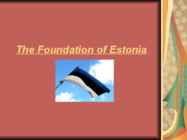
The Foundation of Estonia Estonia The history of Estonia The history of Estonia is a part of the history of Europe. Estonia was settled near the end of the last glacial era, beginning from around 8500 BC. Before the Germans invaded in the 13th century proto-Estonians of the Ancient Estonia worshipped the spirits of nature. Since the Northern Crusades Estonia became a battleground for centuries where Denmark, Germany, Russia, Sweden and Poland fought their many wars over controlling the important geographical position of the country as a gateway between East and West. Being conquered by Danes and Germans in 1227, Estonia was ruled initially by Denmark in the north, by the Livonian Order, an autonomous part of the Monastic state of the Teutonic Knights and Baltic German ecclesiastical states of the Holy Roman Empire. From 1418–1562 the whole of Estonia was part of the Livonian Confederation. A...
Topic Estonia, Tallinn The Republic of Estonia is the northernmost of the three Baltic States on the eastern shore of the Baltic Sea. To the east Estonia borders on Russia and Lake Peipsi and on the south on Latvia. The area of Estonia is 45 100km2, its coastline is 774km long. The geography of the land is surprisingly varied. Islands make up 9,2 per cent of Estonian's total territory, the largest islands are Saaremaa, Hiiumaa and Vormsi. The highest point is Suur Munamägi, which is 317m high. Estonia has a surprisingly mild climate for an area so far north. Sea winds keep the weather from becoming very cold or hot. The population of Estonia is 1.5 million. Of this number 62 per cent are Estonians. Estonians speak the Estonian language, which is closely related to Finnish. Estonia's flag has three horizontal stripes. The blue stripe at the top of the fla...
 annaabi.ee