A single nation. A million voices. The fall of and empire. Main events in Estonian history NIMI Ancient Estonia · Begins from around 8500 BC. · Worshipped the spirits of nature. · Own gods. · 5 periods: mesolithic, neolithic, bronze age, iron age, early middle ages. Click icon to add picture Click icon to add picture Estonian crusade · One of the last corners of medieval Europe to be christianized. · Against pagans in Estonia. ...
Estonian history between 1710-1850 and 1850-1918 Contents Contents.................................................................................................................................. 2 17101850.............................................................................................................................. 3 Population and social structure........................................................................................ 4 Serfdom and the intensifying manorial economy ............................................................. 4 Influences of Pietism and the Moravian Brethren............................................................. 5 Enlightenment and enlightened absolutism...................................................................... 6 18501918.......................................................................................................................
01.12.14 The Priorities of Estonian Historical Research As a result of multiple nations having ruled over Estonian lands, Estonian history has been written from multiple perspectives. Often, religion, politics, and personal motives have fashioned history into what its authors wanted it to be. People have written from a multiplicity of perspectives. It should be one Estonian historical research's greatest priorities to distance itself from this, to seek after holistic, balanced accounts of the past. Early chronicles of Estonian history illustrate this diversity of perspective. Johann Renner, a Baltic German, held his own people in high esteem, deeming them the people of God. He implied this when he wrote that God would save His people from the hand of Gog. He seems to indicate that Gog was the Muscovite people. Perhaps the ...
Cinema in Estonia The story of moving pictures 1896 First cinema 1906 Estonian's first film-maker Johannes Pääsuke Johannes Pääsuke - Born 30 March 1892 - Estonian photographer and filmmaker - Founded his studio Estonia-Film - 40 films in his career - ,,Karujaht Pärnumaal" (1914) - Died in a train accident in 1918 Estonian films Films which have enjoyed popularity during The post-war period. - ,,Elu tsitadellis" (Life in the Citadel) was released in 1947 - ,,Hullumeelsus" (Lunacy) - ,,Nipernaadi" (Happy-Go-Lucky) by Kaljo Kiisk - ,,Naerata ometi" (Do Smile, Please) by Leida Laius and Arvo Iho Estonian films ,,Viimne reliikvia" (The Last Relic) by Grigori Kromanov - The film was released in 1969. - The best-known Estonian film. - Has screened in over 60 countries. - Sold 45 million tickets (772k) Estonian documentaries Have ...
The most important key dates in Estonian history Every country has its history and some moments are more important than the others. Here are some of the most notable dates from Estonian history. 3rd millennium BC the Finno-Ugric tribes arrive in Estonia 1154 First written mention of Tallinn (by al-Idrisi) 13th century German and Danish invade Estonia. Estonians' numerous attempts to restore independence fail 1343 St. George's Night uprising 1558-1583 the Livonian War after which Northern Estonia is occupied by Sweden and Southern Estonia occupied by Poland 1632 Tartu University was founded 1860-1885 the era of national awakening, the foundation for Estonian journalism was laid, collection of folklore 1869 First all-Estonian Song Festival in Tartu 1884 The blue-black-and-white flag of Estonian Students' Society was consecrated ...
Report Theatres of Tallinn Student: Supervisor: Tallinn 2008 Table of Contents Table of Contents........................................................................................................................2 Introduction.................................................................................................................................3 The Estonia National Opera........................................................................................................4 Russian Drama Theatre...............................................................................................................5 Tallinn City Theatre.................................................................................................................... 6 Estonian Drama Theatre....................................
The Great Guild Liisbeth Kallakmaa The Great Guild Medieval Tallinn's social institutions were guilds and brotherhoods, whose main function was to provide members with social interactions and ensure their rights, but also played an important political and economic role. Tallinn had three important guilds - The Great Guild, St. Canute's Guild and St. Olaf's guild. The Great Guild was the youngest among them, founded in the 14th century, but soon became the biggest and most important. It was founded as an organization of the wealthiest merchants and shipowners. The name of the Great Guild was introduced in the late 15th century. There were close ties between the guild and the town rules: only members of the Great Guild had the right to belong to the town council and could be elected for mayor. Tallinn's small coat of arms is also the Great Guild's coat of arms. Guild was led by Alderman, with the assistance of t...
Estonia and what you know about it By Anšiel and Liza National symbols • The flag is blue, black and white horisontal lines, It represents the blue sky, the dirt, purity or snow. • The national bird is a swallow. • The national flower is a cornflower. History • The first settelments in Estonia came by supposedly about 11 000 years ago. • In the past most Estonians worshipped spirits of nature and their beliefs were seen as unholy by christian crusaders. Taara is believed to have been the name of the old Estonian god. • Starting with the Northern Crusades in the Middle Ages, Estonia became a battleground for centuries where many countries fought their wars over controlling the important geographical position of the country as a gateway between East and West, despite this the country has survived. • Estonia first got it’s independence in 1918 wich lasted 22 years. • The first president of Estonia during this period was Kon...
The Foundation of Estonia Estonia The history of Estonia The history of Estonia is a part of the history of Europe. Estonia was settled near the end of the last glacial era, beginning from around 8500 BC. Before the Germans invaded in the 13th century proto-Estonians of the Ancient Estonia worshipped the spirits of nature. Since the Northern Crusades Estonia became a battleground for centuries where Denmark, Germany, Russia, Sweden and Poland fought their many wars over controlling the important geographical position of the country as a gateway between East and West. Being conquered by Danes and Germans in 1227, Estonia was ruled initially by Denmark in the north, by the Livonian Order, an autonomous part of the Monastic state of the Teutonic Knights and Baltic German ecclesiastical states of the Holy Roman Empire. From 1418–1562 the whole of Estonia was part of the Livonian Confederation. A...
Estonia Tjorn Treu KP-31 Information · Area- 45,227 km2 · Population- 1,282,963(2011 july) · Location- Baltic Region of Northern Europe · Capital- Tallinn · Main cities- Tallinn,Pärnu,Tartu,Narva · Official Language- Estonia · Political structure- democraic republic National symbols Flag- Coat of arms- Anthem-"My Fatherland, My Happiness and Joy,, Plant-cornflower Bird-chimney swallow Stone-slate Tree- Oak History DATES Independence Day (Iseseisvuspäev) - February 24 May Day (kevadpüha) - May 1 National Flag Day (Eesti lipu päev) - June 4 Victory Day (võidupüha) - June 23 St. John's Day (Jaanipaev) - June 24 Day of Restoration of Independence (taasiseseisvumispäev) - August 20 history EVENTS Viljandi Folk Music Festival - July Ollesummer (Beer Summer) July The All-Estonian Song Festival (Laulupidu) takes place every five years in Tallin...
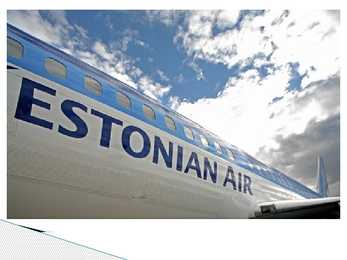
History Partners Activities Structure Strategy History On December 1, 1991 Estonian Air was created. In 1996, the Estonian state decided to privatise the airline and 66% of the shares were put on sale. In 2003, Maersk Air sold its 49% share to SAS Group. Partners v Scandinavias Airlaines v Aeroflot, Russian Airlaines v Belavia, Belarusian Airlaines v AeroSvit, Ukrainian Airlaines v Spanair, Spanish Airlaines v KLM, Royal Dutch Airlaines v Brussels Airlaines v Rossiya, Russian Airlaines Activities Ø Estonian Air'sprincipal field of activity is provided scheduled flights to both business and holiday travellers Ø Estonian Air's fields of activity include training of flight attendants, freight transport and the on-board sale of merchandise. Structure to edit Master text styles Click to edit Master text styles econd level Second level Third level ...
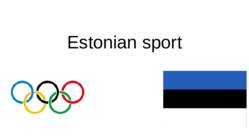
Estonian sport Alfred Neuland ● 10 October 1895 ● first Olympic gold 1920 ● weightlifter ● 12 WR Palusalu’s triumph ● 10 March 1908 ● Berlin Olympic games 1936 ● two gold ● Greco-Roman and freestyle heavy weight ● people came to railway stations ● 40 000-60 000 people Paul Keres ● January 7, 1916 ● chess grandmaster ● the world's top players from the mid-1930s to the mid-1960s. ● the strongest player never to become world champion ● one of the greatest players in history Jaan Talts ● 19 May 1944 ● weightlifter ● silver 1968 ● gold 1972 ● 41 WR ● lifted 500 kg Erika Saulmäe ● born 11 June 1962 ● track bicycle racer ● only Estonian female medallist ● gold in 1988, 1992 Andrus Veerpalu ● 8 February 1971 ● most successful male cross country skier ● 2002 gold and silver ● 2006 gold ● oldest world champion in history - 38 years old ● oldest Olympic champion in individual dist...
Estonia officially the Republic of Estonia, is a country in the Baltic region of Northern Europe. It is bordered to the north by the Gulf of Finland, to the west by the Baltic Sea, to the south by Latvia and to the east by Russia. Across the Baltic Sea lies Sweden in the west and Finland in the north. The territory of Estonia covers 45,227 km2, and is influenced by a humid continental climate. Estonia is a democratic parliamentary republic divided into fifteen counties, with its capital and largest city beingTallinn. With a population of 1.3 million, it is one of the least-populous member states of the European Union. The Estonians are a Finnic people, and the official language, Estonian, is a Finno-Ugric language closely related to Finnish The history of Estonia is a part of the history of Europe. Estonia was settled near the end of the last glacial era, beginning from around 8500 BC. Before the Germans invaded in the 13th century pro...
Great Coastal Gate & Fat Margaret's Tower Good morning ladies and gentlemens, and welcome to Great Coastal Gate and Fat Margaret's Tower. Before we begin the tour, I`d like to tell you a little about their history. The Great Coastal Gate (Suur Rannavärav) was the most important gate in Tallinn. It was built as a defence on the seaward side of Tallinn, but also to impress visitors coming in from the sea. In the Middle Ages the Great Coastal Gate was about 300 footsteps from the harbour. Legends say, that during storms, the waves reached the gate. . In the 16th century, a powerful cannon tower was built next to the Great Coastal Gate. It had 155 loopholes, diameter of 25 meters, and a height of about 20 meters. The tower was named Roosikrantsi, but as it was the stoutest tower in the Wall, people started to call it "Fat Margaret". Through history, the cannon tower has also served as a storehouse for gunpowder ...
Kiili Gümnaasium Referaat Hiiumaa Kairo parts 8b klass Kiili 2011 Contents 1. Hiiumaa 2. Name 3. History 4. Transport 5. Kõpu lighthouse Hiiumaa Hiiumaa (Finnish, Hiidenmaa, German Dagö, Swedish Dagö, Danish Dagø) is the second largest island (989 km²) belonging to Estonia. It is located in the Baltic Sea .north of the island of Saaremaa ,a part of the West Estonian archipelago. Its largest town is Kärdla. Name Hiiumaa is the main island of Hiiu County, called Hiiumaa or Hiiu maakond in Estonian. The Swedish and German name of the island is Dagö (day isl...
Brita ESTONIAN FOOD Rasmus Roger Kregor EVERYDAY MEALS Breakfast Lunch Dinner HOLIDAY FOOD New Year's Eve Midsummer Day September 1 Christmas Birthdays NATIONAL DISHES Rye bread Baltic herring Kama DIFFERENT INFLUENCES ON ESTONIAN CUISINE Geographic location and climate Food preparation methods History and external influences Six step historical development OLD ESTONIAN CUISINE AKA PEASANT CUISINE Simple One sided With few spices Made of bread and starch Fish and meat that's high in salt and fat Coarseflour rye bread Butter and nuts GERMAN AKA MANOR CUISINE Quality and availability International connections St. Petersburg and Stockholm 1781 the first cookbook RUSSIAN CUISINE Dumplings Solyanka Rassolnik Borscht Beef stroganof Chicken Kiev Cottage cheese patty/donut Pasha THE BIRTH OF ESTONIAN CUISINE 1918 Republi...
Pärnu City Themes 1. History 2. Attractions 3. About Pärnu 4. Notable Residents 5. Citizens of Honuor 6. Pictures of Pärnu 1. History The people who chose to live at the river mouth thousands of years ago stayed here permanently. It is known that in 1154 the Arabian traveller and geographer Abu Abdallah Muhammed al-Idrisi serving the King of Sicily mentioned a river named Bernu. Embecke ("Emajõgi" in Estonian) is the same River Bernu referred to by al- Idrisi and later renamed as the River Pärnu. Pärnu's first period of prosperity was the time from the beginning of the 14th century up to the end of the 15th century while it was a port on the route to the Hanseatic City of Novgorod. 2. Attractions Places to visit: ● Rannapark (Beach Park) & Vallikäär ● Eliisabet Church was built 1747 and is now a popular location for concerts. It’s organ has a distinct, beautiful sound. ● Jekateriina Church is one of the most beautiful...
Estonia Topic Tallinn 2007 2 List of Contents page Facts and figures 3 Geography 3 Climate 3 Nature 4 History 5 Economy 6 Culture 6 Biggest towns 7 Language 8 3 Facts and figures The Republic of Estonia is a small country. Covering only 45, 228 sq km it is slightly bigger than Denmark, Belgium or Switzerland. Estonia's population is under 1.4 million. The official language is Estonian but since very many Russians live here Russian is also wide spread. The capital of Estonia is Tallinn. The currency used in Estonia is Eesti kroon. The Estonian national flag is blue-black-white. It was originally the flag of the Estonian Students' Society. The flag was first consecrated in Otepää Church in 1884. For a while, during the Soviet occupation, the flag was banned but it was again seen in p...
Report about Estonia Introduction The purpose of this report is to describe Estonia's. I'm going to write little about the geography, culture, Geography of Estonia Estonia has 4 neighbours Latvia, Sweden, Finland and Russia. Estonian land border with Latvia is 267 km, with Russia its 290 km. Estonia lies on the east of the Baltic Sea. Estonian highest point is the Suur Munamägi winces height is 318 m. Estonia has 3794 km of coastline. The number of islands is estimated around 1500 and two of the largest are called Saaremaa and Hiiumaa. Estonia is situated in the northern part of the temperate climate zone and in the transition zone between maritime and continental climate. Estonia has four seasons of near-equal length. Estonia has over 1,400 lakes. Most are very small, with the largest, Lake Peipus being 3,555 km2. Culture of Estonia The culture of Estonia incorporates indigenous heritage, as represented by the Estonian language and the...
Estonia is divided into 15 counties which are divided in turn into 207 rural municipalities and 47 towns. The Republic of Estonia, the northernmost and smallest of the three Baltic countries, is located on the eastern shores of the Baltic Sea in the north-east of Europe. Lying between East and West, it has served as junction of international trade routes for centuries. Moreover, Estonian neighbours are Russia and Latvia. Estonia is accessible, both from a logistical and social point of view - Tallinn is within 3 hours flight from major European capitals and the power distance is very low. In the west, the coast of Estonia is washed by the Baltic Sea. It is a land of great natural beauty with a long and varied history and rich culture. That's their nature especially concerning national symbols such as their music or their language. Even if Estonia is tiny, it still offers a breathtaking amount of nature. It is safe or safer than most pl...
History of Estonia Elina, Rasmus, Joosep Pre-history The Mesolithic Period The Neolithic Period The Bronze Age The Iron Age Early Middle Ages Click to edit Master text styles Second level Third level Fourth level Fifth level Counties of Ancient Estonia The Middle Ages Danish Estonia Swedish Coastal Settlements Terra Mariana The Reformation Period Division of Estonia in the Livonian War PolishLithuanian Commonwealth Estonia in the Swedish Empire Estonia in the Russian Empire Age of Enlightenment National Awakening Road to Republic Occupation of Estonia by German Empire. United Baltic Duchy Declaration of Independance As a result of the availability of education Age of awakening Red Army's retreat and arrival of German troops in Pärnu on 23 February in Tallinn on 24 February 1918 Independence (1918-1939) Tartu peace treaty in 1920 First recognized by Finl...
Lennart Meri Lennart Meri was a writer, a film director and a statesman who served as the second President of Estonia. Meri was a leader of the Estonian independence movement. His lifestory: Lennart Georg Meri was born in Tallinn, 29 March 1929, a son of the Estonian diplomat and later translator Georg Meri, and Estonian Swedish Alice-Brigitta Engmann. Because his father was a diplomat, Lennart left Estonia at an early age and studied abroad, in nine different schools and in four different languages. In addition to his native Estonian, Lennart Meri fluently spoke five other languages: Finnish, French, German, English and Russian. The family was in Tallinn when Estonia was occupied by the armed forces of the Soviet Union in June 1940 and in 1941, the Meri family was deported to Siberia. They came back to Estonia 1945. In 1953, Lennart Meri graduated cum laude fr...
Lennart Meri Lennart Meri was a writer, film director and statesman who served as the second President of Estonia. Meri was a leader of the Estonian independence movement. His lifestory: Lennart Georg Meri was born in Tallinn, 29 March 1929, a son of the Estonian diplomat and later translator Georg Meri, and Estonian Swedish Alice-Brigitta Engmann. Because his father was a diplomat, Lennart left Estonia at an early age and studied abroad, in nine different schools and in four different languages. In addition to his native Estonian, Lennart Meri fluently spoke five other languages: Finnish, French, German, English and Russian. The family was in Tallinn when Estonia was occupied by the armed forces of the Soviet Union in June 1940 and in 1941, the Meri family was deported to Siberia. They came back to Estonia 1945. In 1953, Lennart Meri graduated cum laude from t...
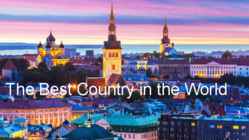
The Best Country in the World The Best Country in the World Estonia ● Area: 45,227 km² ● Population: 1,36 million ● Capital city: Tallinn (405 000 inhabitants) Sport ● Kiiking ● Kelly Sildaru ● Wife carrying Fun facts ● Tallinn is the city of the first Christmas tree ● Free public transport ● The first country to introduce online political voting ● Skype was invited in Estonia ● Estonian education system is the best in Europe ● 75.7% are irreligious ● 16% say that they believe in God Estonian nature History ● Human settlement was around 11 000 years ago ● Has been under Danish, Swedish, German and Russian ruling ● Achieved independence 24th of February 1918 ● Re-independence 20. August 1991 ● Regained its independence without a war ● Baltic Way Baltic Way The Estonian Song and Dance Festival https://youtu.be/ieKfoxVWUSo
Old Market square (Vanaturg) is the former market square in Tallinn old town. Five streets meet here: Vene, Viru, Suur Karja and Kuninga streets, and Vana Turu Kael sidestreet. The market location perfectly suited for trade: five trade routes started there. The square is connected to Town Hall Square by a short sidestreet. Town Hall Square Was used as marketing place, for festivities as well as for executions. In summer it is filled with outdoors cafes In winter it becames a magical christmas market The L-shaped sigh There has been a town hall in Tallinn since at least 1322. Town Hall Built in 13th century The management of the city worked in the Town Hall until the year 1970 The only gothic town hall on Northern Europe Weathervane Old Thomas The height of the towe is 64 metres Town Hall pharmacy Is one of the oldest working pharmacies in Europe and...
estonian culture The culture of Estonia incorporates indigenous heritage, as represented by the country's rare Finno-Ugric national language Estonian, with mainstream Nordic and European cultural aspects. Due to its history and geography, Estonia's culture has been influenced by the traditions of the adjacent area's various Finnic, Baltic, Slavic and Germanic peoples as well as the cultural developments in the former dominant powers Sweden and Russia. Traditionally, Estonia has been seen as an area of rivalry between western and eastern Europe on many levels. An example of this geopolitical legacy is an exceptional combination of nationally recognized Christian traditions: a western Protestant and an eastern Orthodox Church. Like the mainstream culture in the other Nordic countries, Estonian culture can be seen to build upon the ascetic environmental realities and traditional livelihoods, a heritage of ...
Theaters of Estonia Jõhvi Theater Jõhvi Concert H all, situated in a small town Jõhvi near N arva, is the youngest, yet the most modern theater in Estonia. With it's large multi-functional transforming scene and stunning unusual architecture it became an important art and cultural center not only of Ida Virumaa, but of the whole Estonia in a very short time. The colourful history of Jõhvi Concert H all dates back to the year 1491, when Jõhvi M anor with its historicist features stood on the spot of the modern Jõhvi Concert H ouse. The manor buildings were surrounded by a spacious park, which can be found next to the concert house even today, reminding us of the former glory of the manor. In cooperation with the Estonian M inistry of Culture and Jõhvi Government the Jõhvi Theater was built in 2004 and first opened its doors on the 8th of October 2005 under the management of Aivar M äethe Director of Estonian Concert. The ...
HISTORY The history of rail transport in Estonia starts in 1870 when a line was opened connecting Paldiski, Tallinn, Tapa and Narva; the line extending all the way to St. Petersburg in Russia. The first railway line to be built in Estonia was the Paldiski Tallinn Narva Gatchina line constructed in 1870; Baltic German nobility provided the impetus for the construction of the line, though because of the Russian influence the line was built to 1524mm gauge to connect with the line from St. Petersburg to Warsaw . The construction project was controlled by the Russian Ministry of Roads. The port of Paldiski was chosen because its southerly position made it ice free all the year round. Soon after both Paldiski and Tallinn experienced an upswing in trade, notably exports of grain.In 1877 another line was complete, connecting Tapa and Tartu; later extended to Valga in 1887, which brought ...
Estonian language Seliin-Doris Tsinjakov 11. Klass Kehra Gümnaasium · Estonian is the official language of Estonia. · Spoken natively by about 1.1 million people. · It belongs to the Finnic branch of the Uralic language family. Classification · Belongs to the Finnic branch of the Uralic languages, along with Finnish, Karelian, and other nearby languages. · Estonian has been influenced by Swedish, German and Russian, though it is not related to them genetically. History · The two different historical Estonian languages, the North and South Estonian languages, are based on the ancestors of modern Estonians migration into the territory of Estonia in at least two different waves, both groups speaking considerably different Finnic vernaculars. · Modern standard Estonian has evolved on the basis of the dialects of Northern Estonia. · The domination of Estonia a...
Symbols of Estonia Estonian coat of arms The Estonian coat-of-arms has ancient roots and resembles both that of Denmark and of England. The three blue leopard-like creatures on a gold background were first used in 1219 as part of the coat-of-arms of the city of Tallinn and, later in history, of the Estonian province. In 1925, what is called the three lion coat-of-arms finally became the national coat-of-arms. National flower The campaign to choose a national flower for Estonia was organized by The Estonian Wildlife Protection Society in 1967-1968 where the ornamental Blue Cornflower was the favourite because of its popularity and decorative appearance, because of this Blue Cornflower was selected as the National Flower of Estonia. National bird The barn swallow, the national bird, is a characteristic guest of Estonian homes. Its call can be heard from practically every eave or barn rafter in t...
Women writer's influence on our society Estonian women writer's history doesn't go far back. The reason for that is that people were slaves back then. Even if there were writers, then most weren't famous and they wrote poems and stories more for themselves. Also being a woman and a writer wasn't considered as a decent job for a woman at that time. The stories that we have from that time were given to one another by talking and mostly we don't know who were the authors. Education was also very expensive so only rich people could get it and Estonians, who were just farmers, mostly didn't have money for that. First I am going to talk about Marie Heiberg. She lived 1890-1942. Her first poem collection was ,,Mure-lapse laulud" in translation ,,Problem child's songs". Her talent was noticed, but she didn't have a change to really become famous. She was in a great penury that made her life really though and she had a ...
As Kalev Heli Kiima The main points: · Introduction · History · Location · Products ...the biggest and oldest confectionery company in Estonia. ...main activities are manufacturing of chocolate. Location ...produces its sweets in the production facility at Põrguvälja just outside Tallinn. History · 1806 The Estonian confectionery industry was born. · 1921 Chocolate and candy factory Kawe is established. · 1948 on April the 1st Kawe is renamed and takes the name Kalev. Products · Chocolates · Candies · Bars · Biscuits Thank you... Any questions?
Estonian Defence League The Estonian Defence League is part of the Defence Forces. The task of the Estonian Defence League is to enchance, by relying on free will and self-initiative, the nation's readiness to defend the independence of Estonia and its constitutional order. There are over 13 000 members in the Estonian Defence League. Together with affiliated organisations Women's Home Defence, Young Eagles and Home Daughters, the Estonian Defence League has more than 21 000 volunteers in action. There are also public figures in the organisation. The Estonian Defence League unites loyal citizens who wish and are able to work voluntarily and without receiving any remuneration for protecting the internal order of the state and improving the sense of security. According to the Estonian Defence League Act they co- operate with the police, local governments, border guard, rescue board and fire-fighters. Member...
Estonians and their habits There are hundreds of different countries and nationalities in the world and each one is peculiar in its own way. For example, Italians are very impulsive. French people don't like the British. Germans are pedantic. Russians are generous, but lazy. What about Estonians? In Estonia when a stranger on a street smiles at you, you can assume that: he is either drunk, insane, from another country or all of the above. Estonians don't smile too often. Estonians are not very talkative either. In Estonian schools teachers have stopped asking their students "Are there any questions?" It is especially hard to keep a conversation flowing with an Estonian when you don't know each other very well. I tried to make a conversation with an Estonian classmate of mine once (whom I didn't know very well) and it sounded like that: Me: So... what did you do during your holidays? ...
Education in Estonia { The beginning The history of formal education dates back to 1314th century crusades The first schools were built near churches The first primer was published in 1575 It was possible to learn reading & writing in various guilds during the 16th century 1617th century Education in the Estonian language started after the reformation by Martin Luther During Swedish era, on Gustav Adolf II's orders, the first school and university were built in 1631 GAG in Tallinn and in 1632 the University of Tartu After The Great Northern War, as Estonia was occupied by Russia, many admiralty schools were built 18th century During the reign of Russian empress Katarina II, many great improvements were made in peasant school system and girls started going to school Estonians were quite highly educated for that time, since at least half of the folk in a parish could read and a third write In 1739, the first bible w...
The Estonian Green Party Green Party History The Estonian Green Party is a political party and follower of the political activity of Estonian Green Movement (EGM), which was formed in 1988 during a massive movement against the Soviet Union's plans to start exploitation of huge phosphorite deposits on NorthEastern part of Estonia EGM was one of the first independent political popular movement in Estonia under Soviet rule. The party Estonian Greens (EG) was formally registered in March 1992 (precessor EGM was registered as party on 20.09.1989) after merger of EGM political wing and EGP. It had approximately 250 members and 3 regional branches. In the 1992 general elections, the Greens were only able to scrape 2.6% of the vote and one deputy to the 101strong Riigikogu (Parliament). Estonian Greens Today After joining the EU (European Union) on May 2004 along the election...
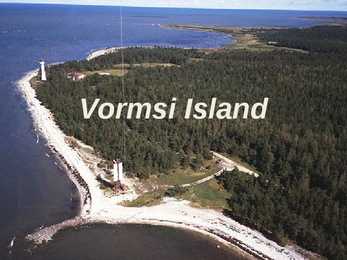
Vormsi Island Location Located between Hiiumaa and the mainland Fourth largest Estonian island Covering 92 square kilometres The meaning of "Vormsi" Known as "snake island" Derived from the German name "Worms" or it's Swedish name "Ormsö", both meaning snake island History Vormsi was inhabited by coastal Swedes 2500 people lived there before WWII During the Soviet occupation Vormsi was a closed border-zone Blend of Soviet and Swedish history mixed with unspoilt nature Nowadays Celtic crosses from the 13th century in Vormsi cemetery Vormsi is for people interested in mixed Soviet and Swedish history and rare nature Landscape Juniper fields Seaside meadows Erratic borders Lighthouses Forests Bays Lagoons To get to Vormsi You have to take a ferry (12 km, 45 min.) from Rohuküla port Public transportation bet...
Finland history biggest narco gang direction Estonia. Monday began Finland Espo court of justice north neighbours history biggest narco process, where other amidst is guiltcouch also Estona electorate. Estonia When recently second progresive in court conculusion Finland hockey star Jere Karalaht and connate 2006.year act narco gang above in that case they couple hundred kg amfetamiini record is already over beaten. Accusal according to cart 25-member gang, where noted also eight Estonia electorate. In the court fore accompanied gang belongs too two Spaniard rest are Finn. Finn over in spite of were also Estonian. Explorotory group assay gang set to pull Estonia. Estonia move also assemblage gang money by Estonia.
Curriculum Vitae PERSONAL INFORMATION Kairi Teder Lume 1, Röa village, 72806 Paide (Estonia) +37256617850 [email protected] Skype Kairi Teder Sex Naine | Date of birth 04 March 1995 | Nationality Estonian JOB APPLIED FOR WORK EXPERIENCE 16 June 201322 August 2013 Cook Tõru Hotel, Paide (Estonia) accommodation cooking customer service trade reception harvesting Chatting with people on the phone. EDUCATION AND TRAINING 01 Septembe...
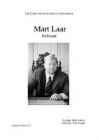
Carl Robert Jakobsoni nimeline Gümnaasium Mart Laar Referaat Koostaja: Mark Gabriel Juhendaja: Tiina Kungla Viljandi 2008-11-27 Valisin Mart Laari, sest ta on huvitav poliitik, kes on olud kõva tegija alates eesti iseseisvumisest ja aitab praegu oma kogemustega teisi riike, kes on saavutanud juba iseseisvuse.Praegu aitab ta Gruusial sõjajärgsest olukorrast taastuda. Referaadi koostamise käigus tahan rohkem Mart Laarist teada saada. Sooviksin teada saada millised autasusi ta on saanud ja milliseid raamatuid kirjutanud. ELULUGU Mart Laar on sündinud 22.aprillil 1960. aastal. Sünnilinnaks on Viljandi. Mart Laar on abielus ja tal on kaks last.Poeg ja tütar. Ta õppis Tallina 46. keskooli kunstikallakuga klassis. Peale keskhariduse omandamist läks Mart Laar Tartu ü...
CURRICULUM VITAE Name: Viljam Viljasoo Address: Leete 4-2 , Tartu , 51009 Mobile number: +372 58 303 883 Nationality: Estonian Date of birth: 27 April 1993 Email: [email protected] Education: 2009-2012 High school, Tartu Raatuse Gymnasium 2004-2009 Basic school, Tartu Raatuse Gymnasium 2000-2004 Primary school, Tartu Raatuse Gymnasium Employment history: 15-24 July, 2010 I worked in Iisaku. I rendered there different house walls. My employer was Ehitus OÜ. 2006-2010 I worked in Ida-Virumaa forests every summer. I harvested there different berries like blueberries and cranberries for selling. Skills: I speak three language- Estonian(mother tongue) , English(quite well) and German( fluently). My computer skills are quite good. I know how to use different programs like Adobe Photoshop CS2 ; Adobe Dreamw...
School name THEATRES IN TALLINN Term Paper Compiler: Tallinn 2013 Introduction Tallinn is the capital city of Estonia. In Estonia there are many theatres. Tallinn has 8 theatres. Most of them are located in the Old Town or near the Old Town. These 8 theatres are: Estonian National Opera, Tallinn City Theatre, Estonian Drama Theatre, Estonian State Puppet & Youth Theatre, Russian Drama Theatre, VAT Theatre, Theatre NO99 and Von Krahl Theatre. Estonian National Opera The song and drama society `'Estonia'' was founded in 1865. Play-acting started in 1871. The following theatre activites were relatively haphazard, theatre as a tradition really came into being since 1895, when the society began to direct song plays, folk plays and comedies, usually with singing and dancing; in the start of the XX century already saw more serious drama on the stage. In year 1906 Paul Pinna a...
INDREK TARAND Ander Rosin Sandra Anderson Biography ● Born February 3, 1964, Tallinn. ● Estonian politician, reserve officer, civil servant, journalist and historian. ● Tarand has served as an advisor to the Prime Minister of Estonia. Education ● He studied history at the University of Tartu, as well as the University of Bologna, Italy. ● He was a student during the Soviet occupation. ● He finished the university in 1991. Career ● He is also a freelance journalist hosting programmes in radio and television ● He also held the post of the Director of the Estonian War Museum. ● Member of the European Parliament ● Tarand received 25 votes in the Riigikogu against Ilves's 73 Family ● Tarand is the eldest son of Andres Tarand. ● His mother Mari Tarand is a well-known linguist and the elder siste...
Introduction Estonia, officially the Republic of Estonia (Estonian: Eesti or Eesti Vabariik) is a country in the Baltic region of Northern Europe. It is bordered to the north by Finland across the Gulf of Finland, to the west by Sweden across the Baltic Sea, to the south by Latvia (343 km), and to the east by the Russian Federation (338,6 km). The territory of Estonia covers 45,227 km² and is influenced by a temperate seasonal climate. The Estonians are a Finnic people closely related to the Finns, with the Estonian language sharing many similarities to Finnish. The modern name of Estonia is thought to originate from the Roman historian Tacitus, who in his book Germania (ca. AD 98) described a people called the Aestii. Similarly, ancient Scandinavian sagas refer to a land called Eistland, close to the German term Estland for the country. Early Latin and other ancient versions of the name are Estia and Hestia. Until the late 1930s, the ...
Eating habits in Estonia Mari-Ann Lepp 9th A class History Traditional Estonian food has its roots firmly in the countryside The main culinary influences were from Germans The Estonian cuisine is historically pretty poor- pork, fish, cabbage soup, potatoes, vegetables and dairy products. Eating times and habits Depending on the rhythm of life, different Estonians also have different preferences in meal times and meals. a light breakfast most important meal of the day lunch around six or seven o'clock we have dinner. Eating habits:when, what, why? Estonian eating habits have historically been closely linked to the seasons. black rye bread mushrooms, jams, and preserved foods as modestly spiced.The most coveted spice was salt Traditions... the age-old combination of potato and sauce although stews, roasts and soups are quite popular as well fond of chicken and red fish. About overweight Every tenth child in Estonia is overwei...
Fat Margaret was built in 16th century. Author of the first design was Clemens Pale, but the building was finished by Gert Konigk. 2nd March 1917 the convicts were liberated and the tower was set in fire by the mob of workers and sailors In 1930ties part of the complex buildings were used by the Tallinn City museum In 1978 to 1980 the tower were renovate First architect Clemens Pale was start building the canon tower in 15101529 to protect the harbour against the invaders. Building was finished by master Gert Konigk from Münster in 1531. The tower was reconstructed by Polish renovators from 1978 to 1980 The tower was originally used the canon tower, later it was taken into use as an arsenal and magazine . 1830 1917 it served as a prison since the convicts were liberated and the tower was set in fire Fat Margaret's Tower are now used by houses the Estonian...
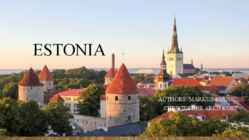
ESTONIA AUTHORS: MARKUS KUUSE, CHRISTOFHER ARKO KÖST FACTS ABOUT ESTONIA • Estonia is about 50% forest • Estonia has over 2000 islands • Estonia was the first country in the world to use online political voting. HISTORY • Humans settled in the region of Estonia near the end of the last glacial era • In the Middle Ages, Estonia became a battleground for centuries where Denmark, Germany, Russia, Sweden and Poland fought their many wars • Estonians declared their independence in February 1918 RECENT HISTORY • In 1940, the Soviet Union occupied Estonia • Nazi Germany occupied Estonia in 1941; later in World War II the Soviet Union reoccupied it (1944). GEOGRAPHY • The two largest islands are Saaremaa and Hiiumaa • The highest point in Estonia is Suur Munamägi ESTONIA CITIES • Capital: Tallinn • Tartu • Pärnu TALLINN • The capital of Estonia • Reval, Lindanise • Old town TARTU • Second larg...
Mustamäe College Tallinn's Seaplane Harbour Report Anna Elise Rohtmets G2K Tallinn 2010 Table of Contents 1. Introduction.................................................................................................3 2. History.........................................................................................................4 3. Early History...............................................................................................4 4. The Post-War Years....................................................................................5 5. Recent History.................................................
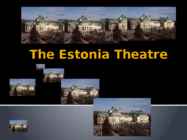
The Estonia Theatre The location Estoniatheatre is situated in the centre of Tallinn. Theatre Estonia winter garden The history The Estonia Theatre is an opera house and concert hall in Tallinn, Estonia. The Jugendstil building was designed by Finnish architects Armas Lindgren and Wivi Lönn. It was built as a national effort with the leadership of Estonia society in 1913 and was opened to the public on 24 August. At the time, it was the largest building in Tallinn. The opera house was heavily damaged in the Soviet air raid on Tallinn on 9 March 1944. It was reconstructed in a classical and Stalinist style, and reopened in 1947. Thebuilding has two large auditoriums in two separate wings. It now houses the Estonian National Opera and the Estonian National Symphony Orchestra. A chamber hall was opened in 2006. Speciality In2003 a new multipurpose chamber hal...
MODERN TALLINN Danel Toom Kärol Pilberg 9. class In this presentation we are focusing on the modern architecture of Tallinn. The city has alot of different modern buildings. We will intoduce you some of them in the next couple of minutes. KUMU Opend in 2006. Has close to 25 000 rooms. It has 7 floors. Kumu's permanent exhibition introduces Estonian art from 18th century till 1991. ESTONIAN FILM MUSEUM Opend in 2017. The building is minimalistic with façade of stained walls. It has an exhibitions dedicated to the history of cinema in Estonia. Architects were Anto Savi, Margus Soonets and Jürgen Lepper. NOA RESTAURANT Opend in 2014 The building has been specially built for the restaurant. The interior is simple and full of light and all tables have a view to the sea. VIIMSI SECONDARY SCHOOL The ground floor of the school is in the shape of a sun weel. Different wings of the building mee...
 annaabi.ee