Leidsid 33 sarnast õppematerjali, mis on seotud failiga "Essay: Christmases in Estonia". Need materjalid aitavad sul teemat sügavamalt mõista.
christ, christmas, tradition, year, times, holiday, estonians, considered, whole, night, late, gifts, traditionalact, greatest, important, recent, grown, changed, german, cultural, influencesirst, birth, secondly, marks, period, winter, jõulud, ancient, origin, connection, christianity, longest, same, autumn, sacred, season, nowadays, simply, spendof the many that are so abundant in Estonia's folklore. It is the story of a poor girl who falls in love with the son of the village elder, and disguises herself as a choirboy in order to sneak into the castle. But, alas, the lord of the manor's son discovers the deception. He is overcome by jealous rage and orders his men to seal the girl inside the thick stone walls while still alive. Turned into an incarnation of undying love, the White Lady now appears every August, on the night of the full moon, in the Dome Church chapel window. Haapsalu is seven-and-a- quarter centuries old this year, and the townsfolk intend to make it a celebration to remember. The annual dance and light show dedicated to the Lady alone involves over 100 performers - and you'll have several chances to catch it over the four days of the event. Musical shows, dances and contests of strength and skill will be held all over town.
Estonian national holidays Christmas Christmas , also referred to as Christmas Day, is an annual holiday celebrated on December 25 or January 7 that commemorates the birth of Jesus of Nazareth. Modern customs of the holiday include gift-giving, Church celebrations, and the display of various decorations--including the Christmas tree, lights, mistletoe, nativity scenes, and holly. In many countries there are many different types of decorations used depending on the traditions and available resources. However , in Estonia people bring Christmas tree in and decorate it with straw ,glass balls and candles. Estonians eat sauerkraut and black pudding. On the 24th December people leave work early, families gather, Santa Clouse comes , everybody gives gifts
and sausages served with potato salad or Rosolje, an Estonian signature dishes based on beetroot, meat and herring . Small pastries called pirukad ("pirukas" in the singular) - a relative of the pirozhki - filled with meat, cabbage, carrots, rice and other fillings or mixtures are also popular, and are often served with bouillon. Herring is common among other fish as a part of the Estonian Cold Table. Smoked or marinated eel, crayfish dishes and imported crabs and shrimps are considered delicacies. One of Estonia's national dishes is räim (Baltic dwarf herring), along with sprats. Flounder, perch and pike-perch are also popular. Soups Soups are traditionally eaten before the main course and most often are made of meat or chicken stock mixed with a variety of vegetables. Soups are also blended with sour cream, milk and yogurt. The Main Course Pork and potatoes accompanied by a rich gravy and often served with sauerkraut or other
Winter, which lasts from November to middel March, 4 can be very cold. The cold winter does not necessarily mean constant snow; in fact snowfalls are few and far between. When it falls it stays though, and there tends to be a layer of snow on the ground constantly. The deepest snow cover is usually in the south-eastern part of Estonia. Temperatures range from a summer average of 30°C to an average in winter of -8°C.The coldest month is considered to be February and the hottest July. There are about 160 to 181 rainy days a year. Rainfall is distributed throughout the year with the heaviest rainfall in August. Nature Waterbodies Estonia is a country of thousands of lakes. There are about 1450 natural and man-made lakes in Estonia. The two largest of them are Lake Peipsi (the fifth largest in Europe; 3 555 sq km, shared with Russia) and Võrtsjärv (270 sq. km). Of all the other lakes, only 45 have an area of more than 100 ha
Estonian holidays Robert Rootsi Allan Marran LE10 Christmas Christmas , also referred to as Christmas Day, is an annual holiday celebrated on December 25 or January 7 that commemorates the birth of Jesus of Nazareth. Modern customs of the holiday include gift-giving, Church celebrations, and the display of various. Estonian people bring Christmas tree indoors and decorate it with straw ,glass balls and candles. On the 24th December people leave work early, families gather, Santa Clouse comes , everybody gives gifts. People are very calm at Christmas time and they support each other. New Year's Eve New Year's Eve is on December 31, the final day of the Gregorian year, and the day before New Year's Day. New Year' s Eve is celebrated all around world because it's final day of the Gregorian year.
More than 200 of them breed in Estonia. Due to the vast preserved natural landscapes, large raptorial birds, such as the golden eagle and eagle owl have made Estonia their home. It is the small islets, however, that can really be called bird paradise. Undisturbed by man and protected from most smaller predators by the sea, they are real nesting sanctuaries for a diversity of birds. The first inhabitants came to the area that now forms present-day Estonia some 11 000 years ago. Estonians were one of the last pagan people in Europe. Estonia was incorporated into Christendom at the beginning of the 13th century, under the pressure of crusaders from Denmark and Northern Germany. Estonians were reduced to the status of peasantry until the 19th century. From 1558 onwards, Estonia became the battleground for the Livonian War involving Denmark, Sweden, Russia and Poland. Sweden emerged as the winner and Estonia remained under its influence until the beginning of the 18th century
Christmas in Australia Christmas in Australia is often very hot. Whereas the northern hemisphere is in the middle of winter, Australians are baking in summer heat. It is not unusual to have Christmas Day well into the mid 30 degrees Celsius, or near 100 degrees Fahrenheit. A traditional meal includes a turkey dinner, with ham, and pork. A flaming Christmas plum pudding is added for dessert. In the Australian gold rushes, Christmas puddings often contained a gold nugget. Today a small favor is baked inside. Whoever finds this knows s/he will enjoy good luck. Another treat is Mince Pies. Some Australians and particularly tourists often have their Christmas dinner at midday on a local beach, Bondi Beach in Sydney's Eastern Suburbs attracts thousands of people on Christmas Day. Other families enjoy their day by having a picnic. If they are at home, the day
Mari-Liisa Reigo Jaanipäev Jaaniõhtu, also called Jaanilaupäev and Jaanipäev are the most important days in the Estonian calendar, apart from Christmas. The short summer seasons with long days and brief nights hold special significance for the people of Estonia. Jaanipäev is celebrated in the night between 23rd and 24th of June, a few days after the summer solstice, when night seems to be non-existent. For Estonians, Jaanipäev celebrations were merged with the celebration of Võidupüha during the War of Independence when Estonian forces defeated the German troops on 23 June 1919. After this battle against Estonia's traditional oppressors, Jaaniõhtu and the lighting of the traditional bonfires became linked with the ideals of independence and freedom.
Christmas differentces of 2 countries This reports purpose is to analyse Estonian and English Christmas traditions. It compares the meaning of this tradition, decorations, eating habits, activities and Father Christmas. Firstly, for English people this traditions means to celebrate the birthday of Jesus Christ , but on the other hand for Estonian peole it means to celebrate the mid-winter holidays and religous people go to church. Secondly, for Estonian people decorating their homes is big part of christmas. People in the countryside bring straw into the house, they decorate their homes and bring in fir-trees. The traditional Christmas flowers are hyacinth, Christmas cactus and the poinsettia
Estonian Public holidays New Year's Day January 1 New Year is the time at which a new calendar year begins and the calendar's year count is incremented. In many cultures, the event is celebrated in some manner. The New Year of the Gregorian calendar, today in worldwide use, falls on 1 January, as was the case with theRoman calendar. There are numerous calendars that remain in regional use that calculate the New Year differently Independence Day Independence from the Russian Empire in 1918. Independence re-declared from the Soviet Union in 1991 An Independence Day is an annual event commemorating the anniversary of a nation's assumption of independent statehood, usually after ceasing to be a group or part of another nation or state; more rarely after the end of a military occupation. Most countries observe their respective independence days as a national holiday, and in some
Independence day 24 February. Estonian people often have a day-off from school and work, to celebrate this day. People often make big dinners and sit around in the circle of family. They often light a few candles on the window and all houses have an Estonian flag out. This is by law the most important holiday, commemorating the declaration of independence in 1918. New Year's Eve 31December The New Year's Eve is an event that happens when Estonians celebrates the end of one year and the beginning of the next year. Estonians launch a big amount of fireworks up to the sky at midnight. It's a celebration with family and friends. After launcing the fireworks people watch and toast and wich a happy new year to each other. Christmas Eve 24 December Most of the traditions, such as Christmas dinner and gift giving are observed in Estonia on this day. Santa Claus visits homes in person, played by an older family member or a rent-a-Santa
come to see them. Some of them are even like symbols of England. The most famous ones are: Stonehenge is one of the greatest national icons of Britain. That prehistoric monument is located in the plain of Salisbury, in the county of Wiltshire in the south-west of England. It is built of 150 enormous stones which are set in a purposive circular pattern. Stonehenge was probably built to mark the longest and shortest day of the year because it lies on the line of the midsummer sunrise and the midsummer sunset. That would have enabled people to keep a record of changing of seasons. Although it is still unclear who built it. Hadrian’s Wall is an ancient wall which was built in 2nd century by Hadrian, the emperor of Rome from AD 117 to 138, and it marked the northern border of the Roman Empire in Britain. The wall was 80 Roman miles (117 kilometres) long and it is situated in northern
Introduction Estonia, officially the Republic of Estonia (Estonian: Eesti or Eesti Vabariik) is a country in the Baltic region of Northern Europe. It is bordered to the north by Finland across the Gulf of Finland, to the west by Sweden across the Baltic Sea, to the south by Latvia (343 km), and to the east by the Russian Federation (338,6 km). The territory of Estonia covers 45,227 km² and is influenced by a temperate seasonal climate. The Estonians are a Finnic people closely related to the Finns, with the Estonian language sharing many similarities to Finnish. The modern name of Estonia is thought to originate from the Roman historian Tacitus, who in his book Germania (ca. AD 98) described a people called the Aestii. Similarly, ancient Scandinavian sagas refer to a land called Eistland, close to the German term Estland for the country. Early Latin and other ancient versions of the name are Estia and Hestia. Until the late
Christmas By Xxxx Xxxx Nowadays, Christmas is celebrated almost world-wide. It's a global time of peace for all who believe in the magic of it. Overworked people treasure days that bring rest and recreation and allow them to meet their families and friends. They appreciate days when they give and receive gifts - the evidence of friendship, of remembrance and love. A time when it feels good to give, when anger is forgotten, when heaven becomes a place on earth for a moment.
interest in the history of the flag. After about half a century, during which it was prohibited by the Soviet authorities, the flag was seen again in public for the first time in Tartu in May 1988. 24 February 1989, Estonia, still part of the Soviet Union, hoisted its tricolor on the tower of Pikk Hermann in Tallinn. Since then the flag has always been hoisted with ceremony on that day, which is the national holiday the anniversary of the republic. According to the Estonian tradition, the national flag is hoisted at sunrise and lowered at sunset except on June 23, Victory Day, when it is left out for the shortest night of the year, followed by another public holiday, Midsummer Day. The Estonian national anthem - entitled My Native Land, My Pride and Joy, was composed in 1848 by Friedrich Pacius, a Finn of German descent. The Estonian- language words were written by Johann Voldemar Jannsen. In 1869 it was
catches of pike-perch and eel, which are regarded as a delicacy. There are also many rivers in Estonia, but only ten of them are longer than 100 kilometres. The most important rivers are the Pärnu River and the Emajõgi River. Estonia has more than 1 500islands. The largest of these is Saaremaa,. Saaremaa is followed in size by Hiiumaa, Muhu and Vormsi. The islands and the coastal areas of the mainland are interesting owing to the fact that they are on the migratory route for waterfowl. Twice a year - in the spring and autumn - several hundreds of thousands of birds are visitors in Estonia. The barnacle goose, the swan, the eider plus many more are protected species. The mild sea climate and the rather level landscape of the island, makes Saaremaa an area abundant in flora and fauna. Rare and beautiful species of orchids can be found in many places, and a large number of rare animals including seals live there. Tallinnis the capital and largest city of Estonia
1. How many public holidays or Red-Letter Days are there in Britain? Name them. 8 public holidays in Britain: two at Christmas, one for the New Year(which was only introduced in the late 1970s) two at Easter and three Bank Holidays. 2. What is the same and what is different about the way Christmas is celebrated in England and Estonia? In England, there's common to sing Carol's and for children, Christmas means pantomimes plays based on fairy tales which combine comedy, dance and song. A traditional Christmas dinner includes roast turkey with roast potatoes, a range of vegetables, cranberry sauce etc., followed by Christmas pudding and Christmas cake. The pulling of crackers(and the wearing of paper hats) before the meal is quite popular. Afterwards many watch the Queen's traditional Christmas address on TV at 3 pm
Eating habits in Estonia Mari-Ann Lepp 9th A class History Traditional Estonian food has its roots firmly in the countryside The main culinary influences were from Germans The Estonian cuisine is historically pretty poor- pork, fish, cabbage soup, potatoes, vegetables and dairy products. Eating times and habits Depending on the rhythm of life, different Estonians also have different preferences in meal times and meals. a light breakfast most important meal of the day lunch around six or seven o'clock we have dinner. Eating habits:when, what, why? Estonian eating habits have historically been closely linked to the seasons. black rye bread mushrooms, jams, and preserved foods as modestly spiced.The most coveted spice was salt Traditions... the age-old combination of potato and sauce although stews, roasts and soups are quite popular as well fond of chicken and red fish. About overweight
If a piece of bread was dropped, it had to be picked up and given a kiss so that hunger would not come to the house. A loaf of bread was never put on a table upside crust down. That would predict a family member's death. It was not allowed to lay a loaf of bread with its cut side to the door, because then the house would run out of bread. Eating the crusty end of bread would give a girl nice breasts. Warm bread was supposed to be broken not cut. Christmas bread Christmas bread had to be different from everyday bread. It was made of rye or wheat flour and it was usually in the shape of a lying pig. Christmas bread was also fed to the animals in the stables and barns Kama Finely milled flour mixture Mixture of ground grains rye, oat barley, and pea flour. It is used for making some desserts Mostly enjoyed for breakfast mixed with milk, buttermilk or kefir F is h o n ia n
Christmas in Ireland lasts from Christmas Eve to the feast of the Epiphany on January 6, which is referred to as Little Christmas. Ireland's Christmas is more religious than a time of fun. Lighted candles are placed in windows on Christmas Eve, as a guide that Joseph and Mary might be looking for shelter. The candles are usually red in color, and decorated with sprigs of holly. Irish women bake a seed cake for each person in the house. They also make three puddings, one for each day of the Epiphany such as Christmas, New Year's Day and the Twelfth Night. After the
7.The Anglo-Saxon Chronicle The Anglo-Saxon Chronicle is a collection of annals in Old English chronicling the history of the Anglo-Saxons. The annals were initially created late in the 9th century, probably in Wessex, during the reign of Alfred the Great. Multiple manuscript copies were made and distributed to monasteries across England and were independently updated. In one case, the chronicle was still being actively updated in 1154. Nine manuscripts survive in whole or in part, though not all are of equal historical value and none of them are the original version. 8. Beowulf Beowulf is the most famous heroic poem (written down 8-9cc) Beowulf is a war-leader from Scandinavia.He rescued the land of the Danes from a man-like monster Grendel. The monster kills the hero.The poet describes the funeral and how warriors mourned their king. 9. The Vikings, their way of life. Sutton Hoo
The people here are mostly engaged in industry- mainly the food industry (23%), trade (16%) and transport and communication (14%). History. Tallinn has a great history. It was first marked on a map of the world by the Arab geographer al-Idrisi in 1154, its name then being Kolyvan. In the 13 th- century chronicle of Henricus de Lettis the town was called Lyndanise. Then it was called Reval for some time and finally Estonians started to call the town Tallinn from Taanilinn (Danish town) after the Danish conquest in the 13th century. The Knights of the Sword took Tallinn from the Danes in 1227 and made Toompea their fortress. In the middle of the 14th century Denmark sold its possessions in Estonia to the German Teutonic Order; Toompea became the seat of German-born gentry. A fortified wall was built between the Toompea (the Upper Town) and the
and lakes brought together by a beauty spot Halliste primeval valley. According to several folk tales, it is also in these valleys, woods and bogs that Old Nick found refuge.The great variety displayed in the nature is also reflected in the local cultural heritage. At the beginning of the 19th century growing linen spread and became the basis of the legendary wealth of Mulgi farms. The ancient barn-dwellings and decaying manor houses are the mute witnesses of those times. The riches and cultural heritage of Mulgimaa owe to the diligence and tenacity of the local people. Village handicraftsmen and masters have always been honoured. Mulgikapsad (stewed sauerkraut with barley groats), Estonian cheesecakes and kama (a roasted meal-mixture) have not lost their popularity. However, linen growers have now been replaced by cereal grains growers and many farms have specialised on raising sheep or horses. And as the song goes: "Mulgimaa it's a place where life is good
Mardi Gras in the USA Mardi Gras, from the French words meaning "Fat Tuesday," combines religious tradition with a carnival or festival to welcome spring. It is also called Shove Tuesday or Pancake Day (in UK pancakes have an important role in celebrating Mardi Gras). Mardi Gras is the final day of Carnival- a festival season. Carnival begins 12 days after Christmas on January 6 and ends on Mardi Gras, which always falls exactly 47 days before Easter. The date of Mardi Gras changes every year. In the year 2008 it is on the 5th of February.
in the territorial waters of present-day Estonia. The late Russian patriarch, Alexis II, started his priestly ministry in the church. Interior of the Cathedral. The Alexander Nevsky Cathedral crowns the hill of Toompea where the Estonian folk hero Kalevipoeg is said to have been buried according to a legend. (There are many such legendary burial places of him in Estonia.) The cathedral was built during the period of late 19th century Russification and was so disliked by many Estonians as a symbol of oppression that the Estonian authorities scheduled the cathedral for demolition in 1924, but the decision was never implemented due to lack of funds and the building's massive construction. As the USSR was officially non-religious, many churches including this cathedral were left to decline. The church has been meticulously restored since Estonia regained independence from the Soviet Union in 1991. http://en.wikipedia.org/wiki/Alexander_Nevsky_Cathedral,_Tallinn
......................................................................................................................... 9 Conclusions........................................................................................................................10 References..........................................................................................................................11 3 Introduction English is considered to be one of most important languages in the world. It is one of the official languages of the United Nations. According to research by the British Council, around 375 million people in the world speak English as their native language and English has official or special status in at least seventy-five countries. The British Council has also noted that English is the main language of newspapers, airports and air-traffic control, international business
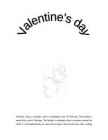
Valentine's Day is a holiday, which is celebrated on the 14 th February. This holiday is named after a priest Valentine. The holiday is celebrated almost everywhere around the world. It is the traditional day on which lovers express their love for each other, sending cards. On this day people show how much they care about their friends. Usually on this day people gift hand-made cards and roses. Nowadays people can also send e-cards. Modern Valentine symbols include the heart-shaped outline and the figure of the winged Cupid. The traditional Valentine's colours are pink and red. On that day people should
bodybuilding the third place and he got chalice and medal. I'm very proud of him. He is an invaluable brother who always supports me. Unfortunately I don't have grandmother or grandfather. My grandmother died when I was thirteen years old. I haven't saw never my grandfather. He died before I was borned. Besides my mother, father and brother I have lovely uncle and aunt. They live in Jõgeva a big white house. We try to visit them about thrice during the year. They have also a very smart daugther who is travelling around the world. Now she stays in Germany and study genetic engineering. My uncle and aunt are also a very important persons in my life. Our family celebrates also different events. Mostly I like Christmas celebrations. On Christmas night we always eat meal, potatoes and lots of sweets. I usually help my mother with meal preparation. Also we visit sometimes theatre. Every summer we are going to the Pärnu where we rent a cottage
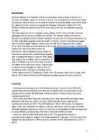
Tallinna Inglise Kolledz Estonia Topic Alice Tärk, 9b Tallinn 2007 FACTFILE Area: 45 228 sq km Poplulation: under 1.4 million Capital: Tallinn Language: Estonian Currency: Eesti kroon (EEK) Main religion: Lutheran National holiday: 24 February (anniversary of the republic) National flower: Cornflower National bird: Barn Swallow National stone: Limestone LOCATION The Republic of Estonia is the northernmost and smallest of the three Baltic States. It is located on the eastern shores of the Baltic Sea in the north east of Europe. To the east the country borders Russia. Latvia is the countries neighbour to the south. From the west the coast of Estonia is washed by the
Dear John, Thank you for your letter. It was very interesting to get to know more about British Christmas and the traditions related to it, but now I would like to write about how we celebrate Christmas in Estonia. Usually we start to prepare for Christmas four weeks before it, by putting out advent candles. Each week we light one, till by Christmas it's four of those. On Christmas Eve we usually go to cemetery, where we light candles and also go to church to hear Christmas service and where well known Christmas songs are sung. After that we go home, to eat traditionally sauerkraut with potatoes and blood sausage and also roast pork or brawn. Earlier we have baked and decorated gingerbreads. Then soon Santa Claus comes with a bag full of presents. We all have to read poems or sing songs to get a present. Usually by that time it is very late already and we go to sleep to rest. On next day we visit our relatives and parents or grandparents.
the republic is celebrated on February 20. The national flower is cornflower, national bird is barn swallow and national stone is limestone. It is a land of great natural beauty with a long and varied history and rich culture. It has served as a junction of international trade routes for centuries. History. The oldest marks of habitation on the territory of Estonia date from the 8th millennium BC. Fortified settlements were established in the 1 st century BC. The ancestors of Estonians formed several independent states headed by elected elders. Until the beginning of the 13th century Estonia was politically independent. Then began a long chain of occupation and control by foreign powers. In the 1200s the German crusaders converted Estonia into a Christianity by force and took control over South Estonia. In 1219 Denmark conquered Northern Estonia. About a century later, in 1346 Denmark sold its territory to Germany. By the 1500s German nobles owned much of
It is a naturally- formed limestone hill. Lower Town was a merchantile centre, Tallinn also belonged to the Hansaetic League (1285). It is often referred to as the town of citizens. Any grown-up, married and economically independent person, born in a legal marriage between two free people and having lived in the town for at least 3 months, could apply to the Magistracy for citizenship. Serfs could escape from serdom after having successfully hidden in town for a year and a day. Two parts remained separated until the end of the 19th century. Four Names Lyndanise - mentioned by Henricus de Lettis in his Chronicle; derives from the name Linda - the wife of Kalev and mother of Kalevipoeg Koluvan - mentioned in Russian chronicles; derives from the hero Kalev from our national epic Reval - comes from the German words “REH” and “FALL”, meaning the falling of the deer; could be deers trying to escape from the Danes, running down the Toompea hill
The basic ingredients, when fresh, are so full of flavour that British haven't had to invent sauces to disguise their natural taste. What can compare with fresh pees or new potatoes just boiled and served with butter? Why drown spring lamb in wine or cream and spices, when with just one or two herbs it is absolutely delicious? If you ask foreigners to name some typically English dishes, they will probably say "Fish and chips" then stop. It is disappointing, but true that, there is no tradition in England of eating in restaurants, because the food doesn't lend itself to such preparation. English cooking is found at home. So it is difficult to a good English restaurant with a reasonable prices. In most cities in Britain you'll find Indian, Chinese, French and Italian restaurants. In London you'll also find Indonesian, Mexican, Greek... Cynics will say that this is because English have no "cuisine" themselves, but this is not quite the true. Vocabulary: to criticize - tasteless
 annaabi.ee