Leidsid 33 sarnast õppematerjali, mis on seotud failiga "Eesti tutvustamine". Need materjalid aitavad sul teemat sügavamalt mõista.
festival, song, biggest, dance, located, baltic, there, flower, stone, shield, them, grounds, arti, republic, country, northern, europe, eastern, colours, blue, black, bird, swallow, limestone, anthem, rõõm, coat, golden, middle, along, islands, hiiumaa, divided, different, oldest, university, highest, peak, states, near, haanja, total, height, aboveTallinna Inglise Kolledz Estonia Topic Alice Tärk, 9b Tallinn 2007 FACTFILE Area: 45 228 sq km Poplulation: under 1.4 million Capital: Tallinn Language: Estonian Currency: Eesti kroon (EEK) Main religion: Lutheran National holiday: 24 February (anniversary of the republic) National flower: Cornflower National bird: Barn Swallow National stone: Limestone LOCATION The Republic of Estonia is the northernmost and smallest of the three Baltic States. It is located on the eastern shores of the Baltic Sea in the north east of Europe. To the east the country borders Russia. Latvia is the countries neighbour to the south. From the west the coast of Estonia is washed by the Baltic Sea and from the north by the Gulf of Finland. The length of the coastline is approximately 3 800 km. The longest distance from east to west is
Estonia. Estonia, officially the Republic of Estonia is a country in Northern Europe. It is the smallest of the three Baltic countries. Estonia has land borders with Latvia (339 km) to the south and Russia (229 km) to the east. It is separated from Finland in the north by the narrow Gulf of Finland and from Sweden in the west by the Baltic Sea. Estonia has been a member of the European Union since May 1, 2004 and of the NATO since March 29, 2004. The area of Estonia is about 45000 square kilometres and the population is about 1.4 million people. The capital of Estonia is Tallinn and the official language is Estonian. The currency is Eesti kroon. The main religion is Lutheran. Anniversary of the republic is celebrated on February 20. The national flower is cornflower, national
Tallinn English College Topic Estonia Tallinn 2008 1. Introduction Estonia is a small country about the size of Switzerland, or New Hampshire and Massachussetts combined. Estonia is named after the people called "Ests" who lived in the region in the 1 st century AD. The Republic of Estonia is one of the three countries commonly known as the "Baltic States". The other Baltic States are Latvia and Lithuania. 2. Geographical position Estonia is situated in northeastern Europe. Estonia is bounded on the north by the Gulf of Finland, on the east by Russia, on the south by Latvia and on the west by the Baltic Sea. In the north it borders on Finland. The coastline of the Baltic Sea in Estonia is characterized by numerous gulfs and bays, the biggest of them being the Gulf of Finland, the Gulf of Riga and the Gulf of Pärnu. Bays include the
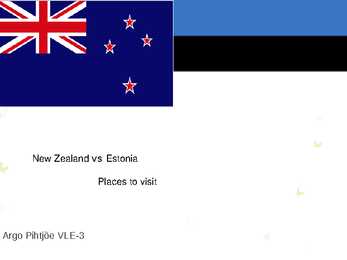
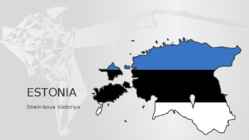
4 million. The official language is Estonian but since very many Russians live here Russian is also wide spread. The capital of Estonia is Tallinn. The currency used in Estonia is Eesti kroon. The Estonian national flag is blue-black-white. It was originally the flag of the Estonian Students' Society. The flag was first consecrated in Otepää Church in 1884. For a while, during the Soviet occupation, the flag was banned but it was again seen in public in Tartu in May 1988. The national flower is cornflower, the national bird is barn swallow and the national stone is limestone. The Estonian national anthem called "My Native Land, My Pride and Joy" was composed in 1848 by Friedrich Pacius. The Estonian language words were written by J. V. Jannsen. It was officially adopted after the War of Independence in 1920.The same melody with different words is also Finland's national anthem. The current coat of arms of Estonia is a golden shield which includes three slim, blue leopards
Estonia Anna-Kaisa Adamson Estonia, officially the Republic of Estonia, is a state in the Baltic region of Northern Europe. It is bordered to the north by the Gulf of Finland, to the west by the Baltic Sea, to the south by Latvia, and to the east by the Lake Peipsi and the Russian Federation. The territory of Estonia covers 45,227 km2. The capital, Tallinn, has around 400000 inhabitants.Tallinn's ability to blend medieval architecture with Scandinavian modernity with all the comforts you'd expect from a modern, competitive and innovative capital. Estonian language, does not belong to the Indo-European group. It belongs to the
Introduction of Estonia The Republic of Estonia is beautiful country which is located in northeastern Europe, bordering the Baltic Sea on the west, the Gulf of Finland on the north, Latvia on the south, and Russia on the east. Estonia is the smallest of the Baltic countries. Administrative division: Estonia has an area of 45,226 square kilometers and Estonia is administratively divided into counties. There are 15 counties in Estonia. The capital is Tallinn which is located in Harjumaa. Counties are divided into 194 rural municipalities. Population: The population of Estonia was estimated at 1.34 million in January 2011, with a density of 30 persons per square kilometer. According to the last census the number of inhabitants has decreased
Võnnu Keskkool ESTONIA Referaat Autor: Klass : 9 Juhendaja: Võnnu 2013 Estonia officially the Republic of Estonia, is a state in the Baltic region of Northern Europe It is bordered to the north by the Gulf of Finland, to the west by the Baltic Sea, to the south by Latvia and to the east by Lake Peipus and Russia.Across the Baltic Sealies Sweden in the west and Finland in the north. The territory of Estonia covers 45,227km2 The Estonian climate resembles that of other countries on the Baltic littoral. On account of the country's proximity to the sea, the skies are often cloudy, and rain often falls in the spring and autumn, in the winter the rain turns to snow. The highest point in Estonia is Suur Munamäg It is in fact the highest point in the Baltic region Forest cover over one half of Estonia
Just as July becomes August, the seaside town of Haapsalu will host a grand spectacle of rural Estonian entertainment. The White Lady Days is a summer celebration filled with amusement for all the family. Held in and around the remains of the Teutonic-knights-era castles, the fair combines enchanting medieval legends with modern countryside charm to create a comprehensive experience of Estonia beyond the big cities. But the legend of the White Lady of Haapsalu, which is at the heart of the festival, is perhaps the most famous tall tale of the many that are so abundant in Estonia's folklore. It is the story of a poor girl who falls in love with the son of the village elder, and disguises herself as a choirboy in order to sneak into the castle. But, alas, the lord of the manor's son discovers the deception. He is overcome by jealous rage and orders his men to seal the girl inside the thick stone walls while still alive. Turned into an incarnation
tranquillity for forigners. There are many pastures and forests but there isn't much untouched and wild landscape. The highest point in Estonia is Suur Munamägi (318 metres). The largest lake is Peipsi Lake and the longest river is the Võhandu River. South-Estonia offers superb varieties to have a picnic on the picturesque landscape. Inlanders appreciate our scenic contrasts on the peninsulas and there are also about 1,500 islands in Estonia. The biggest island is Saaremaa where you can admire the beauty of Kuressaare Castle and Kaali meteorite crater. The flag of Estonia is really simple but beautiful. There are only 3 colours blue, black and white. The national flower is the cornflower and the national stone is limestone. In Estonian coat of arms there are 3 lions. The national anthem is ,,My Fatherland, my Delight and Joy". The melody of our national anthem is the same that of the national anthem of Finland
... Gümnaasium English Project Sights of Estonia Student: .............................. Class: 6 ... Teacher: ............... Harjumaa 2011 1 1. Steamer-icebreaker Suur Tõll The ship was built in 1914 in Stettin (Szczecin) by Vulkan-Werke A. G. Suur Tll is the only pre-war steam ship of the Republic of Estonia remained up to now and, at the same time, the biggest icebreaker in the world preserved through two world wars. All the 3 original steam engines as well as most of the original arrangement of space and late Jugendstil interior of the officers' rooms are preserved. In 1914 the first home port of the ship was Tallinn. The ship ensured a regular winter sea navigation for Tallinn up to the end of the independency period. 2. The Tallinn Song Festival Grounds The Tallinn Song Stage was built in 1959 for arranging the Song Festivals. The stage
·Republic of Estonia is a country in Norhern Europe. Our president is Toomas Hendrik Ilves ·Territory of Estonia is 45,227 ( square kilometer) km² ·Population is 1.4 million. Estonia is one of the least-populous members of the European Union. ·The capital and largest city is Tallinn wich is in North-Estonia ·We are special because we have own language estonian ·Estonia is bordered to the north by the Gulf on Finland, to the west by the Baltic Sea, to the south by Latvia and to the east by Russian Federation ·Estonia is divided into 15 counties (maakond) ·In Estonia are 33 cities and several town-parish towns in the country. More than 70% of the population lives in towns. ·Estonia has summer capital it's Pärnu, autum capital it's Türi, winter capital it's Otepää ·The Estonia Theatre is an opera house and concert hall in Tallinn . It was built on 1913
On the 16th century the first book in Estonian language was publicated. Then the Livonian War began. Northern part of Estonia was occupied by Sweden and the southern part of Estonia was occupied by Poland. On the 17th century Estonia was under Sweden occupation. In 1632 Tartu University was founded. On the 18th century there was a Norhern War and Estonia was occupied by Russia. On the 19th century poeple started to collect Estonian folklore. In 1869 was the first Estonian song festival in Tartu. 1884 blue-black-white flag of Estonia was consecrated in Otepää Church. In 1885-1890 Russian introduced as a official language. In 1918 on the 24th of February was the birth of the Republic of Estonia and then was the german occupation and afer that was a War of Independence. In 1919 Estonians won in the Battle of Võnnu. In 1920 the Peace treaty with Russia was signed in Tartu. Estonia was Independent in 1920-1940. One year later estonia was occupied by Soviet occupation
Estonia Tjorn Treu KP-31 Information · Area- 45,227 km2 · Population- 1,282,963(2011 july) · Location- Baltic Region of Northern Europe · Capital- Tallinn · Main cities- Tallinn,Pärnu,Tartu,Narva · Official Language- Estonia · Political structure- democraic republic National symbols Flag- Coat of arms- Anthem-"My Fatherland, My Happiness and Joy,, Plant-cornflower Bird-chimney swallow Stone-slate Tree- Oak History DATES Independence Day (Iseseisvuspäev) - February 24 May Day (kevadpüha) - May 1 National Flag Day (Eesti lipu päev) - June 4
Estonia is located in the Northern Europe and is a state in the Baltic region It is bordered to the north by the Gulf of Finland, to the west by the Baltic Sea, to the south by Latvia, and to the east by Lake Peipus(Peipsi) and the Russian Federation.Estonia also has a number of islands: Saaremaa and Hiiumaa, which are the most known are also the two biggest ones.The territory of Estonia covers 45,227 km2. There is 3,794 kilometers of coastline marked by numerous bays, straits, and inlets. The Republic of Estonia is divided into fifteen counties: Hiiumaa, Saaremaa, Läänemaa, Harjumaa, Lääne-Virumaa, Ida-Virumaa, Tartumaa, Jõgevamaa, Järvamaa, Raplamaa, Viljandimaa, Pärnumaa, Valgamaa, Põlvamaa and Võrumaa. The capital city of estonia is Tallinn. Estonia is influenced by a temperate seasonal climate. Estonia has four seasons
The tower s name, "peek in the kitchen", comes from its height. The tower was partially destroyed during the Livonian War (1558-1583), but the building itself did not fall. The tower has been rebuilt several times, but up until the 20th century, it was still being used as a gunpowder storage and storehouse. Today the tower tells the story of the birth and development of Tallinn and the most important military events from the 13th to the 18th centuries. The external wall still holds stone and iron cannonballs from Russian tsar Ivan IV. The Great Coastal Gate, built along with the city wall, is situated on the northern side of the Old Town, near the harbour. During the reconstruction of the gate in the early 16th century, the cannon tower Fat Margaret was added. The round tower, with 155 loopholes, a diameter of 25 meters, and a height of about 20 meters, was built to protect the harbour. It got its name from the fact that it was indeed the stoutest tower in the city wall
Estonia Estonia is a small country in Northern Europe with an area of about 45 000 sq km. As a part of the East-European Plain, the country has a rather flat surface. The highest and most diverse region in Estonia is in the south-eastern part of the country. At 318 metres, Suur Munamägi is not only the highest point in Estonia, but of all the Baltic countries. There are about 1500 islands in Estonia, the biggest of which being Saaremaa and Hiiumaa. Sixty-four species of mammals have been recorded in Estonia, three of them have been introduced: the racoon dog, the American mink and the muskrat. A couple of species have been re-introduced The European beaver, who was hunted to extinction by the end of the 19th century. A vital population of them now exists in Estonia once again. Another re- introduced species is the red deer.
Estonia officially the Republic of Estonia, is a country in the Baltic region of Northern Europe. It is bordered to the north by the Gulf of Finland, to the west by the Baltic Sea, to the south by Latvia and to the east by Russia. Across the Baltic Sea lies Sweden in the west and Finland in the north. The territory of Estonia covers 45,227 km2, and is influenced by a humid continental climate. Estonia is a democratic parliamentary republic divided into fifteen counties, with its capital and largest city beingTallinn. With a population of 1.3 million, it is one of the least-populous member states of the European Union. The Estonians are a Finnic people, and the official language, Estonian, is a Finno-Ugric language closely related
Currency: Estonian Kroon (EEK),1 EUR = 15,65 EEK Estonia has two Independence Days - Estonia first achieved independence from the Soviet Union on the 24th February 1918 and again on the 20th August 1991 after 51 years of occupation. The second date is known as the Restoration of Independence Day The Estonian language belongs to the Finno-Ugric group and is most similar to Finnish Estonia was the first country in the world to introduce online political voting Estonia won the Eurovision Song Contest in 2001 with the song Everybody There are over 1500 Islands, 1000 lakes and 7000 rivers in Estonia Chess Grandmaster Paul Keres was born in Estonia. When he died in 1975 over 100,000 people attended his funeral, thats around 10% of the entire population of Estonia! The official name of Estonia is the Republic of Estonia. Estonia is situated in the Baltic region of Northern Europe and spreads over an area of approximately 45,226 sq km.
*Estonians conquered by the crusaders 1208 *Reformation 16th century establishments of new school, Estonians first book appeared in 1525 *Tartu University 1632 founded by King Gustavus II Adolphus, classical university, member of the Coimbra group *Abolition of serfdom 1816 *Song festival 1869 in Tartu, an organiser was J.V.Jannsen, 822 singers, men only *Declaration of independence 24th February 1918 *War of independence 1918-1920 during the Russian Civil War, resulted in a victory for Estonia *Deportation 1949 *Estonia becomes independent 20th August 1991 *Joining EU 1st May 2004 Language: Estonian language, belongs to the Balti-Finnic group of the Finno-Ugric languages,
Famous for its two glaciers, Franz Josef and Fox glaciers. They are unique as they are the closest glaciers to the coastline of any in the world outside of the polar regions. Mountain range bigger in area than the European Alps. Tongariro National Park The park contains 3 active volcanos that are situated in a desert like landscape. Mt Ruapehu is the largest volcano and last erupted in 1995 and 1996. A conical volcano called Mt Ngauruhoe is located next to Ruapehu and is the location for the Tongariro Crossing. Top ten places to visit in New Zealand Coromandel Peninsula the Coromandel is blessed with a superb climate coupled wih some of New Zealand's best beaches and coastline. A thermal beach called Hot Water Beach is one attraction worth seeing. Volcanic heat rises through the ground allowing you to create your own
Make sure to pay a visit to the top floor café for beautiful Old Town views. Kiek in de Kök was originally built in the 1470s, but quickly expanded and strengthened, now the walls are four metres thick. The investment paid off: During the Livonian war in the late 1500s, Ivan the Terrible's forces managed to blow a huge hole through the top storey, but the tower held. During post-war repairs, a row of four cannon balls was placed in the newly patched stone wall as a memorial. You can still see them on the tower's south east side. http://www.tourism.tallinn.ee/eng/fpage/explore/attractions/old_town #!p_174740 Tallinn Town Hall Nothing says power like the impressive, Gothic Town Hall that dominates Medieval Tallinn's main square. It was built in 1402-1404 as a meeting place for the ruling burgermeisters and has been a show piece of the city ever since.
Topic Estonia, Tallinn The Republic of Estonia is the northernmost of the three Baltic States on the eastern shore of the Baltic Sea. To the east Estonia borders on Russia and Lake Peipsi and on the south on Latvia. The area of Estonia is 45 100km2, its coastline is 774km long. The geography of the land is surprisingly varied. Islands make up 9,2 per cent of Estonian's total territory, the largest islands are Saaremaa, Hiiumaa and Vormsi. The highest point is Suur Munamägi, which is 317m high. Estonia has a surprisingly mild climate for an area so far north. Sea winds keep the weather from becoming very cold or hot.
Estonia Estonia, officially the Republic of Estonia, is a state in the Baltic region of Northern Europe. It is bordered to the north by the Gulf of Finland, to the west by the Baltic Sea, to the south by Latvia, and to the east by Lake Peipus and Russia. Across the Baltic Sea lies Sweden in the west and Finland in the north. The territory of Estonia covers 45,227 km 2, and is influenced by a humid continental climate. The Estonians are a Finnic people, and the official language, Estonian, is a Finno-Ugric language closely related to Finnish, and distantly to Hungarian and to the Sami languages. The population of Estonia is 1.5 million. Of this number 62 per cent are Estonians. The geography of the land is surprisingly varied
Tallinn English College English Sergo Vainumäe 9A TALLINN Report Supervisor: Inge Välja Tallinn 2006 Order of contents: 1.Introduction 2.Toompea 3.Lower Town 4.Kadriorg and Pirita 5.Museums 1. Introduction Tallinn, the capital of Estonia, lies on the Baltic Sea. It is on almost the same latitude east St. Petersburg in Russia, Stockholm in Sweden and Stavanger in Norway, and covers 158 sq km. Tallinn was first marked on a map of the world by the Arab geographer al-Idrisi in 1154, its name then being Kolyvan (probably derived from the name Kalev). In the 13th-century Chronicle of Henricus de Lettis the town was called Lyndanise. Later came Reval (presumably after the old county
houses are the mute witnesses of those times. The riches and cultural heritage of Mulgimaa owe to the diligence and tenacity of the local people. Village handicraftsmen and masters have always been honoured. Mulgikapsad (stewed sauerkraut with barley groats), Estonian cheesecakes and kama (a roasted meal-mixture) have not lost their popularity. However, linen growers have now been replaced by cereal grains growers and many farms have specialised on raising sheep or horses. And as the song goes: "Mulgimaa it's a place where life is good. It's a land of vast woods, fertile fields and nature's charms, the home of prosperous Estonian farms..." Tourism and handicraft in Lõuna-Viljandimaa Lõuna- Viljandimaa captivates senses with its beautiful landscapes. Lõuna- Viljandimaa as we know it today stays in the heart of the historic Mulgimaa. Mulgimaa is the home of mountains, deep valleys and lakes, its natural axis is the beautiful old valley of Halliste.
Estonian National Emblems and Symbols There are several important emblems and symbols of Estonia of which many are also known for the rest of the world. Estonian national emblems are the blue- black-and-white national flag, the national anthem and the coat of arms. The symbols are national flower (the cornflower), national bird (the barn swallow) and national stone (limestone). Estonian flag was originally the flag of the Estonian Students' Society which was consecrated in 1884. During Soviet rule, the flag was prohibited and it was first used again in Tartu in 1988. The national anthem is entitled as "My Native Land, My Pride and Joy". The melody was composed in the centre of the 19 th century by Friedrich Pacius and the
Its name means ,,Southland". The official name of the country is the Commonwealth of Australia. It's capital is Canberra. Australia is the sixth largest country in the world but the smallest continent. Australia has 6 states and 2 territories (New South Wales, Victoria, Tasmania, Queensland, Western Australia , South Australia, The Australian Capital Territory and the Northern Territory). The Australian people are culturally the same as the Anglo Americans. There also live aborigines. Aborigines are the ancestors of the people. Like the US and Canada, Australia was an English speaking colony of Great Britain. Today Australia is a modern developed country with a diversified economy. Australia is an island continent of 7.7 million square kilometres, which makes it a little smaller than the USA. Located in south of Asia, between The Pacific and Indian Oceans, Australia is the World's driest continent
Estonia is a pretty small country in northern Europe. Estonia has land borders in the south with Latvia and in the east with Russia, it's oversea neighbours are Finland and Sweden. Estonia divided into fifteen counties. Estonia has been an independent country since 1991. Tallinn is the capital city of Estonia. It's not very large, there lives about 400 000 pedestrians. Estonia is a member of European Union and NATO. Estonia is a democratic republic and it's president is Toomas Hendrik Ilves. The territory of Estonia covers 45,227 km² and is influenced by a temperate seasonal climate. The surface there is mainly flat, but in the southern parts of Estonia it gets little bumpy. The official language of Estonia is Estonian, which is Finno-Ugric language and has many similarities with Finnish
................................................................................................5 Animals...........................................................................................................................6 Population.......................................................................................................................6 The Native Australians....................................................................................................6 The Biggest cities............................................................................................................7 Economy.........................................................................................................................8 Sports..............................................................................................................................9 Culture........................................................................................................
Milestones in Estonian History The Estonians are a Finno-Ugric people who came from the area near the Urals and the Volga and Oka rivers. They migrated westward to the Baltic shores some 5, 000 years ago. In the ninth century A.D. Viking ships invaded Estonia and the country became a vital link in the sea-trade between East and West. By the 12th century, the Arabian geographer al-Idrisi had placed the city on his maps. In the 13th century, Tallinn joined the Hanseatic League, the union of European commercial towns that stretched from London to Novgorod. Pärnu, Viljandi and Tartu were also members. Estonia became a vital link in the sea-trade between East and West
Commonwealth of Australia was formed. Over 30 000 entries attracted the official competition. Five of them, which contained almost identical designs, were placed equally first. The Australian flag symbolises Australia's historical links with Britain, because it has British flag on it, and Australia's location in the southern hemisphere, because it has stars of the Southern Cross on it. The large seven-pointed star represents the six original states and the territories of Commonwealth. There is also the Indigenous Australian flag, which represents the Aboriginal Australians. The flag with its colours of red (representing the land), black (representing the people) and the yellow in the middle (representing the sun) is a source of pride for Indigenous Australians. The present coat of arms was granted by King George V in 1912. It consists of a shield containing the badges of six Australian states, enclosed by an ermine border. The shield
and Germany as well as Russia, and all left their mark on the city's architecture. It is one of the best preserved medieval towns in northern Europe, and makes a beautiful impression from the sea, with its ancient city walls, church spires, and red-tile roofed homes. Tallinn has previously been named as Kolõvan, Lindanise and Reval. Most well-known sights in Tallinn are Freedom Square, Kadriorg Palace, Rotermann Quarter, Tallinn Song Festival Grounds, Toompea Castle and Town Hall Square, the Old Town of Tallinn and many more. Tallinn's Old Town is in the list of UNESCO World Heritage Sites. At the Old Town, you pass beneath the arches of Tallinn's ancient stone walls and enter a world of cobblestones, narrow alleys, and medieval buildings. It's a fun place to explore on foot. Today, the city is growing rapidly, with modern buildings joining the old. The government of Estonia is located in Tallinn
are Lake Peipsi and Lake Võrtsjärv. • Highest point: Suur Munamägi (Great Egg Hill), 318 m • The capital of Estonia is Tallinn (439 517 inhabitants (01.01.2016) or approx. 32% of the total population). Other large cities and population (thousands): Tartu - 103 300 Narva - 65 900 Kohtla-Järve - 44 500 Pärnu - 44 000 PAIDE TOWN IS THE HEART OF ESTONIA Paide town is located right in the centre of Estonia, earning it the nickname of “the Heart of Estonia”. A long historic background, beautiful surroundings, a colourful fair and festival life and an unique relationship with the limestone – come and experience the cosy feel of Paide. Paide town was named after the limestone (“paekivi”
 annaabi.ee