The Sydney Opera House is a multi-venue performing arts centre in Sydney, New South Wales, Australia. It is situated on Bennelong Point in Sydney Harbour. Sydney Opera House is the most famous Australian architectural icon. Sydney Opera House is widely regarded as one of the greatest architectural works of the 20th century. The Sydney Opera House became a UNESCO World Heritage Site on 28 June 2007. Designed by Danish architect Jørn Utzon. Planning began in the late 1940s, when Eugene Goossens lobbied for a suitable venue for large theatrical productions. The normal venue for such productions was not considered large enough. By 1954, Goossens succeeded in gaining the support of Joseph Cahill, who called for designs for a dedicated opera house. Joseph Cahill launched a design competition on 13 September 1955 and recieved 233 entries. The criteria specified a large hall seating 3,000 and a small
was put on the world map of the Almoravid by cartographer Muhammad al-Idrisi who described it as a small town like a large castle among the towns of Astlanda. It has been suggested that the Quwri in Astlanda may have denoted the predecessor town of today's Tallinn. The earliest name Kolyvan may be derived from the mythical Estonian hero Kalev. Up to the 13th century the Scandinavians and Henry of Livonia in his chronicle called the town Lindanisa: Lyndanisse in Danish, Lindanäs in Swedish, also mentioned as Ledenets in Old East Slavic. According to some theories the name derived from mythical Linda, the wife of Kalev and the mother of Kalevipoeg. who in an Estonian legend carried rocks to her husband's grave that formed the Toompea hill. It has been also suggested that in the context the meaning of linda in the archaic Estonian language, that is similar to lidna in Votic, had the same meaning as linna or linn later on meaning a castle or town in English
The Old Town (The Dome Hill) Kelly Pärkman 10a Tallinn Lillekyla Gymnasium Table of Contents Tallinn Toompea Castle Tall Hermann's Tower Cathedral of Saint Mary the Virgin Danish King's Garden The House of the Estonian Knighthood Maiden Tower References Tallinn The centre of Tallinn Dome Hill The lower town Toompea Castle Location Built in the 13th to the 14th centuries Wooden fortress The building of the Riigikogu Several parts Tall Hermann's Tower Location 14th century
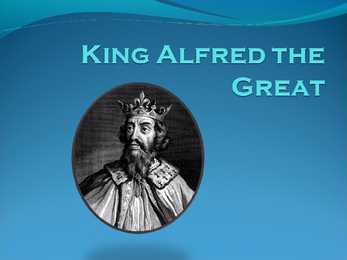
Scotland and northern England: from Ireland Roman Christianity soon prevailed Anglo-Saxon poetry: a peculiar combination of pagan traditions and the Christian belief No written literature at first Stories and poems were to be memorised Letters called "runes" carved in wood and stone Fighting everyone in sight A king's power was not hereditary, depended on the ability to win battles The power of the kingdom depended on the strength of its king in battle Danish raids In the 8th c Vikings, Norsemen or Danes invaded By 870 the kingdoms of East Anglia, Northumbria, and Mercia overthrown Preparations to overthrow Wessex Defeated by King Alfred England divided: Wessex in the south and west (Saxon law) Danelaw in the north and east (Danish law) King Alfred Alfred the Great The only monarch in English history with this title An able warrior A dedicated scholar
Lembitu was killed. · Ancient Estonian fight for independence. http://wapedia.mobi/thumb/4176501/en/fixed/470/376 /Danmarks_flag_1219_Lorentzen.jpg?format=jpg Click icon to add picture Danish Estonia · Conquered by Danish king Click icon to add picture Waldermat II · The Danish Army defeated the Estonians at the Battle of Lyndanisse. · The Estonians of Harria started a rebellion in 1343- St. George's Night Uprising. http://ts1.mm.bing.net/images/thumbnail.aspx? q=819230880636&id=9318fc57fdc860ec1be51 52b3d56ff20
Comparison of "Beowulf" and "Grendel" by John Gardner The text has more or less the same meaning in both of the extracts. The differences lie in the language use, character types, speakers, layout etc. In the original "Beowulf" epic Grendel displays nothing but the most primitive human qualities. He is a grotesque monster who terrorizes a small community of Danish warriors. Therefore he can be called a flat character. In the book "Grendel" the protagonist and antagonist have been swapped. Gardner greatly alters the monster's characterization. In his novel, very little separates Grendel from his human counterparts: he has a high level of intelligence, as well as a human capacity for both emotion and philosophy. As the text is written in the first person point of view through Grendel's eyes, one gets a quite good picture of him. Unfortunately he is
Kiili Gümnaasium Referaat Hiiumaa Kairo parts 8b klass Kiili 2011 Contents 1. Hiiumaa 2. Name 3. History 4. Transport 5. Kõpu lighthouse Hiiumaa Hiiumaa (Finnish, Hiidenmaa, German Dagö, Swedish Dagö, Danish Dagø) is the second largest island (989 km²) belonging to Estonia. It is located in the Baltic Sea .north of the island of Saaremaa ,a part of the West Estonian archipelago. Its largest town is Kärdla. Name Hiiumaa is the main island of Hiiu County, called Hiiumaa or Hiiu maakond in Estonian.
inhabitants) Sport ● Kiiking ● Kelly Sildaru ● Wife carrying Fun facts ● Tallinn is the city of the first Christmas tree ● Free public transport ● The first country to introduce online political voting ● Skype was invited in Estonia ● Estonian education system is the best in Europe ● 75.7% are irreligious ● 16% say that they believe in God Estonian nature History ● Human settlement was around 11 000 years ago ● Has been under Danish, Swedish, German and Russian ruling ● Achieved independence 24th of February 1918 ● Re-independence 20. August 1991 ● Regained its independence without a war ● Baltic Way Baltic Way The Estonian Song and Dance Festival https://youtu.be/ieKfoxVWUSo
The History of Estonia 8000 BC traces of first settlement at Pulli 3000 BC Finno-Ugric tribes arrive 1st cent AD Estonians mentioned in written records by Tacitus 1030 first written mention of Tartu 1154 first written mention of Tallinn, map of Estonia 1219 Danish invasion by the Teutonic Order 13th century German invasion by the Livonian Order 1343 St George's Night uprising 15th century serfdom begins to develop 16th century Reformation 1558.1583 The Livonian War between Sweden, Poland, Denmark, Russia 1629.1710 Swedish era 1700.1721 The Northern War, Russian invasion 1860.1885 era of national awakening 1918.1920 the War of Independence 1918.1940 the Republic of Estonia 1940
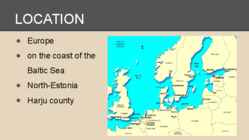
LOCATION ● Europe ● on the coast of the Baltic Sea ● North-Estonia ● Harju county FACTS ● capital city of Estonia ● largest city in Estonia ● population 435,000 ● area 156 km² ● previous name - Reval HISTORY ● first marked on the map in 1154 ● Danish rule started in 1219 ● 1285 - member of the Hanseatic League ● 1345 - Danes sold Tallinn to the Teutonic Order ATTRACTIONS ● Toompea Castle ● Old Town ● Town Hall ● Kadriorg - beautiful park ● City Centre - medieval churches, modern towers OLD TOWN ● listed in the UNESCO world heritage list ● built up from the 13th to 16th centuries ● old Hanseatic town ● surrounded by huge walls ● many towers, narrow streets TOWN HALL ● on the Town Hall Square
Country Nationality Language Austria Austrian German Australia Australian English Belgium Belgian/Flemish French/Flemish The Czech Republik Czech Czech Canada Canadian English/French China Chinese Chinese Denmark Dane Danish Estonia Estonian Estonian Finland Finn Finnish France Frenchman/woman French Germany German German Greece Greek Greek The Netherlands/ Dutchman/woman Dutch Holland Hungary Hungarian Hungarian Iceland Icelander Icelandic
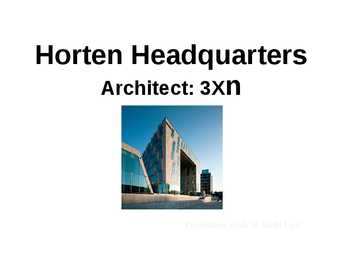
Horten Headquarters Architect: 3Xn Presentation made by Kadri Lajal Little about 3X n Danish architectural practice 1986 Kim Herforth Nielsen, Bo Boje Larsen, Jan Ammundsen GXN Horten Headquarter 10,000 m2 2009 Copenhagen, Denmark Shape which saves energy Material Fiberglass and travertine The "innovation" Fibreglass is a fiber reinforced Traventine form of polymer made of a plastic. Easily limestone deposited by mineral formed using molding processes. springs. Lightweight and extremely strong.
and a population of about 15 000. • The city is situated on the coast of the Gulf of Riga. Kuressaare Kuressaare castle • Saaremaa Museum is one of the oldest (founded in 1865) and biggest museums in Estonia and is visited by 70-80 thousand people every year. • At the heart of the museum is an episcopal castle built during the 14th and 15th. Kuressaare castle History • Kuressaare first received its town charter in 1563 under the Danish rule. • Kuressaare first appeared on maps around 1154. Used literature • Wikipedia.org • Google.com • Estlandia.de • Kuressaare.ee New vocabulary • Episcopal-piiskoplik • Municipality-omavalitsus • https://www.youtube.com/watch?v=YhWHBueqg94 • Thank you for listening! :)
Among the many languages and dialects used in the EU, it has 23 official and working languages: Bulgarian, Czech, Danish, Dutch, English,Estonian, Finnish, French , German, Greek, Hungarian, Italian, Irish, Latvian, Lithuanian, Maltese, Polish, Portu-guese,
Landscape rugged coastline, mountains, fjords Republic of Iceland Capital - Reykjavik Language Icelandic, fluent English Size 103,000 square kilometers Population 299,000 Flag - blue, red Scandinavian cross outlined in white Iceland is a volcanic island in the North Atlantic Ocean Nature volcanoes, lava fields, waterfalls, geysers and hot pools Kingdom of Denmark Capital - Copenhagen Language - Danish Size 43,094 square kilometers Population 5,564,219 Flag red,white Scandinavian cross Emblem 3 crowned lions Symbols swan, red clover, beech Denmark is called the home of the Vikings Famous writer H.C.Andersen, meremaid statue, football stadium, art galleries
The climate is extremely cold, although the south experiences a short summer. The mammals of Greenland are more American than European and include muskox, wolves, lemmings, and reindeer. The varieties of seal and whale, and most of the species of fish and seabird, are also American rather than European. Circumpolar animals, such as polar bears, arctic foxes, polar hares, and stoats, are also found. Greenlanders are a people of mixed ancestry, primarily Inuit and European, especially Danish Norwegian. Nearly all live on the narrow southwest coastal fringe. Fishing, sealing, and
s Born: 849 at Wantage, Oxfordshire Parents: Aethelwulf, King of Wessex, and Osburh Relation to Elizabeth II: 32nd great-grandfather House of: Wessex Crowned: 871 Married: Ealhswith of Mercia Children: 5 children Died: 899 Buried at: Winchester ·Only King to have epithet"the Great" ·Defended England against Danish invasion and founded the first English navy ·He encouraged the translation of scholarly works from Latin and promoted the development of the Anglo-Saxon Chronicle. ·A new legal code came into force during his reign. ·At the age of 19 in 868 he is recorded as fighting beside his brother in Mercia against the Danes In 878, the Danes under their leader, Guthrum overran Wessex. Alfred and his remnants went into hiding. At Easter time in 879, Alfred set up a base in the region of Athelney.
early 15th and mid 16th centuries It has three parts: Lower Town, Upper Town + Town Wall, Towers and the Gates Lower Town/Upper Town Town Hall Square Toompea Castle & Tall Tallinn Town Hall Hermann's Tower Town Hall Pharmacy Cathedral of Saint Mary the Virgin Great Guild Hall Danish King's Garden House of the Brotherhood of Black Heads Other Attractions Kadriorg Palace The Kadriorg Art Museum Alexander Nevsky Cathedral Russalka Soviet Legacy KGB Headquarters Soviet Legacy Tallinn TV Tower - Closed from November 26th 2007 Open Air Attractions Estonian Open Air Museum Open Air Attractions Tallinn Zoo -Established in 1939
History of Estonia Elina, Rasmus, Joosep Pre-history The Mesolithic Period The Neolithic Period The Bronze Age The Iron Age Early Middle Ages Click to edit Master text styles Second level Third level Fourth level Fifth level Counties of Ancient Estonia The Middle Ages Danish Estonia Swedish Coastal Settlements Terra Mariana The Reformation Period Division of Estonia in the Livonian War PolishLithuanian Commonwealth Estonia in the Swedish Empire Estonia in the Russian Empire Age of Enlightenment National Awakening Road to Republic Occupation of Estonia by German Empire. United Baltic Duchy Declaration of Independance As a result of the availability of education Age of awakening Red Army's retreat and arrival of German troops in Pärnu on 23 February
Denmark Capital Copenhagen Official language Danish The national flag of Denmark, Dannebrog, is red with a white Scandinavia cross that extends to the edges of the flag; the vertical part of the cross is shifted to the hoist side. Symbols - Bird: Mute Swan, Coat of Arms: The National Coat of Arms features three crowned lions facing left, surrounded by nine red hearts, all placed atop a golden shield. The crown on the shield is the crown of King Christian V. Tree: Beech, Flower: Red Clover Size - 43,075 km2
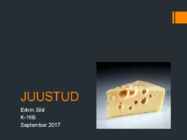
Emmental Gruyère Parmesan Raclette Beaufort Romano Sinihallitusjuust Seda juustu ei kuumutata ega pressita. Vaar lõigatakse väiksemateks tükkideks, vormitakse, nõrutatakse, soolatakse ja külvatakse hallitusseen. Nõeltega süstitakse juustu sisse hapnik, et juba varem juustu sisse pandud hallituskultuur seal arenema hakkaks. Seeneniidistik hakkab arenema seespoolt väljapoole. Gorgonzola juust Bleu de Bresse Danish Blue Stilton Juustusordid Atleet Bel Piemonte juust Feta ehk fetajuust Hollandi leib Maasdammeri juust Parma juust Pikantne juust Šveitsi juust Vene juust Viru juust https://www.youtube.com/watch? v=43Y7MuwGXX4 Aitäh kuulamast!
The most important key dates in Estonian history Every country has its history and some moments are more important than the others. Here are some of the most notable dates from Estonian history. 3rd millennium BC the Finno-Ugric tribes arrive in Estonia 1154 First written mention of Tallinn (by al-Idrisi) 13th century German and Danish invade Estonia. Estonians' numerous attempts to restore independence fail 1343 St. George's Night uprising 1558-1583 the Livonian War after which Northern Estonia is occupied by Sweden and Southern Estonia occupied by Poland 1632 Tartu University was founded 1860-1885 the era of national awakening, the foundation for Estonian journalism was laid, collection of folklore 1869 First all-Estonian Song Festival in Tartu
Tallinn's surface water system is founded on two major reservoirs: Paunküla and Soodla. Ülemiste Lake Pirita River Jõelähtme Holy Virgin Mary Church. Jõelähtme church is one of the oldest churches in Estonia. 1220. Keila Michael's Church. Keila Harjumaa's largest medieval church in the rural church, which was probably built soon after the exposure to the Danish king North Estonian. Harju County Museum. Keila Harjumaa Museum is located and operates jõepargis19th Keila dated the beginning of the century manor house. Manor, about 100 metersaway are the ruins of a medieval fortress in Keila. Keila Michael's Church 412 144 people live in Tallinn. Most of the people are funny and nice. Estonian people
wikimedia.org/wikipedia/commons/a/a4/Carl_Nielsen_at_piano. gif · http://www.royaldanishbrass.dk/komponister/komp-carl-nielsen02.jpg · http://upload.wikimedia.org/wikipedia/en/thumb/b/bb/Nielsen's_5th_Symphon y_Tempo_giusto.png/350px-Nielsen's_5th_Symphony_Tempo_giusto.png · http://en.wikipedia.org/wiki/File:Carl-Nielsen.jpg · http://en.wikipedia.org/wiki/File:Denmark-Carl_Nielsen %27s_Childhood_Home.JPG 3. ,,Carl Nielsen 1865-1931"/ Royal Danish Ministry of Foreign Affairs, Danish Music Information Centre (lk.6, 16-17) 9
History of Great Britain Prehistory (55BC) no written records 6th 3rd c. BC the Celts came to British isles hill figures, hill forts, stone circles ( Stonehenge ) RomanBritain (55BC 400AD) Julius Caesar, named the country Albion Hadrian's Wall, villas, roads, the town of Bath The AngloSaxon, Danish and Norman invasions Germanic tribes settled and stayed Anglia Christianity was brought, religion became important, churches were built 8th century = raids by the Vikings and the Danes 1016 1042 : Under Danish rule ( York was the capital ) 1042 : local AngloSaxons regain their rule 1066 : Normans arrive ( the Norman conquest ) Medieval Britain (106615th c.) the Battle of Hastings William the Conqueror a new AngloNorman state the feudal system introduced
Main industries in Estonia are engineering, electronics, wood and wood products, textile and information technology and telecommunications. The main ports and harbours in Estonia are in Haapsalu, Kunda, Muuga, Paldiski, Pärnu and Tallinn. There is about 10,000 km of paved streets/roads/highways and about 41,000 km of unpaved roads. Estonia has 29 airports and 968 km of railways. Estonian people have about 800,000 cell phones and 475 000 telephone main line users. After centuries of Danish, Swedish, German, and Russian rule, Estonia attained independence in 1918. Forcibly incorporated into the USSR in 1940, it regained its freedom in 1991, with the collapse of the Soviet Union. Since the last Russian troops left in 1994, Estonia has been free to promote economic and political ties with Western Europe. Most popular religions in Estonia are Evangelical Lutheran, Russian Orthodox, Estonian Orthodox, Baptist, Methodist,
Samuti paikneb Taanis maailma suurim tuulegeneraatorite tootja Vestas. Äärmiselt olulised on ka Põhjamerest ammutatavad nafta ja maagaas, mille tootmiselt on Taani Norra ja Suurbritannia järel Euroopas kolmas. A.P. MøllerMærsk - merelaevanduse, gaasi-ja naftatööstuse ning kaubandusega tegelev ettevõte Danske Bank (Eestis Sampo Pank) TDC - telekommunikatsiooniettevõte Dansk Supermarked - A.P. MøllerMærskile kuuluv kaubandusgrupp Arla Foods - Skandinaavia suurim piimatööstus Danish Crown - Euroopa suurim sealiha tootja ISS - puhastus- ja hooldusteenuseid pakkuv ettevõte Carlsberg - suur õlletootja, millele kuulub muuhulgas ka Saku Õlletehas G4S - turvateenuseid pakkuv ettevõite Novo Nordisk - ravimitootja.
Power went into the hands of those who could read & write. In the 2nd half of the 10th cent. under the rule of Alfred's descendants, the Saxon monarchy was further consolidated. Alfred's son Edward, the Elder, and his sister defeated the Northumbrian Vikings. Edward took control of the Danelaw and ruled over the whole of England. The Danes were not driven out of the country, they were made subjects of Wessex. The descendants of the Danish conquerors became peaceful peasants & traders. They were skilful shipbuilders. They were not very different from the Anglo-Saxons. They had adopted their town. Many Scandinavian words came into the English language (happy, ugly, ill, weak etc.) The Saxons' Golden Age started when Athelstan (Alfred's grandson, Edward's son), won a great victory in 937 against an army of Irish Vikings, Scots & Stathclyde Britons. Athelstan was interested in good government
Spiders have two body segments. The front segment is called the Cephalothorax. The second part of the body is called the Abdomen. SpidersGettingBigger-GlobaW l armingtoBlame? A group of Danish scientists wondered whether global warming would make the hairy, meat-eating wolf spiders of northeastern Greenland bigger, since longer summers mean more hunting time. The spiders can live for at least two years, and the researchers found that, in years when spring came early, the animals grew larger, on average. For example, when spring came 30 days earlier than usual, some spiders grew exoskeletons that were 10 percent thicker than average, resulting in bigger bodies overall. http://www
Värvus kollane Sordid: Emmental, Gruyere, Parmesan, Raclette, Beaufort, Romano Sinihallitusjuust Seda juustu ei kuumutata ega pressita. Vaar lõigatakse väiksemateks tükkideks, vormitakse, nõrutatakse, soolatatakse ja külvatakse hallitusseen ( Penicillium gorgonzola). Juustu sisse süstitakse nõeltega lisaks hapnikku, et hallitusseen saaks paremini areneda. Värvus valkjaskollane, sinisäbruline Sordid: Gorgonzola juust, Rookfoor, Bleu de Bresse, danish Blue, Stilton Rokfoor Pärineb Lõuna- Prantsusmaalt Värvus valge, vänge maitsega, mure ja pisut niiske, roheliste hallitusesoontega juust. Maitselt mahe, muutub süües järjest magusamaks, siis suitsuseks ning lõpuks taandub soolaseks. Juustu valmistatakse lambapiimast, rasva sisaldus ca 7,4 %, valgu sisaldus 5,63% Kasutatakse näiteks magusa suupistena koos tumedate viinamarjadega või magustoidu osana. Eesti juust Poolkõva juust, valmistatud lehmapiimast
The earliest buildings confirmed by historical data originate from the 9th century A settlement of tradesmen and artisans began to develop at the foot of Toompea hill Farmers from the neighbouring counties, were the masters In 1219 King Valdemar II of Denmark conquered the stronghold From that time on the stronghold of Toompea belonged to foreign rulers After the subjugation, the Danes immediately set out to fortify it In the following years, the Danish stronghold was repeatedly besieged All attempts ended in failure Timeline Occupied in 1227 by the Order of the Brethren of the Sword In 1238 the rights of the Danes in North Estonia were restored and Toompea was once again ruled by Danes In 1346 Denmark sold its possessions to the Teutonic Order Until 1561 Toompea belonged to the Livonian Order According to the Altmark peace treaty of 1629, Estonian territories went to the king of Sweden
They came from Denmark and Norway and raided monasteries and churches in Ireland and in the east, north and west coasts. London was raided in 842. In 865 they started to settle in Britain. They quickly accepted Christianity and didn't disturb the local population. King Alfred was strong enough to win an important battle against the Vikings and they made a treaty which gave the Viking north and east of England. Rest of the country Alfred was recognised as king. Who should be king? When Danish Vikings started raiding westwards, the Saxon King Ethelred started gathering taxes to pay the Vikings so that they wouldn't raid anymore. When he died, Cnut (the leader of Danish Vikings) became king and after his death his son took over, but the also died soon so the Witan quickly gave the throne to Edward one of Saxon Ethelred's son. After his death the next king was Harold from Wessex. He had no claims for the throne so the Duke William of Normandy claimed it to himself
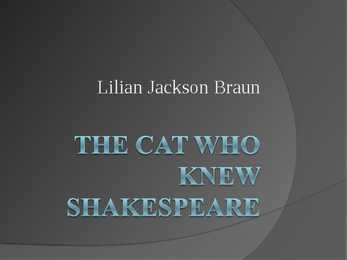
talents and a flair for mystery; loves, when Qwilleran reads to him. Yum Yum a lovable Siamese adored by her two male companions. Series opens in November. Jim Qwilleran. Other matters that concern Qwill. A museum in the mansion. Jim Qwilleran as a hobby detective. Koko and Shakespeare. Fire in the Klingenschoen Museum. Emphasis characters important. Auto Bibliography: Qwilleran, Koko and Yum Yum series: The Cat Who Could Read Backwards (1966) The Cat Who Ate Danish Modern (1967) The Cat Who Turned On and Off (1968) The Cat Who Saw Red (1986) The Cat Who Played Brahms (1987) The Cat Who Played Post Office (1987) The Cat Who Knew Shakespeare (1988) The Cat Who Sniffed Glue (1988) The Cat Who Went Underground (1989) The Cat Who Talked to Ghosts (1990) The Cat Who Lived High (1990) The Cat Who Knew a Cardinal (1991) The Cat Who Moved a Mountain (1992) The Cat Who Wasn't There (1992) The Cat Who Went into the Closet (1993)
Unlawful- ebaseaduslik Infrequent- harv Unhelpful- kasutu Irregular- korrapäratu Illegible- arusaamatu Irrelevant- ebaoluline Illegal- ebaseaduslik Irresponsible- vastutustundetu Illogical- ebaloogiline Irrational- irratsionaalne Illiterate- harimatu Irresistible- vastupandamatu Illiberal- mittetahtlik Incomplete-mittetäielik Denmark- Danish USA- English Greece- Greek Norway- Norwegian Britain- English Italy- Italian France- French Turkey- Turkish Sweden- Swedish Holland- Dutch Portugal- Portuguese Spain- Spanish Russia- Russian Finland- Finnish Germany- German UNIT6 The bank of England- keskpank, central bank Commercial bank- clearing bank
for a far-reaching rules overhaul. However, Märtin made a limited return to competitive rallying in March 2006 at the 2006 Rally of Portugal. The invitational event was held as a candidate for full WRC status. Markko competed in a Subaru Impreza, his first outing in an FIA-spec Group N car in nearly a decade. He was co-driven by David Senior, who formerly worked with Alister McRae. Märtin also partook in the 2006 Danish Touring Car Championship with Hans Hartmann's Honda Racing.
Independence (taasiseseisvumispäev) - August 20 history EVENTS Viljandi Folk Music Festival - July Ollesummer (Beer Summer) July The All-Estonian Song Festival (Laulupidu) takes place every five years in TallinnIn Estonia Mother's Day is celebrated on the second Sunday in May and Father's Day on the second Sunday in November. Main sights Dome Church (Toomkirik) Estonia's oldest church, Dome Church (Toomkirik) was founded in the early 13th century by the earliest Danish conquerors of the region. It stands on Toompea hill which, with its fine views over the town and harbour, became the birthplace of Tallinn when the German Knights of the Sword built a fortress here around 1230. Main sights Oleviste Church Near the end of Pikk tänav stands a chief Tallinn landmark, the Oleviste Church . This is a great place to start any Tallinn expedition as there's a superb observation deck, halfway up its 124m structure offering the city's best views
Influences Latin monks and scholars from 7th century Old Norse Viking raids of late 8th century French After Norman conquest in 1066 Mongrel nation ? Old english One of the first written vernacular languages from the Indo- European language groups; From today's languages most similar to Frisian; Most famous written works: Beowulf, Anglo-Saxon Chronicles. Beowulf Written around ca 700-1000 AD in West Saxon Story about a mighty warrior Beowulf who saves the Danish kingdom of king Hrothgar by killing two mythical monsters. Beowulf then lives on to become a legendary king of the Geats. Beowulf dies when he has to face a third monster a dragon, in order to save his kingdom. The motifs of a character such as Beowulf: courage, loyalty, honour, but also pride, hasty decisions and grandeur as weakness. Beowulf: · A quintessential hero · Youthful fearlessness · Wisdom in old age · A bee-wolf OR bear-wolf Grendel: · Descendant of Cain
The people here are mostly engaged in industry- mainly the food industry (23%), trade (16%) and transport and communication (14%). History. Tallinn has a great history. It was first marked on a map of the world by the Arab geographer al-Idrisi in 1154, its name then being Kolyvan. In the 13 th- century chronicle of Henricus de Lettis the town was called Lyndanise. Then it was called Reval for some time and finally Estonians started to call the town Tallinn from Taanilinn (Danish town) after the Danish conquest in the 13th century. The Knights of the Sword took Tallinn from the Danes in 1227 and made Toompea their fortress. In the middle of the 14th century Denmark sold its possessions in Estonia to the German Teutonic Order; Toompea became the seat of German-born gentry. A fortified wall was built between the Toompea (the Upper Town) and the Lower Town (inhabited by people of a lower social standing), as there were conflicts between the two
Põhjanoot võrdsest tiivast, kahest 15 veoköis Kalakott on soovitav ümbritseda jämedaniidilise kattekotiga, eriti rasketel põhjadel püüdes. Eestis kasutatakse põhjanootasid Peipsil koha püügiks ja rannikumeres (saartel) lestapüügil. Põhjanooda nimetused: merel lestanoot, Peipsil mutnik. 16 Danish seining: Drawing of Anchor seining (Danish seining) This fishing method depends on the long lengths of rope used, up to three kilometres per side, herding fish into the path of the net as the gear is hauled. The gear is set roughly in the shape of an isosceles triangle with the dhan, which marks the end of rope first shot and to which the vessel returns to complete the set, as the apex and the net as the centre of the base. Having picked up
Tallinn is a small port town in which the population is 371 000 people, and the area is only 159,2 km².( square kilometers). Tallinn, the capital of Estonia, is named after taani linnus, which means Danish castle. The Castle in question was built by King Waldemar of Denmark in the 13th century. The settlement quickly developed itself into a busy port. -The Old Town In medieval age Tallinn was called Reval and it was as big as the Tallinns Old Town is now. Uniqueness of Tallinn is that it is one of very few European cities, where the historical lay-out is kept in it's original form , and has a lot of monuments of that time. Thanks to that in 1997 Old
Inside, staff demonstrate many of the games and toys for sale. Niketown is another store that is popular with children. It sells all sorts of stylish sportswear. New Yorkers love their food. Thanks to the many immigrant communities, there is a huge variety of cooking. Everything from Jewish bagels to Japanese sushi can be found here. People eat out more often than home. The day often starts with breakfast at diner. This might be eggs with bacon, waffles, juice and coffee or just a Danish pastry with coffee. Lunch is generally a deli sandwich or some other fast food. New York contains every kind of traditional fast food outlet, from hamburger restaurants to hot dog stands. But there is more on offer, too. Delis will make almost any kind of sandwich a New York favourite is pastrami ( smoked, spiced beef ) on rye bread. Cafes serve drinks, snacks and cakes, including cheesecake, a speciality of the city. 1. Jam the roads ummikutes olema 2. Daring kartmatu 3
Nõmme, in the south-west of the city. The first human steps, that archeologists found, are about 5000 years old. Tallinn`s first fortress was built in Toompea, in 1050. As an important port for trade between Russia and Scandinavia, it became a target for the expansion of the Teutonic Knights and the Kingdom of Denmark during the period of Northern Crusades in the beginning of the 13th century when Christianity was forcibly imposed on the local population. Danish rule of Tallinn and Northern Estonia started in 1219. In 1285 the city became the northernmost member of the Hanseatic League - a military alliance of German-dominated cities inNorthern Europe. The Danes sold Tallinn along with their other land possessions in northern Estonia to the Teutonic Knights in 1346. Medieval Tallinn enjoyed a strategic position at the crossroads of trade between Western and Northern Europe and Russia.
The tribe was located to the north-east of Londinium. They had bad relations with the Romans, which is why they burned down the place. London was rebuilt in the year 100. During the 2nd century, Roman London had a population around 60 000 people. In the 8th century there was a lot of Vikings attacking the city. Alfred the Great, an Anglo-Saxon king, was fighting against them. His people created a new settlement called Lundenwic 2 km upstream of Londinium. In 886 Alfred made peace with the Danish Vikings. Their king was named Guthrum. London Wall The Norman Conquest During the 9th century, London was the largest city of England. At that time, the Duke of Normandy won the Battle of Hastings, which was between England and Normandy. As a result the duke was crowned king of England. His name was William the Conqueror. William granted the citizens of London special privileges. He also built the Tower of London, (which was a prison) to keep the people under control
lake is Võrtsjärv. The largest river is Võhandu whinch is 162 meters long. Estonia has many national parks. A national park is a protected area. They are good to protect animals, birds, insects and other natural resources. The most famous national parks are: Lahemaa, Karula, Soomaa, Vilsandi, Matsalu. On the 8th millenium BC first people began to settle here in Estonia. On the 13th century Germans and Danish tried to conquer our country. On the 16th century the first book in Estonian language was publicated. Then the Livonian War began. Northern part of Estonia was occupied by Sweden and the southern part of Estonia was occupied by Poland. On the 17th century Estonia was under Sweden occupation. In 1632 Tartu University was founded. On the 18th century there was a Norhern War and Estonia was occupied by Russia. On the 19th century poeple started to collect Estonian folklore
at Pirita. At various times in history, the city has been given different names. In 1219 Henricus de Lettis wrote about the Lyndanise stronghold of the Rävala people. On 13 June that year King Waldemar II of Denmark came to conquer north Estonia. The Estonians lost the battle and the Danse renamed the town Reval, as it was the centre of the ancient Estonian province of Rävala. The Estonian, however, rejected the name and began to call the city Taani linn, the Estonian for Danish castle. Tallinn's economy started to boom in the 19th century with the emergence of machine- building, woodworking and textile industries. A railroad was built in 1870, linking the city to St. Petersburg. From that time Estonia maintained close ties with Russia. From 1918 to 1940 Tallinn was the capital of the Republic of Estonia. It was then that Tallinn became the official name of the town.
40 Brie, natural, jogurtiga, ürtidega (Turek) 5. Camembert jogurtiga 12.92 (Turek) 6. Valgehallitusjuust 20.40 Brie 7. Valgehallitusjuust 16.72 Camembert 5 (Friendship) 8. Valgehallitusjuust 15.28 Brie (Saint Benoit) 9. Reverent Brie Pontnte 13.45 10. Hallitusjuust 11.93 Bergader, natural, jogrutiga (Almkäse) 11. Valgehallitusjuust 19.12 Danish Brie (Castello) 12. Valgehallitusjuust 15.60 Breton Brie (Paysan Breton) 13. Valgehallitusjuust 11.12 Camembert (Merci Chef) 14. Forte Kõva 14.55 Pastöriseeritud piim, itaaliapärane juust juuretis, meresool 26% (Valio) (1,7%), tardaine kaltsiumkloriid,
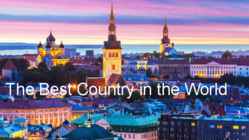
Tallinn is one of the oldest cities on the Baltic Sea. It is unique for its well-preserved architecture from the 13-15 centuries. In contrast to the ancient town-walls and towers, Tallinn of today offers modern hotels, restaurants, sport and cultural centres. Every five years national song and folk dance festivals take place in Tallinn. The yachting regatta of the 1980 Moscow Olympic Games was held at Pirita. History Tallinn means in English "Danish town". The place is believed to have been settled by Finno-Ugric people about 2500 BC. It was first marked on a map of the world by the Arab geographer al-Idrisi in 1154. The Estonians were the first to build a stronghold on the spot of the Toompea Hill, but the real Tallinn was built by the Danes who conquered the north of Estonia in 1219. Legend has it that one day, when the Danes were about to lose a bloody battle, the sky suddenly opened and a red flag with a white cross on it
They divorced in 1994, after he left her for his astrological therapist who had told him that the couple's astrological signs were incompatible. § She subsequently married Nick Fox, a poet who is also her manager, with whom she currently lives in Dorset. She has four sons, three stepsons and six grandchildren. § Weldon serves together with Daniel Pipes as the most notable foreign members of the board of the Danish Press Freedom Society. § Her most recent novels are "Chalcot Crescent "(2010) and "Kehua" (2011). Prizez and awards 1979 Booker Prize for Fiction (shortlist) "Praxis" 1996 PEN/Macmillan Silver Pen Award "Wicked Women" 2001 CBE
their 9 children connected them with many royal families in Europe. Sir Christopher Wren (1632-1723) became a leading figure in the rebuilding of London after the Great Fire of 1666, building in total 52 new churches, including St, Paul`s Cathedral. John Nash (1752-1835) a famous architect and town planner during the Georgian era. 3. In ex. 4 at page 20 the task was to remember the dates from London history. Roman invasion AD 43, Anglo-Saxon invasion around AD 400, Danish invasion 9th century, Norman invasion 1066, Hundred Years` War 1337-1453, the Wars of the Roses 1455-1488, the Elizabethan period 1558-1603, the Puritan Republic 1653-1658, the Georgian era 1714-1830, the Victorian era 1837-1901, the Second World War 1939-1945, the Great Fire of London 1666, the Great Plague 1665, the Roman walls were built AD 200, Westminster Abbey was started before 1065, the White Tower
At various times in history, the city has been given different names. In 1219 Henricus de Lettis wrote about the Lyndanise stronghold of the Rävala people. On 13 June that year King Waldemar II of Denmark came to conquer north Estonia. The Estonians lost the battle and the Danse renamed the town Reval, as it was the centre of the ancient Estonian province of Rävala. The Estonian, however, rejected the name and began to call the city Taani linn, the Estonian for Danish castle. Tallinn’s economy started to boom in the 19 th century with the emergence of machine-building, woodworking and textile industries. A railroad was built in 1870, linking the city to St. Petersburg. From that time Estonia maintained close ties with Russia. From 1918 to 1940 Tallinn was the capital of the Republic of Estonia. It was then that Tallinn became the official name of the town.
 annaabi.ee