Leidsid 33 sarnast õppematerjali, mis on seotud failiga "Conditionals". Need materjalid aitavad sul teemat sügavamalt mõista.
pass, exams, osalause, might, could, põhivorm, passed, simple, study, conditionals, present, perfect, earned, moneyConditionals Sentences with if are used to express possibilities. 0 Zero conditional If-clause present (past) simple Main clause present (past) simple Sometimes sentences with if express certainty rather than possibility. The zero conditional is used to talk about sth. that is always true (such as a scientific fact), or that was always true in the past. In this type of conditional we can use when instead of if. E.g., If/When you mix blue and red, you get purple. If/When you don't water flowers, they die. (present simple in both parts of the sentence) If/When I asked her to come with us, she always said no.
frequency(kordumine ) adverbs(määrsõna) N: Do you go to school by car every day ? I don't often watch TV. 2)Present continuousbe + verb + ing. Actions happening now N; Look! It's snowing. I'm meeting Jane tonight. You're always losing things. 3)keep + ingto describe habitual actions which may be irritating. N: my uncle keeps making silly jokes. Present perfect: 1) Present perfect simple: have/has + past participle. N: I've been here for ten minutes .The phone has rung ten times today. Look at this cheque,'I've won first prize. They have made a new star wars film. I've just got home. How long have you been here ? Have you ever been to Paris? It's the best book I've ever read. It's the first time I have ever been abroad. 2)Present perfect continious : have/has + been + ing. N:I've been living in this flat since 2000. I've been waiting for ages
Some people seem born lucky. Everything they touch turns to gold. Others are dogged by misfortune. But what is luck- i would define it as the accidental way things happed without being planned. Some people say that they are lucky and others say that they are unlucky. In my opinion is not just people who might be lucky or unlucky- it can be single acts. When someone does not win a card game or misses a shot in basketball then they often think that they are unlucky. People who say that they have bad luck are negative. For example they woun´t even play bingo or take part in raffle. They think that because they are unlucky they can not be lucky. I am sure that if they wait something good will happen their lives. I like to wish people good luck, because i think it is a nice thing to say if
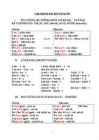
CONDITIONALS · Type 0 Present Simple if + I, I o If you boil water, it evaporates.(Loodusseadus) · Type 1 if + I , will + I o If you study more, you will get better marks. (Kui õpid rohkem, saad paremaid hindeid.) · Type 2 if II, would + I o do If you studied more, you would get better marks. (Kui õpiksid, saaksid) · Type 3 if had + III, would have + III o if I had studied more, I wouldn't have had that many mistakes. o If you had studied more, you would have got better marks. (Kui oleksid õppinud, oleksid saanud)
Conditionals Table of Contents Conditionals ......................................................................... 2 A. Real Conditionals ............................................................. 2 B. Unreal Conditionals ......................................................... 3 Linking words used in Conditionals ...................................... 4 Conditionals Conditions deal with imagined situations: some are possible, some are unlikely, some are impossible. A. Real Conditionals Real Conditionals refer to situations that are true, have happened, generally happen or are likely to happen. The First Conditional expresses a possible condition and a probable result: If I have time, I will help you. In the if-clause we use the Present Simple, in the main clause will + the verb.
CONDITIONALS 0 or 1? TYPE 0 ZERO CONDITIONAL In 'zero' conditional sentences, the tense in both parts of the sentence is the simple 'IF' CLAUSE (CONDITION present: ZERO CONDITIONAL (TYPE 0) 'IF' CLAUSE MAIN CLAUSE (CONDITION) (RESULT) If + simple present If + simple present If you heat ice, it melts. If it rains, you get wet TYPE 0 'IF' CLAUSE MAIN CLAUSE (CONDITION) (RESULT) If + simple present If + simple present If plants don't get they die. enough water, If you mix red and blue, you get purple Make sentences (type 0) Heat water/ boil Mix yellow and red/get orange Conditional Type 1 · First Conditional: real possibility · We are talking about the future. We are thinking about a particular condition or situation in the future, and the result of this condition. There is a real possibility that this condition will happen.
INGLISE KEEL Sisukord Sisukord.................................................................................................................................. 2 Ajavormid Tense vorms.......................................................................................................3 Lihtolevik The present simple..................................................................................... 3 Lihtminevik The past simple....................................................................................... 3 Lihttulevik The future simple...................................................................................... 3 Kestev olevik The present continuous......................................................................... 3 Kestev minevik The past continuous
INGLISE KEEL Sisukord Sisukord 2 Ajavormid Tense vorms 3 Lihtolevik The present simple 3 Lihtminevik The past simple 3 Lihttulevik The future simple 3 Kestev olevik The present continuous 3 Kestev minevik The past continuous 4 Kestev tulevik The future conrinuous 4 Täisminevik The present perfect 4 Enneminevik The past perfect 4 Ennetulevik Future perfect 5 Üldminevik Past tense 5 Üldtulevik Future indefinite 5
Future Forms Future Forms · 1) Future Simple will work · 2) Be going to am/is/are going to work · 3) Present Continuous am/is/are working · 4) Present Simple start(s) Future Forms · 5) Future Continuous will be working · 6) Future Perfect will have worked · 7) Future Perfect Continuous will have been working Future Simple · We do our morning exercises and think, "I think we will have a nice day " · Prediction (ennustused kõhutunde põhjal) · verbs think, believe, guess, expect, hope etc · expressions be sure, be afraid etc · adverbs probably, perhaps, certainly Future Simple · You see your little brother carrying a very heavy suitcase and you think, "I will help him carry the suitcase." · on-the-spot decision (hetkeotsused)
Estonia 01/03/04 Dear aunt Anette, Thank you for your letter. I hope you and uncle Joe are well and that you'll find a good place for living. At school is a very terrible time at the moment. I have to spend all my time to studing, because the exams are coming, as you know. I'm not very good at maths so I'm thinking about taking a private teacher. It's quite expensive, but I have to pass the exams, so It's OK. Thanks for the invitation to visit you at London. I've never been there but I'm sure It's great. I would love to see you after these years. I think you have not change at all. I'm glad that I can see uncle Joe for last! You have written so much about him. Did he bought a new car yet?
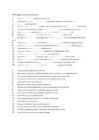
Tests Superstar 1 Luke Prodromou Test 1 Name____________________ Class_______ Use your English 1 Complete these sentences using the correct form (present simple or present continuous) of the verb in brackets. _ 1 She is in a band and she _________________________________ (record) a CD at the moment. _ 2 She is an actress and often _________________________________ (appear) on television. _ 3 At the moment she _________________________________ (have) a rest because she is tired. _ 4 Mike is a doctor and he _________________________________ (live) in Manchester. _ 5 I _________________________________ (start) work at 8.30 every morning.
town centre. We'll have to take a taxi. b) I feel rather cold. I wish I brought / had brought my pullover with me. c) What a pity. I wish we don't have to / didn't have to / wouldn't have to leave. d) If only you tell / told / had told me about the test. I haven't done any revision. e) I wish the people next door hadn't made / wouldn't make / couldn't make so much noise. I can't hear myself think! f) Darling, I love you so much! I wish we are / had been / would be / could be together always! g) I'm sorry I missed your birthday party. I really wish I come / came / had come / would come. h) I like my new boss but I wish she gave / would give / could give me some more responsibility. i) Having a lovely time in Brighton. I wish you are / were / had been here. j) This car was a complete waste of money. If only I didn't buy /hadn't bought it. 2.- 3.- 4.- Choose the most suitable verb form in each sentence.
The United States 21.09.2008 Dear Sir Brown I'm writing for you because I'm dissatisfied about the success rate in this year's examinations. I read your report and it leaves me an explicit and clear message the standards are falling and noone tries itselfs best anymore. Years ago it was very difficult to pass an exam, it was hard for us and only few of us could do it so I have to agree with your sayings. None of them worked hard I guess, they just walk in school from door to door and they think that they can just achieve theirs purposes like that. They need some experiences and things which can give them something to learn. In the future, they can't just celebrate and walk on air every day. They have to face difficulties and learn that somethimes there are hard times in everyone's life.
f) I can't come to the cinema. I have to read/study for a test. g) In history we had to learn a lot of dates by hand/heart. h) I hope your work will improve by the end of course/term. i) Martin failed/missed his maths exam and had to sit it again. j) If you have any questions, raise/rise your hand. Task 2. Complete each sentence with a word from the box. Use each word once only. cheat copy memorise pay revise concentrate divide pass punish underline a) Our teachers used to punish us by making us stay behind after school. b) If you…….twenty-seven by nine, the answer is three. c) Try to……. the most important rules. d) It is difficult to …….attention in a noisy classroom. e) Pauline tried her best to …….the end of year examinations. f) Your work is the same as Harry's. Did you……. his work? g) Your mind is wandering! You must …….more! h) Helen decided to……
Conditionals: II and III II CONDITIONAL • to imagine a different reality • An unreal situation • If I were a parent, I would give candy to my kids every day. • If he won the lottery, he would quit his job. • If I had wings, I would fly to Africa. How to use it? • IF + PAST SIMPLE, + WOULD + VERB • If I were a parent, I would give candy to my kids every day. • If he won the lottery, he would quit his job. • If I had wings, I would fly to Africa. • NB! The verb „be“ is always „were“ with this conditional. • If I were you,... • If he were here,... Wou can also turn it around: The result first and then the condition. • WOULD + VERB+ IF +PAST SIMPLE • Note: There is no comma when the „IF“ is between the two clauses.
beautiful (al. 3 silpi) more beautiful the most beautiful tired more tired the most tired boring more boring the most boring Erandid: good/ well better the best Bad/ ill worse the worst many/ much more the most little smaller/ less the smallest/ least VII. CONDITIONALS (TINGIMUSLAUSED) KASUTATAKSE SIIS, KUI SOOVITAKSE RÄÄKIDA VÕIMALIKEST SÜNDMUSTEST JA OLUKORDADEST JA NENDE TAGAJÄRGEDEST. If _________________, ______________. ___________________ if _____________. ! alati ei pruugi IF-i lauses olla! 2 4 conditionals: Zero cond. käibetõed, sagedased sündmused First cond. üsna tõenäolised sündmused Second cond. ebatõenäolised sündm. Third cond. miski, mis oleks võinud minevikus toimuda, aga ei
If I have a lot of money, I will buy a car , Almost unreal events *In additional and main clauses usually use Subjunctive I and II *When you translate into Russian these sentences, you should use conjunction * This type of unreal conditional sentence use, when speaker wants to underline small probability of condition realization Almost unreal events Structure: Additional clause Past Simple Main clause would/should/could/might + V1 If it were possible, I would do it , Absolutely unreal events In additional and main clauses usually use Subjunctive I and II. When you translate these sentences into Russian, you should use // . . This type of conditional sentence use, when speaker wants to underline the missed possibility Absolutely unreal events Structure: Additional clause Past Perfect Main clause would/should/could/might + have III
1. the base form Talk Speak üldoleviku tüvivorm 2. the past form/ -ed form Talked Spoke üldmineviku vorm 3. the past participle (-ed Talked Spoken participle) mineviku kesksõna 4. the present participle (- Talking Speaking ing participle) oleviku kesksõna The tenses: Expressing the future: Simple Perfect Continuous Perfect Continuous Present Base Have / has + to be + base+ ing has/ have been +s + pariticiple base+ -ing He drinks tea at I have walked She is talking She has been breakfast. waiting for you all
If she has given a promise, she has to keep it. Type 2- ebareaalne tingimus olevikus või tulevikus Tingimus (if) Tulemus Verb lihtminevikus (did). would/should+verb NB! Verb be on kõigis pööretes were. could/might+verb If she phoned me, you should answer the phone. If I were a bird, I would fly away. If she hadn´t a husband, she could marry me. Type 3- ebareaalne tingimus minevikus Tingimus (if) Tulemus Verb enneminevikus (had done) would/should+ have+Past participle If she had phoned me, you should have answer the phone. If I had been a bird, I would have flown away. If she hadn´t had a husband, she could married me.
Type 3 If + Past Perf / would have + V-3 Pa- Unreal сожаления Mix Из прошлого в наст. 3-2 Passive Книга читаемая мною Pr. simple Am/is/are+ III Pr. Cont. Am/is/are+ being+ III Pr. Perf. Have/has been+ III Past sim. Was/were+ III Past cont
abiks.pri.ee 24. Have you ever been to a funfair? Where? 25. Have you ever been to a circus? When? Where? 26. Have you ever seen a circus show on TV? 27. What did you see in the show? (an animal act? clowns? acrobats? jugglers?) 28. Are you good at juggling? What makes you think so? 29. Do you like aerobics? Are you good at it? Do you know anybody who is? 30. Would you like to perform in a circus? 31. Do you know anybody who might become a good clown? What must a clown be good at? 32. Have you ever played sport regularly? What training classes do you go to and how often? What sport would you like to play and why? 33. Have you ever taken part in sport competitions? When, where and what were the results? 34. Are sports days held at your school? 35. What sports events do you watch on TV? 36. Do you read the sports page in a paper? Do you watch/listen to sports news? Could you tell us the latest sports news?
INGLISE KEELE KORDAMINE TIME CLAUSES Present Simple · Permanent states, facts (Tom works..) · Repeated and habitual actions, routines (She usually goes..) · Laws of nature and general truths (The sun sets in the west) · Timetables and programmes · Sporting commentaries, rewiews (Beckham wins the ball, crosses and Owen scores) · Feelings and emotions (I love Tallinn..) TIME EXPRESSIONS USED WITH PRESENT SIMPLE: usually, often, always, every day/week etc, in the morning/evening
certain time in the past actions taking place at the same time action in the past that is interrupted by another action Present Perfect Simple A: He has spoken. already, ever, just, putting emphasis on N: He has not spoken. never, not yet, so Q: Has he spoken? the result far, till now, up to
Dear Paul I was sorry to hear about your problem. The exams are very important and difficult but I think I can help you. The first thing you have to do is tell your parents. They can help you get back on track with your studies. It's easier if you share your problems with others. Remember, a trouble shared is a trouble halved. You won't have to lie to them anymore and they will encourage you so you won't be so worried about the exams. When you have told your parents about your results you really should stop worrying so much. This is your main problem. The more you say to yourself you can't do it the less are youre chances of passing. Even geniuses can't get a good score if they worriy so much. If I were you I would go into the nature and relax for a while. Rest for some time and when you feel ready and calm you should start revising. Figure out what went wrong and learn as much as you can
Why I came to study English Why I came to study English? Seems like a simple question, but it certainly made me think about it. Some of my friends have even said that majoring in English seems so boring and they constantly bombard me with questions about my future. That made me think about how exactly did I end up studying English? First of all, as a kid, I was so sure I would be a hairdresser or a teacher or a cook in the future. I am sure that almost every kid thinks the same, when all they have for inspiration are cartoons and toys to play with
I think that one of the biggest mistakes I have recently made was that I did not do any revision before going to the entrance examinations to get into Hugo Treffner’s high school. It all started in February after I had submitted my request to Hugo Treffner’s high school’s entrance examinations. I promised to myself that I will spend at least half an hour a day to revise all the things I had learned in primary school. I had always dreamed of studying there. During the first week I could almost keep my promise and spent the time I wanted to spend on revising, but after that I got very lazy and did not keep up with my revising at all. So time went by and I did not worry at all about the entrance exams until the day they were already there. The examination took place in room 204. It lasted for 3 hours and I spent every last second of it, because it proved to be very difficult. A month later I received a letter from the school. The letter stated that I hadn’t
............................ English grammar. 11. And I (begin / already) .................................... to read the texts in my English textbooks again. 12. I (think) .................................. I (do) ............................ one unit every week. 13. My exam (be) .............................. on 15 May, so there (not / be) ................................. any time to be lost. 14. If I (pass) .............................. my exams successfully, I (start) .......................... an apprenticeship in September. 15. And after my apprenticeship, maybe I (go) ................................ back to London to work there for a while. 16. As you (see / can) ................................., I (become) ................................ a real London fan already. 1. I have been learning English for seven years now. 2
.............................. 3 Making offers........................................................................ 5 Making requests ................................................................... 6 Expressing possibility/probability......................................... 7 Asking about possibilities ..................................................... 7 Infinitives ............................................................................. 8 Introduction Modal Verbs are can, could, may, might, must, will, would, shall, should, ought to. They are known as modal auxiliary verbs because they ‘help’ another verb, i.e. they are always used with another verb in its base form. e.g. I can swim. Do you think I should go? Characteristics of Modal Verbs • There is no -s in the third person singular: She can ski. He must be tired. It might rain. • They are used to form questions and negatives: Shall we go for a walk? What should I do?
Golden Grammar rules 1. Don't use an with own. Sue needs her own room. (NOT Sue needs an own room.) I'd like a phone line of my own. (NOT ... an own phone line.) 2. Use or rather to correct yourself. She's German or rather, Austrian. (NOT She's German or better, Austrian.) I'll see you on Friday or rather, Saturday. 3. Use the simple present play(s), rain(s) etc to talk about habits and repeated actions. I play tennis every Saturday. (NOT I am playing tennis every Saturday.) It usually rains a lot in November. 4. Use will ..., not the present, for offers and promises. I'll cook you supper this evening. (NOT I cook you supper this evening.) I promise I'll phone you tomorrow. (NOT I promise I phone you tomorrow.) 5. Don't drop prepositions with passive verbs. I don't like to be shouted at
Conditional sentences tingiv kõneviis Type 0 (the zero conditional, the present condition) Kasutatakse selleks, et väljendada üldist tõde või teaduslikku fakti. Nende lausete puhul on võimalik kasutada sõna 'if' asemel sõna 'when.' If-clause main clause If /When + present simple, present simple If/ When you drop an egg, it breaks. Kui sa pillad muna maha, läheb see katki. If my sister eats too much, she gets fat. (See juhtub alati.) Kui mu õde sööb liiga palju, läheb ta paksuks. Type 1 (the first conditional, the will-condition) Kasutatakse selleks, et rääkida tõelisest või väga tõenäolisest olukorrast olevikus või tulevikus. If-cl main cl If + present simple, future simple, imperative, can/must/may etc + bare infinitive (verb)
First Conditional: A real possibility in the future A First Conditional sentence is for future actions dependent on the result of another future action or event, where there is a reasonable possibility of the conditions for the action being satisfied. Formation: if + present simple, + will For example: If she gets good grades, she will go to university. We are talking about the future, but we use a present tense for the condition and will for the result. In this case, the person is sure about going to university. We can use other modal verbs in the result part of the sentence. For example: I Condition Result Possibility F she gets good she will go to If the condition is met, then she definitely If
2 been meaning 9 came 2 A 4 B 6 E old-fashioned-looking uniform, so 3 got 10 grew 5 1 at first hand 5 maiden voyage I would guess that it's a private 4 fell 11 were chatting 2 tuberculosis 6 mine school, but it could be a state 5 seen 12 walked school. It's hard to say. 6 were waiting 13 didn't admit 3 stewardess 7 retirement 7 was looking 4 wonderful 2 1 I reckon they are about 17 years old.
Cali 2005 Was Born Traveled to Europe Husband 1978 School graduates @ Oxford 1999 Started Got married School 1983 2008 2 The Six English Verb Tenses Three Simple Tenses Simple continuous Present You walk. You are walking I run. I am running. Past You Walked You were walking. I ran. I was running. Future You will walk. You will be walking. I will run. I will be running. Three Perfect Tenses Perfect continuous Present perfect you have walked
 annaabi.ee