 50 punkti
Autor soovib selle materjali allalaadimise eest saada 50 punkti.
50 punkti
Autor soovib selle materjali allalaadimise eest saada 50 punkti.
 ~ 6 lehte
Lehekülgede arv dokumendis
~ 6 lehte
Lehekülgede arv dokumendis
 2016-01-25
Kuupäev, millal dokument üles laeti
2016-01-25
Kuupäev, millal dokument üles laeti
 5 laadimist
Kokku alla laetud
5 laadimist
Kokku alla laetud
 0 arvamust
Teiste kasutajate poolt lisatud kommentaarid
0 arvamust
Teiste kasutajate poolt lisatud kommentaarid
 kikitan
Õppematerjali autor
kikitan
Õppematerjali autor
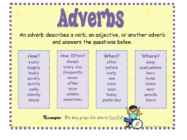
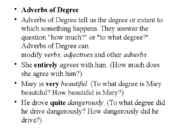
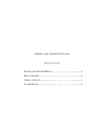
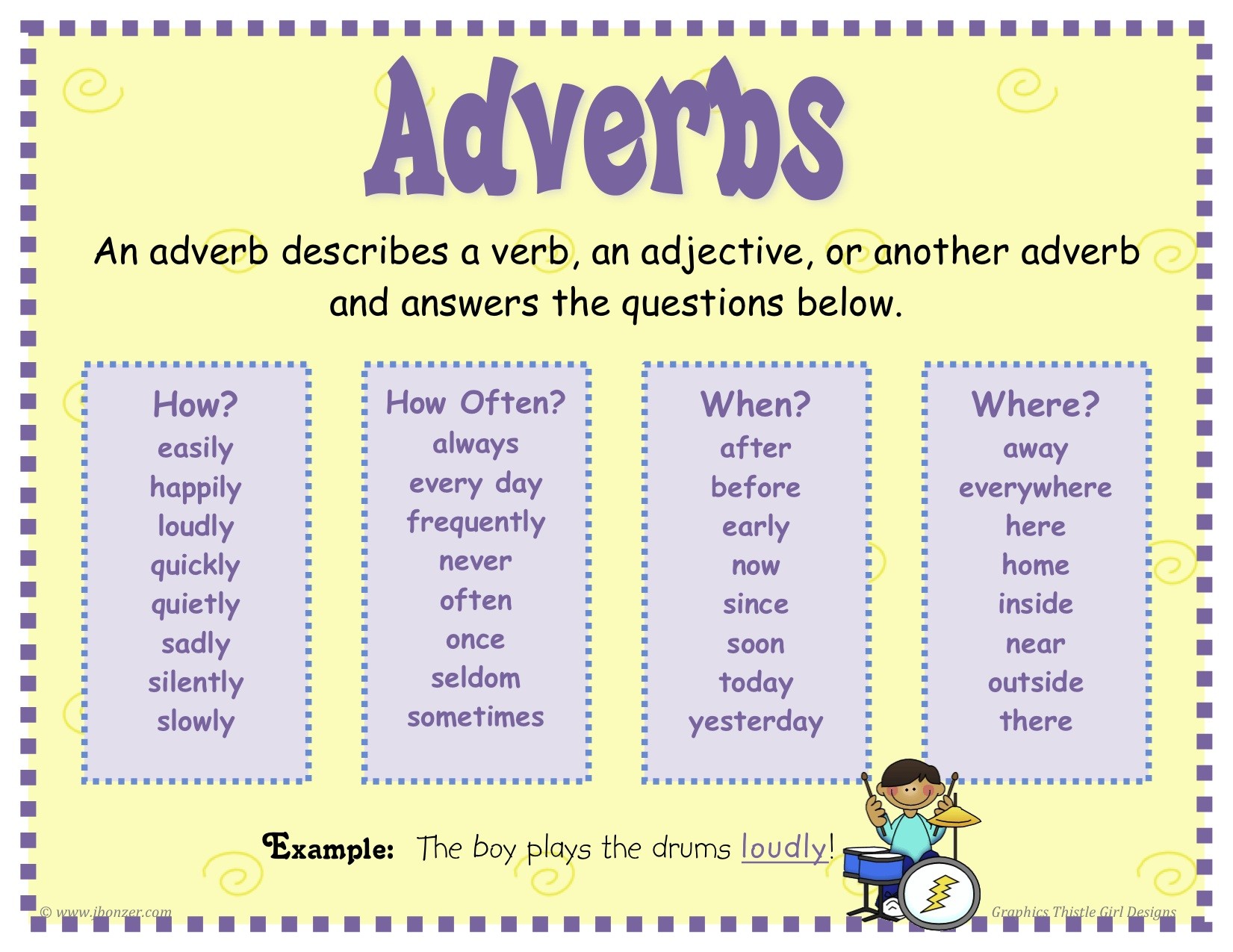
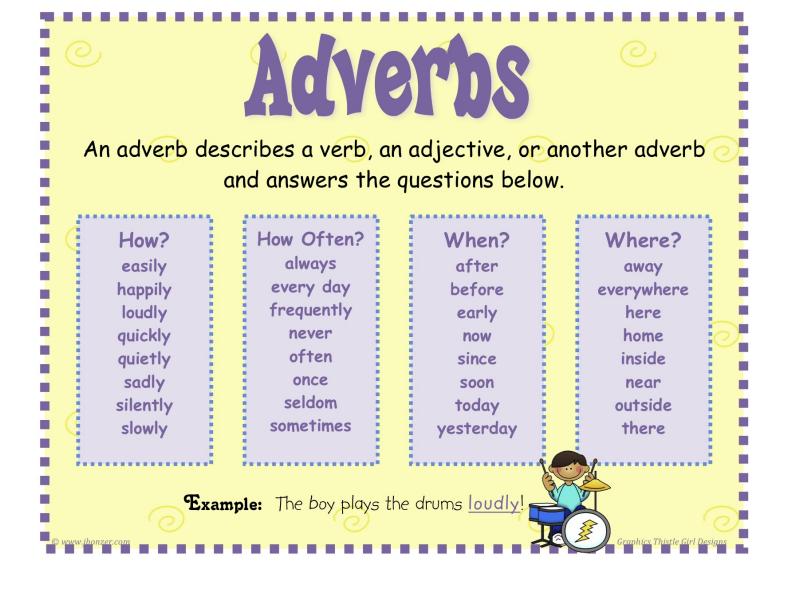
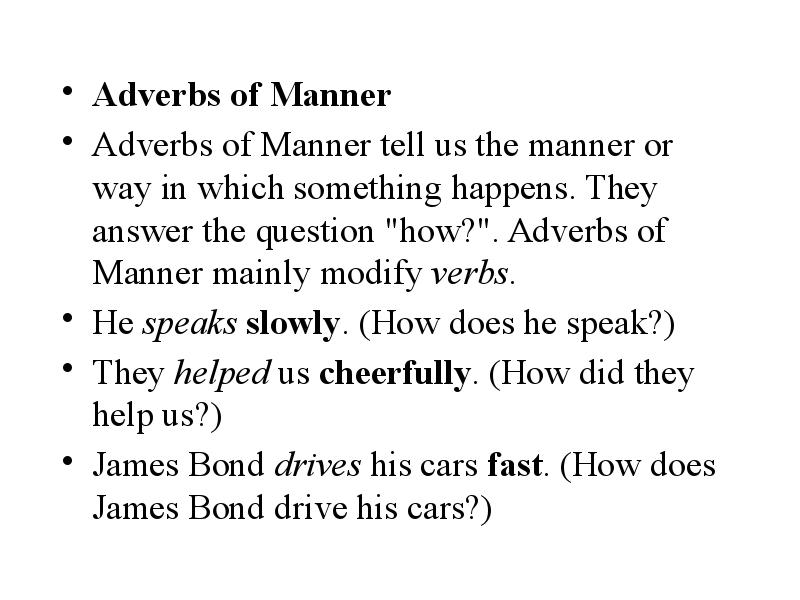
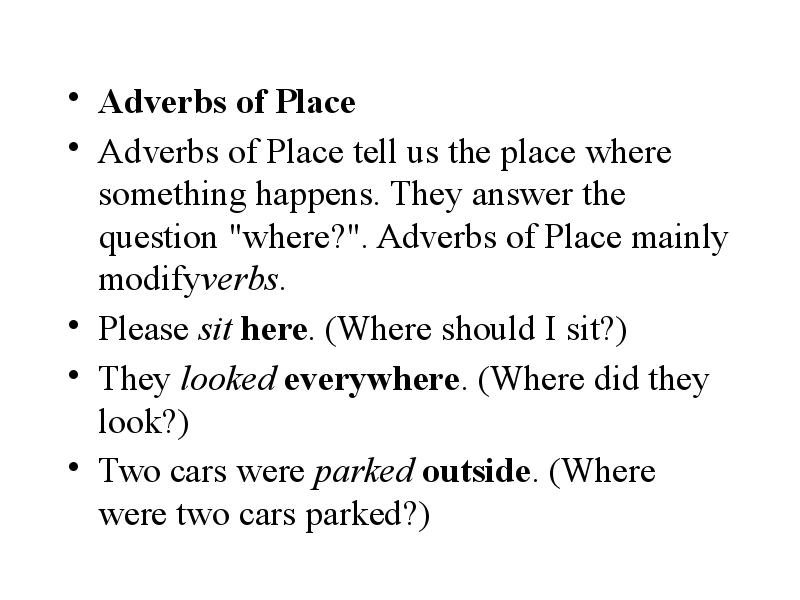
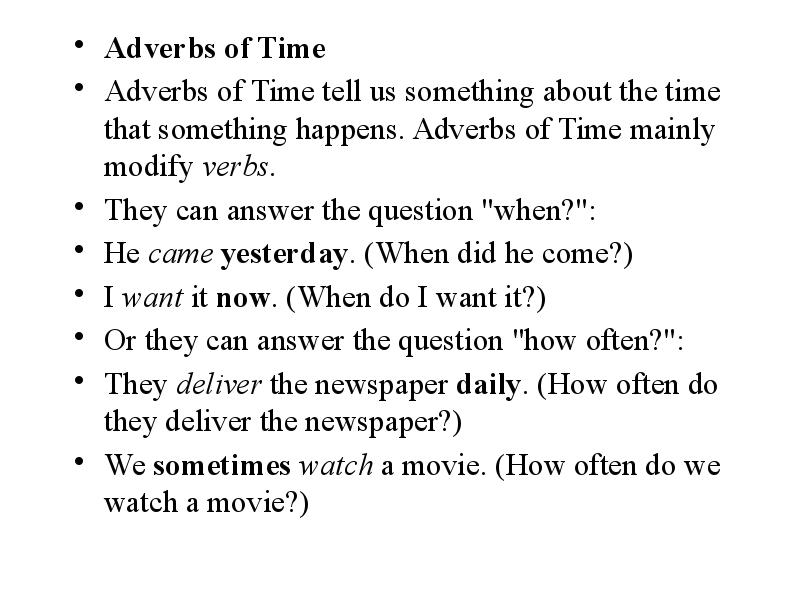
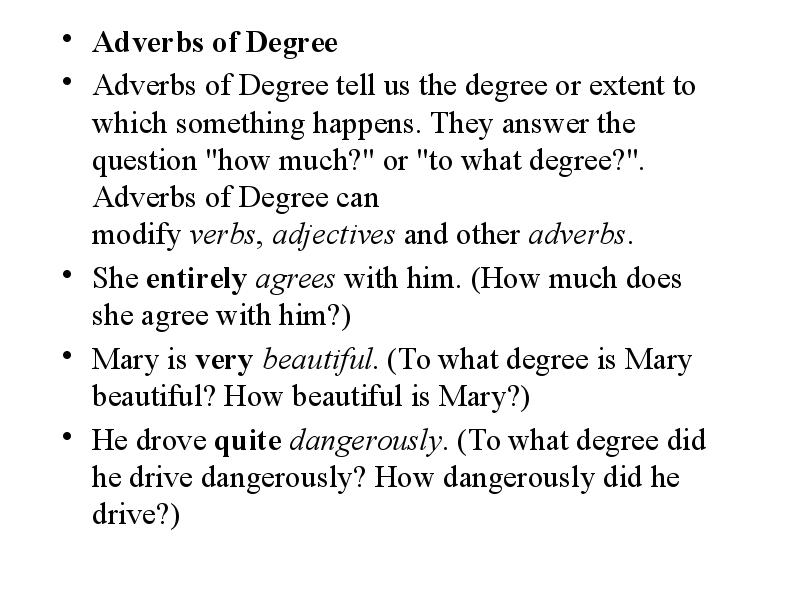
Adverbs and Adverbial Phrases Table of Contents Adverbs and Adverbial Phrases ........................................................... 2 Types of Adverbs ..................................................................................... 2 Position of Adverbs.................................................................................. 4 Yet, still, already ....................................................................................... 6 Adverbs and Adverbial Phrases An adverb describes a verb, an adjective, another adverb or a whole sentence. Adverbs can be divided according to the information that they give. Types of Adverbs 1. Some adverbs tell us how somebody does something or how something happens
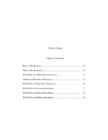
Word Order Table of Contents Types of Sentences ..................................................................................2 Parts of the Sentence ..............................................................................2 Word Order in Affirmative Sentences ...................................................3 Position of Adverbs of Frequency .........................................................5 Word Order in Negative Sentences......................................................6 Word Order in General Questions.........................................................7 Word Order in Special Questions ..........................................................8 Word Order in Subject Questions ..........................................................9 Types of Sentences
grammatical shape of the word, the meaning of the word stays the same. For example: consider, considered, considers. Open class words (content words) → These are the word classes that take in new words, for example by adding affixes to them or borrowing words from other languages. In English these words are most commonly nouns, verbs (not auxiliaries), adjectives and adverbs. Closed class words (function words) → These are words that do not take in any new words. In English the word classes are prepositions, pronouns, determiners and conjunctions. Syntax is the study of how sentences are formed in a language. For example what is the word order ( in English it’s usually subject, verb object) or how words relate to
Grammar is a very old field of study. Did you know that the sentence was first divided into subject and verb by Plato, the famed philosopher from ancient Greece? That was about 2,400 years ago! Ever since then, students all over the world have found it worthwhile to study the structure of words and sentences. Why? Because skill in speaking and writing is the hallmark of all educated people. Lesson by lesson, this book provides basic instruction in the eight parts of speech--nouns, pronouns, verbs, adjectives, adverbs, prepositions, conjunctions, and interjections--as well as the standard patterns of English sentences. All students of English, be they native speakers or those who are studying English as a second language, will profit from the fundamental introduction and review of grammar provided by SADDLEBACK'S BASIC ENGLISH GRAMMAR 1 and 2. Helpful marginal notes throughout the books have been provided to reinforce existing skills and call attention to common problem areas.
consider, considers, considered Open vs. Closed class words: In linguistics, a closed class (or closed word class) is a word class to which no new items can normally be added, and that usually contains a relatively small number of items. Typical closed classes found in many languages are adpositions (prepositions and postpositions), determiners, conjunctions, and pronouns.[1] Contrastingly, an open class offers possibilities for expansion. Typical open classes such as nouns and verbs can and do get new words often, through the usual means such as compounding,derivation, coining, borrowing, etc. [2] Syntax: studies how words group together to make phrases and sentences. Sentences are not simply random strings of words; they conform to specific patterns determined by the syntactic rules of the language. The syntactic rules in a grammar must account for the grammaticality of sentences, word
Word order: positive sentences subjects verb(s) object I speak English. I can speak English. Negative sentences subject verbs Indirect object Direct object place time I will not you the story at Tomorro tell school w. Subordinate Clauses conjunction subject verb(s) Indirec Direct place time t object object
.., the last Continuous speaking. certain time in the future couple of hours, N: He will not have all day long been speaking. · putting emphasis on the Q: Will he have been course of an action speaking? Note: we use continuous tenses only for actions and happenings (e.g. they are singing/ it is snowing). Some verbs are not action verbs (e.g. know, like). You cannot use continuous tenses with the following verbs: like love hate want need prefer know realise suppose mean understand believe remember belong contain consist depend seem 4 The following verbs are usually only used in Simple Present (not in the continuous form). state: be, cost, fit, mean, suit Example: We are on holiday. possession: belong, have Example: Sam has a cat.
It is less personal than the active. Tense Active Passive present simple I think it is thought present we are discussing it is being discussed continuous present perfect the boss has said it has been said past simple John called a meeting a meeting was called future I will refer to this later this will be referred to later Personal pronouns Active verbs use more personal pronouns: I think ... We are working on ... Be careful not to overuse I. We is a good alternative for talking about companies: We will launch the product in June. Reference to the audience As I'm sure you know ... We have all experienced ... You may remember ... As I'm sure we'd all agree ... Everyday language Using slang and everyday expressions can make an impact on the audience and add drama: Where's the caring side of employment gone? I'll tell you where
 annaabi.ee











Kõik kommentaarid