 10 punkti
Autor soovib selle materjali allalaadimise eest saada 10 punkti.
10 punkti
Autor soovib selle materjali allalaadimise eest saada 10 punkti.
 ~ 1 leht
Lehekülgede arv dokumendis
~ 1 leht
Lehekülgede arv dokumendis
 2013-01-27
Kuupäev, millal dokument üles laeti
2013-01-27
Kuupäev, millal dokument üles laeti
 21 laadimist
Kokku alla laetud
21 laadimist
Kokku alla laetud
 0 arvamust
Teiste kasutajate poolt lisatud kommentaarid
0 arvamust
Teiste kasutajate poolt lisatud kommentaarid
 gdjgdg gdjdg
Õppematerjali autor
gdjgdg gdjdg
Õppematerjali autor
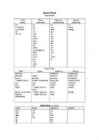
DERIVATION (tuletamine) Verb Noun Adjective Adverb (öeldis) (nimisõna) (omadussõna) (määrsõna) -en -er -en -ly -fy (beauty -or -cal nicely beautify) -ist -able cruelly -ate -ics -less -ize/ ise -ism -al -ion -ed -ation -ent -ing -ant -ness -ful -let -ie -ment -ish -ee (employee) -ive -dom -ous -ence -y -ance
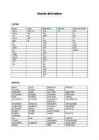
Words derivation LÕPUD: Noun Verb Adjective Adverb Prefix & Sufix -ation -ise/-ize -ing -ly dis- -ence -en -ive ir- -ion en- -able im- -ance -ate -y -il -age -fy -ed in- -er -ical un- -ing -ant over- -ness -ent out- -ity -en under- -ition -ous -ment -ful -hood -ible -ship -less -ist -al -ics
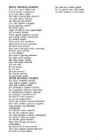
PREFIX- MEANING- EXAMPLE Ize- make into- sterilize, satirize A, in, on, of, up, to- ablaze, atop Ly- in a specific way- softly, kindly Circum- around- circumference Ity- state, condition, civility, acidity In- in, into, within- inhabit Post- after, following, later- postscript Sub- under, below- submerge Ab- from, off, away- absent Con- with, together- congregate In- not, opposing- insincere Pre- before- prefix Super- over, above, extra- superabundant Ad- to, toward- advance Contra- against, opposing- contradict Inter- among, between- international Pro- foward- proceed Trans- across, over- transfusion Ante- before, previous- antecedent De- down, from- descend Intra, intro- to the inside, within- intramural Re- back, again- rebound Un- not- unhappy Anti- against, opposing- antifreeze Dis- apart, away- disappear Mis- badly, wrong- mistake Semi- half, partly- semicircle Uni- one- unity Bi- two- bicycle Ex- out- exit Non- not- nons
INGLISE KEEL Sisukord Sisukord 2 Ajavormid Tense vorms 3 Lihtolevik The present simple 3 Lihtminevik The past simple 3 Lihttulevik The future simple 3 Kestev olevik The present continuous 3 Kestev minevik The past continuous 4 Kestev tulevik The future conrinuous 4 Täisminevik The present perfect 4 Enneminevik The past perfect 4 Ennetulevik Future perfect 5 Üldminevik Past tense 5 Üldtulevik Future indefinite 5 Artiklid ja eessõnad 7 Eessõnad 7 Kesksõnad 8 Prefiksid ehk eesliited 8 Sufiksid ehk jär
INGLISE KEEL Sisukord Sisukord.................................................................................................................................. 2 Ajavormid Tense vorms.......................................................................................................3 Lihtolevik The present simple..................................................................................... 3 Lihtminevik The past simple....................................................................................... 3 Lihttulevik The future simple...................................................................................... 3 Kestev olevik The present continuous......................................................................... 3 Kestev minevik The past continuous........................................................................... 4 Kestev tulevik The fut
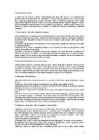
lies in using and appretiating the lg more conciously. There is diachronic (historical) L that studies origin and development; syncronic studies voc at a given historical period. There are general L (studies words disregarding particular features of any particular lg); special L (studies specific features of a separate lg, there is Engl that bases on general L); contrastive (compares vocabularys in different languages). 2. Connection of L with other linguistic disciplines a) the word performes a certain grammatical function (nt, he always misses the class, how many misses are there; the girl powders her nose, soliders face powder)In speech words are combined according to grammatical rules. The plural of nouns may carry a new meaning (nt, arms-weapons, looks-appearance, works-plant) b)connected with phonetics. The meaning of a word is expressed by sounds and it depends on the order of sounds(spoonerism)
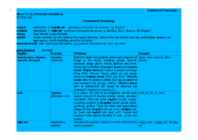
1 Grammatical Terminology PRACTICAL ENGLISH GRAMMAR FLGR.01.042 Grammatical Terminology analytic analüütiline (= uninflected - grammar is focused in the sentence , e.g. English) synthetic sünteetiline (= inflected - grammar is focused in the word, e.g. Estonian, Latin, Russian, Old English) ending lõpp (käände- ja pöördelõpud) marker tunnus (mitmuse, oleviku, lihtmineviku, tingiva kõneviisi, käskiva kõneviisi, kaudse kõneviisi, umbisikulise tegumoe, ma- tegevusnime, oleviku kesksõna, mineviku kesksõna) derivational affix liide, tuletusliide, tuletusafiks (e.g. postwar, anti-American, wiser, greenish) parts of speech sõnaliigid
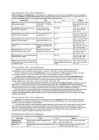
Sõnavara päritolu. Põlis, laen ja tehissõnad Põlis ehk genuiin ehk genuiinne tüvi on vana oma keele tüvi, mida pole ära tuntud kui laenu kuskilt mujalt. Soomeugri keeleteadus on põlis ehk genuiin ehk genuiinses tüvevaras eristanud järgmised päritolurühmad (kolmandas lahtris on H. Rätsepa arvutused, kus küsitava etümoloogiaga sõnad on eri hüpoteeside põhjal arvatud korraga mitmesse rühma): Päritolurühm Aeg Arv Näiteid uurali tüvevara (kaugeimad vasted vähemalt uurali algkeelest (aegade 104119 tüve ela, ema, jõgi, kaks, kala, ühes samojeedi keeles) hämarusest IV aastatuhan keel, kõiv, nimi, ole, puu, deni e.m.a) päev, vesi soomeugri tüvevara
 annaabi.ee






Kõik kommentaarid