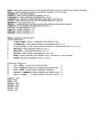
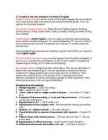
4. Ottava rima 8 iambic pentametres (5 feet): a b a b a b c c. 5. Rhyme Royal 7 iambic pentametres (5 feet): a b a b b c c. 6. Terza rima written in triplets iambic pentametres: aba bcb cdc. 7. Sonnet 14 iambic pentametres (5 feet), difference (Italian Shakespearean) is a matter of rhyme. 8. Limerick funny poem of 5 anapaestic lines (x x /): a a b b a. 5 kinds of feet in English verse: 1. iambic iambus (1 unstressed and 1 stressed syllable) x / 2. trochaic trochee (the stressed syllable is followed by the unstressed one) /x 3. dactylic dactyl (1 stressed syllable is followed by 2 unstressed) /xx 4. amphibrachic amphibrach (1 stressed syllable between 2 unstressed ones) x / x 5. anapaestic anapaest (2 unstressed syllables followed by 1 stressed) xx/ monometer - 1 foot; dimetre - 2 feet; trimetre - 3 feet;
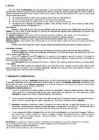
Texts: [t-e-k-s-t-s]- (Consonant, Vowel, Consonant, Consonant, Consonant, Consonant). Strong syllables - has as its nucleus one of the vowel phonemes but not "schwa" Weak syllables has 4 types of nucleus 1) the vowel ,,schwa" 2) a close front unrounded vowel in the general area of i: and ý 3) a close back unrounded vowel in the general area of u: and 4) a syllabic consonant Close front vowels occur in word-final weak syllables (as in happy), weak initial syllables (as in react) and in unstressed personal pronouns (be, the), when preceding a vowel. NB. i: or ý, as in ,,easy, busy", is transcribed as i Close back vowels occur in unstressed syllables, when not preceding a consonant (you, to, into, do) and in unstressed syllables in all positions (through, who). NB. u: or , as in ,,food to eat", is transcibed as u ,,schwa" - is a reduced vowel that is in weak syllables only, and it's sound quality is mid and central. E.g. carrot, perhaps, attend.
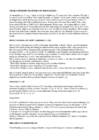
who were skilful and highly trained · In a soliloquy the actor's alone on the stage, speaking to himself and revealing to the audience his inner thoughts and feelings · In an aside the actor speaks words that the other characters on stage are not supposed to hear Sonnet · A sonnet (from the Italian fot ,,little song") is a fourteen-line lyric poem with a fixed rhyme pattern and a regular rhythm, or predictable pattern of stressed and unstressed syllables called metre · The basic unit of metre is foot which usually contains one stressed syllable and one or two unstressed syllables · The usual metre of a sonnet is iambic pentameter · The English sonnet (Shakespearean sonnet) differs from the Italian one on its structure · The Italian sonnet has 2 four-line and 2 three-line stanzas, the English sonnet divides into three quatrains, or groups of four lines, and a rhymed couplet, or a pair of lines
Modifications of metre Metre (Greek metron--measure) forms the structural background of classical poetry, it is also called measured speech. English metre is a combination of the number of syllables and the number of stresses regularly occurring throughout poetic lines. It depends on 2 factors: · The stressing of syllables · The number of stressed syllables to a line English metre us nothing more than rhythmic parallelism: a patterning of the succession of stressed and unstressed syllables with greater regularity than is necessary for spoken English in general. Prosody is the science of versification that studies the laws of metre. Foot is a combination of one stressed and one or two unstressed syllables. The number of syllables to a foot may be either 2 or 3 and one of them must be stressed. Monometer, dimeter, trimeter, tetrameter, pentameter, hexameter, heptameter, octameter (a line of ... feet) 5 major kinds of feet in English poetry:
2. RP - Accent which is normally taught to students who are studying EngEng. Used natively by only 3-5% of the population of England. RP has a large number of diphthongs and not a particularly close relationship to English orthography. RP is a social accent, rather than regional, and is associated particularly with the upper-middle and upper classes. Some features: · The /i:/ of bee, rather than the // of be, occurs in the final syllable of very, many, etc. · The vowel // in unstressed syllables (in RP) often corresponds to // (in near-RP accents). · The consonant /t/ may be realized as a glottal stop [?]. · Most EngEng accents have lost the original contrast. · Some English accents are ,,rhotic" or ,,r-ful" and others are ,,non-rhotic" or ,,r-less". 3. Estuary English - a dialect of English widely spoken in South East England. IT is commong among young Londoners. Something between RP and Cockney. Some features: · Non-rhotic
In the author's narrative they rather suggest humour or irony. 14. METRE IN ENGLISH POETRY Metre (from Greek "measure") forms the structural backbone of classical poetry. The laws of metre are studied by prosody (science of versification). English metre is a combination of the number of syllables and the number of stresses regularly occurring throughout poetic lines. Metrical patterns: in a line stressed and unstressed syllables cling to each other forming a foot (the number of syllables can be 2 or 3, but not less than 2 or more than 3; and the one syllable must be stressed). There are 5 kinds of feet in English verse: verse 1. iambic iambus (1 unstressed and 1 stressed syllable), 2. trochaic trochee (the stressed syllable is followed by the unstressed one), 3
Grimm himself already noticed that there were many words that had different consonants from what his law predicted. These exceptions defied linguists for a few decades, but eventually received explanation from Danish linguist Karl Verner in the form of Verner's law. VERNER'S LAW Verner's law, stated by Karl Verner in 1875, describes a historical sound change in the Proto- Germanic language whereby voiceless fricatives *f, *, *s, *h, *h, when immediately following an unstressed syllable in the same word, underwent voicing and became respectively the fricatives[1] *b, *d, *z, *g, *g. Significance: Karl Verner published his discovery in the article "Eine Ausnahme der ersten Lautverschiebung" (an exception to the first sound shift) in Kuhn's Journal of Comparative Linguistic Research in 1876, but he had presented his theory already on 1 May, 1875 in a comprehensive personal letter to his friend and mentor, Vilhelm Thomsen.
hurry hurried copy copied 3. If a one-syllable verb ends with one vowel and one consonant, we double the consonant. beg begged plan planned We also double the consonant in words of more than one syllable, if the last syllable is stressed. permit permitted prefer preferred In British English l is usually doubled, even if the syllable is unstressed. travel travelled When to use the Past Simple Past Simple generally refers to: • Completed or finished actions I got up, switched off the radio, and sat down again. • Habits Every day I went to the park. • States In those days, I didn't like reading. 3 Past Continuous The Past Continuous is the past tense of be + an -ing-form.
tetrametre 4 feet pentametre 5 feet hexametre 6 feet septametre 7 feet octametre 8 feet MODIFICATIONS OF METRE * pyrrhic foot v v * spondee / / * rhythmic inversion /v|v/| v/ (trochee in iambic line or vise versa) *catalectic line the last syllable is stressed, unstressed id missing *hypermetric line the last syllable is unstressed, stressed is missing METRE IN ENGLISH POETRY ("Rhythm and Text") FGI 1081 Stylistics (I. Ladusseva) 25 Metre (from Greek "measure") forms the structural backbone of classical poetry. The laws of metre are studied by prosody (science of versification). English metre is a combination
· Main qualities: somberness, awareness of inevitable death. Formal features of A-S poetry: 1. No rhyme, instead they used alliteration; A-S poetry is alliterative. (Alliteration the repetition of the same consonants in a line); 2. Every line contains a caesura a pause in the middle of a line; 3. In every half-line there are two stressed syllables, so all in all, 4 in a line; 4. The number of unstressed syllables is not fixed; 5. There is no rhyme; 6. There are very few similes (a direct comparison, i.e your hair is like gold), in Beowulf there are 5 similes; 7. On the other hand there are many metaphors, typically A-S metaphors kennings (a special type of metaphor comprised of two words, i.e swan-road the sea; the bone- house the body; sword-game war; Beowulf bee + wolf = bear) 8
lie lying But only -y does not change hurry hurrying 3 If a one-syllable verb ends with one vowel and one consonant, we double the consonant. win winning put putting 5 We also double the consonant in words of more than one syllable, if the last syllable is stressed. permit permitting prefer preferring In British English l is usually doubled, even if the syllable is unstressed. travel travelling When to use the Present Continuous The Present continuous generally refers to: · Actions which are in progress at the moment. These can be temporary: I'm staying in a hotel until I find a flat. They can be actually in progress: The dog is sleeping on our bed! Or they can be generally in progress but not actually happening at the moment: I'm learning to drive.
Yogh-letter (cf yoke Estonian "ike") modified Latin g. Probably stood for several sounds starting with /j/ up to /g/. Prefix ge probably · not stressed · yokh-letter stood for /j/. Reasons for surmising this: 1. The prefix is still there in German (Past Participle, e.g. gehen, ging. gegangen). It is not stressed in German. 2. The prefix was lost during the Middle English times (geholpan holpen), it is easier to drop unstressed syllables. 3. The middle version was /i/ (spelt in Middle English as y): y-ronne (run Past participle). More logical that /je/ turns into /i/ than that /ge/ turns into /i/. Modern English still had the obsolete form "yclept" so-called. C stood for /k/, except when there was a dot on it then it stood for /kj/ which later turned into /tS/ in the Southern part of Britain, but not in the Northern part. Cf irie church, but in Scottish English (i.e
(nt, ad, advertisment; siss, sister; doc, doctor). Are usually colloquial. If the shortened form is used more often than the long form, it becomes neutral (nt, phone, telephone). Abbr. Types of shortening: *initial shortening- means dropping the first part (nt, telephone, phone) *final shortening- second part dropped (exam, examination) *acronyms- words made up of initial letters (nt, USA, WC) *ellipsis- shortening an expression (nt, bub, public house) *syncope-dropping unstressed syllables in the middle of the word(mathS, mathematics) 13. Blending it is joining 2 stems and dropping points of both(nt, smog smoke plus fog, fringlish- french plus engl, motel- motorists plus hotel)It operates in colloquial engl. It is concidered a minor word building type. Yet new words appear today as well and it is quite productive. Blends began to appear in the 14th century. Nowadays blends are popular in newspapers and advertisments. 14. Words from the historical point of view.
The language is one of the six official languages of the United Nations. Russian is also the second most widespread language on the Internet after English. Russian distinguishes between consonant phonemes with palatal secondary articulation and those without, the so-called soft and hard sounds. Almost every consonant has a hard or a soft counterpart, and the distinction is a prominent feature of the language. Another important aspect is the reduction of unstressed vowels. Stress, which is unpredictable, is not normally indicated orthographically. though an optional acute accent ( , znak udareniya) may be used to mark stress, such as to distinguish between homographic words, for example (zamók, meaning a lock) and (zámok, meaning a castle), or to indicate the proper pronunciation of uncommon words or names. The standard form of Russian is generally regarded as the modern Russian literary language ( ). It arose in the beginning of the 18th century
 annaabi.ee