 50 punkti
Autor soovib selle materjali allalaadimise eest saada 50 punkti.
50 punkti
Autor soovib selle materjali allalaadimise eest saada 50 punkti.
 ~ 7 lehte
Lehekülgede arv dokumendis
~ 7 lehte
Lehekülgede arv dokumendis
 2015-03-10
Kuupäev, millal dokument üles laeti
2015-03-10
Kuupäev, millal dokument üles laeti
 2 laadimist
Kokku alla laetud
2 laadimist
Kokku alla laetud
 0 arvamust
Teiste kasutajate poolt lisatud kommentaarid
0 arvamust
Teiste kasutajate poolt lisatud kommentaarid
 mina olen
Õppematerjali autor
mina olen
Õppematerjali autor
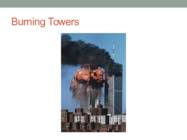
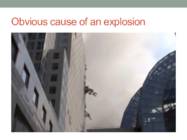
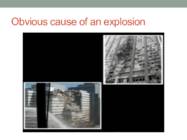
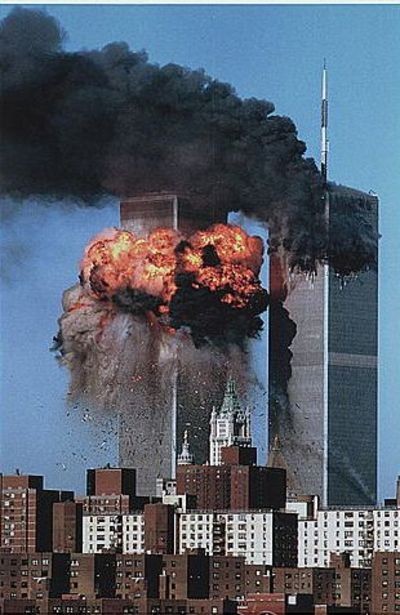
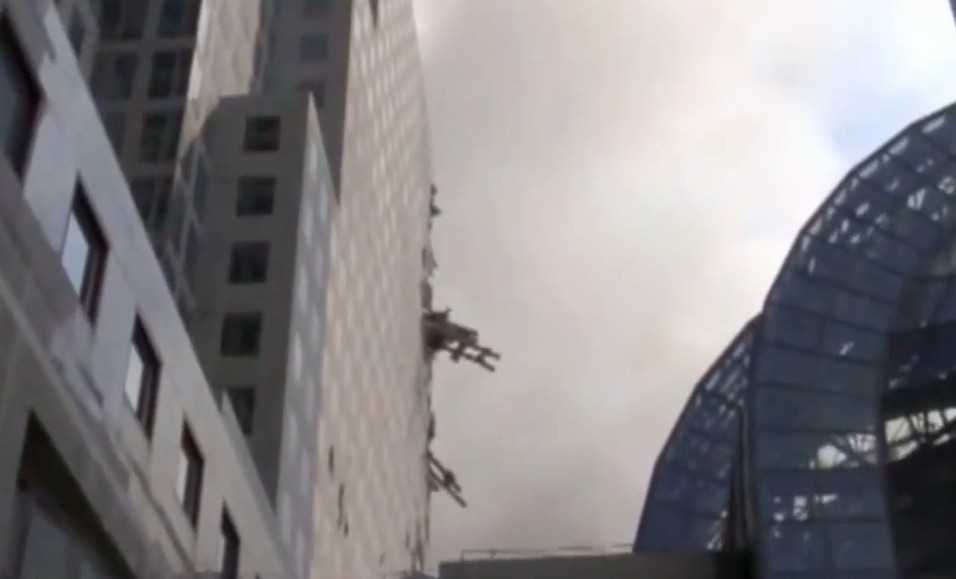
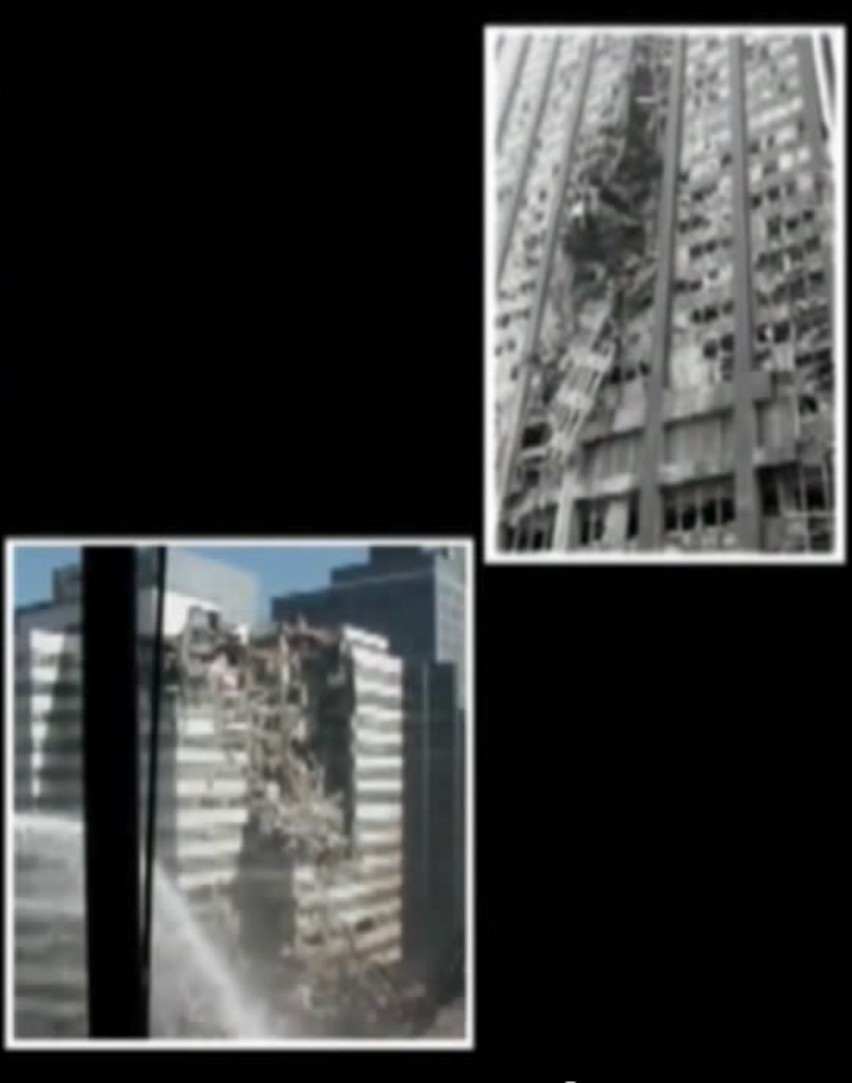
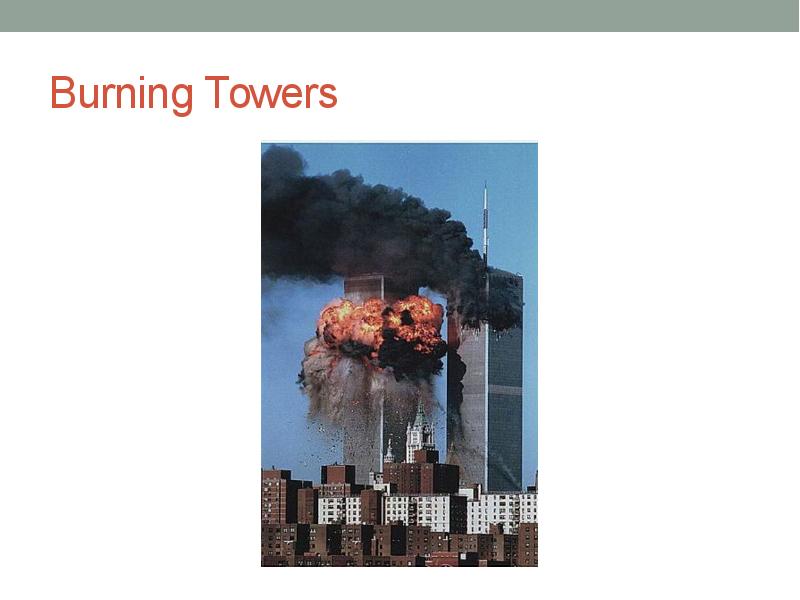
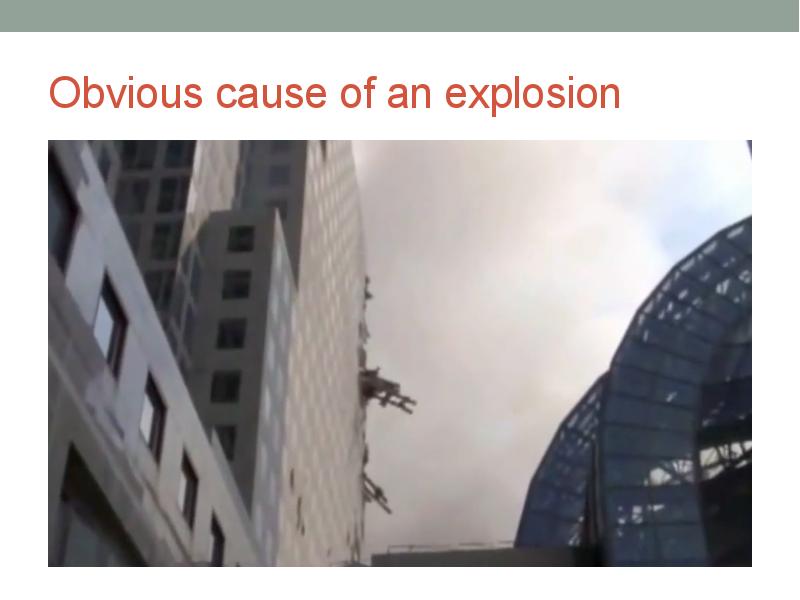
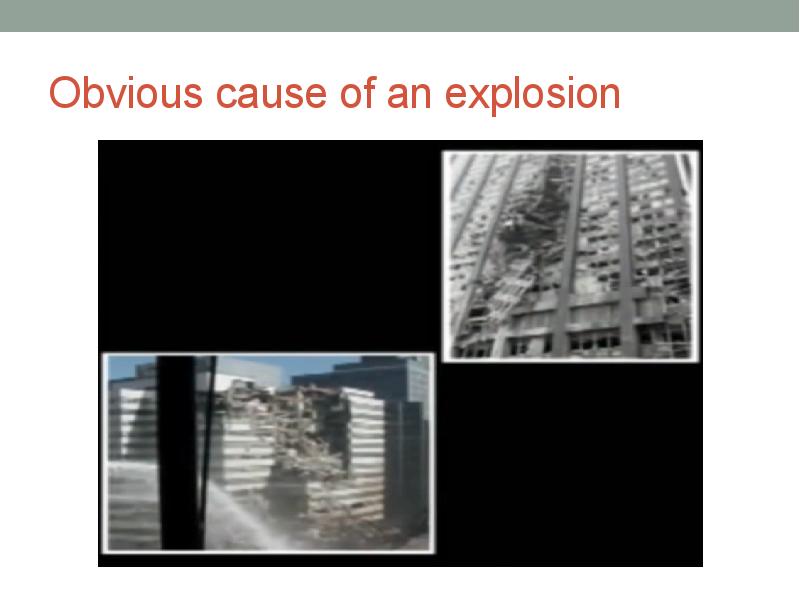
Cooling: 60,000 tons of cooling capacity Antenna: 360 feet high Capacity: 50,000 Employees Satellite Photo - Lower Manhattan WTC Manhattan Prior to Attack WTC Looking Up AA Flight 11 Boston to LAX Hit the North Tower at 8:45 AM United Flight 175 Boston to LAX Hit the South Tower at 9:03 AM Flight Paths of Attack UAL Flight 175 Hitting South Tower AA Flight 11 Hit the North Tower Satellite Photo of NY & NJ Smoke from Burning Towers South Tower Blast Both Towers - Burning From Brooklyn Bridge From Empire State Building South Tower Collapsing Falling Bodies Lone Man - Fleeing Avalanche Car on its End WTC Bldg # 7 Skyline Before & After Attack God Bless America I am certain that, however great the hardships and the trials which loom ahead, our AMERICA will endure and the cause of human freedom will triumph...
Tartus secondary school of business Nuclear Power Helena Nulk form 11b Tartu 2009 Table of contents Introduction..........................................................................................................................................3 What is nuclear power?....................................................................................................................3 Nuclear life cycle.............................................................................................................................3 What is nuclear energy?...................................................................................................................3 What is nuclear fusion?....................................................................................................................4 What is nuclear fission?..................................
nearly eight centuries. Chinese bridge builders experimented with forms and materials, perfecting their techniques. Selected examples, found in the countryside and parks, may be candidates for World Heritage listing. Other fine bridges survive in Iran, such as the Bridge of Khaju at Isfahan (1667), with eighteen pointed arches, carrying an 85ft (26m) wide roadway with walled, shaded passageways, flanked by pavilions and watch towers. This magnificent bridge, combining architecture and engineering in splendid functional harmony, also served as a dam, and included a hostelry where travellers found cool rooms for rest and refreshment after hot desert crossings (Figure 3). Picturesque bridges, such as the Kintaikyo at Iwakuni (1673), with its five wooden arches intricately wedged, slotted, and dovetailed together, are found in Japan. The superstructure of this bridge has
SISUKORD ENERGY STORY................................................................................................................4 USES OF ENERGY............................................................................................................. 4 2.1 Uses of energy in homes...............................................................................................5 2.2 Types of energy used in homes.................................................................................... 6 2.3 Energy use in different types of homes........................................................................ 6 2.4 Commercial Energy Use...............................................................................................9 2.5 Industrial and Manufacturing Energy Use..................................................................11 2.6 Transportation Energy Use.........................................................................................12 RENE
The star had exploded just a minute or so after the burst, but most of its energy was invisible ultraviolet and x-ray radiation. Its visible light had brightened more slowly, and now it was finally outshining the afterglow. For the first time, astronomers had seen a gamma-ray burst evolve into a supernova from the very beginning. Eighteen days after the supernova flared into view, astronomers were still watching. Atop Palomar Mountain in southern California, the observatory dome's twin shutters slid open under patchy clouds, letting a sliver of night sky fall onto the caged mirror of the 200-inch (508- centimeter) Hale Telescope. Caltech astronomer Avishay Gal-Yam had two hours before the supernova would dip too low in the sky for the telescope to see it. Still more luminous than a billion suns, the supernova outshone the combined light from all the stars in its home galaxy, glowing white-hot from the radioactive decay of unstable nickel atoms forged in the explosion
Acid Rain Acid rain is any precipitation that is unusually acidic. It possesses elevated levels of hydrogen ions(it has low pH level). Acid rain is caused by emissions of carbon dioxide, sulfur dioxide and nitrogen oxides, which react with water molecules. Distilled water(doesn't contain CO 2), has pH level 7. Liquids with pH level less than 7 are acidic, liquids with pH level greater than 7 are alkaline. Unpolluted rain has a pH level over 5.7, so it is slightly acidic. Affected areas Places significantly impacted by acid rain around the globe include most of eastern Europe from Poland northward into Scandinavia, the eastern third of the United States and southeastern Canada. Other affected areas include the southeastern coast of China and Taiwan Causes · It is caused when sulfur dioxide and nitrogen oxides are released into the air. In the atmosphere they react with water, oxygen and other chemic
EHITUSTEADUSKOND Ehitustootluse instituut KUIDAS MUUDAB MUDELPROJEKTEERIMINE TERASKONSTRUKTSIOONIDE PROJEKTEERIMIST, VALMISTAMIST JA EHITAMIST? HOW ARE 3D AND BIM CHANGING THE DESIGN, FABRICATION AND CONSTRUCTION OF COMPLEX STEEL STRUCTURES? EPJ 60 LT Üliõpilane: Tanel Friedenthal Juhendaja: Prof. Roode Liias Kaasjuhendaja: Prof. Carrie S. Dossick Tallinn, 2010.a. Olen koostanud lõputöö iseseisvalt. Kõik töö koostamisel kasutatud teiste autorite tööd, olulised seisukohad, kirjandusallikatest ja mujalt pärinevad andmed on viidatud. …………………………………………….. (töö autori allkiri ja kuupäev) Üliõpilase kood: 041399 Töö vastab magistritööle esitatud nõuetele …………………………………………?
to be more expensive than other sources (see Economics of new nuclear power plants, Clean coal, and Carbon capture and storage). In 2004, wind energy cost one-fifth of what it did in the 1980s, and some expected that downward trend to continue as larger multi-megawatt turbines were mass-produced. However, installed cost averaged 1,300 per kilowatt in 2007,compared to 1,100 per kilowatt in 2005. Not as many facilities can produce large modern turbines and their towers and foundations, so constraints develop in the supply of turbines resulting in higher costs. Research from a wide variety of sources in various countries shows that support for wind power is consistently between 70 and 80 percent amongst the general public. Global Wind Energy Council (GWEC) figures show that 2007 recorded an increase of installed capacity of 20 GW, taking the total installed wind energy capacity to 94 GW, up from 74 GW in 2006
 annaabi.ee














Kõik kommentaarid