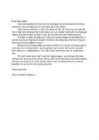
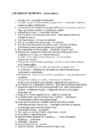
Dear Jane Smith, I am writing behalf of our team to apologize for inconvenience we have caused. It was our fault and we are really sorry about this. Your camera arrived on time, but when we did the checking, we realised that it had been damaged for some reason, so we couldn't send you the damaged camera and due to that we had to wait for the next delivery from suppliers. In order to make the delivery of the new camera faster we decided that, it will be sent as an Express Delivery tomorrow. We assure you that this time you will receive your camera on time. Because of this long delay we want to make it up to you for being a good customer. As a compensation we are going to give you a free carry case and three films as a compensation. For more, your next order will be completely free. We will assure you, that it will not happen again, we sill hope that you will use our services in the future. If you h...
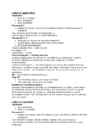
be replaced. I would appreciate it if you could look into this matter as soon as possible. I hope that this matter can be resolved/dealt with promptly. I look forward to your reply on the matter. Sign-of Yours faithfully – if you don’t know the name Yours sincerely – if you now the name Style Formal language: no slang, foul language, informal words, contractions. This is a piece of academic writing. Clear paragraphs (indented lines OR block style) Transactional letters/letter of inquiry Transactional letters require a reply which may be based on advertisements, other writing input, letters, etc. For example, a letter which is asking for further information about summer camp based on an advertisement. Use an appropriate style. Include all the factual information provided, using your own words. Write in more detail about at least half of them and mention everything.
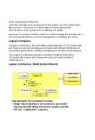
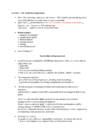
·May not just be disk but can include battery-backed RAM or Flash RAM. Transaction Commands ·Begin: Start a new transaction. ·Commit: End a transaction. Store changes made during transaction. Make changes accessible to other transactions. ·Abort(sometimes also referred to as rollback or undo): End a transaction. Undo all changes made during the transaction. 20. Flat and Nested Transactions FLAT ·In a flat transaction a transactional client issues begin transaction, commit transaction or abort transaction commands. ·The transaction is successfully completed if it reaches the commit statement. ·The transaction is not completed if it is either explicitly aborted by the transactional client (if it encounters an inconsistency that cannot be reconciled) or it is implicitly aborted if a system failure occurs and it does not reach the commit.
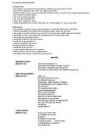
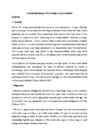
Formal transactional letter Complaining: I am writing to you about (several problems related to my city break in June). I have been waiting for (two weeks for replay to my letter). To make matters worse, (we were informed that there was no record of our cheque being cashed). I am writing to complain about... I am sorry to inform you that... I was very disappointed with... I have some complaints about... I would be grateful if you could (refund the cost of the holiday as soon as possible.) Requesting: I am writing in response to (your advertisement in The Daily Standard on July 20th) I would be grateful if you could (send me further details about the position) I am writing to enquire whether (you colud let me have further details about the holiday) I would like to know more about (the arrangements for the evening meal) I am writing for information about... I would like to learn/ know more about... I would like to ask whether/ if... I w...
koostööd 15. Competitive salary according to the results achieved – konkurentsivõimeline tulemuspalk/ vastavalt töötulemustele 16. foundation for sustainable business – alus jätkusuutlikule ettevõttele 17. broad development and learning possibilities under professional leaders – laialdased arengu- ja õppevõimalused asjatundjate juhendamisel 18. long-term income opportunities – stabiilne sissetulek 19. operating high volume transactional systems – toimetulek mitmekülgsete ülekandesüsteemidega 20. Experience working in a global setting and with a broad international user community – töökogemused rahvusvahelise klientuuriga ülemaailmses keskkonnas 21. stakeholder group – sidusrühm 22. Articulate succinctly/ briefly- väljendada lühidalt 23. articulation- väljendusoskus 24. demonstrable experience in leading ... – märkimisväärne kogemus ... juhtimises 25
outside); adaptation to outer world, horizontal integration, segmentation (market is divided by groups of customs). Contingency approach: world inside and outside the orgnaisation is unstable; quality management, customer orientation, continuous improvement; there is no simple solution, benchmarking (goal to be the best company in area), urgency (act and react very quikly). What makes a leader? Followers! Transactional leadership: can be learned, linked to the position. Transformationa: linked to people wanting to follow you. Natural leader is elected bottom up. Hi paces the group's well-being above their own personal gains. Priveleges: 3S Status, Sex, Salary. Default leaders: parachuted top down. Dark triad: selfishness, aggressiveness, indifference. Management by terror.
Letters Letters FORMAL, INFORMAL, TRANSACTIONAL TASK 1 Read the extracts and answer the questions. · Where are the extracts from? · What is the purpose of each letter? · How do they differ? · Which extracts are examples of formal letters? · How is the reader addressed in a formal letter? · What are the closing remarks for formal letters? · What is the salutation in a friendly letter? · How would you end extracts 1,2,3 ? · How would you begin the extracts 4 and 5? 1.
E. Brent, D.A., Kaufman, J., Dahl, R.E., Perel, J. & Nelson, B. (1996). Childhood and adolescent depression: A review of the past 10 years. Part I. Journal of the American Academy of Child and Adolescent Psychiatry, 35(11), 14271439. Polatajko, H., Kaiserman, E. (1986) House-Tree-Person Projective Technique: A Validation of its Use in Occupational Therapy. Canadian Journal of Occupational Therapy, Vol 53, 4. Wilmhurst, L. (2012). Clinical and Educational Child Psychology: An Ecological - Transactional Approach to Understanding Child Problems and Interventions. Lk 192 - 195. Wiley.
Accept second helpings. When passing salt and pepper shakers, put them on the table within the person's reach. Do not give them directly. Men should keep their jacket on at meals unless the host removes his. Finish everything on your plate. Finns do not appreciate waste. When you have finished eating, place your knife and fork across your plate with the prongs facing down and the handles facing to the right. Relationships & Communication Finns are transactional and do not need long-standing personal relationships in order to conduct business. The basic business style is formal - i.e. there is relatively little small talk and Finns prefer people to speak succinctly and to focus purely on business. Finns do not require face-to- face contact and, in fact, are quite comfortable using e- mail. Finns are excellent time managers who prefer to organize their workday in order to accomplish as much as possible.
seaduspärasusi eeldatakse väljaspool oleva vaatleja olemasolu,ta kirjeldab asjade seisu Kolmas maailmavaade on organismiline maailmavaade holistlikke psühholoogiliste süsteemide uurimine, kus isiksuslike ja isklike ja kk-ke komponentide vahel on keerukad vastastikused seosed tervik on midagi enamat kui lihtsalt osade summa - J. Miller - 1978 raamat: "The living systems", üle 1000 lk-ga, süsteemiteoreetikute piibel 6.märts.2009 Transaktsiooniline maailmavaade (transactional ww) - see käsitleb muutuvaid suhteid, psühholoogiliste tervikute ja kk-e aspektide vahel, põhiline mõiste on sündmus (event) ja see ei koosne eraldi elementidest vaid kokkulangevatest v sulavatest faktoritest, mis siis sõltuvalt oma tähendusele ja ka funktsioonile, määravad ära selle terviku, erinevad aspektid defineerivad üksteist vastastikku ja määravad sellega ära sündmuse Oluline on siin ka aja käsitlemine defineeriva aspektina. Muutus on sündmuse seesmine aspekt, sel
'respond to - - i' LG a. Readtheletterandcrossouttheinappropriate .,tl::::.' We VVe W write Ilte a transactional d Lldll)dLLlulror E ( L L r to rletter '" --"""- r r r v v r "may r r r r J input be ii
'respond to - - i' LG a. Readtheletterandcrossouttheinappropriate .,tl::::.' We VVe W write Ilte a transactional d Lldll)dLLlulror E ( L L r to rletter '" --"""- r r r v v r "may r r r r J input be ii
'respond to - - i' LG a. Readtheletterandcrossouttheinappropriate .,tl::::.' We VVe W write Ilte a transactional d Lldll)dLLlulror E ( L L r to rletter '" --"""- r r r v v r "may r r r r J input be ii
'respond to - - i' LG a. Readtheletterandcrossouttheinappropriate .,tl::::.' We VVe W write Ilte a transactional d Lldll)dLLlulror E ( L L r to rletter '" --"""- r r r v v r "may r r r r J input be ii
wiley.com/ wiley-blackwell. Authorization to photocopy items for internal or personal use, or the internal or personal use of specific clients, is granted by Blackwell Publishing, provided that the base fee is paid directly to the Copyright Clearance Center, 222 Rosewood Drive, Danvers, MA 01923. For those organizations that have been granted a photocopy license by CCC, a separate system of payments has been arranged. The fee codes for users of the Transactional Reporting Service are ISBN-13: 978-0-8138-2182-5/2010. Designations used by companies to distinguish their products are often claimed as trademarks. All brand names and product names used in this book are trade names, service marks, trademarks or registered trademarks of their respective owners. The publisher is not associated with any product or vendor men- tioned in this book. This publication is designed to provide accurate and authoritative information in
 annaabi.ee