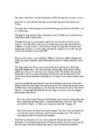
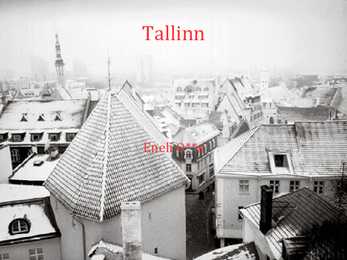
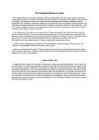
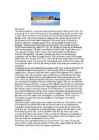
Tallinn Town wall by: Manfred-Markus Tikenberg Introduction The big walls of Tallinn Fat Margaret's Tower Epping tower "Grand Monastery gate" Viru gate Thank you for watching!
Kunda Gymnasium Rait Türkel Old Tallinn Report Instructor:Teacher Kristi Aron Kunda 2012 Introduction Like most cities with an eight-hundred-year-old past, Tallinn is a patchwork of historic areas. The city's pride and joy is without a doubt its Medieval Old Town, but equally enchanting is the Kadriorg district, a throwback to the time when Estonia was ruled by the Russian Tsars. Tallinn is the capital and largest city of Estonia. It occupies an area of 159.2 km2 with a population of 416,470. It is situated on the northern coast of the country, on the shore of the Gulf of Finland, 80 km south of Helsinki, east of Stockholm and west of Saint Petersburg. Tallinn's Old Town is in the list of UNESCO World Heritage Sites. It is ranked as a global city and has been listed among the top 10 digital cities in the world.The city was a European Capital of Culture for 2011, along with urku, Finland.T...
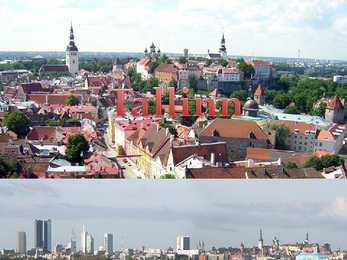
Introduction Tallinn, the capital city of the Republic of Estonia and of the Harju county, is a town in North Estonia on the coast of the Gulf of Finland. It has nearly half a million inhabitants and covers an area of almost 160 sqkm. It is also an important economic and cultural centre and one of the main ports in the Baltic States. Tallinn is one of the oldest cities on the Baltic Sea. It is unique for its well-preserved architecture from the 13-15 centuries. In contrast to the ancient town-walls and towers, Tallinn of today offers modern hotels, restaurants, sport and cultural centres. Every five years national song and folk dance festivals take place in Tallinn. The yachting regatta of the 1980 Moscow Olympic Games was held at Pirita. History Tallinn means in English "Danish town". The place is believed to have been settled by Finno-Ugric people about 2500 BC. It was first marked on a map of the world by the Arab geographer al-I...
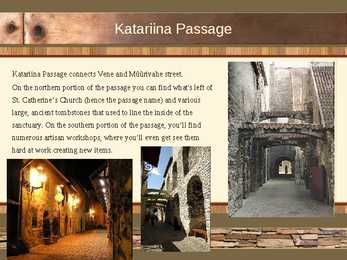
Katariina Passage Katariina Passage connects Vene and Müürivahe street. On the northern portion of the passage you can find what's left of St. Catherine's Church (hence the passage name) and various large, ancient tombstones that used to line the inside of the sanctuary. On the southern portion of the passage, you'll find numerous artisan workshops, where you'll even get see them hard at work creating new items. City wall Tallinn's medieval city wall is a sub-facility that was built to protect the lower Tallinn and upper Tallinn (Toompea). The building of the city wall began in 1310th years, and by improving over time it formed the city wall with defensive buildings (towers). It was finished by the end of the 1561. Then it was 2.35-kilometer-long circular wall, which had 27 wall gate, 8 tower gate and 21 other stone fortifications. Many parts of the to...
The name short foot was first mentioned in 1353, the name brev is mons in latin. Short foot is a street between Rataskaevu street and Long foot in the old town of Tallinn. The name that is used nowadays was translated from german by anton thor helle and it is Lühike jalg. Pikk jalg (lit. long leg/foot), One of the oldest streets in Tallinn, previously known as Strantstrasse (beach road) (1362); Pikk jalg (long-leg) is a steep narrow road which was once the only way into the fortress. It runs from Pikk in the lower town right up to Lossi plats and the Nevsky cathedral. A couple of cafes in the old houses along Pikk jalg offer excellent views and genuine ambience, as well as plenty of caffeine to help you up the hill. The gate tower at the end dates from around 1380. Because of the names short and long Tallinn is sometimes called a limping city. Short Leg is also sometimes called street-stairs, because it is made complet...
Tallinn English College English Sergo Vainumäe 9A TALLINN Report Supervisor: Inge Välja Tallinn 2006 Order of contents: 1.Introduction 2.Toompea 3.Lower Town 4.Kadriorg and Pirita 5.Museums 1. Introduction Tallinn, the capital of Estonia, lies on the Baltic Sea. It is on almost the same latitude east St. Petersburg in Russia, Stockholm in Sweden and Stavanger in Norway, and covers 158 sq km. Tallinn was first marked on a map of the world by the Arab geographer al-Idrisi in 1154, its name then being Kolyvan (probably derived from the name Kalev). In the 13th-century Chronicle of Henricus de Lettis the town was called Lyndanise. Later came Reval (presumably after the old county of Rävala), the name used by the Germans who ruled the country for seven centuries. Russians then modified Reval...
Names of town ● Lindanise - it was first used in 1219, derived from mythical Linda, the wife of Kalev and the mother of Kalevipoeg, national hero. ● Koluvan - found in old Russian chronicles, the name possibly deriving from the Estonian mythical hero Kalev ● Reval - used after 1219; comes from two german words ‘reh’ and ‘fall’, meaning the falling of the deer - as they fall down the Toompea hill, probably when escaping from the Danish occupation or just the hunters. ● Tallinn - used after Estonia gained its independence in 1918, origin is definitely estonian; meaning Taani-linn, tali- linn. Liberty Square ● The central square of Tallinn, it was renovated in 2008. There used to be Harju gate, which can now be seen through glass. ● The statue of Liberty, 2009; represents freedom, Estonia has been under many foreign powers, starting with Danes, Sweden, German and Russia. The clock of liberty, 2...
TOOMPEA Toompea (from German Domberg – Cathedral Hill ) is a limestone hill with an area of about 7 hectares in the central part of Tallinn. It towers about 30-40 m above the surrounding areas. According to the legend it´s the tumulus mound over the grave of the national hero Kalev, erected stone by stone in his memory by his grieving wife Linda. It is the birthplace of Tallinn - a place where in 1229 the Knights of the Sword built a fortress instead of the wooden Estonian stronghold. Toompea Castle is also one of the most potent symbols of the reigning power. Today Toompea is the seat of the Government of Estonia as well as the Riigikogu, both of which are often simply colloquially referred to as Toompea. For centuries there was only one access to Toompea - Pikk Jalg - but there is also another way leading up to Toompea - Lühike Jalg, which was made in the 14th century. At present Pikk Jalg and Lühike Jalg are used only by pedestri...
Tallinn Eneli O**a History City rights were given to Tallinn on May 15, 1248 Independent since 1991 Covers the area of 159.2 km2 Old Town of Tallinn Tallinn's Old Town is one of the most well- preserved old towns in northern Europe The golden era in lies in the period between the early 15th and mid 16th centuries It has three parts: Lower Town, Upper Town + Town Wall, Towers and the Gates Lower Town/Upper Town Town Hall Square Toompea Castle & Tall Tallinn Town Hall Hermann's Tower Town Hall Pharmacy Cathedral of Saint Mary the Virgin Great Guild Hall Danish King's Garden House of the Brotherhood of Black Heads Other Attractions Ka...
Prepositions of Place in a car in a garden in the water (sea / river) in a town in a room in the city centre IN in a shop in France in hospital in a newspaper / in a book "Where's David?" "In the kitchen / In the garden / In London." What's in that box / in that bag / in that cupboard? Angela works in a shop / in a bank / in a factory. Milan is in the north of Italy. I live in a town but I want to live in the country. I read about the accident in the newspaper. David's father is ill. He's in hospital. at the table at the station at a concert at university / at schoo...
Kunda Ühisgümnaasium Tallin Old Town Report Student: Kristin Karu Teacher: Kristi Aron Kunda 2012 The Alexander Nevsky Cathedral The Alexander Nevsky Cathedral is an orthodox cathedral in the Tallinn Old Town,Estonia. It was built to a design by Mikhail Preobrazhensky in a typical Russian Revivalstyle between 1894 and 1900, during the period when the country was part of theRussian Empire. The Alexander Nevsky Cathedral is Tallinn's largest and grandest orthodox cupola cathedral. It is dedicated to Saint Alexander Nevsky who in 1242 won the Battle of the Ice on Lake Peipus, in the territorial waters of present-day Estonia. The late Russian patriarch, Alexis II, started his priestly ministry in the church. Interior of the Cathedral. The Alexander Nevsky Cathedral crowns the hill of Toompea where the Estonian folk hero Kalevipoeg...
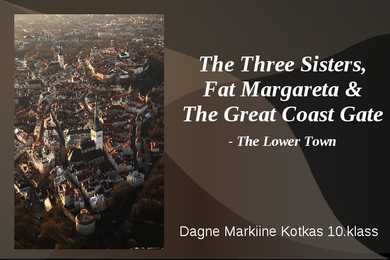
The Three Sisters, Fat Margareta & The Great Coast Gate - The Lower Town Dagne Markiine Kotkas 10.klass The Three Sisters Three Sisters is a group of 15th century houses at 71 Pikk Street with many decorative elements. The first record of The Three Sisters merchant houses comes from the year 1362. This is a typical of the Tallinn school of Gothic architecture. Recently a hotel was opened in this medieval complex. The Three Sister's Hotel Big sister's suite Middle sister's suite Junior suite The hotel has 5 stars and is very expensive. The Fat Margaret The Fat Margaret was built on the site of the eastern tower in the outer gate of the Great Coast Gate at the beginning of the 16th century to protect entrance to the town. Its walls are over 4 meters thick at the base and its flat roof is ...
Estonia Estonia is a country in Eastern Europe. It's a small country beside the Baltic Ssea. Our neighbours are Finland, Russia, Latvia and Sweden. Estonia's surface area is 45,227 square kilometres wide. The population of Estonia is around 1,34 million people. We have four seasons in Estonia. The air is very humid and it rains quite often, especially in spring and autumn. We usually have long winters and plenty of snow, but sometimes we haven't even had snow. Summers are is mostly warm and beautiful in Estonia. Estonia is well known for it's amazing countryside. We don't have any big mountains, but we do have over a thousand islands and over a thousand lakes that are worth seeing. One fifth of Estonia is covered by wetlands and almost one forth of the territory is forested. We also have four spectacular national parks and more than 50 nature reserves. The capital of Estonia is Tallinn...
The town hall pharmacy is located in the centre of Tallinn, opposite the Town Hall. It is one of the oldest continuesly running pharmasies in Europe. It has been in buisiness from the 15. century. It´s also the oldest commercial enterprice and medical establishment in Tallinn. It´s not known how old exactly the pharmacy is. Some say it was in 1415, when it opened, some say it was 1422. The first chemist was Johann Molner. It´s known that medicine were being sold at the end of 15th century. The bUtchard family ran the pharmacy for 10 generations, almost 325 years. When The last buchart died, the pharmacy was sold to C.R. Lehbert.Presently the main part of the pharmacy is located on the first floor and sells most modern medicines.There is an antiques shop on the ground floor and in 1999 a garlic restaurant called "Balthasar" was opened on the second floor.Near the modern pharmacy on the first floor there is a small museum displaying old m...
The Haapsalu Bishop's Castle The Haapsalu Bishop's Castle and Cathedral, which was established in the 13th century as the centre of the SaareLääne Diocese, is one of the best preserved castles in Estonia. It is located on the western coast of Estonia in Haapsalu. The Haapsalu Castle is one of the most remarkable examples of Estonian MiddleAge fortress architecture. The stronghold construction, widening and reconstruction went on throughout several centuries, with architecture changing according to the development of weapons. The fortress achieved its final dimensions area of more than 3 hectares, thickness of the wall between 1.2 and 1.8 meters, and maximum height over 10 metres under the reign of Bishop Johannes IV(fourth). In the 17th century, the castle was no longer used as a defensive building by the Swedes who now ruled the Swedish Estonian Province. In the course of the Grea...
My Town I live in Tallinn. It's the capital and main seaport of Estonia. Tallinn is a very beautiful city that lies on the Baltic Sea. It covers 158 square kilometres. The Mayor of Tallinn is Jüri Ratas. The population of our capital is about 400000 people. About 55% of them are Estonian, 37% Russians and the other 8% are from different nations. The people here are mostly engaged in industry- mainly the food industry (23%), trade (16%) and transport and communication (14%). History. Tallinn has a great history. It was first marked on a map of the world by the Arab geographer al-Idrisi in 1154, its name then being Kolyvan. In the 13 th- century chronicle of Henricus de Lettis the town was called Lyndanise. Then it was called Reval for some time and finally Estonians started to call the town Tallinn from Taanilinn (Danish town) after the Danish conquest in the 13th century. Th...
Tallinn Tallinn, the capital of Estonia Locates in Estonia the biggest lakes: Lake Ülemiste and Lake Harku population about 400 000 people occupies a surface of 159.2 km2 History It is thought that Tallinn is about 4500-5500 years old Click to edit Master text styles The Estonians established a Second level settlement in Toompea Third level The Estonians have been in Fourth level Fifth level a battle with Danes, Russians and Swedes Sightseeing Many interesting museums: Click to edit Master text styles KUMU, Ahha Second level the Old Town Th...
Christ The Redeemer Or the Statue of Christ Redeemer (Portuguese: Cristo Redentor) is a statue of Jesus Christ with the largest Art Deco architectural style and located in Rio de Janeiro, Brazil. The statue has a height 38 meters and is located at the top of Corcovado Mountain is 710 m high in the Tijuca Forest National Park, overlooking the city. Chichen Itza It is a Mayan archaeological heritage in Mexico is the most complete and still well maintained. According to the Mayan culture of Chilam Balam, the temple complex was built between the years 502-522 AD. Mayans occupy just over 200 years, then they migrate to coastal areas in Campeche. Itza is the central point of the complex and other buildings such as the Pyramids of Kukulcan, Temple of Chac Mool, and building the Thousand Pillars. Colosseum Is a large theater / Amphitheater, located at the State Capital of Italy, Rome, called the original "Flavian Amphitheatre", founded by...
Old Tallinn Old Town, a medieval walled city filled with old buildings and fortifications. The sheltered bay and the easily defended Toompea Hill made it a natural place to settle. Sometime about 1050 A.D. a fortress was built atop the hill, the first of many. In 1219 the Danes showed up as part of the Northern Crusade to subjugate the Baltics and convert the local pagans to Christianity whether they wanted to or not. The Danes improved the fortifications and expanded the town, which became part of the Hanseatic League, a trading organization of a hundred northern cities. The Danes sold Tallinn to the Livonan Order, a branch of the Teutonic Knights, in 1346. The Swedes came next in 1561. Tallinn weathered plague and the Great Northern War and became part of Russia in 1710. In 1918, Estonia declared independence from Russia and fought a bitter war against Bolshevik Russia. Independence didn’t last long, ...
Tallinna Mustamäe College The Most Important Buildings in Lai Street in Tallinn Report Supervisor: Ingrid Teigar Tallinn 2014 Table of Contents Introduction.............................................................................. 3 Lai Street in general.................................................................. 4 The origin of the name "Lai"...................................................... 4 1 Lai Street / 4 Nunne Street...................................................... 5 17 Lai Street............................................................................. 6 23 Lai Street............................................................................. 6 27 Lai Street............................................................................. 8 29 Lai Street...........................................................................
TALLINN History Tallinn is one of the oldest cities in the Baltic Sea region. Tallinn was first mentioned in written sources of the 1154th, when the Arabian geographer Al Idris took a world map the city 'Kaleveny "/ Kolõvan. Through the years, the city of Tallinn had several names: Lindanisa, Kolõvan, Reval and eventually Tallinn. Tallinn was granted the Lübeck law in 1248 and became the member of the Hanseatic League in 1285. General Data l Country - Estonia l County - Harju County l First appeared on map - 1154 l Town rights - 1248 l Mayor - Edgar Savisaar l Aera - Total 159.2 km2 (61.5 sq mi) l Population - (1 Mar 2012) Total - 416,470 Denisty - 2,614.0/km2(6,766.6/sq mi) Tallinn Coat of arms Flag Top 5 Attractions 1. Kiek in de Kök Visitors to the museum will see examples of Medieval firepower, displays detailing how the city's system of walls and towers devel...
The Historic Centre (Old Town) of Tallinn is an exceptionally complete and well-preserved medieval northern European trading city on the coast of the Baltic Sea. The city developed as a significant centre of the Hanseatic League during the major period of activity of this great trading organization in the 13th-16th centuries. The combination of the upper town on the high limestone hill and the lower town at its foot with many church spires forms an expressive skyline that is visible from a great distance both from land and sea. The upper town (Toompea) with the castle and the cathedral has always been the administrative centre of the country, whereas the lower town preserves to a remarkable extent the medieval urban fabric of narrow winding streets, many of which retain their medieval names, and fine public and burgher buildings, including town wall, Town Hall, pharmacy, churches, monasteries, merchants' and craftsmen' guilds, and the...
Tallinn is a small port town in which the population is 371 000 people, and the area is only 159,2 km².( square kilometers). Tallinn, the capital of Estonia, is named after taani linnus, which means Danish castle. The Castle in question was built by King Waldemar of Denmark in the 13th century. The settlement quickly developed itself into a busy port. -The Old Town In medieval age Tallinn was called Reval and it was as big as the Tallinns Old Town is now. Uniqueness of Tallinn is that it is one of very few European cities, where the historical lay-out is kept in it's original form , and has a lot of monuments of that time. Thanks to that in 1997 Old Tallinn has been included in the list of a world heritage of UNESCO. -The Raekoja Square The Raekoja Square is used for senturies like market and fair square, here took place many festivals, and criminals were executed. In summer on Raekoja Square many open air conserts ...
Tallinn Mustamäe College G2K Jaana-Kristiina Jõgevest The Four oldest churches of Tallinn Report Supervisor: Ingrid Teigar Tallinn 2009 The Dome Church The Danes began fortification of Toompea after the conquest of Tallinn in 1219 and probably also built the first church there. It was presumably a wooden building located at the site of the present cathedral. However, a serious conflict with the Order of the Brothers of the Sword broke out soon as the latter wanted to gain control of the entire Estonia. The order succeeded in subordinating Tallinn and the whole of North Estonia to its rule in 1227. The monks of the Dominican Order began the construction of a stone church in Toompea in 1229. The first written data on the cathedral date back to 1233, the date of a battle...
Urban trail in Tartu old town. Tartu, small town in southern-Estonia. Town was first mentioned in 1030. Nowadays there is living nearly 100 000 people. Tartu is known as city of students, and students come to improve to Tartu from all over the world. But Tartu is also known as a Hansa town, that is why one of the most attractive sightseeing place is the old town. It is a valuable place for Tartu and for Estonia as well. PHOTO HUNT MAP: Start the photo hunt on the corner of Lai and Jakobi street. Go up to the Toome hill, it's a great upturn and a great test for legs. As you move forward you will see the famous ,,Musumägi". In english it is called ,,The Kissing Hill" Take a picture with your crew members in the background of the hill. After a brief walk in the Toome Park you see the Ruins of Toome Cathedral. Is it possible to visit the ruins of the Cathedral? Now, go straight ahead until you reach the Lossi street, turn rig...
My dream home My dream home would be a beautiful two-storey detached house in a small town. The house is surrounded by a nice garden full of gorgeous plants and a lot of types of flowers. I would also hire a gardener, so I can have time for my other duties. There are many spacious rooms in my house that are in well-lit and pastel tones. There are a living room, a kitchen and lightly coloured guest room on the ground floor. On the first floor there is also a living room, two nurseries, a toilet and a study with a bookshelf that covers the entire wall. I would hang pictures of my travelles on the walls, so it's easier to talk about my trips to my friends and family. As I'm the quiet type I would like to have the house in the suburbs. I think it would be nice if it were to be a gated community.
Pärnu City Themes 1. History 2. Attractions 3. About Pärnu 4. Notable Residents 5. Citizens of Honuor 6. Pictures of Pärnu 1. History The people who chose to live at the river mouth thousands of years ago stayed here permanently. It is known that in 1154 the Arabian traveller and geographer Abu Abdallah Muhammed al-Idrisi serving the King of Sicily mentioned a river named Bernu. Embecke ("Emajõgi" in Estonian) is the same River Bernu referred to by al- Idrisi and later renamed as the River Pärnu. Pärnu's first period of prosperity was the time from the beginning of the 14th century up to the end of the 15th century while it was a port on the route to the Hanseatic City of Novgorod. 2. Attractions Places to visit: ● Rannapark (Beach Park) & Vallikäär ● Eliisabet Church was built 1747 and is now a popular location for concerts. It’s organ has a distinct, beautiful sound. ● Jekateriina Church is one of the most beautiful...
Kiek in de Kök tower The cannon tower Kiek in de Kök was founded in 1475-1483. The name was first recorded in the description of the second siege of Tallinn in 1577 as Kyck in de Kaeken, later on several forms of the same name were used, such as Kik (Kyk) in de Kok, Kiek in die Küche, Pulffer-Thurm Giecken Köck. In 1696 the present name Kiek in de Kök was also mentioned, meaning "peek into the kitchen" in Low German. And true enough, it was possible to watch what the enemy was doing in their "kitchen" i.e. on position lower down from the about 38m-high tower. Already in the late 15th century the tower was somewhat reconstructed. The outer walls were made thicker and the tower got a diameter of 17.3 m. The walls are 4 m thick but the tower was then lower than today. The waterproof upper floor made of cobblestones was open and had 22 embrasures in its parapet. The parapet must have been covered by some kind of a roof but the middle part o...
Accessible- easy for anyone to obtain and use Admittedly- used for saying that you admit something is true, especially when this makes your main idea weaker Affordable- cheap enough for ordinary people to afford Agricultural- relating to farming Alcoves- a small area in a room that is created by building part of one wall further back than the rest of the wall Ample- enough, and often more than you need Attic- the room in a house under the roof Bedsit- a room that you rent that is used for both living and sleeping in Brick pillars- Bungalow- a house that is all on one level Caravan- BRITISH a vehicle that people can live and travel in on holiday. Caravans are usually towed (=pulled) by a car. The American word is trailer Carpenter- someone whose job is to make things from wood, or to repair things that are made of wood Cellar- a room under a building, below the level of the ground, usually used for storing things Compatible-...
1. Fat Margareta - 16. Cent. Tallinn's most impressive defensive structures, the Great Coastal Gate (Suur Rannavärav) and Fat Margaret's Tower. They were built not only to defend the city from the seaward side of town, but also to impress any visitors arriving via the harbour. Fat Margareta used to be a prison. It is a town wall's building. Now it's home to the Estonian Maritime Museum, which provides a detailed look at the nation's seafaring past. 2. The Great Coastal Gate - with the Viru Gates, are the last of six gates that controlled access to the town in Medieval times. 3. Kolm Õde - a hotel. In 2003, three of Tallinn's splendid merchant houses, built in 1362, were renovated and united to create The Three Sisters, which now offers modern amenities with great design and a backdrop of medieval history. 4. Oleviste church baptism. Believed to have been built in the 12th century a...
Great Coastal Gate & Fat Margaret's Tower Good morning ladies and gentlemens, and welcome to Great Coastal Gate and Fat Margaret's Tower. Before we begin the tour, I`d like to tell you a little about their history. The Great Coastal Gate (Suur Rannavärav) was the most important gate in Tallinn. It was built as a defence on the seaward side of Tallinn, but also to impress visitors coming in from the sea. In the Middle Ages the Great Coastal Gate was about 300 footsteps from the harbour. Legends say, that during storms, the waves reached the gate. . In the 16th century, a powerful cannon tower was built next to the Great Coastal Gate. It had 155 loopholes, diameter of 25 meters, and a height of about 20 meters. The tower was named Roosikrantsi, but as it was the stoutest tower in the Wall, people started to call it "Fat Margaret". Through history, the cannon tower has also served as a storehouse for gunpowder ...
Kiek in de Kök is an old German language nickname for towers, mainly those that formed parts of town fortifications. They gained the name from the ability of tower occupants to see into kitchens of nearby houses. Due to the history of the Hanseatic League and the Teutonic Order, also towers far outside modern Germany bear this name, like in Gdask and Tallinn. The tower in Tallinn is an artillery tower built in 1475.The walls are 4 m thick but the tower was then lower than today. The waterproof upper floor made of cobblestones was open and had 22 embrasures in its parapet. The parapet must have been covered by some kind of a roof but the middle part of the floor was uncovered to get the mortars and catapults in place better. Compared to the other Tallinn towers Kiek in de Kök was predominant in its fire power, due to its 27 embrasures for cannons and 30 for handguns. The ground floor was a storage floor and there was also the initial ent...
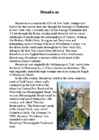
Broadway Broadway is a road in the USA of New York. Perhaps best known for the portion that runs through the borough of Manhattan in New York City, it actually runs 21 km through Manhattan and 3.2 km through the Bronx, exiting north from the city to run an additional 29 km through the municipalities of Yonkers, Hasting- On-Hudson, Dobbs Ferry, Irvington and Tarrytown and terminating north of Sleepy Hollow in Westchester County. It is the oldest north–south main thoroughfare in New York City, dating to the first New Amsterdam settlement. The name Broadway is the English literal translation of the Dutch name, Breede weg. Broadway is known widely as the heart of the American theatre industry. Broadway was originally the Wickquasgeck Trail, carved into the brush of Manhattan by its Native American inhabitants. This trail originally snaked through swamps and rocks along the length of Manhattan Island. ...
2 Towns (Upper & Lower Town) Tallinn used to be divided into 2 parts - Upper Town where lived the aristocracy, gentry and the clergy; and Lower Town with traders, craftsmen and merchants. Legend says the Toompea Hill is actually the tumulus mound of the great Kalev. Linda carried rocks to his grave. It is a naturally- formed limestone hill. Lower Town was a merchantile centre, Tallinn also belonged to the Hansaetic League (1285). It is often referred to as the town of citizens. Any grown-up, married and economically independent person, born in a legal marriage between two free people and having lived in the town for at least 3 months, could apply to the Magistracy for citizenship. Serfs could escape from serdom after having successfully hidden in town for a year and a day. Two parts remained separated until the end of the 19th century. Four Names Lyndanise - mentioned by Henricus de Lettis in his Chronicle; derives from the name Lind...
Tarantula are a group of hairy and often very large spiders belonging to the family Theraphosidae, of which approximately 900 species have been identified. Some genera of the tarantulas hunt prey primarily in trees and other genera hunt on or near the ground. All tarantulas can produce silk; while arboreal species will typically reside in a silken "tube tent", terrestrial species will line their burrows with silk to stabilize the burrow wall and facilitate climbing up and down. Tarantulas mainly eat insects and other arthropods, using ambush as their primary method of prey capture. The biggest tarantulas can kill animals as large as lizards, mice, and birds. Tarantulas are found in tropical and desert regions around the world. Most tarantulas are harmless to humans, and some species are popular in the exotic pet trade. Some species, while not known to have ever produced human fatalities, have venom that can produce extreme discomfort ov...
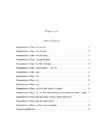
Prepositions Table of Contents Prepositions of Time – in, on & at ....................................................................... 2 Prepositions of Time – for & since ....................................................................... 3 Prepositions of Time – for & during ..................................................................... 3 Prepositions of Time – during & while ................................................................. 4 Prepositions of Time – by & by the time .............................................................. 4 Prepositions of Time – until & from ... till / to ... ................................................. 4 Prepositions of Time - ago................................................................................... 5 Prepositions of Place – in ..........................................
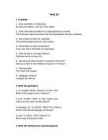
Test 13 1 Translate. 1 Minu lemmiklill on maikelluke. My favourite flower is the lily of the valley. 2 Eesti rahvuslikud sümbolid on suitsupääsuke ja rukkilill. The Estonian national symbols are the barnswallow and the cornflower. 3 See kindlus on pärit 15. sajandist. This fortress dates from the 15th century. 4 Saaremaal on palju tuuleveskeid. There are lots of windmills on Saaremaa. 5 Eesti pinnas ei ole väga rammus. Estonian soil is not very rich. 6 Kas sa oled käinud paekivi muuseumis Porkunis? Have you been to the limestone museum in Porkuni? 7 Raekoja plats The Town Hall Square 8 millegagi võrdlema compare sth with sth 2 Write the questions. 1 in / longest / What / Estonia / is / the / river What is the longest river in Estonia? 2 ever / smoke / Have / a / had / sauna / you Have you ever had a smoke sauna? 3 language / of / is / official / What / the / Estonia What is the offici...
Contents Contents.................................................................................................................................. 1 # When the Tigers Broke Free................................................................................................ 2 # In The Flesh ?...................................................................................................................... 3 # The Thin Ice......................................................................................................................... 4 # Another Brick in the Wall part 1........................................................................................... 5 # The Happiest Days of our Lives........................................................................................... 6 # Another Brick in the Wall part 2........................................................................................... 7 # Mother...........
Reis on peaaegu igas vanus inimestele, peredele ja gruppidele Tallinn-New York-Tallinn Tallinnast New York´i minnakse lennukiga Väljasõit Tallinnast 1. juunil ja tagasi 7. juunil, lennupiletite hind 6882 krooni Days Broadway** Manhattanil Pennsylvania** Penn Stationi raudteejaama kõrval Milford Plaza*** Theatre District Times Square'i lähedal New York Helmsley**** Grand Centrali ja ÜRO peahoone vahel Skyline Cruise-See 90-minutiline laevasõit ümber Manhattani saare on põnev võimalus teha tutvust New Yorgi kauni panoraamiga. Audiogiid esitab põnevaid fakte kaldalt paistvate ehitiste kohta. Hind ühele reisijale alates 312 EEK Gospeli kolmapäev-See ekskursioon toimub vaid kolmapäeviti ning pakub New Yorgist täiesti enneolematu elamuse.Tuur algab huvitava ringsõiduga ajaloolises mustade linnajaos Harlemis ning lõpeb kultuurikeskuses, kus saate osaleda võimsal gospelkoori kontserdil. Hind ühele reisijal...
What kind of city is Tallinn? What is it famous for? Old own The old City, city of Hanseatic sellers, was not an administrative part of a city (the Cathedral Hill) till the end of a XIX-th century. It was the centre of medieval marketing that has provided him well- being. Now it is the most popular place among tourists with shops and big variety of restaurants. It was opened 22 july 1718 year.Kadriorg it is the largest park in Tallinn.Kadriorg`s founder was the Peter I. He named the park in honour of his wife Ekaterine I. Y ou can walk around this beautiful park and enjoy delightful sights of nature. Tallinn Hall square is the area, popular in summer months and is filled with street cafes. In winter, by the tradition which has remained since 1441, Hall square is the area decorated by a huge Christmas tree. Town Hall Square for centuries been used as a market and fairs square and also...
FORMATION OF MEDIEVAL kARELIA · WHAT WAS BEFORE MIDDLE AGES · WHAT CHANGES OCCURRED WITH IT HOW KARELIA LOOKED LIKE WHEN NEW · ERA DAWNED IN 16th CENTURY GEOGRAPHY OF KARELIA AND ITS RELEVANCE Click to edit Master text styles Major changes in prehistoric times in Second level Karelia Third level Transgression of Ladoga Birth of Vuoksi 3700 BCE Fourth level Birth of Neva 1300 BCE Fifth level Land rise during entire period from Ice Age till today, leading most notably to changes in Vuoksi river's flow Crossroads of trading routes White Sea/Arctic Ocean Upper Volga / Caspian basin Baltic Sea basin Dnepr / Black Sea basin Daugava Waterways: Gulf of Finland, Ladoga, Onega, White Sea, Neva, Vuoksi, Svir, Volkhov, Vyt...
Your Name Dear Diary, The most amazing thing just happened to me. The Time Machine which I never thought will work, just brought me back from my travel to 1975. I've always imagined what the 70's would have looked like and I've even dreamed of living in that time. And now I finally got to see and feel it. I wasn't quite sure where would The Machine bring me, but luckily it worked perfectly and brought me into the New York City. I think that it somehow works on the power of mind and it gets you exactly where and when you want to be. On the first sight it all looked wonderful, the grass was greener and the air was more easier to breathe of course I was evolved into the famous Central Park. I didn't know where to go or what to do, so I whistled, like they do in the movies, and took a cab. I asked the driver just to drive me around the city and show m...
Edinburgh Castle is an ancient stronghold which dominates the sky-line of the city of Edinburgh from its position atop Castle Rock. It is Scotland's second most visited tourist attraction. Human habitation of the site is dated back as far as the 9th century BC. As it stands today though, few of the castle's structures pre-date the Lang Siege of the 16th century, with the notable exception of St Margaret's Chapel, the oldest surviving building in Edinburgh, which dates from the early 12th century.As with all castles, Edinburgh's fortress has been a centre of military activity. As an ancient fortress Edinburgh Castle is one of the few that still has a military garrison, albeit for largely ceremonial and administrative purposes. The New Barrack Block is now home to the official headquarters of the Royal Regiment of Scotland and 52 Infantry Brigade, as well as home to the regimental museum of the Royal Scots and Royal Scots Dragoon Guards. ...
Description The eastern border of Livonia was mainly formed already in the first half of the 13th century and the first belt of fortresses here was probably ready by the end of the 13th century. The first fortresses were not built on the border but further inland. The first decades of the 14th century brought no changes in the situation. Early in 1340 the relationship with Russians deteriorated again. Provincial master Burchard von Dreileben planned a campaign against Pskov and demanded the help of Tartu bishopric. The provincial master began to build another belt of border fortresses. On the Annunciation Day, March 25, 1342, the building of fortresses in Marienburg and Vastseliina began. The latter was called the fortress of the Virgin Mary, but it soon acquired the name of New (vastse) Town (Castrum Novum, Neuhausen, Nyhusen, Nowogrodek). The name is probably the result of a chronological comparison with the older Kirumpää fortress. T...
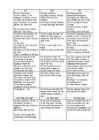
AT ON IN For the time of day For days and dates For longer periods At five o'clock, 11.45, On Friday/ Fridays, 16 May (months/years/seasons) midnight, lunchtime, sunset. 1999, Christmas Day, In October, the 1990s, the At night, the weekend, week- birthday. past, Middle ages, the winter. ends, Christmas, the moment, On Friday/ Sunday/ Monday In the morning/ afternoon/ present, the same time. evening/ morning/ afternoon. evening. In a few minutes/ a week/ Do not use at/ on/ in before moment. last/ next / this/ every. How long it takes to do sth. At the bus stop/ the door/ the ...
Tallinna Inglise Kolledz Estonia Topic Alice Tärk, 9b Tallinn 2007 FACTFILE Area: 45 228 sq km Poplulation: under 1.4 million Capital: Tallinn Language: Estonian Currency: Eesti kroon (EEK) Main religion: Lutheran National holiday: 24 February (anniversary of the republic) National flower: Cornflower National bird: Barn Swallow National stone: Limestone LOCATION The Republic of Estonia is the northernmost and smallest of the three Baltic States. It is located on the eastern shores of the Baltic Sea in the north east of Europe. To the east the country borders Russia. Latvia is the countries neighbour to the south. From the west the coast of Estonia is washed by the Baltic Sea and from the north by the Gulf of Finland. The length of the coastline is approximately 3 800 km. The longest distance from east to west is 350 km, while nort...
London London is one of the world's great cities. Located in the southeast of England, on the River Thames, it is the capital of the United Kingdom and has been the heart of its political, cultural and business life for centuries. London has always been the centre of the world. The origin of the city may be dated around the beginning of the 1st century when a Celtic tribe settled near the Thames. The Romans founded London about 50 AD. Its name is derived from the Celtic word Londinios, which means `the place of the bold one'. The Romans brought with them forts, roads and the rule of law. Then in 61 AD Queen Boudicca led a rebellion against the Romans. Her army marched on London. No attempt was made to defend London. Boudicca burned London but after her rebellion was crushed it was rebuilt. By the end of the 2nd century, a 6metre stone wall was ...
Great Pyramid of Giza The Great Pyramid of Giza (also called the Pyramid of Khufu and the Pyramid of Cheops) is the oldest and largest of the three pyramids in the Giza Necropolis and is the only one of the Seven Wonders of the Ancient World that survives mostly intact. Originally the Great Pyramid was covered by casing stones that formed a smooth outer surface, and what is seen today is the underlying core structure. Some of the casing stones that once covered the structure can still be seen around the base. There have been different scientific and alternative theories regarding the Great Pyramid's construction techniques. Most accepted construction theories are based on the idea that it was built by moving huge stones from a quarry and dragging and lifting them into place. There are three known chambers inside the Great Pyramid. The lowest chamber is cut into the bedrock upon which the pyramid was built and was unfinished. The so-call...
The UK & London The United Kingdom (or the UK) is a short way of saying the United Kingdom of Great Britain and Norther Ireland. The UK is situated north-west of the European continent between the Atlantic Ocean and the North Sea. The UK consists of England, Wales, Scotland and Northern Ireland. Its highest point is Ben Nevis in Scotland followed by Snowdon in Wales. The Severn is the longest river in the United Kingdom. Other important rivers are the Trent, the Mersey, the Tyne, etc. Lough Neagh which lies in the centre of Northern Ireland is thr UK's largest freshwater lake. The climate in the UK is variable. The weather changes so frequently that it is difficult to forecast. It is not unusual for people to complain that the weathermen were wrong. Fortunately there is no extreme weather conditions, it is never very cold or very hot. The first inhabitants were Iberians and Celts who sett...
The City of London History The City of London occupies one square mile in the middle of the capital. It once made up the entire town of London, surrounded by the wall first built by the Romans. The Roman Londinium grew up on the northern side of the "London Bridge" in the past. Products such as olive oil, wines and fruit were brought by ships from different parts of the Roman Empire and unloaded onto wooden quays along the river. In AD 61 the native Celtic Iceni tribe, led by Queen Boudicca, rose up against The Romans. They burnt Londinium to the ground but Roman armies eventually defeated Boudicca. The city was rebuilt and was gradually surrounded with a wall of stone and brick which lasted for many centuries. During the archeological excavations in 1954 the Roman Temple of Mithras was revealed. It was a pagan temple dedicated to the Persian Sun-god. The Temple was later reconstructed only a short way...
 annaabi.ee