 50 punkti
Autor soovib selle materjali allalaadimise eest saada 50 punkti.
50 punkti
Autor soovib selle materjali allalaadimise eest saada 50 punkti.
 ~ 8 lehte
Lehekülgede arv dokumendis
~ 8 lehte
Lehekülgede arv dokumendis
 2015-02-08
Kuupäev, millal dokument üles laeti
2015-02-08
Kuupäev, millal dokument üles laeti
 2 laadimist
Kokku alla laetud
2 laadimist
Kokku alla laetud
 0 arvamust
Teiste kasutajate poolt lisatud kommentaarid
0 arvamust
Teiste kasutajate poolt lisatud kommentaarid
 Edina Dufala-Pärn
Õppematerjali autor
Edina Dufala-Pärn
Õppematerjali autor
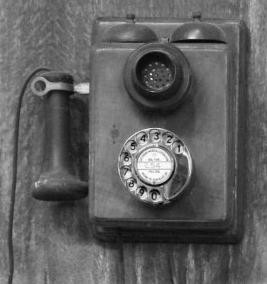
lessons at schools in his community. Bell was the first to obtain a patent, in 1876, for an "apparatus for transmitting vocal or other sounds telegraphically", after experimenting with many primitive sound transmitters and receivers. In 1875, Bell developed his first version of what came to be known as the telephone. He received a patent for it on March 7, 1876, just after his 29th birthday. Five days later, on March 12, he tested his device, speaking into the phone to his associate, Thomas Watson, when he said, "Mr. Watson, come here. I want to see you." After that this primitive telephone was rapidly improved. Picture on the slaid : Bell's March 10, 1876 laboratory notebook entry describing his first successful experiment with the telephone.
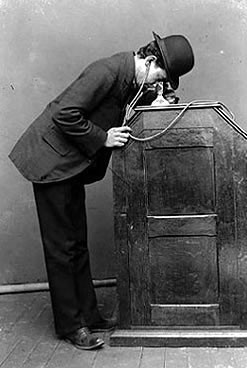
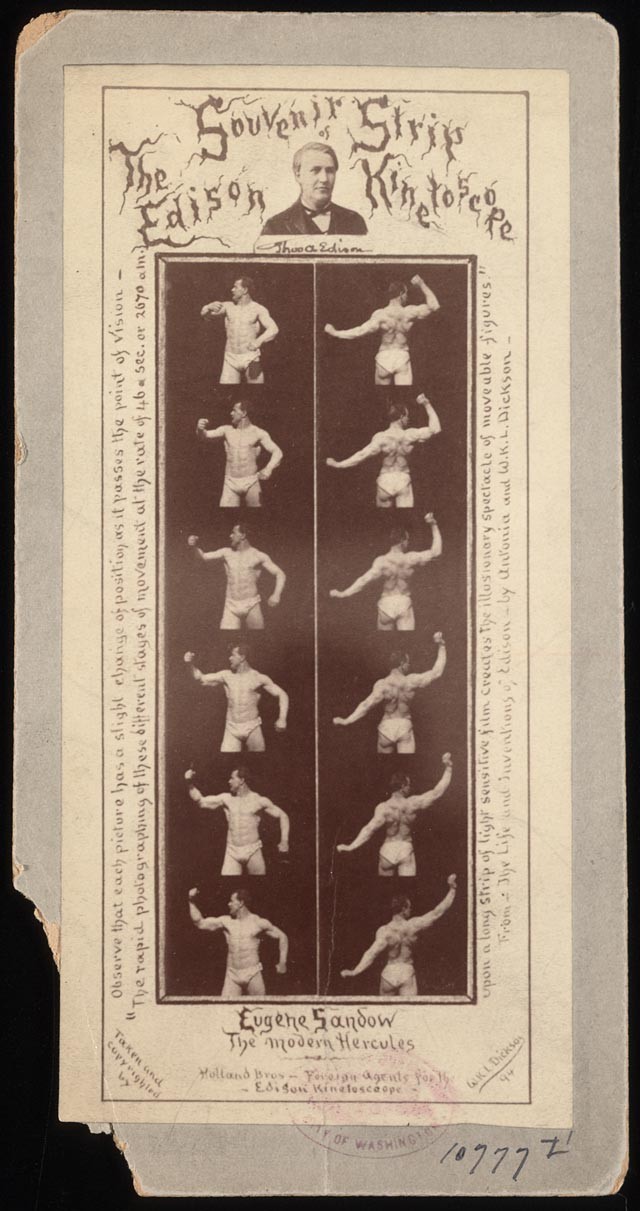
each box, there was a camera. Does the hooves touch the ground or not? Fast shutter, can freeze the moment. Makes fast shutters, to record this. Finds solution, hooves are touching. The prerequisites for cinema: camera(edison and dickson), film stock that is flexible and stable to run through camera(kodak, celluloid film), projector, can show the image on a screen(1895-max skladanowsky, lumiere brothers) The lumiere brothers and cinematographe Father was a wealthy factory owner. Thomas edison-worked with moving images. They thaught they can do that also: called it cinematograph-the recording of movement. Started to film on the streets, how they are coming from factorys and called this actuality. They thaught that they are filming the world the way it is. Why do u need to show people things they see every day? The first ,,cinema": cafe. Le grand cafe, paris. 28th of december 1895. Watched the lumiere brothers film
Almost at once Davy left for his tour and took faraday with him. In 1833 he became a professor of chemistry. Faraday was also director of laboratory. During his life he discovered how to make an electrical motor, he built the first generator, which he called dynamo. He also was giving many popular lectures for the general public. He did great work. The result of his work made it possible for Morse to invent electromagnetic telegraph, for Bell to invent the telephone and for Edison to make electrical light. He requested during life that he be buried under a gravestone of the most ordinary kind. He was very smart man, who discovered many new things; despite of it he refused an offer of knighthood. He preferred to be plain Michael faraday. 6) NEW YEARS CELEBRATIONS New Year's Eve is a time for merriment. At midnight bells ring, horns blow, and friends exchange kisses. Everyone stays up late to celebrate the arrival of another January
Captain John Smith was responsible for all this. One of the causes of the Revolutionary Wars was the English put tacks in their tea. Also, the colonists would send their pacels through the post with- out stamps. During the War, Red Coats and Paul Revere was throwing balls over stone walls. The dogs were barking and the peacocks crowing. Finally, the colonists won the War and no longer had to pay for taxis. Delegates from the original thirteen states formed the Contented Congress. Thomas Jefferson, a Virgin, and Benjamin Franklin were two singers of the Declaration of Independence. Franklin had gone to Boston carrying all his clothes in his pocket and a loaf of bread under each arm. He invented electricity by rubbing cats backwards and declared "a horse divided against itself cannot stand." Franklin died in 1790 and is still dead. George Washington married Matha Curtis and in due time became the Father of Our Country. Them the
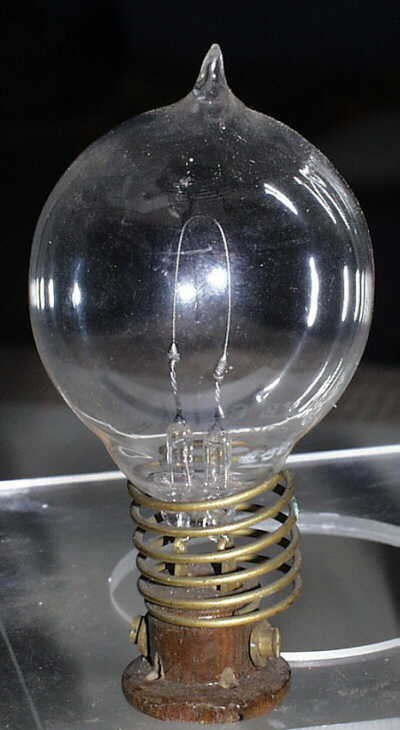
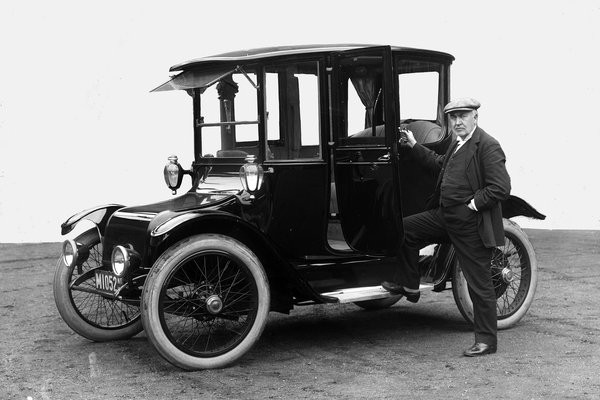
heating. Another 20 percent is used for water heating, 8 percent for cooling rooms, and 5 percent for refrigeration. Almost one-fourth of the energy used in homes is used for lighting and appliances. Lighting is essential to a modern society. Lights have revolutionized the way we live, work, and play. Picture 2.2. How energy is used in homes (2005) 5 Most homes still use the traditional incandescent bulbs invented by Thomas Edison. These bulbs convert only about ten percent of the electricity they use to produce light, the other 90 percent is converted into heat. In 1879, the average bulb produced only 14 lumens per watt, compared to about 17 lumens per watt today. By adding halogen gases, the efficiency can be increased to 20 lumens per watt. Compact fluorescent bulbs, or "CFLs", have made inroads into home lighting systems in the last few years. These bulbs last much longer and use much less energy, producing
Some of the things you will learn in THE CODEBREAKERS • How secret Japanese messages were decoded in Washington hours before Pearl Harbor. • How German codebreakers helped usher in the Russian Revolution. • How John F. Kennedy escaped capture in the Pacific because the Japanese failed to solve a simple cipher. • How codebreaking determined a presidential election, convicted an underworld syndicate head, won the battle of Midway, led to cruel Allied defeats in North Africa, and broke up a vast Nazi spy ring. • How one American became the world's most famous codebreaker, and another became the world's greatest. • How codes and codebreakers operate today within the secret agencies of the U.S. and Russia. • And incredibly much more. "For many evenings of gripping reading, no better choice can be made than this book." —Christian Science Monitor THE Codebreakers
1 The Medium Is the Message In a culture like ours, long accustomed to splitting and dividing all things as a means of control, it is sometimes a bit of a shock to be reminded that, in operational and practical fact,, the medium is the message. This is merely to say that the personal and social consequences of any medium-that is, of any extension of ourselves-result from the new scale that is introduced into our affairs by each extension of ourselves, or by any new technology. Thus, with automation, for example, the new patterns of human association tend to eliminate jobs, it is true. That is the negative result. Positively, automation creates roles for people, which is to say depth of involvement in their work and human association that our preceding mechanical technology had destroyed. Many people would be disposed to say that it was not the machine, but what one did with the machine, that was its meaning or message. In terms of the ways in which the machine altered our relations to
pregnant very soon thereafter. Her health declined rapidly during this time, and according to Gaskell, her earliest biographer, she was attacked by "sensations of perpetual nausea and ever-recurring faintness." Charlotte and her unborn child died March 31, 1855. Jane Eyre, published 1847 Shirley, published 1849 Villette, published 1853 The Professor, written before Jane Eyre and rejected by many publishing houses, was published posthumously in 1857. Thomas Hardy Thomas Hardy was an English novelist, short story writer, and poet of the naturalist movement, though he saw himself as a poet and wrote novels mainly for financial gain only. The bulk of his work, set mainly in the semi-imaginary county of Wessex, delineates characters struggling against their passions and circumstances. Hardy's poetry, first published in his fifties, has come to be as well regarded as his novels, especially after The Movement of the 1950s and 1960s.
 annaabi.ee






Kõik kommentaarid